Author: shivamlohiya

  • Notes of Business Environment Business Studies Class 12

    UNIT 3

    BUSINESS ENVIRONMENT

    Business environment can be defined as those forces, individuals and institutions who have the ability to influence the working of an organisation.

    Features of Business Environment :

    (1) Totality of external forces : Business environment is the sum total of all the forces/factors external to a business firm.

    Specific and General forces : Business environment includes both specific and general forces. Specific forces includes investors, competitors, customers etc who influence business firm directly while general forces includes social, political, economic, legal and technological conditions which affect a business firm indirectly.

    Inter-relatedness : All the forces/factors of a business environment are closely interrelated.

    Dynamic : Business environment is dynamic in nature which keeps on changing with the change in technology, consumers fashion and tastes etc.

    Uncertainty : Business environment is uncertain as it is difficult to predict the future environmental changes and their impact.

    Complexity : Business environment is complex which is easy to understand in parts separately but it is difficult to understand in totality.

    Relativity : Business environment is a relative concept whose impact differ from country to country and region to region.

    IMPORTANCE OF BUSINESS ENVIRONMENT

    1. I d en t i fi c a t i o n o f op p o rt u n i t i e s t o g e t f i r s t m ov e r a d v a n t a ge :

    Understanding of business environment help an organisation in identifying advantageous opportunities and getting their benefits prior to competitors.

    (2)

    (3)

    (4)

    (5)

    1. (7)

    18 XII – Business Studies

    2.

    Identification of threats : Correct knowledge of business environment help an organisation to identify those threats which may adversely affect its operations.

    3.

    Tapping useful resources : Business environment made available various resources such as capital, labour, machines, raw material etc to a business firm. In order to know the availability of resources and making them available on time knowledge of business environment is necessary.

    4.

    Coping with Rapid changes : Continuous study/scanning of business environment help in knowing the changes which are taking place and thus they can be faced effectively.

    5.

    Assistance in planning and policy formulation : Understanding and analysis of business environment help an organisation in planning & policy formulation.

    6.

    helps in Improving Performance : Correct and continuous monitoring of business environment help an organisation in improving its performance.


    DIMENSIONS / COMPONENTS OF BUSINESS

    ENVIRONMENT

    1.

    Economic Environment : It has immediate and direct impact on a business. Rate of interest, inflation rate, change in the income of people etc. are some economic factors which could affect business firms. Economic environment offers opportunities to a firm or it may put constraints.

    2.

    Social Environment : It includes various social forces such as customs, beliefs, literacy rate, educational levels, lifestyle, values etc. Changes in social environment affect an organisation in the long run. Example : now a days people are paying more attention towards their health as a result of which demand for mineral water, diet coke etc has increased while demand of tobacco, fatty food products has decreased.

    3.

    Technological Environment : It provides new and advance ways/ techniques of production. A businessman must closely monitor the technological changes taking place in the industry as it helps in facing competition and improving quality of the product.

    4.

    Political Environment : Changes in political situation also affect business organisations. Political stability builds confidence among business community white political instability and bad law & order situation, may

    19 XII – Business Studies

    bring uncertainly in business activities. Political environment has immediate and great impact on the business transctions, so the businessman must scan the environment carefully so that necessary changes can be made in the organisation as per requirements.

    5. Legal Environment : It constitutes the laws and legislation passed by the Government, administrative orders, court judgements & decisions of various commissions and agencies. Businessman had to act according to various legislations and so their knowledge is very necessary.

    Economic Reforms :

    As a part of Economic reforms, the Government of India announces new

    Industrial Policy in 1991, whose main features are as follows :

    1. Only six industries were kept under licencing scheme.
    2. The role of public sector was limited only to four industries.
    3. Disinvestment was carried out in many public sector enterprises.
    4. Foreign capital/investment policy was liberalised and in many sectors 100% direct foreign investment was allowed.
    5. Automatic permission was given for signing technology agreements with foreign companies.
    6. Foreign investment promotion board (FIPB) was setup to promote & bring foreign investment in India.

    The main objective of New Industrial Policy was to promote Liberalization,

    Privatization and Globalization

    Liberalization : Abolishing licensing requirements; Freedom in deciding the scale of business: removals of restriction on movements of goods and service; reduction in tax rates; freedom in fixing prices; simplifying procedures; making it easier to attract foreign investment.

    Privatization : Giving greater role to private sector in the nation buiding process and reduced role of public sector; Disinvestment in many Public Sector undertaking etc.

    Globalization : It means integration of various economies of the world leading to the emergence of cohesive global economy. The measures taken by the Government include trade liberalization which includes import liberalization; Export Promotion though rationalization of tariff structure; Foreign exchange liberalization; increased interaction among global economics under the aegis (protection/support) of World Trade Organization.

    20 XII – Business Studies

    IMPACT OF GOVERNMENT POLICY CHANGES ON BUSINESS AND INDUSTRY

    1.

    Increasing Competition : Delicencing and entry of foreign firms in Indian market has increased the level of competition for Indian firms.

    2.

    More Demanding Customers : Now customers are more aware and they keep maximum information of the market as the result of which now market are customer/buyer oriented. Now products are produced keeping in mind the demands of the customers.

    3.

    Rapid Changing Technological Environment : Rapid Technological advancement has changed/improved the production process as a result of which maximum production is possible at minimum cost but it leads to tough challenges in front of small firms.

    4.

    Necessity for change : After new industrial policy the market forces (demand & supply) are changing at a very fast rate. Changes in the various components of business environment has made it necessary for the business firms to modify their policies & operations from time to time.

    4.

    Need for Developing Human resources : The changing market corditions of today require people with higher competence and greater commitment, hence the need for developing human resources arise, which could increase their effectiveness and efficiency.

    5.

    Market orientation : Earlier selling concept was famous in the market but now its place is taken by the marketing concept. Today firms produces those goods & services which are required by the customers.

    6.

    Reduction in budgetary Support to Public Sector : The budgetary support given by the government to the public sector is going on reducing and thus the public sector have to survive and grow by utilising their own resources efficiently.


    IMPORTANT QUESTIONS

    1 Mark Questions (To be answered in 1 word or 1 sentence)

    1.

    Govt. of India is seriously thinking to allow oil marketing public sector undertaking to fix their own price for diesel. Which economic reform is the reason of this change in government s policy (Answer: Liberalization)

    21 XII – Business Studies

    2.

    Just after declaration of Lok Sabha Elections 2009 results, the Bombay stock exchange s price index (Sensex) rose by 2100 points in a day. Identify the environmental factor which led to this rise. (Answer : Political Environment)

    3.

    State any two impacts of change of government policy on business and industry.

    4.

    The understanding of business environment helps the managers to identify threats . What is meant by threats here? (Answer: Threats refer to the external environment trends and changes that will hinder a firm s performance)

    5.

    Business environment includes both specific and general forces. List any four specific forces. (Answer : Suppliers, investors, customers and competions).

    6.

    The understanding of business environment helps the managers to identify Opportunities . What is meant by Opportunities here? (Answer-Opportunities refer to positive changes and trends that will help the business to improve its performance.)

    7.

    Business Environment includes both specific and general forces . List any four general forces. (Answer: Social, Economic, Political Legal and Technological).

    3/4

    Marks Questions (To be answered in about 50 to 75 words)

    1.

    Explain any three features of Business Environment.

    2.

    Explain any two impacts of Government policy changes on Business and Industry.

    3.

    Explain Increasing Competition and More demanding customers as impact of Government policy changes on Business and Industry.

    5 Marks Questions (To be answered about 150 words)

    1.

    Identify the type of dimension of environment to which the following are related :


    i) Banks reducing interest rate on housing loans.


    ii) An increasing number of working women.

     
    1. Booking of air tickets through internet.
    2. Alcohol beverages are prohibited to be advertised on Door Darshan

    22 XII – Business Studies

    1. Economic Environment,
    2. Social Envrionment
    3. Technological Environment
    4. Legal Environment

    2. Explain the various dimensions of business environment.
    23 XII – Business Studies


  • Notes of Principles of Management Business Studies Class 12

    UNIT 2

    PRINCIPLES OF MANAGEMENT

    Concept of Principle of Management :

    Principle of Management are the broad and general guidelines for managerial decision making. They are different from principles of science as they deal with human behaviour. They are different from techniques of management as techniques are method whereas principles are guidelines to action and decision making. Principle of management are different from values which are formed as generally accepted behaviour in society and having moral coordination where-as principles are formed through research having teachnical nature.

    Nature of Principles of Management

    The nature of principles of management can be described in the following points :

    1. Universal applicability i.e. they can be applied in all types of organizations, business as well as non-business, small as well as large.
    2. General Guidelines : They are General Guidelines to action which however do not provide readymade solutions as the business environment is very changing or dynamic.
    3. Formed by practice and experimentation : They are developed after thorough research work on the basis of experiences of managers.
    4. Flexible which can be modified by the practicing manager as per the demands of the situations.
    5. Mainly Behavioural : Since the principles aim at influencing human behaviour they are behavioural in nature.
    6. Cause and Effect relationship : They intend to establish relationship between cause & effect so that they can be used in similar situations.
    7. Contingent : Their applicability depends upon the prevailing situation at a particular point of time.

    12 XII – Business Studies

    Significance of the Principles of Management

    The significance of principles of management can be derived from their utility

    which can be understood from the following points :

    1. Providing managers with useful insights into reality.
    2. Optimum utilization of resource and effective administration.
    3. Scientific decisions.
    4. Meeting the changing environmental requirements.
    5. Fulfilling social responsibility.
    6. Management training, education and research.

    Taylor s Scientific Management :

    F.W. Taylor (1856-1915) was an American mechanical engineer who believed

    in analyzing the work scientifically and finds one best way to do any work.

    His book Principles of Scientific Management was published in 1911.

    Principles of Scientific Management :

    Taylor gave the following principles of scientific management :

    1. Science and not the rule of thumb : which implies developing one standard method through work study unifying the best practices globally which would result in optimum resource utilization.
    2. Harmony, Not discord : which implies that there sould be mental revolution on part of managers, workers and owners to respect each other s role and eliminate any class conflict to realize organizational objectives.
    3. Cooperation not individualism : It is an extension of the Principle of Harmony, Not discord whereby constructive suggestions of workers should be adopted and they should not go on strike as both management and workers share responsibility and perform together. Infact there should be complete cooperation between the labour and the management instead of individualism.
    4. Development of Each and Every Person to His or Her greatest Efficiency and Prosperity : Which implies development of competencies of all persons of an organization after their scientific selection and assigning work suited to their temperament and abilities.

    Techniques of Scientific Management

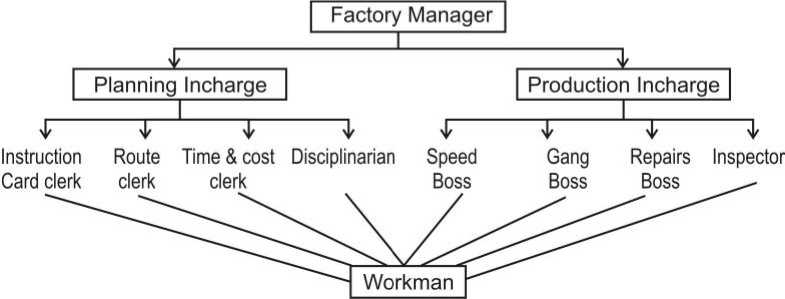
    (1) Functional Foremanship : Functional foremanship is a technique in which planning and execution are saparated. There are 8 types of specialized professionals 4 each under planning and execution who keep a watch on all workders to extract optimum performance.

    1. Standardisation and Simplification of work : Standardization refers to developing standards for every business activity whereas Simplification refers to eliminating superfluous varieties of product or service. It results in savings of cost of labour, machines and tools. It leads to fuller utilization of equipment and increase in turnover.
    2. Method Study : The objective of method study is to final out one best way of doing the job to maximise efficiency in the use of materials, machinery, manpower and capital.
    3. Motion Study : Motion study seeks to eliminate unnecessary motions in the execution of a job to enable it to be completed in less time efficienty.
    4. Time study : It determines the standard time taken to perform a well defined job. The objective of time study is to determine the number of workers to be employed, frame suitable incentive schemes & determine labour costs.
    5. Fatigue study : Fatigue study seeks to determine amount and frequency or rest intervals in completing a task.
    6. Differential Piece Wage system : Differential Piece Wage system seeks to reward a more efficient worker by giving him/her more wages for more quantity of standard production achieved.
    7. Mental Revolution : It involves a change in the attitude of workers and management towards one another from competition to cooperation.

    14 XII – Business Studies

    Foyol s Principles of Management : Henri Fayol (1841-1925) was a French

    Mechanical engineer who gave 14 general principles of Management which are

    as under :

    1. Division of Work : Work is divided into small tasks / jobs and each one is done by a trained specialist which leads to greater efficiency.
    2. Authority and Responsibility : Managers are empowered with authority to give orders and obtain obedience and responsible for the accomplishment of task for which they are granted authority.
    3. Discipline : it is the obedience to organizational rules and employment agreement which are necessary for working of the organization.
    4. Unity of Command : There sould be only one boss for every employee. If an employee gets orders from two superiors at the save time the principle of unity of command is voilated.
    5. Unity of Direction : Each group of activities having the same objective must have one head and one plan. This ensures unity of action and coordination.
    6. Subordination of Individual Interest to General Interest : The Interest of an organization should take priority over the interests of any one individual employee.
    7. Remuneration of Employees : The overall pay and compensation should be fair to both employees and the organization.
    8. Centralization and Decentralization : The concentration of decision making authority is called centralization whereas its dispersal among more than one person is known as decentralization. Both should be balanced.
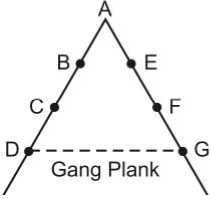
    9. Scalar Chain : The formal lines of authority between superiors and subordinates from the highest to the lowest ranks is known as scalar chain. This chain should not be voilated but in emergency employees at same level can contact through Gang Plank.

    1. Order : A place for everything (everyone) and everything (everyone) in its place. People & materials must be in suitable places at oppropriate time for maximum efficiency.
    2. Equity : The working environment of any organization should be free from all form of discrimination and the principles of Justice and fair play should be followed.
    3. Stability of Personnel : After being selected and appointed after due and rigorous procedure the selected person should be kept at the post for a minimum period decided to show result.
    4. Initiative : Workers should be encouraged to develop and carry out their plans for improvements. Initiative means taking the first step with self motivation It is thinking out and executing the plan.
    5. Espirit De Corps : Management should promote team spirit, unity and harmony among employees. Management should promote a team work.

    Difference between unity of command and unity of direction

    Basis

    (2) Meaning

    (2) Aim

    Unity of Command

    One subordinate should receive orders from & should be responsible to only one superior.

    Prevents dual subordination

    Unity of Direction

    Each group of activities having save objectives must have one head and one plan

    Prevents overlapping of activities

    (3) Implications Affects an individual employee

    Affects the entire organisation.

    Fayol versus Taylor :

    While the work of Taylor concerned shop floor, the work of Fayol concerned General Principles applicable to all types of situations.

    IMPORTANT QUESTIONS

    1 Mark Questions (To be answered in 1 word or 1 sentence)

    1. The Principles of Management are different from those used in pure science”. Write anyone difference.
    2. Why is it said that the management principles are universal?
    3. Different techniques were developed by Taylor to facilitate the Principles

    of Scientific Management. One of them was ‘Fatigue study’. What is the objective of this study?

    1. List any two principles of “Scientific Management” formulated by Taylor for managing an organization scientifically?
    2. What is meant by principles of management?
    3. State anyone principle of scientific management.
    4. State any one reason why Principles of Management are important.
    5. Give the meaning of mental revolution as suggested by Taylor.

    3/4 MARKS QUESTIONS :

    1. Explain the following principles of management:-
    2. Equity.
    3. Remuneration of Employees.
    4. In your school, you observe that books, are kept in office, chalks in the library and office records in the staffroom. How will that affect the achievement of school objectives? Which aspect of management is lacking and why? As a manager, what steps will you take to rectify the shortcomings?

    5/6 Marks Question (to be answered in about 150 words)

    1. Explain any two techniques of Taylor s Scientific Management.
    2. Explain the following principles of Fayol with example.
    3. Unity of Command
    4. Unity of Direction
    5. Order
    6. Espirit De Corps.
  • Notes of Nature and Significance of Management Business Studies Class 12

    UNIT 1

    NATURE AND SIGNIFICANCE OF MANAGEMENT

    Management is an art of getting things done through others. Management can be defined as, the process of getting things done with the aim of achieving goals effectively and efficiently.

    Efficiency and Effectiveness

    Efficiency means doing the task correctly at minimum cost while effectiveness means completing the task correctly. Although Efficiency and effectiveness are different but they are interrelated. It is important for management to be both i.e. effective and efficient.

    Example : A business produces targeted 1000 units but at a higher cost is effecitive but not efficient. Therefore if the business has to be effective and efficient then it has to produce 1000 units within cost.

    Characteristics of Management

    1. Goal oriented Process : It is a goal oriented process, which is undertaken to achieve already specified and desired objectives.
    2. Pervasive : Management is pervasive in nature. It is used in all types of organizations whether economic, social or political and at every level.
    3. Multidimensional : It is multidimensional as it involves management of Work, People and operations.
    4. Continuous : It is a continuous process i.e. its functions are being performed by all managers simultaneously. The process of management continue till an organisation exist for attaining its objectives.
    5. Group Activity : It is a group activity since it involves managing and coordinating activities of different people as a team to attain the desired objectives.
    6. Dynamic function : it is a dynamic function since it has to adapt to the

    6 XII – Business Studies

    changing environment.
    7. Intangible Force : It is an intagible force as it cannot be seen but its effect are felt in the form of results like whether the objectives are met and whether people are motivated or not.

    Objectives of management

    1. Organizational objectives of Survival (Earning enough revenues to cover cost); Profit (To Cover cost and risk); & Growth (To improve its future Prospects).
    2. Social Objectives of giving benefits to society like using environmental friendly practices and giving employment to disadvantaged sections of society etc.
    3. Personal Objectives because diverse personal objectives of people working in the organization have to be reconciled with organizational objectives.

    Importance of management

    1. Achieving Group Goals : Management helps in achieving group goals. Manager give common direction to the individual effort in achieving the overall goal of the organisation.
    2. Increases Efficiency : Management increases efficiency by using resources in the best possible manner to reduce cost and increase productivity.
    3. Creates Dynamic Organisation : Management helps in creating Dynamic organisation which could adopt changing situations easily.
    4. Achieving Personal Objectives : Management helps in achieving objectives of individuals working in the organisation.
    5. Development of Society : Management helps in the development of society by producing good quality products, creating employment opportunities and adopting new technology.

    Management as an Art

    Art refers to skillful and personal application of existing knowledge to achieve desired results. It can be acquired through study, observation and experience. The features of art are as follows.

    (2) Existence of theoretical knowledge : In every art systematic & organised study material should be available compulsorily to acquire theoretical knowledge.

    1. Personalised application : The use of basic knowledge differ from person to person and thus, art is a very personalised concept.
    2. Based on practice and creativity : Art involves the creative practice of existing theoretical knowledge.

    All the features of art are present in management so it can be called an art.

    Management as a science

    Science is a systematised body of knowledge that is based on general truths

    which can be tested anywhere, anytime. The features of science are as follows

    1. Systematized body of knowledge : Science has a systematised body of knowledge based on principles and experiments.
    2. Principles based on experiments & observation : Scientific principles are developed through experiments and observations.
    3. Universal Validity : Scientific principles have universal validity and application. Management has systematic body of knowledge and its principles are developed over a period of time based on repeated experiments & observation, which are universally applicable.

    As the principles of management are not as exact as the principles of pure science, so it may be called inexact science.

    Management as a profession :

    Profession means an occupation for which specialised knowledge and skills are

    required. The main features of profession are as follows.

    1. Well defined body of knowledge : All the professions are based on well defined body of knowledge.
    2. Restricted entry : The entry in every profession is restricted through examination or through some minimum educational qualification.
    3. Professional Associations : All professions are affiliated to a professional association which regulates entry and frame code of conduct relating to the profession.
    4. Ethical code of conduct : All professions are bound by a code of conduct which guides the behaviour of its members
    5. Service Motive : The main aim of a profession is to serve its clients.

    Management does not fulfill all the features of a profession and thus it is not

    a full pledged profession.

    Levels of Management : Top, Middle and operational levels.

    Top Level

    Consists of Chairperson, Chief Executive Officer, Chief Operating Officer or equivalent and their team.

    Chief task is to integrate and to coordinate the various activities of the business, framing policies, formulating organisational goals & strategies.

    Middle Level

    Consists of divisional heads, Plant Superintendent and Operations Manager etc.

    Main tasks are to interpret the policies of the top management, to ensure the availability of resources to implement Policies & to coordinate all activities, ensure availability of necessary personnel & assign duties & responsibilties to them.

    Lower Level / Supervisory Level

    Consists of Foremen and supervisors etc.

    Main task is ensure actual implementation of the policies as per directions, bring workers grievances before the management & maintain discipline among the workers.

    Functions of Management : Planning, Organizing, Staffing, Directing and Controlling.

    Planning is deciding in advance what to do in future and how to do it.

    Organizing is to assign duties, grouping tasks, establishing authority and allocating resources required to carry out a specific plan.

    Staffing is finding the right people for the right job.

    Directing is leading, influencing and motivating employees to perform the tasks assigned to them.

    Controlling is monitoring the organizational performance towards the attainment of organizational goals.

    Coordination : The essence of Management : Coordination is the force which synchronizes all the functions of management and activities of different departments.

    It integrates the group efforts.

    It ensure unity of action.

    9 XII – Business Studies


    It is a continuous process.

    It is an all pervasive function.

    It is a deliberate function.

    It is the responsibility of all managers


    IMPORTANT QUESTIONS

    1 Mark Questions (To be answered in one word or one sentence)

    1.

    In order to be successful an organization must change its goals according to the needs to the environment. Which characteristic of management is highlighted in the statement? (Answer: It is a dynamic function).
    2.

    To meet the objectives of the firm the Management of Angora Limited offers employment to Physically Challenged persons. Identify the organizational objective it is trying to achieve (Answer : Social Objective.

    3.

    Management of any organization strives to attain different objectives. Enumerate any two such objectives.

    4.

    Give any two characteristics of management.

    5.

    Management is multidimensional. Enumerate any two dimensions of management.

    6.

    Managerial activities are performed in all types of organizations in all departments at all levels. Which management character is highlighted here? (Answer : It is all pervasive)

    7.

    Your grandfather has retired where he is responsible for implementing the plans developed by the top management at which level of management was he working? State one more function of this level of management. (Answer: Middle level management) (Write any one function of this level).

    8.

    List any two social objectives of management.

    9.

    Your grandfather has retired as a Director of manufacturing company. At which level of management was he working? Different functions are performed at this level. State any one such function. (Answer : Top level of management) Write any one function of this level).

    10.

    What is meant by management ?

    10 XII – Business Studies

    3/4 Marks Questions (To be answered in about 50 to 70 words)

    1. There are different Business Objectives and Economic Objectives are one among them. Explain these economic objectives.
    2. Explain how management is an art
    3. Explain why management is not considered a full fledged profession.
    4. Explain how management is science.
    5. Coordination is the essence of management . Explain.

    5/6 Marks Questions (To be answered in about 150 words)

    1. Management is a Profession like Accounting, Medicine and Law as it also has a well defined body of knowledge. Yet management does not qualify to be a full fledged profession. Why? (Hint : No formal qualification is prescribed to enter management, no code of conduct is prescribed).
    2. Success of an organization largely depends upon its management Explain any five reasons to justify the statement. (Hint : Give five points of Importance of management).
  • FORMS OF MARKET AND PRICE DETERMINATION NOTES CLASS 12th

    UNIT – IV: FORMS OF MARKET AND PRICE DETERMINATION

    Market : Market is a place in which buyers and sellers come into contact for the purchase and sale of goods and services.

    • Perfect Competition
    • Monopoly
    • Monopolistic competition
    • Oligopoly

    Market structure: refers to number of firms operating in an industry, nature of competition between them and the nature of product.

    Types of market

    1. Perfect competition.
    2. Monopoly.
    3. Monopolistic Competition
    4. Oligopoly.
    5. Perfect competition: refers to a market situation in which there are large number of buyers and sellers. Firms sell homogeneous products at a uniform price.
    6. Monopoly market: Monopoly is a market situation dominated by a single seller who has full control over the price.
    7. Monopolistic competition: It refers to a market situation in which there are many firms who sell closely related but differentiated products.
    8. Oligopoly: is a market structure in which there are few large sellers of a commodity and large number of buyers.

    Features of perfect competition:

    1. Very large number of buyers and sellers.
    2. Homogeneous product.
    3. Free entry and exit of firms.
    4. Perfect knowledge.
    5. Firm is a price taker and industry is price maker.
    6. Perfectly elastic demand curve (AR=MR)
    7. Perfect mobility of factors of production.
    8. Absence of transportation cost.
    9. Absence of selling cost.

    Features of monopoly:

    1. Single seller of a commodity.
    2. Absence of close substitute of the product.
    3. Difficulty of entry of a new firm.
    4. Negatively sloped demand curve(AR>MR)
    5. Full control over price.
    6. Price discrimination exists
    7. Existence of abnormal profit.

    Features of monopolistic competition

    1. Large number of buyers and sellers but less than perfect competition.
    2. Product differentiation.
    3. Freedom of entry and exit.
    4. Selling cost.
    5. Lack of perfect knowledge.
    6. High transportation cost.
    7. Partial control over price.

    Main features of Oligopoly.

    1. Few dominant firms who are large in size
    2. Mutual interdependence.
    3. Barrier to entry.
    4. Homogeneous or differentiated product.
    5. Price rigidity.

    Features of pure competition

    1. Large number of buyers and sellers.
    2. Homogeneous products.
    3. Free entry and exit of firm.

    DETERMINATION OF PRICE UNDER PERFECT COMPETITION

    Equilibrium: It means a position of rest, there is no tendency to change.

    Market equilibrium: It means equality between quantity demanded and quantity supplied of a commodity in the market.

    Equilibrium price: This is the price at which market demand of a commodity is exactly equal to the market supply.

    Market demand: It refers to the sum total demand for a commodity by all buyers in the market.

    Market supply: It refers to supply of a commodity by all the firms in the market

    Very short answer questions

    1. Define perfect competition.

    Ans:- Perfect competition is a market with large number of buyers and sellers , selling homogeneous product at same price.

    1. Define monopoly.

    Ans: Monopoly is a market situation dominated by a single seller who has full control over the price.

    1. Define monopolistic competition.

    Ans:- It refers to a market situation in which many buyers and sellers selling differentiated product and have partial control over the price.

    1. Under which market form firm is a price maker?

    Ans: – Monopoly

    1. What are selling cost?

    Ans:- Cost incurred by a firm for the promotion of sale is known as selling cost. (Advertisement cost)

    1. What is oligopoly?

    Ans:- Oligopoly is defined as a market structure in which there are few large sellers who sell either homogenous or differentiated goods.

    1. In which market form is there product differentiation?

    Ans:- Monopolistic competition market and oligopoly market.

    1. What is product differentiation?

    Ans: It means close substitutes offered by different producers to show their output differs from other output available in the market. Differentiation can be in colour, size packing, brand name etc to attract buyers.

    1. What do you mean by patent rights?

    Ans:- Patent rights is an exclusive right or license granted to a company to produce a particular output under a specific technology.

    1. What is price discrimination?

    Ans: – It refers to charging of different prices from different consumers for different units of the same product.

    1. What is the shape of marginal revenue curve under monopoly?

    Ans:- Under monopoly market MR curve is downwards sloping curve form left to right and it lies below the AR curve.

    1. What do you mean by abnormal profits?

    Ans:- It is a situation for the firm when TR > TC.

    1. Why AR is equal to MR under perfect competition?

    Ans:- AR is equal to MR under perfect competition because price is constant.

    1. What are advertisement costs?

    Ans:- Advertisement cost are the expenditure incurred by a firm for the promotion of its sales such as publicity through TV , Radio , Newspaper , Magazine etc.

    1. What is short period?

    Ans:- Short period refers to that much time period when quantity of output can be changed only by changing the quantity of variable input and fixed factors remaining same.

    1. Define long period.

    Ans:- Long period refers to that much time period available to a firm in which it can increase its outputs by changing its fixed and variable inputs.

    1. What is market period?

    Ans: Market period is defined as a very short time period in which supply of commodity cannot be increased.

    1. What is meant by normal profit?

    Ans:- Normal profit is the minimum amount of profit which is required to keep an entrepreneur in production in the long run.

    1. What is break-even price?

    ANs:-In a perfectly competitive market, break- even price is the price at which a firm earn normal profit (Price=AC). In the long run, Break- even price is that price where P=AR=MC

    Short Answer Questions: (3 / 4 Marks)

    1. Explain any four characteristics of perfect competition market.

    Ans:-

    1. Large number of buyers and sellers : The number of buyers and sellers are so large in this market that no firm can influence the price.
    2. Homogeneous products: Products are uniform in nature. The products are perfect substitute of each other. No seller can charge a higher price for the product. Otherwise he will lose his customers.

    iiU Perfect knowledge: Buyers as well as sellers have complete knowledge about the product.

    iv) Free entry and exit of firm: Under perfect competition any firm can enter or exit in the market at any time. This ensures that the firms are neither earning abnormal profits nor incurring abnormal losses.

    1. Explain briefly why a firm under perfect competition is a price taker not a price maker?

    Ans:- A firm under perfect competition is a price taker not a price maker because the price is determined by the market forces of demand of supply. This price is known as equilibrium price. All the firms in the industry have to sell their outputs at this equilibrium price. The reason is that, number of firms under perfect competition is so large. So no firm can influence the price by its supply. All firms produce homogeneous product.

    y

    y Industry

    Demand & Supply

    Firm

    AR/MR

    x

    Output

    1. Distinguish between monopoly and perfect competition.

    Ans:-

    Perfect Competition

    Monopoly

    Very large number of buyers and sellers.

    Single seller of the product.

    Products are homogenous

    Product has no close substitute

    Firm is the price taker and not a maker

    Firm is price maker not price taker

    Price is uniform in the market (price =AR)

    Due to price discrimination price is not uniform.

    Free entry and exit of firms.

    Very difficult entry of new firms.

    1. Which features of monopolistic competition are monopolistic in nature?

    Ans:- i) Product differentiation

    1. Control over price
    2. Downward sloping demand curve
    3. What are the reasons which give emergence to the monopoly market?

    Ans:-i) Patent Rights: Patent rights are the authority given by the government to a particular firm to produce a particular product for a specific time period.

    1. Formation of Cartel: Cartel refers to a collective decision taken by a group of firms to avoid outside competition and securing monopoly right.
    2. Government licensing: Government provides the license to a particular firm to produce a particular commodity exclusively.
    3. Explain the process of price determination under perfect competition with the help of schedule and a diagram.

    Ans:-Equilibrium price is that price which is determined by market forces of demand and supply. At this price both demand and supply are equal to each other. Diagrammatically it is determined at the point where demand curve and supply curve intersect each other. At this point price is known as equilibrium price and quantity is known as equilibrium quantity.

    0 2 4 6 8

    Mkt. Demand & Supply

    Price (Rs.)

    M.D (Units)

    M S (Units)

    1

    10

    2

    2

    8

    4

    3

    6

    6

    4

    4

    8

    5

    2

    10

    1. When will equilibrium price not change even if demand and supply increase?

    Ans:- When proportionate increase in demand is just equal to proportionate increase in supply. Equilibrium price will not change. It can be shown in the following diagrams.

    y S

    In the above diagram increase in demand is just equal to increase in supply. Demand curve shift from D to D1 and supply curve shift from S to S1 which intersect at point E. Thus equilibrium price remain unchanged at OP though equilibrium quantity increased from OQ to OQ1.

    1. How does increase in price of substitute goods in consumption affect the equilibrium price of a good? Explain with a diagram.

    Ans:- An increase in price of substitute goods (coke) will cause increase in demand for its related goods (Pepsi) . The demand curve for Pepsi will shift to the right side. The supply curve of Pepsi remains the same. It will lead to an increase in equilibrium price of Pepsi and increase in quantity also.

    Y D1

    Result: Price increases from OP to OP1.Quantity demand increases from OQ to OQ1

    1. How does the equilibrium price of a normal commodity change when income of its buyers falls? Explain the chain effects.

    Ans:-

    • When income falls demand falls
    • Supply remaining unchanged .There is excess supply at a given price
    • This leads to competition among sellers to reduce the price.
    • As a result demand starts rising and supply starts falling.
    • These changes continue till a new equilibrium price is established where demand equal supply.
    • Equilibrium price falls.
    1. Why is the demand curve facing monopolistically competitive firm likely to be very elastic?

    Ans:- It is because the product produced by monopolistically competitive firms are close substitute to each other. If the products are closer substitutes to each other the elasticity of demand is high which makes the firm demand curve is elastic.

    1. Show with the help of diagram the effect on equilibrium price and quantity when supply is perfectly inelastic and demand increases and decreases?

    Ans:-

    Y

    D1 S

    x

    When supply is perfectly inelastic and demand increases. Demand curve shift to towards right. The new demand curve D1 intersects the supply curve at point E1.

    Result : Price increases from OP to OP1 and quantity demand remains unchanged.

    O)

    u

    CL

    Y

    S

    x

    In the above diagram demand curve shift left wards from D to D1 Price falls from OP to OP1 , but quantity remains same.

    1. Explain the implication of free entry and free exit of a firm in perfect competitive market.

    Ans: – If there is free entry and free exit of firms, then no firm can earn abnormal profit in the long run (firm earn zero abnormal profit). Each firm earns just normal profit.

    1. Explain the implication of the feature ‘large number of buyers and sellers’ in perfect competition

    LONG ANSWER QUESTIONS (6 MARKS)

    1. Equilibrium price may or may not change with shifts in both demand and supply curve. Comment.

    Ans:- There can be 3 situations of a simultaneous right wards shift of supply curves and demand curves.

    1. When demand increases more than supply price and quantity both will increase.

    Y

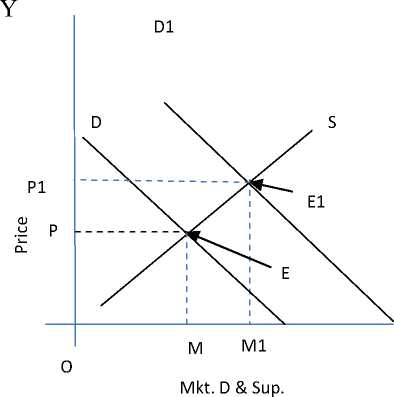
    When increase in demand is more than increase in supply price increases from OP to OP1. Quantity increases from OM to OM1. Increase in price is less than increase in quantity.

    1. When demand increases less than supply, price will fall but quantity will rise.

    CD

    u

    CL

    M kt . D & Su p.

    S1

    X

    When supply increases more than demand price falls from OP to OP1 and quantity demand i: y ases from OM to OM1. Decrease in price is less than increase in quantity. i) When demand and supply increases equally then equilibrium price remain same.

    X

    When increase in demand is equal to increase in supply price remains unchanged at OP. Quantity exchanged increases from OQ to OQi.

    1. Distinguish between collusive and non-collusive oligopoly. Explain the following features of oligopoly.
    2. Few firms.
    3. Non-price competition.

    Ans:- Collusive oligopoly is one in which the firm cooperate with each other in deciding price and output.

    Non collusive oligopoly is one in which firms compete with each other.

    Few firms: There are few sellers of the commodity and each seller sells a substantial portion of the output of the industry. The number of firm is so small that each seller knows that he can influence the price by his own action and that he can provoke rival firms to react.

    Non price competition: The firms are afraid of competition through lowering the price because it may start price war. Therefore they complete through the non price factors like advertising, after sales service etc.

    1. With the help of demand and supply schedule explain the meaning of excess demand and its effects on price of a commodity.

    Ans:- Demand and supply schedule

    Price(Rs)

    Market demand (in kg.)

    Market supply(in kg.)

    10

    10

    50

    9

    20

    40

    8

    30

    30

    The above schedule shows market demand and market supply of the commodity at different prices. At the price of 7 and 6 the market demand is greater than market supply. This is the situation of excess demand. There will be competition among the buyers resulting in a rise in price. Rise in price will result in fall in market demand and rise in market supply. This reduces the excess demand. These changes continue till the price rises to Rs. 8 at which excess demand is zero. The excess demand results in a rise in price of the commodity.

    7

    40

    20

    6

    50

    10

    1. Market for a good is in equilibrium. There is increase in demand for the goods. Explain the chain effect of this change.

    Ans:-

    • Increase in demand shift the demand curve from D to D1 to right leading to excess demand E E1 at the given price OP.
    • There will be competition among buyers leading to rise in price.
    • As price rise supply starts rising (along S) demand starts falling.
    • These changes continues till D=S at a new equilibrium at E1
    • The quantity rises to OM to OM1 and price rises OP to OP1
    1. Distinguish between monopoly and monopolistic competition.

    Ans:- i) Under monopoly there is single seller / producer of the commodity. Whereas under monopolistic competition there are large numbers of sellers, so the firm under monopoly has greater influence over price than under monopolistic competition.

    ii) There is freedom of entry of new firms under monopolistic competition where as there is no such freedom under monopoly. As a result a monopolist can earn abnormal profit in the long run.

    1. Under monopolistic competition the product is heterogeneous while under monopoly there is no close substitute of the product.
    2. Demand curve in a monopoly market is less elastic than the demand curve under monopolistic competition because under monopoly there is no close substitute of the product.

    HOTS

    1. How much loss a firm can bear in the short run?

    Ans:- A firm can bear losses up to its total fixed cost in the short run.

    1. The firms are earning abnormal profits. Will the number of firms in the industry change?

    Ans:- If firms are getting abnormal profit new firms will enter the industry.

    1. If firms are making abnormal losses will the number of firms in the industry change?

    Ans:- When firms are suffering losses, the number of firms in the industry will decrease as some firms may exit from the industry.

    1. Why is demand curve facing a monopolistic competition firm likely to be more elastic?

    Ans:- In monopolistic competition market the demand curve of a firm is likely to be more elastic, the reason behind this is that all the firm in the industry produce close substitute of each other. If close substitute of any good is available in the market then elasticity of demand is very high because whenever there is a hike in price the consumer will shift to its substitutes. That is why a firm’s demand curve under monopolistic competition is more elastic.

    1. Explain how the efficiency may increase if two firms merge.

    Ans:- i) When two firms merge then there combined efforts and efficiency brings more output to the firm. Increase in the sale of output and economies of scale can be availed. It leads to division of labour and can get advantage of the specialization. Use of better and advanced technology saves the cost of production.

    FREQUENTLY ASKED QUESTIONS – CBSE BOARD EXAMINATION

    One Mark Questions (1M)

    1. In which market form can a firm not influence the price of the product?
    2. What is equilibrium price?
    3. Under which market form a firm is a price taker?
    4. Define market equilibrium.
    5. Define Monopoly.
    6. State one feature of Oligopoly.

    Three Marks Questions (3M)

    1. Why is the number of firms small in an Oligopoly Market? Explain.
    2. Explain three features of Monopoly.
    3. How is equilibrium price of a commodity affected by a decrease in demand?
    4. Why is the demand curve more elastic under monopolistic competition than under

    monopoly? Explain.

    1. Explain the feature ‘differentiated product’ of a market with monopolistic competition.
    2. Explain the effect of ‘large number of buyers and sellers’ in a perfectly competitive

    firm.

    Four Marks Questions (4 M)

    1. Distinguish between Monopoly and Perfect Competition.
    2. Draw the Average Revenue Curve of a firm under a) Monopoly and b) Perfect Competition. Explain the difference in these curves, if any.
    3. Show with the help of a diagram the effects of an increase in demand for a commodity on its equilibrium price and quantity.
    4. Explain with the help of a diagram the determination of price of a commodity under perfect competition.
    5. Explain the concept of equilibrium price with the help of market demand and supply schedules.

    Six Marks Questions (6 M)

    1. Given the market equilibrium of a good. What are the effects of Simultaneous increase in both demand and supply of that good on its equilibrium price and quantity?
    2. Distinguish between perfect competition and monopoly. Why is the demand curve facing a firm under perfect competition perfectly elastic?
    3. Explain briefly the three feature of perfect competition.
    4. Explain the chain of effects on demand, supply and price of a commodity caused by a leftward shift of the demand curve. Use diagram.
    5. Explain three feature of Monopolistic Competition.


  • PRODUCER BEHAVIOUR AND SUPPLY Class 12 Microeconomics notes

    UNIT 3: PRODUCER BEHAVIOUR AND SUPPLY

    Production: Combining inputs in order to get the output is production.

    Production Function: It is the functional relationship between inputs and output in a given state of technology. Q= f(L,K)

    Q is the output, L: Labor, K: Capital

    Fixed Factor: The factor whose quantity remains fixed with the level of output.

    Variable Factor: Those inputs which change with the level of output.

    Capital

    Labor

    Output

    10

    1

    50

    10

    2

    70

    10

    3

    82

    10

    4

    92

    10

    5

    100

    Here units of capital used remain the same for all levels of output. Hence it is the fixed factor. Amount of labor increases as output increases. Hence it is a variable factor.

    PRODUCTION FUNCTION AND TIME PERIOD

    1. Production function is a long period production function if all the inputs are varied.
    2. Production function is a short period production function if few variable factors are combined with few fixed factors.

    CONCEPTS

    Time period, can be classified as:

    1. Very short period or market period
    2. Short period / short run
    3. Long period / long run

    Market period : is that period where supply / output cannot be altered or changed.

    Short period /run : is that period where supply / output can be altered / changed by changing only variable factors of production. In other words fixed factors of production remain fixed.

    Long period : is that period where all factors of production are changed to bring about changes in output / supply. No factor is fixed.

    Difference between short run & long run :

    Basis

    Short Run

    Long Run

    Meaning

    Only variable factors are changed

    All factors are changed

    Price Determination

    Demand is active.

    Both demand & supply play an important role.

    Classification

    Factors are classified as fixed & variable.

    All factors are variable.

    Concept of product Refers to volume of goods produced by a firm or an industry during a specific period of time.

    Concepts of product:

    Total Product- Total quantity of goods produced by a firm / industry during a given period of time with given number of inputs.

    Average product = output per unit of variable input.

    APP = TPP / units of variable factor

    Average product is also known as average physical product.

    Marginal product (MP): refers to addition to the total product, when one more unit of variable factor is employed.

    MPn = TPn – TPn-1

    MPn = Marginal product of nth unit of variable factor TPn = Total product of n units of variable factor TPn-1= Total product of (n-1) unit of variable factor. n=no. of units of variable factor MP = ATP / An

    We derive TP by summing up MP TP = £MP

    LAW OF VARIABLE PROPORTION OR RETURNS TO A VARIABLE FACTOR

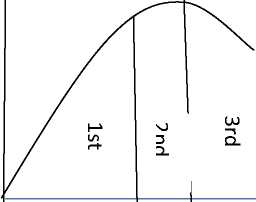
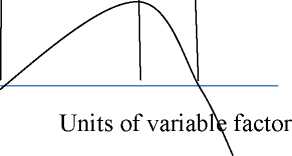
    Statement of law of variable proportion: In short period, when only one variable factor is increased, keeping other factors constant, the total product (TP) initially increases at an increasing rate, then increases at a decreasing rate and finally TP decreases.

    MPP initially increase then falls but remains positive then 3rd phase becomes negative.

    Explanation of law of variable proportion with a schedule and a diagram

    Schedule of Law of variable proportion

    Fixed factor

    Variable factor

    Total product

    Marginal

    product

    Phase

    Land in acres

    Labour

    Units

    Units


    1

    0

    0

    I – Increasing returns to a factor

    1

    1

    5

    5

    1

    2

    15

    10

    1

    3

    30

    15

    1

    4

    40

    10

    II – diminishing returns to a factor

    1

    5

    45

    5

    1

    6

    45

    0

    1

    7

    40

    -5

    III – Negative returns to a factor

    Diagram

    Y

    MPP/TPP

    Q-

    Q-

    X

    MPP

    X

    Phase I / Stage I / Increasing returns to a factor.

    • TPP increases at an increasing rate
    • MPP also increases.

    Phase II / Stage II / Diminishing returns to a factor

    • TPP increases at decreasing rate
    • MPP decreases / falls
    • This phase ends when MPP is zero & TPP is maximum

    Phase III / Stage III / Negative returns to a factor

    • TPP diminishes / decreases
    • MPP becomes negative.

    Reasons for increasing returns to a factor

    • Better utilization of fixed factor
    • Increase in efficiency of variable factor.
    • Optimum combination of factors Reasons for diminishing returns to a factor
    • Indivisibility of factors.
    • Imperfect substitutes.

    Reasons for negative returns to a factor

    • Limitation of fixed factors
    • Poor coordination between variable and fixed factor
    • Decrease in efficiency of variable factors.

    Relation between MPP and TPP

    • As long as MPP increases, TPP increases at an increasing rate.
    • When MPP decreases, TPP increases diminishing rate.
    • When MPP is Zero, TPP is maximum.
    • When MPP is negative, TPP starts decreasing.

    Short answer questions and Long answer questions

    1. What is meant by production?

    Ans :- Transformation of Input into Output.

    1. What will be MP when TP is maximum?

    Ans :- MP will be zero.

    1. Define market period, Short run & Long run.

    Ans :- Refer time period.

    1. Explain the law of variable proportions with the help of a schedule and

    a diagram

    6 Marks 6 Marks

    4 Marks

    1. What are the reasons for
    2. Increasing returns to a factor
    3. Diminishing returns to a factor
    4. Negative returns to a factor
    5. Explain the difference between MPP & TPP.

    HOTS

    Giving reasons, state whether the following statements are true or false :

    1. When there are diminishing returns to a factor, total product always decreases.

    Ans :- False. When there is diminishing returns to a factor, TPP increases at a decreasing rate.

    1. TPP increases only when MPP increases.

    Ans :- False. TPP also increases when MPP decreases but remains positive.

    1. Increase in TPP always indicates that there are increasing returns to a factor.

    Ans :- False. TPP increases even when there are diminishing returns to a factor.

    1. When there are diminishing returns to a factor marginal and total products always fall.

    Ans: – False. Only MPP falls, not TPP. In case of diminishing returns to a factor, TPP increase at diminishing rate.

    1. Calculate MP for the following.

    Variable factor unit

    0

    1

    2

    3

    4

    5

    6

    TP (unit)

    0

    5

    13

    23

    28

    28

    24

    Ans :- MP: 0 5 8 10 5 0 -4

    COST

    Cost of production : Expenditure incurred on various inputs to produce goods and services. Cost function : Functional relationship between cost and output.

    C=f(q)

    Where f=functional relationship c= cost of production

    q=quantity of product

    Money cost : Money expenses incurred by a firm for producing a commodity or service.

    Explicit cost : Actual payment made on hired factors of production. For example wages paid to the hired labourers, rent paid for hired accommodation, cost of raw material etc.

    Implicit cost : Cost incurred on the self – owned factors of production.

    For example, interest on owners capital, rent of own building, salary for the services of entrepreneur etc.

    Opportunity cost : is the cost of next best alternative foregone / sacrificed.

    Fixed cost : are the cost which are incurred on the fixed factors of production.

    These costs remain fixed whatever may be the scale of output. These costs are present even when the output is zero.

    These costs are present in short run but disappear in the long run.

    Numerical example of fixed cost

    Output

    0

    1

    2

    3

    4

    5

    TFC Rs

    20

    20

    20

    20

    20

    20

    TFC = Total Fixed Cost Diagrammatic presentation of TFC

    Y

    TFC

    to

    O

    U

    X

    Output

    O

    TFC is also called as “overhead cost”, “supplementary cost”, and “unavoidable cost”.

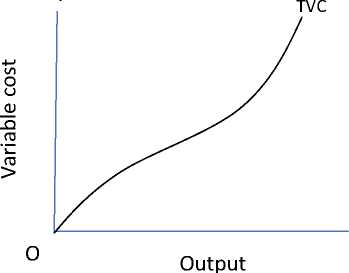
    Total Variable Cost : TVC or variable cost – are those costs which vary directly with the variation in the output. These costs are incurred on the variable factors of production.

    These costs are also called “prime costs”, “Direct cost” or “avoidable cost”.

    These costs are zero when output is zero. Numerical example,

    Output

    0

    1

    2

    3

    4

    5

    TVC

    0

    10

    16

    25

    38

    55

    Diagrammatic presentation of TVC

    X

    Difference between TVC & TFC

    Basis

    TVC

    TFC

    Meaning

    Vary with the level of output

    Do not vary with the level of output

    Time period

    Can be changed in short period

    Remain fixed in short period

    Cost at zero output

    Zero

    Can never be zero

    Factors of production

    Cost incurred on all variable factors

    Cost incurred on fixed factors of production

    Shape of the cost curve

    Upward sloping

    Parallel to x axis

    Total cost : is the total expenditure incurred on the factors and non-factor inputs in the production of goods and services.

    It is obtained by summing TFC and TVC at various levels of output.

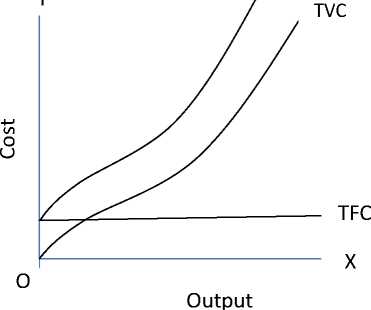
    Relation between TC, TFC and TVC

    1. TFC is horizontal to x axis.
    2. TC and TVC are S shaped (they rise initially at a decreasing rate, then at a constant rate & finally at an increasing rate) due to law of variable proportions.
    3. At zero level of output TC is equal to TFC.
    4. TC and TVC curves parallel to each other.

    TC

    • TC=TFC + TVC
    • TFC=TC-TVC
    • TVC=TC-TFC

    Average cost : are the “cost per unit” of output produced. Average fixed cost is the per unit fixed cost of production. AFC = TFC / Q or output

    AFC declines with every increase in output. It’s a rectangular hyperbola. It goes very close to x axis but never touches the x axis as TFC can never be zero.

    Average variable cost is the cost per unit of the variable cost of production.

    AVC = TVC / output.

    AVC falls with every increase in output initially. Once the optimum level of output is reached AVC starts rising.

    Average total cost (ATC) or Average cost (AC) : refers to the per unit total cost of production.

    ATC = TC / Output AC = AFC + AVC Phases of AC

    1. phase : When both AFC and AVC fall , AC also fall
    2. phase : When AFC continue to fall , AVC remaining constant AC falls till it reaches minimum.
    3. phase : AC rises when rise in AVC is more than fall in AVC.

    Important observations of AC , AVC & AFC

    1. AC curve always lie above AVC (because AC includes AVC & AFC at all levels of output).
    2. AVC reaches its minimum point at an output level lower than that of AC because when AVC is at its minimum AC is still falling because of fall in AFC.
    3. As output increases, the gap between AC and AVC curves decreases but they never intersect.

    Marginal cost: refers to the addition made to total cost when an additional unit of output is produced.

    MCn = TCn-TCn-1 MC = ATC/AQ

    Note : MC is not affected by TFC.

    Relationship between AC and MC

    • Both AC & MC are derived from TC
    • Both AC & MC are “U” shaped (Law of variable proportion)
    • When AC is falling MC also falls & lies below AC curve.
    • When AC is rising MC also rises & lies above AC
    • MC cuts AC at its minimum where MC = AC

    Important formulae at a glance

    1. TFC = TC – TVC or TFC=AFC x output or TFC = TC at 0 output.
    2. TVC = TC – TFC or TVC = AVC x output or TVC =£MC
    3. TC = TVC + TFC or TC = AC x output or TC = X MC + TFC
    4. MCn=TCn – TCn-1 or MCn= TVCn – TVCn-1
    5. AFC = TFC / Output or AFC = AC-AVC or ATC – AVC
    6. AVC = TVC / Output or AVC = AC-AFC
    7. AC = TC / Output or AC=AVC + AFC Short answers and Long Answer questions:
    8. What is cost of production?
    9. Define cost function.
    10. What are money costs?
    11. Distinguish between explicit and implicit costs.
    12. How do you define an opportunity cost?
    13. What difference you find between fixed and variable costs?
    14. Why the fixed cost curve is a horizontal straight line to the X axis?
    15. Why variable costs are variable?
    16. What is average cost? How do you derive it?
    17. Explain AVC, AFC & ATC and explain the relationship between these costs.
    18. Explain the relationship TC, TFC & TVC.
    19. With a diagram describe the various phases of AC.
    20. Bring out the relationship between AC & MC

    HOTS

    1. Why AFC curve never touches ‘x’ axis though it lies very close to x axis?

    Ans :- Because TFC can never be zero.

    1. Why AVC and AFC always lie below AC?

    Ans:- AC is the summation of AVC & AFC so AC always lies above AVC & AFC.

    1. Why TVC curve start from origin?

    Ans:- TVC is zero at zero level of output.

    1. When TVC is zero at zero level of output, what happens to TFC or Why TFC is not zero at zero level of output?

    Ans:- Fixed cost are to be incurred even at zero level of output.

    Revenue

    Revenue: – Money received by a firm from the sale of a given output in the market.

    Total Revenue: Total sale receipts or receipts from the sale of given output.

    TR = Quantity sold x Price (or) output sold x price
    Average Revenue: Revenue or Receipt received per unit of output sold.

    o AR = TR / Output sold o AR and price are the same. o TR = Quantity sold x price or output sold x price o AR = (output / quantity x price) / Output/ quantity o AR= price

    AR and demand curve are the same. Shows the various quantities demanded at various prices.

    Marginal Revenue: Additional revenue earned by the seller by selling an additional unit of output.

    • MRn = TR n – TR n-1
    • MR n = A TR n / A Q
    • TR = X MR

    Relationship between AR and MR (when price remains constant or perfect competition)

    Under perfect competition, the sellers are price takers. Single price prevails in the market. Since all the goods are homogeneous and are sold at the same price AR = MR. As a result AR and MR curve will be horizontal straight line parallel to OX axis. (When price is constant or perfect competition)

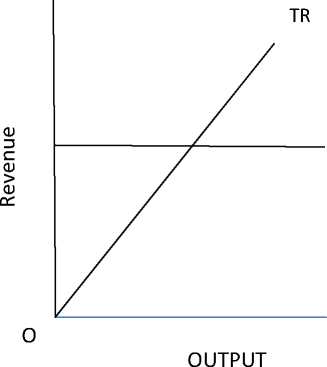
    Relation between TR and MR (When price remains constant or in perfect competition) When there exists single price, the seller can sell any quantity at that price, the total revenue increases at a constant rate (MR is horizontal to X axis)

    y


    Revenue


    AR- IVIR-ri Ice

    o

    OUTPUT

    x

    Y

    AR= MR

    X

    <D

    3

    >

    O

    Y

    Price line

    Price=AR=MR

    X

    Quantity

    Relationships between AR and MR under monopoly and monopolistic competition

    (Price changes or under imperfect competition)

    • AR and MR curves will be downward sloping in both the market forms.
    • AR lies above MR.
    • AR can never be negative.
    • AR curve is less elastic in monopoly market form because of no substitutes.
    • AR curve is more elastic in monopolistic market because of the presence of substitutes.

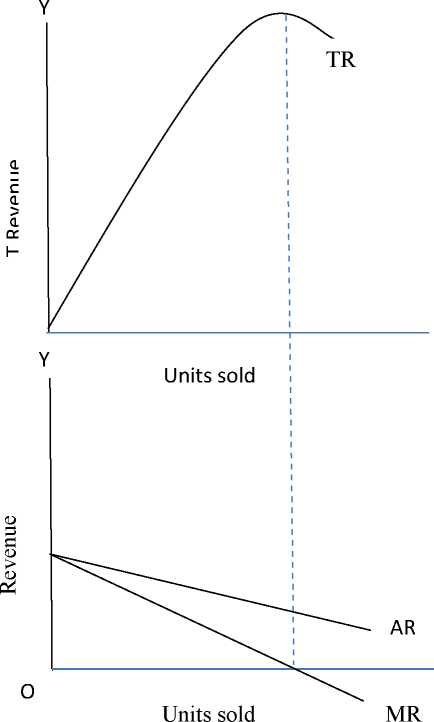
    Relationship between TR and MR. (When price falls with the increase in sale of output)

    • Under imperfect market AR will be downward sloping – which shows that more units can be sold only at a less price.
    • MR falls with every fall in AR / price and lies below AR curve.
    • TR increases as long as MR is positive.
    • TR falls when MR is negative.
    • TR will be maximum when MR is zero.

    X

    X

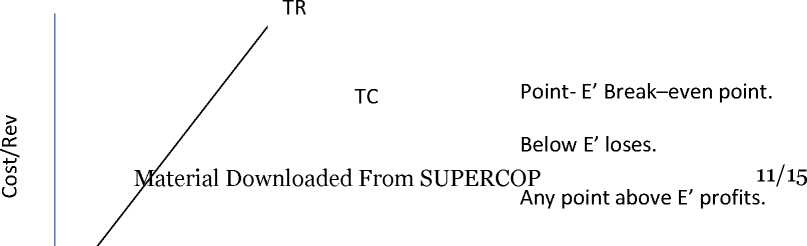
    Break-even point: It is that point where TR = TC or AR=AC. Firm will be earning normal profit.

    Y

    E

    Profit

    Loss

    Shut down p< 0 : A situati O utput firm is able to cover only variable costs or TR = TVC

    Formulae at a glance:

    • TR = price or AR x Output sold or TR = £ MR
    • AR (price) = TR ^ units sold
    • MR n = MR n – MR n_i

    HOTS

    1. Can MR be negative or zero.

    Ans:- Yes, MR can be zero or negative.

    1. If all units are sold at same price how will it affect AR and MR?

    Ans:- AR and MR will be equal at levels of output.

    1. What is price line?

    Ans:- Price line is the same as AR line and is horizontal to X-axis in perfect competition.

    1. Can TR be a horizontal Straight line?

    Ans:- Yes, when MR is zero.

    1. What do you mean by revenue?
    2. Explain the concept of revenue ( TR, AR and MR)
    3. Define AR
    4. Prove that AR = price
    5. Prove that AR is nothing but demand curve.
    6. Explain the relationships between AR and MR when price is constant and when price falls.
    7. Explain the relationships between TR and MR when price is constant.
    8. What is break- even point? Explain with a diagram.
    9. When the situation of ‘shut – down’ point arises for a firm?
    10. What happens to TR when a) MR is increasing, b) decreasing but remains positive and c) MR is negative?

    Ans:- a) TR increases at an increasing rate.

    1. TR increases at a diminishing rate.
    2. TR decreases.
    3. Why AR is more elastic in monopolistic competition than monopoly?

    Ans:- Monopolistic competition market has close substitutes. Monopoly market does not have close substitutes.

    1. Why TR is 45 0 angle in perfect competition market?

    Ans:- In perfect competition market the goods are sold at the same price so AR= MR and the TR increases at a constant rate.

    1. Can there be Break- even point with AR = AC

    Ans:- Yes there can be breakeven point with AR=AC.

    CONCEPT OF SUPPLY

    1. Individual supply refers to quantity of a commodity that an individual firm is willing and able to offer for sale at each possible price during a given period of time.
    2. Market supply: It refers to quantity of a commodity that all the firms are willing and able to offer for sale at each possible price during a given period of time.
    3. The supply curve of a firm shows the quantity of commodity (Plotted on the X-axis) that the firm chooses to produce corresponding to two different prices in the market (plotted on the Y-axis)
    4. Supply Schedule refers to a table which shows various quantity of a commodity that a producer is willing to sell at different prices during a given period of time.
    5. Determinants of supply are a) state of technology b) input prices c) Government taxation policy.
    6. Law of supply: It states direct relationship between price and quantity supplied keeping other factors constant.
    7. Movement along the supply curve: It occurs when quantity supplied changes due to change in its price, keeping other factors constant.
    8. Shift in supply curve: It occurs when supply changes due to factors other than price.
    9. Reasons for shift in supply curves: Change in price of other goods, change in price of factors of production, change in state of technology, change in taxation policy.
    10. Expansion in supply: It occurs when quantity supplied rises due to increase in price keeping other factors constant.
    11. Contraction of supply: It means fall in the quantity supplied due to fall in price keeping other factors constant.
    12. Increase in supply refers to rise in the supply of a commodity due to favorable changes in other factors at the same price.
    13. Decrease in supply: It refers to fall in the supply of a commodity due to unfavorable change in other factors at the same price.
    14. Price elasticity of supply: The price elasticity of supply of a good measures the responsiveness of quantity supplied to changes in the price of a good.
    15. Price elasticity of supply = %change in qty supplied/ %change in price.
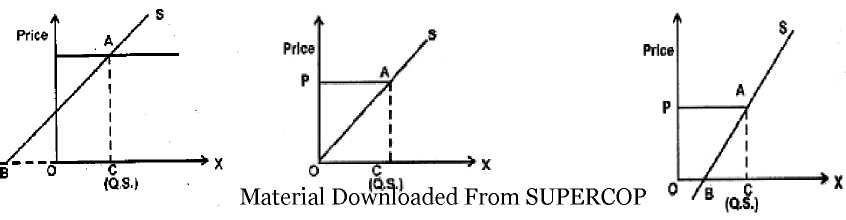
    16. Geometric method:

    Fig. 1 Fig. 2 Fig.3

    Es at a point on the supply curve = Horizontal segment of the supply curve

    Quantity supplied

    Fig.1: BC/OC>1 fig. 2: BC/OC=1 fig 3. BC/OC<1

    FREQUENTLY ASKED QUESTIONS – CBSE BOARD EXAMINATION

    One Mark Questions (1M)

    1. Define the law of supply.
    2. Define market supply.
    3. What do you understand by supply curve of a firm?
    4. What do you mean by elasticity of supply?
    5. Define supply schedule.
    6. Define revenue of a firm? OR give meaning of revenue?
    7. Define Marginal Revenue?
    8. What is Average revenue?
    9. When will the marginal revenue become negative?
    10. What happens to total revenue when Marginal revenue is zero?
    11. In which market the Average revenue is equal to marginal Revenue?

    Three Marks Questions (3M)

    1. Give reasons for the rightward shift in supply curve?
    2. Give reasons for the leftward shift in supply curve?
    3. If the price of the commodity falls by 10 % and consequently the quantity supply decreases by 20 % what will be elasticity of supply?

    Four Marks Questions (4 M)

    1. Briefly explain the geometric method of measuring price elasticity of supply?
    2. Distinguish between change in supply and change in quantity supplied?
    3. Explain the movement along the supply curve?

    Three OR Four Marks Questions (3M/4M)

    1) What changes will take place in marginal Revenue when:

    1. TR increase at an increasing rate?
    2. TR increases at a diminishing rate?

    2) Complete the following table:

    Units

    1

    2

    3

    4

    5

    6

    Total

    Revenue

    20


    56


    Average

    Revenue


    18


    Marginal

    Revenue


    12


    4

    0

    Six Marks Questions (6 M)

    1. Explain the determinants of supply?
    2. Explain the relationship between Total Revenue and marginal Revenue using a Schedule and diagram?
  • Consumer Equilibrium Notes Class 12 Microeconomics 

    UNIT 2: CONSUMER EQUILIBRIUM AND DEMAND KEY CONCEPTS

    1. UTILITY
    2. MARGINAL UTILITY
    3. LAW OF DIMINISHING MARGINAL UTILITY
    4. CONDITIONS OF CONSUMER’S EQUILIBRIUM
    5. INDIFFERENCE CURVE ANALYSIS
    6. THE CONSUMER’S BUDGET
    7. BUDGET SET
    8. BUDGET LINE
    9. PREFERENCES OF THE CONSUMER
    10. INDIFFERENCE CURVE
    11. INDIFFERENCE MAP
    12. CONDITIONS OF CONSUMER’S EQUILIBRIUM
    13. DEMAND
    14. INDIVIDUAL DEMAND
    15. MARKET DEMAND
    16. DEMAND SCHEDULE
    17. DEMAND CURVE
    18. DETERMINANTS OF DEMAND
    19. MOVEMENT ALONG THE DEMAND CURVE
    20. EXTENSION
    21. CONTRACTION
    22. SHIFT IN THE DEMAND CURVE
    23. INCREASE IN DEMAND
    24. DECREASE IN DEMAND
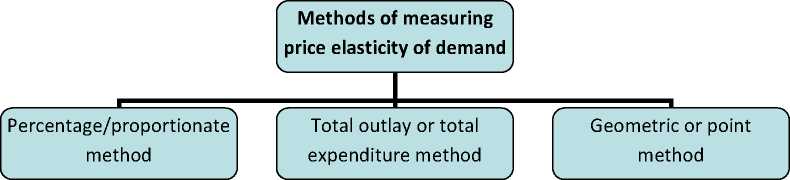
    25. MEASUREMENT OF PRICE ELASTICITY OF DEMAND
    26. TOTAL EXPENDITURE METHOD
    27. PROPORTIONATE METHOD
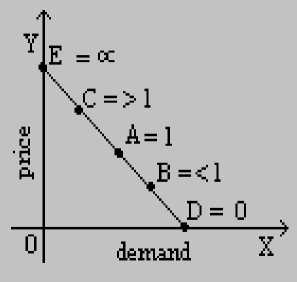
    28. GEOMETRIC METHOD
    29. FACTORS AFFECTING PRICE – ELASTICITY OF DEMAND

    Utility:- The satisfaction which a consumer gets from using/consuming a good or service.
    Total Utility:- The total satisfaction a consumer gets from a given commodity /service.

    r)

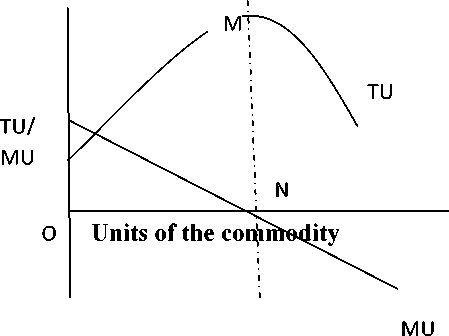
    Sum of marginal utility is known as total utility

    Marginal Utility:- An addition made to total utility by consuming an extra unit of commodity. Sum of marginal utilities derived from various goods is known as total utility.

    Graph -1: The relationship between TU and MU Law of Diminishing Marginal Utility:-

    It states that as the consumer consumes more and more units of a commodity , the marginal utility derived from each successive units goes on diminishing.

    Demand for a commodity refers to the quantity of a commodity which a consumer is willing to buy at a given price in a given period of time.

    Consumer Equilibrium:

    Refers to a situation when he spends his given income on purchase of a commodity ( or commodities) in such a way that yields him maximum satisfaction.

    Condition of equilibrium:

    MU in terms of money = Price.

    MU of product / MU of a Rupee.= Price

    Consumer Equilibrium through Indifference Curve:-

    Budget Set :- Set of bundles ( combination of goods ) available to consumer

    Budget line:- It refers to all combinations of goods which a consumer can buy with his

    entire income and price of two goods.

    Equation of Budget line: – P1 X1 + P2 X2 = M

    Indifference Curve: –

    The combination of two goods which gives consumer same level of satisfaction Properties of IC :- 1. It slopes downwards from left to right

    1. It is always convex to the origin due to falling of Marginal Rate of Substitution (MRS)
    2. Higher IC always gives higher satisfaction
    3. Two IC never intersect each other.

    Indifference Map:- Group of indifference curves that gives different levels of satisfaction to the consumer.

    Marginal Rate of Substitution (MRS):- It is the rate at which a consumer is willing to give up one good to get another good.

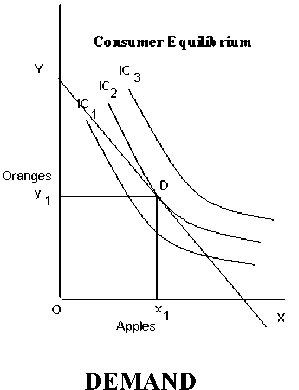
    Consumer Equilibrium:-

    At a point where budget line is tangent to the indifference curve, MRS = PX / PY ,

    1. e., Marginal rate of substitution = ratio of prices of two goods.

    Demand:- Quantity of the commodity that a consumer is able and willing to purchase in a given period and at a given price.

    Demand Schedule:- It is a tabular representation which shows the relationship between price of the commodity and quantity purchased.

    Demand Curve:- It is a graphical representation of demand schedule.

    Individual Demand: – Demand by an individual consumer.

    Factors Affecting Individual Demand For a Commodity/Determinants of Demand:-

    1. Price of the commodity itself
    2. Income of the consumer
    3. Price of related goods
    4. Taste and Preference
    5. Expectations of future price change

    Demand Function:- Dx = f( Px, Y, Pr, T)

    Substitute Goods:- Increase in the price of one good causes increase in demand for other good. E.g., tea and Coffee

    Complementary Goods:- Increase in the price of one good causes decrease in demand for other good. E.g:- Petrol and Car

    Normal Good:- Goods which are having positive relation with income. It means when income rises, demand for normal goods also rises.

    Inferior Goods:- Goods which are having negative relation with income. It means less demand at higher income and vice versa.

    Law of Demand:- Other things remains constant, demand of a good falls with rise in price and vice versa .

    Demand Scheduler-

    PRICE (Rs.)

    DEMAND

    (units)

    1

    100

    2

    80

    3

    60

    4

    40

    5

    20

    Changes in Demand:-

    They are of two types:

    1. Change in Quantity Demanded (Movement along the same demand curve)
    2. Change in Demand (Shifts in demand)

    1) Change in Quantity Demanded: –

    Demand changes due to change in price of the commodity alone, other factors remain constant; are of two types;

    1. Expansion of demand : More demand at a lower price
    2. Contraction of demand : Less demand at a higher price

    Change in Quantity Demanded

    Due to price change Movement will takes place Extension and contraction

    Diagram

    Change in Demand

    Due to other than price change Shifting will takes place Increase and decrease

    Diagram

    Demand changes due to change in factors other than price of the commodity, are of two types:

    1. Increase in demand:- more demand due to change in other factors, price remaining constant.
    2. Decrease in demand:- less demand due to change in other factors, price remaining constant.

    Causes of Increase in Demand:-

    1. Increase in Income.
    2. Increase/ favorable change in taste and preference.
    3. Rise in price of substitute good.
    4. Fall in price of complementary good.

    Note: Increase in income causes increase in demand for normal good Causes of Decrease in Demand:

    1. Decrease in Income.
    2. Unfavorable/Decrease in taste and preference
    3. Decrease in price of substitute good.
    4. Rise in price of complementary good.

    Note: Decrease in income causes Decrease in demand for normal good Price Elasticity of Demand (Ed):

    Refers to the degree of responsiveness of quantity demanded to change in its price. Ed. = Percentage change in quantity demanded/ Percentage change in price Ed. = P/q X Aq/Ap P = Original price Q = Original quantity A = Change

    Q. Explain the five degrees of elasticity of demand?

    Ans.

    1. Perfectly inelastic demand: – Even with change in price, there is no change in the quantity demanded, the demand is said to be perfectly inelastic Ed =0. The demand curve is parallel to OY axis.

    Perfectly elastic demand: – Even with no change in price there is a great change in qty. Demanded, then the demand is said to be perfectly elastic. The demand curve is parallel to Ox axis

    2.

    Y

    D

    Y

    Ed=

    ¥


    Ed=0


    ‘h

    P


    £


    D


    D


    0 Q 0 Q Q, X

    Qty dd Qty dd

    decrease in price, there is unit increase or decrease in quantity demanded. The demand curve resembles a rectangular hyperbola.

    1. Relatively less elastic: With a unit increase in price, the quantity demanded is proportionately less, then demand is said to be less elastic
    2. Relatively more elastic: With a unit increase in the price, there is proportionately more increase in the quantity demanded. The demand is said to be more elastic.

    Methods of Measuring Price Elasticity of Demand:-

    Proportionate / Percentage Method:

    Ed = % change in Quantity demanded = AQ/QQ x 100

    % change in price AP/P0 x 100

    OR

    = D Q/AP x P/Q

    Q. The Price of ice cream is Rs.20 per cup and demand is for 200 cup. If the price of ice cream falls to Rs.15 demand increases to 300 cups. Calculate elasticity of demand.

    Sol.: P = 20; P1 = 15 ; D P = 5

    Q= 200; Q1 = 300; DQ = 100 Ed = 100_ x 20_ = 2 5 200

    Total Outlay Method (Expenditure Method)

    If with the fall in price, total outlay increases elasticity of demand is greater than one, if total outlay remain constant, elasticity is equal to one and if the total outlay decreases elasticity is less than one.

    Situa-

    Price of

    Quantity

    Total

    Effect on Total

    Elasticity of

    tion

    Commodity

    (Kg)

    Expenditure

    Expenditures

    Demand

    (Rs)

    (Rs)


    2

    4

    8


    Unitary

    A

    Same Total

    Elastic

    1

    8

    8

    Expenditure

    Ed=1


    2

    4

    8

    Total

    Greater than

    B


    Expenditure

    unitary


    1

    10

    10

    increases

    Ed > 1


    2

    3

    6

    Total

    Less than

    C


    Expenditure

    unitary Ed <


    1

    4

    4

    decreases

    1

    Geometric / Point Method: –

    This measures the elasticity of demand at different points on the same demand Curve.

    Ed = lower segment of the demand curve Upper segment of the demand curve

    ONE MARK QUESTIONS AND ANSWERS

    1. What do you mean by utility?

    Ans Utility is the want satisfying power of a commodity.

    1. How is total utility derived from marginal utility?

    Ans :- Total utility is the sum total of marginal utilities of various units of a commodity. TUn= MU 1+MU2+MU3 +MUn

    1. State the law of equi-marginal utility.

    Ans :- It states that a consumer gets maximum satisfaction when the ratio of the marginal utilities of two goods and their prices is equal i.e., MUx / Px = MUy / Py

    1. What will you say about MU when TU is maximum?

    Ans :- MU is zero when TU is maximum

    1. Give the reason behind a convex indifference curve.

    Ans :- Diminishing marginal rate of substitution.

    HOTS QUESTIONS

    1. Give the formula for calculating the slope of the budget line.

    Ans :- It is equal to the ratio of the prices of the two commodities , i.e., Px / Py

    1. Suppose a consumer’s preferences are monotonic. What can you say about his preference ranking over the bundles (10,10),(10,9) and (9,9)?

    Ans :- Consumer will monotonically prefer bundle (10,10) to (10,9) and (9,9) and also prefer bundle (10,9) to (9,9)

    1. A rise in the income of the consumer leads to a fall in the demand for commodity ‘x’. What type of good is commodity ‘x’?

    Ans Inferior good

    1. What do you mean by substitute and complementary goods? Give two examples each.

    Ans :- Substitute goods are those goods which can be used in place of each other. Ex. Tea and Coffee. Complementary goods are those goods which are used together to satisfy a given want. Ex : Car and petrol.

    1. Mention one factor that causes a leftward shift of the demand curve.

    Ans :- Fall in income of a consumer.

    1. What causes a movement along the demand curve of a commodity?

    Ans :- When the price of a commodity changes and other factors remain constant, there will be movement along the demand curve.

    1. What is demand function?

    Ans: – A demand function shows the functional relationship between the quantity demanded and the factors on which demand depends on.

    1. Draw a demand curve with unitary elasticity.

    Price

    x

    1. Define price elasticity of demand.

    Ans :- It refers to the degree of responsiveness of quantity demanded to change in price.

    3 AND 4 MARKS QUESTIONS & ANSWERS

    1. Explain the law of Diminishing Marginal Utility with the help of a table and a diagram.

    Ans :- The law of diminishing Marginal Utility states that as we consume more and more units of a commodity, the MU derived from the successive units of that commodity goes on decreasing. It is explained with the help of following schedule and diagram.

    UNITS

    TU

    MU

    1

    8

    8

    2

    14

    6

    3

    18

    4

    4

    20

    2

    5

    20

    0

    6

    18

    -2

    Diagram:

    TU

    TU/MU

    X

    Relationship between MU and TU:

    1. When MU is positive TU rises.
    2. When MU is zero TU is maximum.
    3. When MU is negative, TU falls.
    4. What is meant by consumer’s equilibrium? State its conditions in case of two commodities approach.
    5. Meaning: A consumer is to be equilibrium when he is spending his given income on various goods and services to get maximum satisfaction.
    6. Conditions:
    7. MUx / Px = MUy / Py (MUs are equal to their prices)
    8. PxQx+ PyQy =M
    9. M ( Money spent is equal to income)
    10. What is the difference between cardinal and ordinal utility analysis.
     

    Cardinal Utility

    Ordinal Utility

    1

    Given by Prof. Alfred Marshall

    Given by Prof. J.R. Hicks

    2

    Utility can be measured numerically

    It cannot be measured numerically

    3

    Unit of measurement is ‘utils’

    Possible for a consumer to scale his preferences.

    1. Explain any four determinants of demand for a commodity.

    Ans :- Following are the three determinants of demand for a commodity.

    1. Price of the commodity:- When the price of a commodity increases the demand for

    that commodity decreases and vice versa.

    1. Income of the consumer:- When the income increases the demand for normal

    commodity also increases and vice-versa.

    1. Price of related goods :
    2. In complementary goods demand rises with fall in price of complementary goods.
    3. In substitute goods demand for a commodity falls with a fall in the price of other substitute goods
    4. Taste & preference of the consumer: With favourable taste, demand increase and unfavourable taste demand decreases for a commodity.
    5. Draw a) perfectly elastic demand curve, b) perfectly inelastic demand curve and c) unitary elastic demand curve.

    Ans :- a) perfectly elastic demand

    y Ed=ro

    Price

    D

    p

    ! >

    o q q1 x

    Quantity x b). Perfectly inelastic demand

    Price

    y

    p1

    p

    O

    D

    D

    Q

    >

    x

    Ed=’0′

    Quantity

    c) Unitary elastic demand

    Quantity

    1. Explain any four factors that affect elasticity of demand.

    Ans Following are the factors affecting price elasticity of demand.

    1. Availability of close substitutes: If close substitutes of product are available, the commodity tends to be more elastic, If there are not available, they tend to be less elastic.
    2. Proportion of total expenditure spent on the product:If the amount spent on a product constitutes a very small fraction of the total expenditure, then the demand tends to be less elastic of the amount spent is high the elasticity of demand tends to be high.
    3. Habits: A commodity if it forms an essential part of the individual, the demand tends to be inelastic. It is consumed casually; the demand tends to be elastic
    4. Time Period: Longer the time period, the more elastic is the demand for any product the shorter the time period, less elastic is the demand for any products

    HOTS

    1. Is the demand for the following elastic, moderate elastic, highly elastic? Give

    reasons.

    1. Demand for petrol
    2. Demand for text books
    3. Demand for cars
    4. Demand for milk

    Ans :- i) Demand for petrol is moderately elastic , because when the price of the petrol goes up , the consumer will reduce the use of it.

    1. Demand for text books is completely inelastic. In case of text books, even a substantial change in price leaves the demand unaffected.
    2. Demand for cars is elastic. It is a luxury good, when the price of the car rises, the demand for the car comes down.
    3. Demand for milk is elastic, because price of the milk increases then the consumer purchase less quantity milk.
    4. What is the relationship between slope and elasticity of a demand curve?

    Ans :- The formula of Ed = AQ / AP * P / Q

    The formula for the slope of the demand curve is, slope = AP / AQ

    The relationship between slope and elasticity of demand is Ed= 1/slope * P/Q

    6 MARKS QUESTIONS

    1. How is equilibrium achieved with the help of indifference curve analysis?

    Ans :-

    a) Definition: In the indifference curve approach, consumer’s equilibrium is achieved at the point at which the budget line is tangent to a particular indifference curve. This is the point of maximum satisfaction.

    b) Diagram:

    A

    O Good x B X

    Good ‘y’

    1. Explanation of the diagram:
    2. ‘AB’ is the budget line.
    3. It is sure that consumer’s equilibrium will lie on some point on ‘AB’
    4. Indifference map (set of ICi, IC2, IC3) shows consumers scale of preferences between different combinations of good ‘x’ and good ‘y’
    5. Consumers’ equilibrium will achieve where budget line (AB) is tangent to the IC2.
    6. Essential conditions for consumers equilibrium:
    7. Budget line must be tangent to indifference curve i.e., MRS xy = Px / Py
    8. Indifference curve must be convex to the origin or MRS xy should decrease.
    9. Consumers cannot achieve the following:
    10. P and R points on budget line give satisfaction but they lie on lower indifference curve IC1. Choosing point ‘q’ puts him on a higher IC which gives more satisfaction.
    11. He cannot move on IC3, as it is beyond his money income.
    12. Explain the factors affecting the market demand of a commodity.

    Ans :- i) Meaning: Market demand is the aggregates of the quantities demanded by all the consumers in the market at different prices.

    ii) Factors affecting market demand :

    1. Price of the commodity: When the price goes up demand for its falls and vice- versa.
    2. Income of the consumers: When the income of the consumers goes up the demand for a commodity also goes up.
    3. Price of related goods :
    • Complementary goods :The demand for a commodity rises with a fall in the price of its complementary good (Car and petrol)
    • Substitute goods: Demand for a commodity falls with a fall in the price of other substitute good (Tea& Coffee).
    1. Tastes and preferences: Any favourable change in consumers’ tastes will lead to increase in market demand and any unfavourable change in consumers tastes will lead to decrease in market demand.
    2. Consumer’s group: More the consumers more will be market demand and vice- versa.
    3. Explain the various degrees of price elasticity of demand with the help of diagrams.

    Ans:- There are five degrees of price elasticity of demand. They are,

    1. Perfectly elastic demand (Ed r):- a slight or no change in the price leads to infinite changes in the quantity demanded.
    2. Perfectly Inelastic demand (Ed=0) :- Demand of a commodity does not change at all irrespective of any change in its price.
    3. Unitary elastic demand (Ed=1):- When the percentage change in demand (%) of a commodity is equal to the percentage change in price.
    4. Greater than unitary elastic demand (Ed>1):- When percentage change in demand of a commodity is more than the percentage change in its price.
    5. Less than unitary elastic demand (Ed<1) :- When percentage change in demand of a commodity is less than the percentage change in its price.

    Diagrams

    y Ed=ro

    y

    Ed=0

    A

    y

    Ed=1

    Price

    0 x

    0

    x

    0

    >

    x

    Numerical for practice

    1. Derive the total utility schedule from the marginal utility.

    Units consumed

    Marginal utility

    1

    12

    2

    11

    3

    8

    4

    6

    5

    3

    6

    0

    1. A consumer buys 50 units of a good at Rs. 4/- per unit. When its price falls by 25 percent its demand rises to 100 units. Find out the price elasticity of demand.

    Ans:- Ed=4

    1. Price elasticity of demand for wheat is equal to unity and a household demands 40 Kg of wheat when the price is Rs.1 per kg. At what price will the household demand 36 kg of wheat?

    Ans:- The price of wheat rises to Rs. 1.10 per kg.

    1. The quantity demanded of a commodity at a price of Rs.10 per unit is 40 units. Its price elasticity of demand is -2. Its price falls by Rs.2/- per unit. Calculate its quantity demanded at the new price.

    Ans :- 56 units.

    FREQUENTLY ASKED QUESTIONS – CBSE BOARD EXAMINATIONS

    1. Define Microeconomics.
    2. Why an economic problem does arises?
    3. What are the central problems of an economy?
    4. Define opportunity cost.
    5. Define marginal opportunity cost.
    6. Distinguish between ‘micro’ and’ macro’ economics.
    7. Why PPC is Concave from the origin.
    8. Define Marginal Rate of Transformation (MRT)
    9. Explain the problem, of ‘what to produce’ and ‘how to produce.’
    10. Explain the central problem of how to produce with the help of an example.
    11. What is an indifference curve?
    12. Define Utility.
    13. What is budget set?
    14. Define budget line.
    15. Define MRS.
    16. A consumer consumes only two goods. Explain the conditions of consumer’s equilibrium with the help of IC analysis.
    17. For a consumer to be in equilibrium, why must MRS be equal to the ratio of price of two goods?
    18. What is an indifference map?
    19. Explain the law of demand with the help of diagram and schedule.
    20. Write three causes of increase / decrease in demand
    21. Distinguish between the change in quantity demanded and change in demand.
    22. Explain any three factors or determinants of demand.
    23. Explain any three factors affecting elasticity of demand
    24. Explain the price elasticity of demand through geometric method.
    25. Explain the price elasticity of demand through expenditure method
    26. Explain the properties of indifference curve.
    27. Why can not two indifference curves meet each other?
    28. Why is indifference curve convex to origin?
    29. Why does higher indifference curve gives higher levels of satisfaction?
  • Introduction to Economics Notes Class 12 Microeconomics 

    INTRODUCTORY MICRO ECONOMICS
    UNIT 1: INTRODUCTION

    KEY CONCEPTS

    • MICRO ECONOMICS
    • ECONOMY
    • TYPES OF ECONOMY
    • PLANNED ECONOMY
    • MARKET ECONOMY
    • CENTRAL PROBLEMS OF AN ECONOMY | BASIC ECONOMIC PROBLEMS
    • WHAT TO PRODUCE?
    • HOW TO PRODUCE?
    • FOR WHOM TO PRODUCE?
    • CAUSES OF AN ECONOMIC PROBLEM
    • PRODUCTION POSSIBILITY CURVE
    • MARGINAL OPPORTUNITY COST -MOC
    • MARGINAL RATE OF TRANSFORMATION
    • SCARCITY OF RESOURCES
    • OPPORTUNITY COST
    1. MICRO ECONOMICS: It is a study of behaviour of individual units of an economy such as individual consumer, producer etc.
    2. ECONOMY: An economy is a system by which people get their living.
    3. TYPES OF ECONOMY:
    4. Capitalist economy / Market economy
    5. Socialist economy / Planned economy
    6. Mixed economy
    7. MARKET ECONOMY: It is an economic system, in which all material means of production are owned and operated by the private with profit motive.
    8. PLANNED ECONOMY: In this economy all material means of production are owned by the government or by a centrally planned authority. All important decisions regarding production, exchange and distributions, consumptions of goods and services are made by the government or by a centrally planned authority
    9. ECONOMIC PROBLEM: “An economic problem is basically the problem of choice” which arises due to scarcity of resources having alternative uses”.
    10. CAUSES OF ECONOMIC PROBLEM :
    11. Scarcity of resources
    12. Unlimited wants
    13. Limited resources having alternative uses
    14. BASIC (CENTRAL) ECONOMIC PROBLEMS
    15. Allocation of resources
    16. What to produce?
    17. How to produce?
    18. For whom to produce
    19. . Efficient Utilization of resources

    iii.) Growth of resources

    1. PRODUCTION POSSIBILITY CURVE (PPC): PP curve shows all the possible combination of two goods that can be produced with the help of available resources and technology.
    2. MARGINAL OPPORTUNITY COST: MOC of a particular good along PPC is the amount of other good which is sacrificed for production of additional unit of another good.
    3. MARGINAL RATE OF TRANSFORMATION: MRT is the ratio of units of one good sacrificed to produce one more unit of other good.

    Unit of one good sacrificed Ay

    MRT = = —

    More unit of other good produced Ax

    1. SCARCITY OF RESOURCES: Scarcity of resources means shortage of resources in relation to their demand.
    2. OPPORTUNITY COST: It is the cost of next best alternative foregone.
    3. POSITIVE ECONOMICS: Positive economics deals with what is, what was (or) how an economic problem facing the society is actually solved.
    4. NORMATIVE ECONOMICS: It deals with what ought to be (or) how an economic problem should be solved.

    VERY SHORT ANSWER QUESTIONS (1 MARK)

    1. What is economics about?

    Ans : – Economics is the study of the problem of choice arising out of scarcity of resources having alternative uses.

    1. Define scarcity.

    Ans : – Scarcity means shortage of resources in relation to their demand is called scarcity.

    1. What is an economy?

    Ans : – An economy is a system by which people get their living.

    1. Define central problem.

    Ans : – Central problem is concerned with the problems of choice (or) the problem of resource allocation.

    1. What do you understand by positive economic analysis?

    Ans : – It deals with what is (or) how an economic problem facing an economy is solved. It analyses the cause of effect relationship.

    1. What do you understand by normative economic analysis?

    Ans : – Normative economic analysis deals with what ought to be (or) how an economic problem should be solved.

    1. Give one reason which gives rise to economic problems?

    Ans : – Scarcity of resources which have alternative uses.

    1. Name the three central problems of an economy.

    Ans : – i) What to produce?

    1. How to produce?
    2. For whom to produce?
    3. What is opportunity cost?

    Ans : – It is the cost of next best alternative foregone.

    1. Why is there a need for economizing of resources?

    Ans : – Resources are scarce in comparison to their demand, therefore it is necessary to use resources in the best possible manner without wasting it.

    1. What is production possibility frontier?

    Ans : – It is a boundary line which shows the various combinations of two goods which can be produced with the help of given resources and technology.

    1. Why PPC is concave to the origin?

    Ans :- PPC is concave to the origin because of increased marginal opportunity cost.

    1. Define marginal rate of transformation.

    Ans :- MRT is the ratio of units of one good sacrificed to produce one more unit of other goods. MRT = Ay / Ax

    1. What does a point inside the PPC indicate?

    Ans :- Any point inside the production possibility curve indicate underutilization of resources.

    1. What do you mean by the problem of what to produce?

    Ans :- It is the problem of choosing which goods and services should be produced in what quantities.

    1. What do you understand by the problem of how to produce?

    Ans :- It is the problem of choosing technique of production of goods and services.

    1. What does the problem for whom to produce indicate?

    Ans The problem of for whom to produce refers to the distribution of goods and services produced in the economy.

    1. Give two examples each of micro economics & macroeconomics.

    Ans :- Microeconomics – Individual demand, individual supply

    Macroeconomics – Aggregate demand and aggregate supply

    1. What does a rightward shift of PPC indicate?

    Ans :- It indicates a) growth of resources b) improvement in technology

    1. What is meant by economising of resources?

    Ans :- It means making best use of available resources.

    SHORT ANSWER QUESTIONS (3 / 4 MARKS)

    1. What is production possibility frontier?

    Ans :- It is a boundary line which shows that maximum combination of two goods which can be produced with the help of given resources and technology at a given period of time.

    Ex: An economy can produce two goods say rice or oil by using all its resources. The different combination of rice and oil are as follows:

    Production Possibilities

    Rice (quintals)

    Oil (litres)

    A

    0

    10

    B

    1

    9

    C

    2

    7

    D

    3

    4

    E

    4

    0

    10

    9

    8

    7

    6

    5

    4

    Oil

    3

    E

    0 1 2 3 4

    Rice

    1. Draw a production possibility curve and mark the following situations:
    2. underutilization of resources
    3. full employment of resources
    4. growth of resources

    Ans. Every point on PP curve like ABCDEF indicates full employment and efficient uses of resources.

    Any point below or inside PP curve like G underutilization of resources.

    Any point above PP curves like H indicates growth of resources.

    Wheat

    F

    0 1 2 3 4 5

    Cloth

    Production Possibility Curve And Opportunity Cost

    It refers to a curve which shows the various production possibilities that can be produced with given resources and technology.

    Production Possibilities

    Production

    Commodity

    Commodity

    Marginal opportunity

    Possibility

    A

    B

    cost of commodity A

    A

    0

    15

    B

    1

    14

    15-14=1

    C

    2

    12

    14-12=2

    D

    3

    09

    12-9=3

    E

    4

    05

    9-5=4

    F

    5

    0

    5-0=5

    If the economy devotes all its resources to the production of commodity B, it can produce 15 units but then the production of commodity A will be zero. There can be a number of production possibilities of commodity A & B

    If we want to produce more commodity B, we have to reduce the output of commodity A & vice versa.

    Shape of PP curve and marginal opportunity cost.

    1. PP curve is a downward sloping curve.

    In a full employment economy, more of one goods can be obtained only by giving up the production of other goods. It is not possible to increase the production of both of them with the given resources.

    1. The shape of the production possibility curve is concave to the origin.

    The opportunity cost for a commodity is the amount of other commodity that has been foregone in order to produce the first.

    The marginal opportunity cost of a particular good along the PPC is defined as the amount sacrificed of the other good per unit increase in the production of the good in question. Example: Suppose a doctor having a private clinic in Delhi is earning Rs. 5lakhs annually. There are two other alternatives for him.

    1. Joining a Govt. hospital in Bangalore earning Rs. 4 lakhs annually.
    2. Opening a clinic in his home town in Mysore and earning 3 lakhs annually.

    The opportunity cost will be joining Govt. hospital in Bangalore.

    Increasing marginal opportunity cost implies that PPC is concave.

    Shift in PP curve

    (1) Upward shift

    1. When there is improvement in technology.
    2. Increase in resources.

    (2) Downward shift

    When Resources depletes

    Commodity B

    3. Distinguish between a centrally planned economy and a market economy.

    SNo

    Planned Economy

    Market Economy

    1

    All the materials means of production are owned by government.
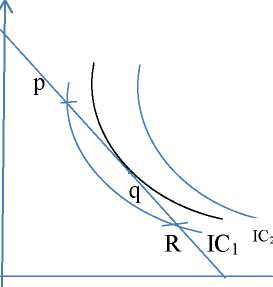
    All the materials means of production are owned by private individuals.

    2

    Main objectives of production is social welfare

    Main objectives of production are maximization of profit.

    3

    Ownership of property is under government control.

    There is no limit to private ownership of property.

    4

    All the economic problems are solved

    All the economic problems are solved


    as per direction of the planning

    through price mechanism i.e., demand


    commission.

    and supply.

    4. Distinguish between micro economics and macroeconomics.

    SNo

    Micro economics

    Macro economics

    1

    It studies individual economic unit.

    It studies aggregate economic unit

    2

    It deals with determination of price and output in individual markets

    It deals with determination of general price level and output in the economy.

    3

    Its central problems are price determination and allocation of resources.

    Its central problem is determination of level of Income and employment in the economy.

    HOTS

    1. Does massive unemployment shift the PPC to the left?

    Ans:- Massive unemployment will shift the PPC to the left because labour force remains underutilized. The economy will produce inside the PPC indicating underutilization of resources.

    1. What does the slope of PPC show?

    Ans. The slope of PPC indicates the increasing marginal opportunity cost.

    1. From the following PP schedule calculate MRT of good x.

    Production possibilities

    A

    B

    C

    D

    E

    Production of good x units

    0

    1

    2

    3

    4

    Production of good y units

    14

    13

    11

    8

    4

    Production of good X units

    Production of good Y units

    MRT = Ay / Ax

    0

    14

    1

    13

    1:1

    2

    11

    2:1

    3

    8

    3:1

    4

    4

    4:1

    How are fundamental problems solved in the capitalistic economy.

    In a market-oriented or capitalist economy, the fundamental problems are solved by the market mechanism. Price is influenced by the market forces of demand and supply. These forces help to decide what, how and for whom to produce.

    How are fundamental problems solved in the planned economy?

    In a planned economy all the economic decisions regarding what, how and for whom to produce are solved by the state through planning. Economic planning replaces the price mechanism. The market is regulated by the state. The prices of the various products are fixed by the state called administered prices.

  • Notes of BALANCE OF PAYMENTS AND FOREIGN EXCHANGE RATE Class 12 Chapter 6 Economics

    UNIT X: BALANCE OF PAYMENTS AND FOREIGN EXCHANGE RATE

    Foreign Exchange refers to all currencies other than the domestic currency of a given country.

    Foreign exchange rate is the rate at which currency of one country can be exchanged for currency of another country.

    Foreign Exchange Market: The Foreign Exchange market is the market where the national currencies are traded for one another.

    Functions of Foreign Exchange Market:

    1. Transfer function: It transfers the purchasing power between countries.
    2. Credit function: It provides credit channels for foreign trade
    3. Hedging function: It protects against foreign exchange risks.

    FIXED EXCHANGE RATE SYSTEM: Fixed exchange rate is the rate which is officially fixed by the government, monetary authority and not determined by market forces.

    FLEXIBLE EXCHANGE RATE: Flexible exchange rate is the rate which is determined by forces of supply and demand in the foreign exchange market.

    DEMAND FOR AND SUPPLY OF FOR FOREIGN EXCHANGE

    Demand for foreign exchange:

    1. To purchase goods and services from other countries
    2. To send gifts abroad
    3. To purchase financial assets (shares and bonds)
    4. To speculate on the value of foreign currencies
    5. To undertake foreign tours
    6. To invest directly in shops, factories, buildings
    7. To make payments of international trade.

    Supply of foreign exchange:

    Foreign currencies flow into the domestic economy due to the following reason.

    1. When foreigners purchase home countries goods and services through exports
    2. When foreigners invest in bonds and equity shares of the home country.
    3. Foreign currencies flow into the economy due to currency dealers and speculators.
    4. When foreign tourists come to India
    5. When Indian workers working abroad send their saving to families in India.

    EQUILIBRIUM IN THE FOREIGN EXCHANGE MARKET

    The equilibrium exchange rate is determined at a point where demand for and supply of foreign exchange are equal. Graphically interaction of demand and supply curve determines the equilibrium exchange rate of foreign currency.

    y

    Demand and supply of US$

    Managed Floating: This is the combination of fixed and flexible exchange rate. Under this, country manipulates the exchange rate to adjust the deficit in the B.O.P by following certain guidelines issued by I.M.F.

    Dirty floating: If the countries manipulate the exchange rate without following the guidelines issued by the I.M.F is called as dirty floating.

    BALANCE OF PAYMENTS: MEANING AND COMPONENTS

    Meaning: The balance of payments of a country is a systematic record of all economic transactions between residents of a country and residents of foreign countries during a given period of time.

    BALANCE OF TRADE AND BALANCE OF PAYMENTS

    Balance of trade: Balance of trade is the difference between the money value of exports and imports of material goods (visible item)

    Balance of payments: Balance of payments is a systematic record of all economic transactions between residents of a country and the residents of foreign countries during a given period of time. It includes both visible and invisible items. Hence the balance of payments represents a better picture of a country’s economic transactions with the rest of the world than the balance of trade.

    STRUCTURE OF BALANCE OF PAYMENT ACCOUNTING

    A balance of payments statement is a summary of a Nation’s total economic transaction undertaken on international account. There are two types of account.

    1. Current Account: It records the following 03 items.

    1. Visible items of trade: The balance of exports and imports of goods is called the balance of visible trade.
    2. Invisible trade: The balance of exports and imports of services is called the balance of invisible trade E.g. Shipping insurance etc.
    3. Unilateral transfers: Unilateral transfers are receipts which resident of a country receive (or) payments that the residents of a country make without getting anything in return e.g. gifts.

    The net value of balances of visible trade and of invisible trade and of unilateral transfers is the balance on current account.

    1. CAPITAL ACCOUNT: It records all international transactions that involve a resident of the domestic country changing his assets with a foreign resident or his liabilities to a foreign resident.
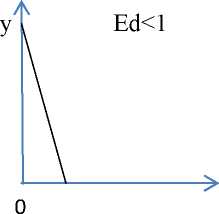
    VARIOUS FORMS OF CAPITAL ACCOUNT TRANSACTIONS

    1. Private transactions: These are transactions that are affecting assets (or) liabilities by individuals.
    2. Official transactions: Transactions affecting assets and liabilities by the government and its agencies.
    3. Direct Investment: It is the act of purchasing an asset and at the same time acquiring and control of it.
    4. Portfolio investment: It is the acquisition of assets that does not give the particular control over the asset.

    The net value of balances of direct and portfolio investment is called the balance on capital account.
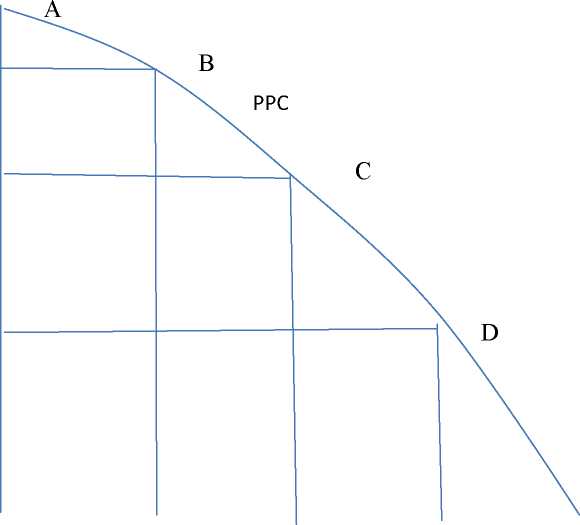
    OTHER ITEMS IN THE BALANCE OF PAYMENT

    They are included since the full balance of payments account must balance. These items are as follows.

    1. Errors and Omissions: They may arise due to the presence of sampling and due to his honesty.
    2. Official reserve transactions: All transactions except those in this category may be termed as autonomous transactions. They are so called because they were entered into with some independent motive. Balance of payments always balance.

    AUTONOMOUS AND ACCOMMODATING ITEMS

    Autonomous items: Autonomous items in the B.O.P refer to international economic transactions that take place due to some economic motive such as profit maximization. These items are often called above the line items in the B.O.P.

    The balance of payments is in a deficit if the autonomous receipts are less than autonomous payments. The monetary authorities may finance a deficit by depleting their reserves of foreign currencies, or by borrowing from I.M.F.

    Accommodating items: Accommodating items in the B.O.P. refer to transactions that occur because of other activity with the B.O.P such as government financing. Accommodating items are also referred to as below the line of items.

    DISEQUILIBRIUM THE BALANCE OF PAYMENTS

    There are a number of factors that cause disequilibrium in the balance of payments showing either a surplus or deficit. These causes are categorized into 3 factors.
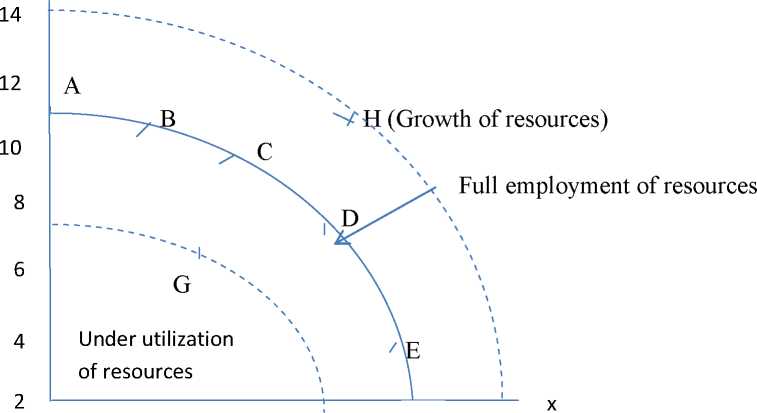
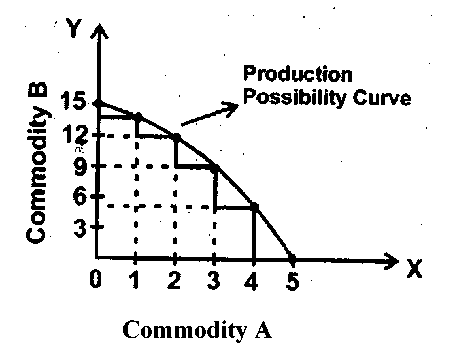
    1. Economic factors: Large scale development expenditure that may cause large imports.

    Cyclical fluctuations in general business activities such as recession or depression.

    High domestic prices may result in imports.

    1. Political factors: Political instability may cause large capital outflows and hamper the inflows of foreign capital.
    2. Social factors: Changes in tastes, preferences and fashions may affect imports and exports.

    VERY SHORT ANSWER QUESTIONS.

    1. Define foreign exchange rate.

    Ans: Foreign exchange rate is the rate at which currency of one country can be exchanged for currency of another country.

    1. What do you mean by Foreign Exchange Market?

    Ans: The foreign exchange market is the market where international currencies are traded for one another.

    1. What is meant by Fixed Exchange Rate?

    Ans: Fixed Rate of exchange is a rate that is fixed and determined by the government of a country and only the government can change it.

    1. What is equilibrium rate of exchange?

    Ans: Equilibrium exchange rate occurs when supply of and demand for foreign exchange are equal to each other.

    1. Define flexible exchange rate.

    Ans: Flexible rate of exchange is that rate which is determined by the demand and supply of different currencies in the foreign exchange market.

    1. What is meant by appreciation of currencies?

    Ans: Appreciation of a currency occurs when its exchange value in relation to currencies of other country increases.

    1. Define Spot exchange rate.

    Ans: The spot exchange rate refers to the rate at which foreign currencies are available on the sport.

    1. Define forward market.

    Ans: Market for foreign exchange for future delivery is known as the forward market.

    1. What is meant by balance of payments?

    Ans: Balance of payments refers to the statement of accounts recording all economic transactions of a given country with the rest of the world.

    1. What do you mean by balance of trade?

    Ans: Balance of trade is the difference between the value of imports and exports of only physical goods.

    1. The balance of trade shows a deficit of Rs. 600 crores, the value of exports is Rs.1000 crores. What is value of Imports?

    Ans: Balance of Trade = Exports of goods – import of goods

    Import of good = Export of goods – (B.O.T)

    = 1000- (-600)

    = Rs. 1600.

    1. What is the balance of visible items in the balance of payments account called?

    Ans: – Balance of trade

    1. What do you mean by disequilibrium in BOP?

    Ans:- Disequilibrium in BOP is means either there is a surplus or deficit in balance of payment account.

    1. List two items of the capital account of BOP account.

    Ans:- i) external assistance ii) commercial borrowing iii) foreign investment

    1. Which transactions bring balance in the BOP account?

    Ans:- Accommodating transactions bring balance in the BOP account.

    1. Define autonomous items in BOP.

    Ans:- Autonomous items in BOP refers to international economic transaction that take place due to some economic motive such as profit maximization. These items are independent of the state of the country balance of payments.

    1. What is the other name of autonomous items in the BOP?

    Ans:- The other name of autonomous items in BOP is above the line item.

    1. When does a situation of deficit in BOP arises?

    Ans:- A situation of deficit in BOP arise when autonomous receipts are less than autonomous payments.

    1. What is meant by managed floating?

    Ans:- It is a system that allows adjustments in exchange rate according to a set of rules and regulations which are officially declared in the foreign exchange market.

    1. What is meant by dirty floating?

    Ans:- Manipulate the exchange rate without following the guidelines issued by IMF is called dirty floating.

    ANSWER QUESTIONS (3 / 4 MARKS)

    1. Why is foreign exchange demanded?

    Ans:- Foreign exchange is demanded for the following purposes.

    1. Payment of International loans
    2. Gifts and grants to rest of the world
    3. Investment in rest of the world.
    4. Direct purchases abroad for goods and services as well as imports from rest of the world.
    5. What determines the flow of foreign exchange in to the country?

    Ans: – Following factors contribute to the flow of foreign exchange in to the country.

    1. Purchases of domestic goods by the foreigners
    2. Direct foreign investment and portfolio investment in the home country.
    3. Speculative purchase of foreign exchange.
    4. When foreign tourists come to India.
    5. Why does the demand for foreign exchange rise, when it price falls?

    Ans:- With a fall in price of foreign exchange , the exchange value of domestic currency increases and that of foreign currency falls. This implies that foreign goods become cheaper and their domestic demand increases. The rising domestic demand for foreign goods implies higher demand for foreign exchange. So there is inverse relationship between price and demand for foreign exchange.

    1. When price of a foreign currency falls, the supply of that foreign currency also fall why?

    Ans: When price of a foreign currency falls it makes exports, investment by foreign residents costlier as a result supply of foreign currency falls.

    1. Distinguish between autonomous and accommodating transaction of balance of payment account.

    Ans: Autonomous transactions are done for some economic consideration such as profit, such transactions are independent of the state of B.O.P. Accommodating transactions are under taken to cover the deficit/surplus in balance of payments.

    price

    Ans:

    Give two examples explain why there is a rise in demand for a foreign currency when its

    Sl.

    Forms of

    Very Short (1

    Short Answer

    Long

    Total

    1

    Unit 1

    1(1)

    3(1)

    4

    2

    Unit 2

    1(2)

    3(2), 4(1)

    6(1)

    18

    3

    Unit 3

    3(1)

    3(1), 4(2)

    6(1)

    18

    4

    Unit 4

    1(1)

    3(1)

    6(1)

    10

    5

    Unit 5

    Not to be tested

    6

    Unit 6

    3(3)

    6(1)

    15

    7

    Unit 7

    1(2)

    6(1)

    08

    8

    Unit 8

    1(2)

    4(1)

    6(1)

    12

    9

    Unit 9

    4(2)

    08

    10

    Unit 10

    1(1)

    3(2)

    07


    Sub Total

    10(10)

    30(10), 24(6)

    36(6)

    100

    When price of foreign currency falls, imports are cheaper. So, more demand for foreign exchange by importers.

    falls.

    Tourism abroad is promoted as it becomes cheaper. So demand for foreign currency rises.

    Distinguish between fixed and flexible foreign exchange rate.

    Ans: When foreign exchange rate is fixed by Central Bank/government, it is called fixed exchange rate. When foreign exchange rate is determined by market forces/mechanism, it is flexible exchange rate.