Author: shivamlohiya

  • Notes of Consumer Protection Business Studies Class 12

    UNIT 12

    CONSUMER PROTECTION

    Protecting consumers from unpair trade practices, adopted by the producers

    and/or sellers of goods and services is termed as consumer protection. It not

    only includes educating consumers about their rights and responsibilities, but

    also helps in getting their grievances redressed.

    Importance of consumer protection from consumer s point of view :

    1. Consumers Ignorance : Majority of consumers are not aware of their rights and reliefs available to them as a result of which they are exploited. In order to save consumers from exploitation, consumer protection is needed.
    2. Unorganised Consumers : In India consumers are still unorganised and there is lack of consumer organisations also, thus consumer protection is required.
    3. Widespread exploitation of Consumers : Consumers are exploited on large scale by means of various unfair trade practices and consumer protection is required to protect them from exploitation.

    Importance of Consumer Protection from the Point View of Business

    1. Long term business interest : It is always in the interest of the business to keep its customer satisfied, Global competition could be win only after satisfying customers. Satisfied customers lead to repeat sales and help in increasing customer base of business.
    2. Moral Justification : It is the moral duty of any business to take care of consumer interest & avoid any form of their exploitation & unfair trade practices like defective & unsafe products, adultration, false & misleading advertising, hoardings black marketing etc.
    3. Business uses society s resources : Every business uses the resources of the society and thus it is their responsibility to work in the interest of the society.

    92 XII – Business Studies

    4.

    Social Responsibility : A business has social responsibilities towards various groups like owner, workers, government, customers etc. Thus, customers should be provided qualitative goods at reasonable prices.

    5.

    Government Intervention : If a business engage in any form of unfair trade practices then government take action against it, which adversely affect its goodwill.


    CONSUMER PROTECTION ACT, 1986 (CPA, 1986)

    Consumer protection Act 1986 was introduced to make consumers aware about their rights and to give them legal protection. According to it consumer is defined as follows.

    1.

    Any person who buys any goods for a consideration It includes any user of such goods with the approval of the buyer. But it does not include a person who obtains goods for resale or any commercial purpose.

    2.

    Any person who avails any services for a consideration. It includes any beneficiary of such services but it does not include a person who avails such service for any commercial purpose.

    Rights of a Consumer

    Consumer protection Act, 1986 has provided six rights to the consumer, which are as follows:

    1.

    Right to Safety : Consumer has the right to be protected against products, & services which are hazardous to health & life (should use ISI marked electric products)

    2.

    Right to be informed : Consumer has right to have complete information about the product before buying it.

    3.

    Right to choose : Consumer has a right to choose any product out of the available products as per his own decision/liking.

    4.

    Right to be heard : Consumer has the right to file a complaint & to be heard in case of dissatisfaction with goods or services (use of grievance cell)

    5.

    Right to Seek Redressal : Consumer has the right to get relief in case the product or service falls short of his expectations or is dangerous. He may be provided with replacement / removal of defect / compensation for any loss.

    93 XII – Business Studies

    6. Right to consumer education : Consumer has right to acquire knowledge & to be well informed consumer throughout life. It make consumer aware all the time.

    Responsibilities / Duties of a Consumer

    1. Consumer must exercise his right : Consumer must be aware of their rights with regard to the product or services they buy from the market.
    2. Consumer must be a cautions consumer : While buying a product or services, a consumer should read labels carefully to learn about its every minute detail.
    3. Consumer must file a complaint in a appropriate forum in case of any shortcoming in product / service availed.
    4. Consumer must insist on cash memo ; i.e. a proof of purchase & required to file a complaint.
    5. Consumer must be a quality conscious : He should ask / look for ISI mark on electric goods. FPO mark on food products, Hall mark on jewellery etc.
    6. Consumer must bring the discrepancy in the advertisement to the notice of the sponsor.

    THE SALIENT FEATURES AND PROVISIONS OF CONSUMER PROTECTION ACT, 1986

    Why was consumer protection act, 1986 enacted

    To protect & promote the interests of the cousumers by providing various rights to them.

    Under what circumstances complaints can be filed ?

    Frandulent practices of traders & manufactures.

    Goods are defective

    Any deficiency in the services hired.

    Redressal agencies under the consumer Protection Act 1986.

    District forum State Commission National commission

    Within what period the complaint must be filed ?

    With in 3 months of purchase & if some testing of goods is required then with in 5 months.

    Who can file a complaint.

    Any consumer

    Any registered consumer association.

    Central / State Govts.

    Legal heir / representation of a a deceased customer.

    Relief Available to Consumers (Remedies)

    1. To remove the defect in goods or services.
    2. To replace the defective product with a new one free from defect.
    3. To refund the price paid for the product/Service.
    4. To pay compensation for the loss or injury suffered by the consumer due to product/Service.
    5. To discontinue the unfair trade practice & not to repeat them.
    6. To withdraw the hazardous goods from sale.

    Role and Functions of Consumer Organisation & NGOs.

    1. Educating the general public about consumer right by organising training programmes, seminars and workshops.
    2. Publishing periodical & other publications.
    3. Providing Legal assistance to consumers.
    4. Producing films or cassettes on food adultration, misuse of drugs etc.
    5. Filing complaints in appropriate consumer courts on behalf of consumers.

    Ways And Means of Consumer Protection.

    1. Government : Protcts the interest of consumers by enacting various legislations like CPA 1986, Sale of goods Act 1930, Bureau of Indian Standard 1986 etc. Consumer Protection Act provides for a three-tier machinery at the district, state & national level for speedy & inexpensive redressal of consumer grievances.

    1. Consumer Organisation : Force business firms to avoid malpractices & exploitation of consumers.
    2. e.g. Consumer coordination council, Delhi.
    3. Common cause, Delhi
    4. Consumers Association, Kolkata.
    5. Mumbai Grahak Panchyat, Mumbai etc.
    6. Business Association : The associations of trade, commerce & business like federation of Indian Chambers of commerce (FICCI) & Confederation of Indian Industries (CII) have laid down their code of conduct for their members in their dealings with the customers.

    IMPORTANT QUESTIONS :

    1 marks

    1. What are the two aspect of consumer prolection?

    (Hint – Educating consumers & Redressal of their grievances)

    1. Give one example of consumer exploitation?

    (unsafe products / Black marketing)

    1. Name any two legitalations which provide protection to consumers (Hint : (i) CPA 1986, The Essential Commodities Act 1955)
    2. Mention any two ways & means of consumer protection.

    (Hint – Consumer organisation & Govt.)

    1. Which mark is issued under the Bureau of Indian Standard Act 1986 ? (Hint : ISI)

    3/4 Marks Questions

    1. Explain the role of Universities & schools in counsumer protection?
    2. Explain briefly the silent features of consumer protection Act 1986?

    UNIT 13

    PROJECT WORK

    Introduction :

    A project means an activity which has a special purpose and which is performed with absolute devotion and enthusiasm

    Project work assigned to the students whether individually or in groups. It has two types as

    1. Visit of a Industrial unit as Bank, Stock Exchange or a mall.
    2. Case study of a product as packing, branding and labelling.

    Objects of a Project

    1. Providing deep knowledge to the students
    2. Developing Creativity in the students
    3. Developing independent thinking skill in the student.
    4. To convert theoretical knowledge into practical knowledge.

    Steps in Project Work

    1. Selection of topic or problem
    2. Define the problem.
    3. Setting objectives of the problem.
    4. Preparing questionnaire.
    5. Conducting enquiry
    6. Collect information and Data
    7. Editing the information or data
    8. Analysing the Data or Information
    9. Preparing the Report

    97 XII – Business Studies

    The marks will be allocated on the following head by C.B.S.E.

    1.

    Inititative, cooperativeness and participation

    1 Mark

    2.

    Creativity in presentation

    1 Mark

    3.

    Context, observation and research work

    2 Marks

    4.

    Analysis of situations

    2 Marks

    5.

    Viva

    4 Marks


    Total 10 marks

    Some Content of the Project :

    1.

    Principles of Management :


    1.

    Division of work


    2.

    Unity of Command


    3.

    Unity of direction


    4.

    Remuneration to employees


    5.

    Scalar chain


    6.

    Functional foremanship


    7.

    Time study


    8.

    Motion study


    9.

    Fatique study.

    2.

    Business Environment :


    1.

    Effect of New Industrial Policy


    2.

    New Trade Policy

    3.

    Orginisation :


    1.

    Departmentalization

    4.

    Staffing :


    1.

    On the Job Training


    2.

    Off the Job Training

    1. Financial Management :
    2. Stock Exchange

    (A) B.S.E. (B) N.S.E.

    1. Trading procedure on stock exchange.
    2. Procedure of opening the following A/c, saving A/c, Trading A/c, D Mat A/c
    3. Marketing Management :
    4. Branding
    5. Labelling
    6. Packaging
    7. Types or levels of channel of distrubution
    8. Methods of Sales promotion
    9. Consumer Protection :

    1. Advertisement of the ISI Mark, Hall Mark, Agmark.

  • Notes of Marketing Business Studies Class 12

    UNIT 11

    MARKETING MANAGEMENT

    Introduction :

    Marketing management is an important functional area of business.

    – It is the process of planning, organising, directing and controlling the activities related to marketing of goods and services to satisfy customers needs & achieve organisational goals.

    Market :

    In the traditional sense, the market means a place where buyers & sellers gather to enter into transaction involving the exchange of goods & services. But in modern sense, market refers to meeting of buyers and sellers at a place, by telephone or by internet etc.

    Marketing :

    Markerting is a social process whereby people exchange goods & services for money or for something of vaue to them. Any thing that is of value to the other can be marketed e.g.

    1.

    Physical Products

    – T.V. Mobile phone etc.

    2.

    Services

    – Insurance, education etc.

    3.

    Person

    – Selection for different posts.

    4.

    Place

    – Agra Taj Mahal , etc.

    Importance features of Marketing :-

    1. Need and want : Satisfaction of the needs and wants of individuals and organisations.
    2. Creating a market offering : Complete offer for a product of service.
    3. Customer value : greatest benefit or value for the money.
    4. Exchange mechanism : Exchange of products / services for money / value.

    81 XII – Business Studies

    Functions of Marketing / Marketing activities

    1. Marketing research : Gathering and analysing marketing information i.e. what the customers want to buy, when they are likely to buy in what quantitis do they buy, from where do they buy etc.
    2. Marketing planning : Specific plan for increasing the level of production, promotion of the products etc and specify the action programmes to achieve these objectives.
    3. Product designing and development ; Marketer must take decision like, what-product? Which model / size ? brand name? Packaged ? quality level? So that customer needs are satisfied.
    4. Buying & assembling : e.g. car. Raw material like steel, tyres, batteries, seats, stearing wheels etc are bought & them assembled in the form of a complete product.
    5. Packing / Labelling : designing the package & labelling.
    6. Branding : Creating a distinct identity of the product from that of competitors e.g. Videocon washing machine.

    Concepts & Philosophies of Marketing :-

    1. Production concept : Profits could be maximised by producing products at a large scale, thereby reducing average cost of production.

    Drawback : Customer donot always buy inexpensive products.

    1. Product concept : Business goals lies in making high quality products as customer favour them.
    2. Sales Concept : Firms must undertake aggresive selling & promotion efforts to make customers buy their products.

    Marketing Management :

    Marketing management means management of the marketing function which

    are

    1. Choosing a target market.
    2. Creation of demand
    3. Creating, developing & communicating superior value for the customers.
    4. Market Shares.
    5. Goodwill
    6. Planning & controlling marketing activities.

    82 XII – Business Studies

    Marketing Mix :

    Marketing mix refers to ingredients or the tools or the variables which the markets mixes in order to interact with a particular markets.

    Elements / 4 Ps of Marketing mix

    1. Product Mix : Product live e.g. Hindustan Lever Limited – Colgate, lifebouy etc.

    Elements

    Branding Packaging Labelling

    2. Price Mix : Value (Money) in lieu of product / Service recieved by seller from a buyer.

    3. Promotion mix : informing the customers about the products & pursuading them to buy the same.

    4. Place Mix : Physical distribution : Various decision regarding distribution of products.

    • Channels of distribution : Whether wholesalers, retailors to be used or not.
    • Physical movement of the products from producer to consumers.
    • Storage, transportation, managing inventory (stock) etc.

    Products :

    Product is anything that can be offered to a market to satify a want or need.

    1. Consumer Product : Purchased by the ultimate consumers for personal needs.

    e.g. Soap, toothpaste, textile etc.

    1. Industrial Products : Used as inputs in producing other products eg. raw materials, toots etc.

    Detailed Study of 4 P s (Elements) of Marketing Mix :

    PRODUCT MIX Three components are

    1. i) Branding – giving a name / a sign / a symbol etc to a product eg. :Pepsi –

    Nike

    Qualities of a good Brand Name :

    1. Simple and short : A brand name should be simple and short as Tata, Bata.
    2. Easily Pronunceable : A brand name should be easily pronunceable as Lux, Dalda.
    3. Suggestive : Brand name should be self explanatory that suggesting the inherent quality of the product as Ujjala suggest more whiteness.
    4. Distinctive : Brand name should be so distinctive that it highlights itself in the group of other brand name such as : Tide, Perk.

    Advantages of Branding

    1. Brand name helps in advertising in an easier way.
    2. Brand name establishes permanent identity of the product.
    3. Branded products can be easily identified by consumers.
    4. Brand name promotes repurchasing.

    2. ii) Packaging : Act of designing and producing the container or wrapper of a product.

    – Good packaging often helps in selling the product so it is called a silent salesman.

    Functions of Packaging

    1. Product Identification : Packaging help in identification of the product.
    2. Product Protection : The main function of the packing is to provide protection to the product from dirt, insect and breakage.
    3. Convenience : It provides convenience in carriage, stocking and in consuming.

    Product Promotion : Packaging simplifies the work of sales promotion.

    Advantages of Packaging

    1. Rising standards of Health and Sanitations : The people are becoming health conscious they like to buy packed goods. The reason is that the chances of adulteration in such goods are minimised.
    2. Innovational Opportunity : With the increasing use of packaging more innovational opportunity becomes available in this area for the researchers.
    3. Product Differentiation : Packing is helpful in creating product differentiation. The colour, material and size of the package makes differences in the quantity of the product.

    3) Labelling – Description of the product, its contents, the manufacturers,

    date & time of manufacturing

    – Helps in promotion / grading / identifying the product.

    Function of Labelling :

    1. Describe the product and specify its contents.
    2. Grading of Product
    3. Identification of the Product or Brand.
    4. Help in promotion of Product.
    5. Providing information required by law.

    PRICE MIX : –

    Price, pricing strategies, Price determination.

    Price – Amount of money paid by a buyer (or recieved by a seller) in

    consideration of the purchase of product or a services.

    Pricing Strategies Price skimming – higher prices at initial stages to recover fixed costs.

    Penetration pricing – Lower initial price to capture a large market.

    Price determination / Factors affecting Pricing decisions

    1. Pricing objectives : affects price of product / service e.g. maximum profits in short term leads to high price.
    2. Product cost : Sets lower limits of the price.
    3. Extent of competition in the market : No competition means complete freedom in fixing its price.
    4. Utility & demand : More demand – Move price. Sometimes Less price – more demand depends upon the utility of the product.

    Place Mix/ Physical Distribution Mix :

    Covers all the activities required to physically move goods from manufacturers to the customers. Important activities includes.

    1. Order processing : Accurate & speedy order processing leads to profit & goodwill & vise versa.
    2. Transportation : Add value of the goods by moving them to the place where they are required.
    3. Inventory control : Additional demand can be met in less time, the need for inventory will also be low.
    4. Ware-housing : Need arises to fill the gap between the time of product is produced & the time it is required for consumption.

    Channels of Distribution :

    Direct Chennal – Manufacturer – Customer Indirect Chennal – Manufacturer – Retailer – customer

    Manufacturer – wholesaler – Retailer – customer Manufacturer – Agent – wholesaler – Retailer customer

    Factors Determining Choice of Channels of Distribution :-

    Choice of appropriate channel of distribution is a very important marketing decision, which affects the performance of an organisation. Whether organisation will adopt direct marketing channels or long channels involving no. of intermediaries is a strategic decision.

    86 XII – Business Studies

    Factors Determining Choice of Channels of Distribution

    f T *

    Market related Factor

    1. Size of the market no of customers – more customers more intermediates
    2. Geographical concentration – concentrated buyers – direct selling spread customers – more intermediates
    3. Size or order – i.e. quantity purchase –

    Less – more intermediates More – direct selling

    Promotion Mix

    It refers to combination of promotional tools used by an organisation to

    achieve its communication objectives.

    Tools

    1. Advertising : Most commonly used tool of promotion. It is an impersonal

    form of communication, which is paid by the marketers (sponsors) to

    promote goods or services. Common mediums are newspaper ,

    magazine , television & radio .

    Role or Importance of Advertising :

    1. Enhancing customer satisfaction and confidence.
    2. Helpful in increasing the demand of existing product.
    3. Helpful to increase the Market Area.
    4. Helpful in generating more employment.
    5. Helpful in the economic development of the country.
    6. Knowledge of various product.
    7. No fear of exploitation.

    Product Related Factor

    1. Nature of product – technical (made to order) – direct selling
    2. Penshable (direct / short channels); Non perishable – Long Channels.
    3. The unit value of the product – costly – direct selling,
    4. Product Complexity – Complex products – direct selling

    Company related factor

    1. Financial strength of the company
    • Strong direct / own channel
    • Weak – middleman required.
    1. Degree of control – Greater control Short/ direct channel.
    2. Management – Sufficient knowledge
    • direct selling & Vice versa.

    Objections to Advertising :

    1. Add to Cost
    2. Undermines social value.
    3. Confuses the buyers
    4. Encourages sale of inferior product.
    5. Some advertisement are in bad taste.

    2. Sales Promotion :-

    Short term incentives designed to encourage the buyers to make immediate purchase of a product / service.

    Techniques

    1.

    Rebate : Special price to clear off excess inventory.


    2.

    Discounts : Price reduced to induce buyers to buy

    more.

    3.

    Sampling : Free sample of a product to customers to try product & learn about it.

    4.

    Lucky draw : Lucky draw coupon eg. purchase an win a car. etc.

    easy product &

    5.

    Full Finance @ 0%


    6.

    Contests.


    3. Personal Selling :

    Personal selling consists of contacting prospective buyers of product personally.

    Features of the Personal Selling :

    1. Personal contact is established under personal selling.
    2. Oral conversation.
    3. Quick solution of queries.
    4. Receipt of Additional Information.
    5. Development of reletionship.

    Qualities of a good Salesman :

    1. Physical Qualities : Physical qualities include personality health, stamina and tolerance
    2. Mental Qualities : These include mainly skill, mental alertness, imagination and self confidence.

    88 XII – Business Studies


    3. Social Qualities : These include social-abilities tact, sound character, sweet nature.


    4. Vocational Qualities : It includes mainly knowledge of product, knowledge of competitive product, training and aptitude.

    4.

    Publicity : is a non-personal form of communication & against advertising it is a non-paid form of communication e.g. If a manufacturer develops a car engine runs on water instead of petrol & this news is covered by television/ radio/ newspaper, it would be termed as publicity as the manufacturer benefit from it without bearing any cost. Merit : Mass reach, more credibility Limitation : Not with in th control of firm.

    Public Relations :

    Public relations is the deliberate planned and sustained efforts to establish and maintain mutual under standing between an organisation and its public

    Features of Public Relation :

    1.

    Securing cooperation of Public

    2.

    Satisfying different group.

    3.

    Engaging in dialogue

    4.

    It is ongoing activity.

    5.

    Succesful relation with public.

    Role of Public Relation

    1.

    This is economical Medium

    2.

    Boosting sales

    3.

    Image Building

    4.

    Easy to attract the public

    Tools to Establish Public Relations :

    1.

    Speech

    2.

    Printed Materials

    3.

    Public services Activities

    4.

    Events

    89 XII – Business Studies

    QUESTION : MARKETING MANAGEMENT

    One Mark Question

    1. Define marketing management in present context.
    2. Outline one objective of marketing management.
    3. What is marketing research?
    4. What is meant by product Mix?
    5. What is a trade mark?
    6. Which marketing philosophy gives more importance to consumer welfare instead of consumer satisfaction.
    7. State any one Pillar of marketing concept.
    8. Name the channel where in goods are made directly available by the manufacturer to consumers without involving any intermediary.
    9. A lunch box free with Kissan Sauce is an example of the techniques of sales promotion. Name the technique.
    10. Write any two brand names available in the market.
    11. State any one feature of convenience goods.
    12. Toothpaste is packed in a tube is an example of which type of packing.
    13. Which concept of Marketing suggests that the organisation should earn profit through volume of production.
    14. Name any two products which are subject to process of grading.
    15. Name the element of marketing mix which makes the product available to the target customers.

    Three or Four mark Questions

    1. Explain any three advantage of labelling to the customers.
    2. Differentiate between marketing and selling on the basis of :

    (i) Meaning (ii) Scope (iii) Objectives.

    1. Write any four difference between advertising and personal selling.
    2. State any three advantages of sales promotion.
    3. Explain any four functions of packing.
    4. Advertising confuses rather than helps Do you agree? Give reasons.

    90 XII – Business Studies

    Five or Six Marks Questions

    1. Explain the various functions of marketing management.
    2. Explain four important elements of marketing mix.
    3. Explain any four factors on which the choice of channels of distribution depend.
    4. Advertising encourges sale of inferior products Do you agree? Give reasons.
    5. Why public relations are important for an organisation.
    6. Explain four qualities of a good brand.
    7. Explain three methods of sales promotion.
  • Notes of Financial Market Business Studies Class 12

    UNIT 10

    FINANCIAL MARKETS

    Introduction :

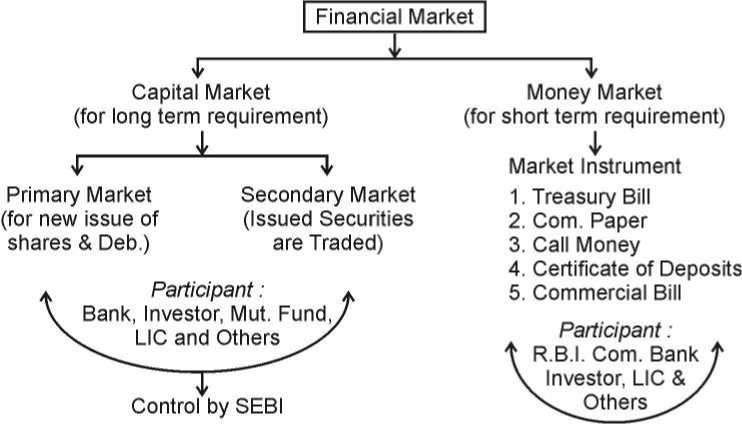
    Financial Market is a market for creation and exchange of financial assets like share, bonds etc. It helps in mobilising savings and channelising them into the most productive uses. It helps to link the savers and the investors by mobilizing funds between them. The person / Institution by which allocation of funds is done is called financial intermediaries.

    Functions of Financial Market.

    1. Mobilisation of Savings and channeling them into the most productive

    uses: Financial market facilitates the transfer of savings from savers to investors and thus helps to channelise surplus funds into the most productive use.

    1. Help in Price Determination : Financial Market helps in interaction of savers and investors which in turn helps in the determination of prices of the financial assets such as shares, debentures etc.
    2. Provide Liquidity to Financial Assets : Financial market ficilitate easy purchase and sale of financial assets. Thus, it provide liquidity to them so that they can be easily converted into cash whenever required.
    3. Reduce cost of transactions : Financial market provide valuable information about securities which helps in saving time, efforts and money and thus it reduces cost of transactions.

    70 XII – Business Studies
    Money Market

    It is a market for short term funds / securities whose period of maturity is upto one year. The major participants in the money market are RBI, Commercial Banks, Non-Banking Finance Companies, State Government, Large Corporate Houses and Mutual Funds. The main instruments of money market are as follows.

    1. Treasury Bills : They are issued by the RBI on behalf of the Central Government to meet its short-term requirement of funds. They are issued at a price which is lower than their face value and repaid at par. They are available for a minimum amount of Rs. 25,000 and in multiples thereof. They are also known as Zero Coupon Bonds.
    2. Commercial Paper : It is a short term unsecured promisory note issued by large and credit worthy companies to raise short term funds at lower rates of interest than market rates. They are negotiable instrument transferable by endorsement and delivery with a fixed maturity period of 15 days to one year.
    3. Call Money : It is short term finance repayable on demand, with a maturity period of one day to 15 days, used for interbank trasactions. Call Money is a method by which banks borrow from each other to be able to maintain the cash reserve ratio as per RBI. The interest rate paid on call money loans is known as the call rate.
    4. Certificate of Deposit : It is an unsecured instrument issued in bearer form by Commercial Banks & Financial institutions. They can be issued to

    71 XII – Business Studies

    individuals, Corporations and companies for raising money for a short period ranging from 91 days to one year.

    5. Commercial Bill : It is a bill of exchange used to finance the working capital requirements of business firms. A seller of the goods draws the bill on the buyer when goods are sold on credit. When the bill is accepted by the buyers it becomes a marketable instrument and is called a trade bill. These bills can be discounted with a bank if the seller needs funds before the bill maturity.

    Capital Market :

    It is a market for long term funds where debt and equity are traded. It consists of development banks, commercial banks and stock exchanges. The capital market can be divided into two part.

    1. Primary Market.
    2. Secondary Market

    Primary Market :

    It deals wth the new securities which are issued for the first time. It is also known as the new issues market. The investors in this market are banks, financial institutions, insurance companies, mutual funds and individuals. It has no fixed geographical location and only buying of securities take place in the primary market.

    Secondary Market :

    It is also known as the stock market or stock exchange where purchase and sale of existing securities take place. They are located at specified places and both the buying as well as selling of securities take place.

    Methods of flotation of New Issues in the Primary Market

    1. Offer through Prospectus : It involves inviting subscription from the public through issue of prospectus. A prospectus makes a direct appeal to investors to raise capital through an advertisement in newspapers and magazines.
    2. Offer for sale : Under this method securities are offered for sale through intermediaries like issuing houses or stock brokers. The company sells securities to intermediary / broker at an agreed price and the broker resell them to investors at a higher price.

    3.

    Private Placements : It refers to the process in which securities are allotted to institutional investor and some selected individuals.

    4.

    Rights Issue : It refers to the issue in which new shares are offered to the existing shareholders in proportion to the number of shares they already possess.

    5.

    e-IPOs :- It is a method of issuing securities through on-line system of stock exchange. A company proposing to issue capital to the public through the on-line system of the stock exchange has to enter into an agreement with the stock exchange. This is called an e-initial public offer. SEBI registered brokers have to be appointed for the purpose of accepting applications and placing orders with the company.

    Difference between Capital and Money Market.


    Basis

    Capital Market

    Money Market

    1.

    Participants

    Financial Institutions, Banks Corporate Entities, foreign investors and individuals

    RBI, Banks, Financial Institutions & finance companies

    2.

    Instruments

    Traded

    Equity shares, bonds preference shares and debentures

    Treasury Bills, trade bills, commercial paper, call money etc.

    3.

    Investment

    outlay

    Does not necessarily require a huge financial outlay

    Entail huge sums of money as the instruments are quite expensive.

    4.

    Duration

    Deals in medium & long term securities having maturity period of over one year.

    Deals in short term funds having maturity period upto one year.

    5.

    Liquidity

    Securities are less liquid as compared to money market securities.

    Money market instruments are highly liquid.

    6.

    Expected

    Return

    High return

    Low return

    7.

    Safety

    Capital Market instruments are riskier both with respect to return and repayment.

    Money market instrument are generally much safer with a minimum risk of default.


    73

    XII – Business Studies

    Difference between Primary and Secondary Market

    Basis

    1. Securities
    2. Price of Securities
    3. Purchase & Sale.
    4. Place of Market
    5. Medium

    Primary Market

    Only new Securities are traded.

    Prices of securities are determined by the management of the company.

    Securities are sold to investors directly by the company or through intermediary.

    There is no fixed geographical location

    Only buying of securities takes place

    Secondary Market

    Existing securities are traded.

    Price are determined by the forces of demand and supply of the securities.

    Investors exchange ownership of securities.

    Located at specified places.

    Both buying & the selling of securities can take place.

    Stock Exchange / Share Markets

    A stock Exchange is an institution which provides a platform for buying and selling of existing securities. It facilitates the exchange of a security i.e. share, debenture etc. into money and vice versa. Following are some of the important functions of a stock Exchange.

    1. Providing liquidity and Marketability to Existing Securities : Stock Exchange provide a ready and continuous market for the sale and purchase of securities.
    2. Pricing of Securities : Stock Exchange helps in constant valuation of securities which provide instant information to both buyers and sellers and thus helps in pricing of securities which is based on the forces of demand & supply.
    3. Safety of transaction : The members of a stock exchange are well regulated, who are required to work within the legal framework. This ensures safety of transactions.
    4. Contributes to Economic Growth : Stock exchange provide a platform by which saving get channelised into the most productive investment proposals, which leads to capital formation & economic growth.
    5. Spreading of Equity cult : Stock exchange helps in educating public about investments in securities which leads to spreading of Equity culture.

    74 XII – Business Studies

    6. Providing scope for speculation : Stock exchange provides scope within the provisions of law for speculation in a restricted and controlled manner.

    Trading Procedure on a Stock Exchanges.

    1. Selection of Broker : In order to trade on a stock Exchange first a broker is selected who should be a member of stock exchange as they can only trade on the stock exchange.
    2. Placing the order : After selecting a broker, the investors specify the type and number of securities they want to buy or sell.
    3. Executing the order : The broker will buy or sell the securities as per the instructions of the investor.
    4. Settlement : Transactions on a stock exchange may be carried out on either cash basis or a carry over basis (i.e. badla). The time period for which the transactions are carried forward is referred to as accounts which vary from a fortnight to a month. All transactions made during one account are to be settled by payment for purchases and by delivery of share certificates, which is a proof of ownership of securities by an individual.

    Earlier trading on a stock exchange took place through a public outcry or aution system which is non replaced by an online screen based electronic trading system. Moreover, to eliminate, the problems of theft, forgery, transfer delays etc an electronic book entry from a holding and transferring securities has been introduced, which is called process of dematerialisation of securities.

    National Stock Exchange of India (NSE)

    NSE was set up by leading financial institutions, banks, insurance companies and other financial intermediaries in 1992 and was recognised as a stock exchange in April 1993. It has provided a nation wide screen based automated trading system with a high degree of transparency and equal access to investors irrespective of geographical location. NSE was set up with the following objectives.

    1. Establishing a nation-wide trading facility for all types of securities.
    2. Ensuring equal access to investors all over the country through an appropriate communication network.
    3. Enabling shorter settlement cycles and book entry settlements.
    4. Providing a fair, efficient and transparent securities market using electronic trading system.
    5. Meeting international bench marks & standards.

    NSE provides trading in following two segments :

    1. Whole sale Debt Market Segment which provide platform for a wide range of fixed income securities such as Government Securities, treasury bills, state development loans, PSU bonds etc.
    2. Capital Market Segment which provide platform for equity shares, preference shares, debentures etc. as well as retail Govt. securities.

    Over the Counter Exchange of India (OTCEI)

    OTCEI was promoted by UTI, ICICI, IDBI, IFCI, LIC, GIC, SBI Capital Markets and can Bank Financial Services. It is a place where buyers seek sellers and vice-versa and then attempt to arrange terms and conditions for purchase / sale acceptable to both the parties. It is fully computerised, transparent, single window exchange which provide quicker liquidity to securities at a fixed and fair price, liquidity for less traded securities. Following are the advantages of OTC Market.

    1. It provides a trading platform to smaller and less liquid companies.
    2. It is a transparent system of trading with no problem of bad or short deliveries.
    3. Family concerns & closely held companies can go public through OTC.
    4. Dealer can operate both in new issues & secondary market at their options.
    5. It is cost effective as there is a lower cost of new issues and lower expenses of servicing the investors.

    Difference beteen NSEI and OTCEI


    Basis

    NSEI

    1.

    Establishment

    1992

    2.

    Settlement

    within 15 days

    3.

    Security

    In whole sale debt


    Traded

    Market segment Treasury

    OTCEI

    1990

    within 7 days Equity, debentures etc.

    bill, PSU Bonds etc & In Capital Market segment equity shares, preference shares, debentures

    4. Objectives To provide nation

    wide, ringless transparent trading facility for all instruments.

    To serve as an exchange for securities of small companies.

    5. Size of the Paid up capital Paid up capital

    company Rs. 3 Crore & above Rs. 30 Lakh & above.

    Depository Services and D mat Accounts :

    Keeping in the mind the difficulties to transfer of shares in physical form SEBI has developed a new system in which trading in shares is made compulsory in electronic form Depository services and D Mat Account are very basis of this system.

    Depository Services :

    Now a days on line paper-less trading in shares of the company is compulsory in India. Depository services is the name of that mechanism. In this system transfer of ownership in shares take place by means of book entry without the physical delivery of shares. When a investor wants to deal in shares of any company he has to open a D Mat account. There are four players who participate in this system.

    1. The Depository : A depository is an institution which hold the shares of an investor in electronic form. There are two depository institution in India these are NSDL and CDSL.
    2. The Depository Participant : He opens the Account of Investor and maintains securities records.
    3. The Investor : He is a person who wants to deal in shares whose name in recorded.
    4. The Issuing Company : That organisation which issue the securities. This issuing company send a list of the shareholders to the depositories.

    D Mat Accounts :

    In this process a shares certificates converted its physical form to electronic form and credited the same number of holding to D mat A/c.

    Benefits of D Mat Account :

    1. Reduces of paper work.
    2. Elimination of problems on transfer of shares such as loss, theft and delay.
    3. Exemption of stamp duty when transfer of shares.
    4. The concept of odd lot stand abolished.
    5. Increase liquidity through speedy settlement.
    6. Attract foreign investors and promoting foreign investment

    Depository System Parallel to Banking System

    The depository system in parallel to the Banking System. A bank holds cash in account the depository hold shares in account. The transfer of cash and shares take place with-out the physical handling of cash or shares.

    Securities and Exchange Board of India (SEBI)

    SEBI was established by Government of India on 12 April 1988 as an interim administrative body to promote orderly and healthy growth of securities market and for investor protection. It was given a statutory status on 30 January 1992 through an ordinance, which was later replaced by an Act of Parliament known as the SEBI Act, 1992.

    Objectives of SEBI

    1. To regulate stock exchange and the securities market to promote their orderly functioning.
    2. To protect the rights and interests of investors and to guide & educate them.
    3. To prevent trade malpractices such as internal trading.
    4. To regulate and develop a code of conduct and fair practices by intermediaries like brokers, merchant bankers etc.

    Function of SEBI

    f ? *

    Regulatory Functions

    1. Framing Rule & Regulations
    2. Registrations of broker & sub-brokers
    3. Registration of collective investment schemes & mutual funds.
    4. Regulation of Stock Brokers, portfolio exchanges, underwriters & Merchant Bankers
    5. Regulation of task over bids by companies.
    6. Levying fee or other charges as per Act.

    1.

    2.

    3.

    4.

    5.

    Development Functions

    Training of intermediaries Conducting Research & Publishing useful information.

    Undertaking measures to develop capital market by adapting flexible approach. Educating Investors to broader their understanding Permitting internet trading through registered stock brokers

    Protective Functions

    1. Prohibiting of frandulent & unfair trade practices.
    2. Check on insider trading.
    3. Ensure investors protection.
    4. Promote fair practice & code of conduct in securities market.
    5. Check on price rigging.
    6. Check on preferential allotment.

    One Marks Questions :


    1.

    What is the maturity period of a commercial Paper?


    2.

    What is a Treasury Bill?


    3.

    AB Ltd. has sold 1 lakh equity shares of Rs. 10 each at Rs. 12 per

    share


    to an investment banker, who offered them to the public at Rs. 20 Identify the method of flotation.

    each.

    4.

    State any two instruments of Capital Market.


    5.

    Who act as the watchdog of Security Market in India?


    6.

    Who is the Borrowers of call money?


    7.

    What is the other name of Zero coupon Bodn?


    8.

    Who issues the treasury Bill?


    9.

    What is the other name of Primary Market?


    10.

    What is a Prospectus?


    11.

    What is Dematerialization?


    12.

    What is the minimum amount of Treasury Bill?


    13.

    What is D Mat A/c?


    14.

    Write one benefit of D Mat Account?


    Three / Four Marks Questions


    1.

    State the various protective functions of SEBI.


    2.

    What is money market? Explain its three instruments.


    3.

    What is meant by commercial paper & certificate of Deposit?


    4.

    Distinguish between NSEI and OTCEI on following basis.

    1. Size of the company
    2. Securities traded.
    3. Settlement
    4. Objective.
     

    5.

    State any four regulatory functions of the SEBI.


    6.

    Make difference between Primary and Secodary Market.


    79 XII – Business Studies

    Five/ Size marks Questions.

    1. Explain any five / six functions of stock exchange.
    2. Why was SEBI set up? State its development functions.
    3. Explain any five methods of floating new issues in the primary market.
    4. Explain the trading procedure on a stock exchange.
    5. Distinguish between capital market and money market on the following

    basis.

    a)

    Participants

    b)

    Instruments Traded.

    c)

    Duration of Securities Traded.

    d)

    Expected Return

    e)

    Safety

    f)

    Liquidity.

    1. Primary Market contribute to capital formation directly Secondary Market does so indirectly Explain.
    2. You are finance expert. Your father feels that there is no difference between Primary Market and Secondary Market. Where do you differ with him. How would you convince him. Give reasons in support of your answer.
    3. What are the benefits of depository services and D Mat Account.
    4. Explain the constituents of depositry services.
    5. Mohan wants to sell 50 shares of Tata Motor. Explain the trading procedure of shares.

     

  • Notes of Financial Management Business Studies Class 12

    UNIT 9

    FINANCIAL MANAGEMENT

    Introduction

    Money required for carrying out business activities is called business finance. Finance is needed to establish a business, to run it, to modernise it, to expand or diversify it.

    Finanicial management is the activity concerned with the planning, raising controlling and administering of funds used in the business. It is concerned with optimal procurement as well as usuage of finance. It aims at ensuring availability of enough funds whenever required as well as avoiding idle finance.

    The Main Objective of Financial Management is to maximise shareholder s wealth, for which achievement of optimum capital structure and proper utilisation of funds is a must.

    Every company is required to take three main financial decisions which are as follow:

    1. Investment Decision :-

    It relates to how the firm s funds are invested in different assets. Investment decision can be long-term or short term. A long term investment decision is called capital budgeting decisions which involve huge amounts of investments and are irreversible except at a huge cost while short term investment decisions are called working capital decisions, which affect day to day working of a business.

    1. Financing Decison :-

    It relates to the amount of finance to be raised from various long term sources. The main sources of funds are owner s funds i.e. equity / share holder s funds and the borrowed funds i.e. Debts. Borrowed funds have to be repaid at a fixed time and thus some amount of financial risk (i.e. risk of default on payment) is there in debt financing. Morever interest on

    63 XII – Business Studies

    borrowed funds have to be paid regardless of whether or not a firm has made a profit. On the other hand shareholder funds involve no commitment regarding payment of returns or repayment of capital. A firm mixes both debt and equity in making financing decisions.

    3. Dividend Decision

    Dividend refers to that part of the profit which is distributed to shareholders. A company is required to decide how much of the profit earned by it should be distributed among shareholders and how much should be retained. The decision regarding dividend should be taken keeping in view the overall objective of maximising shareholder s wealth.

    Financial Planning :-

    The process of estimating the fund requirement of a business and specifying the sources of funds is called financial planning. It ensure that enough funds are available at right time so that a firm could honour its commitments and carry out, its plans.

    Importance of Financial Planning

    1. To ensure availbility of adequate funds at right time.
    2. To see that the firm does not raise funds unnecessarily.

    Factors affecting Investment Decisions / Capital Budgeting decisions

    1. Cash flows of the project : The series of cash receipts and payments over the life of an investment proposal should be considered and analysed for selecting the best proposal.
    2. Rate of Return : The expected returns from each proposal and risk involved in them should be taken into account to select the best proposal.
    3. Investment Criteria Involved : The various investment proposals are evaluated on the basis of capital budgeting techniques. Which involve calculation regarding investment amount, interest rate, cash flows, rate of return etc.

    Factors Affecting Financing Decision

    1. Cost :- The cost of raising funds from different sources are different. The cheapset source should be selected.
    2. Risk :- The risk associated with different sources is different, More risk is associated with borrowed funds as compared to owner s fund as

    64 XII – Business Studies


    interest is paid on it and it is rapaid also, after a fixed period of time or on expiry of its tenure.

    3.

    Flotation Cost :- The cost involved in issuing securities such as broker s commission, underwriters fees, expenses on prospectus etc is called flotation cost. Higher the flotation cost, less attractive is the source of finance.

    4.

    Cash flow position of the business :- In case the cash flow position of a company is good enough then it can easily use borrowed funds.

    5.

    Control Considerations : In case the existing shareholders want to retain the complete control of business then finance can be raised through borrowed funds but when they are ready for dilution of control over business, equity can be used for raising finance.

    6.

    State of Capital Markets : – During boom, finance can easily be raised by issuing shares but during depression period, raising finance by means of debt is easy.

    Factors affecting Dividend Decision :

    1.

    Earnings : – Company having high and stable earning could declare high rate of dividends as dividends are paid out of current and past earnings.

    2.

    Stability of Dividends : Companies generally follow the policy of stable dividend. The dividend per share is not altered/changed in case earning changes by small proportion or increase in earning is temporary in nature.

    3.

    Growth Prospects : In case there are growth prospects for the company in the near future them it will retain its earning and thus, no or less dividend will be declared.

    4.

    Cash Flow Positions : Dividends involve an outflow of cash and thus, availability of adequate cash is foremost requirement for declaration of dividends.

    5.

    Preference of Shareholders : While deciding about dividend the preference of shareholders is also taken into account. In case shareholders desire for dividend then company may go for declaring the same.

    6.

    Taxation Policy : A company is required to pay tax on dividend declared by it. If tax on dividend is higher, company will prefer to pay less by way of dividends whereas if tax rates are lower then more dividends can be declared by the company.

    65 XII – Business Studies

    Capital Structure

    Capital structure refers to the mix between owner s funds and borrowed funds. It will be said to be optimal when the proportion of debt and equity is such that it results in an increase in the value of the equity share. The proportion of debt in the overall capital of a firm is called financial Leverage or capital gearing. When the proportion of debt in the total capital is high then the firm will be called highly levered firm but when the proportion of debts in the total capital is less then the firm will be called low levered firm.

    Factors affecting Capital Structure.

    1. Cash flow position : In case a company has strong cash flow position then it may raise finance by issuing debts.
    2. Interest Coverage Ratio : It refers to the number of times earning before interest and taxes of a company covers the interest obligation. High Interest coverage ratio indicate that company can have more of borrowed funds.
    3. Return on Investment : If return on investment is higher than the rate of interest on debt then it will be beneficial for a firm to raise finance through borrowed funds.
    4. Flotation Cost : The cost involved in issuing securities such as brokers commission, under writers fees, cost of prospectus etc is called flotation cost. While selecting the source of finance flotation cost should be taken into account.
    5. Control : When existing shareholders are ready to dilute their control over the firm then new equity shares can be issued for raising finance but in reverse situation debts should be used.
    6. Tax Rate : Interest on debt is allowed as a deduction, thus in case of high tax rate debts are prefered over equity but in case of low tax rate more preference is given to Equity.

    In addition, cost of debt, cost of equity, flexibility, risk consideration etc are other factors affecting capital structure.

    Fixed Capital and Factors affecting Fixed Capital

    Fixed capital refers to investment in long-term assets. Investment in fixed assets is for longer duration and they must be financed through long-term sources of capital. Decisions relating to fixed capital involve huge capital/ funds and are not reversible without incurring heavy losses. The factors affecting the requirement of fixed capital are as follows.

    1. Nature of Business : Manufacturing concern require huge investment in fixed assets & thus huge fixed capital is required for them but trading concern needs less fixed capital as they doesn t require to purchase plant and machinery etc.
    2. Scale of Operations : An organisation operating on large scale require more fixed capital as compare to an organisation operating on small scale.
    3. Choice of Technique : An organisation using capital intensive techniques require more investment in plant & machinery as compare to organisation using labour intensive techniques.
    4. Technology upgradation : Organisations using assets which become obsolete faster require more fixed capital as compare to other organisations.
    5. Growth Prospects : Companies having higher growth plan require more fixed capital. In order to expand production capacity more plant & machinery are required.
    6. Diversification : In case a company go for diversification then it will require more fixed capital to invest in fixed assets like plant and machinery.

    Working Capital and Factors affecting working capital

    Working Capital refers to the capital required for day to day working of an organisation. Apart from the investment in fixed assets every business organisation needs to invest in current assets, which can be converted into cash or cash equivalents within a period of one year. They provide liquidity to the business. Working capital is of two types : Gross working capital and Net working capital Investment in all the current assets is called gross working capital whereas the excess of current assets over current liabilities is called net working capital. Following are the factors which affect working capital requirements of an organisation.

    1. Nature of Business : A trading organisation needs a lower amount of working capital as compared to a manufacturing organisation as trading organisation undertake no processing work.
    2. Scale of operations : – An organisation operating on large scale will require more inventory and thus, its working requirement will be more as compared to small organisation.

    3.

    Business Cycle ; In the time of boom more production will be undertaken and so more working capital will be required during that time as compared to depression.

    4.

    Seasonal Factors : During peak season demand of a product will be high and thus high working capital will be required as compared to lean season.

    5.

    Credit allowed : If credit is allowed by a concern to its customers than it will require more working capital but if goods are sold on cash basis than less working capital is required.

    6.

    Credit availed : If a firm is able to purchase raw material on credit from its suppliers then less working capital will be required.


    In addition to above growth prospects, operating efficiency, inflation, level of competition etc also affect working capital requirement.

    Trading on Equity :

    It refers to the increase in profit earned by the equity shareholders due to the presence of fixed financial charges like interest. Trading on equity happen when the rate of earning of an organisation is higher than the cost at which funds have been borrowed and as a result equity shareholders get higher rate of dividend per share.

    One Mark Questions

    1.

    Name the concept which increases the return on equity shares with a change in the capital structure.

    2.

    A company wants to establish a new unit in which a machinery of worth Rs. 10 lakhs is involved. Identify the type of Decision involved in financial management.

    3.

    What is the primary aim of financial management?

    4.

    What is financial risk?

    5.

    Why service-industry require less working capital?

    Three / Four Marks Questions

    1.

    What are capital budgeting Decisions? Explain three factors affecting capital budgeting Decisions.

    2.

    What is meant by fiancial planning? Explain its objectives.

    3.

    Explain the meaning and objectives of financial management.

    68 XII – Business Studies

    1. Explain financial Leverage and Trading on Equity.
    2. Explain the various financial decisions taken by an organisation.

    Five / Six Marks Questions

    1. Define capital structure. Explain five factors affecting it.
    2. Explain six factors affecting fixed capital of a concern.
    3. Give the meaning of working capital. Explain any five factors determing working capital requirements.
    4. What is meant by Divident Decision? State & Explain five factors affecting the Dividend Decision.
    5. Suggest working capital requirement for following manufacturing concern:

    a)

    Bread

    b)

    Sugar

    c)

    Coolers

    d)

    Motor Car

    e)

    Locomotive

    f)

    Furniture on Specific order.

  • Notes of Controlling Business Studies Class 12

    UNIT 8

    CONTROLLING

    Meaning & Definition

    Controlling means ensuring that activities in an organisation are performed as per the plans. Controlling also ensures that an organisation s resources are being used effectively and efficiently for the achievement of predetermined goals.

    It can be defined as comparison of actual performance with the planned performance

    The controlling functions find out how far actual performance deviates from standards, analyses the causes of such deviations and attempts to take corrective actions based on the same.

    Importance of Controlling :-

    1. Controlling helps in achieving organisational goals :- The controlling function measures progress towards the organisational goals and brings to light/indicates corrective action.
    2. Judging accuracy of standards : A good control system enables management to verify whether the standards set are accurate or not.
    3. Making efficient use to resources – By the process of control, a manager seeks to reduce wastage of resources.
    4. Improves employees motivations : A good control system ensures that employees know well in advance what they are expected to do & also the standard of performance. It thus motivates & help them to give better performance.
    5. Facilitating Coordination in action : In controlling each department and employee is governed by predetermind standards which are well coordinated with one another.

    58 XII – Business Studies

    6.

    Ensuring order and discipline :- Controlling creates an atmosphere of order and discipline in the organisation by keeping a close check on the activities of its employees.

    Limitations of Controlling

    1.

    Little Control on external factors : Generally no exterprise can control external factors such as government policies, technological changes, competitions etc.

    2.

    Resistance from employee – Control is often resisted by employees. They see it as a restriction on their freedom.

    3.

    Costly affair : Control is a costly affair as it involves a lot of expenditure time and efforts.

    4.

    Difficulty in setting quantitative standards :- Control system loses some of its effectiveness, when standards cannot be defined in quantitative terms. In the absence of quantitative standards, comparison with standards becomes difficult.

    Relationship between Planning and Controlling :

    Planning and controlling are interrelated and infact reinforce each other in the sense that

    1.

    Planning is pre-requisite for controlling. Plans provide the standard for controlling. Thus, with out planning, controlling is blind.

    2.

    Planning is meaningless without controlling. It is fruitful when control is exercised.

    3.

    Effectiveness of planning can be measured with the help of controlling.

    4.

    Planning is looking ahead & controlling is looking back.


    Thus planning & controlling cannot be separated. The two are supplementary functions which support each other for successful execution of both the functions.


    Planning makes controlling effective where as controlling improves future planning.

    Controlling Process :

    1.

    Setting performance Standards :- Standards are the criteria against which actual performance would be measured. Thus standards serve as bencemarks.

    59 XII – Business Studies

    1. Measurement of Actual performance : Performance should be measured in an objective and reliable manner. Which include personal observation, sample checking.
    2. Comparing Actual performance with standard : This steps involves comparison of actual performance with the standard. Such comparison will reveal the deviation between actual and desired performance.
    3. Analysing Deviations – The deviations from the standards are assessed and analysed to identify the causes of deviations.
    4. Taking Corrective Action :- The final step in the controlling process is taking corrective action. No corrective action is required when the deviations are within the acceptable limits.

    Techniques of Managerial Control

    Traditional Control Techniques Modern Control Techniques

    Personal Observation Return On investment

    Statistical Reports Break even analysis Budgetary Control

    Ratio Analysis Responsibility Accounting Management Audit PERT and CPM

    Management information

    Traditional Techniques :-

    Traditional techniques are those which have been used by the companies for a long time and are still being used.

    Modern Techniques :-

    Modern techniques of controlling are those which are of recent origin. These techniques provide refreshingly new thinking on the way in which various aspects of an organisation can be controlled.

    Budgetary Control : It is a technique of management control in which all operation are planned in advance in the form of budget & actual result are compared with budgetary standard.

    60 XII – Business Studies

    Types of Budget (i) Sales Budget, Production Budget etc.

    Budgetary Control :

    A budget reflects the policy for the specified period. The most common types of budgets used by an organisation are sales budget, production budget, cash budget etc.

    Budgetary control is a technique of managerial control in which all operation are planned in advance in the form of budgets and actual results are compared with budgetary standards. This comparison reveals the necessary action to be taken so that organisational objectivies are accomplished.

    Modern Techniques of Managerial Control :

    1. ROI Return an investment

    Net Income x Sales

    Sale Total Investments

    1. Ratio Analysis : Liquidity ratios; Solvency ratios;

    Profitability ratios; Turnover ratios.

    PERT : Programme evaluation & review techniques.

    CPM : Critical path method

    MIS : Management Information System

    1. It is computer based information system that provides support & information for effective managerial decesion making.
    2. It servis as an important control technique by providing data & information to the managers at the right time so that appropriate corrective action may be taken in case of deviation from standards.

    One Mark Question :-

    1. Explain the meaning of controlling.
    2. Write the first step of controlling process.
    3. Mention any one features of good controlling system.
    4. What are the two types of deviations.
    5. Which principle of management control is based on the belief that an attempt to control everything results in controlling nothing.

    61 XII – Business Studies

    3-4 Marks Questions

    1. Planning is looking ahead and controlling is looking back. Explain.
    2. Controlling function of management is a pervasive function . Explain.
    3. What is meant by Budgetary control?
    4. Corrective action is essence of control . Explain.

    5-6 Mark Questions :

    1. Explain the various steps involved in the process of control.
    2. Explain the importance of controlling is an organisation.
    3. What is break-even-analysis? How it is an effective technique of control.
    4. Planning and controlling are mutually interrelated and inter-dependent activities. Explain.
    5. What are the advantages of Budgetary Control?
    6. Explain the limitations of controlling?
    7. Explain any two Traditional techniques of controlling.
    8. Explain any two Modern techniques of controlling.

    62 XII – Business Studies


  • Notes of Directing Business Studies Class 12

    UNIT 7

    DIRECTION

    Meaning

    Directing as a function of managment, refers to the process of instructing, guiding counselling, motivating and leading people in the organisation to achieve its objectives. It does not mean only instructions but also include supervising the employess when they are performing the job, motivating them to perform more efficiently and leading them towards the achievement of organisational goal.

    Features :

    1. Directing initiate action : The other functions of management prepare a setting for action, but directing initiates action in the organisation.
    2. Directing takes place at every level of Management :- Every manager from top executive to supervisor performs the function of directing.
    3. Directing is a continous process of supervision, communication, leadership and motivation, It takes place throughout the life of the organisation.
    4. Directing flows from top to bottom :- It is first initiated at the top level and flows to the bottom through organisational hierarchy.

    Importance :

    1. Initiates Action : It helps to initiate action by people in the organisation towards attainment of desired objectives. The employees start working only when they get instructions and directions from their superiors. It is the directing function which starts actual work to convert plans into results.
    2. Integrate Employee s Efforts :- All the activities of the oranisation are interrelated so it in necessary to coordinate all the activities. It integrates the activities of subordinates by supervision, guidance and counselling.

    46 XII – Business Studies

    3.

    Means of motivation – It motivates the subordinates to work efficiently and to contribute their maximum efforts towards the achievement of organisational goals.

    4.

    Facilitates change :- Employees often resist changes due to fear of adverse effects on their employment and promotion. Directing facilitate adjustment in the organisation to cope with changes in the environment.

    5.

    Stability and Balance in the organisation :- It helps to achieve balance between individual interests of employees and organisational interests.

    Principles of Directing

    1.

    Maximum Individual Contribution : – Directing techniques must help every individual in the organisation to contribute his maximum potential for achievement of organisational objectives.

    2.

    Harmony of objectives – The objectives of individual and organisation must be in harmony with each other. But good directing should provide harmony by convincing the employees that organisational objectives are in their own interest.

    3.

    Unity of Command :- An individual or subordinate in the organisation should receive instructions from one superior only otherwise it creates confusion conflict and disorder in the organisation.

    4.

    Appropriateness of Direction Technique : According to this principle the technique like motivation, supervision, communication and leadership should be appropriate – according to the attitude and need of the employees.

    5.

    Managerial Communication : The two way flow of information is the most effective means of securing cooperation of the subordinates because it provides them an opportunity to express their feelings.

    6.

    Use of Informal organisation :- An informal organisation exist within formal organisation structure. So managers must make use of informal structure also for getting correct and real feed back.

    7.

    Leadership – A manager by becoming a good leader can make direction effective with the trust and confidence of his subordinates.

    8.

    Follow through : Mere giving of an order is not sufficient managers should follow it up by reviewing continuously.

    47 XII – Business Studies

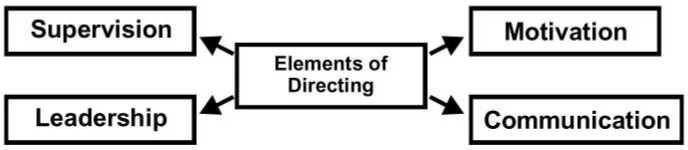
    Elements of Direction

    1. Supervision – It means observing the subordinates at work to see that they are working in according with plans and to help them in solving their problems. The important thing in supervision is it involves face to face contact between superior and subordinates. Supervisor s position is immediately above the worker.

    Importance of Supervision / Role of a Supervisor

    1. Link between workers and management because the supervisor explains management policies to worker and brings workers problems to the notice of the management.
    2. Ensures issuing Instructions : To make sure that the instructions are communicated to each and every employee.
    3. Facilities Control : – Control means match between actual and planned output. It ensures checking on the methods in use and progress of work according to planned schedule.
    4. Maintainence of Discipline : The strict supervision and guidance of supervisor encourages the employees and workers to be more disciplined in the activities.
    5. Feedback – The supervisors are directly dealing with the subordinates, As a result feedback in the form of suggestions, grievances keeps coming to the management.
    6. Improved Motivation – A supervisor with good leadership qualities can build up high morale among workers.
    7. Optimum utilisation of resources All the activities are under the observation of supervisor so less wastages and optimum utilisation of resources is possible.

    Motivations :-

    Meaning :- It is the process of stimulating people to act to their best ability

    to accomplish desired goals. It depends upon satisfying needs of people.

    Features :

    1. Psychological phonomenon – It is personal and internal feelings which arises from the needs and wants of a person.
    2. Goal Directed Behaviour – It includes people to behave in such a manner so that they can achieve their goal.
    3. Motivation can be either positive or Negative – Positive motivation means inspiring people to work better and appreciating a work that is well done. Negative motivation means forcing people to work by threatening or punishing them.
    4. Complex Process :- It is a complex and difficult process. Individuals differ in their needs and wants and moreover human needs change from time to time.

    Motivation Process –

    It is based on human needs.

    Unsatisfied Needs
    Tension
    Drives

    Search Behaviour
    Satisfied Need
    Reduction of Tension

    An Unsatisfied needs of an individual creates tension which stimulates his or her drives. These drives generate a search behaviour to satisfy such need. If such need is satisfied, the individual is relieved of tension.

    Importance –

    1. Achievement of Organisational Goal : Motivation puts human resources into action by satisfying their needs through appropriate rewards. Motivated employees cooperate and contribute their maximum efforts towards the organisational goals.
    2. Higher Efficiency of Employees – Depends upon their abilities and willingness to work hard. It bridges the gap between the ability to work and willingness to work and willingness always improves efficiency.
    3. Reduction in resistance to change It helps to overcome resistance to change.
    4. Stability in workforce – It brings confidence in employees and also improve their loyality and commitment towards the organisation. As a result the rates of labour absenteeism and labour turnover reduce.
    5. Optimum Utilisation of Resources – The motivated workers would handle machines and materials properly. This would ensure optimum utilisation of resources and reduction of wastage.

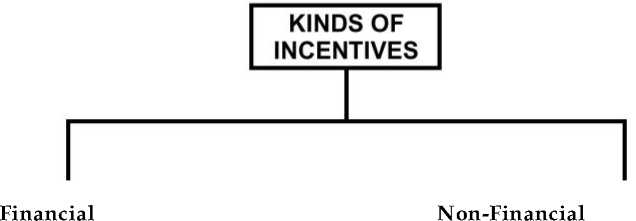
    Financial and Non-Financial Incentives – Incentive means all measures which are used to motivate people to improve performance.

    Profit sharing

    Pay and Allowances

    Bonus

    Retirement Benefits Perquisites

    Productivity linked wage in centuries

    Co-partnership/stock option

    Status

    Career Advancement

    Opportunity

    Job enrichment

    Employee Recognition programmer

    Employees participation Job security

    Employees empowerment

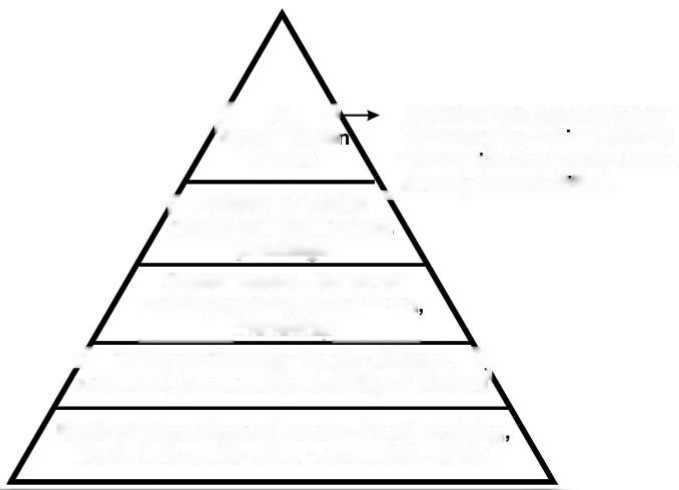
    Maslow s Need Hierarchy Theory of Motivation :- Maslow s Theory focuses on the needs as the basis for motivation

    Example from the point
    view of Individual

    Example from the point of view of organisation

    Self fulfilments

    Achievement of goals

    Status

    Jobtitle

    Friendship

    Cordial relation with collegues

    Stability of Income

    Pension Plan

    Hunger

    Basic Salary

    f Self J
    rActualisatioi
    Needs

    Needs of the highest order

    Generally found in persons

    whose first four needs have

    f Esteem or Status ‘
    needs self confidence,
    prestidge

    already been fulfilled.

    Social Needs – Sense of Belongingness, association friendship

    / Safety or Security Needs – Oldage, \ sickness, job security, stability of income’

    Basic of physiclogical needs – Food, clothing
    Shelter, air, water, other necessities of life.

    Leadership –

    Leadership is the activity of influencing people to strive willingly for mutual objectives. Managers at all levels are expected to the leaders of their subordinates.

    Features :-

    1. Influence behaviour : It indicates ability of an individual to influence others.
    2. Interpersonal relations : It tries to bring change in the behaviour of others.

    3.

    Common goals : It is exercised to achieve common goals of the organisation.

    4.

    Contnuous process : It is a continous process.

    5.

    Situational : There a no particular style of leadership it is related to particular situation.

    Importance :-

    1. Help in guiding and inspiring employees.

    2.

    Creates confidence – by recognising the Quality and capabilities of individuals.

    3.

    Handles conflicts effectively and does not allow adverse effects resulting from the conflics.

    4.

    Provides Training to Subordinates .

    5.

    Secures cooperation of members of organisation

    6.

    Inspires productivity

    7.

    Improves job satisfaction

    8.

    Achievement of organisational goals

    9.

    Introducing required changes.

    Qualities of a Good Leader

    1.

    Physical Features – Health and endurance help a leader to work hard which inspires others also to work with same spirit.

    2.

    Knowledge – A leader must be able to examine every problem in the right direction.

    3.

    Integrity – He should be a model to others regarding his ethics and values.

    4.

    Initiative – He should not wait for opportunities come to his way rather he should grab the opportunities.

    5.

    Motivation skills – To understand the needs of people and motivate them through satisfying their needs.

    6.

    Communication skills : A leader must be a good communicator.

    Communication – It is transfer of information from the sender to the receiver with the information being understood by the receiver.

    52 XII – Business Studies

    Elements of Communication Process –

    1.

    Sender – Who conveys his thoughts or ideas

    2.

    Message – Ideas, feelings, suggestions, order etc.

    3.

    Encoding – Converting the message into communication symbols such as words / pictures etc.

    4.

    Media – Path/ Channel through which encoded message is transmitted to receiver e.g., face to face, phone call, internet etc.

    5.

    Decoding – Converting encoded symbols of the sender.

    6.

    Receiver – Who receives communication of the sender.

    7.

    Feed back – All those action of receiver indicating that he has received and understood message of sender.

    8.

    Noise – Some obstruction or hindrance to communication like poor telephone connection, inattentive receiver.

    Importance of Communication

    1. Facilitates Coordination – between interrelated departments and sections thus creating a unity of purpose and action.

    2.

    Provides data necessary for decision makings – When information is effectively and efficiently communicated to management.

    3.

    Increases Managerial Efficiency – By Conveying the goals, targets, instructions.

    4.

    Promotes cooperation and Industrial Peace – The two way communication promotes cooperation and mutual understanding between the management and workers.

    5.

    Establishes effective leadership – Effective communication helps to influence subordinates – while influencing leader should posses good communication skills.

    Formal Communication – refer to official communication which takes place following the chain of command. Classification of formal communication –

    1.

    Vertical communication – Flows vertically i.e., upwards or downwards through formal channels


    i) Downward Communication – Higher to lower level like plans, policies, rules etc.

    53 XII – Business Studies

    ii) Upward Communication – Subordinate to superior like suggestions, grievances, reports etc.

    2. Horizontal / lateral Communication – between persons holding positions at the same level of ther organisation e.g., production manager may contact marketing manager about product design, quality etc.

    Communication Net works of a Formal Communication.

    Single Chain

    Free Flow

    Informal Communication : Communication that takes place without following the formal lines of communication is said to be internal communication. There is no fixed direction or path for the flow of information.

    Grapevine or Informal Communication Networks

    1. Single Strand – Each person communicates with the other in sequence.
    2. Gossip – Each person communicates with all on non-selective basis.
    3. Probability – The individual communicates randomly with other individual.
    4. Cluster – the individual communicates with only those people whom he trusts.

    Difference between Formal & Informal Communication


    Basis Formal Communication

    Internal Communication

    1.

    Meaning within the official chain of command

    Between individuals and groups which are not officially recognised.

    2.

    Channel Through a definite path

    No definite path

    3.

    Speed Slow – because all information has to pass through an established chain of command

    Very fast – Cuts across all the official channels.

    4.

    Nature More rigid and cannot be modified

    Flexible and varies from individual to individual.

    5.

    Expression It is mostly expressed in written form.

    It mostly tends to be oral

    Barriers to Effective Communication –


    1.

    Semantic Barriers – Concerned with problems and obstructions in the process of encoding or decoding of message into words or impressions Semantic barriers are as follows.

    1.

    Badly expressed message


    2.

    Symbols with different meanings.


    3.

    Faulty Translations.


    4.

    Unclarified assumptions – Subject to different interpretations.

    5.

    Technical Targon – Technical words may not be understood by the workers.

    Psychological Barriers –

    The state of mind of both sender and receiver affect the process of communication. Psychological barriers are as follows.

    1

    Premature Evaluation – Judgement before listening.

    2.

    Lack of attension.


    3.

    Loss by transmission and Poor Retention – When oral communication passes through various levels – destroy the structure of the message.

    4.

    Distrust – If the parties do not believe each other.


    55

    XII – Business Studies

    Organisational Barriers

    Factor related to organisation structure.

    1. Organisational Policy
    2. Rules and regulations.
    3. Status.
    4. Complexity in organisation structure.

    Personal Barriers – of superiors and subordinates

    1. Fear of challenge to authority.
    2. Lack of confidence of superior on his subordinates.
    3. Unwillingness to communicate.
    4. Lack of Proper incentives.

    Improving Communication Effectiveness.

    1. Clarify the ideas before communication.
    2. Communicate according to the needs of receiver.
    3. Consult others before communicating.
    4. Be aware of language, tone and content of message.
    5. Ensure proper feedback.
    6. Follow up communication.
    7. Be a good listner.

    QUESTIONS

    1 Mark

    1. Which function of management is known as Management-in-action ?
    2. How supervision is helpful in maintaining discipline?
    3. What is Economic Safety?
    4. What is meant by Job Enrichment as a type of non-monetary incentives?
    5. What is meant by Leadership ?
    6. What is meant by Integrity ?
    7. A leader does not wait for opportunities but creates them . This statement is related to which quality of a good leader?
    8. What is meant by NOISE in communication process?
    9. What is meant by Feedback in communication process?
    10. What is meant by Grapevine ?

    3 Marks Questions

    1. Direction is the least important function of management . Do you agree with this statement? Give any two reasons in support of your answer.
    2. The post of supervisor should be abolished in the hierarchy of Managers . Do you agree? Give any three reasons in support of your answers.
    3. Explain how supervision facilities control?
    4. Motivation can be either positive or negative. How?
    5. Motivation helps to reduce absentism in the organisation. Clarify.

    4/5 Marks Questions

    1. Explain any four principles of directing.
    2. State any four characteristics of motivation.
    3. Clarify Job Enrichment and Job Securing as non-financial Motivators.
    4. Explain the importance of leadership as the directing functions of management.
    5. Explain any four factors which are likely to disrupt effective communication.

    6 Marks Questions

    1. Supervision is an important element of directing function . Explain any four reasons in support of the above statement.
    2. Explain different financial and non-financial incentives used to motivate employees of a company.
    3. Effectiveness of Leadership depends on the qualities of the leader . Explain any four such qualities of a leader.
    4. In an organization there are many leaders. But a good leader must be a distinguished one. Suggest any four qualities that a good leader must possess.
    5. Explain the meaning and importance of communication process.

    57 XII – Business Studies


  • Notes of Staffing Business Studies Class 12

    UNIT 6

    STAFFING

    Meaning

    Staffing means putting people to jobs. It begins with human resource planning and includes different other functions like recruitment, selection training, development, promotion and performance appraisal of work force.

    Need and Importance of Staffing

    1. Obtaining Competent personal : Proper staffing helps in discovering and obtaining competent personal for various jobs.
    2. Higher performance : Proper staffing ensures higher performance by putting right person on the right job.
    3. Continuous growth : Proper staffing ensures continuous survival and growth of the enterprise.
    4. Optimum utilisation of human resources :- it prevents under – utilisation of personnel and high labour cost.
    5. Improves job satisfaction : It improves job satisfaction and morale of employee.

    Human Resource Management : (HRM)

    The function of Human Resource Managent is to provide skill human elements to the enterprise. Therefore big enterprise create a separate department called HRD. This department work under H.R.M. Managers.

    Definition : Human Resource managent is the recruitment selection, development, utilisation, compensation and motivation of human resources of the organisation.

    Staffing as Part of Human Resources Management : The scope of Human Resources Management is big than staffing. It involves staffing, keeping personal record, providing expert service and other work.

    40 XII – Business Studies

    Process of staffing :

    Estimating manpower requirements I i II

    Recruitment

    |Selecting from among the applications

    • Z Placement and Orientation

    |Training and Development

    Components of Staffing

    (A) Recruitment (B) Selection (C) Training. Thus, Recruitment + Selection + Training = Staffing.

    (A) Recruitment : Recruitment may be defined as the process of searching for prospective employee and stimulating them to apply for job in the Organisation.

    Sources of Recruitment :-

    (A) Internal Source (B) External Sources

    Internal Sources of Recruitment :- Internal sources refer to inviting candidates from within the Organisation. Following are important sources of internal recruitment.

    1. Transfer :- It involves the shifting of an employee from one job of another, from one department to another or from one shift to another shift.
    2. Promotions : It refers to shifting an employee to a higer position carrying higher responsibilities, prestige, facilities and pay.
    3. Lay off : To recall the temporarty worker for work is called Lay-off.

    Advantages of Internal Sources Recruitment :-

    1. Employees are motivated to improve their performance.
    2. Internal recruitment also simplifies the process of selection & placement.
    3. No wastage of time on the employee training and development.
    4. Filling of jobs internally is cheaper.

    Limitation of Internal Sources

    (1)

    The scope for induction of fresh talent is reduced.

    (2)

    The employee may become lethargic.

    (3)

    The spirit of competition among the employees may be hampered.

    (4)

    Frequent transfers of employees may often reduce the productivity of the Organisation.

    External Sources of Recruitment :-

    1.

    Direct Recruitment :- Under the direct Recruitment a notice is placed on the notice board of the enterprise specifying the details of the job available.

    2.

    Casual callers : Many reputed business org. keep a data base of unsolicited applicants in their office. These list can be use for Recruitment.

    3.

    Advertisement : – Advertisement in newspaper is generally used when a wider choice is required.

    4.

    Employment Exchange : Employment exchange is regarded as a good source of Recruitment.

    5.

    Compus recruitment and labour contractors can be used for the purpose.

    Merit of External Sources :-

    1.

    Qualified Personnel : By using external source of recruitment the management can attract qualified and trained people to apply for the vacant job in the org.

    2.

    Wider Choice : The management has a winder choice selecting the people for employment.

    3.

    Fresh Talent : It provide wider choice and brings new blood in the org.

    4.

    Competitive Spirit : If a company taps external sources, the staff will have to compete with the outsiders.

    Limitations of External Sources of Recruitment :-

    1.

    Dissatisfaction among existing employee :- Recruitment from outside may causes dissatisfaction among the employees. They may feel that their chances of promotion are reduced.

    2.

    Costly process : A lot of money has to be spent on advertisement therefore this is costly process.

    42 XII – Business Studies

    3. Lengthy Process : It takes more time than other process.

    (B) Selection : Selection is the process of choosing from among the candidates from within the org. or from the outside, the most suitable person from the current position or for the future position.

    f

    Preliminary

    Screening

    Selection

    Test

    PROCESS OF SELECTION ^

    ^ ^ ^

    Employment Reference Selection

    interview Checks

    decision

    Medical

    Exam

    Job

    Offer

    *

    Contract

    of

    employment

    (C) Training : Training is the act of increasing the knowledge and technical skills of an employee for doing a particular job efficiently.

    Benefits to the Organisation :-

    1. It enhances employee productivity and quality.
    2. Training increases employee moral.
    3. Employee got new Tech. knowledge.
    4. Efficient uses of machine.

    Benefits to the Employee :-

    1. Improved skills and knowledge of employee
    2. Increased performance by the individual help him to earn more.
    3. Less accidents.
    4. Training increases the satisfaction and morale of employee.

    Training Method

    (A) On the Job Method :- It refers to the method that are applied to the work place, while the employee is actually working. It means learning while doing .

    1. Apprenticeship Programme Training :- A master worker or a trainer is appointed who guides the worker regarding the skill of job.
    2. Coaching : In this method, the superior guides and instructs the trainee as a a coach.
    3. Job Rotation : In this method employee is transfer to other department or other shift.

    (B) Off the Job Method : These methods are used away from the work place. It means learning before doing.

    1. Class room lectures : The lecture approach is well adapted to convey specific information. The use of audio-visuals can often make a formal classroom.
    2. Films : They can provide information to the employee.
    3. Case study : Trainee study the cases to determine problems & analyses causes.
    4. Computer modelling – Training provide to the employee by the help of computer.

    One Marks Questions :-

    1. Explain the meaning of Staffing .
    2. Define Placement .
    3. Why is selection considered to be a negative Process.
    4. Give one advantage of Job Rotation training.
    5. State one objective of Preliminary screening.
    6. What is interview?
    7. What do you mean by on the Job Training?
    8. What do you mean by Recruitment?
    9. Define Lay off.
    10. Give the last steps of staffing process.
    11. Give the first steps of selection process.

    3 or 4 Marks Questions :-

    1. Explain any three types of selection Test.
    2. Explain the meaning of selection and training.
    3. Internal sources of Recruitment are better than external sourcs of Recruitment . Give reasons in support of your answer.
    4. Write the difference between training and Development.

    5 – 6 Marks Questions

    1. Explain the importance of Staffing as the reference of Management function.
    2. Describe briefly the steps involved in the process of staffing.
    3. What do you mean by Training? What are its objectives?
    4. Explain in brief merits and limitation of external sources of recruitment.
    5. The process of selection starts where the process of recruitment ends. In the light of this statement, explain the difference between recruitment and selection.
    6. Explain the process of Selection.
    7. Explain off the job Training Method.
    8. Explain the Advantages and Limitation of Internal Sources of Recruitment.
    9. A newly appointed personal manager is of the view that there is no need for training the workers. Do you agree with his views? Give reasons in support of your answer.
    10. Explain Staffing as a part of Human Resources Management.


  • Notes of Organising Business Studies Class 12

    UNIT 5

    ORGANISING

    Meaning of Organising

    After laying down the plans and objectives the next function to be performed by the managers is organising. It determines what activities and resources are required and decides who will do a particular task, where it will be done and when it will be done.

    * Thus organising means establishing relationship between various factors of production and it in concerned with establishing relationship amongst jobs, sections, department & position.

    Organising is the process of identifying and grouping the work to be performed, defining and delegating responsibility and authority and establishing relationships for the purpose of enabling people to work most effectively together in accomplishing objectives.

    Step Involved in the Process of Organising :-

    1. Identification and Division of Work :- It involves identification and dividing the total work to be done into specific activities (called jobs) in accordance with previously determined plans. By dividing the work the burden of work can be shared among the employees.

    It facilitates specialisation of work & skills. Duplication of work can be avoided by dividing the work into manageable activities.

    1. Departmentalisation :- The second step in organising is to combine or group similar or related jobs into larger units, called departments, divisions or sections. They can be grouped on the basis of functions which an organisation undertakes to achieve its objective. For example departments may be created for manufacturing, marketing, financing etc.

    Departmentalisation is done to achieve coordination & to facilitate unity of efforts.

    29 XII – Business Studies

    1. Assignment of duties Once departments have been formed each of them is placed under the charge of an individual called departmental head (e.g., production manager, finance manager etc.) Jobs are then allocated to the members of each department according to their skills and qualifications.
    2. Establishing Reporting Relationships :- Merely allocating work is not enough. Each individual should also know from whom he has to take orders and to whom he is accountable. It helps in coordination amongst various departments.

    Importance of Organising :-

    1. Benefits of specialisation : – In organising every individual is assigned a part of total work and not the whole task. Due to this division of work into smaller units and repetitive performance leads to specialisation. Thus organising promotes specialisation which in turn leads to efficient & speedy performance of tasks.
    2. Clarity in working Relationship :- It helps in creating well defined jobs and also clarifying the limits of authority and responsibility of each job. The superior, subordinate relationship is clearly defined in organising.
    3. Effective Administration : It provides a clear description of jobs and related duties which helps to avoid confusion and duplication. Clarity in working relationships enables proper execution of work which results in effective administration.
    4. Optimum Utilisation of resources : The proper assignment of jobs avoids overlapping/duplication of work. This helps in preventing confusion and minimising the wastage of resources and efforts.
    5. Adaptation of change :- It allows a business enterprise to adapt itself according to changes in the business environment. Organisational structures can be suitably modified according to changes.
    6. Development of personnel : Sound organisation encourages initiative & creative thinging on part of employees.
    7. Expansion and growth : It helps in growth & diversification of an enterprise by adding more job positions & department.

    Meaning of Organisational Structure :-

    It seeks to establish relations among all the persons working in the

    organisation. Under the organisational structure various posts are created to

    30 XII – Business Studies

    perform different activities for the attainment of the objectives of the enterprise. Relations among persons working on different posts are determined. The structure provides a basis or framework for managers and other employees for performing their functions.

    The organisation structure can be defined as the frame work within which managerial and operating tasks are performed.

    Relation between Span of Management and Organisation structure

    – Span of mangement refers to the number of subordinates that can be effectively managed by a superior. The Span of management to a large extent gives shape to the organisation structure. This determines the levels of management in the structure.

    Types of Organisation Structures

    Functional Structure

    Divisional Structure

    I. Functional Structure :- In functional structure activities are grouped and departments are created on the basis of specific functions to be performed. For example all the jobs related to production are grouped under production department – Sales to sales department etc.

    Advantages :

    1. Specialisation – Better division of labour takes place which results in specialisation of functions and its consequent benefits.
    2. Coordination is established :- All the persons working within a department are specialist of their respective jobs. It makes the coordination easier at department level.
    3. Helps in increasing managerial efficiency : Managers of one department are performing same type of function again and again which makes them specialised and improves their efficiency.
    4. Minimises cost – It leads to minimum duplication of effort which results in economies of scale and thus lowers cost.

    Disadvantages

    1. Ignorance of organisational objectives – Each departmental head works according to his own wishes. They always give more weight to their departmental objectives. Hence overall organisation objectives suffer.
    2. Difficulty in Inter-departmental Coordination – All departmental heads work as per their own wishes which results coordination within the department but it makes inter-departmental coordination difficult.
    3. Hurdle in complete development – because each employee specialises only in a small part of the whole job.

    Suitability :-

    1. Where the size of business unit is large.
    2. Where specialisation is required.
    3. Where there is mainly only one product in sold.

    II. DIVISIONAL ORGANISATION STRUCTURE :

    Dividing the whole enterprise according to the major products to be

    manufactured (like metal, plastic, cosmetics etc) in known as divisional

    organisation structure.

    Advantages :-

    1. Quick decision making :- Divisional manager can take any decision regarding his division independently which makes decisions quick and effective.
    2. Divisional results can be Assessed :- Divisional results (profit/loss) can be assessed easily. On this basis unprofitable division can be closed.
    3. Growth and Expansion :- It facilitates growth and expansion as new divisions can be added without disturbing existing departments.

    Disadvantages :-

    1. Conflicts – among different divisions on allocation of resources
    2. Duplicity of Functions : – Entire set of functions is required for all divisions. It gives rise to duplicity of efforts among divisions.
    3. Selfish Attitude :- Every division tries to display better performance even sometimes at the cost of other divisions. This shows their selfish attitude.

    Suitablity :-

    1. Where the number of main products are more than one.
    2. Where the size of the concern is large enough.

    FORMAL ORGANISATION

    This structure is designed by the management to achieve organisational goals in which the responsibilities, authority and mutual relationships among all the employees working in an enterprise are clearly defined. It can be functional or divisional.

    Features :-

    1. It in deliberately created by the top management.
    2. It is based on rules and procedures. Which are in written form
    3. It is impersonal – Does not take into consideration emotional aspect.
    4. It clearly difines the authority and responsibility of every individual.
    5. It is created to achieve organisational objectivies.

    Advantages :-

    1. Easier to fix responsibility since mutual relationships are clearly defined.
    2. No overlapping of work – because things move according to a definite plan.
    3. Unity of command through an established chain of commands.
    4. Easy to achieve objectives – because of coordination and optimum use of human and material resources.
    5. Stability in the organisation – because behaviour of employees can be fairly predicted since there are specific rules to guide them.

    Disadvantages :

    1. The work is based by rules which causes unnecessary delay.
    2. Lack of initiatives – because the employees have to do what they are told to do and they have no opportunity of thinking.
    3. Limited in scope – It is difficult to understand all human relationships in an enterprice as it places more emphasis on structure and work.

    Informal Organisation :

    An informal organisation is that organisation which is not established

    deliberately but comes into existence because of common interests, tastes and

    religious and communal relations.

    Features :

    1. It originates from within the formal organisation as a result of personal interaction among employees.
    2. It has no written rules and procedures.
    3. It does not have fixed lines of communication.
    4. It is not deliberately created by the management.
    5. It is personal – means the feelings of individuals are kept in mind.

    Advantage

    1. Speed : Prescribed lines of communication are not followed which leads to faster spread of information.
    2. Fulfillment of social needs – enhances job satisfaction which gives them a sense of belongingness in the organisation.
    3. Quick solution of the problems – because the subordinates can speak out their mind before the officers which helps the officers to understand the problems of their subordinates.

    Disadvantages :-

    1. It creates rumours :- All the persons in an informal organisation talk carelessly and sometimes a wrong thing in conveyed to the other person.
    2. It resists change and lays stress on adopting the old techniques.
    3. Priority to group Interests – Pressurises members to confirm to group expectations.

    Difference between Formal & Informal organisation


    Basis

    Formal organisation

    Informal organisation

    1.

    Meaning

    If refers to the structure of well defined authority and and responsibility.

    It refers to the network of social relationships which develops automatically

    2.

    Nature

    Rigid

    Flexible

    3.

    Authority

    Arises by virtue of positions in management

    Arises out to personal qualities.

    4.

    Adherence to rules

    Violation of rules may lead to penalties and punishments

    No such punishments.

    5.

    Flow of

    Takes place through the

    Not through a planned


    communi

    cation

    scalar chain

    route It can take place in any direction.

    Delegation of Authority

    Meaning – It means the granting of authority to subordinates to operate within the prescribed limits. The manager who delegates authority holds his subordinates responsible for proper performance of the assigned tasks. To make sure that his subordinates perform all the work effectively and efficiently in expected manner the manager creates accountability.

    Elements of Delegation :-

    1. Authority – The power of taking decisions in order to guide the activities of others. Authority is that power which influences the conduct of others.
    2. Responsibility : It is the obligation of a subordinate to properly perform the assigned duty. When a superior issues orders it becomes the responsibility of the subordinate to carry it out.
    3. Accountability – When a superior assigns some work to a subordinate, he is answerable to his superior for its success or failure.

    Principle of Absoluteness of Accountability – Authority can be delegated but responsibility / Accountability cannot be delegated by a manager. The authority granted to a subordinate can be taken back and re-delegated to another person. The manager cannot escape from the responsibility for any default or mistake on the part of his subordinates.

    Importance of Delegation of Authority

    1. Reduction of Executive work load – It reduces the work load of officers. They can thus utilise their time in more important and creative works instead of works of daily routine.
    2. Employee development – Employees get more opportunities to utilise their talent which allows them to develop those skills which will enable them to perform complex tasks.
    3. Quick and better decision are possible – The subordinate are granted sufficient authority so they need not to go to their superiors for taking decisions concerning the routine matters.
    4. High Morale of subordinates – Because of delegation of authority to the subordinates they get an opportunity to display their efficiency and capacity.
    5. Better coordination – The elements of delegation – authority, responsibility and accountability help to define the power, duties and answerability related to various job positions which results in developing and maintaining effective co-ordination.

    Difference – Authority, Resposibility and Accountability

    Basis

    Authority

    Responsibility

    Accountability

    1. Meaning

    Right to command

    Obligation to perform an assigned task

    Answerability for out come of the assigned task.

    2. Origin

    Arises from formal position

    Arises from delegated authority

    Arises from responsibility.

    3. Flow

    Downward – from Superior to Subordinate

    upward – from Subordinate to Superior

    upward – from Subordinate to Superior

    4. Withdrawl

    Can be withdrawn anytime by giving notice

    Cannot be withdrawn once created

    Cannot be withdrawn once created

    Decentralisation :-

    Meaning – It means to delegate authority to all levels of management for taking decisions. Under decentralisation all the authority except the one which is absolutely necessary for the superiors to hold is given to the subordinates permanently. Under decentralisation the number of centres for taking decisions

    36 XII – Business Studies

    increases because the managers belonging to the middle and lower level have the authority to take important decisions.

    Centralisation and Decentralisation – represents the pattern of authority among managers at different levels. Centralisation of authority means concentrations of power of decision making in a few hands. In such an organisation very little authority is delegated to managers at middle and lower levels. No organisation can be completely centralised or decentralised. They exist together and there in a need for a balance between the two. As the organisation grows in size there is tendency to move towards decentralisation. Thus every organisation characterised by both.

    Importance of Decentralisation :-

    1. Develops initiative amongst subordinates – It helps to promote confidence because the subordinates are given freedom to take their own decisions.
    2. Quick and better decisions – The burden of managerial decisions does not lie on a few individuals but get divided among various persons which helps them to take better and quick decisions.
    3. Relieves the top Executives from excess workload – The daily managerial works all assigned to the subordinates which leaves enough time with the superiors which they can utilise in developing new strategies.
    4. Managerial Development – It means giving authority to the subordinates upto the lower level to take decisions regarding their work. In this way the opportunity to take decisions helps in the development of the organisation.
    5. Better Control – It makes it possible to evaluate performance at each level which results in complete control over all the activities.

    Difference between – Delegation & Decentralisation


    Basis

    Delegation

    Decentralisation

    1.

    Nature

    It is a compulsory act

    It is an optional policy

    2.

    Freedom

    Less freedom to take

    More freedom of action due


    of action

    decisions due to more

    to less control by the top


    control by the superiors

    management.

    3.

    Status

    It is a process of sharing

    It is the result of policy


    tasks and authority

    decisions taken by top


    management.

    37 XII – Business Studies

    4.

    Scope

    Narrow – as it is confined

    Wide – It includes extensions


    to a superior and his

    of delegation to the lowest


    immediate subordinate.

    of management.

    5.

    Purpose

    To reduce the burden of

    To increase the role and


    the manager

    autonomy of lower level


    management.

    QUESTIONS

    1 marks

    1. How effective administration in possible through organising?
    2. Name the function of management which coordinates the physical, financial and human resources and establishes productive relations among them for achievement of specific goals.
    3. Name the organisation which is directed by group norms.
    4. What is organisation chart?
    5. What is meant by organisational structure?
    6. Difficulty in inter-departmental coordination is one of the limitations of which organisation structure.
    7. What is meant by Authority?
    8. What is the basis of delegation of authority.
    9. Why effective management is possible through delegation of authority.

    3 marks

    1. What is functional organisation structure? Write two advantages of this structure.
    2. How accountability related to authority? Explain.
    3. Why is it necessary to delegate authority? Give three reasons.
    4. Write three characteristics of decentralisation.
    5. State three steps in the process of organising.

    4/5 marks

    1. Explain briefly any four features of formal organisation.
    2. The employees of Sachin Ltd. a software company, have formed a Dramatic group for their recreation, Name the type of organisation and state its three features.
    3. Distinguish between Formal and Informal organisation (any four points)
    4. A manager is of the view that he is not responsible for the quality of work that he has delegated to his subordinates . Do you agree?
    5. Delegation of authority provides the means where by a manager multiples himself Commnet.

    6 marks

    1. Explain the importance of organising as a function of management.
    2. Formal organisation is considered better than informal organisation . Do you agree with this statement? Give reasons.
    3. What is meant by Divisional structure of an organisation? Explan any two advantages and two limitations of it.
    4. Decentralisation is an optional policy. Explain why an organisation would choose to be decentralised.
    5. Explain the meaning and process of delegation of authority.
  • Notes of Planning Business Studies Class 12

    UNIT 4

    PLANNING

    ConceptPlanning is deciding in advance what to do, how to do it, when to do it and who is to do it. Planning bridges the gap from where we are to where we want to go. It is one of the basic managerial functions. Planning involves setting objectives and developing appropriate courses of action to achieve these objectives. Thus it in closely connected with creativity and innovation.

    Importance of Planning :-

    1. Planning provides directions : By Stating in advance how work to be done planning provides direction for action. If there was no planning, employees would be working in different direction and the organisation would not be able to achieve its goods efficiently.
    2. Planning reduces the risk of uncertainty :- Planning is an activity which enables a manager to look ahead, anticipate change, consider the impact of change and develop appropriate responses.
    3. Planning reduces wasteful activities :- Planning serves as the basis of coordinating the activities and efforts of different departments and individuals useless and redundant activities are minimised.
    4. Planning promotes innovative ideas : Planning is the first function of management : Managers get the opportunity to develop new ideas and new ideas can take the shape of concrete plans.
    5. Planning facilities decision making : Under planning targets are laid down. The manager has to evaluate each alternative and select the most viable proposition.
    6. Planning establishes standards for controlling :- Planning provides the standards against which the actual performance can be measured and evaluated. Control is blind without planning. Thus planning provides the basis for control.

    24 XII – Business Studies

    Features of Planning

    1.

    Planning focuses on achieving objectives :- Planning function of management starts with determination of objectives. Once the objectives are set up, the next step is to determine the step that are to be followed to achieve these objectives.

    2.

    Planning is the primary function of management : – Planning precedes organising, directing and controlling. It serves as the basis of all other function of management.

    3.

    Planning is pervasive : Planning is required in all types of organisations and at all levels of management as well as in all departments of the organisation.

    4.

    Planning is continuous :- Planning continues as a continuous process which an organisation has to undertake till its existence.

    5.

    Planning is futuristic : Planning is deciding in the present what to do in the future. It is never done for past.

    6.

    Planning is a mental exercise : Planning requires application of the mind involving creative thinking and imagination, therefore this is a mental


    exercise :

    Limitations of Planning

    1.

    Planning leads to rigidity : A well defined plan is drawn up with specific goals to be achieved within a specific time frame. A plan decide in advance the future course of action. This kind of rigidity in plan may create difficulty.

    2.

    Planning may not work in a dynamic environment :- The business environment is dynamic, nothing is constant. Every organisation has to constantly adapt itself to the changes in business environment.

    3.

    Planning reduces creativity : Planning is an activity which is done by the top management therefore it reduced other level creativity.

    4.

    Planning involves huge costs : When plans are drawn up, huge cost involved in their formulation.

    5.

    Planning is time consuming : Sometime plans to be drawn up take so much of time that there is not much time left for their implementation.

    6.

    Planning does not guarantee success

    25 XII – Business Studies

    Planning Process

    1. Setting Objectives : The first and foremost step is setting objective. Objective may be set for the entire organisation and each department.

    2.

    Developing premises : Planning premises are the assumptions about the likely shape of events of future. It forecasts the abstacles, problems or limitations in the path of the effective planning because of which the plans may deviate, planning premises supply relevant facts & information relating to future.

    3.

    Identifying alternative courses of action :- Once objective are set and

    premises are developed. Then the next step would be to act upon them. All the alternative courses of action should be identified.

    4.

    Evaluating alternative Courses : The next step is to be weight pros and cons of each alternative. Each course will have many variables which have to be weighted against each other.

    5.

    Selecting an alternative :- After comparison and evaluation the best alternative is chosen for reaching organisation objectives.

    6.

    Implement the plan : Once the plan are developed they are put into action.

    7.

    Follow to action : To see whether plans are being implemented, activities are performed according to schedule.

    Types of Plan :-

    1. Objective : Objectives can be said to be the desired future position that the management would like to reach.

    2.

    Strategy : A strategy refers to future decision defining the organisation s direction and scope in the long run.

    3.

    Policy : Policies are general statements that guide thinking or channelise energies towards a particular direction. We don t sell on Credit is the example of sales policy.

    4.

    Procedure : Procedures are routine steps on how to carry out activities.

    5.

    Rule : Rules are specific statement that tell what is to be done. For example No Smoking is a rule.

    6.

    Programmes :- Programmes are the combination of goals, policies and rules. All these plans together form a programme.

    26 XII – Business Studies

    7.

    Single use plan : Plan made to be used only one time or at most, couple of times because they focus on unique or rare situations within the organisation eg. program, budget.

    8.

    Standing plan : Standing plan are often policies, procedure and program developed to ensure the inernal operation of a given business are operating smoothly. They other developed onces & then modified to suit the business needs requirements.

    9.

    Budgets : A budget is a statement of expected result expressed in numerical terms for a definite period of time in the future.

    10.

    Method : Methods are standardised ways or manner in which a task has to be performed considering the objectives.

    1 Mark Questions

    1.

    Define planning.

    2.

    Explain Procedures.

    3.

    Define Rules.

    4.

    Write the meaning of Budgets.

    5.

    Write one difference between Policies & Procedure.

    6.

    One of the function of management is considered as base for all other function. Name that functions.

    7.

    Name the types of plan in which the movement of competitors is considered.

    8.

    No Smoking in the work shop This statement is related to which types of plan.

    9.

    We do not sell on credit This statement is related to which types of plan.

    10.

    Write the meaning of strategies.

    3 and 4 Marks Question

    11.

    Planning is the heart of management . How?

    12.

    Control is blind without planning. How?

    13.

    How planning proviide base to controlling?

    14.

    Write the difference between rules and policies.

    15.

    Write the difference between Policies & Procedures.

    27 XII – Business Studies

    5 – 6 Marks Question :-

    1. Explain any four types of planning.
    2. In spite of best effort of managers sometime planning fails to achieve desired result due to its limitations. Explain.
    3. Planning keeps the organisation on the right path. In this reference explain the importance of Planning.
    4. Explain the features of Planning.
    5. Explain the limitations of Planning.
    6. Explain the process of Planning.

    28 XII – Business Studies