Category: Business Studies

  • Notes of Planning Business Studies Class 12

    UNIT 4

    PLANNING

    ConceptPlanning is deciding in advance what to do, how to do it, when to do it and who is to do it. Planning bridges the gap from where we are to where we want to go. It is one of the basic managerial functions. Planning involves setting objectives and developing appropriate courses of action to achieve these objectives. Thus it in closely connected with creativity and innovation.

    Importance of Planning :-

    1. Planning provides directions : By Stating in advance how work to be done planning provides direction for action. If there was no planning, employees would be working in different direction and the organisation would not be able to achieve its goods efficiently.
    2. Planning reduces the risk of uncertainty :- Planning is an activity which enables a manager to look ahead, anticipate change, consider the impact of change and develop appropriate responses.
    3. Planning reduces wasteful activities :- Planning serves as the basis of coordinating the activities and efforts of different departments and individuals useless and redundant activities are minimised.
    4. Planning promotes innovative ideas : Planning is the first function of management : Managers get the opportunity to develop new ideas and new ideas can take the shape of concrete plans.
    5. Planning facilities decision making : Under planning targets are laid down. The manager has to evaluate each alternative and select the most viable proposition.
    6. Planning establishes standards for controlling :- Planning provides the standards against which the actual performance can be measured and evaluated. Control is blind without planning. Thus planning provides the basis for control.

    24 XII – Business Studies

    Features of Planning

    1.

    Planning focuses on achieving objectives :- Planning function of management starts with determination of objectives. Once the objectives are set up, the next step is to determine the step that are to be followed to achieve these objectives.

    2.

    Planning is the primary function of management : – Planning precedes organising, directing and controlling. It serves as the basis of all other function of management.

    3.

    Planning is pervasive : Planning is required in all types of organisations and at all levels of management as well as in all departments of the organisation.

    4.

    Planning is continuous :- Planning continues as a continuous process which an organisation has to undertake till its existence.

    5.

    Planning is futuristic : Planning is deciding in the present what to do in the future. It is never done for past.

    6.

    Planning is a mental exercise : Planning requires application of the mind involving creative thinking and imagination, therefore this is a mental


    exercise :

    Limitations of Planning

    1.

    Planning leads to rigidity : A well defined plan is drawn up with specific goals to be achieved within a specific time frame. A plan decide in advance the future course of action. This kind of rigidity in plan may create difficulty.

    2.

    Planning may not work in a dynamic environment :- The business environment is dynamic, nothing is constant. Every organisation has to constantly adapt itself to the changes in business environment.

    3.

    Planning reduces creativity : Planning is an activity which is done by the top management therefore it reduced other level creativity.

    4.

    Planning involves huge costs : When plans are drawn up, huge cost involved in their formulation.

    5.

    Planning is time consuming : Sometime plans to be drawn up take so much of time that there is not much time left for their implementation.

    6.

    Planning does not guarantee success

    25 XII – Business Studies

    Planning Process

    1. Setting Objectives : The first and foremost step is setting objective. Objective may be set for the entire organisation and each department.

    2.

    Developing premises : Planning premises are the assumptions about the likely shape of events of future. It forecasts the abstacles, problems or limitations in the path of the effective planning because of which the plans may deviate, planning premises supply relevant facts & information relating to future.

    3.

    Identifying alternative courses of action :- Once objective are set and

    premises are developed. Then the next step would be to act upon them. All the alternative courses of action should be identified.

    4.

    Evaluating alternative Courses : The next step is to be weight pros and cons of each alternative. Each course will have many variables which have to be weighted against each other.

    5.

    Selecting an alternative :- After comparison and evaluation the best alternative is chosen for reaching organisation objectives.

    6.

    Implement the plan : Once the plan are developed they are put into action.

    7.

    Follow to action : To see whether plans are being implemented, activities are performed according to schedule.

    Types of Plan :-

    1. Objective : Objectives can be said to be the desired future position that the management would like to reach.

    2.

    Strategy : A strategy refers to future decision defining the organisation s direction and scope in the long run.

    3.

    Policy : Policies are general statements that guide thinking or channelise energies towards a particular direction. We don t sell on Credit is the example of sales policy.

    4.

    Procedure : Procedures are routine steps on how to carry out activities.

    5.

    Rule : Rules are specific statement that tell what is to be done. For example No Smoking is a rule.

    6.

    Programmes :- Programmes are the combination of goals, policies and rules. All these plans together form a programme.

    26 XII – Business Studies

    7.

    Single use plan : Plan made to be used only one time or at most, couple of times because they focus on unique or rare situations within the organisation eg. program, budget.

    8.

    Standing plan : Standing plan are often policies, procedure and program developed to ensure the inernal operation of a given business are operating smoothly. They other developed onces & then modified to suit the business needs requirements.

    9.

    Budgets : A budget is a statement of expected result expressed in numerical terms for a definite period of time in the future.

    10.

    Method : Methods are standardised ways or manner in which a task has to be performed considering the objectives.

    1 Mark Questions

    1.

    Define planning.

    2.

    Explain Procedures.

    3.

    Define Rules.

    4.

    Write the meaning of Budgets.

    5.

    Write one difference between Policies & Procedure.

    6.

    One of the function of management is considered as base for all other function. Name that functions.

    7.

    Name the types of plan in which the movement of competitors is considered.

    8.

    No Smoking in the work shop This statement is related to which types of plan.

    9.

    We do not sell on credit This statement is related to which types of plan.

    10.

    Write the meaning of strategies.

    3 and 4 Marks Question

    11.

    Planning is the heart of management . How?

    12.

    Control is blind without planning. How?

    13.

    How planning proviide base to controlling?

    14.

    Write the difference between rules and policies.

    15.

    Write the difference between Policies & Procedures.

    27 XII – Business Studies

    5 – 6 Marks Question :-

    1. Explain any four types of planning.
    2. In spite of best effort of managers sometime planning fails to achieve desired result due to its limitations. Explain.
    3. Planning keeps the organisation on the right path. In this reference explain the importance of Planning.
    4. Explain the features of Planning.
    5. Explain the limitations of Planning.
    6. Explain the process of Planning.

    28 XII – Business Studies

  • Notes of Business Environment Business Studies Class 12

    UNIT 3

    BUSINESS ENVIRONMENT

    Business environment can be defined as those forces, individuals and institutions who have the ability to influence the working of an organisation.

    Features of Business Environment :

    (1) Totality of external forces : Business environment is the sum total of all the forces/factors external to a business firm.

    Specific and General forces : Business environment includes both specific and general forces. Specific forces includes investors, competitors, customers etc who influence business firm directly while general forces includes social, political, economic, legal and technological conditions which affect a business firm indirectly.

    Inter-relatedness : All the forces/factors of a business environment are closely interrelated.

    Dynamic : Business environment is dynamic in nature which keeps on changing with the change in technology, consumers fashion and tastes etc.

    Uncertainty : Business environment is uncertain as it is difficult to predict the future environmental changes and their impact.

    Complexity : Business environment is complex which is easy to understand in parts separately but it is difficult to understand in totality.

    Relativity : Business environment is a relative concept whose impact differ from country to country and region to region.

    IMPORTANCE OF BUSINESS ENVIRONMENT

    1. I d en t i fi c a t i o n o f op p o rt u n i t i e s t o g e t f i r s t m ov e r a d v a n t a ge :

    Understanding of business environment help an organisation in identifying advantageous opportunities and getting their benefits prior to competitors.

    (2)

    (3)

    (4)

    (5)

    1. (7)

    18 XII – Business Studies

    2.

    Identification of threats : Correct knowledge of business environment help an organisation to identify those threats which may adversely affect its operations.

    3.

    Tapping useful resources : Business environment made available various resources such as capital, labour, machines, raw material etc to a business firm. In order to know the availability of resources and making them available on time knowledge of business environment is necessary.

    4.

    Coping with Rapid changes : Continuous study/scanning of business environment help in knowing the changes which are taking place and thus they can be faced effectively.

    5.

    Assistance in planning and policy formulation : Understanding and analysis of business environment help an organisation in planning & policy formulation.

    6.

    helps in Improving Performance : Correct and continuous monitoring of business environment help an organisation in improving its performance.


    DIMENSIONS / COMPONENTS OF BUSINESS

    ENVIRONMENT

    1.

    Economic Environment : It has immediate and direct impact on a business. Rate of interest, inflation rate, change in the income of people etc. are some economic factors which could affect business firms. Economic environment offers opportunities to a firm or it may put constraints.

    2.

    Social Environment : It includes various social forces such as customs, beliefs, literacy rate, educational levels, lifestyle, values etc. Changes in social environment affect an organisation in the long run. Example : now a days people are paying more attention towards their health as a result of which demand for mineral water, diet coke etc has increased while demand of tobacco, fatty food products has decreased.

    3.

    Technological Environment : It provides new and advance ways/ techniques of production. A businessman must closely monitor the technological changes taking place in the industry as it helps in facing competition and improving quality of the product.

    4.

    Political Environment : Changes in political situation also affect business organisations. Political stability builds confidence among business community white political instability and bad law & order situation, may

    19 XII – Business Studies

    bring uncertainly in business activities. Political environment has immediate and great impact on the business transctions, so the businessman must scan the environment carefully so that necessary changes can be made in the organisation as per requirements.

    5. Legal Environment : It constitutes the laws and legislation passed by the Government, administrative orders, court judgements & decisions of various commissions and agencies. Businessman had to act according to various legislations and so their knowledge is very necessary.

    Economic Reforms :

    As a part of Economic reforms, the Government of India announces new

    Industrial Policy in 1991, whose main features are as follows :

    1. Only six industries were kept under licencing scheme.
    2. The role of public sector was limited only to four industries.
    3. Disinvestment was carried out in many public sector enterprises.
    4. Foreign capital/investment policy was liberalised and in many sectors 100% direct foreign investment was allowed.
    5. Automatic permission was given for signing technology agreements with foreign companies.
    6. Foreign investment promotion board (FIPB) was setup to promote & bring foreign investment in India.

    The main objective of New Industrial Policy was to promote Liberalization,

    Privatization and Globalization

    Liberalization : Abolishing licensing requirements; Freedom in deciding the scale of business: removals of restriction on movements of goods and service; reduction in tax rates; freedom in fixing prices; simplifying procedures; making it easier to attract foreign investment.

    Privatization : Giving greater role to private sector in the nation buiding process and reduced role of public sector; Disinvestment in many Public Sector undertaking etc.

    Globalization : It means integration of various economies of the world leading to the emergence of cohesive global economy. The measures taken by the Government include trade liberalization which includes import liberalization; Export Promotion though rationalization of tariff structure; Foreign exchange liberalization; increased interaction among global economics under the aegis (protection/support) of World Trade Organization.

    20 XII – Business Studies

    IMPACT OF GOVERNMENT POLICY CHANGES ON BUSINESS AND INDUSTRY

    1.

    Increasing Competition : Delicencing and entry of foreign firms in Indian market has increased the level of competition for Indian firms.

    2.

    More Demanding Customers : Now customers are more aware and they keep maximum information of the market as the result of which now market are customer/buyer oriented. Now products are produced keeping in mind the demands of the customers.

    3.

    Rapid Changing Technological Environment : Rapid Technological advancement has changed/improved the production process as a result of which maximum production is possible at minimum cost but it leads to tough challenges in front of small firms.

    4.

    Necessity for change : After new industrial policy the market forces (demand & supply) are changing at a very fast rate. Changes in the various components of business environment has made it necessary for the business firms to modify their policies & operations from time to time.

    4.

    Need for Developing Human resources : The changing market corditions of today require people with higher competence and greater commitment, hence the need for developing human resources arise, which could increase their effectiveness and efficiency.

    5.

    Market orientation : Earlier selling concept was famous in the market but now its place is taken by the marketing concept. Today firms produces those goods & services which are required by the customers.

    6.

    Reduction in budgetary Support to Public Sector : The budgetary support given by the government to the public sector is going on reducing and thus the public sector have to survive and grow by utilising their own resources efficiently.


    IMPORTANT QUESTIONS

    1 Mark Questions (To be answered in 1 word or 1 sentence)

    1.

    Govt. of India is seriously thinking to allow oil marketing public sector undertaking to fix their own price for diesel. Which economic reform is the reason of this change in government s policy (Answer: Liberalization)

    21 XII – Business Studies

    2.

    Just after declaration of Lok Sabha Elections 2009 results, the Bombay stock exchange s price index (Sensex) rose by 2100 points in a day. Identify the environmental factor which led to this rise. (Answer : Political Environment)

    3.

    State any two impacts of change of government policy on business and industry.

    4.

    The understanding of business environment helps the managers to identify threats . What is meant by threats here? (Answer: Threats refer to the external environment trends and changes that will hinder a firm s performance)

    5.

    Business environment includes both specific and general forces. List any four specific forces. (Answer : Suppliers, investors, customers and competions).

    6.

    The understanding of business environment helps the managers to identify Opportunities . What is meant by Opportunities here? (Answer-Opportunities refer to positive changes and trends that will help the business to improve its performance.)

    7.

    Business Environment includes both specific and general forces . List any four general forces. (Answer: Social, Economic, Political Legal and Technological).

    3/4

    Marks Questions (To be answered in about 50 to 75 words)

    1.

    Explain any three features of Business Environment.

    2.

    Explain any two impacts of Government policy changes on Business and Industry.

    3.

    Explain Increasing Competition and More demanding customers as impact of Government policy changes on Business and Industry.

    5 Marks Questions (To be answered about 150 words)

    1.

    Identify the type of dimension of environment to which the following are related :


    i) Banks reducing interest rate on housing loans.


    ii) An increasing number of working women.

     
    1. Booking of air tickets through internet.
    2. Alcohol beverages are prohibited to be advertised on Door Darshan

    22 XII – Business Studies

    1. Economic Environment,
    2. Social Envrionment
    3. Technological Environment
    4. Legal Environment

    2. Explain the various dimensions of business environment.

    23 XII – Business Studies


  • Notes of Principles of Management Business Studies Class 12

    UNIT 2

    PRINCIPLES OF MANAGEMENT

    Concept of Principle of Management :

    Principle of Management are the broad and general guidelines for managerial decision making. They are different from principles of science as they deal with human behaviour. They are different from techniques of management as techniques are method whereas principles are guidelines to action and decision making. Principle of management are different from values which are formed as generally accepted behaviour in society and having moral coordination where-as principles are formed through research having teachnical nature.

    Nature of Principles of Management

    The nature of principles of management can be described in the following points :

    1. Universal applicability i.e. they can be applied in all types of organizations, business as well as non-business, small as well as large.
    2. General Guidelines : They are General Guidelines to action which however do not provide readymade solutions as the business environment is very changing or dynamic.
    3. Formed by practice and experimentation : They are developed after thorough research work on the basis of experiences of managers.
    4. Flexible which can be modified by the practicing manager as per the demands of the situations.
    5. Mainly Behavioural : Since the principles aim at influencing human behaviour they are behavioural in nature.
    6. Cause and Effect relationship : They intend to establish relationship between cause & effect so that they can be used in similar situations.
    7. Contingent : Their applicability depends upon the prevailing situation at a particular point of time.

    12 XII – Business Studies

    Significance of the Principles of Management

    The significance of principles of management can be derived from their utility

    which can be understood from the following points :

    1. Providing managers with useful insights into reality.
    2. Optimum utilization of resource and effective administration.
    3. Scientific decisions.
    4. Meeting the changing environmental requirements.
    5. Fulfilling social responsibility.
    6. Management training, education and research.

    Taylor s Scientific Management :

    F.W. Taylor (1856-1915) was an American mechanical engineer who believed

    in analyzing the work scientifically and finds one best way to do any work.

    His book Principles of Scientific Management was published in 1911.

    Principles of Scientific Management :

    Taylor gave the following principles of scientific management :

    1. Science and not the rule of thumb : which implies developing one standard method through work study unifying the best practices globally which would result in optimum resource utilization.
    2. Harmony, Not discord : which implies that there sould be mental revolution on part of managers, workers and owners to respect each other s role and eliminate any class conflict to realize organizational objectives.
    3. Cooperation not individualism : It is an extension of the Principle of Harmony, Not discord whereby constructive suggestions of workers should be adopted and they should not go on strike as both management and workers share responsibility and perform together. Infact there should be complete cooperation between the labour and the management instead of individualism.
    4. Development of Each and Every Person to His or Her greatest Efficiency and Prosperity : Which implies development of competencies of all persons of an organization after their scientific selection and assigning work suited to their temperament and abilities.

    Techniques of Scientific Management

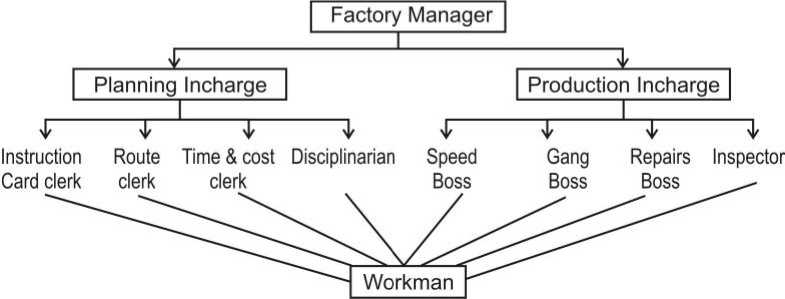
    (1) Functional Foremanship : Functional foremanship is a technique in which planning and execution are saparated. There are 8 types of specialized professionals 4 each under planning and execution who keep a watch on all workders to extract optimum performance.

    1. Standardisation and Simplification of work : Standardization refers to developing standards for every business activity whereas Simplification refers to eliminating superfluous varieties of product or service. It results in savings of cost of labour, machines and tools. It leads to fuller utilization of equipment and increase in turnover.
    2. Method Study : The objective of method study is to final out one best way of doing the job to maximise efficiency in the use of materials, machinery, manpower and capital.
    3. Motion Study : Motion study seeks to eliminate unnecessary motions in the execution of a job to enable it to be completed in less time efficienty.
    4. Time study : It determines the standard time taken to perform a well defined job. The objective of time study is to determine the number of workers to be employed, frame suitable incentive schemes & determine labour costs.
    5. Fatigue study : Fatigue study seeks to determine amount and frequency or rest intervals in completing a task.
    6. Differential Piece Wage system : Differential Piece Wage system seeks to reward a more efficient worker by giving him/her more wages for more quantity of standard production achieved.
    7. Mental Revolution : It involves a change in the attitude of workers and management towards one another from competition to cooperation.

    14 XII – Business Studies

    Foyol s Principles of Management : Henri Fayol (1841-1925) was a French

    Mechanical engineer who gave 14 general principles of Management which are

    as under :

    1. Division of Work : Work is divided into small tasks / jobs and each one is done by a trained specialist which leads to greater efficiency.
    2. Authority and Responsibility : Managers are empowered with authority to give orders and obtain obedience and responsible for the accomplishment of task for which they are granted authority.
    3. Discipline : it is the obedience to organizational rules and employment agreement which are necessary for working of the organization.
    4. Unity of Command : There sould be only one boss for every employee. If an employee gets orders from two superiors at the save time the principle of unity of command is voilated.
    5. Unity of Direction : Each group of activities having the same objective must have one head and one plan. This ensures unity of action and coordination.
    6. Subordination of Individual Interest to General Interest : The Interest of an organization should take priority over the interests of any one individual employee.
    7. Remuneration of Employees : The overall pay and compensation should be fair to both employees and the organization.
    8. Centralization and Decentralization : The concentration of decision making authority is called centralization whereas its dispersal among more than one person is known as decentralization. Both should be balanced.
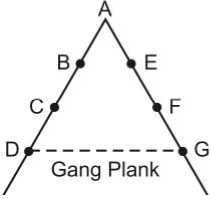
    9. Scalar Chain : The formal lines of authority between superiors and subordinates from the highest to the lowest ranks is known as scalar chain. This chain should not be voilated but in emergency employees at same level can contact through Gang Plank.

    1. Order : A place for everything (everyone) and everything (everyone) in its place. People & materials must be in suitable places at oppropriate time for maximum efficiency.
    2. Equity : The working environment of any organization should be free from all form of discrimination and the principles of Justice and fair play should be followed.
    3. Stability of Personnel : After being selected and appointed after due and rigorous procedure the selected person should be kept at the post for a minimum period decided to show result.
    4. Initiative : Workers should be encouraged to develop and carry out their plans for improvements. Initiative means taking the first step with self motivation It is thinking out and executing the plan.
    5. Espirit De Corps : Management should promote team spirit, unity and harmony among employees. Management should promote a team work.

    Difference between unity of command and unity of direction

    Basis

    (2) Meaning

    (2) Aim

    Unity of Command

    One subordinate should receive orders from & should be responsible to only one superior.

    Prevents dual subordination

    Unity of Direction

    Each group of activities having save objectives must have one head and one plan

    Prevents overlapping of activities

    (3) Implications Affects an individual employee

    Affects the entire organisation.

    Fayol versus Taylor :

    While the work of Taylor concerned shop floor, the work of Fayol concerned General Principles applicable to all types of situations.

    IMPORTANT QUESTIONS

    1 Mark Questions (To be answered in 1 word or 1 sentence)

    1. The Principles of Management are different from those used in pure science”. Write anyone difference.
    2. Why is it said that the management principles are universal?
    3. Different techniques were developed by Taylor to facilitate the Principles

    of Scientific Management. One of them was ‘Fatigue study’. What is the objective of this study?

    1. List any two principles of “Scientific Management” formulated by Taylor for managing an organization scientifically?
    2. What is meant by principles of management?
    3. State anyone principle of scientific management.
    4. State any one reason why Principles of Management are important.
    5. Give the meaning of mental revolution as suggested by Taylor.

    3/4 MARKS QUESTIONS :

    1. Explain the following principles of management:-
    2. Equity.
    3. Remuneration of Employees.
    4. In your school, you observe that books, are kept in office, chalks in the library and office records in the staffroom. How will that affect the achievement of school objectives? Which aspect of management is lacking and why? As a manager, what steps will you take to rectify the shortcomings?

    5/6 Marks Question (to be answered in about 150 words)

    1. Explain any two techniques of Taylor s Scientific Management.
    2. Explain the following principles of Fayol with example.
    3. Unity of Command
    4. Unity of Direction
    5. Order
    6. Espirit De Corps.
  • Notes of Nature and Significance of Management Business Studies Class 12

    UNIT 1

    NATURE AND SIGNIFICANCE OF MANAGEMENT

    Management is an art of getting things done through others. Management can be defined as, the process of getting things done with the aim of achieving goals effectively and efficiently.

    Efficiency and Effectiveness

    Efficiency means doing the task correctly at minimum cost while effectiveness means completing the task correctly. Although Efficiency and effectiveness are different but they are interrelated. It is important for management to be both i.e. effective and efficient.

    Example : A business produces targeted 1000 units but at a higher cost is effecitive but not efficient. Therefore if the business has to be effective and efficient then it has to produce 1000 units within cost.

    Characteristics of Management

    1. Goal oriented Process : It is a goal oriented process, which is undertaken to achieve already specified and desired objectives.
    2. Pervasive : Management is pervasive in nature. It is used in all types of organizations whether economic, social or political and at every level.
    3. Multidimensional : It is multidimensional as it involves management of Work, People and operations.
    4. Continuous : It is a continuous process i.e. its functions are being performed by all managers simultaneously. The process of management continue till an organisation exist for attaining its objectives.
    5. Group Activity : It is a group activity since it involves managing and coordinating activities of different people as a team to attain the desired objectives.
    6. Dynamic function : it is a dynamic function since it has to adapt to the

    6 XII – Business Studies

    changing environment.

    7. Intangible Force : It is an intagible force as it cannot be seen but its effect are felt in the form of results like whether the objectives are met and whether people are motivated or not.

    Objectives of management

    1. Organizational objectives of Survival (Earning enough revenues to cover cost); Profit (To Cover cost and risk); & Growth (To improve its future Prospects).
    2. Social Objectives of giving benefits to society like using environmental friendly practices and giving employment to disadvantaged sections of society etc.
    3. Personal Objectives because diverse personal objectives of people working in the organization have to be reconciled with organizational objectives.

    Importance of management

    1. Achieving Group Goals : Management helps in achieving group goals. Manager give common direction to the individual effort in achieving the overall goal of the organisation.
    2. Increases Efficiency : Management increases efficiency by using resources in the best possible manner to reduce cost and increase productivity.
    3. Creates Dynamic Organisation : Management helps in creating Dynamic organisation which could adopt changing situations easily.
    4. Achieving Personal Objectives : Management helps in achieving objectives of individuals working in the organisation.
    5. Development of Society : Management helps in the development of society by producing good quality products, creating employment opportunities and adopting new technology.

    Management as an Art

    Art refers to skillful and personal application of existing knowledge to achieve desired results. It can be acquired through study, observation and experience. The features of art are as follows.

    (2) Existence of theoretical knowledge : In every art systematic & organised study material should be available compulsorily to acquire theoretical knowledge.

    1. Personalised application : The use of basic knowledge differ from person to person and thus, art is a very personalised concept.
    2. Based on practice and creativity : Art involves the creative practice of existing theoretical knowledge.

    All the features of art are present in management so it can be called an art.

    Management as a science

    Science is a systematised body of knowledge that is based on general truths

    which can be tested anywhere, anytime. The features of science are as follows

    1. Systematized body of knowledge : Science has a systematised body of knowledge based on principles and experiments.
    2. Principles based on experiments & observation : Scientific principles are developed through experiments and observations.
    3. Universal Validity : Scientific principles have universal validity and application. Management has systematic body of knowledge and its principles are developed over a period of time based on repeated experiments & observation, which are universally applicable.

    As the principles of management are not as exact as the principles of pure science, so it may be called inexact science.

    Management as a profession :

    Profession means an occupation for which specialised knowledge and skills are

    required. The main features of profession are as follows.

    1. Well defined body of knowledge : All the professions are based on well defined body of knowledge.
    2. Restricted entry : The entry in every profession is restricted through examination or through some minimum educational qualification.
    3. Professional Associations : All professions are affiliated to a professional association which regulates entry and frame code of conduct relating to the profession.
    4. Ethical code of conduct : All professions are bound by a code of conduct which guides the behaviour of its members
    5. Service Motive : The main aim of a profession is to serve its clients.

    Management does not fulfill all the features of a profession and thus it is not

    a full pledged profession.

    Levels of Management : Top, Middle and operational levels.

    Top Level

    Consists of Chairperson, Chief Executive Officer, Chief Operating Officer or equivalent and their team.

    Chief task is to integrate and to coordinate the various activities of the business, framing policies, formulating organisational goals & strategies.

    Middle Level

    Consists of divisional heads, Plant Superintendent and Operations Manager etc.

    Main tasks are to interpret the policies of the top management, to ensure the availability of resources to implement Policies & to coordinate all activities, ensure availability of necessary personnel & assign duties & responsibilties to them.

    Lower Level / Supervisory Level

    Consists of Foremen and supervisors etc.

    Main task is ensure actual implementation of the policies as per directions, bring workers grievances before the management & maintain discipline among the workers.

    Functions of Management : Planning, Organizing, Staffing, Directing and Controlling.

    Planning is deciding in advance what to do in future and how to do it.

    Organizing is to assign duties, grouping tasks, establishing authority and allocating resources required to carry out a specific plan.

    Staffing is finding the right people for the right job.

    Directing is leading, influencing and motivating employees to perform the tasks assigned to them.

    Controlling is monitoring the organizational performance towards the attainment of organizational goals.

    Coordination : The essence of Management : Coordination is the force which synchronizes all the functions of management and activities of different departments.

    It integrates the group efforts.

    It ensure unity of action.

    9 XII – Business Studies


    It is a continuous process.

    It is an all pervasive function.

    It is a deliberate function.

    It is the responsibility of all managers


    IMPORTANT QUESTIONS

    1 Mark Questions (To be answered in one word or one sentence)

    1.

    In order to be successful an organization must change its goals according to the needs to the environment. Which characteristic of management is highlighted in the statement? (Answer: It is a dynamic function).

    2.

    To meet the objectives of the firm the Management of Angora Limited offers employment to Physically Challenged persons. Identify the organizational objective it is trying to achieve (Answer : Social Objective.

    3.

    Management of any organization strives to attain different objectives. Enumerate any two such objectives.

    4.

    Give any two characteristics of management.

    5.

    Management is multidimensional. Enumerate any two dimensions of management.

    6.

    Managerial activities are performed in all types of organizations in all departments at all levels. Which management character is highlighted here? (Answer : It is all pervasive)

    7.

    Your grandfather has retired where he is responsible for implementing the plans developed by the top management at which level of management was he working? State one more function of this level of management. (Answer: Middle level management) (Write any one function of this level).

    8.

    List any two social objectives of management.

    9.

    Your grandfather has retired as a Director of manufacturing company. At which level of management was he working? Different functions are performed at this level. State any one such function. (Answer : Top level of management) Write any one function of this level).

    10.

    What is meant by management ?

    10 XII – Business Studies

    3/4 Marks Questions (To be answered in about 50 to 70 words)

    1. There are different Business Objectives and Economic Objectives are one among them. Explain these economic objectives.
    2. Explain how management is an art
    3. Explain why management is not considered a full fledged profession.
    4. Explain how management is science.
    5. Coordination is the essence of management . Explain.

    5/6 Marks Questions (To be answered in about 150 words)

    1. Management is a Profession like Accounting, Medicine and Law as it also has a well defined body of knowledge. Yet management does not qualify to be a full fledged profession. Why? (Hint : No formal qualification is prescribed to enter management, no code of conduct is prescribed).
    2. Success of an organization largely depends upon its management Explain any five reasons to justify the statement. (Hint : Give five points of Importance of management).
  • International Business – II Notes Class 11th Business Studies

    1. Export Procedure The main steps involved in export procedure are

    (i) Receipt of enquiry and sending quotations
    (ii) Receipt of order or indent
    (iii) Assessing importer’s credit guarantee for payment worthiness and securing
    (iv) Obtaining export licence

    According to the customs law, a firm must acquire an export licence before exporting goods

    The pre-requisites of export licences are

    (i) Obtaining IEC Number (Import-Export Code)
    (ii) Obtaining RCMC (Registration Cum Membership Certificate)
    (iii) Registration with ECGC (Export Credit Guarantee Corporation)
    (iv) Obtaining Pre-shipment Finance
    (v) Production and Procurement of goods
    (vi) Pre-shipment inspection

    There are three methods of pre-shipment inspection

    (i) Consignment-wise inspection
    (ii) In-process quality control
    (iii) Self certification
    (iv) Excise clearance
    (v) Obtaining certificate of origin
    (vi) Reservation of shipping space
    (vii) Packing and forwarding
    (viii) Insurance of goods
    (ix) Custom clearance
    (x) Obtaining Mate’s receipts
    (xi) Payment of freight and Insurance of Bill of Landing
    (xii) Preparation of Invoice
    (xiii) Securing Payment

    The importer may accept a bill of exchange of two types

    (i) Documents against right
    (ii) Documents acceptance

    2. Import Procedure Steps involved in import procedure are

    (i) Trade enquiry
    (ii) Procurement of import licence
    (iii) Obtaining foreign exchange
    (iv) Placing order or indent
    (v) Obtaining letter of credit
    (vi) Arranging for finance
    (vii) Receipt of shipment advice
    (viii) Retirements of import documents
    (ix) Arrival of goods
    (x) Custom clearance

    3. Export-Import Documents

    (i) Principal Export Documents

    (a) Commercial invoice
    (b) Packing list
    (c) Bill of lading The bill of lading is considered an important document due to the following reason

    • A receipt of goods
    • A document of Title to goods
    • A contract of affreightment

    (d) Airway bill
    (e) Certification of inspection
    (f) Certificate of origin
    (g) Bill of exchange

    4. Auxiliary Export Documents

    (i) Proforma invoice
    (ii) Intimation of inspection
    (iii) Shipping instruction
    (iv) Insurance declaration
    (v) Shipping order
    (vi) Mate’s receipt
    (vii) Application for certificate of origin
    (viii) Letter to banks for collection of documents

    5. Import Documents The important documents used in import procedure is

    6. Bill of Entry There are three types of bill of entry

    (i) Bill of entry for home consumption
    (ii) Bill of entry
    for warehousing
    (iii) Ex-bond bill of entry

    7. Important Terms Used in External Trade

    (i) Free on Boards (FOB)
    (ii) Cost and Freight (CFR)
    (iii) Cost Insurance and Freight (CIF)

    8. International Trade Institution and Agreements

    (i) World Bank The World Bank was established in 1944, in Buttonwoods. It was setup with a purpose to provide loans to countries whose infrastructure was destroyed by the war.

    (a) Nature of World Bank

    • It was set-up to rebuild post World War -II Europe.
    • It offers loan advice and training to private and public sector of poor countries.

    (ii) United Nation Conferences on Trade and Development (UNCTAD)
    (iii) International Development Association
    (iv) International Finance Corporation (IFC)
    (v) The Multinational Guarantee Agency (MIGA)

    (vi) World Trade Organisation (WTO) The world trade organisation is the only global international organisation which deals with the rules and regulations of trade between different nations.

    (a) Nature of WTO

    • WTO deals with sales of trade between nations at global level.
    • It operates with a purpose liberalising trade and free flow of goods and services in trade policy within agreed limits.
    • WTO settles disputes through some neutral procedures.

    (b) Role of WTO

    • Promotes international peace
    • Settles disputes among member nations
    • Makes international trades very smooth by framing common rules and regulations.
    • Helps in economic growth of developing countries by giving them preferential treatment.

    (c) Agreements of WTO

    • General Agreements on Tariffs and Trade (GATT)
    • Agreement of Textile and Clothing (ATC)
    • Agreement on Agriculture
    • General Agreements in Trade in Services (GATS)
    • Agreements on Trade Related Aspects of Intellectual Property Rights (TRIPS)
  • International Business – I  Notes Class 11th Business Studies

    1. International Business International business refers to buying and selling of goods and services beyond the geographical limits of a country. It is also called trade between two countries.

    International trade is of three types

    (i) Export
    (ii) Import
    (iii) Entrepot (Re-export)

    (i) Nature of International Business

    (a) Involvement of two
    (b) Payment in foreign countries currency
    (c) Legal procedures
    (d) Restrictions
    (e) High risk
    (f) Different languages

    (ii) Reasons for International Business

    (a) The countries can not produce equally well or cheaply all that they need.
    (b) There is a unequal distribution of natural resources among different countries.
    (c) Availability of different factors of production such as land labour, capital and raw material differs among different nations.
    (d) Difference in labour. productivity and production cost due to socio economic geographical and political reasons.
    (e) There is not even a single country which is in a better position to produce better quality products at lower cost.

    2. International Business us Domestic Business The key areas, in respect of which domestic and international business differ from each other

    (i) Nationality of buyers and sellers
    (ii) Nationalities of other stake holders
    (iii) Mobility of factors of production
    (iv) Customer heterogeneity across markets
    (v) Differences in business systems and practices
    (vi) Political system and risk
    (vii) Business regulation and policies
    (viii) Currency used in business transactions

    3. Scope of International Business

    (i) Merchandise exports and imports
    (ii) Service export and import
    (iii) Licensing and franchising
    (iv) Foreign investment

    It is of two types

    (a) Direct investment
    (b) Portfolio investment

    4. Benefits of International Business

    (i) Benefits to Nations

    (a) Earning of foreign exchange
    (b) More efficient use of resources
    (c) Improving growth prospectus and employment potential
    (d) Increases standard of living

    (ii) Benefits to Firms

    (a) Prospects for higher profit
    (b) Increased capacity utilization
    (c) Prospects for growth
    (d) Way out from intense competition in the domestic market
    (e) Improved business vision

    5. Mode of Entering into International Business

    (i) Contract Manufacturing With many business facing high start up cost and limited resources, companies are turning to contract manufacturing. Contract manufacturing allows a company to use the products or services that are manufactured by another external production company.

    (a) Merits

    • There is almost no investment risk involved as there is hardly any investment in the foreign country.
    • Contract manufacturing gives the advantage to international firms to get the goods manufactured at a lower cost.
    • Local manufacturers also get the benefits to be involved with international business and start. exporting.

    (b) Demerits

    • Local firms might not follow and provide the same quality standards. causing problems to international rums.
    • The local manufacturer loses his control as goods are manufactured strictly according to the terms and specifications of international firms.
    • The local manufacturer is not free to sell the goods according to his will.

    (ii) Licensing and Franchising Licensing is an agreement between licensor and licensee where by licensor permits licensee to use the permits/patent rights 01′ trade secret acquired by the licensor.

    Franchising is an agreement between franchisee and franchiser.

    (a) Benefits

    • Established brand
    • Quality product
    • Advertisement
    • Financing
    • Training
    • Technological upgradation
    • Uniform control system
    • Better start
    • Expansion
    • Enhancing the goodwill
    • Direct feedback

    (iii) Joint Venture When two or more firms join together to establish a new enterprise then it is known as a joint venture.

    The two firms contribute capital and participate in management enterprise.

    (a) Merits

    • Reduces competition
    • Reduces risk
    • Protection for small companies
    • Advance technology
    • Reduction in cost
    • Better competence
    • Large capital

    (b) Demerits

    • Problem in sharing capital
    • Legal restrictions
    • Conflicts
    • Mergers and monopolies
    • Lack of co-ordination

    (iv) Setting-up WhOlly Owned Subsidies According to Indian Companies Act a foreign company can set up its subsidiary by acquiring more than 50% voting power (equity share) in a company.

    (a) Advantages

    • The parent company is able to exercise full control over its operation in foreign countries.
    • There is no disclosure of technology or trade secret as the parent company itself looks after the entire operations.

    (b) Limitations

    • The entire loss is for the parent company as the parent company alone invests the 100% investment.
    • This form of business is subject to higher political risks as some countries do not permits 100% wholly owned subsidiaries.

    (v) Exporting and Importing Exporting refers to sending of goods and services from the home country to a foreign country and importing means buying goods and services from a foreign country. The exporting and importing can be done in two ways; direct or indirect.

    (a) Advantages

    • It is easiest way to get entry in a foreign country.
    • Firms have to invest less as compared to joint venture and manufacturing plants.
    • Foreign investment risk is nil or very less as compared to other options.

    (b) Demerits

    • Since goods physically move from one country to another so it involves additional packaging, insurance and transportation cost.
    • Some countries put import restrictions. In such cases, exporting is not a good option for other foreign countries.
    • The exporters are not near the customers so they cannot serves the customer better than a local firm.

    6. India’s Place in World Business

    (i) India’s Export and Import of Goods After the new economic policy of liberalisation and globalisation there is a tremendous increase in India’s foreign trade. The share of foreign trade in the GDP has increased from 14.6% in 1990·91 to 24.1% in 2003 – 2004.

    (ii) India’s Export and Import of Services India’s share of software export has increased from 10.2% in 1995-96 to 49% in 2003-04. Where as share of travel and transportation has declined from 64.3% in 1995 – 96 to 29.6% in 2003-04.

    7. India’s Foreign Investment The inflow as well as out flow of foreign investment has grown after the new economic policy of 1991. India’s investment in foreign countries has also increased from Rs 19 crore in 1990-91 to Rs 83,616 crore in 2003-04.

  • Internal Trade Notes Class 11th Business Studies

    1. Internal Trade When buying and selling of goods and services takes place within the geographical limits of a country. It is known as internal trade.

    The main features of internal trade are

    (i) The buying and selling of goods and services takes place within a country.
    (ii) The payment are made and received in the home country only.
    (iii) There are no or very few formalities to be completed by the traders.

    2. Types of Internal Trade Internal trade can be classified into two categories.

    (i) Wholesale Trade It refers to the trade in which goods are sold in large quantities. The person who carries on wholesale trade is known as wholesaler.

    A wholesaler provides many valuable services to the manufacturer as well as the retailer.

    (a) Services to Manufacturer

    • Facilitating large scale production
    • Bearing risk
    • Financial assistance
    • Expert advice
    • Help in marketing function
    • Facilitate production continuity
    • Storage

    (b) Services to Retailer

    • Availability of goods
    • Marketing support
    • Grant of credit
    • Specialised knowledge
    • Risk sharing

    (ii) Retail Trade Retail trade refers to sale of goods in small lots to the final consumers. A retailer buys goods from a wholesaler and sells them to the consumer.

    (a) Services to Consumers

    • Ready or quick supply
    • Wide variety
    • Guiding consumers
    • Demonstration and after sale services
    • Home delivery
    • Convenient location
    • Credit facility

    (b) Services to Wholesaler and Manufacturer

    •  Ready market
    • Providing information
    • Risk bearing
    • Distribution of goods to distant places

    3. Classification of Retailers

    Retailers can be classified on the following basis

    (i) Size
    (ii) Product mix
    (iii) Pricing
    (iv) Service level
    (v) Form of ownership

    4. Types of Retail Trade Keeping in mind all the above criteria, that is size product mix, pricing and service level, the retail trade can be classified in to the following categories

    (i) Itinerants retailers
    (ii) Fixed shop retailers

    5. Itinerants Itinerants refers to retailers who have no fixed place of sale. They move from one place to another in search of customers.

    6. Types of Itinerants

    (i) Hawkers and Peddlers Hawkers and Pedlars moves from street to street in search of customers.

    The main features of hawkers and pedlars are

    (a) They sell a variety of goods such as fruits, vegetables, toys etc.
    (b) They deal with non-branded and local items.
    (c) They supply the goods at the door step of the customer.

    (ii) Periodic Market Trader These traders sell their goods on fixed days in different market places. Their weekly market are fixed

    The main features of periodic market traders

    (a) They sell their goods in the weekly market.
    (b) They deal in low price and low quality goods.
    (c) These traders also set up shops on the occasion of Diwali, Christmas, etc.

    (iii) Street Traders These retailers display their articles on busy street corners, pavements, bus stands etc.

    The main features of street traders are

    (a) They generally operate near public places such as railway stations.
    (b) They deal in a variety of goods such as towels, things of daily use mirrors etc.

    (iv) Cheap Jacks They display their goods in hired shops or intents for a temporary period in different localities.

    The main features of cheap jacks are

    (a) They hire small shops.
    (b) They shift from locality depending upon the prospectus of business.
    (c) They deal in low price, household articles.

    7. Fixed Retailers The retailer having a fixed place of sale are known as fixed shop retailers.

    Fixed shop retailers can be further classified into t\VO categories

    (i) Small scale fixed retail shops
    (ii) Large scale fixed retail shops

    8. Small Scale Fixed Retailer

    (i) General Stores General stores are small shops located in residential areas.

    The main features of general stores are

    (a) They have a large variety in each line of product.
    (b) They provides free home delivery, credit facility.

    (ii) Single Line Stores Single line stores are small shops which deal with one line of products.

    The main features of single line stores are

    (a) These stores deal with one line of products.
    (b) These stores deal in a variety of goods in that line of product.

    (iii) Speciality Stores These stores deal in a particular type of product under one product line only.

    The main features of speciality stores are

    (a) These stores are specialised in one product only.
    (b) They keep all the brands of that product.

    (iv) Street Shops These shops are situated at street crossings, They are also known as street stalls

    The main features of street shops aTe

    (a) These shops have a limited space.
    (b) These retailers display their goods on tables, stands etc.

    (v) Second Hand Goods Shops These shops deal with second-hand goods or used articles such as books.

    The main features of second- hand good shop

    (a) These shops sell used goods.
    (b) The goods are generally priced low because these are used goods.

    (vi) Seconds Shops There are the shops to sell goods which are not produced according to the required specification.

    The main features of second-hand goods shop

    (a) These shops deal in the products which have some manufacturing defect.

    (b) Goods are sold at a heavily discounted price.

    9. Large Scale Retailers Large scale retailers deal in a large stock of goods and purchase goods in bulk. Features of large scale retailers are.

    (i) They require a huge investment.
    (ii) They have large size show rooms to sell goods.

    The most common forms or types of large scale retailers are

    (a) Departmental stores
    (b) Multiple shops or chain stores
    (c) Mail order retailing
    (d) Consumer co-operative stores
    (e) Super markets
    (f) Franchise

    10. Departmental Stores A departmental store is a large retail showroom having a number of departments under one roof each department specialised in one line of product.

    (i) Advantages

    (a) Convenient shopping
    (b) Central location
    (c) Economies of scale
    (d) Elimination of middleman

    (ii) Limitations

    (3) High operating cost
    (b) Lack of personal attention
    (c) High price
    (d) Not located in residential colonies
    (e) Huge capital

    11. Multiple Shops Multiple shops refer to a number of identical retail shops located in different parts of the city.

    (i) Advantages
    (a) Economies of scale
    (b) Standardised products
    (c) Public confidence
    (d) Division of risk
    (e) No, bad debts

    (ii) Limitations

    (a) Limited variety
    (b) Lack of personal touch
    (c) Inflexibility
    (d) Divided attention
    (e) No facilities

    12. Mail Order Retailing In mail order retailing seller contact the potential buyers through advertisements and mail publicity

    (i) Advantages

    (a) Limited capital
    (b) Convenience
    (c) Wider market
    (d) No, bad debts
    (e) Elimination of middleman

    (ii) Limitations

    (a) No personal contact
    (b) No personal inspection
    (c) Limited variety
    (d) Postal delay
    (e) Heavy advertising cost

    13. Consumer Co-operative Store It can be defined as “A voluntary association of persons based on co-operative principles by buying in common and selling in common”.

    (i) Advantages

    (a) Reasonable prices
    (b) Low operating cost
    (c) Cash sales
    (d) Economies of scale
    (e) Benefits from government

    (ii) Limitations

    (a) Limited capital
    (b) Inefficient management
    (c) Lack of incentives
    (d) Lack of storage facilities

    14. Super Markets Super market are organised by co-operative societies as well as by private traders.

    (i) Advantages

    (a) Wide choice
    (b) Low price
    (c) No, bad debts
    (d) Convenience in shopping

    (ii) Limitations

    (a) No credit
    (b) Lack of personal touch
    (c) High cost
    (d) Mis handling of goods
    (e) Limited scope

    15. Vending Machines A vending machine is a new form of direct retailing. It is a machine operated by coins or tokens. The buyer inserts a coin or token in the machine and receive a specific quantity of product from the machine.

    (i) Advantages

    (a) Buying round the clock is possible.
    (b) The customer gets fresh supply of goods.
    (c) No, requirement of salesman.

    (ii) Limitations

    (a) Initial investment to install the machine is quite high.
    (b) Machine requires regular repair and maintenance.
    (c) Coins of exact shape and size are required to operate the machine.

    16. Role of Commerce and Industry Association is in promotion of internal trade.

    (i) Interstate movement of goods
    (ii) Octroi and other local levies
    (iii) Harmonisation of sales tax structure and value added tax
    (iv) Marketing of agro products and related issues
    (v) Weights and measures and prevention of duplication
    (vi) Excise duty
    (vii) Promoting sound infrastructure
    (viii) Labour legislation

  • Small Business Notes Class 11th Business Studies

    1. Small Business The definition of small business by the Government of India is based on the investment in Plant and Machinery, This approach is justified because we have scarce capital and abundant labour. ‘the small scale industries includes.

    (i) Small scale industries
    (ii) Ancillary industrial undertaking
    (iii) Export-oriented units
    (iv) Tiny units
    (v) Small scale industries owned by women
    (vi) Cottage industries
    (vii) Khadi and village industries
    (viii) Agro based industries

    2. Nature of Small Scale Industries

    (i) The business is organised by individuals in the private sector.
    (ii) The use of family labour and locally available talent is made.
    (iii) Simple equipments are used.
    (iv) Capital investment is small, generally restricted to one crore.
    (v) The use of indigenous technology.

    3. Administrative Setup for the Small Scale

    (i) Agro and Rural Industries

    (a) The government of India created the Ministry of small scale industry and Agro and Rural Industries as the nodal ministry for formulation of policy.

    (b) This ministry was divided into following two separate ministries in September 2001 .

    • Ministry of Small Scale Industries
    • Ministry of Agro and Rural Industries

    (c) A part from the ministries state government also makes various promotional and development projects for SSI and then are executed.

    4. Role of Small Business in India In developing countries like India there is a greater scope for small business enterprise. The following factors help in the scope of small business enterprises

    (i) Limited resources
    (ii) Flexibility of operation
    (iii) Personal attention
    (iv) Individual attitude
    (v) Suppliers of large scale business
    (vi) Social utility

    5. Role of Small Business in Rural India

    Small scale industries provide the following benefits in rural area.

    (i) Employment
    (ii) Improves economic condition
    (iii) Promotion of artistic and creative sense
    (iv) Rural development
    (v) Mobilisation of local resources

    6. Problems of Small Business in India

    (i) Shortage of Fund Small enterprises have a chronic shortage of finance both for fixed and working capital requirement.

    (ii) Shortage of Raw Materials and Power Most of the small factories have shortage of raw materials and other equipments because of limited means to buy in bulk and suppliers hesitate to provide credit policy (facility) to small business.

    (iii) Old Techniques of Production and Lack of Latest Technical Knowledge Most of the small scale enterprise use old techniques of production because they cannot afford new technique.

    (iv) Marketing Problems Small scale industries face many difficulties in marketing their products because of many reasons

    (a) The cost of production is high.
    (b) They cannot afford to have their own marketing organisation.
    (c) Products of many small firms are not having uniform quality.

    (v) Personal Problem Securing the right type of personal is a major problem of small business. A more important problem is the problem of proper training reasonable compensation etc.

    (vi) In perfect Organisational Setup In most of the small enterprise the ownership and management functions are performed by the owner himself. Generally the owners may not have the necessary skill to manage the business also.

    7. Government Assistance and Special Schemes for Industries in Rural Backward and Hilly Areas Some of the support measures and programmes meant for the promotion of small and rural industries are grouped in following two categories.

    (i) Institutional Support

    (a) National Bank for Agriculture and Rural Development (NABARD) The NABARD provides loans and advances to State Government for a period not exceeding 20 years to enable to State Government.

    (b) The Rural Small Business Development Centre (RSBDC) It is set up by the World Association for small and medium enterprises and is sponsored by NABARD. It aims at providing management and technical support to current and prospective micro and small entrepreneurs in rural areas.

    (c) National Small Industries Corporation (NSIC) Its main focus was on

    • To supply indigenous and imported machines in easy instalments.
    • To procure and supply imported raw materials.
    • To export of products of SSI.

    (d) Small Industries Development Bank of India (SIDBl) SlDBI was established in 1989 as a public corporation. Its main object is to promote. Finance and develop the small scale sector in India.

    (e) The National Commission for Enterprises in the Unorganised Sector (NCEDS)The NCEUS was constituted in September 2004, with the following objectives

    • TO improve productivity of small scale enterprises.
    • To generate more employment opportunities.

    (f) Rural and Women Entrepreneurship Development (RWED) This programme encourages rural people and women RWED provides the following

    • Enhancing human and institutional capacities.
    • Providing training for women entrepreneurs.

    (g) World Association for Small and Medium Enterprises (WASME) Common schemes offered by WASMe are

    • Integrated Rural Development Programme
    • Prime Minister Rozgar Yojana
    • Training of Rural Youth for self-employment
    • Jawahar Rozgar Yojana

    (h) Scheme of Fund for Regeneration of Traditional Industries (SFURTl) This fund is used

    • To improve the technology of traditional units.
    • To create sustained employment opportunities.
    • To set up traditional industries in various parts of the country.

    (i) The District Industries Centre (DIC) The DIC Programme was started on 1 May 1978 to provide assistance to small scale industries at the district level.

    These centres provides all the promotional activities such as identification of suitable scheme preparation of feasibility report arranging for credit etc.

    (ii) Incentives Some of the common incentives offered are below

    (a) Land
    (b) Power
    (c) Water
    (d) Sales Tax
    (e) Octroi
    (f) Raw materials
    (g) Finance
    (h) Industrial estates
    (j) Tax holiday

  • Sources of Business Finance Notes Class 11th Business Studies

    1. Business Finance It refers to capital funds and credit funds invested in the business.

    According to BO Wheeler, “Finance is thai business activities which is concerned with acquisition and conservation of capital fund in meeting the financial needs and over all objectives of business enterprise.”

    The financial needs of a business can be classified into two categories.

    (i) Fixed capital requirement
    (ii) Working capital requirement

    2. Classification of Sources of Funds

    (i) Period Basis On the basis of time period, a business finance can be classified in three categories.

    (a) Long Term Finance Funds which are required to be invested In a business for a long period of time, that is more than five years are known as long term finance.

    (b) Medium Term Finance The finance required by business enterprises for more than one year but less than five years is known as medium term finance.

    (c) Short Term Finance The finance required for a short period upto one year is known as short term finance.

    (ii) Ownership Basis On the basis of ownership, the sources can be classified into ‘owner’s fund’ and ‘borrowed fund’,

    (a) Owner Fund It refers to the funds contributed by owners as well as the accumulated profit of the company this fund remains with the company and it has no liability to return this fund. e.g., equity shares, retained earnings.

    (b) Borrowed Fund It refers to the borrowing of the firm. It includes all funds available by way of loans or credit

    (iii) Source of Generation Basis Another basis of categorising the sources of funds can be whether the funds are generated from with in the organisation internal or from external sources.

    3. Sources of Finance Companies can raise finance from the following methods.

    (i) Retained Earning Retained undistributed profits after payment earning refers to of dividend and taxes. It provides the basis of expansion and growth of companies.

    (ii) Features of Retained Earnings

    (a) Cushion of security
    (b) Funds for new and innovative projects
    (c) Medium and long term finance
    (d) Conversion into ownership fund

    4. Trade Credit It refers to an arrangement whereby a manufacturer is granted credit from the supplier of raw materials, inputs spare parts etc. The supplier allow their
    customers to pay their outstanding balance, with in a credit period.

    The availability of trade credit depends upon

    (i) Nature of the firm
    (ii) Size of the firm
    (iii) Status or credit worthiness of the firm

    5. Factoring Factoring is a financial service’under which factor renders the following services

    (i) Discounting of Bills of Exchange When goods are sold on credit then a supplier generally draws bills of exchange upon customers who are required to accept the same.

    (ii) Providing Information Regarding the Creditworthiness of Prospective ClientsFactors collect detailed information regarding the financial history of different companies which can used by the financier who may lend money to these companies.

    6. Lease Financing Leasing is a contract between lessor and lessee. whereby the lessor permits the lessee to use the asset acquired by the lessor in return of a payment called rent.

    Lessor is called the owner of the assets and lessee hires the assets by paying rent. With leasing contract the lessee can use the assets without investing a high amount of fund for buying it.

    7. Public Deposits Public deposits refers to unsecured deposits invited from the public. A company wishing to invite public deposit places an advertisement in newspapers. Any member of the public can fill up the prescribed form and deposit money with the company. Different features of public deposits are

    (i) Unsecured
    (ii) Finance of working capital
    (iii) Time period
    (iv) Simple procedure to raise
    (v) Repayment

    8. Commercial Papers Commercial paper is a source of short finance. The commercial paper was introduced in India for the rust time in 1990. It is an unsecured promissory note issued by public or private sector company with a fixed maturity period, which varies from 3 to 12 months. Since these are unsecured that is why these are generally issued by companies having a good reputation.

    9, Issue of Shares Share is the smallest unit in which owner’s capital of the company is divided. A share may also be defined as a unit of measure of a shareholder’s interest in the company.

    According to Companies Act, a public company can issue two types of shares.

    (i) Equity shares
    (ii) Preference shares

    10. Equity Shares Equity shares is a common security issued under permanent or owner’s fund capital. Equity shares are the most important source of raising long term capital.

    In Companies Act permitting companies to issue two categories of equity shares.

    (i) Equity shares with equal rights.
    (ii) Equity shares with differential rights as to divided.

    11. Preference Shares Preference shares are those shares which get preference over equity shares in respect to

    (i) The payment of dividend.
    (ii) The repayment of investment amount during winding up.
    Different features of preferences shares are
    (i) Fixed rate of dividend
    (ii) No security
    (iii) Voting rights
    (iv) Hybrid security

    12. Debentures Debentures are common securities issued under borrowed fund capital. Debentures are instruments for raising long term debt capital. Debentures are called creditorship securities because debenture holder are called creditors of a company.

    Different features of debentures are

    (i) Borrowed fund
    (ii) Fixed rate of interest
    (iii) Compulsory payment of interest
    (IV) Security
    (v) Redeemable
    (vi) No, voting right
    (vii) Appointment of trustee

    13. Commercial Banks Commercial banks occupy a very important position as they provide funds for different purposes and different periods. Firms of all sizes can approach commercial banks. Generally, commercial banks provide short and medium term loans but now-a-days they have started giving long term loans against security.

    14. Financial Institutions Public financial institutions are referred to as lending institutions. development banks or financial institutions, After independence the Government of India realised that for economic development of a country only commercial banks are not sufficient. There must be financial institutions to provide financial assistance and guidance to industries and business enterprises.

    15. International Source of Finance After the new economic policy of liberalisation or globalisation. the doors of foreign companies and investors were opened to invest In the Indian companies. After 1991. the Indian companies tap international sources of finance for both debt and equity. The main securities used by Indian companies to tap international sources of finance are given below

    (i) Loans from Commercial Bank!’;
    (ii) International Agencies and Development Bank
    (iii) International Capital Market

    (a) GDR
    (b) ADR
    (c) lDR

    The businessman must keep in mind the following factors

    (i) Cost involved
    (ii) Financial capacity of the firm
    (iii) Form of business organisation
    (iv) Time period
    (v) Risk involved
    (vi) Control
    (vii) Flexibility
    (viii) Claim over the assets
    (ix) Tax benefits

  • Formation of a Company Notes Class 11th Business Studies

    1. Business Finance It refers to capital funds and credit funds invested in the business.

    According to BO Wheeler, “Finance is that business activity which is concerned with the acquisition and conservation of capital fund in meeting the financial needs and over all objectives of business enterprise.

    2. Formation of Company There are two stages in the formation of private company, promotion and incorporation. A public company has to under go capital subscription stage and to the get certificate of commencement of business, to begin operation.

    3. Promotion of a Company Promotion is the first stage in the formation of a company. It involves conceiving a business opportunity and taking and initiative to form a company so the particular shape can be given to exploiting the available business opportunity.

    4. Functions of a Promoter

    (i) Identification of Business Opportunity The foremost activity of a promoter is to identify a first and business opportunity.

    (ii) Feasibility Studies The promoters undertake detailed feasibility studies to investigate all aspects of the business they intend to start. There are three types of feasibility

    (a) Technical feasibility
    (b) Financial feasibility
    (c) Economic feasibility

    (iii) Name Approval Having decided to launch a company. the promoters have to select a name for it and submit.

    (iv) Fixing up Signatories to the Memorandum of association Promoters have to decide about the members who will be signing the memorandum of association of the proposed company.

    (v) Appointment of Professionals Certain professionals such as mercantile bankers. auditors etc are appointed by the promoters.

    (vi) Preparation of Necessary Documents The promoter takes up steps to prepare certain legal documents. Which have to be submitted under the law

    5. Documents Required to be Submitted

    (i) Memorandum of Association
    (ii) Articles of Association
    (iii) Consent of Proposed Directors
    (iv) Agreement
    (v) Statutory Declaration
    (vi) Payment of Fee

    6. Position of Promoters Promoters undertake various activities to get a company registered and get it to the position of commencement of business. But they are neither the agents nor the trustee of the company. They can’t be the agents as the company is yet to be incorporated.

    7. Incorporation After completing the afore said formalities, promoters make an application for the incorporation of the company. The app cause is to be filed With the registrar of companies of the state within which they plan to establish the registered office of the company.

    8. Effect of the Certificate of Incorporation A company is legally born on the date printed on the certificate of incorporation. It becomes a legal entity with perceptual succession on such date.

    The certificate of incorporation is a conclusive evidence of the regularity of the incorporation of a company certificate of incorporation has been issued the company has been legal business entity irrespective of any flow in its registration.

    9. Capital Subscription A public company can raise the required funds from the public means of Issue of shares and debentures. For doing the same. It has to issue a prospectus which is an invitation to the public to subscribe to the capital of the company.

    The following steps are required for raising funds from the public

    (i) SEBl approval
    (ii) Filling of prospectus
    (iii) Appointment of bankers brokers underwriters
    (iv) Minimum subscription
    (v) Application to stock exchange
    (vi) Allotment of shares

    10. Conunencement of Business If the amount of minimum subscription is raised through new issue of shares, a public company applies to the registrar of companies for the issue of certificate of commencement of business.

    Commencement of business along with the following documents

    (i) A declaration about meeting minimum subscription requirement
    (ii) A declaration about details in respect of allotment to directors
    (iii) A declaration about no money being payable to applicants
    (iv) A statutory declaration

    A public company raising funds privately has to submit only

    (ii) and (iv) listed above

    The registrar, upon satisfaction issues certificate of commencement of business. This certificate is also a conclusive evidence of completion of formation requirements.

    11. Preliminary Contracts Contracts signed by promoters with third parties before the incorporation of company.

    12. Provisional Contracts Contracts signed after incorporation but before commencement of business.