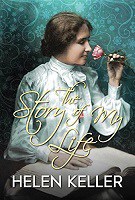
Category: Class 10th

  • Chapter 16 The Story of My Life Extra Questions, Summary, and Notes

    The Story of My Life

    The Story of My life- Novel for class 10- English CBSE

    By Helen Keller

    Chapter 16- Notes and Study Material

    Introduction of Chapter 16- the Story of My life by Helen Keller

    By the time Helen reached the age of thirteen, she had learned to fingerspell, to read in raised print and in Braille. She could speak English and little French too. After that, in October 1893. Helen began her formal  schooling in preparation for college by taking Latin and Math lessons. Initially, she did not like Latin more than Math. but soon grew to love it. Until now, Helen’s learning had been based on her interests. Anne Sullivan’s  method with Helen was to follow her interests, teaching her what she asked to know and providing her with experiences. Helen, at this time, worked systematically at something that did not offer immediate gratification. She had a goal to achieve. Along the way, she started liking the study of Latin since she had a gift for various languages.

    Conclusion/ Chapter in short/ Analysis of Chapter 1/Understanding the Theme of Chapter 1

    Helen writes about her attempts to learn French and improve her speech. She also began to learn              Latin from Mr. Irons.

    Short Summary of Chapter-1 The Story of My Life by Helen Keller in Simple Words-

    This chapter recounts Helen’s attempts at learning French and improving her speech. She had                    already read the histories of Greece, Rome and the United States. In order to improve her speech,          she read aloud to Miss Sullivan and recited passages of her favourite poets. For the first time in her            life, she began to take fixed lessons at fixed times. She started learning Latin from Mr. Irons whom          she describes as a man of rare, sweet nature and of wide experience. She learnt critical appreciation        of literature and enjoyed her Latin lessons. Miss Sullivan helped her in her lessons by spelling into her hand whatever Mr. Irons said and looking up new words for her.

    Extra Important Questions and Answers 

    Question.1- What does Helen mean when she says that earlier she had studied various subjects in a ‘desultory manner‘?

    Answer-Helen confessed that there had been no fixed pattern to her learning of the various subjects. She had learnt them in a haphazard manner.


    Question.2-How do we know that Helen was determined to improve her speech?

    Answer-Helen spent a considerable amount of time reading out aloud to Miss Sullivan and reciting passages from her favourite poems which she had memorised. This reflected her urge to improve her speech.


    Question.3-What was the change that occurred from October 1893?

    Answer-The change that occurred in October 1893 was that Helen’s lessons became more structured and she began to have lessons in special subjects at fixed hours.


    Question.4-What did Mr. Irons teach Helen?

    Answer-Mr. Irons was a Latin scholar. He taught Helen Latin grammar and arithmetic. He taught her critical appreciation of the texts that she read, and to recognise the writer’s style.

  • Chapter 15 The Story of My Life Extra Questions, Summary, and Notes

    The Story of My Life

    The Story of My life- Novel for class 10- English CBSE

    By Helen Keller

    Chapter 15- Notes and Study Material

    Introduction of Chapter 15- the Story of My life by Helen Keller

    The winter and summer following ‘The Frost King’, Helen spent with her family in Alabama. She was very happy. The Frost King was forgotten. In the autumn, she started to write a sketch of her life a year after she had written ‘The Frost King’. But she was frightened and took every precaution in expressing herself while writing, she slopped and reflected if she was not giving expression to someone else’s ideas that had appeared before her she would not write anything the whole day. Miss Sullivan motivated her to continue her work. It was her persuasion that she was writing the sketch of her life for youth’s companion. The chief incidents of the year 1893 which she describes in this chapter are her trip to Washington during the inauguration of President Cleveland and her visits to Niagara and the world’s fair. She says that it is difficult to describe her emotions produced in her heart while she stood near the Niagara Falls and ‘felt the air vibrated and the earth tremble’ she was accompanied by Miss Sullivan and Dr. Graham Bell. Whenever she described her visit to Niagara and its beauties, people would ask her in wonder ‘What did the beauties of Niagara mean to her when she could neither sec the waves rolling up the beach nor hear heir roar? In the world’s fair, Helen was introduced to the wonders of the world about which she read in her books. Now she was face to face with them. This visit to the world’s fair transported her from the fairy land of the childhood to the real world. There she saw the idols of Shiva and Ganesha, pyramids of Egypt, the lagoons of Italy,and many other things which are dragging to Mexico and the other parts of the world. She came to know of the process of the shining and cutting of diamonds. She visited the ships used by Columbus during his journey to America. She also visited the electrical building and examined telephones, auto phones, phonographs and many other scientific inventions. Dr. Graham Bell told her in detail about the functions of these devices. All these things were added to her vocabulary and knowledge. She felt how different the real world was from the world of the fairy tales that greatly fascinated her in her childhood. But in no sense the real world was less beautiful than the fairy world.

    Conclusion/ Chapter in short/ Analysis of Chapter 15/Understanding the Theme of Chapter 15

    Helen writes about the time spent in Alabama, her constant anxiety about the originality of her writing, her trip to the Niagara Falls and her visit to the World Fair.

    Short Summary of Chapter-15 The Story of My Life by Helen Keller in Simple Words-

    In this chapter, Helen writes about the time she spent in Alabama with her family, and how she                  returned to writing. She was plagued with insecurity about the originality of anything she wrote.                She checked and double-checked her writing to make sure that she had not copied from something            she had read, even accidentally. Miss Sullivan continued to encourage her and persuaded her to                  write a brief account of her life for the Youth’s Companion. Helen recounts her trip to Washington,              the Niagara Falls and World’s fair. The curious bazaar of India, the pyramids of Cairo, the lagoons              of Venice and her experience on board a Viking ship at the World’s fair, was a totally new and                     enriching experience for Helen. The World Fair proved to be a storehouse of information for Helen           who readily absorbed every bit that she came across. She confesses that all these experiences added        a great many new terms to her vocabulary.

    Extra Important Questions and Answers  

    Question.1How did Helen resume writing?

    Answer- Helen had serious doubts about her ability to write original work. She was anxious if she might be writing things that she had read somewhere else. She would check and double-check her work to make sure she was not inspired by other works. However, Miss Sullivan continued to encourage her and persuaded her to write for the Youth’s Companion, for which she wrote a brief account of her life.


    Question.2-What surprised people about Helen’s appreciation of the Niagra Falls?

    Answer- People could not understand how Helen could appreciate the Niagra Falls without being able to see or hear the loud roar generated by the fall, flowing down the steep mountainside.


    Question.3-Why does Helen feel that her visit to the World Fair had helped to broaden her horizons and become mature?

    Answer- The visit to the World fair with Miss Sullivan and Dr Alexander Graham Bell was an eye opener for Helen. For the first time in her life, she could ‘see’ all the marvels of invention, treasures of industry and skill and all the activities of human life. She was able to learn about India, Egypt, Mexico and other parts of the world through the statues and relics displayed in the Fair. This broadened her horizons and stirred her interest in the world around, rather than in fairy tales and make-believe.

  • Chapter 14 The Story of My Life Extra Questions, Summary, and Notes

    The Story of My Life

    The Story of My life- Novel for class 10- English CBSE

    By Helen Keller

    Chapter 14- Notes and Study Material

    Chapter 14- Notes and Study Material

    Introduction of Chapter 14- the Story of My life by Helen Keller

    Helen wrote her first book, “The Frost King”, (initially titled “The Frost King”). She showed it to her teacher  and the story was read out to her family members at dinner. She sent it to her friend, Mr. Anagnos, who published it  in one of The Perkin Institution reports. But it was discovered that the story was similar to Miss. Margaret. T. Canby’s “The Frost Fairies” which had appeared in a book called “Birdie and His Friends”. Helen was accused of plagiarism, though she could not figure out how it had happened. When questioned later by a teacher, she admitted that Miss. Sullivan had talked to her about Jack Frost and his wonderful works. She was accused of plagiarism by Mr. Anagnos himself. She was questioned by a court of investigation and the judges forced her to acknowledge that she had listened to the story, “The Frost Fairies”, that was read to her. Stir felt humiliated, though nothing had been proved against her.

    Now she became highly cautious while writing. It was Miss. Sullivan’s encouragement that drove away the psychological fear from her mind that she was a ‘thief of words’. Miss. Canby herself sent a bracing message  stating that she did not consider Helen guilty of any wrong and that she believed that Helen would grow up to become a famous writer. In fact, what Helen had done was not a deliberate or conscious attempt at copying another person’s idea. She had just reproduced the ideas that had become a part and parcel of her life, in her own words. But then, she had lost one of her dearest friends, Mr. Anagnos, because of the allegation of plagiarism.

    Conclusion/ Chapter in short/ Analysis of Chapter 14 /Understanding the Theme of Chapter 14

    Helen describes the writing of the story ‘The Frost King’. She sent the story to Mr Anagnos as                    a birthday gift. The story was published by him but a court of investigation found similarities between her story and another one and accused her of copying ideas. This incident had a deep impact on her life.

    Short Summary of Chapter-14 The Story of My Life by Helen Keller in Simple Words-

    In this chapter, Helen describes the writing of the story ‘The Frost King’ and the appreciation she              received from her family. Although she received great joy in composing the story, her joy was                    short-lived. She sent the story to Mr Anagnos as a birthday gift. Mr Anagnos was delighted with                the story and published it in one of his institution’s reports. However, this innocent gift backfired                as people found similarities between Helen’s story and another story titled the ‘Frost Fairies’.                      Mr Anagnos was annoyed and believed that she had copied the story and sent it to him under her              own name. He thought that Helen and Miss Sullivan had deliberately stolen the thoughts of others              and imposed them on him to win his admiration. He made Helen face a court of investigation                    composed of teachers and officers of the institution which passed a judgment implicating Helen of copying. Helen went into deep depression as a result and lost all confidence in herself. Mr Anagnos              cut off all relations with her. Helen ends this chapter by making clear that her intention in giving              an account of the event was neither to defend herself nor to put the blame on anyone but simply                because this particular incident was important in her life and education.

    Extra Important Questions and Answers  

    Question.1-Why does Helen say that the winter of 1892 was darkened by one cloud? What was this cloud?

    Answer-In the winter of 1892, Helen’s story The Frost King was accused of being a copied.

    Question.2-How did Helen write the story?

    Answer-Helen wrote the story at home, immediately after she learnt to speak. One day, after her teacher had described the beauty of the foliage around Fern Quarry, Helen was motivated to write the story which seemed to flow out of her.

    Question.3-How did her teacher, family and friends react to the story?

    Answer-Helen’s teacher, family and friends were all very impressed with her story and complimented her on it.

    Question.4-Why did Helen send the story to Mr Anagnos?

    Answer-Helen sent her story to Mr Anagnos as a birthday gift.

    Question.5-Why does Helen write, ‘ little dreamed how cruelly I should pay for that birthday gift’?

    Answer-Mr. Anagnos published Helen’s story in one of the reports of the Perkins Institution. It was soon brought to his notice that the story was almost identical to another story called ‘The Frost Fairies’ by Miss Margaret T Canby. Thus, Helen was accused of deliberately copying the story and sending it as her own. Helen was deeply troubled by the accusation and regretted sending her story.

    Question.6- What was Helen’s reaction to these allegations?

    Answer-Helen was deeply distressed because she could not remember having read The Frost Fairies and could not understand how she came to write something so similar . She lost confidence herself and it was a long time before she started writing again.

    Question.7-What does the behaviour of Mr Anagnos and the committee that examined her reveal about them?

    Answer-The episode shows how the insensitive adults were quick to blame Helen without understanding the effect of their harsh behaviour on a little girl who was blind and deaf. In fact, Mr Anagnos cut off all relations with Helen, which hurt her deeply.

    Question.8-What was the role played by the Perkins Institution in Helen’s life?

    Answer-Perkins Institution for the Blind was the first place where Helen interacted with people outside of her family circle. It was the first place where she saw a library which she could peruse to her heart’s content. Here she learnt the basics of lip reading and reading with the help of Braille. Later, however, it was also the place that undermined her confidence and left a deep scar on her psyche, when she was criticised and unfairly condemned for supposedly copying a story and saying that it was written by her. This curbed her efforts at self-expression for a long time, and also made her far more cautious when she interacted with people and institutions in the future.


    Question.9-Do you think Mr Anagnos’ behaviour towards Helen after the story was published was justified?

    Answer-Mr. Anagnos’ behaviour towards Helen seems to have been very unfair. To begin with, he was very supportive of her, and when she sent him a story as his birthday gift, he was very pleased. He was the one who sent the story for publication. However, when it came to light that the story was very similar to another existing story, he changed his attitude almost overnight. He could have clarified the matter and explained that the story was not to be seen as a copied or inspired story, but as the triumph of their efforts in enabling a young blind girl to read and write. Instead, he refused to be associated with her, as though he was trying to distance himself and hide the fact that he had sent it for publication. Perhaps he did this out of consideration of his own position within the Institution, but it was certainly very unjust towards Helen. As a result of his harsh behaviour, she was made the victim, her confidence was shattered and it was a long time before she could bring herself to write again. Apart from stalling her growth, Mr Anagnos also exposed the hypocrisy of the Institute, which was supposed to help disabled people, but was completely insensitive to the pain and mental anguish that they caused a young child like Helen.

  • Chapter 13 The Story of My Life Extra Questions, Summary, and Notes

    The Story of My Life

    The Story of My life- Novel for class 10- English CBSE

    By Helen Keller

    Chapter 13- Notes and Study Material

    The Story of My life- Novel for class 10- English CBSE

    By Helen Keller

    Chapter 13- Notes and Study Material

    Introduction of Chapter 13- the Story of My life by Helen Keller

    Helen had been trying desperately to speak, but she was not successful in her attempts. She did not lose heart The story of RagnhildKaata, a deaf and blind girl in Norway, who had been taught to speak was narrated to her in 1890. by Mrs. Lamson. This story inspired her to continue with her attempts. Miss. Sullivan took her to Miss sarah  Fuller, Principal of  Horace School, who agreed to teach Helen herself. Miss. Fuller’s simple but unique method made Helen speak her first connected sentence- “It is warm”. Thus with Miss. Sullivan’s tireless efforts and Helen’s strong determination, the latter was able to speak on her own. She discarded the manual alphabet as a medium of communication. Now Helen had a great sense of self-esteem. Even her thoughts seemed to flow more easily, when she expressed them. She could now explain the use of the manual alphabet, also called finger spelling. in fact, this phase can be considered as the second part of her life story.

    Conclusion/ Chapter in short/ Analysis of Chapter 13/Understanding the Theme of Chapter 13

    Helen talks about her attempts to speak. She was inspired by Ragnhild Kaata, a deaf and blind                    girl in Norway who had been taught to speak.


    Short Summary of Chapter-13 The Story of My Life by Helen Keller in Simple Words-

    This chapter records Helen’s attempts at learning to speak. There was a strong impulse to utter                   audible sounds within her and she was inordinately pleased with anything that made a noise. She               was inspired by the story of Ragnhild Kaata, a deaf and blind girl in Norway who had actually                      been taught to speak. Helen learnt the elements of speech from Miss Sarah Fuller and uttered her first words with her help. Helen felt as if her soul had come out of bondage. She showed a strong determination and eagerness to show off her new skills to her family. Her joy knew no bounds                    when she felt people responding to her speech. She practised harder even when discouragement                and weariness cast her down, but what spurred her on was the thought of revealing her new                        ability to her loved ones. Helen also describes the delighted surprise of her family at her new achievement.

    Extra Important Questions and Answers  

    Question.1- How did Helen learn to ‘hear with her fingers’?

    Answer-Helen would place her fingers lightly on the lips of the speaker and copy the movement. She would feel the purring of the cat and the barking of the dog with her fingers.

    Question.2-Why did Helen make sounds and try to copy others?

    Answer- Helen tried to copy the sounds of others around her because she felt a deep need to exercise her vocal chords.

    Question.3-Why was Helen filled with eagerness after hearing the story of Ragnhild Kaata?

    Answer-Ragnhild Kaata was a deaf and blind girl in Norway who had been taught to speak. On hearing about her, Helen resolved not to rest till she too learnt to speak.

    Question.4-Why is the 26 March 1890 a date Helen would never forget?

    Answer- 26 March 1890 held deep significance for Helen as she started learning how to speak at the Horace Mann School from the principal, Miss Sarah Fuller.

    Question.5-How did Miss Fuller teach Helen?

    Answer-Miss Fuller passed Helen’s hand lightly over her face and make her feel the position of her tongue and lips as she made a sound. Helen imitated every motion and in an hour learnt six elements of speech.

    Question.6-What did her efforts to learn to speak reveal about Helen’s character?

    Answer-Helen’s tryst with learning to speak reveals her determination as she put in all her effort to overcome her disability.

    Question.7-How did Helen motivate herself to learn?

    Answer-Helen motivated herself by thinking about her sister’s delight at her achievement and by repeating to herself the statement, `I am not dumb now’.

    Question.8-Why was Helen’s father quiet when he came to receive her at the station?

    Answer-Helen’s father’s joy at hearing her speak was so great that he could not speak himself. He expressed his delight through silence.

  • Chapter 12 The Story of My Life Extra Questions, Summary, and Notes

    The Story of My Life

    The Story of My life- Novel for class 10- English CBSE

    By Helen Keller

    Chapter 12- Notes and Study Material

    The Story of My life- Novel for class 10- English CBSE

    By Helen Keller

    Chapter 12- Notes and Study Material

    Introduction of Chapter 12- the Story of My life by Helen Keller

    Once Helen went on a visit to a village in New England, the entire village was covered with snow. Then came  a snowstorm and tiny flakes of ice were falling around. The loneliness that Helen and others felt was forgotten for a while, when they were sitting round the fire. During the night the wind became furious. At last when the sun appeared, Helen and others slid over snow, sitting in a toboggan.


    Conclusion/ Chapter in short/ Analysis of Chapter 12 /Understanding the Theme of Chapter 12

    Helen describes a winter spent in a New England village and her first experiences of a snow storm.


    Short Summary of Chapter-12 The Story of My Life by Helen Keller in Simple Words-

    This chapter describes a winter spent in a New England village and Helen’s first experiences of a                snow storm. New England’s frozen lakes and vast snow fields were a new experience for her and she describes her pleasure in entering the treasures of the snow. She describes the landscape following             the snow storm as a waste of snow with trees rising out of it. She spent the days sitting around the            great fire, along with her family members and shared merry tales. Helen describes how she felt the dazzling sunlight after three days of snow. She also describes the fun she had tobogganing and                   describes the experience as ‘divine’.

    Extra Important Questions and Answers  

    Question.1- What surprised Helen about the trees in winter?

    Answer- Helen was surprised to discover that the trees and branches were bare of leaves in winter: there were no birds on them and their nests were all empty.

    Question.2-Why did Helen rush out of doors even though there were signs of an impending snowstorm?

    Answer- Helen rushed out to feel the tiny snowflakes as they fell from the sky, in spite of dangers of an impending snowstorm.


    Question.3-How did the family spend their time during the snowstorm?

    Answer- During the snowstorm, Helen and her family sat around a fire and enjoyed themselves, sharing merry stories with one another.

    Question.4-Why does Helen say that the pine trees outside had no smell?

    Answer-Helen described the pine trees Outside her home to be bereft of any smell because they were covered with snow.

    Question.5-How was Helen able to feel the light in spite of her blindness?

    Answer-The sunrays on the snow-covered trees and branches shone dazzlingly bright, and blindness. everything sparkled like diamonds. Helen could feel the brightness in spite of her blindness.

    Question.6-What does Helen mean when she says that she could not feel the earth under her feet?

    Answer-The snow was so thick, that Helen could not feel the ground beneath it.

    Question.7-What did Helen enjoy about tobogganing?

    Answer-Helen enjoyed being shoved off a slope and plunging through drifts, swooping down upon the lake as if she were flying.

  • Chapter 11 The Story of My Life Extra Questions, Summary, and Notes

    The Story of My Life

    The Story of My life- Novel for class 10- English CBSE

    By Helen Keller

    Chapter 11- Notes and Study Material

    The Story of My life- Novel for class 10- English CBSE

    By Helen Keller

    Chapter 11- Notes and Study Material

    Introduction of Chapter 11- the Story of My life by Helen Keller

    Helen spent the autumn months with her family on a mountain. Fern Quarry. about 14 miles from Tuscumbia. The mountain was thickly wooded. Many visitors came to Fern Quarry and related stories about  wildlife. Helen considered them to be brave hunters who could frighten even ferocious animals. She enjoyed the  ride on her pony which she had named Black Beauty because of its glossy black coat. One day Mildred. Miss. Sullivan and Helen lost their way in the woods. They narrowly escaped from being hurt by climbing onto  the braces under the bridge on which the train passed.

    Conclusion/ Chapter in short/ Analysis of Chapter 11/Understanding the Theme of Chapter 11

    Helen describes several experiences in this chapter like her outing to the summer cottage in the mountains, campfire evening, hunting expeditions. She talks about her pony, Black Beauty.


    Short Summary of Chapter-11 The Story of My Life by Helen Keller in Simple Words-

    In this chapter, Helen describes the rich experience she had and how her mind blossomed upon                  reaching home. She describes the outing to Fern Quarry, the family cottage in the mountains. She elaborately describes the ferns, the great oaks and the splendid Evergreens that surrounded Fern              Quarry. She also describes their pretty cottage situated on top of the mountain among the oaks and pines. She mentions the visitors at the campfire every evening, and the hunting expeditions the men        went on. She talks of the barbecues and describes her pony, Black Beauty. Her happiest hours were          spent on his back. She enjoyed gathering Persimmons and nuts, and hearing the rail go by. She                    also recounts the adventure she had when she, Miss Sullivan and her little sister, Mildred got lost.

    Extra Important Questions and Answers  

    Question.1-Where did the family spend their autumn months?

    Answer-The family spent the autumn at their summer cottage on a mountain, fourteen miles from Tuscumbia, called Fern Quarry.

    Question.2-How did the family spend the evenings?

    Answer- In the evenings, the family along with visitors sat by a campfire where the men played cards and spent time talking about their success at hunting.

    Question.3- Why was there such excitement and movement in the mornings?

    In the mornings, all the visitors who had arrived much ved the night before got ready to go off on a hunting spree amidst great excitement preparation.

    Question.4- What was ironic about these hunting expeditions?

    Answer- The irony was that though the men boasted about all the animals they had killed and made all kinds of preparation for the hunting expedition, they usually returned without any success.

    Question.5- Who was Black Beauty? Why was it so named?

    Answer- Black Beauty was a pony that Helen rode sometimes. Helen had named it after the horse in the story book Black Beauty, as it had the same glossy black coat with a white star on its forehead as described in the book.

    Question.6-What made Helen gather the Persimmons?

    Answer- Though Helen did not eat the Persimmons, Helen loved their fragrance and enjoyed looking for them in the leaves and grass.

    Question.7-What does Helen mean by the word ‘nutting‘?

    Answer- By ‘nutting’, Helen refers to looking for nuts like chestnuts, hickory nuts and walnuts.

    Question.8- Why were Miss Sullivan and the girls forced to walk over the trestle?

    Answer- Since Miss Sullivan, Helen and her sister lost their way in the woods and had been wandering for hours, it was too late for them to take any other way and they had to cross over the trestle, as it was a short way home.

    Question.9- Why did they find the cottage empty on their return?

    Answer–Miss Sullivan, along with the two girls found the cottage empty on return because everyone was out looking for them.

  • Chapter 10 The Story of My Life Extra Questions, Summary, and Notes

    The Story of My Life

    The Story of My life- Novel for class 10- English CBSE

    By Helen Keller

    Chapter 10- Notes and Study Material

    Introduction of Chapter 10- the Story of My life by Helen Keller

    The chance that Helen got to spend some days on Cape Cod with a dear friend, Mrs. Hopkins, fulfilled her desire to touch and feel the mighty ocean. She was almost drowned in the sea, but the waves luckily threw her back on the shore. Helen took a horseshoe crab home as she wanted to keep it as her pct. But the crab disappeared,  leaving Helen disappointed. She learnt the lesson that it was not kind or wise to force a poor dumb creature out of its natural habitat.

    Conclusion/ Chapter in short/ Analysis of Chapter 1/Understanding the Theme of Chapter 1

    Helen talks about her vacation at Brewster and her first experiences of the sea. She also learnt a                lesson that it was not kind to force creatures of nature to live away from their habitat.

    Short Summary of Chapter-10 The Story of My Life by Helen Keller in Simple Words-

    This chapter describes Helen’s vacation at Brewster and her first experience of the sea. It talks about        her excitement and terror of the sea. Her encounter with sea filled her with an exquisite and quivering joy. But when her foot struck against a rock, she was overcome by fright and frantically searched for something to support her till she was clasped in her teacher’s loving arms. The chapter also mentions        her first encounter with the Horse-shoe Crab, which she wanted to take home. However, the crab escaped, teaching her that it is not kind to force dumb creatures to live away from their habitat.

    Extra Important Questions and Answers  

    Question.1- Why was Helen so excited about her vacation?

    Answer- Helen’s vacation at Brewster was her first encounter with the sea. She had read about the ocean and had developed a deep desire to touch the sea and feel its roar. She was very excited when she learnt that they were going to the seaside.

    Question.2-What terrified Helen about the sea?

    Answer- The rush of waves which tossed her from one place to another as they carried her away from the shore terrified Helen. For a moment she could not feel the earth under her feet and she became panic-stricken.


    Question.3-What surprised Helen about the horseshoe crab?

    Answer- Helen had never seen or felt a creature like the crab and was surprised to learn that it carried its house on its back.

    Question.4-What lesson did Helen learn after the crab disappeared?

    Answer- Helen learnt that it was unkind to force dumb creatures to live away from their habitat, it was best to let creatures be in their own element.

  • Chapter 9 The Story of My Life Extra Questions, Summary, and Notes

    The Story of My Life

    The Story of My life- Novel for class 10- English CBSE

    By Helen Keller

    Chapter 9- Notes and Study Material

    Introduction of Chapter 9- the Story of My life by Helen Keller

    In May 1888 Helen visited Boston with Miss Sullivan and her big rag doll. During this train journey, she is calmer and eager to listen to Miss. Sullivan’s descriptions of the passing scenery and the people at the stations they pass. Unfortunately the doll, Nancy, was reduced to a heap of cotton, when the laundress secretly tried to give it a bath. At the Perkins Institution, she made friends with the blind children. She was quite happy with her stay at  Bostori. She visited Bunker Hill, Plymouth and The Great rock. She made friends with Mr. William Endicott and  his daughter and was touched by their kindness. For her, Boston was ‘The City of Kind Hearts’ mainly due to the benevolent and kind Mr. Endicott.

    Conclusion/ Chapter in short/ Analysis of Chapter 9/Understanding the Theme of Chapter 9

    Helen talks about her visit to Boston with her teacher and mother and how her doll Nancy got                    ruined. She talks about her visit to Perkins institute for the Blind and how she was inspired by the            positive attitude of the institution. She met Mr. William Endicott and his daughter.


    Short Summary of Chapter-9 The Story of My Life by Helen Keller in Simple Words-

    This chapter talks of Helen’s trip to Boston with her mother and teacher. It reveals the change in her behaviour from her previous journey by train. Better behaved as compared to her previous train ride,      she preferred to sit quietly beside her teacher. Miss Sullivan described the world outside the train by writing on Helen’s hand. At Boston, Helen once again visited the Perkins Institution for the blind,               and met other blind children. Unfortunately, her doll Nancy was ruined over there as the laundress           at the Perkins Institution had secretly given it a bath, hoping to clean her, but the doll lost its shape          and became a ‘formless heap of cotton’. Helen was deeply influenced by the positive attitude at the Institution. She also went to Bunker Hall where she received her first lessons in history. Helen also             talks of Mr William Endicott and his daughter, who took great care of her.


    Question.1- How was Helen’s train journey with her teacher different from her earlier one?

    Answer- Helen was extremely well behaved and sat quietly by the side of her teacher, eagerly listening to her description of the world outside the train window. This was in contrast to her earlier journey when she had been undisciplined, restless and required constant attention.

    Question.2-How did Nancy the doll change into a ‘formless heap of cotton’?

    Answer- The laundress at the Perkins Institution tried to give Nancy, Helen’s doll, a bath. It was reduced to a ‘formless heap of cotton’ after being laundered.


    Question.3-What delighted Helen at the Institution?

    Answer- Helen was delighted to meet other children who could not see, and was deeply impressed by their positive spirit.


    Question.4-Why was Helen taken to Bunker Hall?

    Answer- Helen received her first lessons in history at Bunker Hall. She was extremely excited to climb the monument, built in memory of the soldiers from the past, who had fought here.


    Question.5-Why did Helen cry during the steamboat ride?

    Answer- Helen mistook the sound of the rumble of the steamboat to be thunder. She began to cry, worried that they would not be able to have their picnic outdoors if it rained.


    Question.6-Who does Helen think of when she calls Boston the ‘city of kind hearts‘?

    Answer- Helen refers to Mr. William Endicott, who along with his daughter, took great care of Helen when she stayed at their farm in Boston.

  • Chapter 8 The Story of My Life Extra Questions, Summary, and Notes

    The Story of My Life

    The Story of My life- Novel for class 10- English CBSE

    By Helen Keller

    Chapter 8- Notes and Study Material

    Introduction of Chapter 8- the Story of My life by Helen Keller

    Helen and Miss. Sullivan prepared for Christmas at the Tuscumbia House. Helen took part in the festivities and played a guessing game with her teacher. She was invited by the Tuscumbia school children on Christmas Eve. She handed over presents to the children and received a lot of gifts in return. Miss. Sullivan presented her with a canary. Now she had a little bird, Tim, to look after and Miss. Sullivan taught her how to care for her pet. But as ill-luck would have it, Tim was eaten up by a big cat a few days later, when the cage door was kept open by mistake.

    Conclusion/ Chapter in short/ Analysis of Chapter 8/Understanding the Theme of Chapter 8

    Helen talks about the Christmas day full of surprises and the highlight of the day was the time                    she spent with the school children. She describes how she took care of Little Tim, the canary                        and her sorrow after its death.


    Short Summary of Chapter-8 The Story of My Life by Helen Keller in Simple Words-

    This chapter describes how Helen enjoyed celebrating Christmas with her teacher. Helen had fun               preparing surprises for everybody along with Miss Sullivan. The game of guessing which they played         taught Helen more about the use of language. It was a day full of surprises, the highlight being the             time spent with school children on Christmas Eve. Helen had been invited to the school by the                    Tuscumbia schoolchildren to celebrate Christmas with them. There was a gift for each child by the             tree and Helen was allowed to distribute them. Helen was delighted to hand the presents to the                   children. On Christmas day, she found surprises not just in the stockings but all around the house.             The chapter also talks of Helen’s joy at receiving a canary as a gift from her teacher, and how she                took care of ‘Little Tim’, the canary bird. The chapter ends by describing her sorrow at its death.

    Extra Important Questions and Answers of Chapter 8  

    1. What was the most exciting aspect of Christmas for Helen?

    With the help of her teacher, Helen had prepared surprises for her family members. This proved to be the most exciting part of celebrating Christmas. Also, she was excited about trying to guess what gifts the others were going to give her. Spending Christmas Eve with the Tuscumbia school children was another thrilling episode for her, especially as she was allowed to hand the gifts to all the children.

    1. Who or what was Little Tim?

    Little Tim was a pet canary gifted to Helen by her teacher Miss Sullivan.

    3.How did Helen take care of her pet?

    ‘Helen would prepare its bath, clean its cage, fill its cups with fresh seed and water and hang a spray of chickweed in its swing.

    1. Why did the bird not respond to Helen when she opened its cage one morning?

    The canary was eaten by a cat when Helen had gone to fetch water for his bath and had left the cage open. Helen found out when the canary did not respond when Helen opened its cage.

  • Chapter 7 The Story of My Life Extra Questions, Summary, and Notes

    The Story of My Life

    The Story of My life- Novel for class 10- English CBSE

    By Helen Keller

    Chapter 7- Notes and Study Material

    Introduction of Chapter 7- the Story of My life by Helen Keller

    Miss. Sullivan gave Helen cardboard slips on which words were printed in raised letters. These words were then arranged on a frame to form short sentences. Miss. Sullivan illustrated whatever she taught with a beautiful story or poem. She taught her History, Geography and about the pre-historic era, the sea and its creatures, the  growth process of plants and tadpoles and many more. She made raised maps in clay, so that Helen could feel mountain ridges, valleys and rivers. Helen never liked Mathematics. But her love for Biology equated that Geography. She !timed to nature and its processes to understand lessons that applied to human life as well- the order and beauty of a plant growing from an insignificant bud. Miss. Sullivan’s genius, quick sympathy and loving   acts made Helen’s education very beautiful, interesting and thrilling. For Helen, her teacher was everything.


    Conclusion/ Chapter in short/ Analysis of Chapter 7/Understanding the Theme of Chapter 7

    Helen began to learn things by the play method and Miss Sullivan conducted all the lessons                          amidst nature where she could pick up concepts of geography, botany and zoology by touching                    real objects.

    Short Summary of Chapter-7 The Story of My Life by Helen Keller in Simple Words-

    In this chapter, Helen describes how she learnt to read with the help of real objects through play.                Miss Sullivan proved to he an exceptionally gifted teacher, holding most classes out of doors and                making use of games to teach her. For Helen, learning was more like play than work. Helen enjoyed          learning about the things around her and spent several happy hours in the orchard. Miss Sullivan           used all her ingenuity and resourcefulness to teach her during their walks to Keller’s Landing, making       geography lessons come alive through three-dimensional models which she made on the river bed.          She made use of stories and poems to teach Helen. Helen learnt science through fossils, the lily plant          and tadpoles. Helen also talks of her difficulties in learning arithmetic. Different aspects of nature                became a part of Helen’s learning. Education thus became Helen’s one of most precious memories.              Miss Sullivan became an inseparable part of Helen’s life.

    Extra Important Questions and Answers of Chapter 7

    Question.1How did Helen learn to read?

    Answer- Helen learnt to read with the help of slips of cardboard with words printed in raised letters on them. She learnt that each word represented an object, an act or a quality and she arranged these words to form sentences in a frame. She moved on to the printed book in which she felt for the words she knew, learning to read in the process.


    Question.2Why did Helen stand in the wardrobe?

    Answer-When Helen realised that each word represented an object or an act, she started placing words on all objects and then arranging them to form sentences. One day, she pinned the word girl on her dress and stood in the wardrobe, while on the shelf she arranged the words ‘is’, ‘in’ and ‘wardrobe’, thus making the sentence, ‘the girl is in the wardrobe’.


    Question.3How do we know that Miss Sullivan was an exceptionally gifted teacher?

    Answer- Miss Sullivan proved to be a gifted teacher and found innovative methods of teaching Helen. Everything she taught was illustrated by a story or a poem. She would take an interest in whatever interested Helen. Her method made grammar, maths and definitions interesting. She never nagged Helen and tried to make every subject as real as possible. She took Helen out of doors and taught her about the things around her by making her touch and feel them. Helen writes to support this view, ‘any teacher can take a child to a classroom, but not every teacher can make him learn’.


    Question.4 How did Helen learn geographical facts?

    Answer- Miss Sullivan taught Helen geography by building islands, lakes and dams made of pebbles. She talked to Helen about volcanoes, the shape of the world, glaciers, and so.