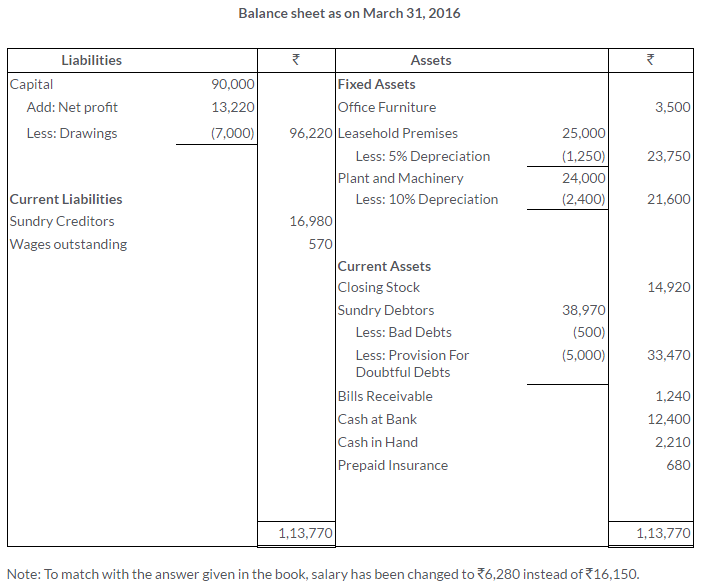
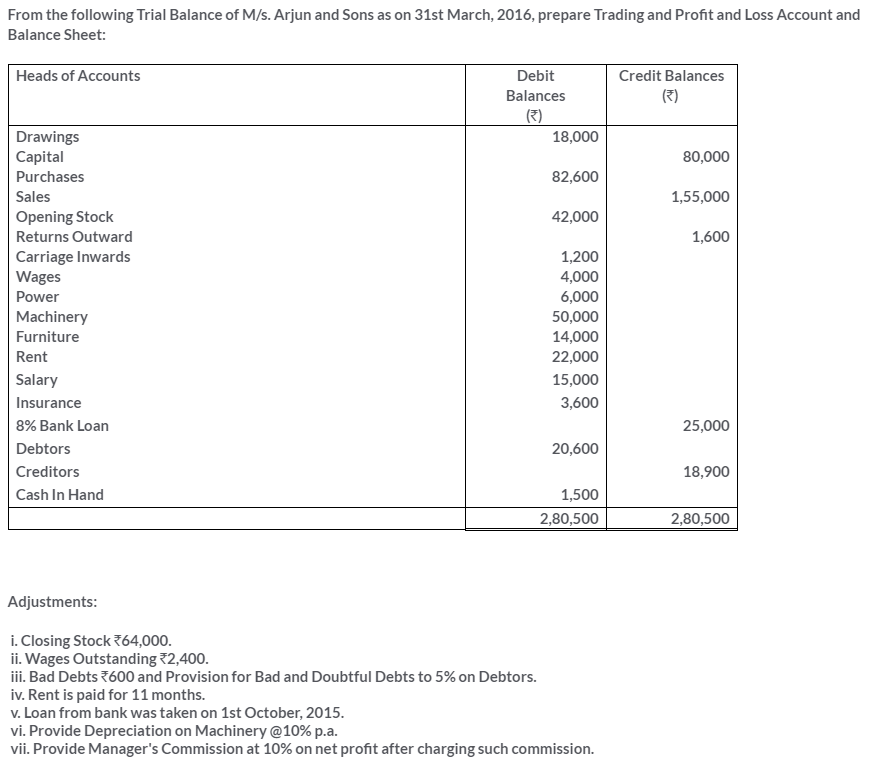
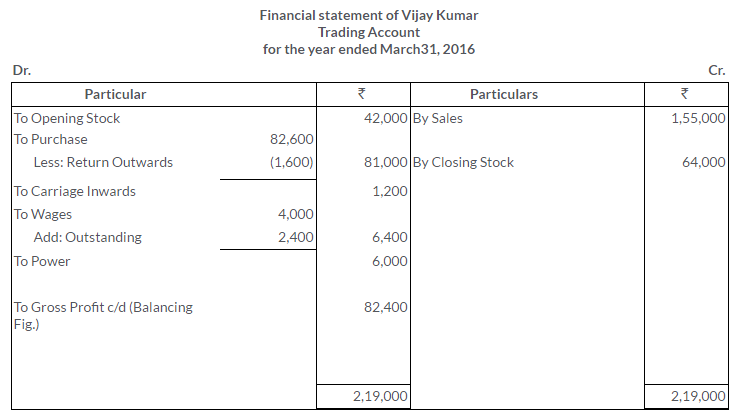
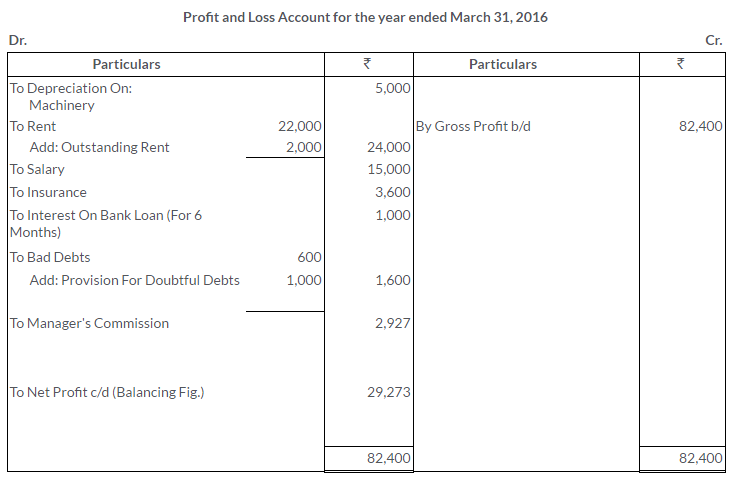
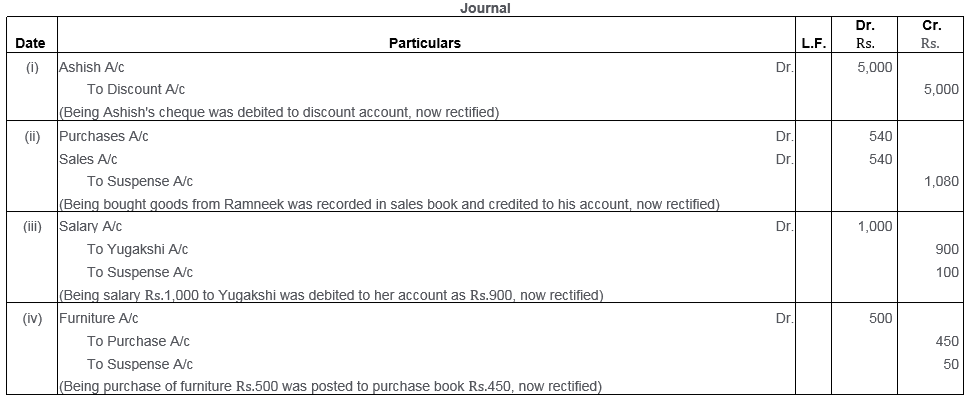
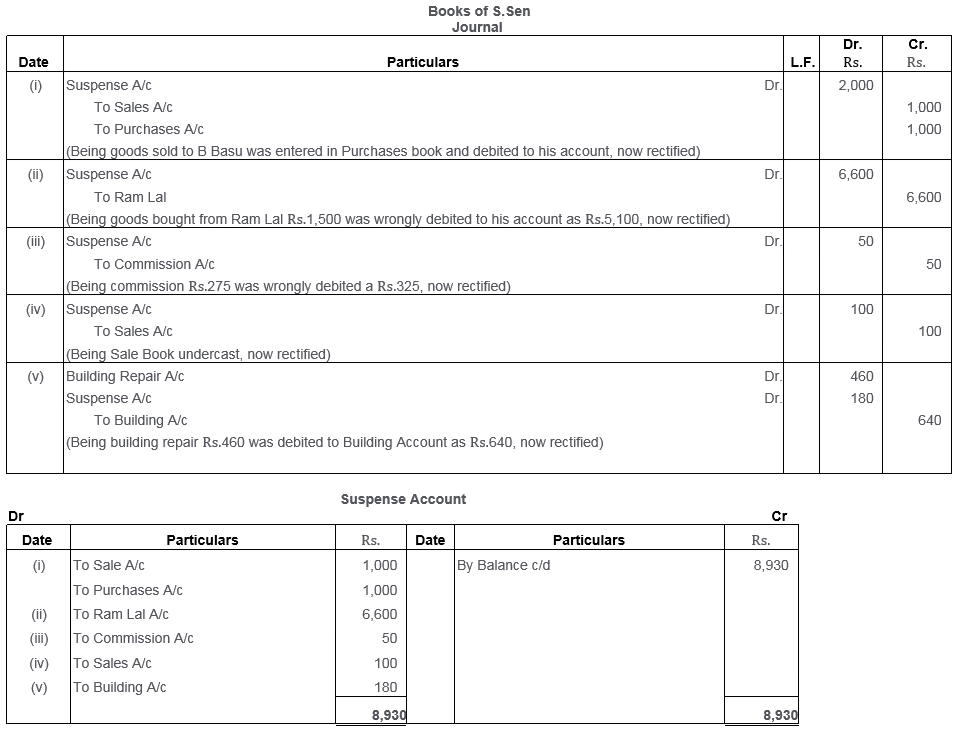
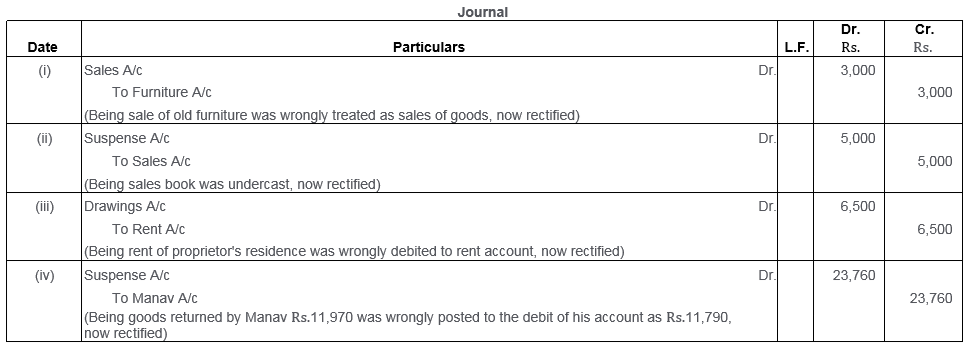
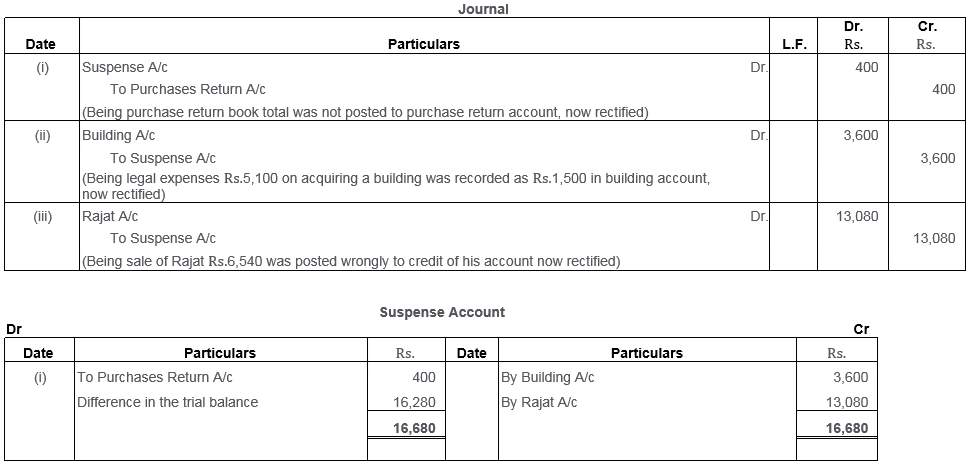
Category: Class 11th

  • TS Grewal Solutions for Financial Statements of Not-for-Profit Organisations Class 11 Accountancy Chapter 20

    TS Grewal Solutions for Class 11 Accountancy Chapter 20 – Financial Statements of Not-for-Profit Organisations

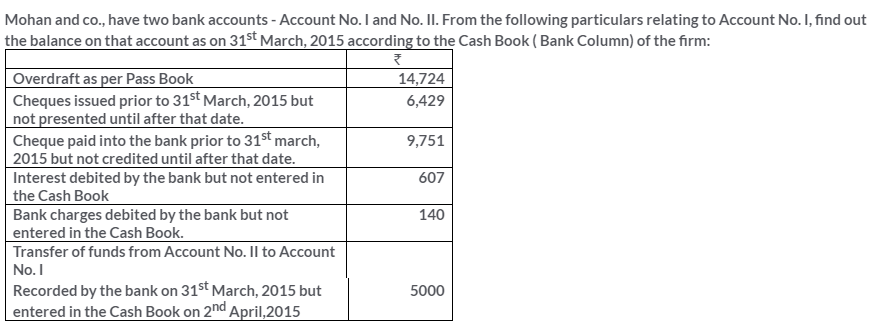
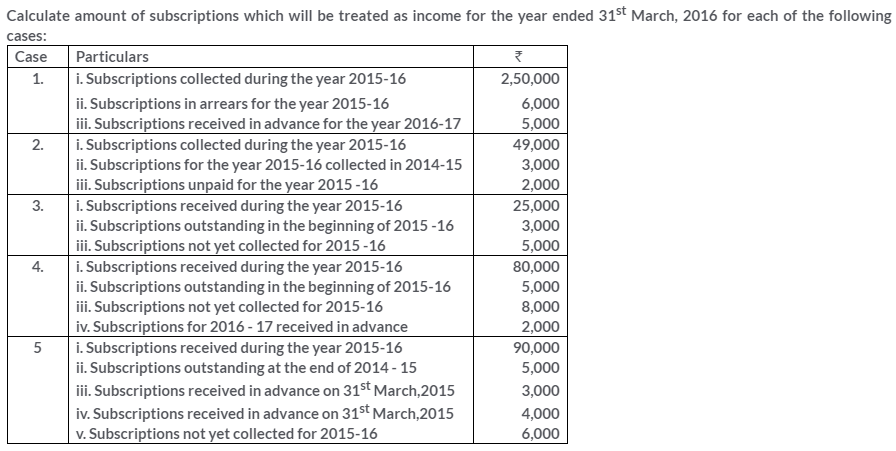
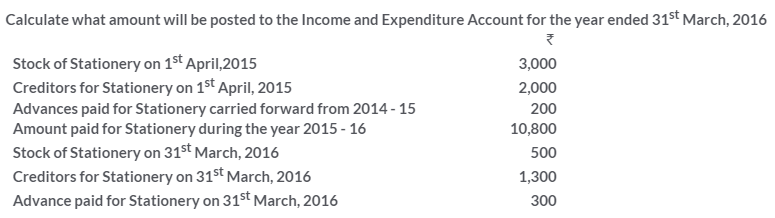
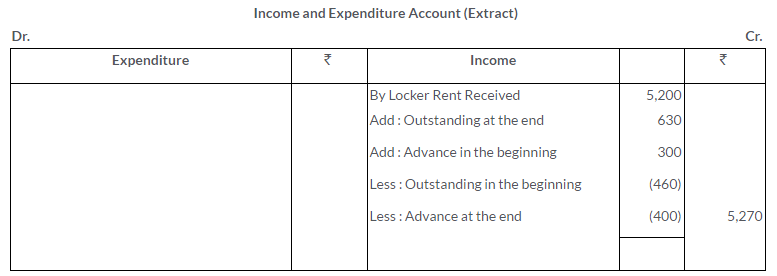
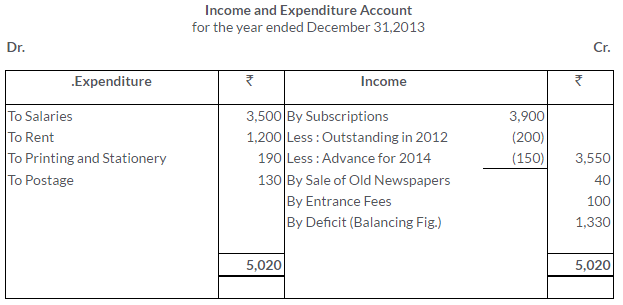
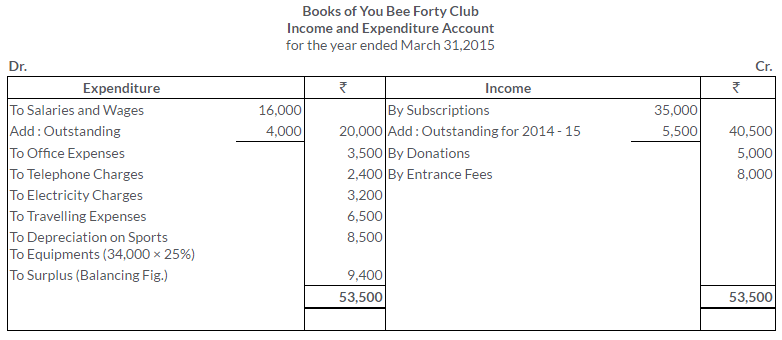
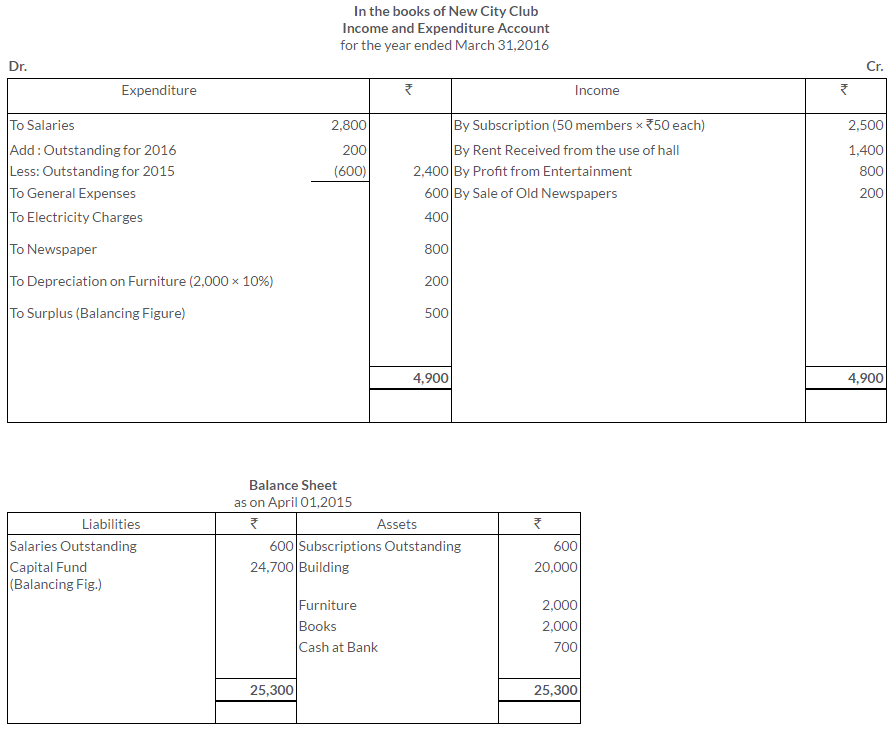
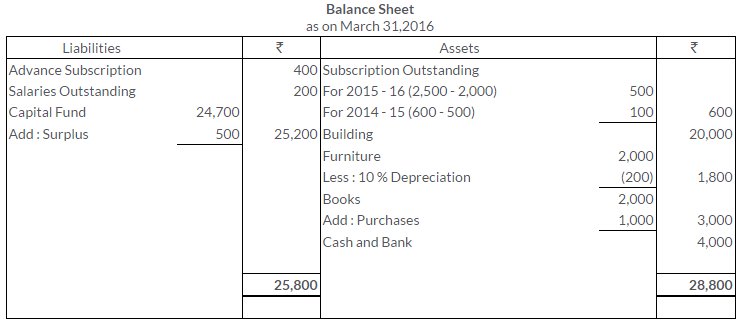
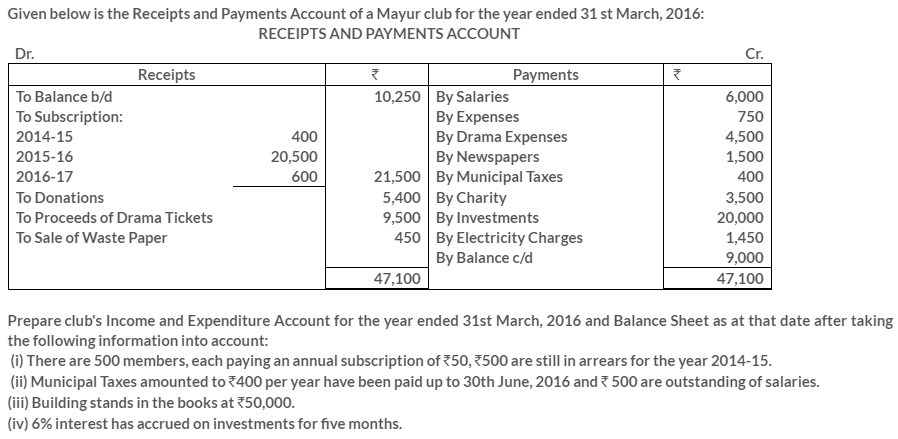
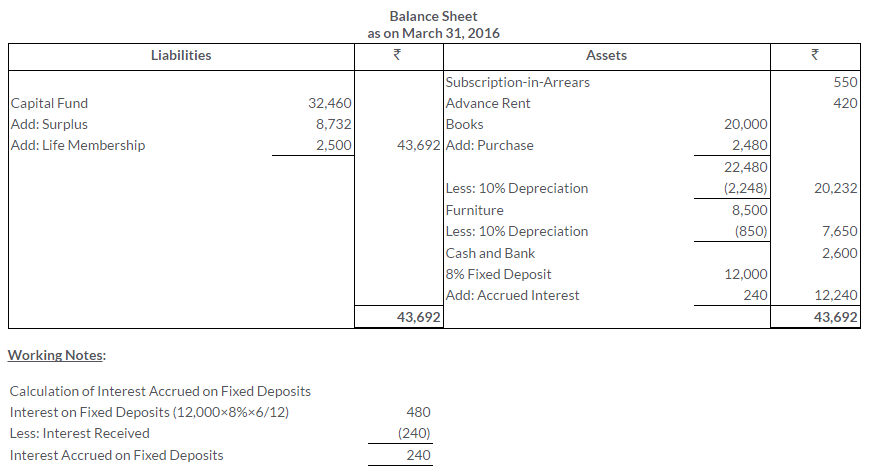
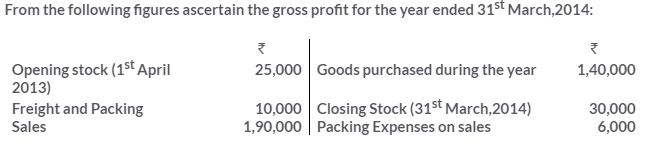
    Question 1.
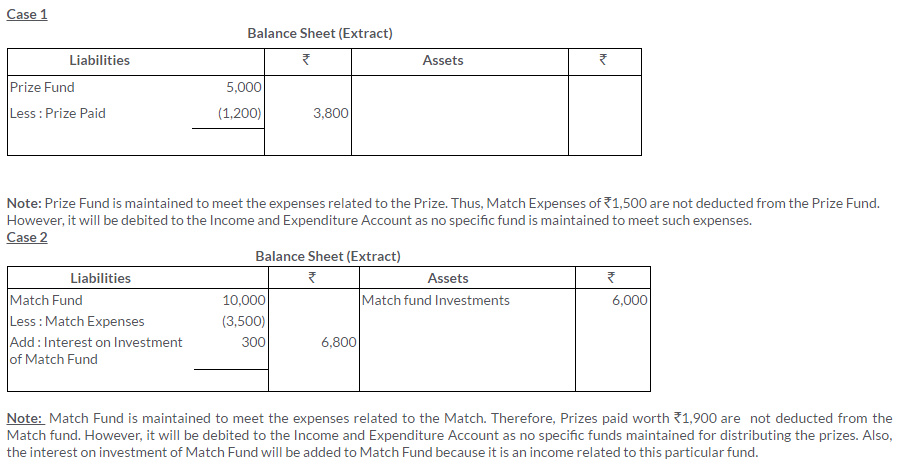
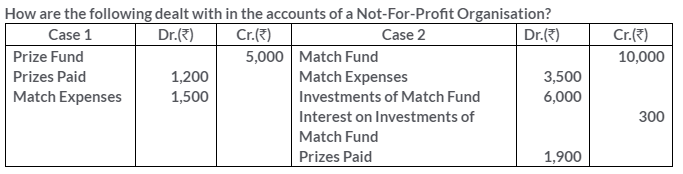
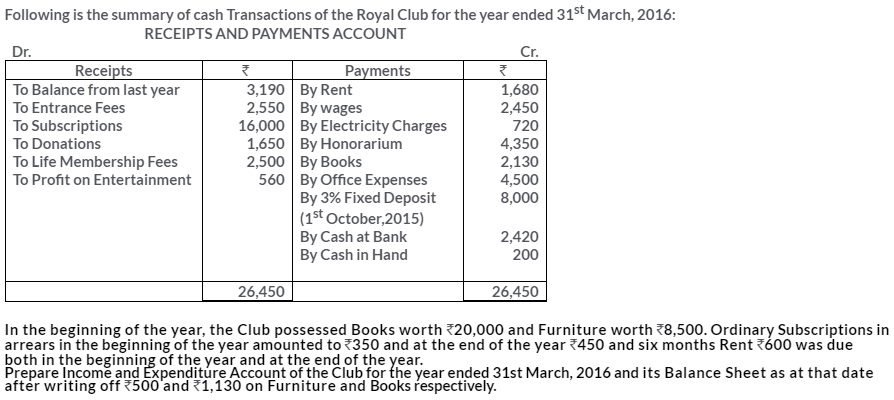
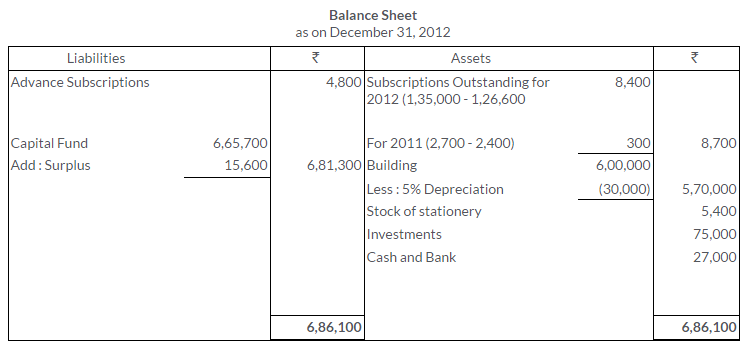
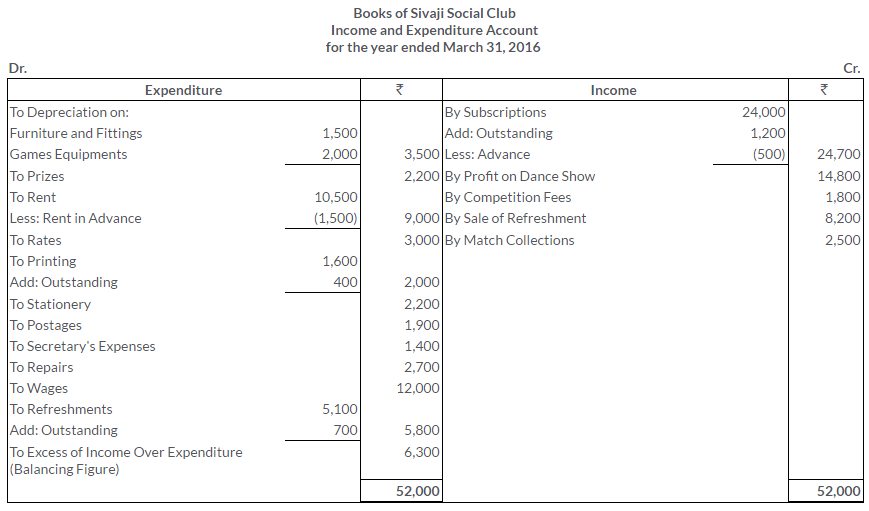
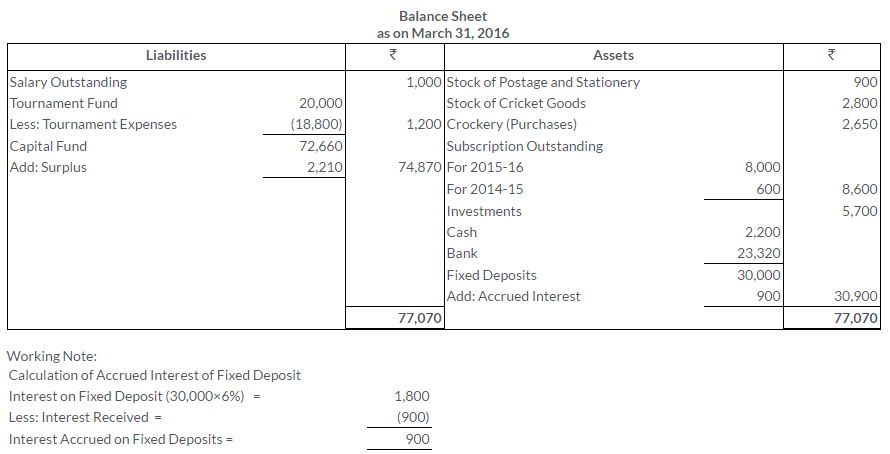
    ts-grewal-solutions-class-11-accountancy-chapter-20-financial-statements-of-not-for-profit-organisations-1-1
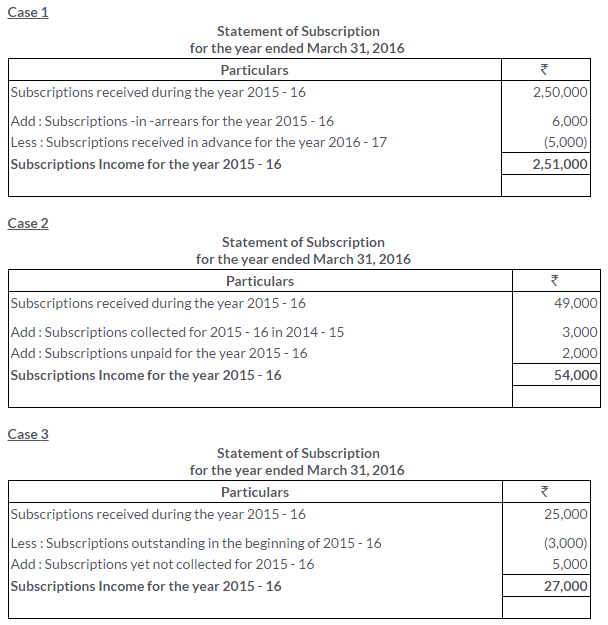
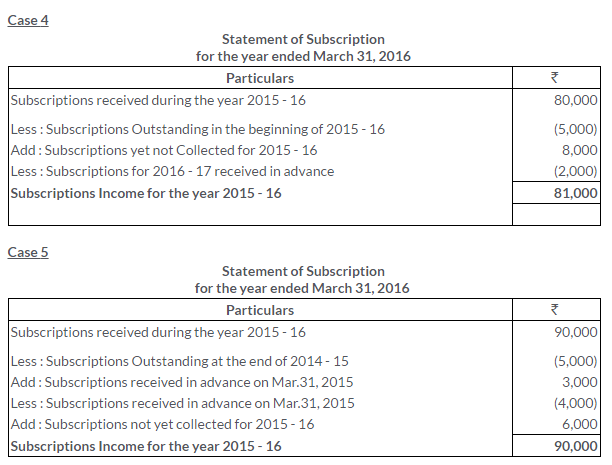
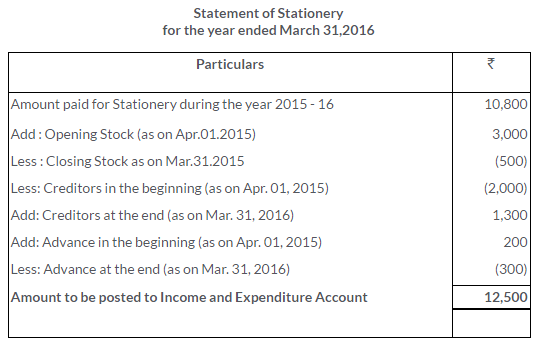
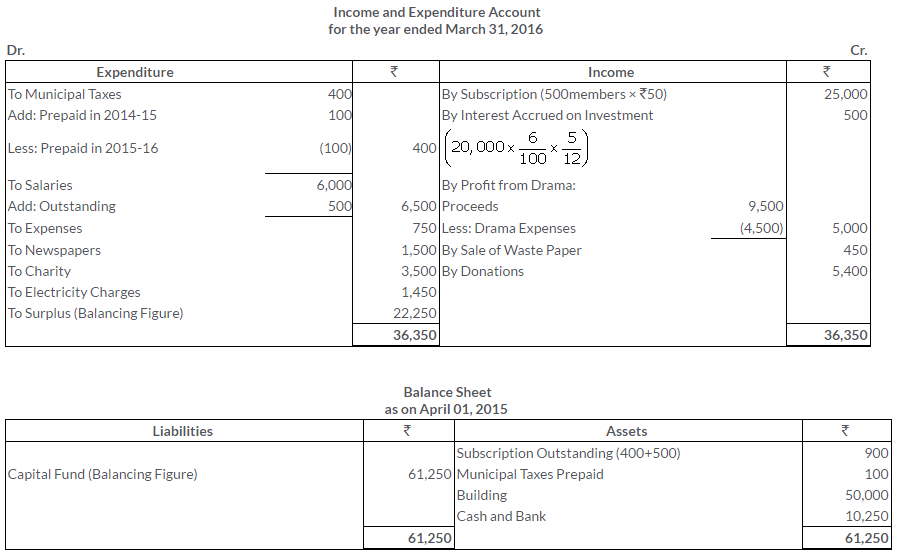
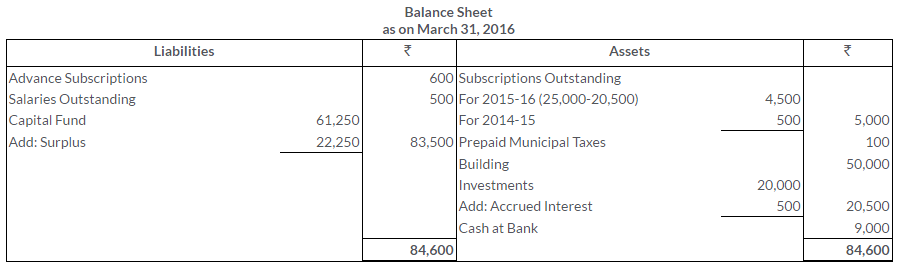
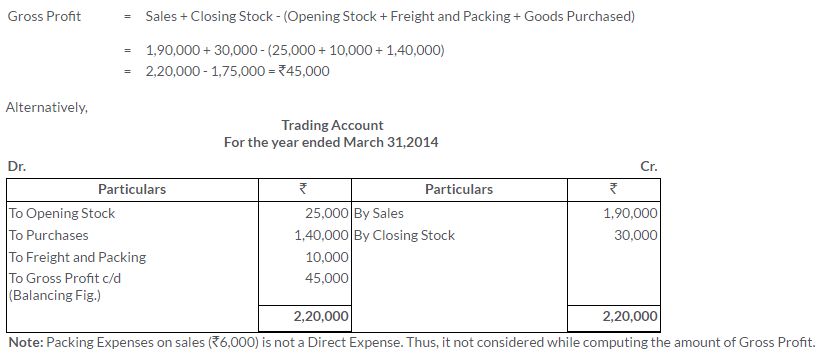
    Solution:
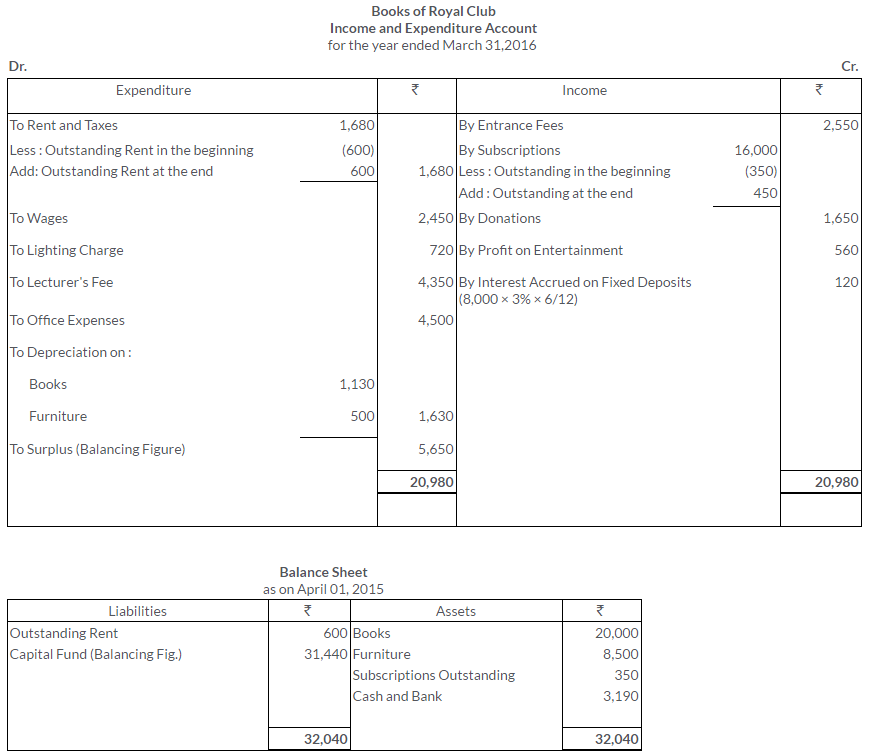
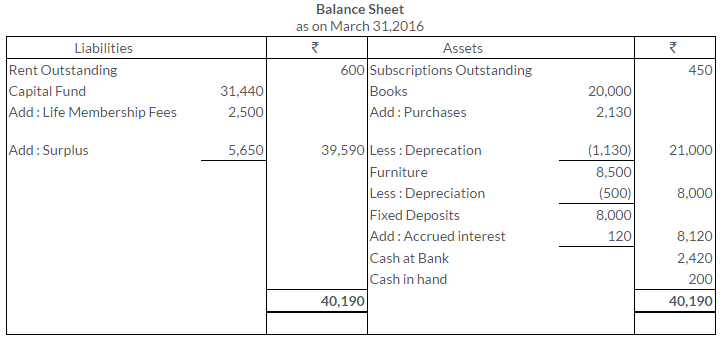
    ts-grewal-solutions-class-11-accountancy-chapter-20-financial-statements-of-not-for-profit-organisations-1-2

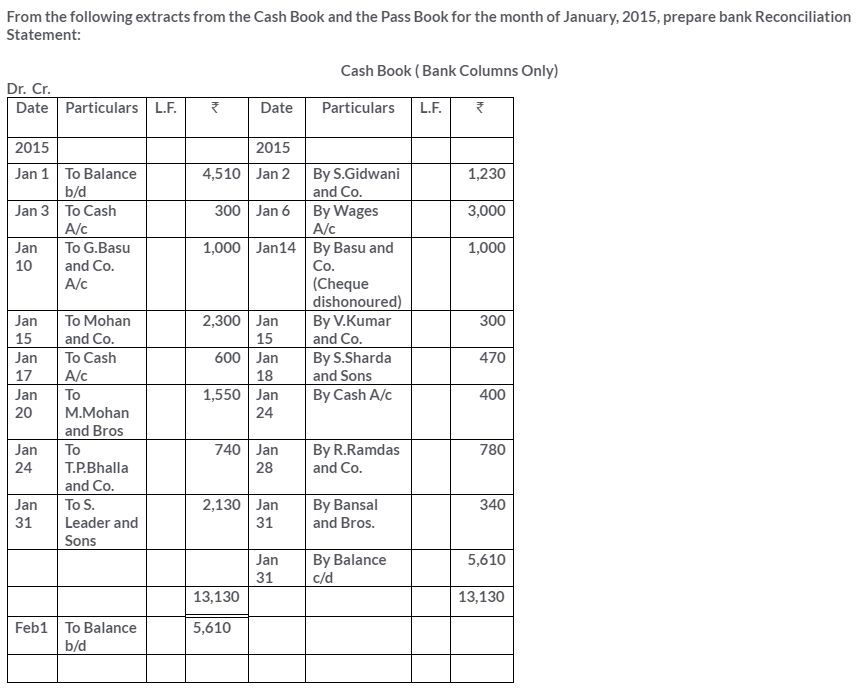
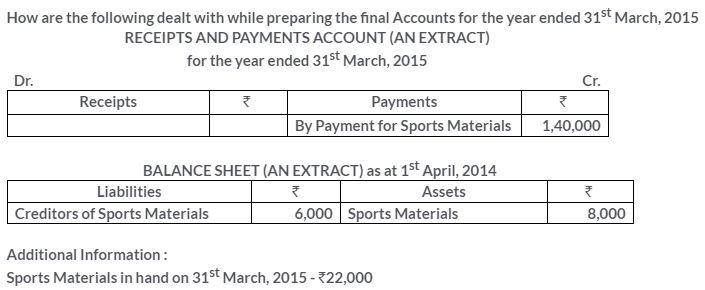
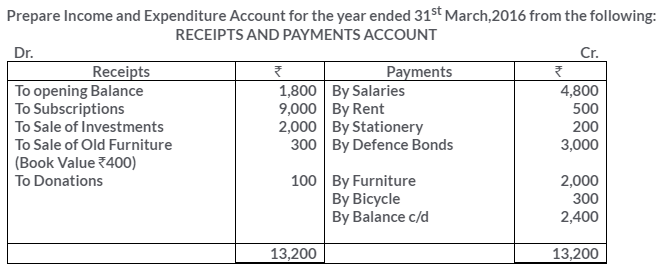
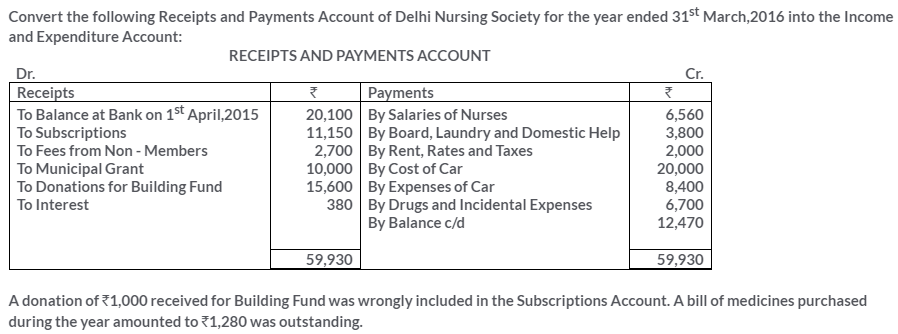
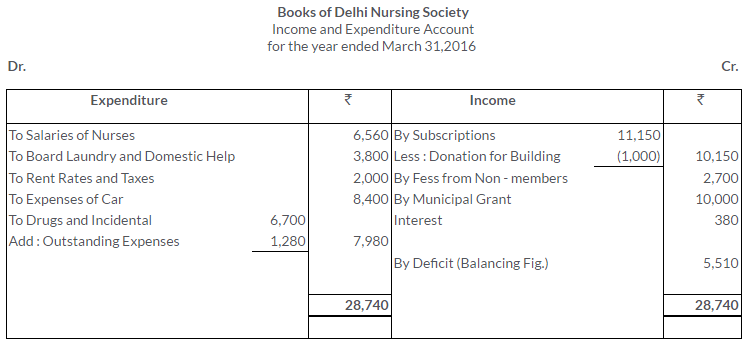
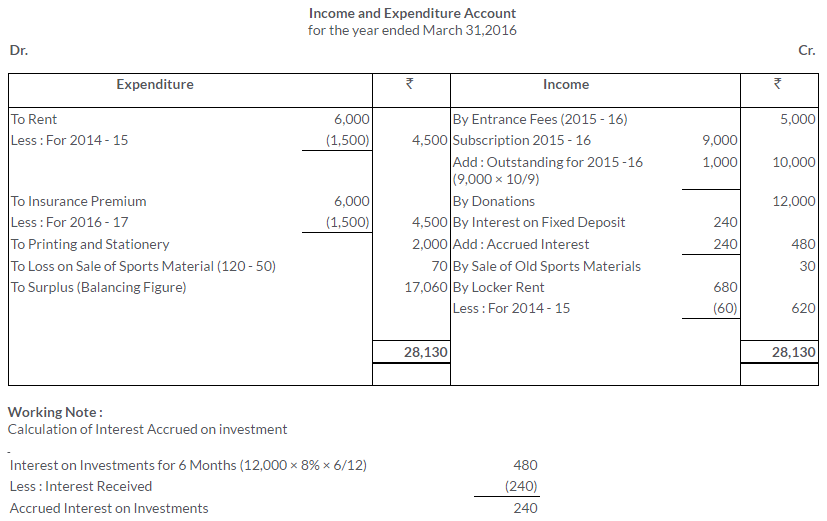
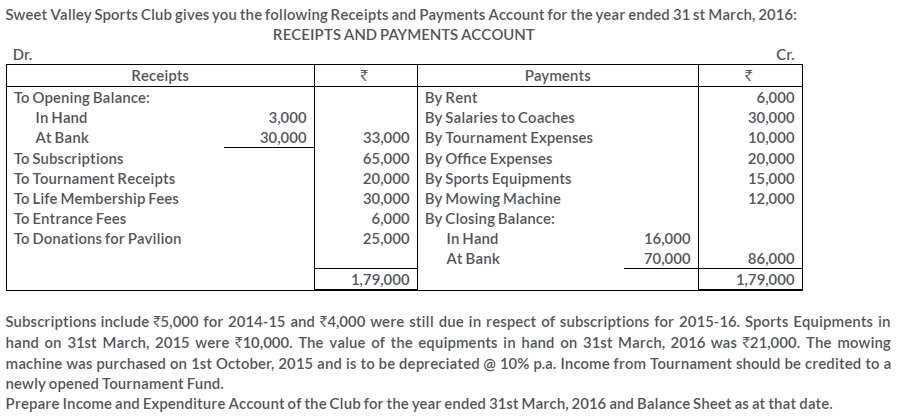
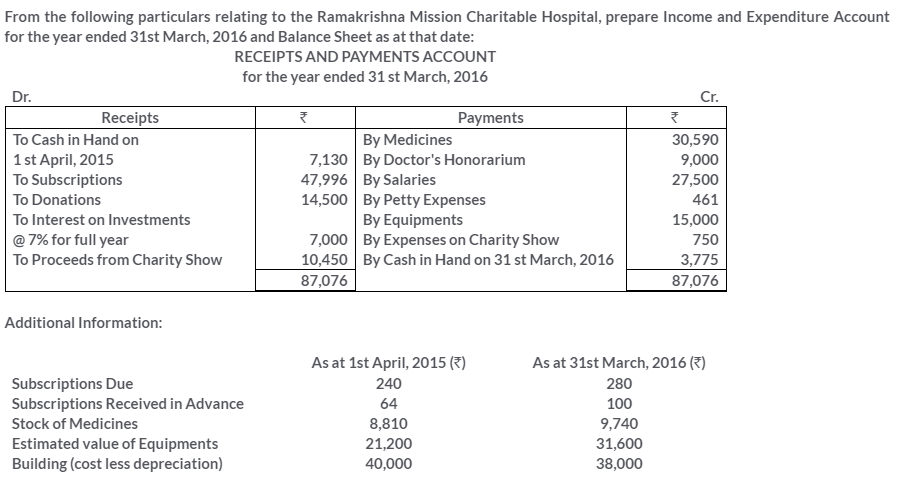
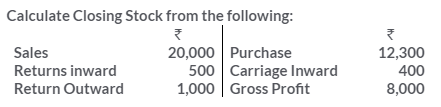
    Question 2.
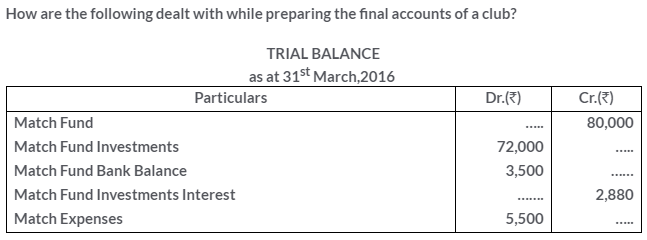
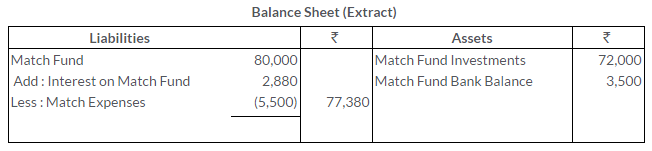
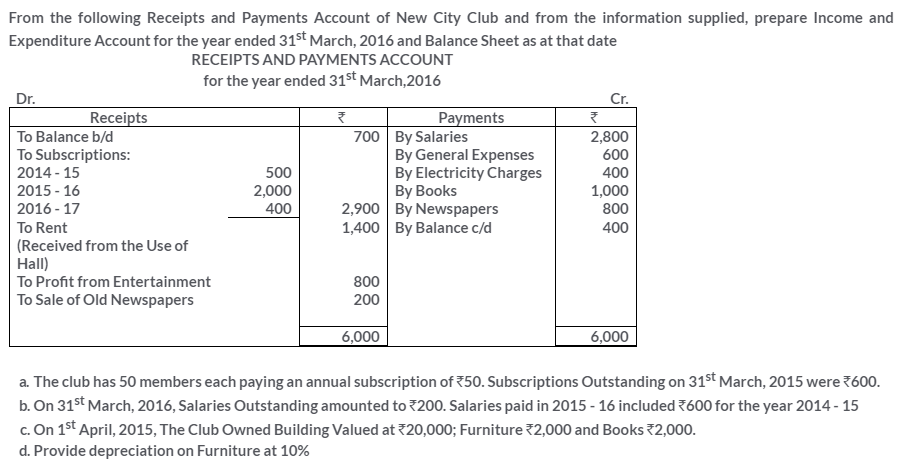
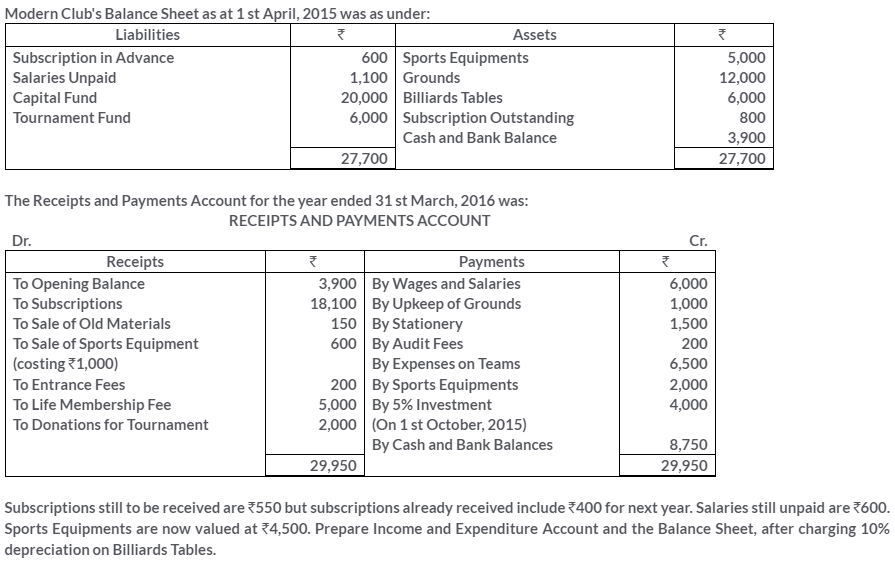
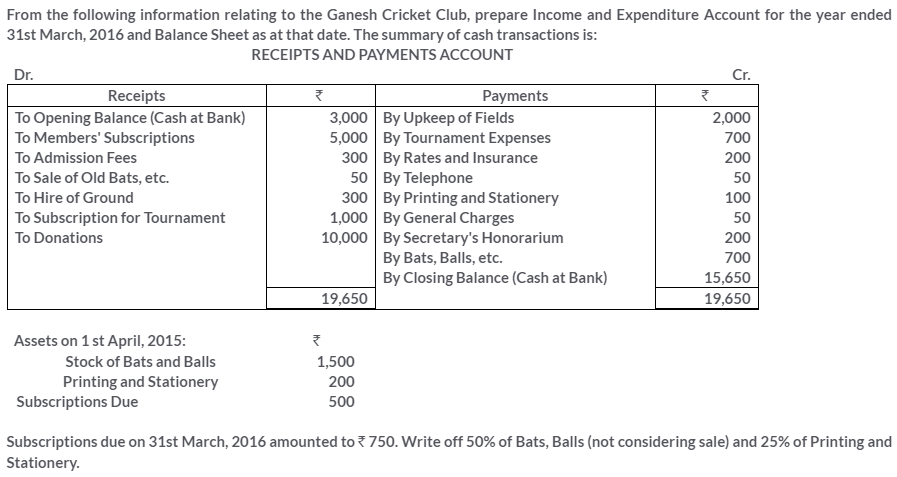
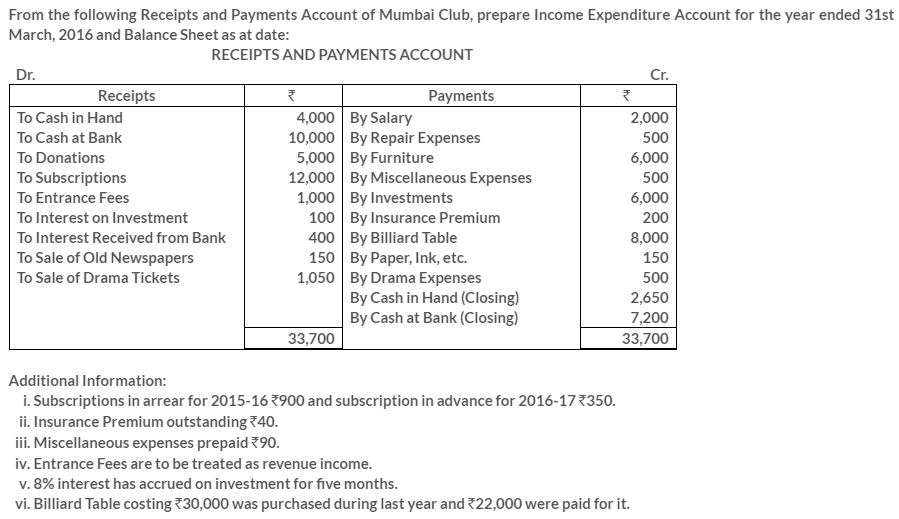
    ts-grewal-solutions-class-11-accountancy-chapter-20-financial-statements-of-not-for-profit-organisations-2-1
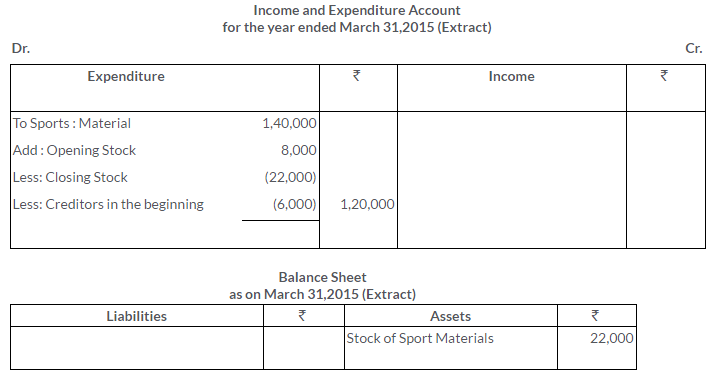
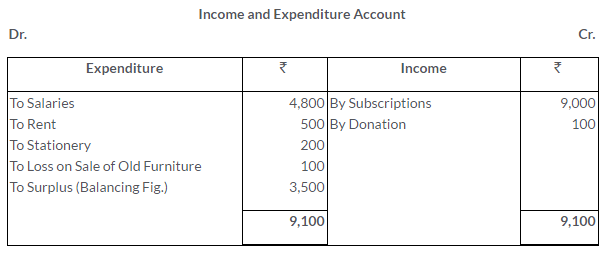
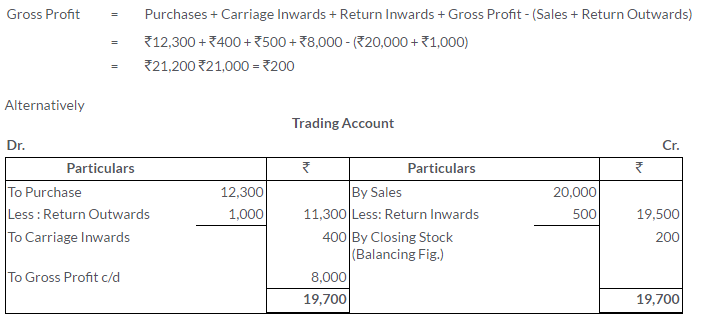
    Solution:
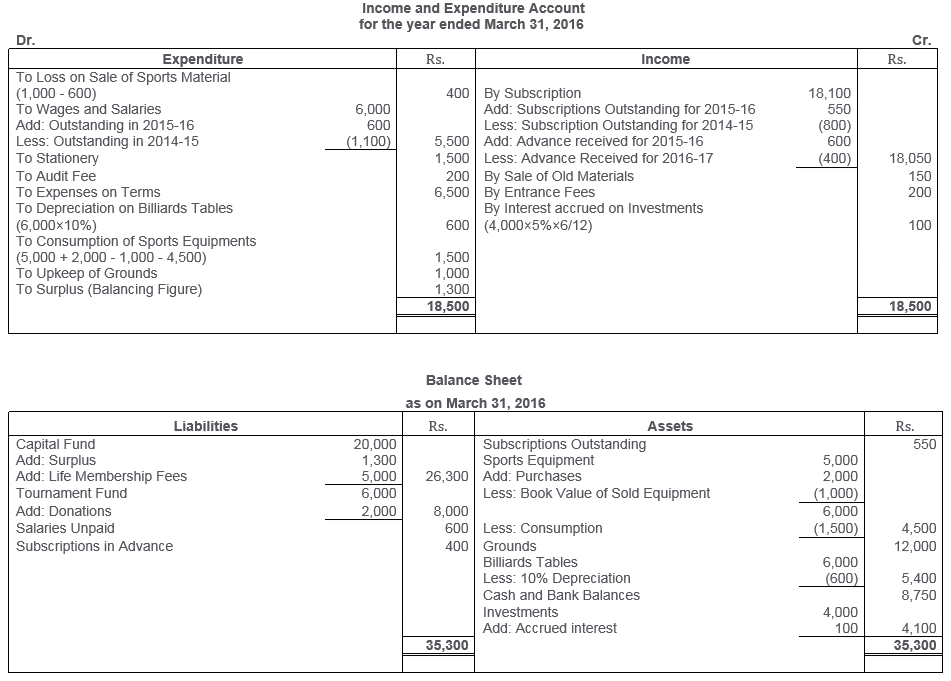
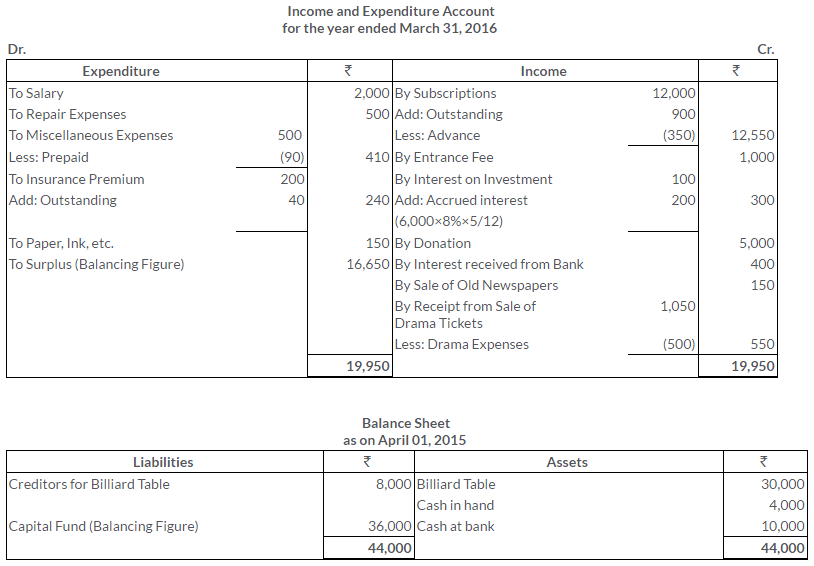
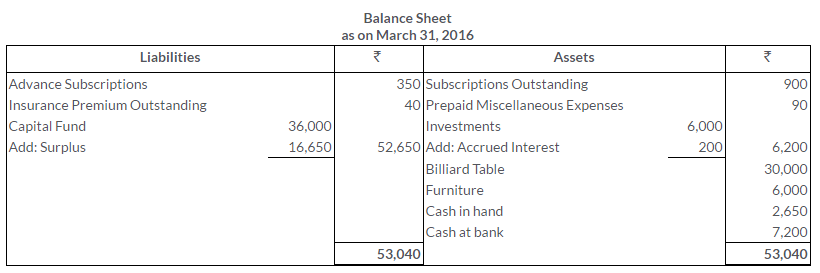
    ts-grewal-solutions-class-11-accountancy-chapter-20-financial-statements-of-not-for-profit-organisations-2-2

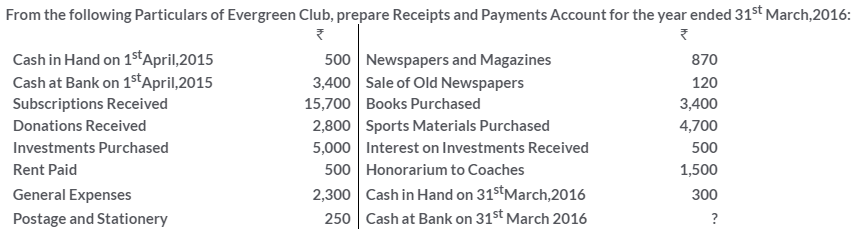
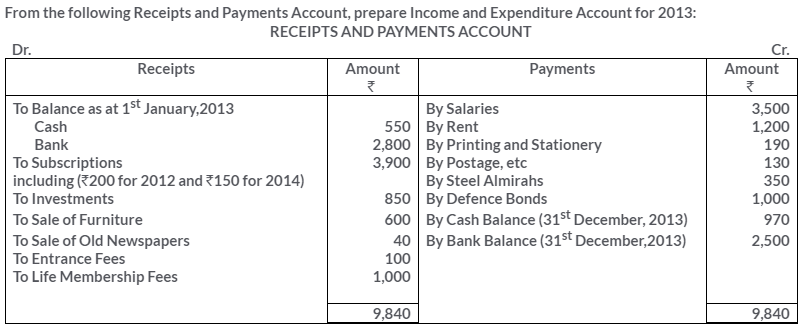
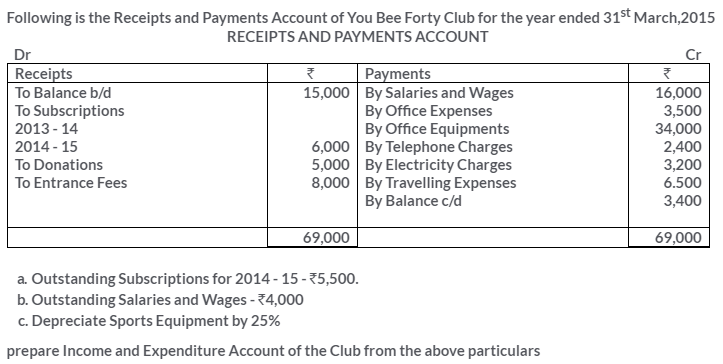
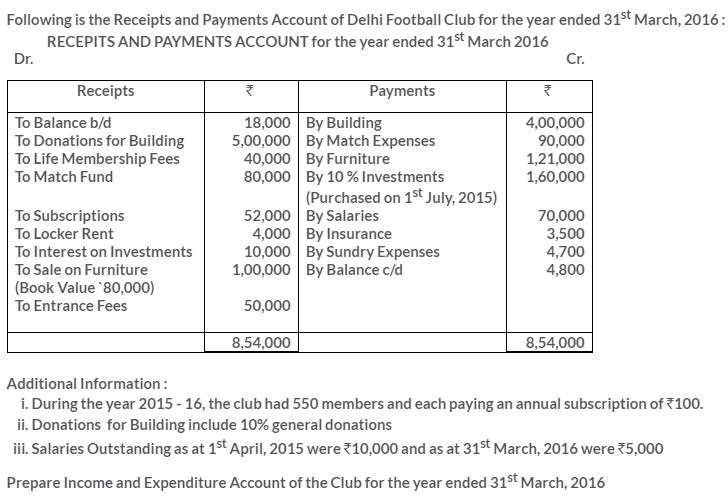
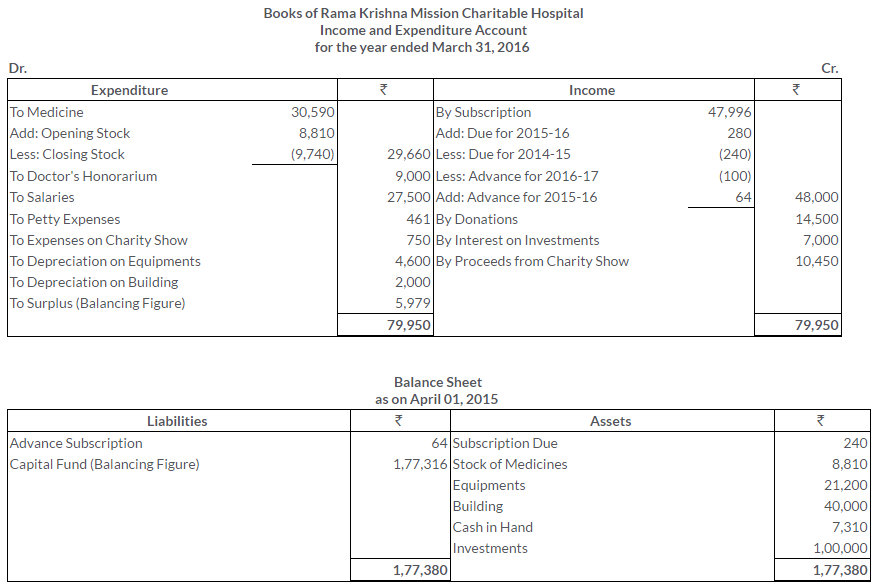
    Question 3.
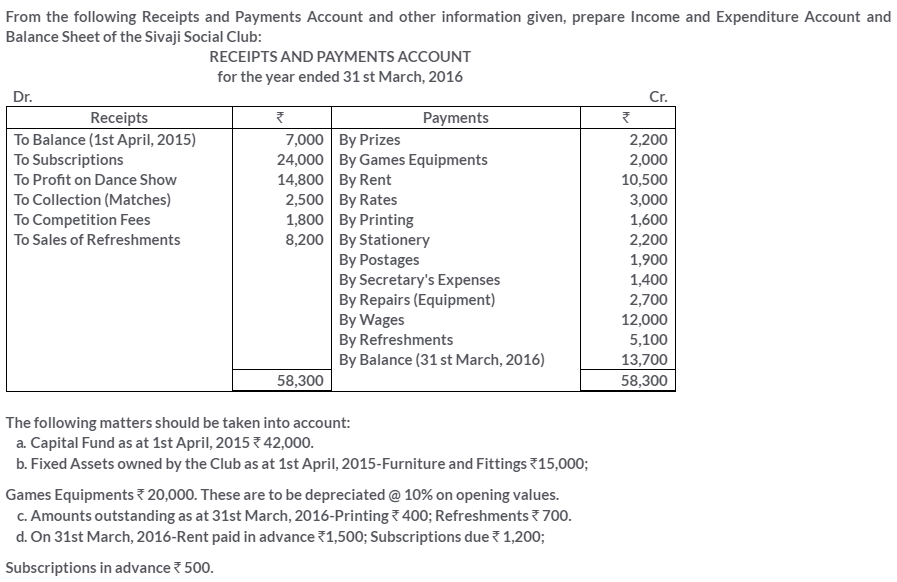
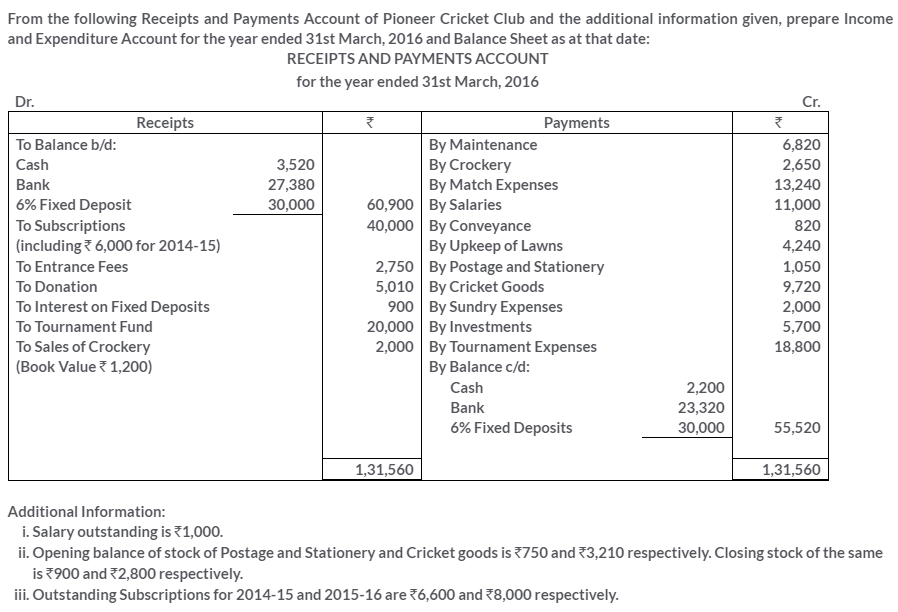
    ts-grewal-solutions-class-11-accountancy-chapter-20-financial-statements-of-not-for-profit-organisations-3-2
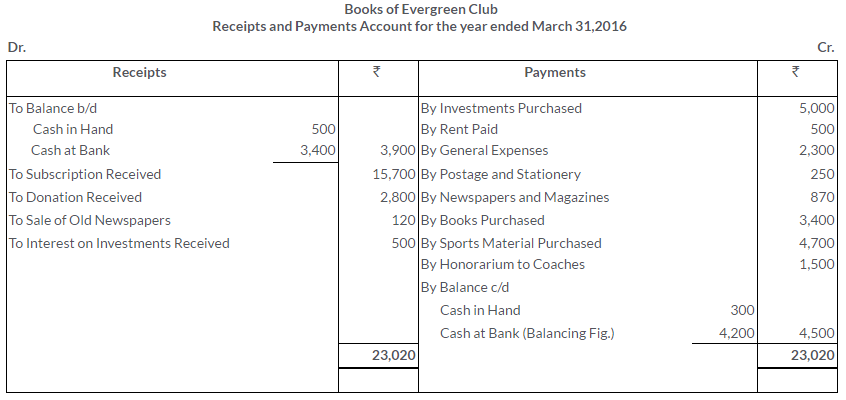
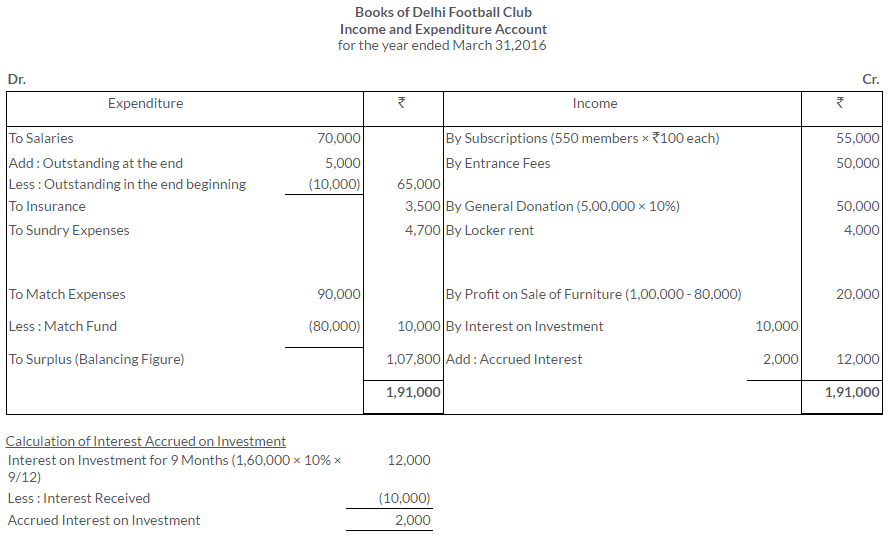
    Solution:
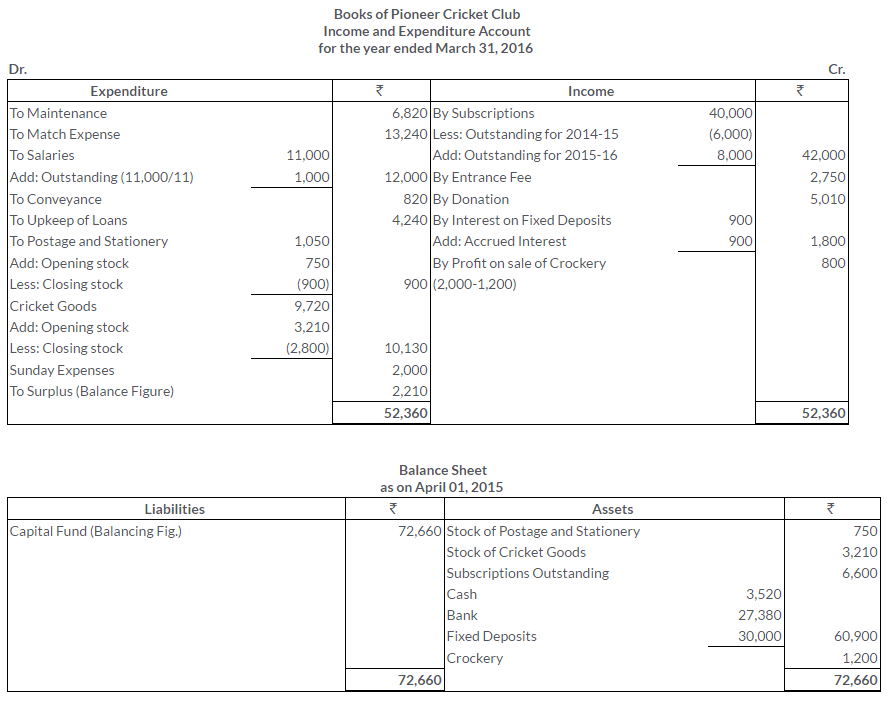
    ts-grewal-solutions-class-11-accountancy-chapter-20-financial-statements-of-not-for-profit-organisations-3-1

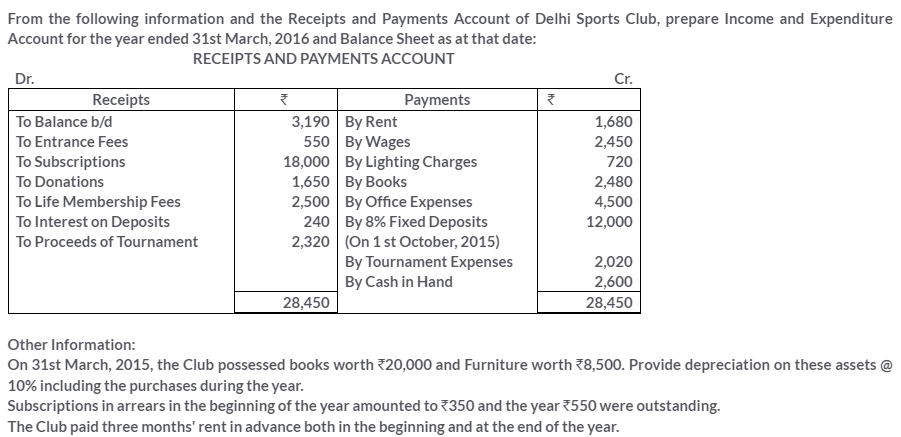
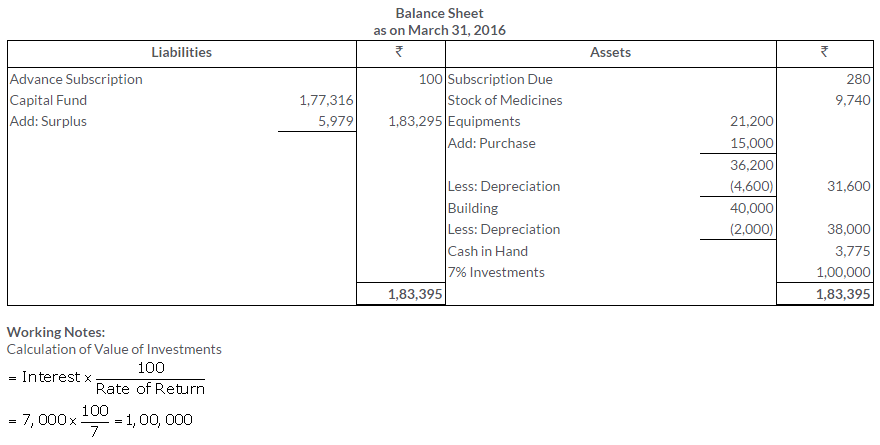
    Question 4.
    ts-grewal-solutions-class-11-accountancy-chapter-20-financial-statements-of-not-for-profit-organisations-4-1
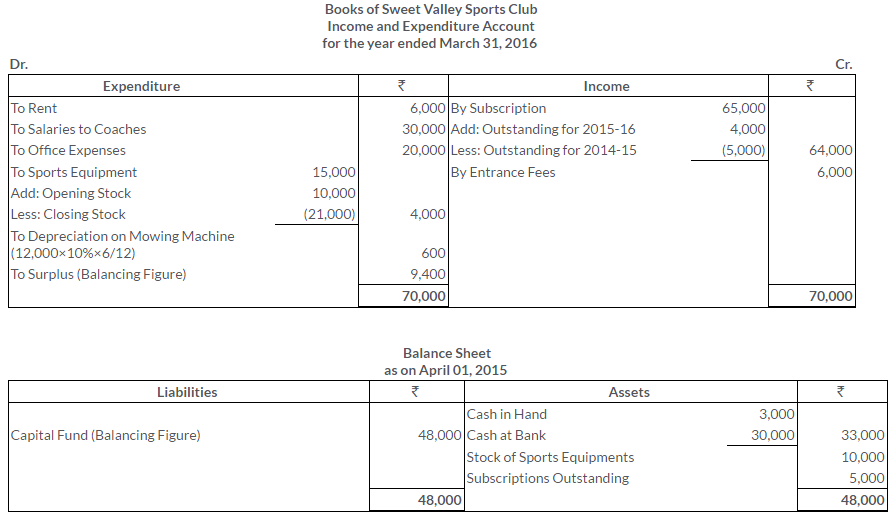
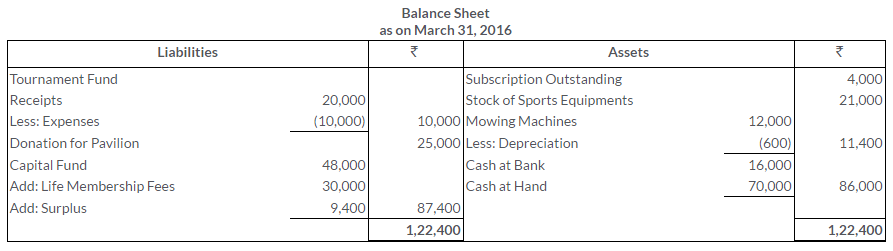
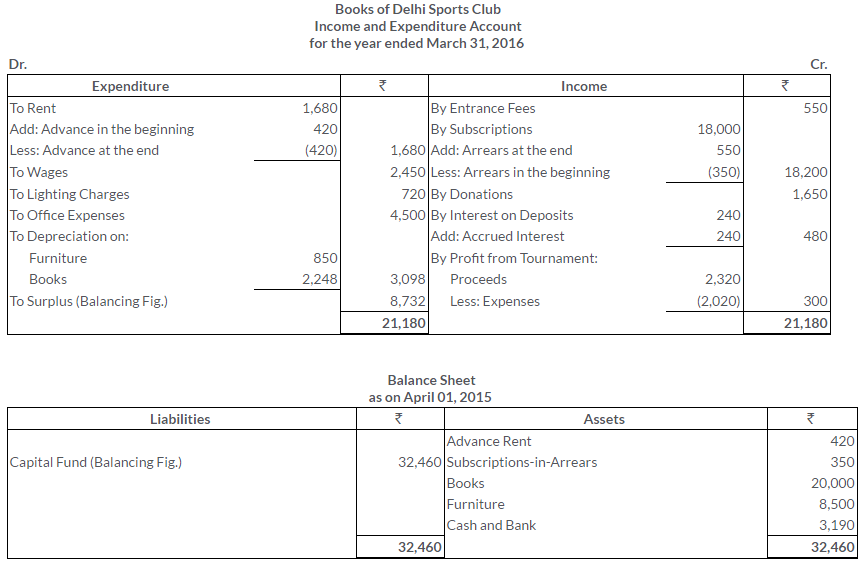
    Solution:
    ts-grewal-solutions-class-11-accountancy-chapter-20-financial-statements-of-not-for-profit-organisations-4-2

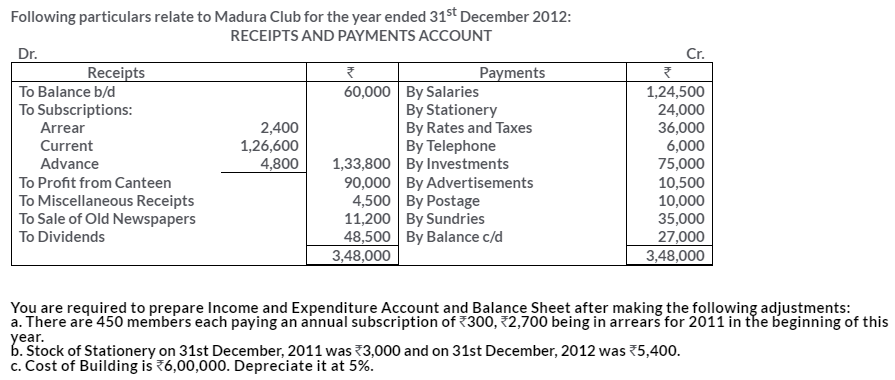
    Question 5.
    ts-grewal-solutions-class-11-accountancy-chapter-20-financial-statements-of-not-for-profit-organisations-5-1
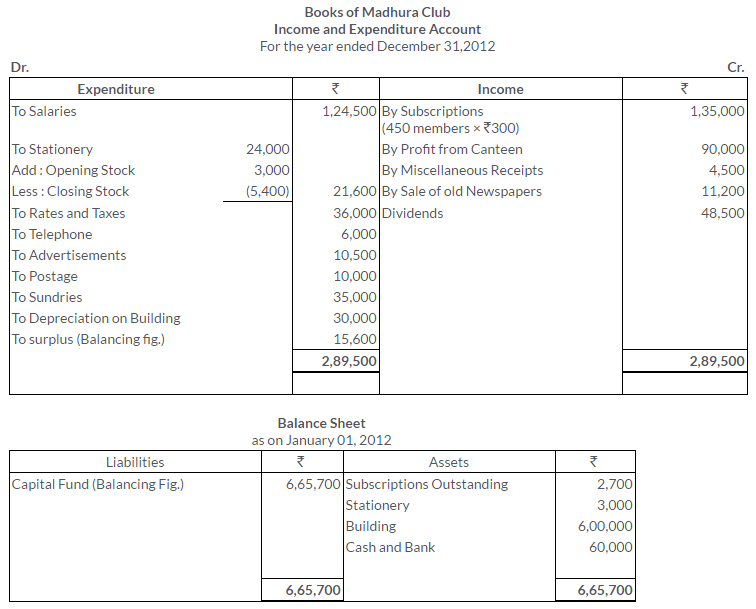
    Solution:
    ts-grewal-solutions-class-11-accountancy-chapter-20-financial-statements-of-not-for-profit-organisations-5-2

    Question 6.
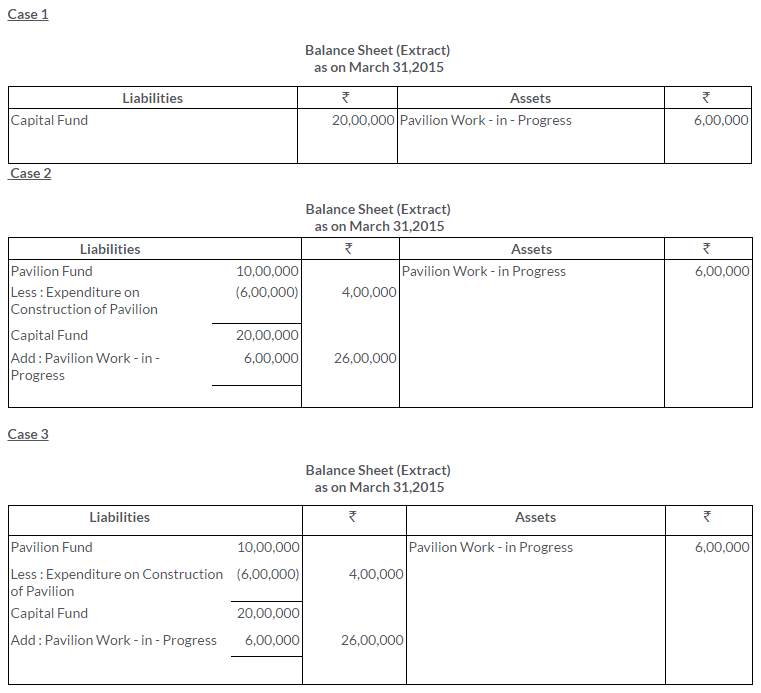
    Show how are the following items dealt with while preparing the final accounts for the year ended 31st March,2016 of a Not – For – Profit Organisation:
    Case 1: Expenditure on construction of Pavilion is Rs.6,00,000. The construction work is in progress and has not yet completed. Capital Fund as at 31st March, 2015 is 20,00,000
    Case 2: Expenditure on construction of Pavilion is Rs.6,00,000. The construction work is in progress and has not yet completed. Pavilion Fund as at 31st March 2015 is Rs.10,00,000 and capital Fund as at 31st March, 2015 is Rs.20,00,000.
    Case 3. Expenditure on construction of Pavilion is Rs.6,00,000. The construction work is in progress and has not yet completed. Pavilion Fund as at 31st March, 2015 is Rs.10,00,000 and Capital Fund as at 31st March, 2015 is Rs.20,00,000. Donation Received for Pavilion on 1st Janurary,2016 is Rs.5,00,000
    Solution:
    ts-grewal-solutions-class-11-accountancy-chapter-20-financial-statements-of-not-for-profit-organisations-6

    Question 7.
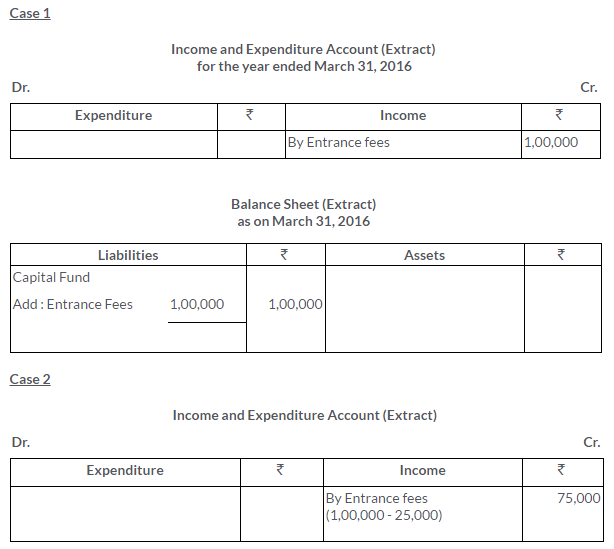
    How is Entrance Fees dealt with while preparing the final accounts for the year ended 31st March, 2016 in each of the following alternatives cases?
    Case 1. During the year 2015-16, Entrance Fees received was Rs.1,00,000.
    Case 2. During the year 2015-16, Entrance Fees received was Rs.1,00,000. Out of this Rs.25,000 pertains to the year 2016 – 17
    Solution:
    ts-grewal-solutions-class-11-accountancy-chapter-20-financial-statements-of-not-for-profit-organisations-7

    Question 8.
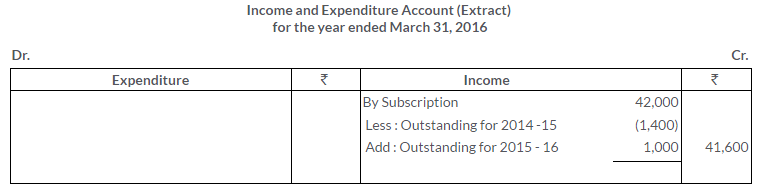
    In 2015 -16, the subscriptions received by the Jaipur Library were Rs.42,000. These subscriptions include Rs.1,400 received for 2014-15. On 31st March, 2016 subscriptions due but not received were Rs.1,000. What amount should be credited to Income and Expenditure Account for the year ended 31st March, 2016 as subscriptions?
    Solution:
    ts-grewal-solutions-class-11-accountancy-chapter-20-financial-statements-of-not-for-profit-organisations-8

    Question 9.
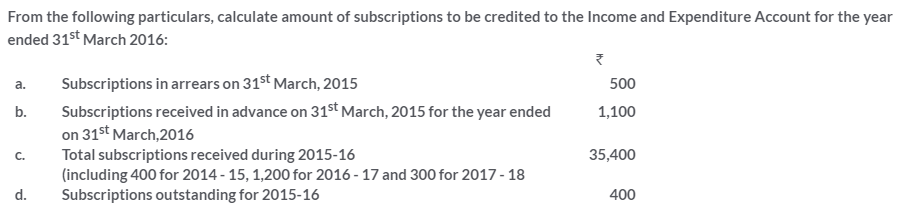
    ts-grewal-solutions-class-11-accountancy-chapter-20-financial-statements-of-not-for-profit-organisations-9-1
    Solution:
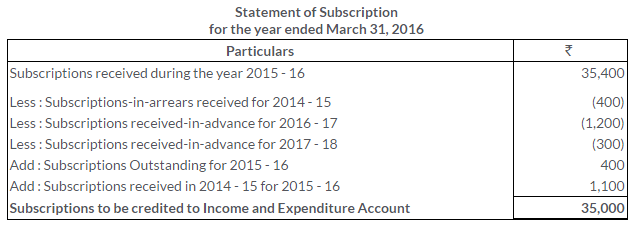
    ts-grewal-solutions-class-11-accountancy-chapter-20-financial-statements-of-not-for-profit-organisations-9-2

    Question 10.
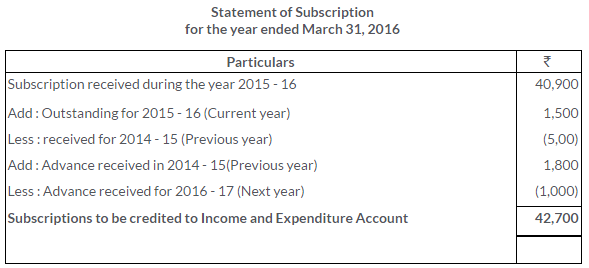
    In 2015-16, subscriptions received by King Club of Delhi were Rs.40,900 including Rs.500 fort 2014-15 and Rs.1,000 for 2016-17. At the end of 2015-16, subscriptions outstanding for 2015-16 were Rs.1,500. The subscriptions due but not received at the end of the previous year, i.e., 31st March, 2015 were Rs.800, while subscriptions received in advance on the same date were Rs.1,800.
    Calculate amount of subscriptions to be credited to Income and Expenditure Account for the- year ended 31st March, 2016.
    Solution:
    ts-grewal-solutions-class-11-accountancy-chapter-20-financial-statements-of-not-for-profit-organisations-10

    Question 11.
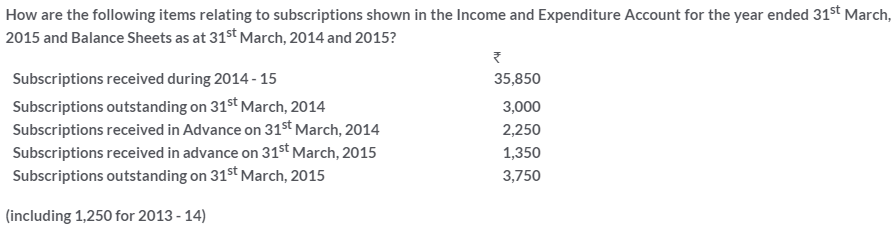
    ts-grewal-solutions-class-11-accountancy-chapter-20-financial-statements-of-not-for-profit-organisations-11-1
    Solution:
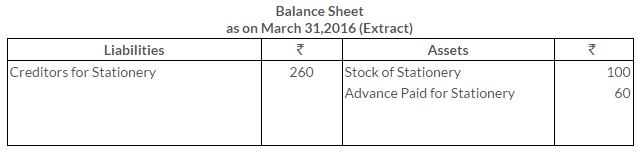
    ts-grewal-solutions-class-11-accountancy-chapter-20-financial-statements-of-not-for-profit-organisations-11-2

    Question 12.
    ts-grewal-solutions-class-11-accountancy-chapter-20-financial-statements-of-not-for-profit-organisations-12-1
    Solution:
    ts-grewal-solutions-class-11-accountancy-chapter-20-financial-statements-of-not-for-profit-organisations-12-2
    ts-grewal-solutions-class-11-accountancy-chapter-20-financial-statements-of-not-for-profit-organisations-12-3

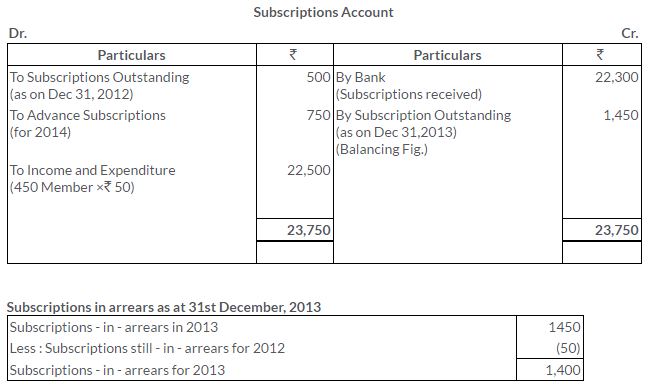
    Question 13.
    There were 450 members in a club each paying an annual subscription of Rs.50. Rs.500 were in arrears as at 31st December, 2012. Subscriptions received during 2013 were Rs.22,300 including Rs.450, for 2012 and Rs.750 for the year 2014. Calculate amount of subscriptions in arrears as at 31st December, 2013 by preparing the Subscriptions Account.
    Solution:
    ts-grewal-solutions-class-11-accountancy-chapter-20-financial-statements-of-not-for-profit-organisations-13

    Question 14.
    ts-grewal-solutions-class-11-accountancy-chapter-20-financial-statements-of-not-for-profit-organisations-14-1
    Solution:
    ts-grewal-solutions-class-11-accountancy-chapter-20-financial-statements-of-not-for-profit-organisations-14-2

    Question 15.
    ts-grewal-solutions-class-11-accountancy-chapter-20-financial-statements-of-not-for-profit-organisations-15-1
    Solution:
    ts-grewal-solutions-class-11-accountancy-chapter-20-financial-statements-of-not-for-profit-organisations-15-2

    Question 16.
    ts-grewal-solutions-class-11-accountancy-chapter-20-financial-statements-of-not-for-profit-organisations-16-1
    Solution:
    ts-grewal-solutions-class-11-accountancy-chapter-20-financial-statements-of-not-for-profit-organisations-16-2

    Question 17.
    ts-grewal-solutions-class-11-accountancy-chapter-20-financial-statements-of-not-for-profit-organisations-17-1
    Solution:
    ts-grewal-solutions-class-11-accountancy-chapter-20-financial-statements-of-not-for-profit-organisations-17-2

    Question 18.
    ts-grewal-solutions-class-11-accountancy-chapter-20-financial-statements-of-not-for-profit-organisations-18-1
    Solution:
    ts-grewal-solutions-class-11-accountancy-chapter-20-financial-statements-of-not-for-profit-organisations-18-2

    Question 19.
    ts-grewal-solutions-class-11-accountancy-chapter-20-financial-statements-of-not-for-profit-organisations-19-1
    Solution:
    ts-grewal-solutions-class-11-accountancy-chapter-20-financial-statements-of-not-for-profit-organisations-19-2

    Question 20.
    ts-grewal-solutions-class-11-accountancy-chapter-20-financial-statements-of-not-for-profit-organisations-20-1
    Solution:
    ts-grewal-solutions-class-11-accountancy-chapter-20-financial-statements-of-not-for-profit-organisations-20-2

    Question 21.
    ts-grewal-solutions-class-11-accountancy-chapter-20-financial-statements-of-not-for-profit-organisations-21-1
    Solution:
    ts-grewal-solutions-class-11-accountancy-chapter-20-financial-statements-of-not-for-profit-organisations-21-2
    ts-grewal-solutions-class-11-accountancy-chapter-20-financial-statements-of-not-for-profit-organisations-21-3

    Question 22.
    ts-grewal-solutions-class-11-accountancy-chapter-20-financial-statements-of-not-for-profit-organisations-22-1
    Solution:
    ts-grewal-solutions-class-11-accountancy-chapter-20-financial-statements-of-not-for-profit-organisations-22-2

    Question 23.
    ts-grewal-solutions-class-11-accountancy-chapter-20-financial-statements-of-not-for-profit-organisations-23-1
    Solution:
    ts-grewal-solutions-class-11-accountancy-chapter-20-financial-statements-of-not-for-profit-organisations-23-2

    Question 24.
    ts-grewal-solutions-class-11-accountancy-chapter-20-financial-statements-of-not-for-profit-organisations-24-1
    Solution:
    ts-grewal-solutions-class-11-accountancy-chapter-20-financial-statements-of-not-for-profit-organisations-24-2

    Question 25.
    ts-grewal-solutions-class-11-accountancy-chapter-20-financial-statements-of-not-for-profit-organisations-25-1
    Solution:
    ts-grewal-solutions-class-11-accountancy-chapter-20-financial-statements-of-not-for-profit-organisations-25-2

    Question 26.
    ts-grewal-solutions-class-11-accountancy-chapter-20-financial-statements-of-not-for-profit-organisations-26-1
    Solution:
    ts-grewal-solutions-class-11-accountancy-chapter-20-financial-statements-of-not-for-profit-organisations-26-2
    ts-grewal-solutions-class-11-accountancy-chapter-20-financial-statements-of-not-for-profit-organisations-26-3

    Question 27.
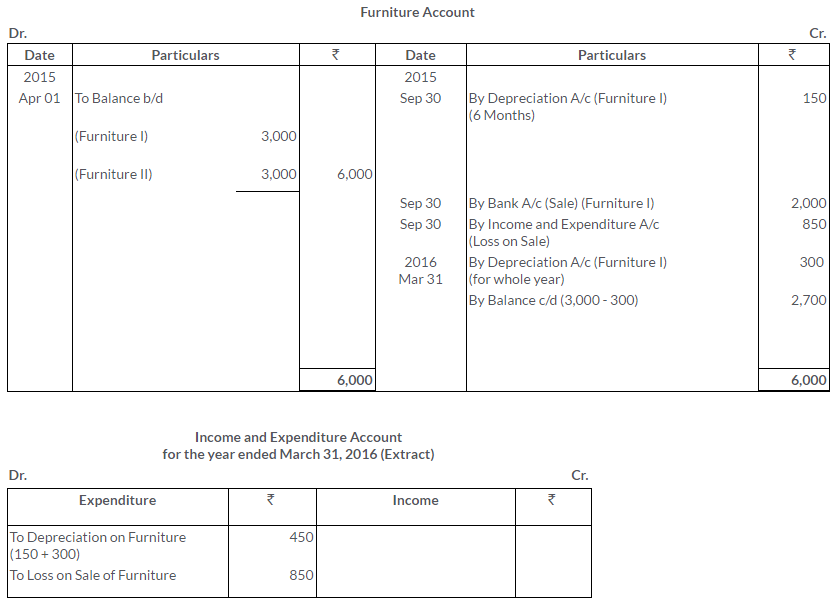
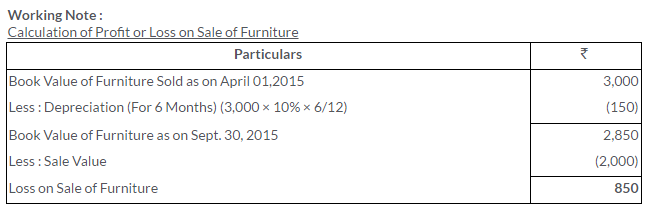
    The book value of furniture on 1st April, 2015 is Rs.6,000. Half of this furniture is sold for Rs.2,000 on 30thSeptember, 2015. Depreciation is to be charged on furniture @ 10% p.a. Calculate loss on sale of furniture. Show how on sale and depreciation on furniture will be shown in the Income and Expenditure Account for the year ended 31st March, 2016.
    Solution:
    ts-grewal-solutions-class-11-accountancy-chapter-20-financial-statements-of-not-for-profit-organisations-27
    ts-grewal-solutions-class-11-accountancy-chapter-20-financial-statements-of-not-for-profit-organisations-27-1

    Question 28.
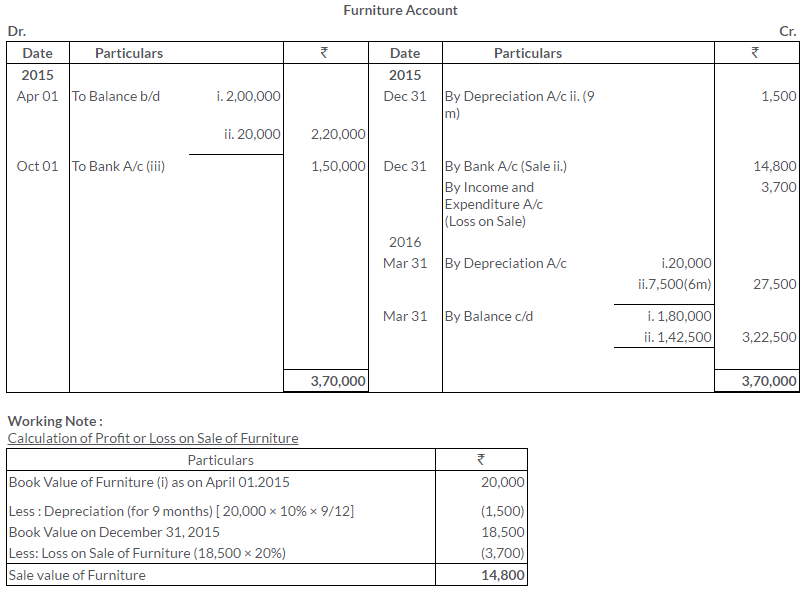
    Delhi Youth Club has furniture at a value of Rs.2,20,000 in its book on 31st March,2015.. It sold old furniture, having book value of Rs.20,000 as at 1st April, 2015 at a loss of @20% on 31st December, 2015. Furniture is to be depreciated @10% p.a. Furniture costing Rs.1,50,000 was also purchased on 1st October, 2015.
    Prepare Furniture Account for the year ended 31st March, 2016
    Solution:
    ts-grewal-solutions-class-11-accountancy-chapter-20-financial-statements-of-not-for-profit-organisations-28

    Question 29.
    ts-grewal-solutions-class-11-accountancy-chapter-20-financial-statements-of-not-for-profit-organisations-29-1
    Solution:
    ts-grewal-solutions-class-11-accountancy-chapter-20-financial-statements-of-not-for-profit-organisations-29-2

    Question 30.
    ts-grewal-solutions-class-11-accountancy-chapter-20-financial-statements-of-not-for-profit-organisations-30-1
    Solution:
    ts-grewal-solutions-class-11-accountancy-chapter-20-financial-statements-of-not-for-profit-organisations-30-2

    Question 31.
    ts-grewal-solutions-class-11-accountancy-chapter-20-financial-statements-of-not-for-profit-organisations-31-1
    Solution:
    ts-grewal-solutions-class-11-accountancy-chapter-20-financial-statements-of-not-for-profit-organisations-31-2

    Question 32.
    ts-grewal-solutions-class-11-accountancy-chapter-20-financial-statements-of-not-for-profit-organisations-32-1
    Solution:
    ts-grewal-solutions-class-11-accountancy-chapter-20-financial-statements-of-not-for-profit-organisations-32-2

    Question 33.
    ts-grewal-solutions-class-11-accountancy-chapter-20-financial-statements-of-not-for-profit-organisations-33-1
    Solution:
    ts-grewal-solutions-class-11-accountancy-chapter-20-financial-statements-of-not-for-profit-organisations-33-2

    Question 34.
    ts-grewal-solutions-class-11-accountancy-chapter-20-financial-statements-of-not-for-profit-organisations-34-1
    Solution:
    ts-grewal-solutions-class-11-accountancy-chapter-20-financial-statements-of-not-for-profit-organisations-34-2

    Question 35.
    ts-grewal-solutions-class-11-accountancy-chapter-20-financial-statements-of-not-for-profit-organisations-35-1
    Solution:
    ts-grewal-solutions-class-11-accountancy-chapter-20-financial-statements-of-not-for-profit-organisations-35-2

    Question 36.
    ts-grewal-solutions-class-11-accountancy-chapter-20-financial-statements-of-not-for-profit-organisations-36-1
    Solution:
    ts-grewal-solutions-class-11-accountancy-chapter-20-financial-statements-of-not-for-profit-organisations-36-2

    Question 37.
    ts-grewal-solutions-class-11-accountancy-chapter-20-financial-statements-of-not-for-profit-organisations-37-1
    Solution:
    ts-grewal-solutions-class-11-accountancy-chapter-20-financial-statements-of-not-for-profit-organisations-37-2

    Question 38.
    ts-grewal-solutions-class-11-accountancy-chapter-20-financial-statements-of-not-for-profit-organisations-38-1
    Solution:
    ts-grewal-solutions-class-11-accountancy-chapter-20-financial-statements-of-not-for-profit-organisations-38-2
    ts-grewal-solutions-class-11-accountancy-chapter-20-financial-statements-of-not-for-profit-organisations-38-3

    Question 39.
    ts-grewal-solutions-class-11-accountancy-chapter-20-financial-statements-of-not-for-profit-organisations-39-1
    Solution:
    ts-grewal-solutions-class-11-accountancy-chapter-20-financial-statements-of-not-for-profit-organisations-39-2
    ts-grewal-solutions-class-11-accountancy-chapter-20-financial-statements-of-not-for-profit-organisations-39-3

    Question 40.
    ts-grewal-solutions-class-11-accountancy-chapter-20-financial-statements-of-not-for-profit-organisations-40-1
    Solution:
    ts-grewal-solutions-class-11-accountancy-chapter-20-financial-statements-of-not-for-profit-organisations-40-2
    ts-grewal-solutions-class-11-accountancy-chapter-20-financial-statements-of-not-for-profit-organisations-40-3

    Question 41.
    ts-grewal-solutions-class-11-accountancy-chapter-20-financial-statements-of-not-for-profit-organisations-41-1
    Solution:
    ts-grewal-solutions-class-11-accountancy-chapter-20-financial-statements-of-not-for-profit-organisations-41-2

    Question 42.
    ts-grewal-solutions-class-11-accountancy-chapter-20-financial-statements-of-not-for-profit-organisations-42-1
    Solution:
    ts-grewal-solutions-class-11-accountancy-chapter-20-financial-statements-of-not-for-profit-organisations-42-2
    ts-grewal-solutions-class-11-accountancy-chapter-20-financial-statements-of-not-for-profit-organisations-42-3

    Question 43.
    ts-grewal-solutions-class-11-accountancy-chapter-20-financial-statements-of-not-for-profit-organisations-43-1
    Solution:
    ts-grewal-solutions-class-11-accountancy-chapter-20-financial-statements-of-not-for-profit-organisations-43-2
    ts-grewal-solutions-class-11-accountancy-chapter-20-financial-statements-of-not-for-profit-organisations-43-3

    Question 44.
    ts-grewal-solutions-class-11-accountancy-chapter-20-financial-statements-of-not-for-profit-organisations-44-1
    Solution:
    ts-grewal-solutions-class-11-accountancy-chapter-20-financial-statements-of-not-for-profit-organisations-44-2
    ts-grewal-solutions-class-11-accountancy-chapter-20-financial-statements-of-not-for-profit-organisations-44-3

    Question 45.
    ts-grewal-solutions-class-11-accountancy-chapter-20-financial-statements-of-not-for-profit-organisations-45-1
    Solution:
    ts-grewal-solutions-class-11-accountancy-chapter-20-financial-statements-of-not-for-profit-organisations-45-2
    ts-grewal-solutions-class-11-accountancy-chapter-20-financial-statements-of-not-for-profit-organisations-45-3

    Question 46.
    ts-grewal-solutions-class-11-accountancy-chapter-20-financial-statements-of-not-for-profit-organisations-46-1
    Solution:
    ts-grewal-solutions-class-11-accountancy-chapter-20-financial-statements-of-not-for-profit-organisations-46-2
    ts-grewal-solutions-class-11-accountancy-chapter-20-financial-statements-of-not-for-profit-organisations-46-3

    Question 47.
    ts-grewal-solutions-class-11-accountancy-chapter-20-financial-statements-of-not-for-profit-organisations-47-1
    Solution:
    ts-grewal-solutions-class-11-accountancy-chapter-20-financial-statements-of-not-for-profit-organisations-47-2
    ts-grewal-solutions-class-11-accountancy-chapter-20-financial-statements-of-not-for-profit-organisations-47-3

    Question 48.
    ts-grewal-solutions-class-11-accountancy-chapter-20-financial-statements-of-not-for-profit-organisations-48-1
    Solution:
    ts-grewal-solutions-class-11-accountancy-chapter-20-financial-statements-of-not-for-profit-organisations-48-2
    ts-grewal-solutions-class-11-accountancy-chapter-20-financial-statements-of-not-for-profit-organisations-48-3

    Question 49.
    ts-grewal-solutions-class-11-accountancy-chapter-20-financial-statements-of-not-for-profit-organisations-49-1
    Solution:
    ts-grewal-solutions-class-11-accountancy-chapter-20-financial-statements-of-not-for-profit-organisations-49-2
    ts-grewal-solutions-class-11-accountancy-chapter-20-financial-statements-of-not-for-profit-organisations-49-3

  • TS Grewal Solutions for Accounts from Incomplete Records – Single Entry System Class 11 Accountancy Chapter 19

    TS Grewal Solutions for Class 11 Accountancy Chapter 19 – Accounts from Incomplete Records – Single Entry System

    Question 1.
    Following information of an accounting year is given:
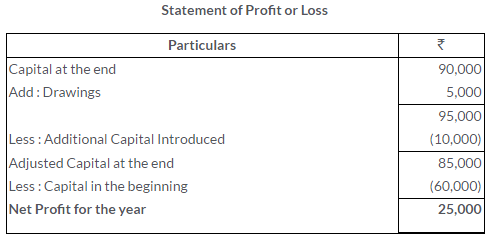
    Opening Capital Rs.60,000;Drawings Rs.5,000; Capital added during the year Rs.10,000 and Closing Capital Rs.90,000. Calculate the Profit or Loss for the year.
    Solution:
    ts-grewal-solutions-class-11-accountancy-chapter-19-accounts-incomplete-records-single-entry-system-1

    Question 2.
    Mayank does not keep proper records of his business, he gives you the following information:
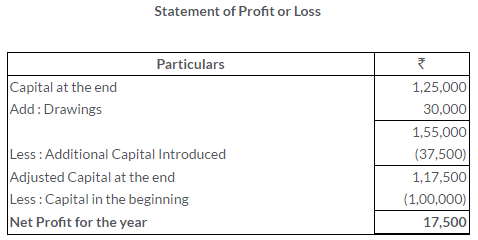
    Opening Capital Rs.1,00,000
    Closing Capital Rs.1,25,000
    Drawings during the year Rs.30,000
    Capital added during the year Rs.37,500
    Calculate the profit or loss for the year.
    Solution:
    ts-grewal-solutions-class-11-accountancy-chapter-19-accounts-incomplete-records-single-entry-system-2

    Question 3.
    Capital of Ganesh Gupta in the beginning of the year was Rs.70,000. During the year his business earned a profit of Rs.20,000. He withdrew Rs.7,000 for his personal use. He sold ornaments of his wife for Rs.20,000 and invested that amount into the business. Find out his Capital at the end of the year.
    Solution:
    Capital at the end of the year
    = Opening Capital + Additional Capital + Profit – Drawings
    = 70,000 + 20,000 + 20,000 – 7,000
    = Rs.1,03,000

    Question 4.
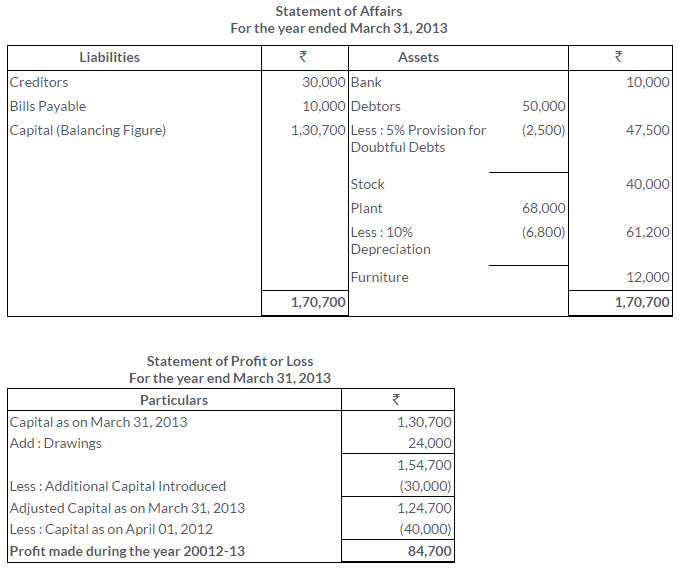
    Vikas maintains his books of account on Single Entry System. He provides following information from his books. Find out additional capital introduced in the business during the year 2012-13.
    Opening Capital – Rs.1,30,000
    Drawing during the year Rs.50,000
    Closing Capital – Rs.2,00,000
    Profit made during the year Rs.1,00,000
    Solution:
    Additional Capital
    = Capital at the End + Drawings – (Capital in the Beginning + Profit)
    = 2,00,000 + 50,000 – (1,30,000 + 1,00,000) = 2,50,000 – 2,30,000
    = Rs.20,000

    Question 5.
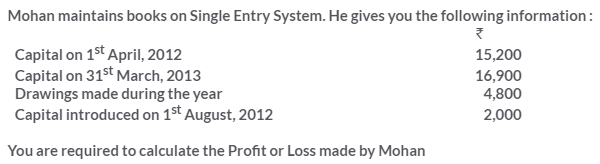
    ts-grewal-solutions-class-11-accountancy-chapter-19-accounts-incomplete-records-single-entry-system-5-1
    Solution:
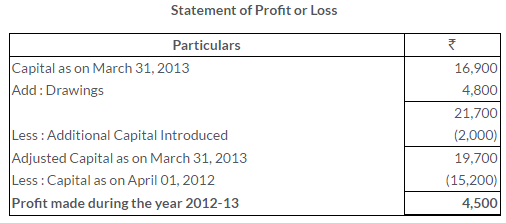
    ts-grewal-solutions-class-11-accountancy-chapter-19-accounts-incomplete-records-single-entry-system-5-2

    Question 6.
    ts-grewal-solutions-class-11-accountancy-chapter-19-accounts-incomplete-records-single-entry-system-6-1
    Solution:
    ts-grewal-solutions-class-11-accountancy-chapter-19-accounts-incomplete-records-single-entry-system-6-2

    Question 7.
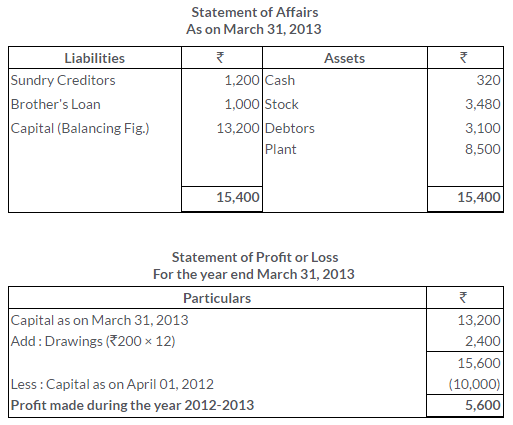
    Ram Prashad keeps his books on Single Entry System and from them and the particulars supplied, the following figures were gathered together on 31st March, 2013:
    Book Debts Rs.10,000;Cash in Hand Rs.510; Stock-in-Trade (estimated) Rs.6,000; Furniture and Fittings Rs.1,200; Trade Creditors Rs.4,000; Bank Overdraft Rs.1,000. Ram Prashad stated that he started business on 1st April with cash Rs.6,000 paid into bank but stocks valued at Rs.4,000. During the year he estimated his drawings to be Rs.2,400. You are required to prepare the statement, showing the profit for the year, after writing off 10% for Depreciation on Furniture and Fittings. What Journal entries will start the books on a Double Entry System with the above figures?
    Solution:
    ts-grewal-solutions-class-11-accountancy-chapter-19-accounts-incomplete-records-single-entry-system-7

    Question 8.
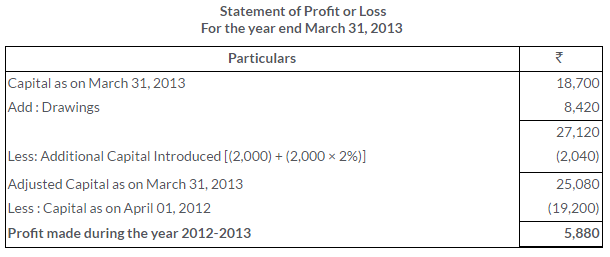
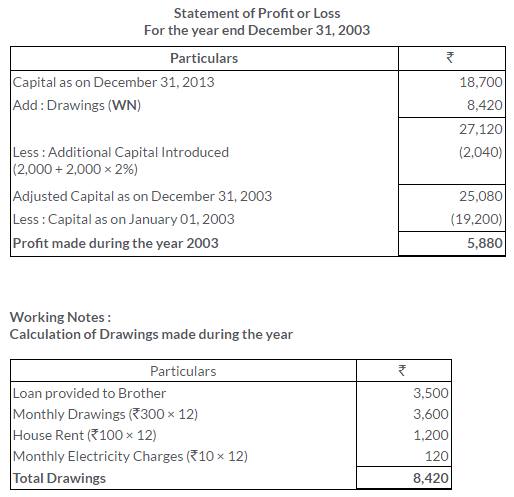
    X, who keeps his books on Single Entry System, tells you that his capital on 31st March, 2013 is Rs.18,700 and his capital on 1st April, 2012 was Rs.19,200. He further informs you that during the year he withdrew for his household purposes Rs.8,420. He once sold his investment of Rs.2,000 at 2% premium and brought that money into the business. You are required to prepare a Statement of Profit or Loss.
    Solution:
    ts-grewal-solutions-class-11-accountancy-chapter-19-accounts-incomplete-records-single-entry-system-8

    Question 9.
    ts-grewal-solutions-class-11-accountancy-chapter-19-accounts-incomplete-records-single-entry-system-9-1
    Solution:
    ts-grewal-solutions-class-11-accountancy-chapter-19-accounts-incomplete-records-single-entry-system-9-2

    Question 10.
    ts-grewal-solutions-class-11-accountancy-chapter-19-accounts-incomplete-records-single-entry-system-10-1
    Solution:
    ts-grewal-solutions-class-11-accountancy-chapter-19-accounts-incomplete-records-single-entry-system-10-2

    Question 11.
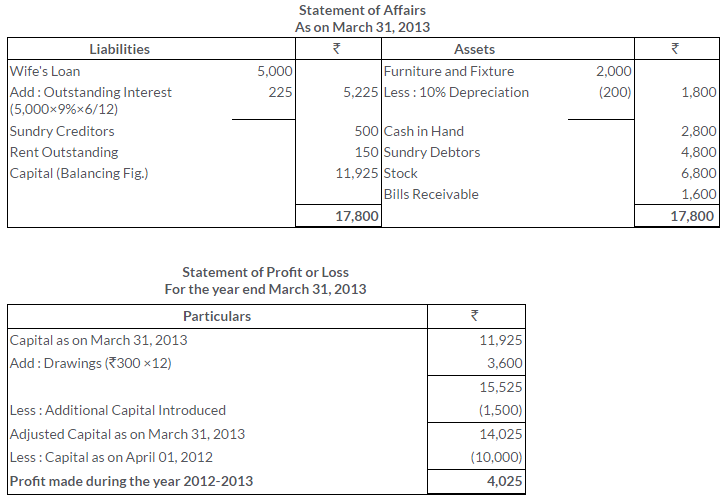
    A commenced business on 1st April, 2012 with a capital of Rs.10,000. He immediately bought Furniture and Fixtures for Rs. 2,000. On 1st October, 2012 he borrowed Rs.5,000 from his wife @ 9% p.a. (interest not yet paid) and introduced a further capital of his own amounting to Rs.1,500. A drew @ Rs.300 per month at the end of each month for household expenses. On 31st March, 2013 his position was as follows :
    Cash in Hand Rs.2,800; Sundry Debtors Rs.4,800; Stock Rs.6,800; Bills Receivable Rs.1,600: Sundry Creditors Rs.500 and owing for Rent Rs.150. Furniture and Fixtures to be depreciated by 10%.
    Ascertain the profit or loss made by A during 2012-2013.
    Solution:
    ts-grewal-solutions-class-11-accountancy-chapter-19-accounts-incomplete-records-single-entry-system-11

    Question 12.
    ts-grewal-solutions-class-11-accountancy-chapter-19-accounts-incomplete-records-single-entry-system-12-1
    Solution:
    ts-grewal-solutions-class-11-accountancy-chapter-19-accounts-incomplete-records-single-entry-system-12-2

    Question 13.
    ts-grewal-solutions-class-11-accountancy-chapter-19-accounts-incomplete-records-single-entry-system-13-1
    Solution:
    ts-grewal-solutions-class-11-accountancy-chapter-19-accounts-incomplete-records-single-entry-system-13-2

    Question 14.
    Raj tells you that his capital on 31st December, 2003 is Rs.18,700 and his capital on 1st January, 2003 was Rs.19,200. He further informs you that during the year he gave a loan of Rs.3,500 to his brother on private account and withdrew Rs.300 p.m. for personal Purposes. He also used a flat for his personal purpose, the rent of which @ Rs.100 per month and electricity charges at an average rate of Rs.10 per month were paid from the business account. During the year he sold his 7% Government Bonds of Rs.2,000 at 2% Premium and brought that money into the business.
    You are required to prepare a Statement of Profit or Loss for the year ended 31st December, 2003.
    Solution:
    ts-grewal-solutions-class-11-accountancy-chapter-19-accounts-incomplete-records-single-entry-system-14

    Question 15.
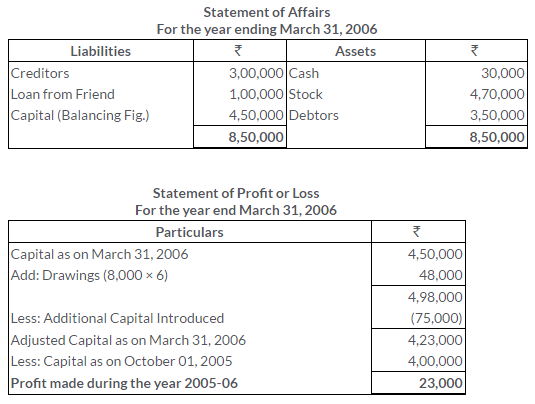
    Mr. Manu started business with a capital of Rs.4,00,000 on 1st October, 2005. He borrowed from his friend a sum of Rs.1,00,000. He brought further Rs.75,000 as capital on 31st March 2006, his position was:
    Cash: Rs.30,000; Stock: Rs.4,70,000; Debtors: Rs.3,50,000 and Creditors: Rs.3,00,000. He withdrew Rs.8,000 per month during this period. Calculate profit or loss for the period.
    Solution:
    ts-grewal-solutions-class-11-accountancy-chapter-19-accounts-incomplete-records-single-entry-system-15

    Question 16.
    ts-grewal-solutions-class-11-accountancy-chapter-19-accounts-incomplete-records-single-entry-system-16-1
    Solution:
    ts-grewal-solutions-class-11-accountancy-chapter-19-accounts-incomplete-records-single-entry-system-16-2

    Question 17.
    ts-grewal-solutions-class-11-accountancy-chapter-19-accounts-incomplete-records-single-entry-system-17-1
    Solution:
    ts-grewal-solutions-class-11-accountancy-chapter-19-accounts-incomplete-records-single-entry-system-17-2

    Question 18.
    ts-grewal-solutions-class-11-accountancy-chapter-19-accounts-incomplete-records-single-entry-system-18-1
    Solution:
    ts-grewal-solutions-class-11-accountancy-chapter-19-accounts-incomplete-records-single-entry-system-18-2


  • TS Grewal Solutions for Adjustments in Preparation of Financial Statements Class 11 Accountancy Chapter 18

    TS Grewal Solutions for Class 11 Accountancy Chapter 18 – Adjustments in Preparation of Financial Statements

    Question 1.
    ts-grewal-solutions-class-11-accountancy-chapter-18-adjustments-preparation-financial-statements-1-1
    Solution:
    ts-grewal-solutions-class-11-accountancy-chapter-18-adjustments-preparation-financial-statements-1-2
    ts-grewal-solutions-class-11-accountancy-chapter-18-adjustments-preparation-financial-statements-1-3

    Question 2.
    ts-grewal-solutions-class-11-accountancy-chapter-18-adjustments-preparation-financial-statements-2-1
    Solution:
    ts-grewal-solutions-class-11-accountancy-chapter-18-adjustments-preparation-financial-statements-2-2
    ts-grewal-solutions-class-11-accountancy-chapter-18-adjustments-preparation-financial-statements-2-3

    Question 3.
    ts-grewal-solutions-class-11-accountancy-chapter-18-adjustments-preparation-financial-statements-3-1
    Solution:
    ts-grewal-solutions-class-11-accountancy-chapter-18-adjustments-preparation-financial-statements-3-2
    ts-grewal-solutions-class-11-accountancy-chapter-18-adjustments-preparation-financial-statements-3-3
    ts-grewal-solutions-class-11-accountancy-chapter-18-adjustments-preparation-financial-statements-3-4

    Question 4.
    ts-grewal-solutions-class-11-accountancy-chapter-18-adjustments-preparation-financial-statements-4-1
    Solution:
    ts-grewal-solutions-class-11-accountancy-chapter-18-adjustments-preparation-financial-statements-4-2
    ts-grewal-solutions-class-11-accountancy-chapter-18-adjustments-preparation-financial-statements-4-3

    Question 5.
    ts-grewal-solutions-class-11-accountancy-chapter-18-adjustments-preparation-financial-statements-5-1
    Solution:
    ts-grewal-solutions-class-11-accountancy-chapter-18-adjustments-preparation-financial-statements-5-2
    ts-grewal-solutions-class-11-accountancy-chapter-18-adjustments-preparation-financial-statements-5-3
    ts-grewal-solutions-class-11-accountancy-chapter-18-adjustments-preparation-financial-statements-5-4

    Question 6.
    ts-grewal-solutions-class-11-accountancy-chapter-18-adjustments-preparation-financial-statements-6-1
    Solution:
    ts-grewal-solutions-class-11-accountancy-chapter-18-adjustments-preparation-financial-statements-6-2
    ts-grewal-solutions-class-11-accountancy-chapter-18-adjustments-preparation-financial-statements-6-3
    ts-grewal-solutions-class-11-accountancy-chapter-18-adjustments-preparation-financial-statements-6-4

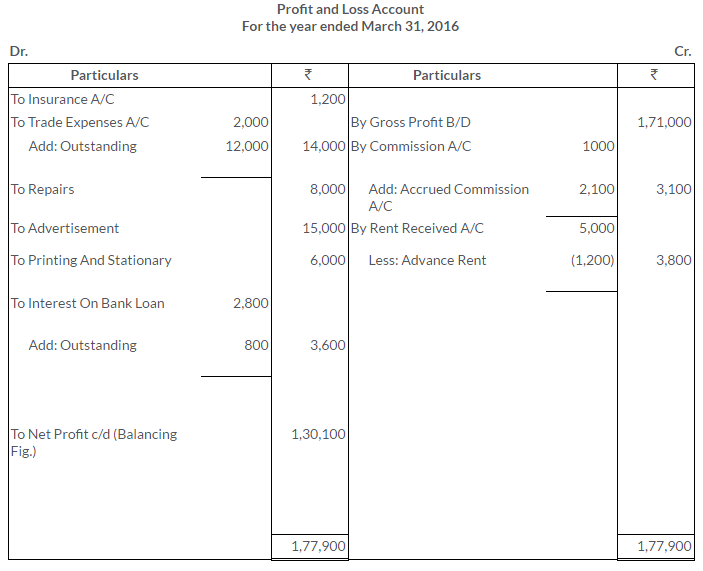
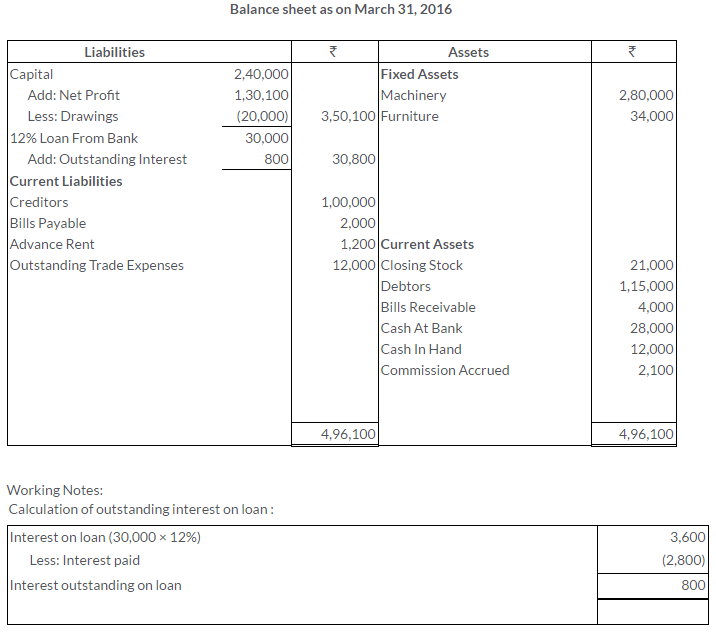
    Question 7.
    ts-grewal-solutions-class-11-accountancy-chapter-18-adjustments-preparation-financial-statements-7-1
    Additional information:
    i. Closing Stock on 31st March, 2016 was Rs.21,000.
    ii. Rent of Rs.1,200 has been received in advance.
    iii. Outstanding liability for trade expenses Rs.12,000.
    iv. Commission earned during the year but not received was Rs.2,100.
    Solution:
    ts-grewal-solutions-class-11-accountancy-chapter-18-adjustments-preparation-financial-statements-7-2
    ts-grewal-solutions-class-11-accountancy-chapter-18-adjustments-preparation-financial-statements-7-3
    ts-grewal-solutions-class-11-accountancy-chapter-18-adjustments-preparation-financial-statements-7-4

    Question 8.
    ts-grewal-solutions-class-11-accountancy-chapter-18-adjustments-preparation-financial-statements-8-1
    Solution:
    ts-grewal-solutions-class-11-accountancy-chapter-18-adjustments-preparation-financial-statements-8-2
    ts-grewal-solutions-class-11-accountancy-chapter-18-adjustments-preparation-financial-statements-8-3
    ts-grewal-solutions-class-11-accountancy-chapter-18-adjustments-preparation-financial-statements-8-4

    Question 9.
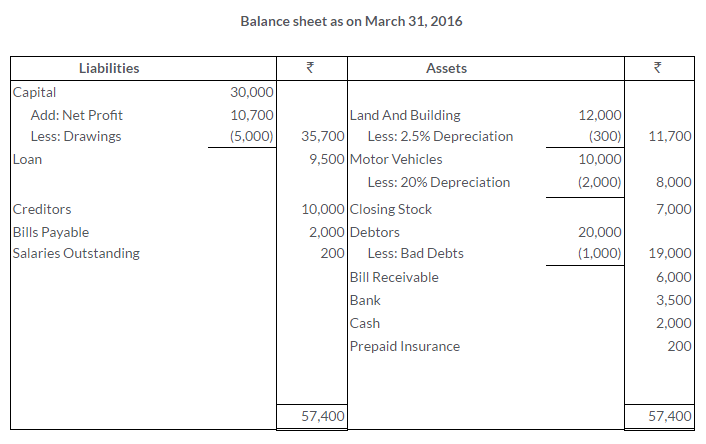
    ts-grewal-solutions-class-11-accountancy-chapter-18-adjustments-preparation-financial-statements-9-1
    Adjustments:
    Prepare Trading and Profit and Loss Account for the year ended 31st March, 2016 and Balance Sheet as at that date after taking into account the following:
    i. Depreciate Land and Building at 2½% and Motor Vehicles at 20%.
    ii. Salaries outstanding Rs.200.
    iii. Prepaid Insurance Rs.200.
    iv. Provision for Doubtful Debts is to be maintained at 5% on Debtors.
    v. Stock on 31st March, 2016 was valued at Rs.7,000.
    Solution:
    ts-grewal-solutions-class-11-accountancy-chapter-18-adjustments-preparation-financial-statements-9-2
    ts-grewal-solutions-class-11-accountancy-chapter-18-adjustments-preparation-financial-statements-9-3
    ts-grewal-solutions-class-11-accountancy-chapter-18-adjustments-preparation-financial-statements-9-4

    Question 10.
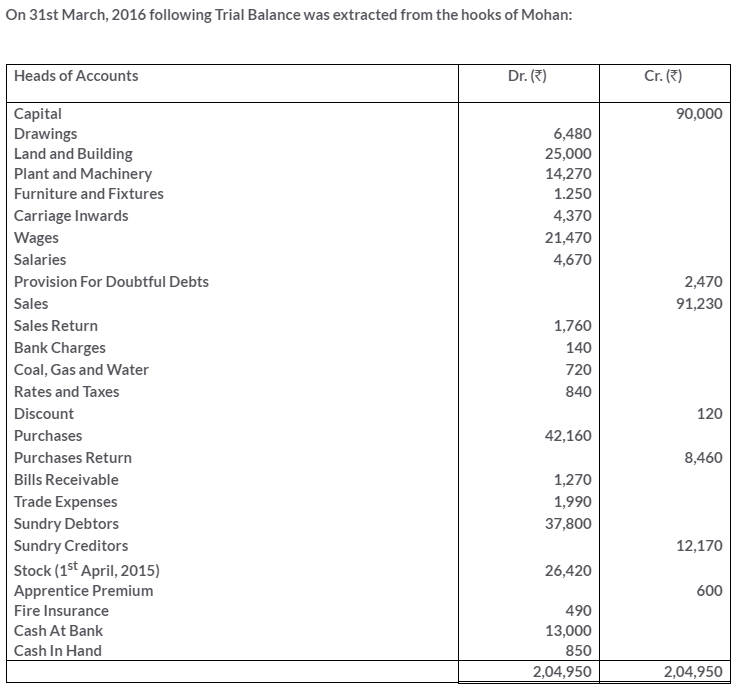
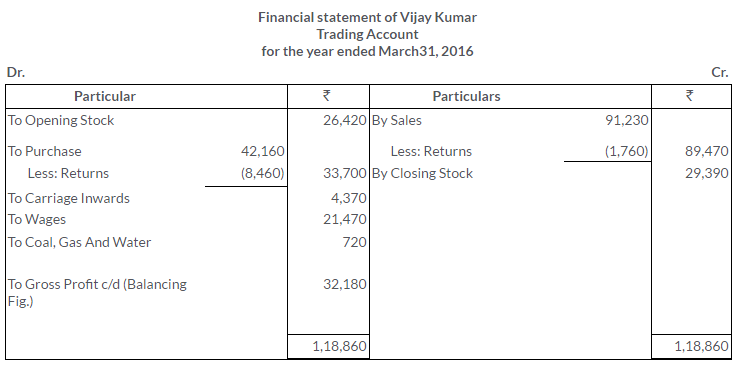
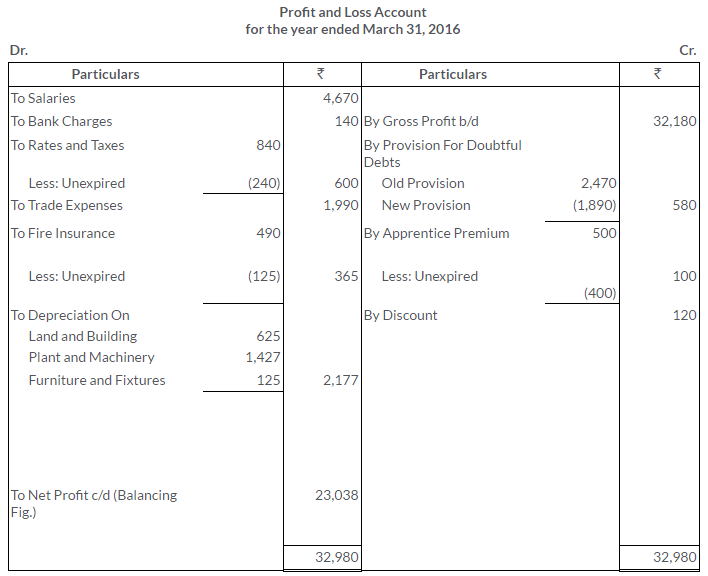
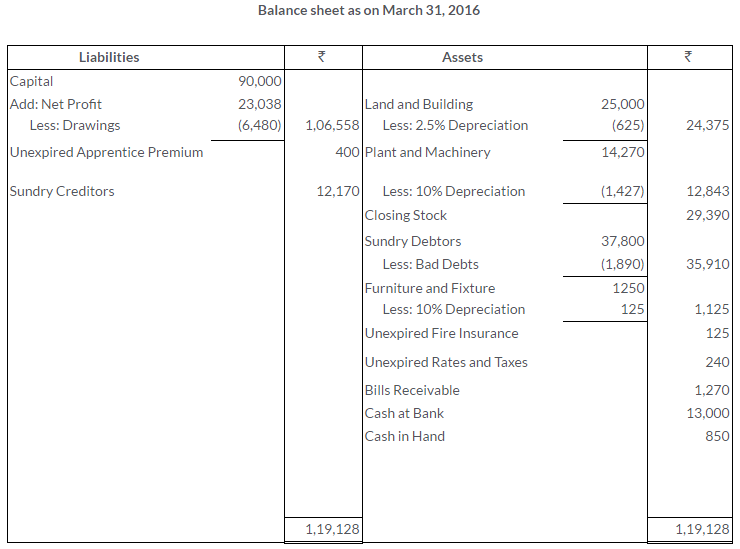
    ts-grewal-solutions-class-11-accountancy-chapter-18-adjustments-preparation-financial-statements-10-1
    Adjustments:
    Charge depreciation on Land and Building at 2½%, Plant and Machinery Account at 10% and on furniture and fixture at 10%. Make provision of 5% on debtors for doubtful debts, carry forward the following unexpired amounts:
    i. Fire insurance Rs.125.
    ii. Rates and taxes Rs.240.
    iii. Apprentice premium Rs.400.
    iv. Closing stock Rs.29,390.
    Solution:
    ts-grewal-solutions-class-11-accountancy-chapter-18-adjustments-preparation-financial-statements-10-2
    ts-grewal-solutions-class-11-accountancy-chapter-18-adjustments-preparation-financial-statements-10-3
    ts-grewal-solutions-class-11-accountancy-chapter-18-adjustments-preparation-financial-statements-10-4

    Question 11.
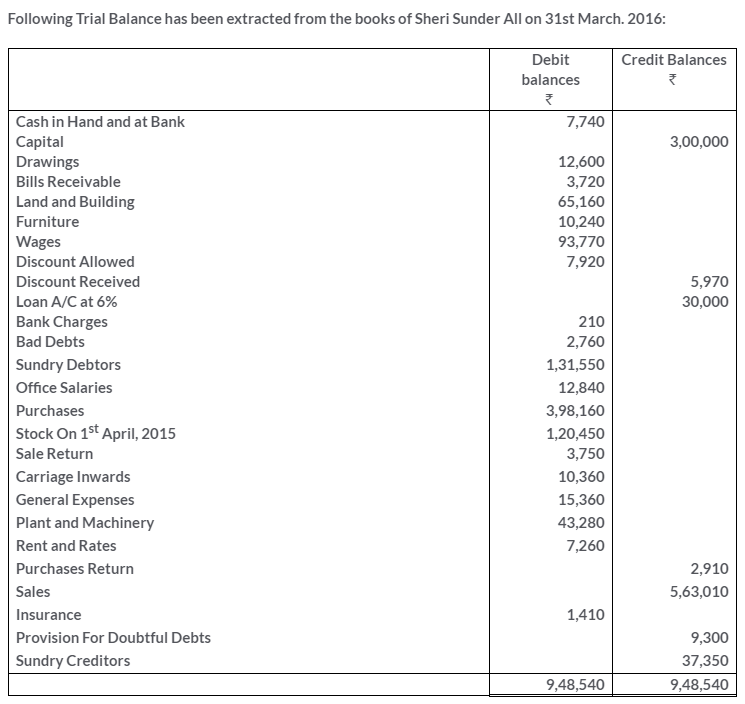
    ts-grewal-solutions-class-11-accountancy-chapter-18-adjustments-preparation-financial-statements-11-1
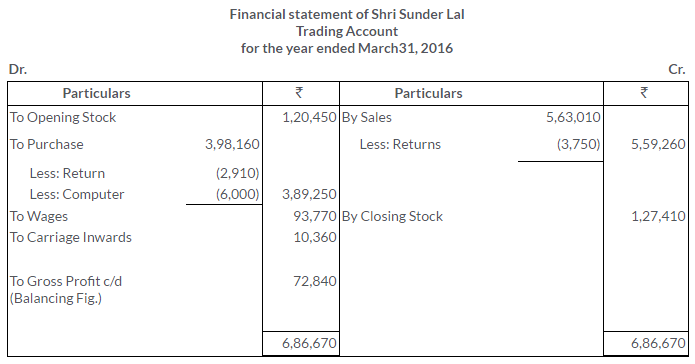
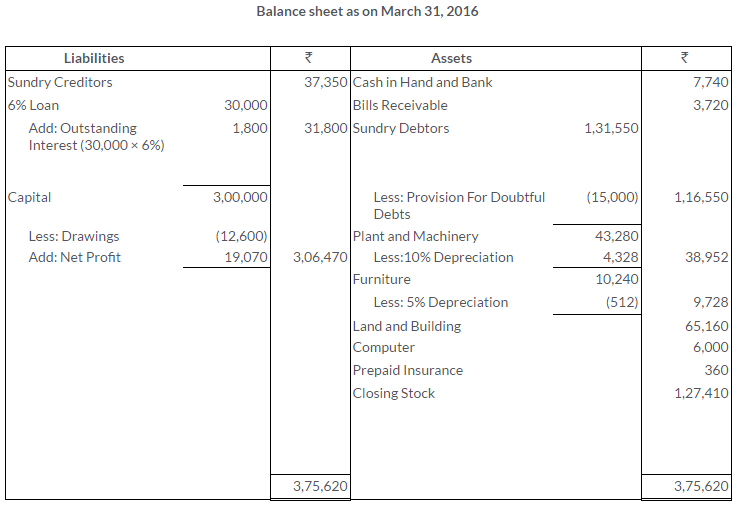
    Closing Stock on 31st March, 2016 was Rs.1,27,410.
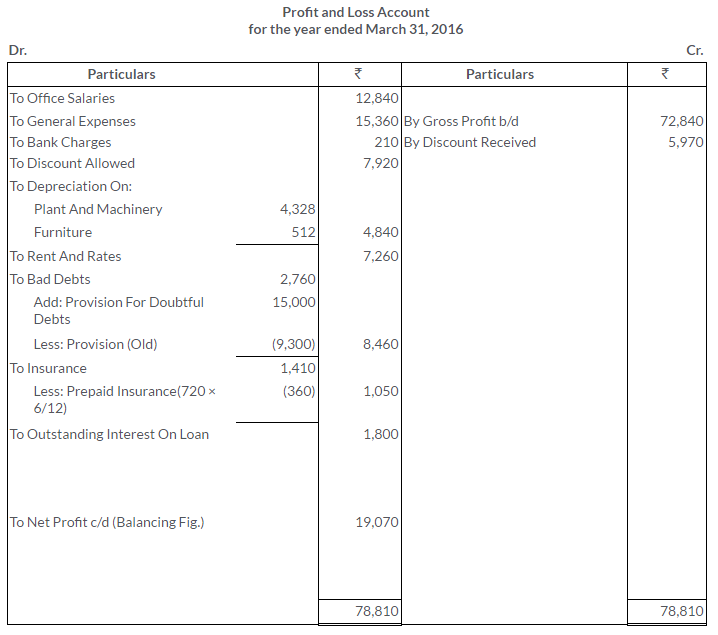
    You are required to prepare Trading and Profit and Loss Account for the year ended 31st March, 2016 and Balance Sheet as at that date.
    Adjustments to be made are:
    i. Depreciate Plant and Machinery at 10% and Furniture at 5%.
    ii. Raise the Provision for Doubtful Debts to Rs.15,000.
    iii. Insurance includes annual premium of Rs.720 on a policy which will expire on 30th September, 2016.
    iv. Purchases included a computer costing Rs.6,000.
    Solution:
    ts-grewal-solutions-class-11-accountancy-chapter-18-adjustments-preparation-financial-statements-11-2
    ts-grewal-solutions-class-11-accountancy-chapter-18-adjustments-preparation-financial-statements-11-3
    ts-grewal-solutions-class-11-accountancy-chapter-18-adjustments-preparation-financial-statements-11-4

    Question 12.
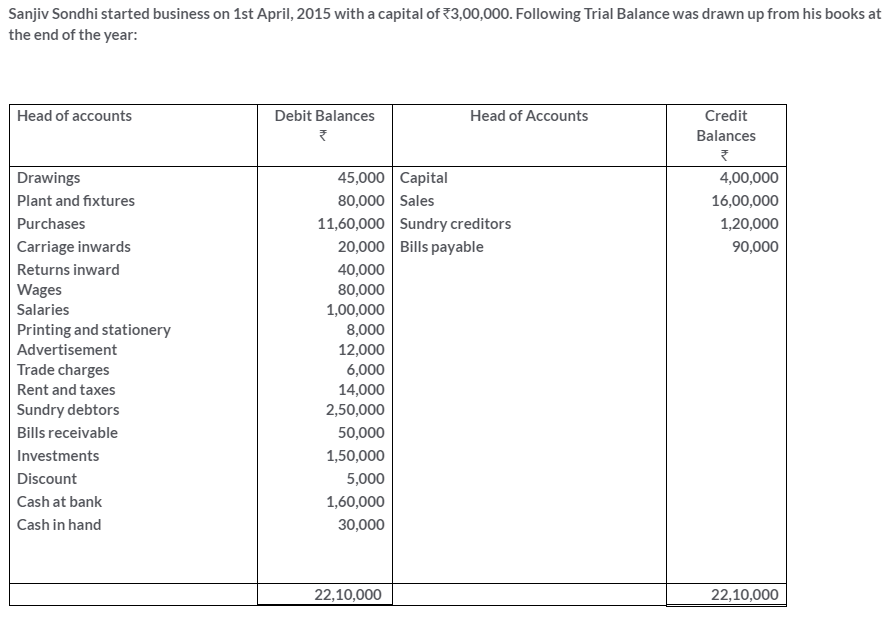
    ts-grewal-solutions-class-11-accountancy-chapter-18-adjustments-preparation-financial-statements-12-1
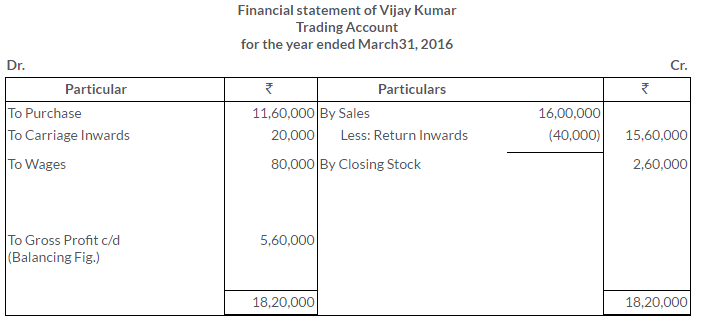
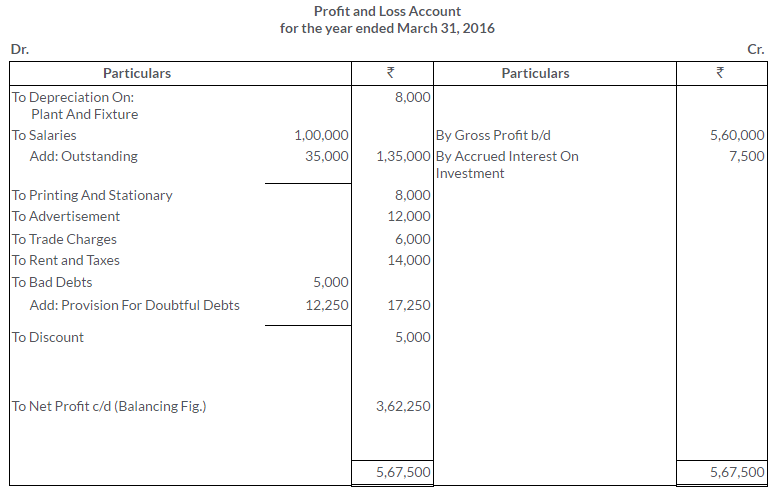
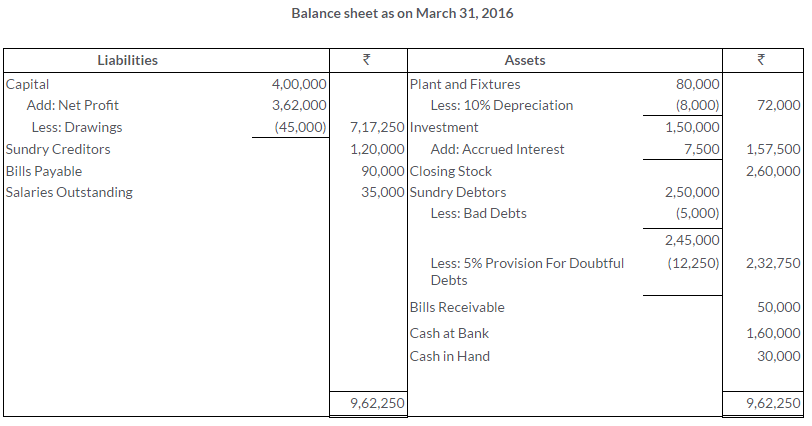
    Value of Stock as on 31st March, 2016 was Rs.2,60,000. You are required to prepare his Trading and Profit and Loss Account for the year ended 31st March, 2016 and Balance Sheet as at that date after taking the following facts into account.
    i. Plant and Fixtures are to be depreciated by 10%.
    ii. Salaries outstanding on 31st March, 2016 amounted to Rs.35,000.
    iii. Accrued interest on investment amounted to Rs.7,500.
    iv. Rs.5,000 are Bad Debts and a Provision for Doubtful Debts is to be created at 5% of balance of debtors
    Solution:
    ts-grewal-solutions-class-11-accountancy-chapter-18-adjustments-preparation-financial-statements-12-2
    ts-grewal-solutions-class-11-accountancy-chapter-18-adjustments-preparation-financial-statements-12-3
    ts-grewal-solutions-class-11-accountancy-chapter-18-adjustments-preparation-financial-statements-12-4

    Question 13.
    ts-grewal-solutions-class-11-accountancy-chapter-18-adjustments-preparation-financial-statements-13-1
    Solution:
    ts-grewal-solutions-class-11-accountancy-chapter-18-adjustments-preparation-financial-statements-13-2
    ts-grewal-solutions-class-11-accountancy-chapter-18-adjustments-preparation-financial-statements-13-3
    ts-grewal-solutions-class-11-accountancy-chapter-18-adjustments-preparation-financial-statements-13-4

    Question 14.
    ts-grewal-solutions-class-11-accountancy-chapter-18-adjustments-preparation-financial-statements-14-1
    Solution:
    ts-grewal-solutions-class-11-accountancy-chapter-18-adjustments-preparation-financial-statements-14-2
    ts-grewal-solutions-class-11-accountancy-chapter-18-adjustments-preparation-financial-statements-14-3
    ts-grewal-solutions-class-11-accountancy-chapter-18-adjustments-preparation-financial-statements-14-4
    ts-grewal-solutions-class-11-accountancy-chapter-18-adjustments-preparation-financial-statements-14-5

    Question 15.
    ts-grewal-solutions-class-11-accountancy-chapter-18-adjustments-preparation-financial-statements-15-1
    Solution:
    ts-grewal-solutions-class-11-accountancy-chapter-18-adjustments-preparation-financial-statements-15-2
    ts-grewal-solutions-class-11-accountancy-chapter-18-adjustments-preparation-financial-statements-15-3
    ts-grewal-solutions-class-11-accountancy-chapter-18-adjustments-preparation-financial-statements-15-4

    Question 16.
    ts-grewal-solutions-class-11-accountancy-chapter-18-adjustments-preparation-financial-statements-16-1
    Solution:
    ts-grewal-solutions-class-11-accountancy-chapter-18-adjustments-preparation-financial-statements-16-2
    ts-grewal-solutions-class-11-accountancy-chapter-18-adjustments-preparation-financial-statements-16-3
    ts-grewal-solutions-class-11-accountancy-chapter-18-adjustments-preparation-financial-statements-16-4

    Question 17.
    ts-grewal-solutions-class-11-accountancy-chapter-18-adjustments-preparation-financial-statements-17-1
    Solution:
    ts-grewal-solutions-class-11-accountancy-chapter-18-adjustments-preparation-financial-statements-17-2
    ts-grewal-solutions-class-11-accountancy-chapter-18-adjustments-preparation-financial-statements-17-3
    ts-grewal-solutions-class-11-accountancy-chapter-18-adjustments-preparation-financial-statements-17-4
    ts-grewal-solutions-class-11-accountancy-chapter-18-adjustments-preparation-financial-statements-17-5

    Question 18.
    ts-grewal-solutions-class-11-accountancy-chapter-18-adjustments-preparation-financial-statements-18-1
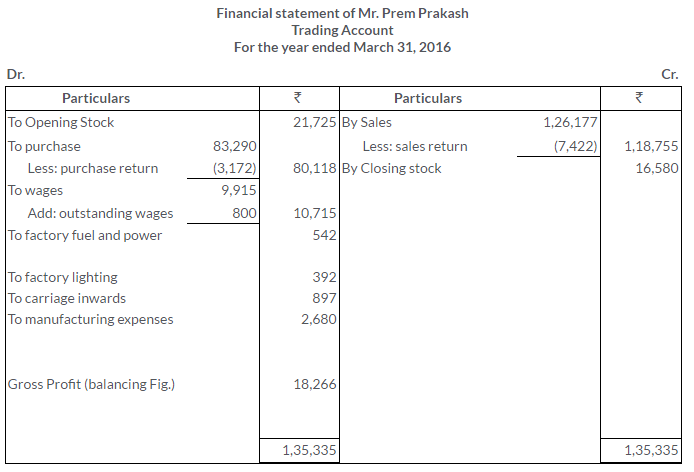
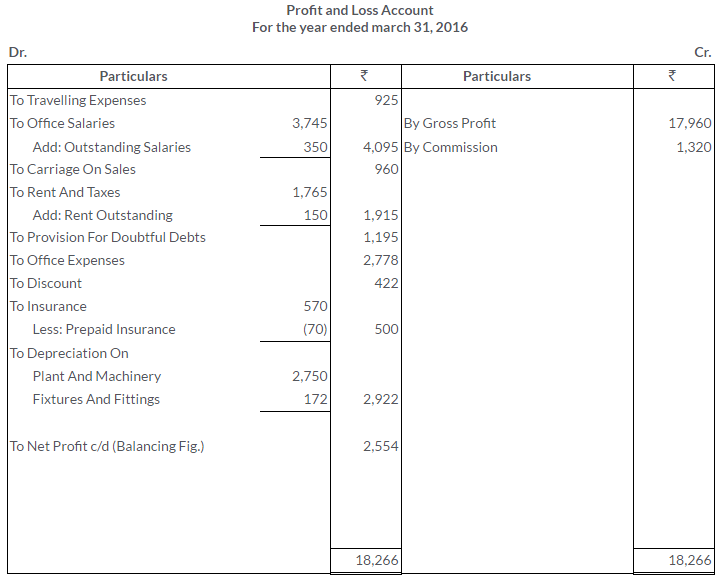
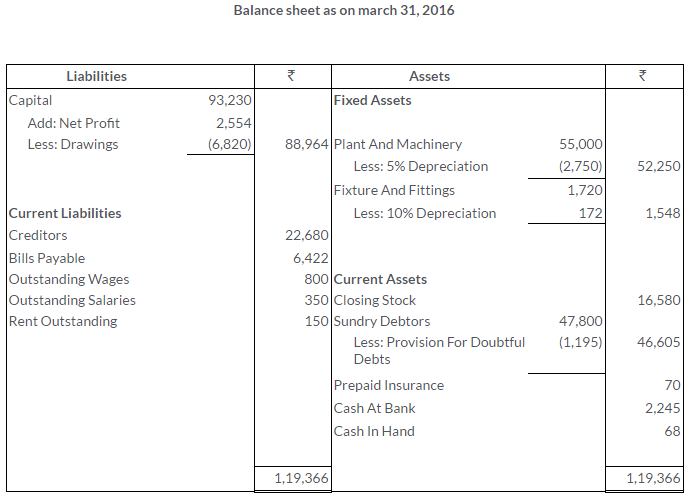
    Taking into account the following adjustments, prepare Trading and Profit and Loss Account and Balance Sheet as at 31st March, 2016:
    a. Depreciation 5% on Plant and Machinery and 10% on Fixtures and Fittings.
    b. Provision for Doubtful Debts 2½ % on Sundry Debtors.
    c. Rent Outstanding for March, 2016 Rs.150.
    d. Insurance unexpired on 31st. March, 2016 Rs.70.
    e. Outstanding Wages and Salaries Rs.800 and Rs.350.
    f. Stock on 31st March, 2016 Rs.16,580.
    Solution:
    ts-grewal-solutions-class-11-accountancy-chapter-18-adjustments-preparation-financial-statements-18-2
    ts-grewal-solutions-class-11-accountancy-chapter-18-adjustments-preparation-financial-statements-18-3
    ts-grewal-solutions-class-11-accountancy-chapter-18-adjustments-preparation-financial-statements-18-4

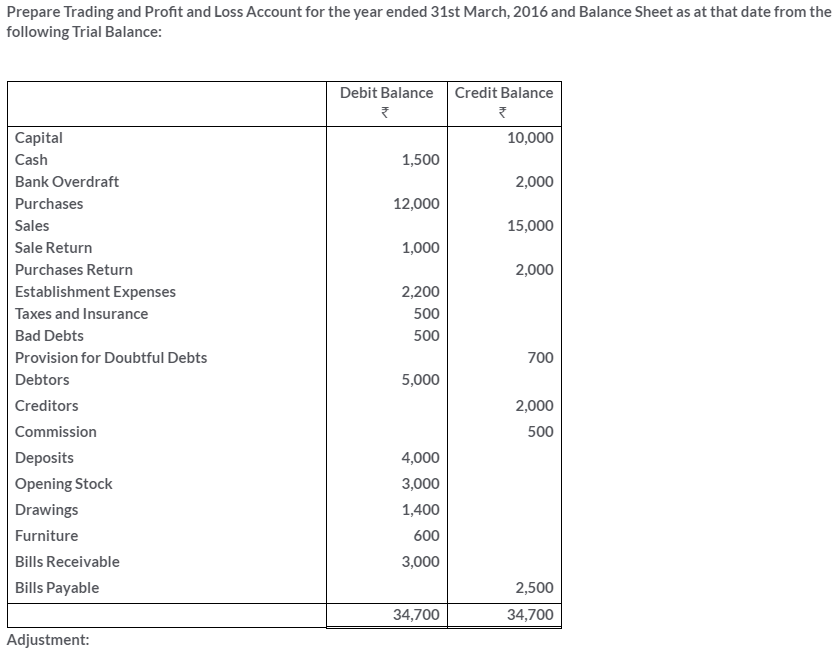
    Question 19.
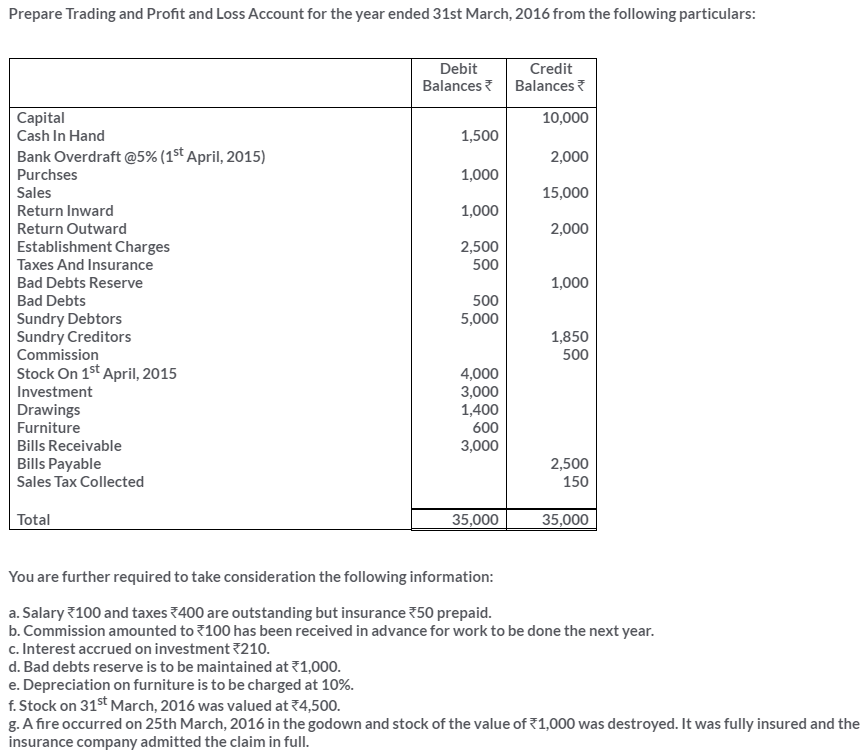
    ts-grewal-solutions-class-11-accountancy-chapter-18-adjustments-preparation-financial-statements-19-1
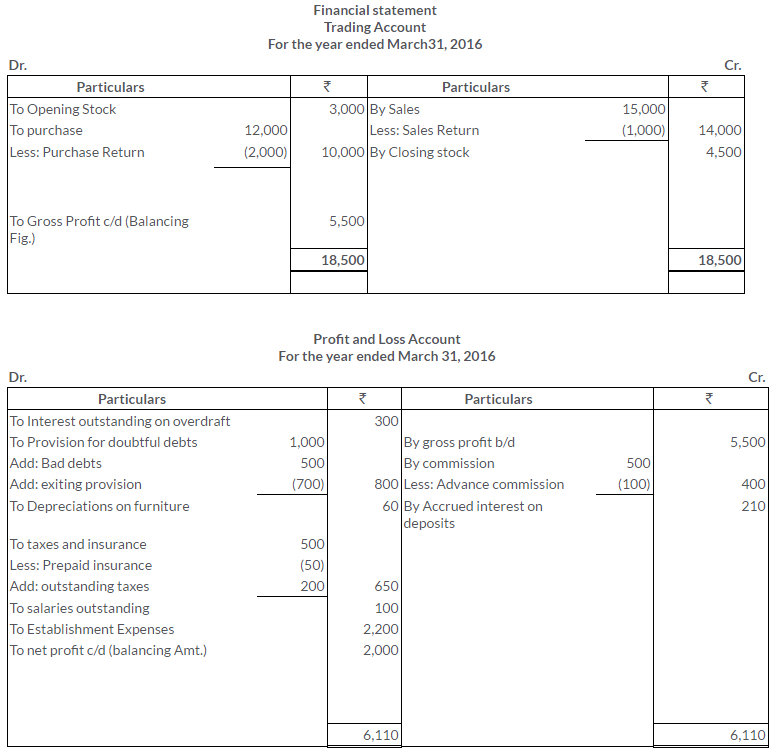
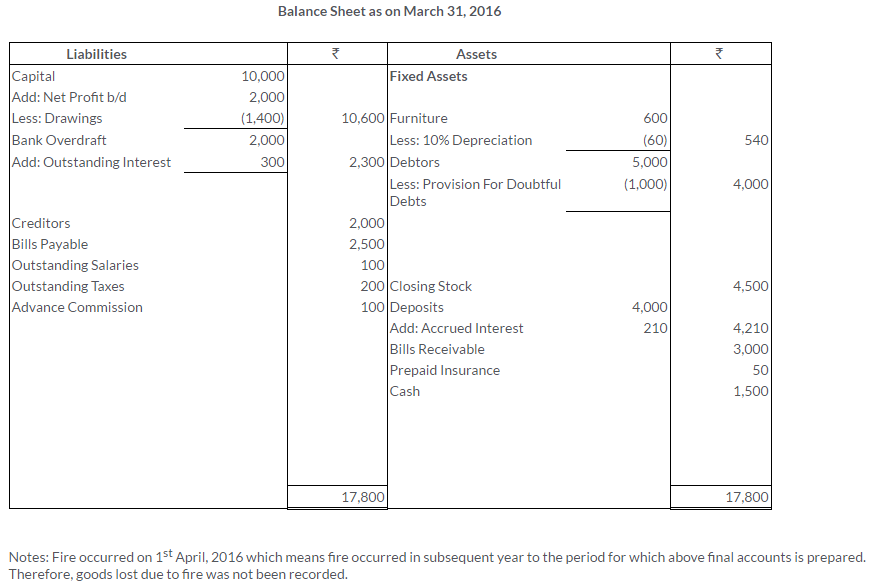
    i. Salaries Rs.100 and Taxes Rs.200 are outstanding but Insurance Rs.50 is prepaid.
    ii. Commission Rs.100 received in advance for the next year.
    iii. Interest Rs.210 is to be received on Deposits and Interest on Bank Overdraft Rs.300 is to be paid.
    iv. Provision for Doubtful Debts to be maintained at Rs.1,000.
    v. Depreciate Furniture by 10%.
    vi. Stock on 31st March, 2016 is Rs.4,500.
    vii. A fire occurred on 1st April, 2016 destroying goods costing Rs.1,000.
    Solution:
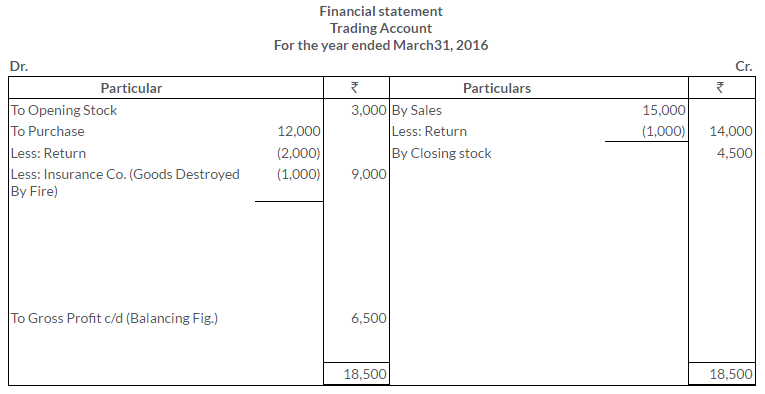
    ts-grewal-solutions-class-11-accountancy-chapter-18-adjustments-preparation-financial-statements-19-2
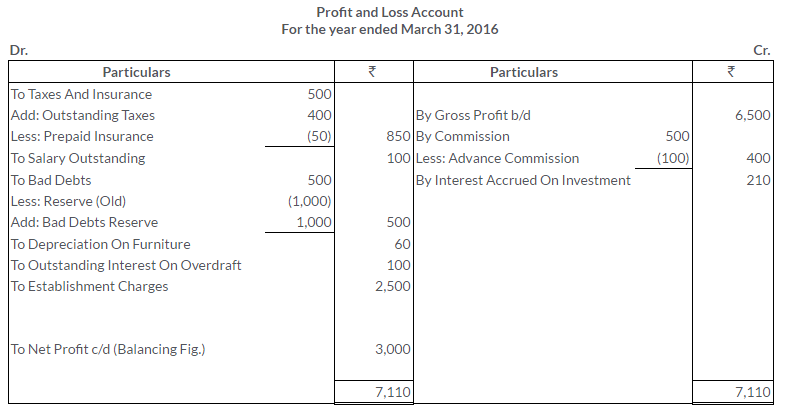
    ts-grewal-solutions-class-11-accountancy-chapter-18-adjustments-preparation-financial-statements-19-3

    Question 20.
    ts-grewal-solutions-class-11-accountancy-chapter-18-adjustments-preparation-financial-statements-20-1
    Solution:
    ts-grewal-solutions-class-11-accountancy-chapter-18-adjustments-preparation-financial-statements-20-2
    ts-grewal-solutions-class-11-accountancy-chapter-18-adjustments-preparation-financial-statements-20-3

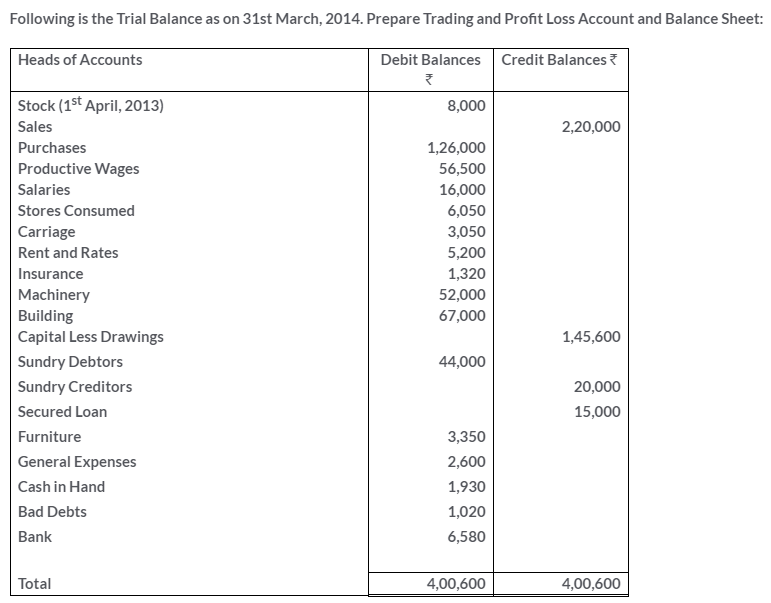
    Question 21.
    ts-grewal-solutions-class-11-accountancy-chapter-18-adjustments-preparation-financial-statements-21-1
    Stock on 31st March, 2014 is Rs.20,600.
    You are to make Provisions in respect of the following:
    a. Depredate Machinery at 10% p.a.
    b. Make a Provision @ 5% for Doubtful Debts.
    c. Provide 2½% discount on debtors.
    d. Rent and Rates include rent deposit of Rs.400.
    e. Insurance Prepaid Rs.120.
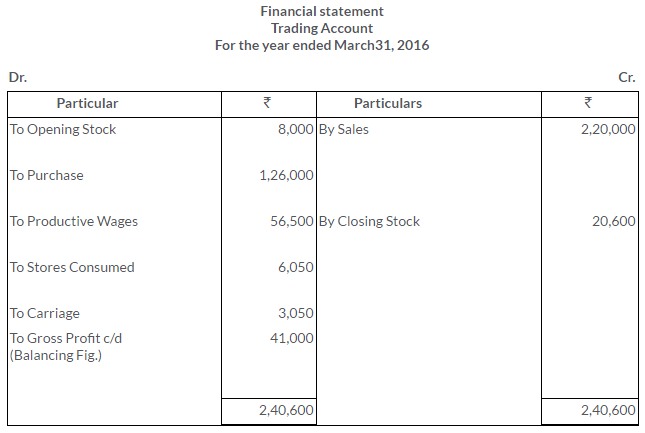
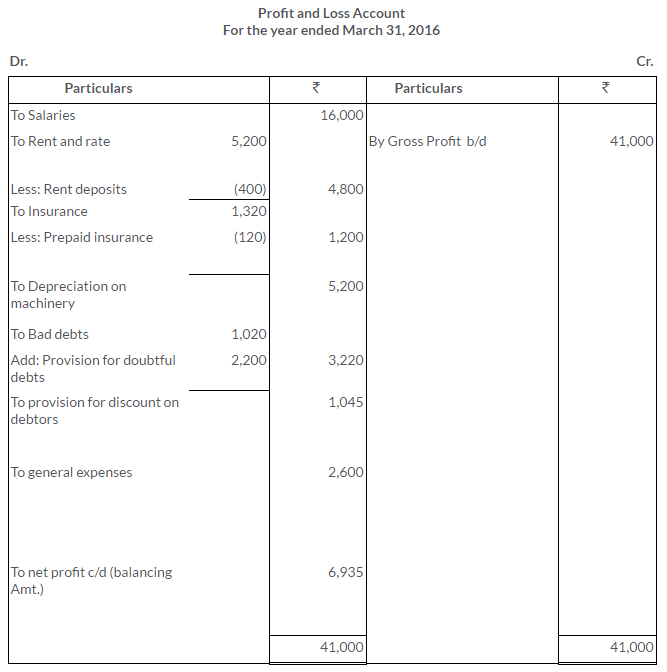
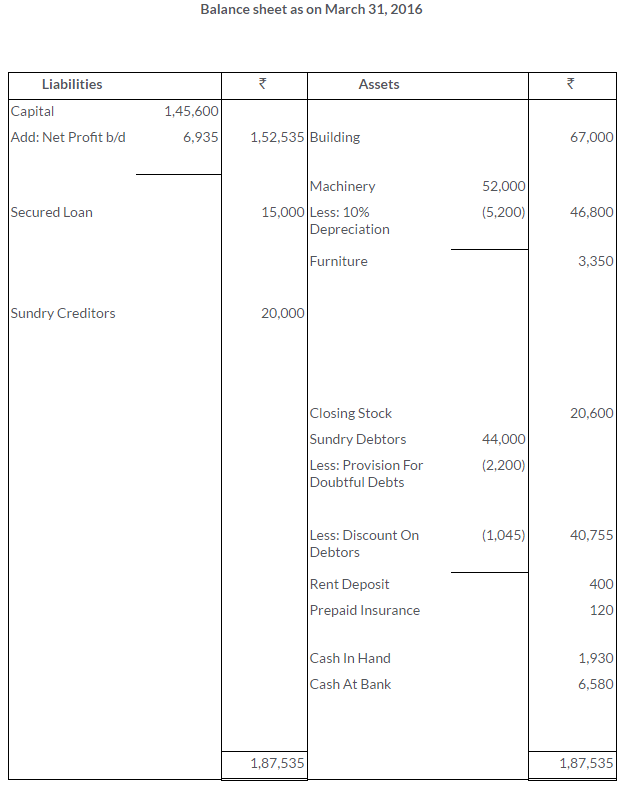
    Solution:
    ts-grewal-solutions-class-11-accountancy-chapter-18-adjustments-preparation-financial-statements-21-2
    ts-grewal-solutions-class-11-accountancy-chapter-18-adjustments-preparation-financial-statements-21-3
    ts-grewal-solutions-class-11-accountancy-chapter-18-adjustments-preparation-financial-statements-21-4

    Question 22.
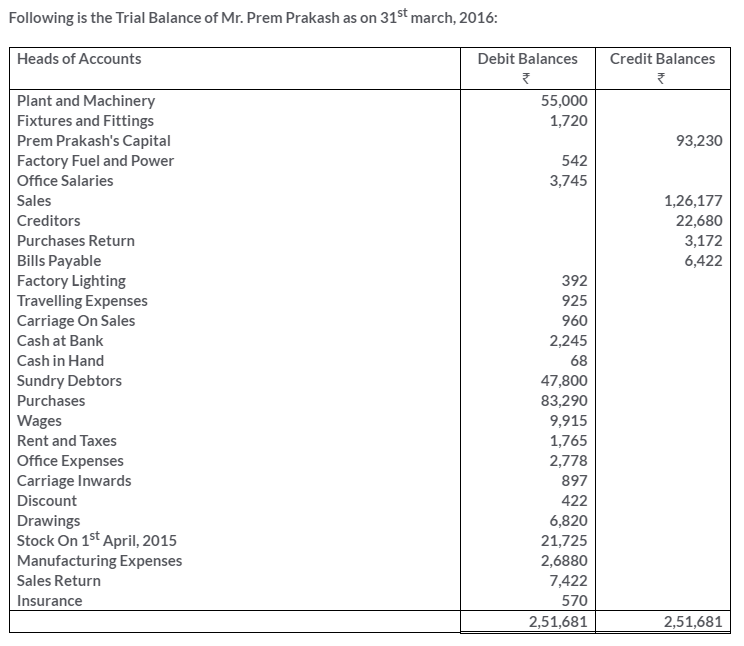
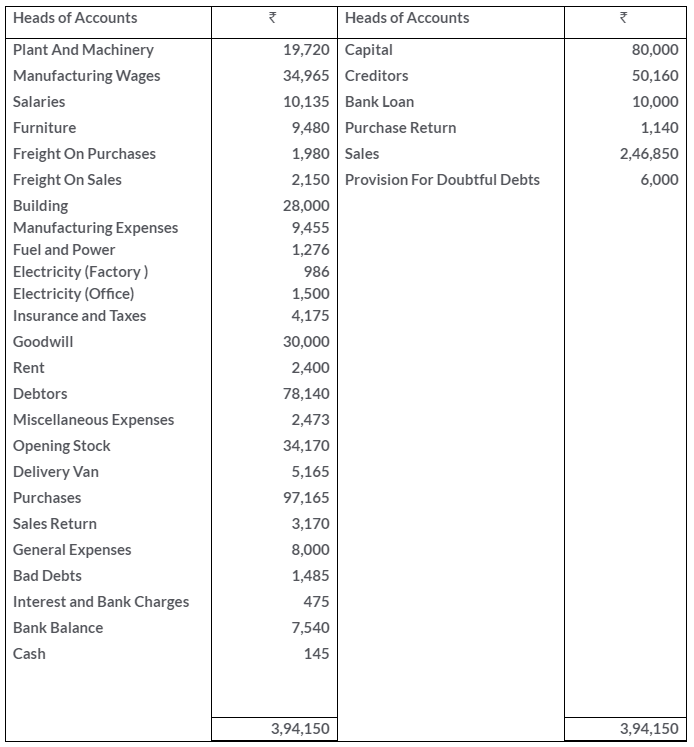
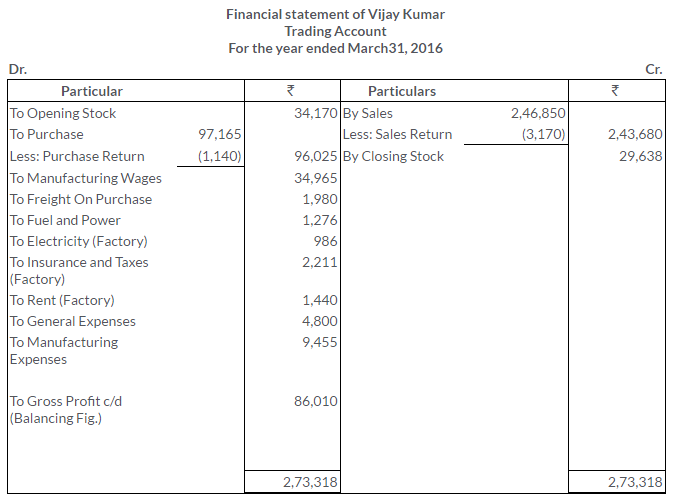
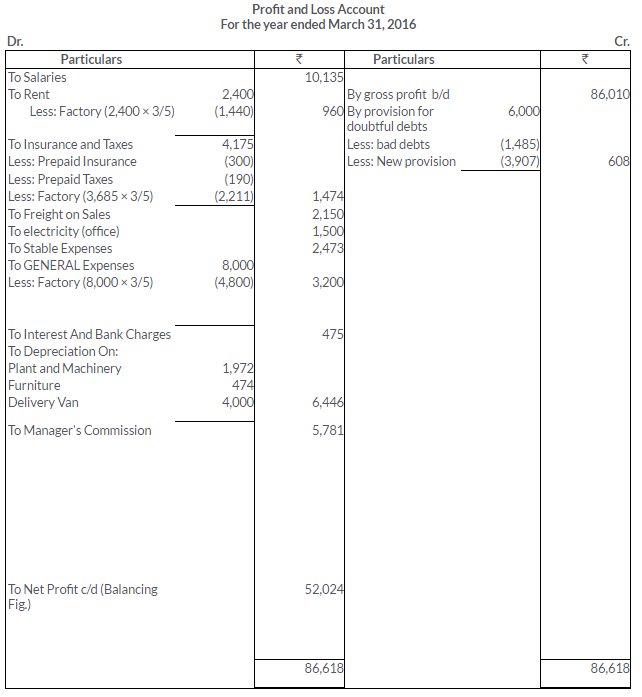
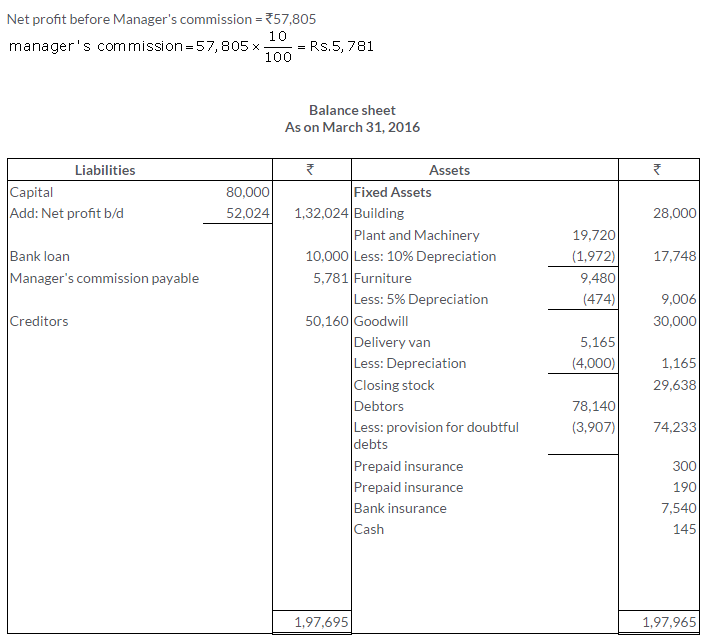
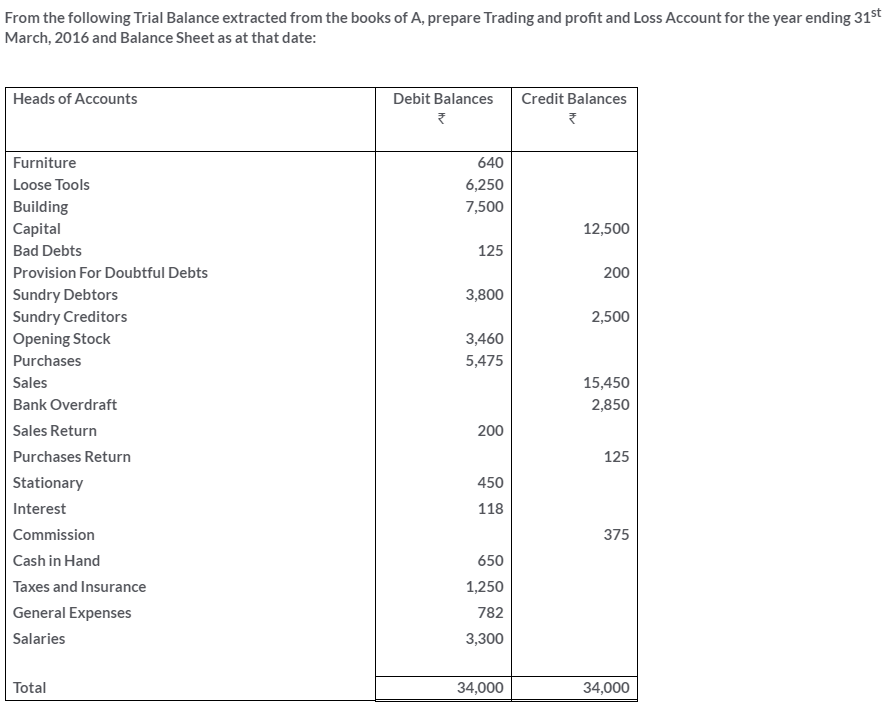
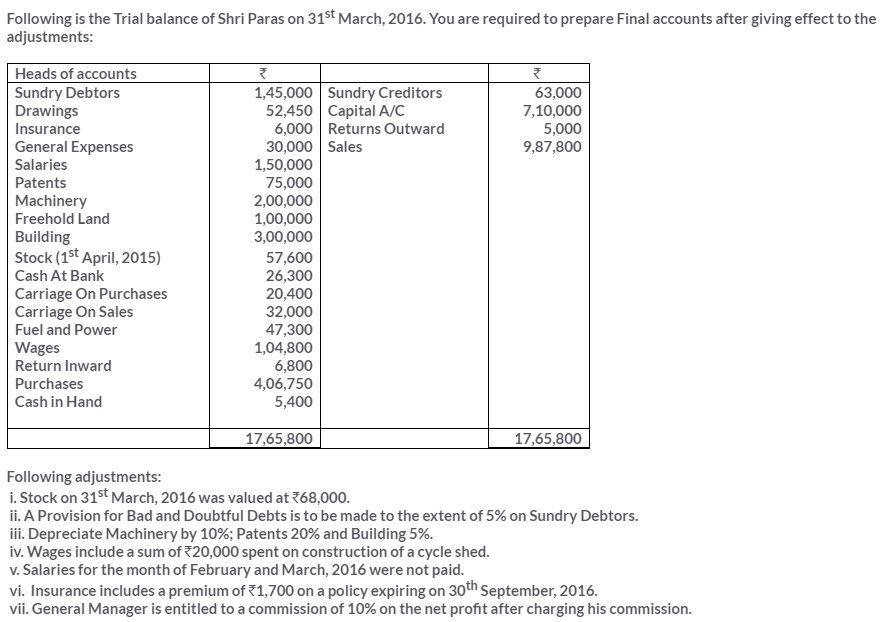
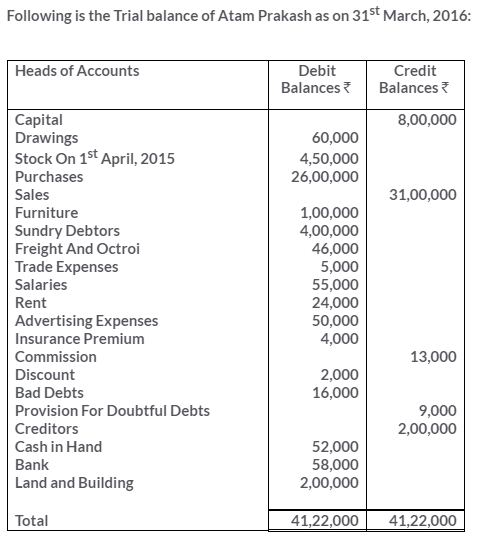
    Following is the Trial Balance of Krishan on 31st March. 2016. Prepare Trading and Loss A/c and Balance Sheet after making the following adjustments:
    i. Value of closing stock Rs.29,638.
    ii. Depreciate plant and machinery 10%, furniture 5%, delivery van Rs.4,000.
    iii. Provide 5% for doubtful debts on debtors.
    iv. Prepaid expenses: Insurance Rs.300 and taxes Rs.190.
    v. 3/5 of insurance and taxes, rent and general expenses to be charged to factory balance to the office.
    vi. Commission to Manager at 10% on net profit.
    ts-grewal-solutions-class-11-accountancy-chapter-18-adjustments-preparation-financial-statements-22-1
    Solution:
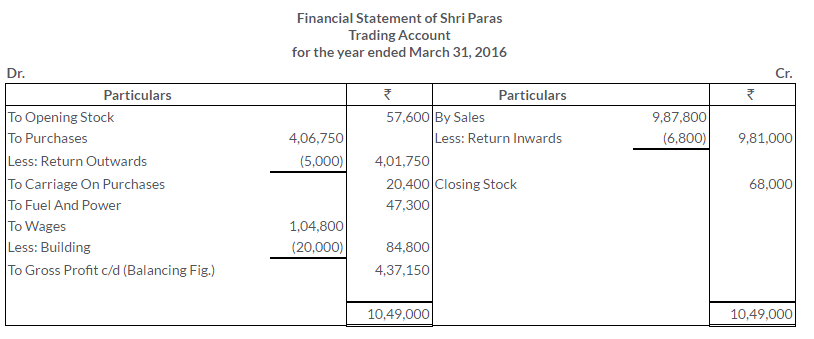
    ts-grewal-solutions-class-11-accountancy-chapter-18-adjustments-preparation-financial-statements-22-2
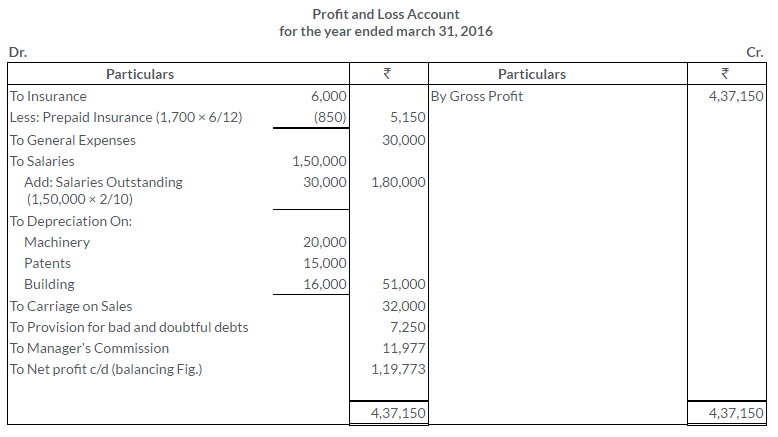
    ts-grewal-solutions-class-11-accountancy-chapter-18-adjustments-preparation-financial-statements-22-3
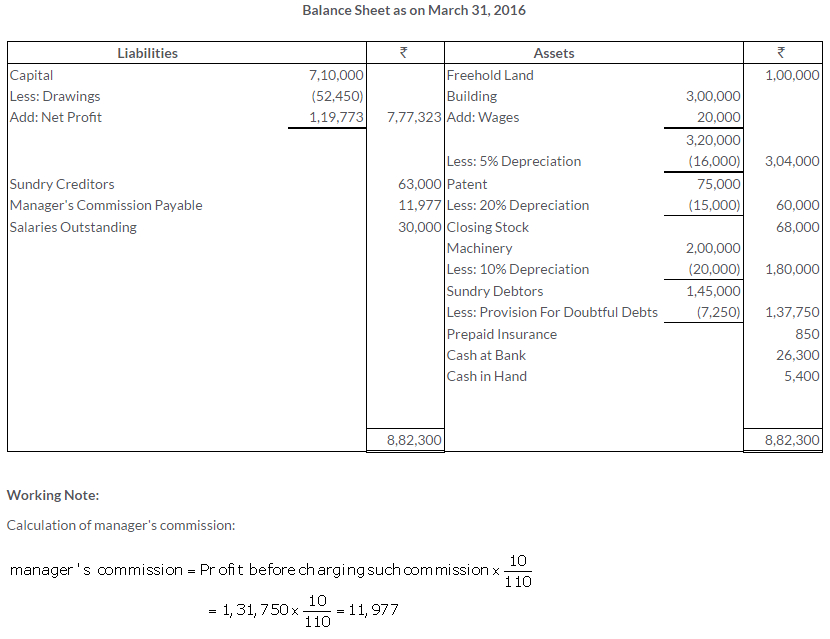
    ts-grewal-solutions-class-11-accountancy-chapter-18-adjustments-preparation-financial-statements-22-4

    Question 23.
    ts-grewal-solutions-class-11-accountancy-chapter-18-adjustments-preparation-financial-statements-23-1
    Following adjustments are to be made:
    i. Stock in Hand on 31st March, 2016 was Rs.3,250.
    ii. Depreciate Building at 5% and Furniture at 10%. Loose Tools are revalued at Rs.5,000 at the end of the year.
    iii. Salaries Rs.300 and taxes Rs.120 are outstanding.
    iv. Insurance amounting Rs.100 is prepaid.
    v. Write off a further Rs.100 as Bad Debts and Provision for Doubtful Debts is to be made equal to 5% on Sundry Debtors.
    vi. Half of the stationery was used by A for his personal purposes.
    Solution:
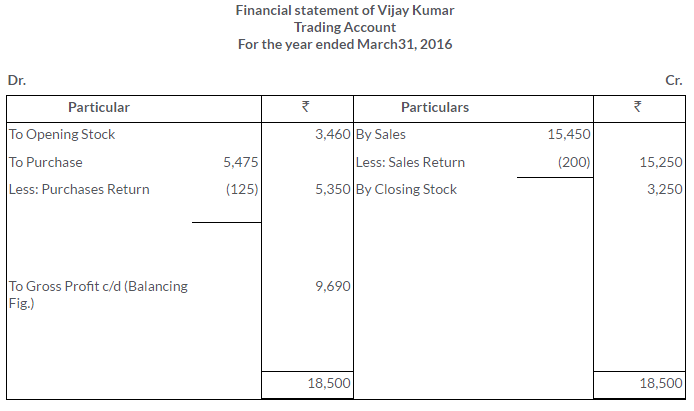
    ts-grewal-solutions-class-11-accountancy-chapter-18-adjustments-preparation-financial-statements-23-2
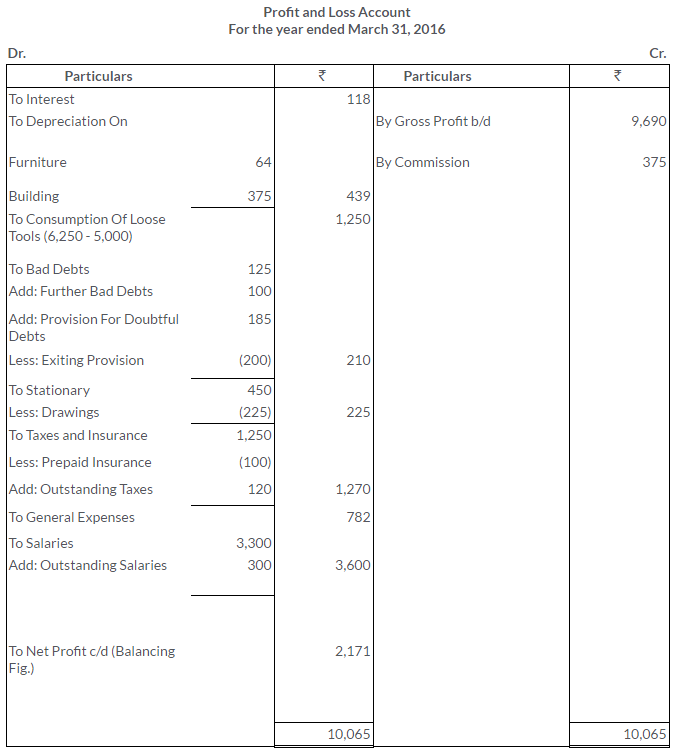
    ts-grewal-solutions-class-11-accountancy-chapter-18-adjustments-preparation-financial-statements-23-3
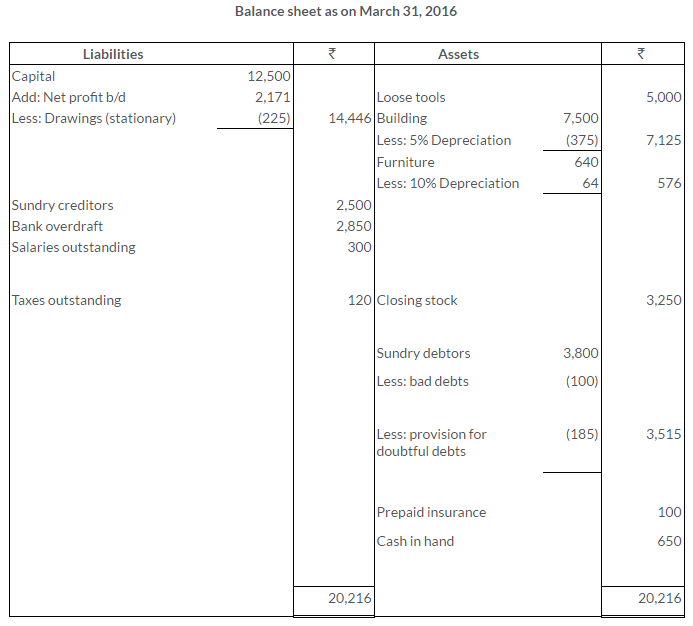
    ts-grewal-solutions-class-11-accountancy-chapter-18-adjustments-preparation-financial-statements-23-4

    Question 24.
    ts-grewal-solutions-class-11-accountancy-chapter-18-adjustments-preparation-financial-statements-24-1
    Solution:
    ts-grewal-solutions-class-11-accountancy-chapter-18-adjustments-preparation-financial-statements-24-2
    ts-grewal-solutions-class-11-accountancy-chapter-18-adjustments-preparation-financial-statements-24-3
    ts-grewal-solutions-class-11-accountancy-chapter-18-adjustments-preparation-financial-statements-24-4

    Question 25.
    ts-grewal-solutions-class-11-accountancy-chapter-18-adjustments-preparation-financial-statements-25-1
    Solution:
    ts-grewal-solutions-class-11-accountancy-chapter-18-adjustments-preparation-financial-statements-25-2
    ts-grewal-solutions-class-11-accountancy-chapter-18-adjustments-preparation-financial-statements-25-3
    ts-grewal-solutions-class-11-accountancy-chapter-18-adjustments-preparation-financial-statements-25-4

    Question 26.
    ts-grewal-solutions-class-11-accountancy-chapter-18-adjustments-preparation-financial-statements-26-1
    Solution:
    ts-grewal-solutions-class-11-accountancy-chapter-18-adjustments-preparation-financial-statements-26-2
    ts-grewal-solutions-class-11-accountancy-chapter-18-adjustments-preparation-financial-statements-26-3
    ts-grewal-solutions-class-11-accountancy-chapter-18-adjustments-preparation-financial-statements-26-4

    Question 27.
    ts-grewal-solutions-class-11-accountancy-chapter-18-adjustments-preparation-financial-statements-27-1
    Solution:
    ts-grewal-solutions-class-11-accountancy-chapter-18-adjustments-preparation-financial-statements-27-2
    ts-grewal-solutions-class-11-accountancy-chapter-18-adjustments-preparation-financial-statements-27-3
    ts-grewal-solutions-class-11-accountancy-chapter-18-adjustments-preparation-financial-statements-27-4

    Question 28.
    ts-grewal-solutions-class-11-accountancy-chapter-18-adjustments-preparation-financial-statements-28-1
    Solution:
    ts-grewal-solutions-class-11-accountancy-chapter-18-adjustments-preparation-financial-statements-28-2
    ts-grewal-solutions-class-11-accountancy-chapter-18-adjustments-preparation-financial-statements-28-3

    Question 29.
    ts-grewal-solutions-class-11-accountancy-chapter-18-adjustments-preparation-financial-statements-29-1
    Adjustments:
    i. Stock on 31st March, 2016 was valued at Rs.5,30,000.
    ii. Salaries have been paid so far for 11months only.
    iii. Unexpired insurance included in the figure of Rs.4,000 appearing in the Trail Balance is Rs.1,000.
    iv. Commission earned but not yet received amounted to Rs.1,220 is to be recorded in the books of account.
    v. Provision for doubtful debts is to be brought up to 3% of sundry debtors.
    vi. Manager is to be allowed a commission of 10% of net profit after charging such commission.
    vii. Furniture is depreciated @10% p.a.
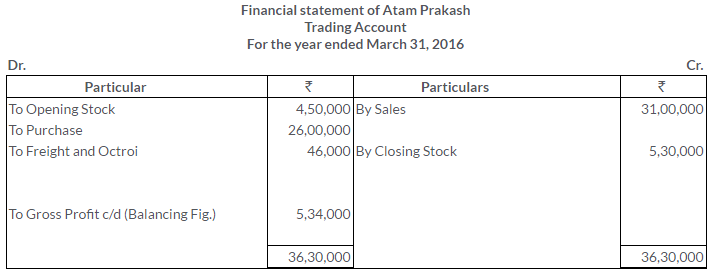
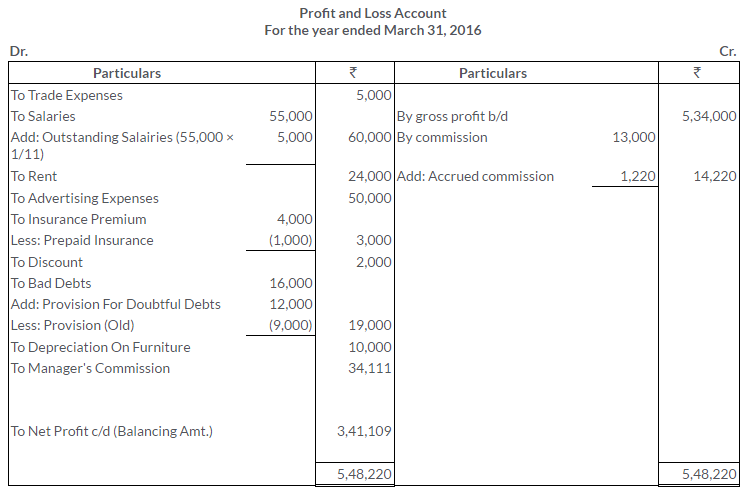
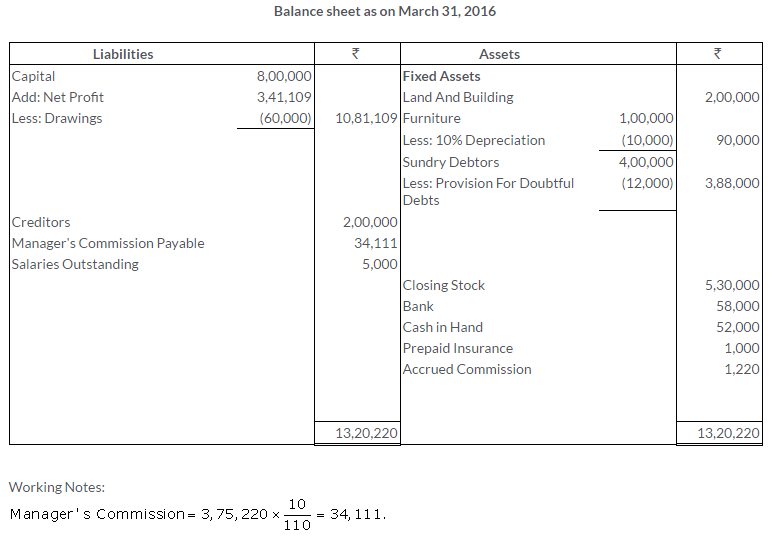
    Prepare Trading and Profit and loss account for the year ended 31st March, 2016 and balance Sheet as at that date.
    Solution:
    ts-grewal-solutions-class-11-accountancy-chapter-18-adjustments-preparation-financial-statements-29-2
    ts-grewal-solutions-class-11-accountancy-chapter-18-adjustments-preparation-financial-statements-29-3
    ts-grewal-solutions-class-11-accountancy-chapter-18-adjustments-preparation-financial-statements-29-4

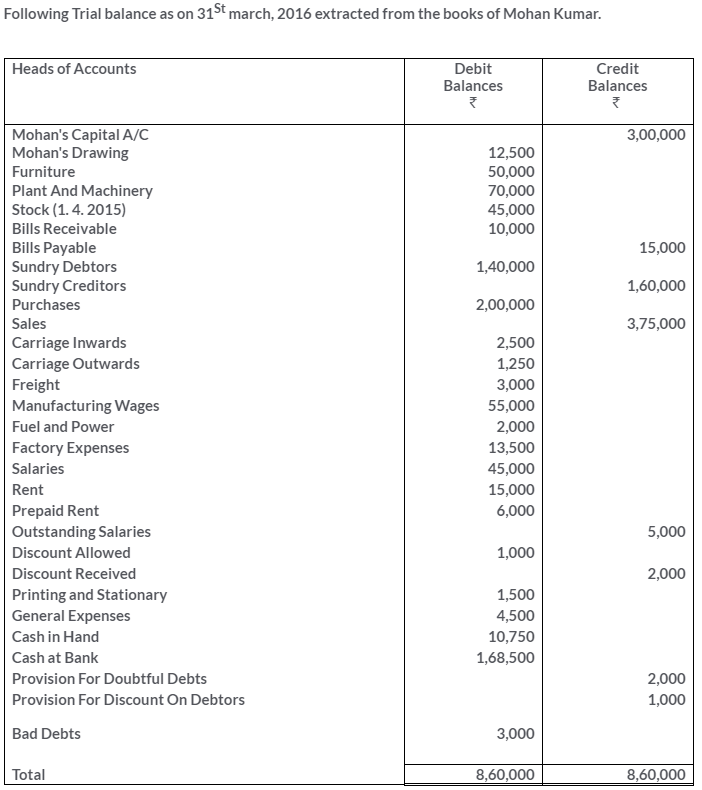
    Question 30.
    ts-grewal-solutions-class-11-accountancy-chapter-18-adjustments-preparation-financial-statements-30-1
    Additional Information :

    Errors:
    a. Purchases include sales return of Rs.5,000 and sales include purchases return of Rs.4,000.
    b. Goods withdrawn by the proprietor for own consumption Rs.2,000 were included in purchases.
    c. Wages paid for installation of plant and machinery amounted to Rs.2,000 were included in wages account.
    d. Free samples distributed for publicity costing Rs.2,500, but not recorded in the books.
    e. An advance of Rs.5,000 to a supplier was wrongly included in the list of sundry debtors.
    f. A dishonoured bill receivable for Rs.2,000 returned by the bank with whom it had been discounted, had been credited to bank account and debited to bills receivable account.

    Adjustment:
    a. Charge depreciation on plant and machinery at 15% and on furniture at 10%.
    b. Create a Provision for Doubtful Debts @5% and provision for discount on debtors at 2%.
    c. Closing stock is valued at Rs.80,000.
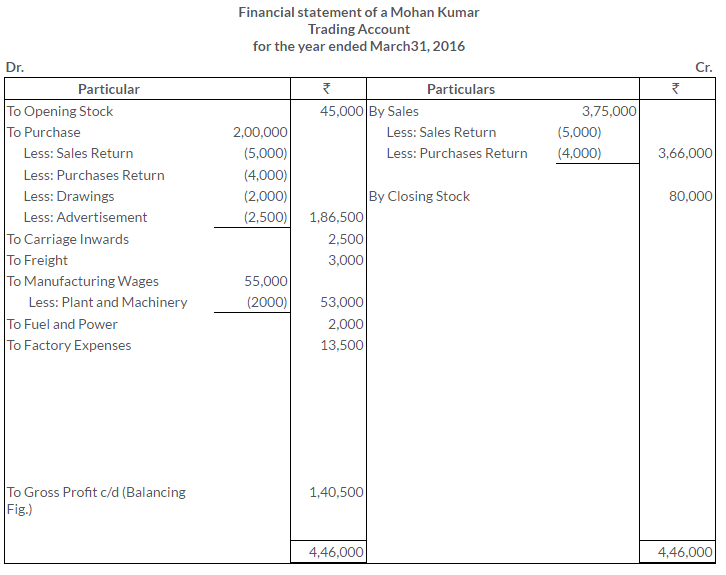
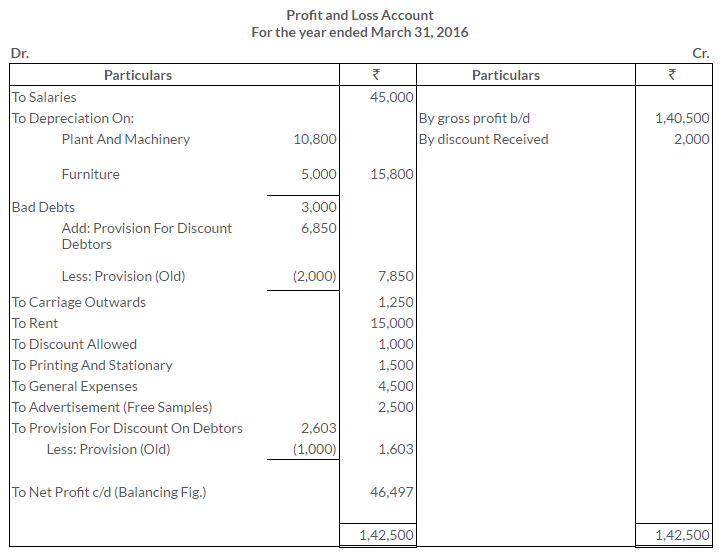
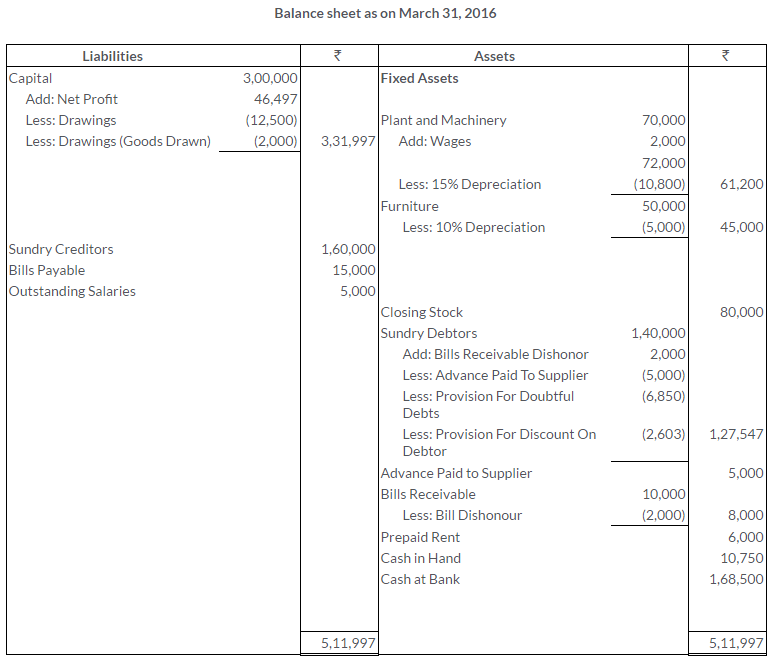
    Solution:
    ts-grewal-solutions-class-11-accountancy-chapter-18-adjustments-preparation-financial-statements-30-2
    ts-grewal-solutions-class-11-accountancy-chapter-18-adjustments-preparation-financial-statements-30-3
    ts-grewal-solutions-class-11-accountancy-chapter-18-adjustments-preparation-financial-statements-30-4

  • TS Grewal Solutions for Financial Statements of Sole Proprietorship Class 11 Accountancy Chapter 17

    TS Grewal Solutions for Class 11 Accountancy Chapter 17 – Financial Statements of Sole Proprietorship

    Question 1.
    ts-grewal-solutions-class-11-accountancy-chapter-17-financial-statements-sole-proprietorship-1-1
    Solution:
    ts-grewal-solutions-class-11-accountancy-chapter-17-financial-statements-sole-proprietorship-1-2

    Question 2.
    ts-grewal-solutions-class-11-accountancy-chapter-17-financial-statements-sole-proprietorship-2-1
    Solution:
    ts-grewal-solutions-class-11-accountancy-chapter-17-financial-statements-sole-proprietorship-2-2

    Question 3.
    ts-grewal-solutions-class-11-accountancy-chapter-17-financial-statements-sole-proprietorship-3-1
    Solution:
    ts-grewal-solutions-class-11-accountancy-chapter-17-financial-statements-sole-proprietorship-3-2

    Question 4.
    ts-grewal-solutions-class-11-accountancy-chapter-17-financial-statements-sole-proprietorship-4-1
    Solution:
    ts-grewal-solutions-class-11-accountancy-chapter-17-financial-statements-sole-proprietorship-4-2

    Question 5.
    ts-grewal-solutions-class-11-accountancy-chapter-17-financial-statements-sole-proprietorship-5-1
    Solution:
    ts-grewal-solutions-class-11-accountancy-chapter-17-financial-statements-sole-proprietorship-5-2

    Question 6.
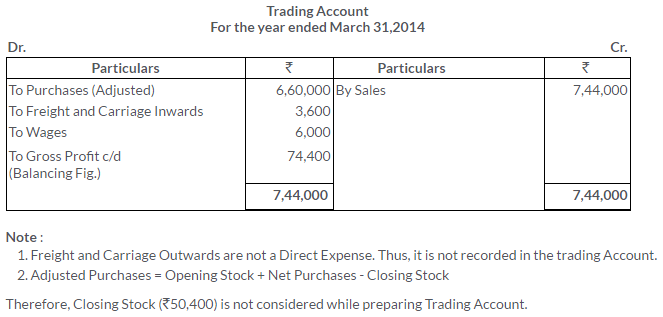
    From the following information, prepare Trading Account for the year ended 31st March,2014:
    Adjusted Purchases Rs.6,60,000; Sales Rs.7,44,000; Closing Stock Rs.50,400; Freight and Carriage Inwards Rs.3,600; Wages Rs.6,000; Freight and Cartage Outwards Rs.2,000
    Solution:
    ts-grewal-solutions-class-11-accountancy-chapter-17-financial-statements-sole-proprietorship-6

    Question 7.
    ts-grewal-solutions-class-11-accountancy-chapter-17-financial-statements-sole-proprietorship-7-1
    Solution:
    ts-grewal-solutions-class-11-accountancy-chapter-17-financial-statements-sole-proprietorship-7-2

    Question 8.
    ts-grewal-solutions-class-11-accountancy-chapter-17-financial-statements-sole-proprietorship-8-1
    Solution:
    ts-grewal-solutions-class-11-accountancy-chapter-17-financial-statements-sole-proprietorship-8-2

    Question 9.
    ts-grewal-solutions-class-11-accountancy-chapter-17-financial-statements-sole-proprietorship-9-1
    Solution:
    ts-grewal-solutions-class-11-accountancy-chapter-17-financial-statements-sole-proprietorship-9-2

    Question 10.
    ts-grewal-solutions-class-11-accountancy-chapter-17-financial-statements-sole-proprietorship-10-1
    Solution:
    ts-grewal-solutions-class-11-accountancy-chapter-17-financial-statements-sole-proprietorship-10-2
    ts-grewal-solutions-class-11-accountancy-chapter-17-financial-statements-sole-proprietorship-10-3

    Question 11.
    ts-grewal-solutions-class-11-accountancy-chapter-17-financial-statements-sole-proprietorship-11-1
    Solution:
    ts-grewal-solutions-class-11-accountancy-chapter-17-financial-statements-sole-proprietorship-11-2
    ts-grewal-solutions-class-11-accountancy-chapter-17-financial-statements-sole-proprietorship-11-3

    Question 12.
    ts-grewal-solutions-class-11-accountancy-chapter-17-financial-statements-sole-proprietorship-12-1
    Solution:
    ts-grewal-solutions-class-11-accountancy-chapter-17-financial-statements-sole-proprietorship-12-2

    Question 13.
    ts-grewal-solutions-class-11-accountancy-chapter-17-financial-statements-sole-proprietorship-13-1
    Solution:
    ts-grewal-solutions-class-11-accountancy-chapter-17-financial-statements-sole-proprietorship-13-2
    ts-grewal-solutions-class-11-accountancy-chapter-17-financial-statements-sole-proprietorship-13-3

    Question 14.
    ts-grewal-solutions-class-11-accountancy-chapter-17-financial-statements-sole-proprietorship-14-1
    Solution:
    ts-grewal-solutions-class-11-accountancy-chapter-17-financial-statements-sole-proprietorship-14-2
    ts-grewal-solutions-class-11-accountancy-chapter-17-financial-statements-sole-proprietorship-14-3

    Question 15.
    ts-grewal-solutions-class-11-accountancy-chapter-17-financial-statements-sole-proprietorship-15-1
    Solution:
    ts-grewal-solutions-class-11-accountancy-chapter-17-financial-statements-sole-proprietorship-15-2
    ts-grewal-solutions-class-11-accountancy-chapter-17-financial-statements-sole-proprietorship-15-3

    Question 16.
    From The following balances, prepare Final Accounts of M/s Raja and Sons for the year ended 31st March,2014:
    Salary Rs.5,400; Insurance Rs.2,500; Cash Rs.400; Purchases Rs.84,170; Rent Received Rs.3,150; Drawings Rs.2,100; Bills Payable Rs.3,900; Debtors Rs.38,080; Stock (1st April, 2013) Rs.29,500; Bank Overdraft Rs.9,700; Carriage Rs.2,200; Creditors Rs.4,200; Trade Expenses Rs.4,900; Sales Return Rs.4,700; Machinery Rs.12,000; Wages Rs.45,000; Sales Rs.1,47,200; Purchases Return Rs.3,900; Capital Rs.58,900; Closing Stock (31st March, 2014) Rs.36,200.
    Solution:
    ts-grewal-solutions-class-11-accountancy-chapter-17-financial-statements-sole-proprietorship-16
    ts-grewal-solutions-class-11-accountancy-chapter-17-financial-statements-sole-proprietorship-16-1

    Question 17.
    From the following balances, prepare Final Accounts of M/s. Mangal and Sons for the year ended 31st March, 2014:
    Opening Stock Rs.12,500; Bills Receivable Rs.2,000; Sales Rs.70,000; Purchases Rs.37,500; Creditors Rs.20,000; Salaries Rs.3,850; Insurance Rs.200; Debtors Rs.32,500; Carriage Rs.1,450; Commission Rs.750; Interest Rs.900; Printing Rs.250; Bills Payable Rs.3,150: Returns In Rs.1,300; Returns Out Rs.500; Bank Rs.5,250; Rent and Taxes Rs.1,300; Furniture Rs.1,000; Capital Rs.7,100;, Stock on 31st March, 2014 Rs.15,000.
    Solution:
    ts-grewal-solutions-class-11-accountancy-chapter-17-financial-statements-sole-proprietorship-17-1
    ts-grewal-solutions-class-11-accountancy-chapter-17-financial-statements-sole-proprietorship-17

    Question 18.
    ts-grewal-solutions-class-11-accountancy-chapter-17-financial-statements-sole-proprietorship-18-1
    Solution:
    ts-grewal-solutions-class-11-accountancy-chapter-17-financial-statements-sole-proprietorship-18-2

    Question 19.
    ts-grewal-solutions-class-11-accountancy-chapter-17-financial-statements-sole-proprietorship-19-1
    Solution:
    ts-grewal-solutions-class-11-accountancy-chapter-17-financial-statements-sole-proprietorship-19-2
    ts-grewal-solutions-class-11-accountancy-chapter-17-financial-statements-sole-proprietorship-19-3

    Question 20.
    ts-grewal-solutions-class-11-accountancy-chapter-17-financial-statements-sole-proprietorship-20-1
    Solution:
    ts-grewal-solutions-class-11-accountancy-chapter-17-financial-statements-sole-proprietorship-20-2
    ts-grewal-solutions-class-11-accountancy-chapter-17-financial-statements-sole-proprietorship-20-3

    Question 21.
    ts-grewal-solutions-class-11-accountancy-chapter-17-financial-statements-sole-proprietorship-21-1
    Solution:
    ts-grewal-solutions-class-11-accountancy-chapter-17-financial-statements-sole-proprietorship-21-2
    ts-grewal-solutions-class-11-accountancy-chapter-17-financial-statements-sole-proprietorship-21-3

    Question 22.
    ts-grewal-solutions-class-11-accountancy-chapter-17-financial-statements-sole-proprietorship-22-1
    Solution:
    ts-grewal-solutions-class-11-accountancy-chapter-17-financial-statements-sole-proprietorship-22-2
    ts-grewal-solutions-class-11-accountancy-chapter-17-financial-statements-sole-proprietorship-22-3

    Question 23.
    ts-grewal-solutions-class-11-accountancy-chapter-17-financial-statements-sole-proprietorship-23-1
    Solution:
    ts-grewal-solutions-class-11-accountancy-chapter-17-financial-statements-sole-proprietorship-23-2
    ts-grewal-solutions-class-11-accountancy-chapter-17-financial-statements-sole-proprietorship-23-3

    Question 24.
    ts-grewal-solutions-class-11-accountancy-chapter-17-financial-statements-sole-proprietorship-24-1
    Solution:
    ts-grewal-solutions-class-11-accountancy-chapter-17-financial-statements-sole-proprietorship-24-2
    ts-grewal-solutions-class-11-accountancy-chapter-17-financial-statements-sole-proprietorship-24-3

    Question 25.
    ts-grewal-solutions-class-11-accountancy-chapter-17-financial-statements-sole-proprietorship-25-1
    Solution:
    ts-grewal-solutions-class-11-accountancy-chapter-17-financial-statements-sole-proprietorship-25-2
    ts-grewal-solutions-class-11-accountancy-chapter-17-financial-statements-sole-proprietorship-25-3

  • TS Grewal Solutions for Rectification of Errors Class 11 Accountancy Chapter 16

    TS Grewal Solutions for Class 11 Accountancy Chapter 16 – Rectification of Errors

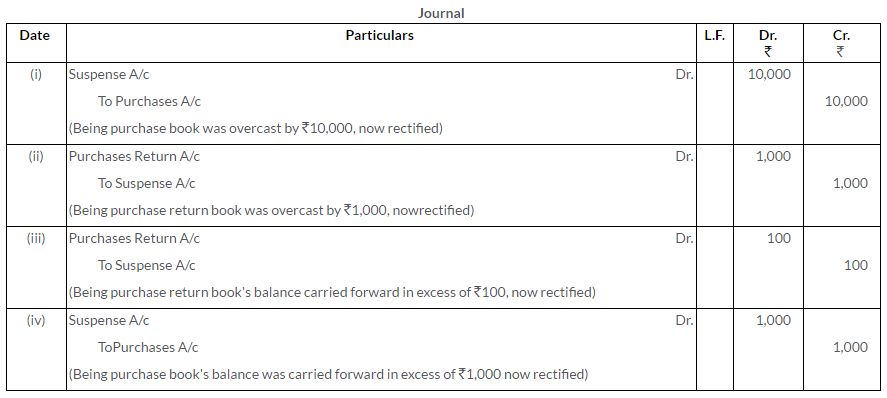
    Question 1.
    How will you rectify the following errors?
    i. Purchases Book is overcast by Rs.10,000.
    ii. Purchases Return Book is overcast by Rs.1,000.
    iii. Purchases Return Book’s balance is carried forward in excess by Rs.100.
    iv. Purchases Book’s balance is carried forward in excess by Rs.1,000.
    Note: The above errors have been detected before the preparation of Trial Balance.
    Solution:
    ts-grewal-solutions-class-11-accountancy-chapter-16-rectification-errors-1

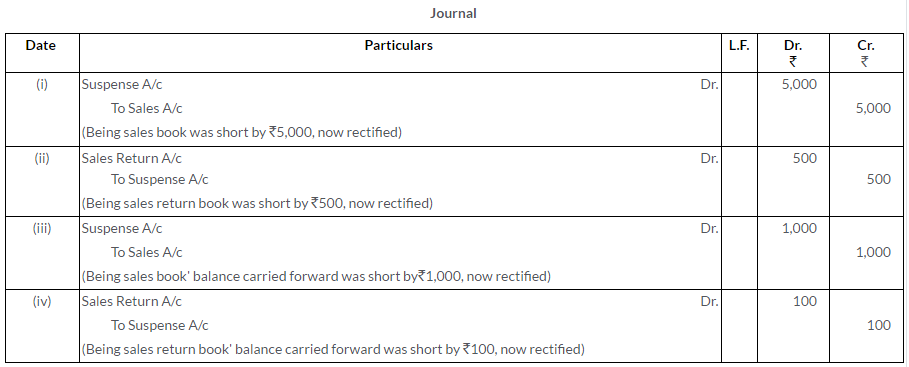
    Question 2.
    How will you rectify the following errors?
    i. Sales Book is short casted by Rs.5,000.
    ii. Sales Return Book is short casted by Rs.500.
    iii. Balance of Sales Book is carried forward short by Rs.1,000.
    iv. Balance of Sales Return Book is carried forward short by Rs.100.
    Solution:
    ts-grewal-solutions-class-11-accountancy-chapter-16-rectification-errors-2

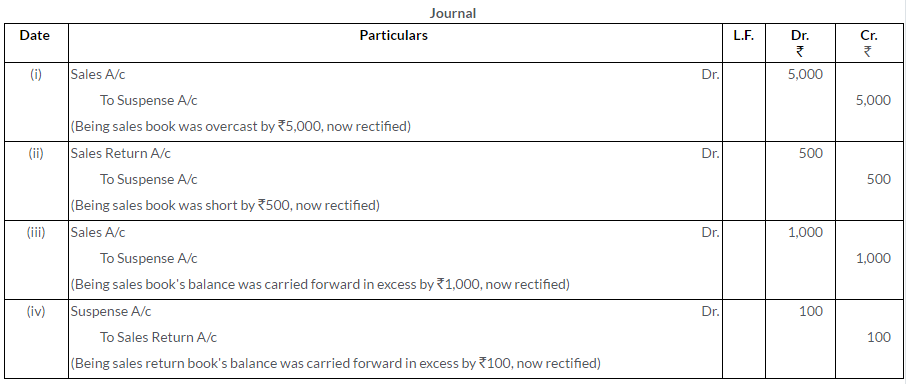
    Question 3.
    How will you rectify the following errors?
    i. Sales Book is overcast by Rs.5,000.
    ii. Sales Return Book is short casted by Rs.500.
    iii. Balance of Sales Book is carried forward in excess by Rs.1,000.
    iv. Balance of Sales Return Book is carried forward in excess by Rs.100.
    Solution:
    ts-grewal-solutions-class-11-accountancy-chapter-16-rectification-errors-3

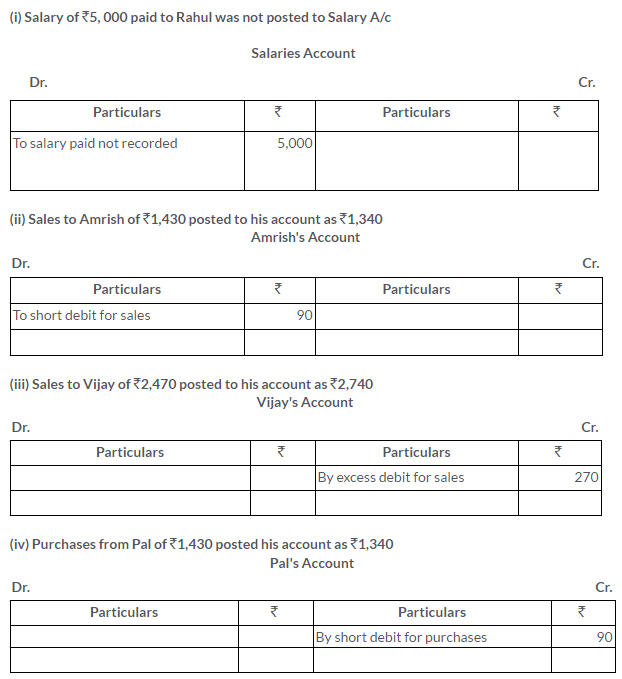
    Question 4.
    Rectify the following errors assuming that there is no Suspense Account:
    i. Salary of Rs.5,000 paid to Rahul was not posted to Salaries Account.
    ii. Sales to Amrish of Rs.1,430 posted to his account as Rs.1,340.
    iii. Sales to Vijay of Rs.2,470 posted to his account as Rs.2,740.
    iv. Purchases from Pal of Rs.1,430 posted to his account as Rs.1,340.
    Solution:
    ts-grewal-solutions-class-11-accountancy-chapter-16-rectification-errors-4

    Question 5.
    Which of the following errors will affect the Trial Balance?
    i. The total of the Sales Book has not been posted to the Sales Account.
    ii. Rs.1,000 paid as installation charges of a new machine has been debited to Repairs Account.
    iii. Goods costing Rs.4,000 taken by the proprietor for personal use have been debited to Debtor’s Account.
    iv. Rs.1,000 paid for repairs to building have been debited to Building Account.
    [The total of the Sales Book has not been posted to Sales Account will affect the Trial Balance.]
    Solution:
    Total of Sales book has not been posted to Sales Account will affect the Trial Balance because due to undercast of Sales Accounts results in undercasting of credit side of the Trial Balance.

    Question 6.
    Rectify the following errors:
    i. The Sales Book of December was added short by Rs.500.
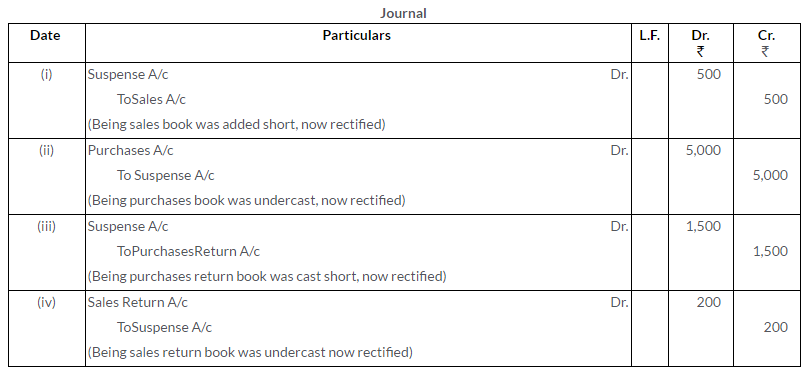
    ii. A periodical total of the Purchases Book was cast short by Rs.5,000.
    iii. The total of Purchases Return Book has been undercast by Rs.1,500.
    iv. The Sales Return Book is added Rs.200 short.
    Solution:
    ts-grewal-solutions-class-11-accountancy-chapter-16-rectification-errors-6

    Question 7.
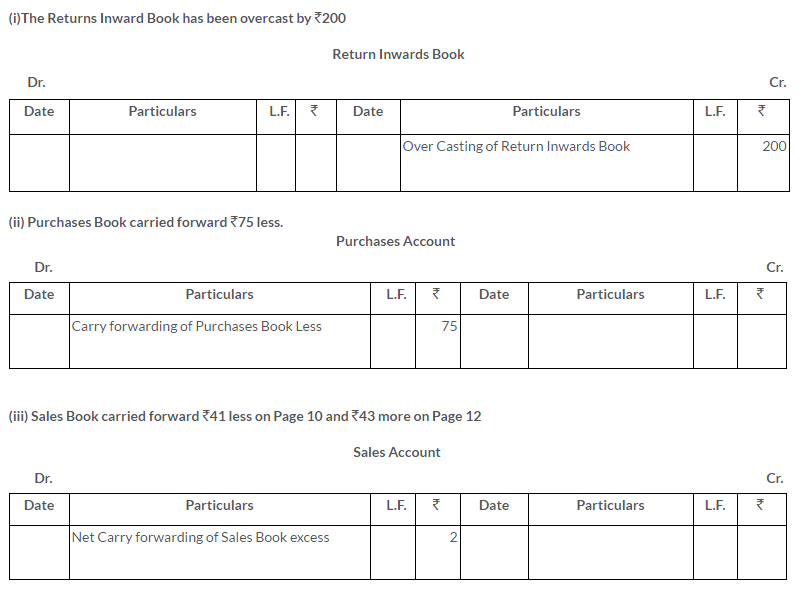
    Rectify the following errors assuming that there is no Suspense Account:
    i. The Returns Inward Book has been overcast by Rs.200.
    ii. Purchases Book carried forward Rs.75 less.
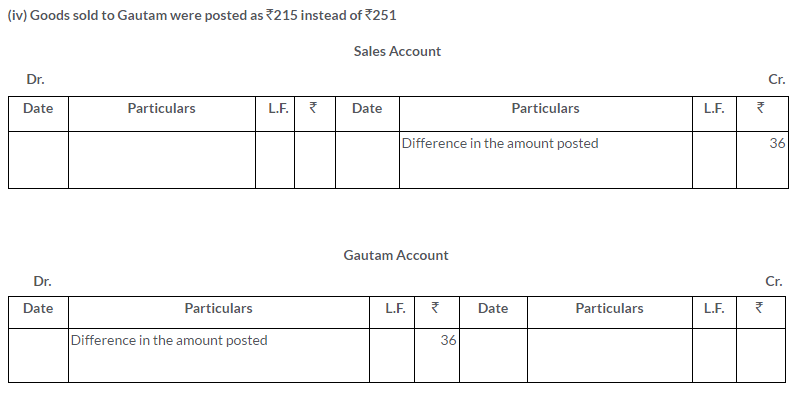
    iii. Sales Book carried forward Rs.41 less on Page 10 and Rs.43 more on Page 12
    iv. Goods sold to Gautam were posted as Rs.215 instead of Rs.251.
    Solution:
    ts-grewal-solutions-class-11-accountancy-chapter-16-rectification-errors-7
    ts-grewal-solutions-class-11-accountancy-chapter-16-rectification-errors-7-1
    Question 8.
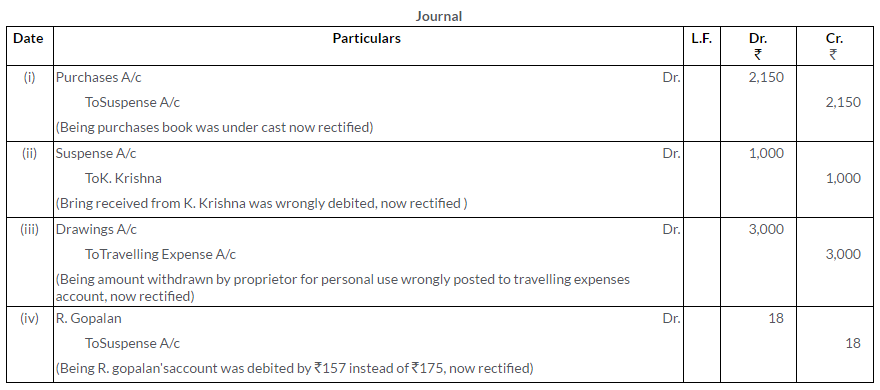
    Following errors are discovered in the books of Sit Ram Lal. Make the necessary entries to rectify them:
    i. Purchases Journal was Rs.2,150.
    ii. Rs.500 received from K. Krishna was debited to his account.
    iii. An amount of Rs.3,000 withdrawn by the proprietor of the firm for his personal use was posted to the Travelling Expense Account.
    iv. An amount of Rs.175 for a credit sale to R. Gopalan correctly entered in the Sale Book, has been debited to his account as Rs.157
    Solution:
    ts-grewal-solutions-class-11-accountancy-chapter-16-rectification-errors-8

    Question 9.
    Pass the Journal entries rectifying the following errors:
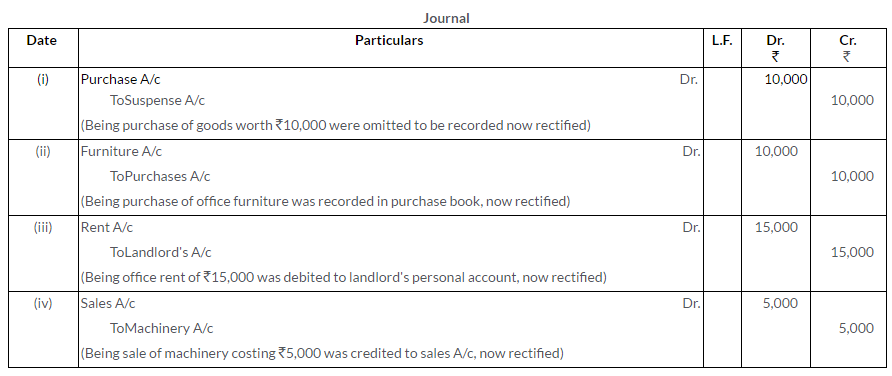
    i. Purchases of Rs.10,000 was omitted to be recorded.
    ii. Purchases of office furniture of Rs.10,000 was recorded in Purchases Book.
    iii. Office Rent of Rs.15,000 was debited to the Personal Account of the landlord.
    iv. Old machine was sold for Rs.5,000 was credited to Sales Account.
    Solution:
    ts-grewal-solutions-class-11-accountancy-chapter-16-rectification-errors-9

    Question 10.
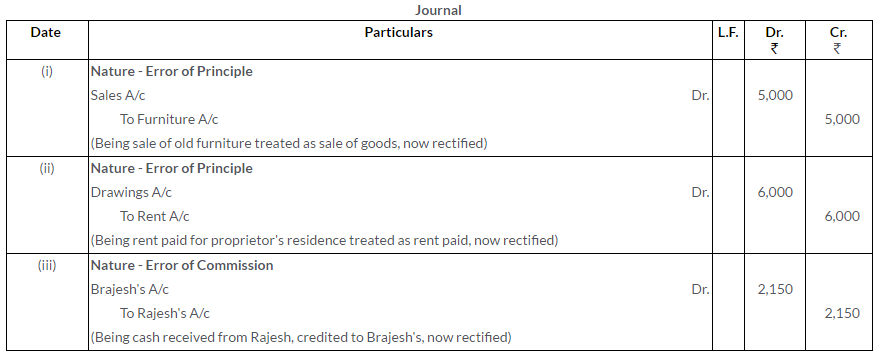
    Following errors affecting the accounts for the year 2015 were detected in the books of Dasand Co., Meerut:
    i. Sale of old furniture for Rs.5,000 was treated as sales of goods.
    ii. Rent of proprietor’s residence Rs.6,000 was debited to Rent Account.
    iii. Cash received from Rajesh Rs.2,150 was credited to Brajesh.
    Pass the rectifying Journal entries. State the nature of each of these mistakes.
    Solution:
    ts-grewal-solutions-class-11-accountancy-chapter-16-rectification-errors-10

    Question 11.
    Rectify the following errors:
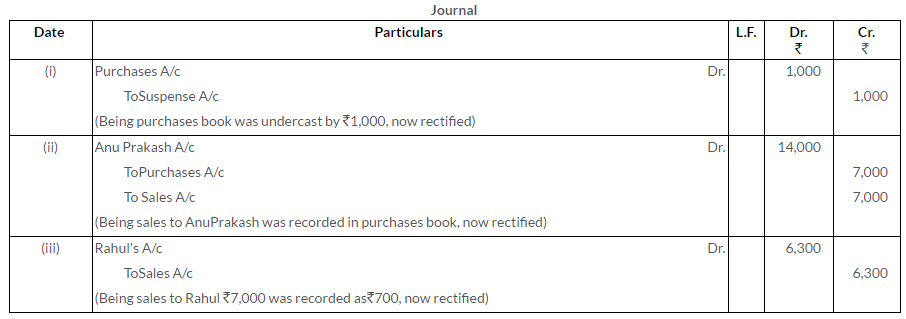
    i. Purchases Book has been undercast by Rs.1,000.
    ii. Credit sale to Anu Prakash Rs.7,000 was recorded in Purchases Book.
    iii. Credit sale to Rahul Rs.7,000 was recorded as Rs.700.
    Solution:
    ts-grewal-solutions-class-11-accountancy-chapter-16-rectification-errors-11

    Question 12.
    Rectify the following errors:
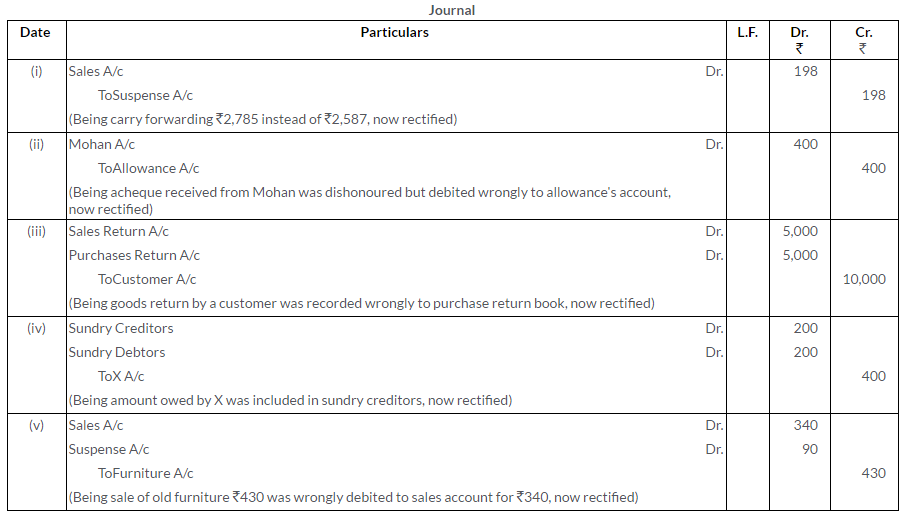
    i. Total of one page of the Sales Book was carried forward to the next page as Rs.2,785 instead of Rs.2,587.
    ii. A cheque of Rs.400 received from Mohan was dishonoured and had been posted to the debit side of the ‘Allowance Account’.
    iii. Return of goods worth Rs.5,000 by a customer was entered in the Purchase Return Book.
    iv. Sum of Rs.200 owed by ‘X’ has been included in the list of Sundry Creditors.
    v. Sale of old furniture worth Rs.430 was credited to the Sales Account as Rs.340.
    (KVS 2005)
    Solution:
    ts-grewal-solutions-class-11-accountancy-chapter-16-rectification-errors-12

    Question 13.
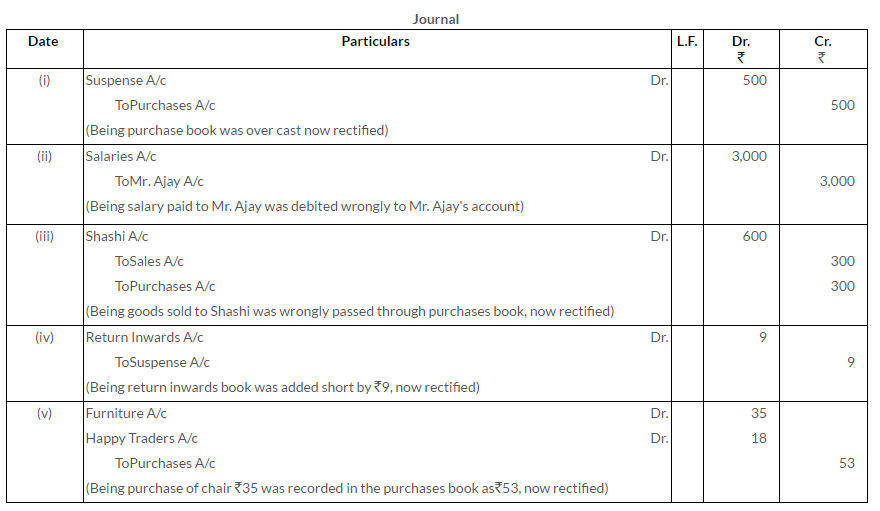
    Rectify the following errors:
    i. Purchases Book is overcast by Rs.500.
    ii. Salary paid to an employee, Mr. Ajay, is debited to his Personal Account Rs.3,000.
    iii. Goods sold to Shashi on credit Rs.300 have been wrongly passed through the Purchases Book.
    iv. Total of returns inward has been added Rs.9 short.
    v. Purchase of chair from Happy Traders for Rs.35 has been entered in the Purchases Book as Rs.53.
    Solution:
    ts-grewal-solutions-class-11-accountancy-chapter-16-rectification-errors-13

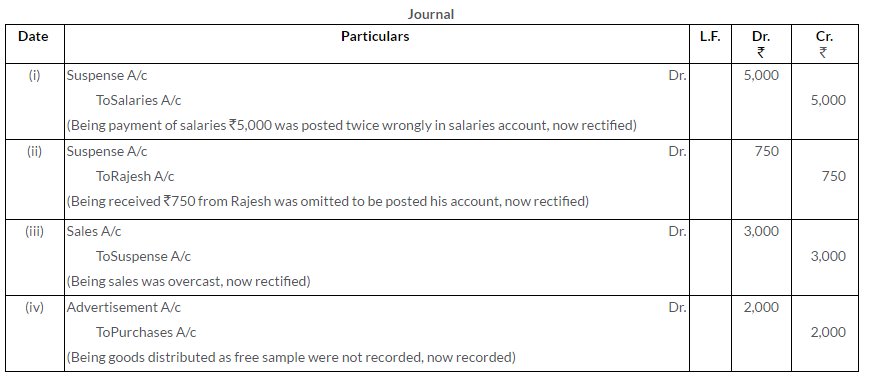
    Question 14.
    Correct the following errors in Mohan Lal’s Book:
    i. A payment of Rs.5,000 for salaries (to Mr. Ram) has been posted twice to the Salaries Account.
    ii. Rs.750 received from Rajesh are entered on the debit side of the Cash Book. No posting was done in Rajesh’s Account.
    iii. Sales Book was overcast by Rs.3,000.
    iv. Goods (Cost Rs.2,000, Sales Price Rs.2,500) distributed as free samples among prospective customers were not recorded anywhere.
    Solution:
    ts-grewal-solutions-class-11-accountancy-chapter-16-rectification-errors-14

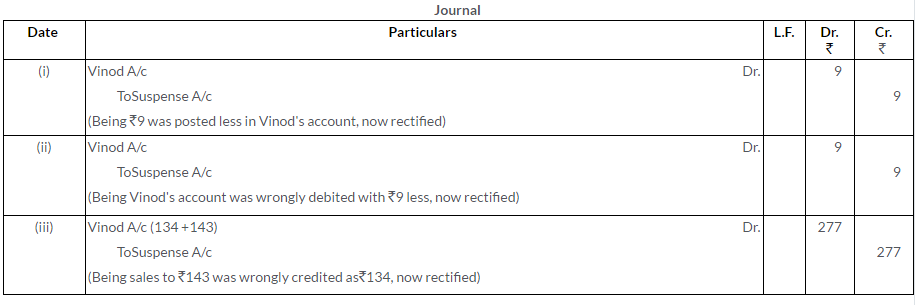
    Question 15.
    Rectify the following errors:
    i. Sales to Vinod of Rs.143 posted to his account as Rs.134.
    ii. Sales to Vinod of Rs.143 debited to his account as Rs.134.
    iii. Sales to Vinod of Rs.143 credited to his account as Rs.134.
    Solution:
    ts-grewal-solutions-class-11-accountancy-chapter-16-rectification-errors-15

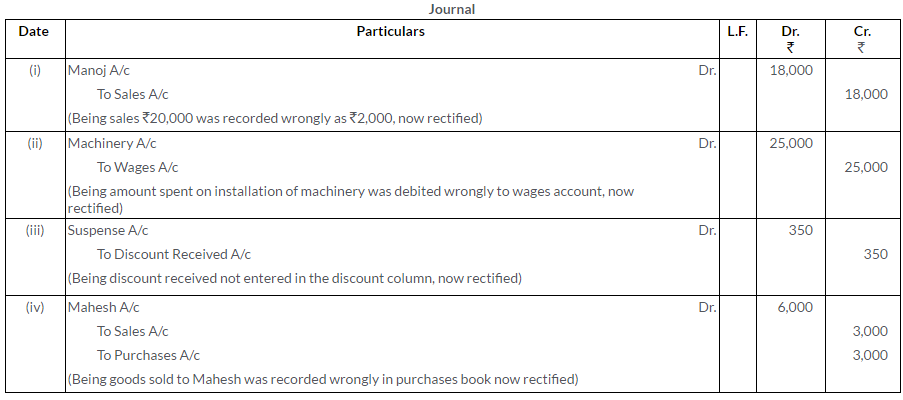
    Question 16.
    Give the rectifying entries of the following:
    i. Sales of Rs.20,000 to Manoj were recorded as Rs.2,000 in the Sales Book.
    ii. An amount of Rs.25,000 spent for the extension of machinery has been debited to the Wages Account.
    iii. Discount received from Ram and Co. Rs.350, has not been entered in the discount column of the Cash Book.
    iv. Goods of Rs.3,000 sold to Mahesh were recorded in the Purchases Book.
    Solution:
    ts-grewal-solutions-class-11-accountancy-chapter-16-rectification-errors-16

    Question 17.
    Correct the following errors in Mohan Lars Book:
    i. A sum of Rs.1,500 written off as depreciation on furniture has not been debited to the Depreciation Account.
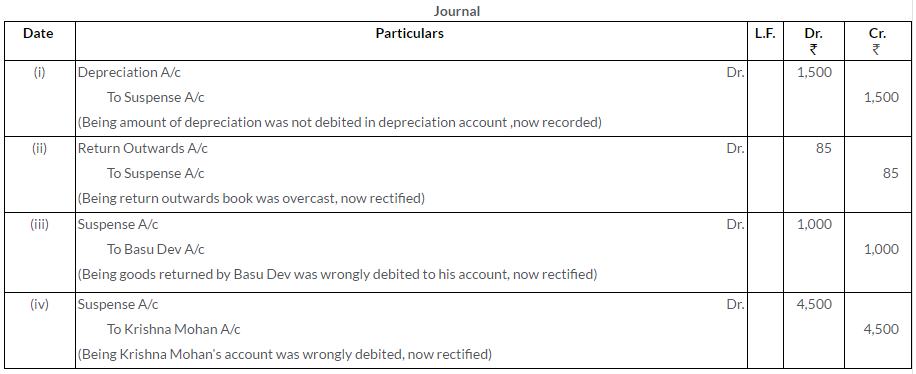
    ii. Returns Outward Journal has been overcast by Rs.85.
    iii. Basudev returned goods worth Rs.500; his account was debited by this amount.
    iv. Purchase from Krishna Mohan of Rs.2,250 has been debited to his account.
    Solution:
    ts-grewal-solutions-class-11-accountancy-chapter-16-rectification-errors-17

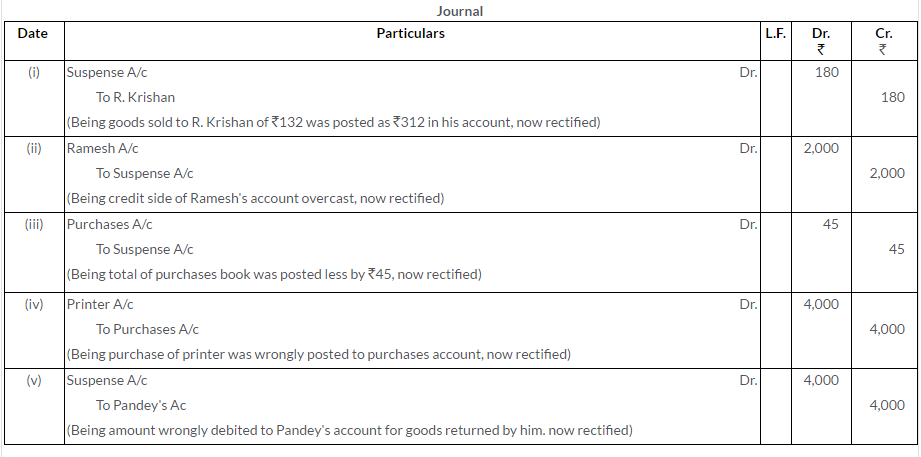
    Question 18.
    Correct the following errors in Hari’s Books:
    i. Credit sale of Rs.132 to R. Krishan correctly entered in Sales Journal but posted to his account as Rs.312.
    ii. The total of the credit side of Ramesh’s Account was overcast by Rs.2,000.
    iii. Total of the Purchases Journal of Rs.5,250 has been posted to Purchases Account as Rs.5,205.
    iv. Printer purchased from R. Ltd. forRs.4,000 on credit was entered in the Purchases Book.
    v. An item of`2,000 entered in the Sales Return Book was posted to the debit of Pandey who had returned the goods.
    Solution:
    ts-grewal-solutions-class-11-accountancy-chapter-16-rectification-errors-18

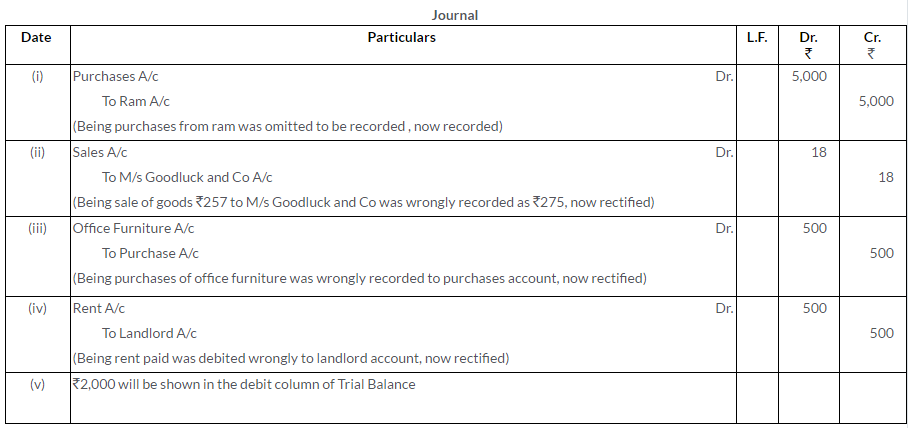
    Question 19.
    Rectify the following errors:
    i. A purchase of Rs.5,000 from Ram was omitted to be entered in the Purchases Book.
    ii. A credit sale of Rs.257 to Messrs. Goodluck and Co. was recorded as Rs.275.
    iii. A purchase of office furniture for Rs.500 from Salwan Furnitures was entered through the Purchases Book.
    iv. Rent paid to Landlord Rs.500 was debited to his Personal Account.
    v. A debit balance of Rs.2000 on the Personal Account of Mr. John (correctly shown in the Ledger) has been omitted when extracting a Trial Balance.
    Solution:
    ts-grewal-solutions-class-11-accountancy-chapter-16-rectification-errors-19

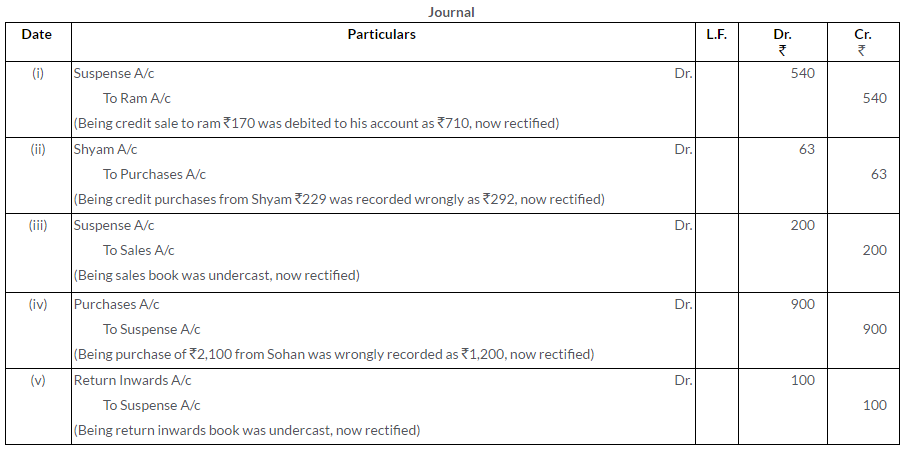
    Question 20.
    Pass the Journal entries to rectify the following errors:
    i. Credit sales to Ram Rs.170 debited to his account as Rs.710.
    ii. Credit purchases from Rs.229 recorded as Rs.292.
    iii. Sales Book was undercast by Rs.200.
    iv. Credit purchase of goods of Rs.2,100 from Sohan posted as Rs.1,200.
    v. An addition in the Returns (Inward) Book had been cast Rs.100 short.
    Solution:
    ts-grewal-solutions-class-11-accountancy-chapter-16-rectification-errors-20

    Question 21.
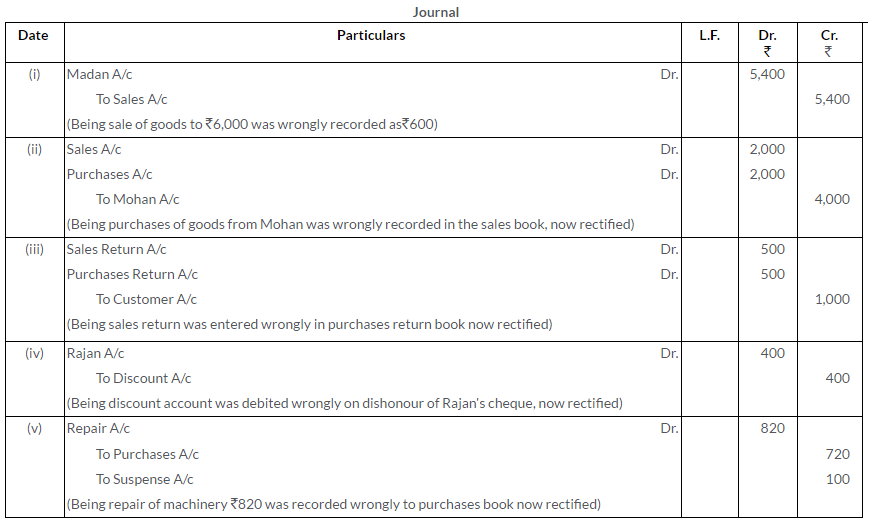
    Pass the rectifying entries for the following:
    i. Sales of goods Rs.6,000 to Madan were recorded as Rs.600 in the Sales Book.
    ii. Credit purchase of goods from Mohan amounting to Rs.2,000 has been wrongly passed through the Sales Book.
    iii. Return of goods worth Rs.500 by a customer was entered in ‘Purchases Return Book’.
    iv. Cheque of Rs.400 received from Ranjan was dishonoured and debited to the Discount Account.
    v. Bill for Rs.820 received from Ramesh for repair of machinery was entered in the Purchases Book as Rs.720.
    (Delhi 2003)
    Solution:
    ts-grewal-solutions-class-11-accountancy-chapter-16-rectification-errors-21

    Question 22.
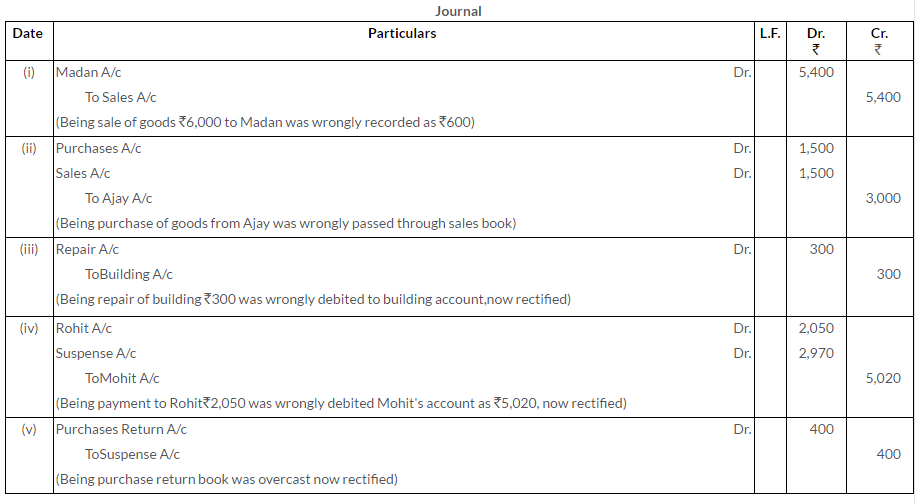
    Give rectifying Journal entries for the following errors:
    i. Sales of goods to Madan Rs.6,000 were entered in the Sales Book as Rs.600.
    ii. Credit purchase of Rs.1,500 from Ajay has been wrongly passed through the Sales Book.
    iii. Repairs to building Rs.300 were debited to Building Account.
    iv. Rs.2,050 paid to Rohit is posted to the debit of Mohit’s Account as Rs.5,020.
    v. Purchases Return Book is overcast by Rs.400.
    (MSE Chandigarh 2007)
    Solution:
    ts-grewal-solutions-class-11-accountancy-chapter-16-rectification-errors-22

    Question 23.
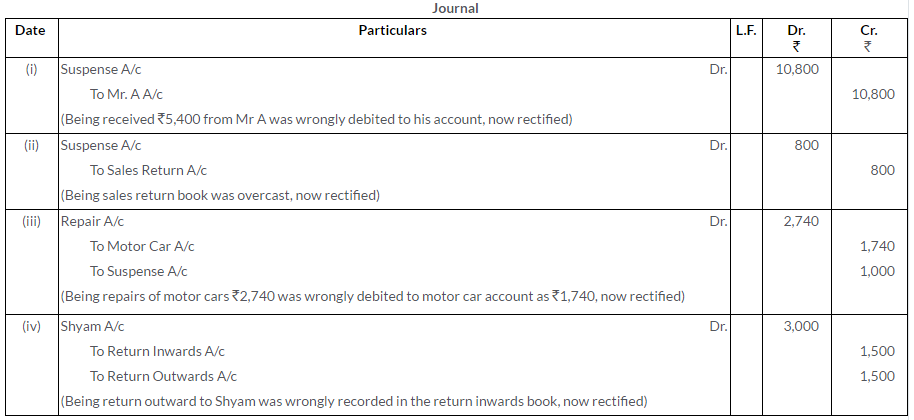
    Give rectifying entries for the following:
    i. Rs.5,400 received from Mr. A was posted to the debit of his account.
    ii. The total of Sales Return Book overcast by Rs.800.
    iii. Rs.2,740 paid for repairs to motor car was debited to Motor Car Account as Rs.1,740.
    iv. Returned goods to Shyam Rs.1,500 were passed through Returns Inward Book.
    (MSE Chandigarh 2008)
    Solution:
    ts-grewal-solutions-class-11-accountancy-chapter-16-rectification-errors-23

    Question 24.
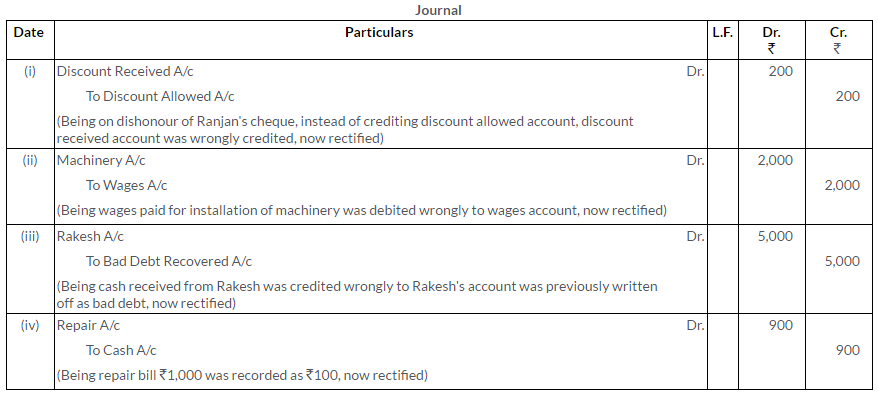
    Pass Journal entries rectifying the following errors:
    i. A cheque for Rs.10,000 was received from Ranjan on which Rs.200 Cash Discount was allowed. The cheque was not honoured on due date and the amount of discount was credited to Discount Received Account.
    ii. Rs.2,000 paid as wages for machinery installation was debited to Wages Account.
    iii. Rs.5,000 received from Rakesh were credited to his Personal Account. The amount had been written off as bad debt earlier.
    iv. Repair bill of machinery was recorded as Rs.100 against the bill amount of Rs.1,000.
    Solution:
    ts-grewal-solutions-class-11-accountancy-chapter-16-rectification-errors-24

    Question 25.
    Rectify the following errors:
    i. Sales Book has been totaled Rs.1,000 short.
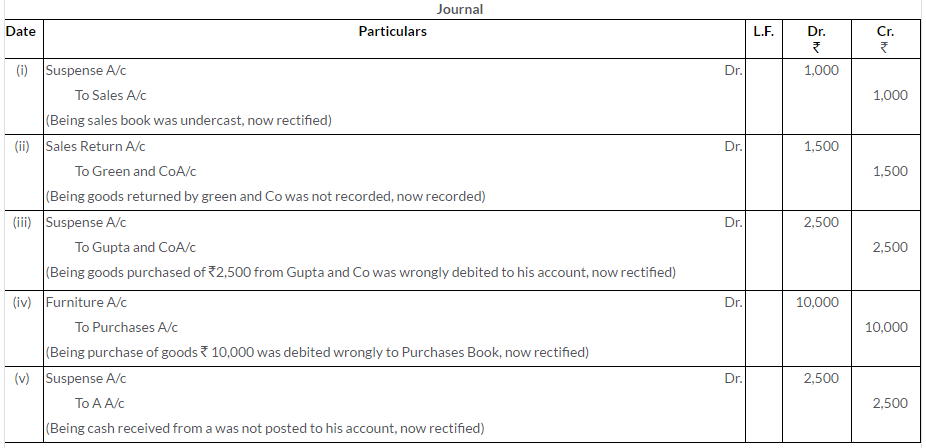
    ii. Goods worth Rs.1,500 returned by Green and Co. have not been recorded anywhere.
    iii. Goods purchased worth Rs.2,500 have been posted to the debit of the supplier, Gupta and Co.
    iv. Furniture purchased from Gulaband Co. worth Rs.10,000 has been entered in Purchases Book.
    v. Cash received from A Rs.2,500 has not been posted in his account.
    (KVS 2008)
    Solution:
    ts-grewal-solutions-class-11-accountancy-chapter-16-rectification-errors-25

    Question 26.
    How will you rectify the following errors?
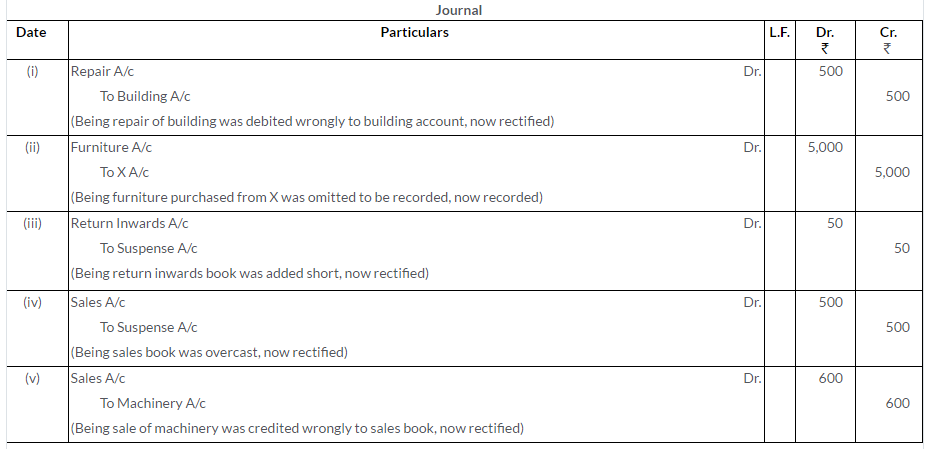
    i. Rs.500 spent on building repairs has been debited to the Building Account.
    ii. Furniture worth Rs.5,000 purchased from X on credit omitted from being recorded in the books.
    iii. Total of Returns Inward Book was added by Rs.200 instead of Rs.250.
    iv. Sales Book was overcast by Rs.500.
    v. Sale of old machinery amounting toRs.600 has been credited to the Sales Account.
    Solution:
    ts-grewal-solutions-class-11-accountancy-chapter-16-rectification-errors-26

    Question 27.
    Pass Journal entries to rectify the errors in the following cases:
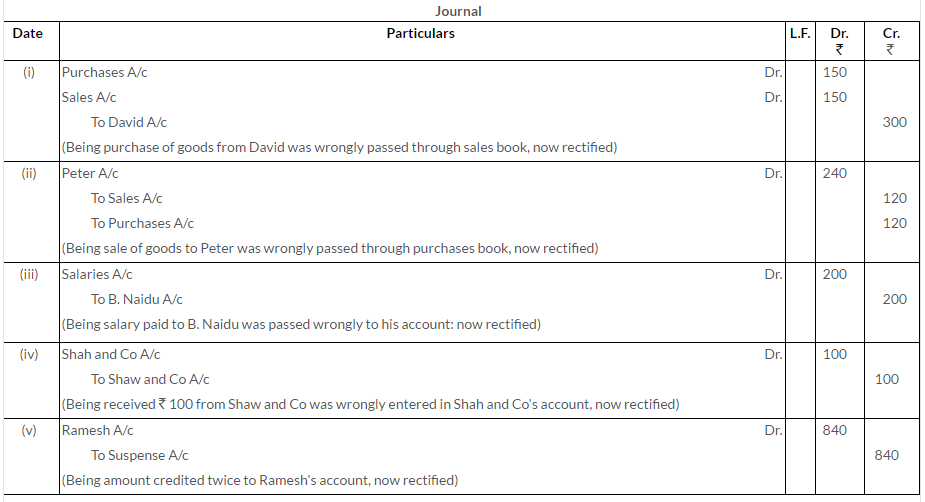
    i. A purchase of goods from David amounting to Rs.150 has been wrongly passed through the Sales Book.
    ii. A credit sale of goods of Rs.120 to Peter has been wrongly passed through the Purchases Book.
    iii. Rs.200, salary paid to Cashier, B. Naidu, stands wrongly debited to his Personal Account.
    iv. Rs.100 received from Shaw and Co. have been wrongly entered as from Shah and Co.
    v. Ramesh’s Account was credited with Rs.840 twice instead of once.
    Solution:
    ts-grewal-solutions-class-11-accountancy-chapter-16-rectification-errors-27

    Question 28.
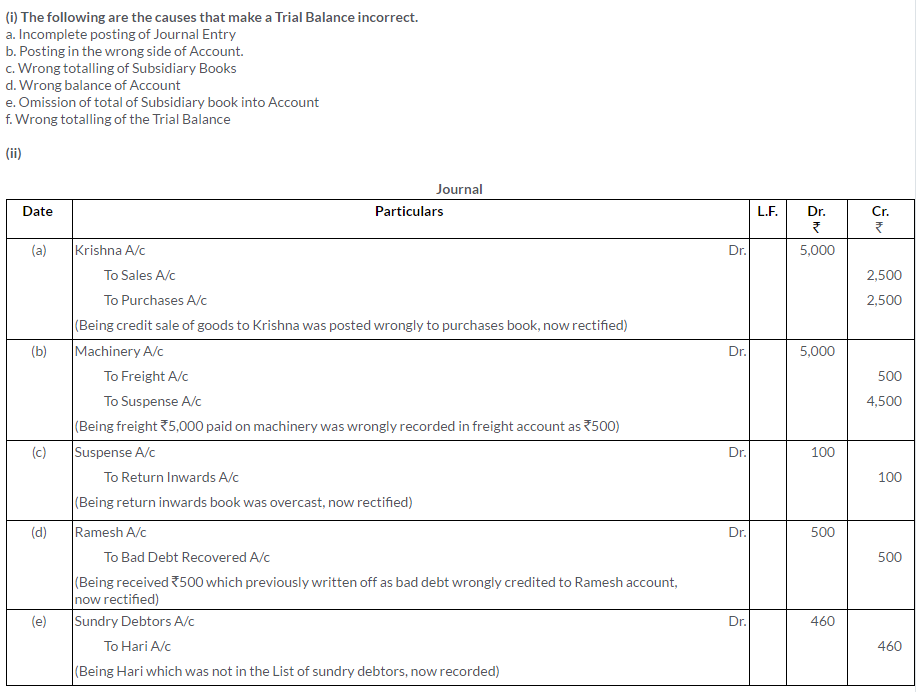
    A. What are the different causes that make a Trial Balance incorrect?
    B. Pass the rectifying Journal entries:
    i. A credit sale of goods for Rs.2,500 to Krishna has been wrongly passed through the Purchases Book.
    ii. Rs.5,000 paid for freight on machinery purchased was debited to the Freight Account as Rs.500.
    iii. The Returns Inward Book has been wrongly overcast by Rs.100.
    iv. An amount of Rs.500 due from Ramesh which had been written off as bad debt in previous year was recovered and had been posted to the Personal Account of Ramesh.
    v. A sum of Rs.460 owed by Hari had not been included in the list of debtors.
    (MSE Chandigarh 2003)
    Solution:
    ts-grewal-solutions-class-11-accountancy-chapter-16-rectification-errors-28

    Question 29.
    Rectify the following errors:
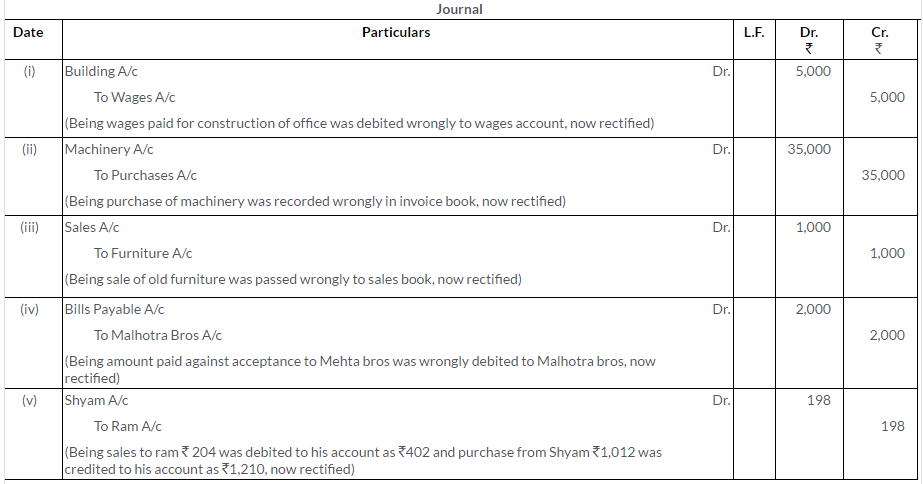
    i. Wages paid for the construction of office debited to the Wages Account, Rs.5,000.
    ii. Machinery purchased for Rs.35,000 was passed through the Purchases Book.
    iii. Old furniture sold for Rs.1,000, passed through the Sales Book.
    iv. Rs.2,000 paid to Mehta Bros. against acceptance were debited to Malhotra Bros Account.
    v. Sales of Rs.204 to Ram debited to his account as Rs.402 and purchases ofRs.1,012 from Shyam credited to his account as Rs.1,210.
    Solution:
    ts-grewal-solutions-class-11-accountancy-chapter-16-rectification-errors-29

    Question 30.
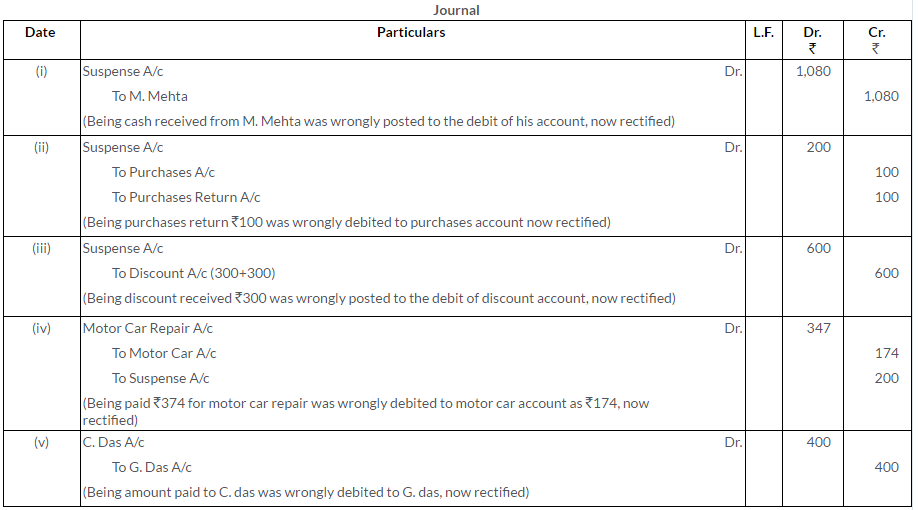
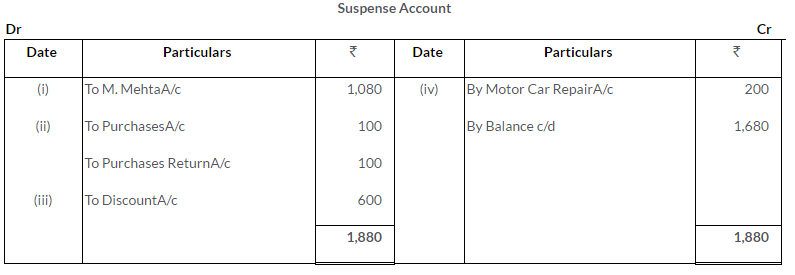
    There was an error in the Trial Balance of Ram Gopal on 31st March, 2013 and the difference in books was carried to the Suspense Account. On going through the books, you find that:
    i. Rs.540 received from M. Mehta was posted to the debit side of his account.
    ii. Rs.100 being purchases return was posted to the debit of the Purchases Account.
    iii. Discount of Rs.300 received was posted to the debit of the Discount Account.
    iv. Rs.374 paid for motor car repairs was debited to the Motor Car Account as Rs.717
    v. Rs.400 paid to C. Das was debited to the account of G. Dass.
    Pass the Journal entries to rectify the above errors and state what amount was carried to the Suspense Account.
    Solution:
    ts-grewal-solutions-class-11-accountancy-chapter-16-rectification-errors-30
    ts-grewal-solutions-class-11-accountancy-chapter-16-rectification-errors-30-1

    Question 31.
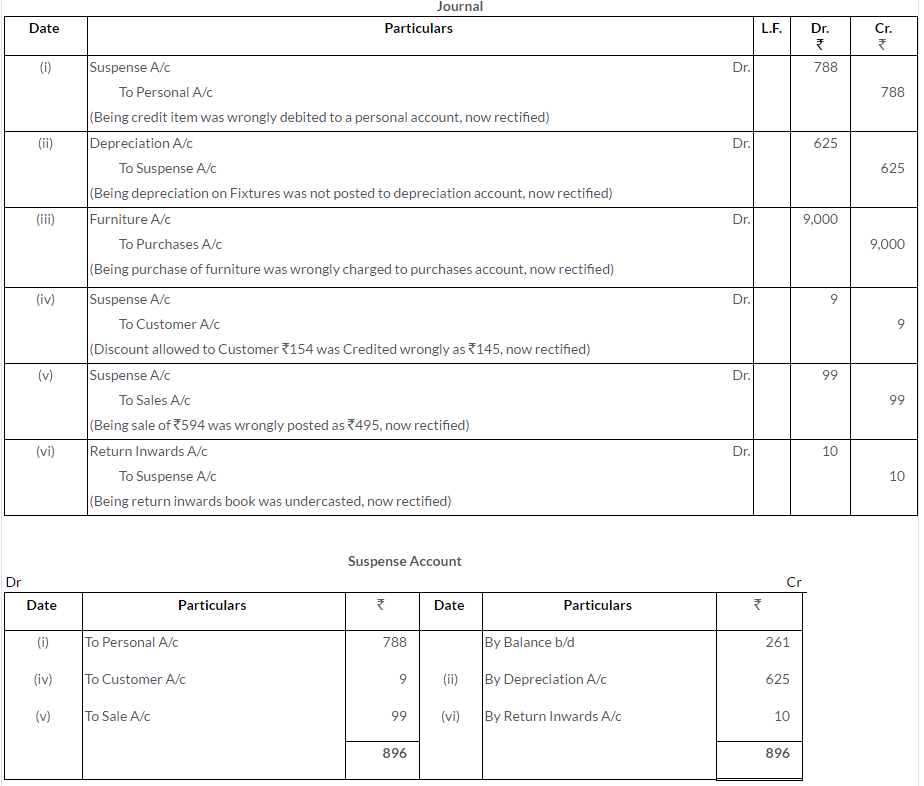
    Trial Balance of a bookkeeper shows an excess of debits over credits by Rs.261. This difference is placed in a Suspense Account to facilitate books closure. Later on the following errors were discovered:
    i. A credit item of Rs.349 has been debited to a Personal Account as Rs.439.
    ii. A sum of Rs.625 written off from fixtures as depreciation has not been posted to Depreciation Account.
    iii. Rs.9,000 paid for furniture bought have been charged to the Purchases Account.
    iv. A discount allowed to a customer has been credited to him as Rs.145 in place of Rs.154.
    v. A sale of Rs.594 was posted as Rs.495 in the Sales Account.
    vi. The total of Returns Inward Book has been added Rs.10 short.
    Pass the Journal entries to correct these errors and prepare the Suspense Account.
    Solution:
    ts-grewal-solutions-class-11-accountancy-chapter-16-rectification-errors-31

    Question 32.
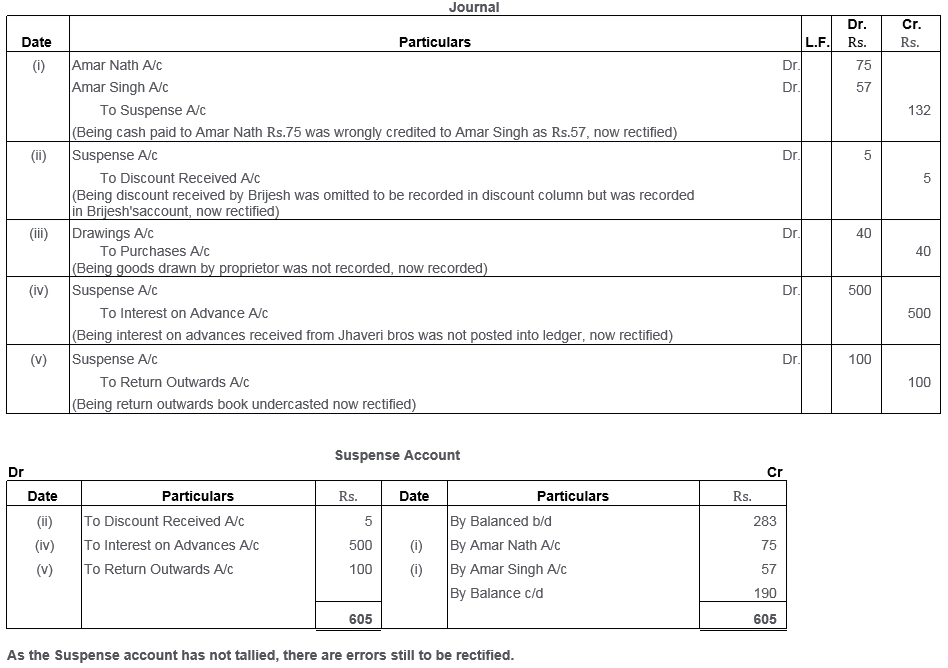
    The accountant of a firm finds that the Trial Balance as on 31st December, 2015 is out by an excess debit of Rs.283. He placed the amount in the Suspense Account. In the first week of January, 2016, he discovered the following errors. Pass the Journal entries necessary to rectify these errors and show the Suspense Account as it would appear at the end of the week. Have you any comment to make?
    i. Cash paid to Amar Nath, Rs.75, was posted to the credit of Amar Singh’s Account as Rs.57.
    ii. Discount allowed by Brijesh of Rs.5 was not entered in the Cash Book but Brijesh stands debited correctly.
    iii. No entry was made for goods worth Rs.40 taken away by proprietor for personal use.
    iv. Rs.500 received from Jhaveri Bros. for interest on loan advanced to them were recorded in the Cash Book. But the entry was not posted in the Ledger.
    v. The total of Returns Outward Book was short by Rs.100.
    Solution:
    ts-grewal-solutions-class-11-accountancy-chapter-16-rectification-errors-32

    Question 33.
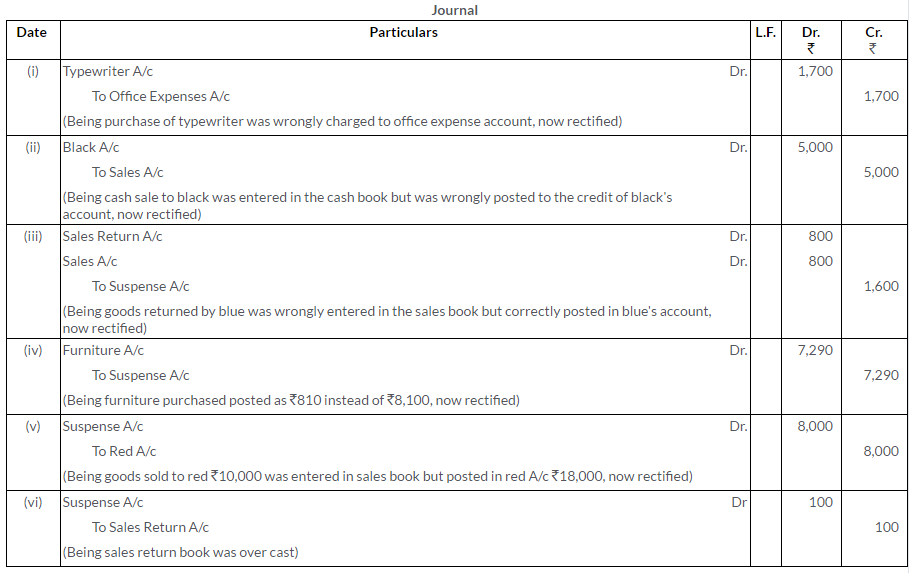
    You are presented with a Trial Balance showing a difference which has been carried to the Suspense Account and the following errors are revealed:
    i. Rs.1,700 paid in cash for an office equipment was charged to Office Expenses Account.
    ii. A cash sale of Rs.5,000 to Black, correctly entered in the Cash Book, was posted to the credit of Black’s Account in the Ledger.
    iii. Goods amounting to Rs.800, returned by Blue, were entered in the Sales Book and posted there from to the credit of Blue’s Account.
    iv. Furniture purchased for Rs.8,100 was posted to Furniture Account as Rs.810.
    v. Goods amounting to Rs.10,000 sold to Red were correctly entered in Sales Book but posted to Red’s Account for Rs.18,000.
    vi. Sales Return Book was overcast by Rs.100.
    You are required to pass the necessary rectification entries in respect of the above.
    Solution:
    ts-grewal-solutions-class-11-accountancy-chapter-16-rectification-errors-33

    Question 34.
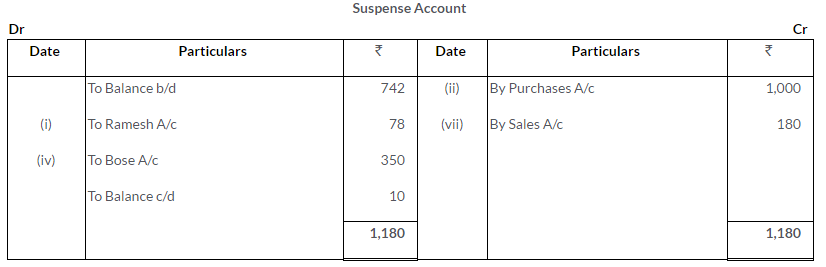
    The bookkeeper of a firm found that his Trial Balance was out (excess credit) by Rs.742. He I placed the amount in a Suspense Account and subsequently found the following errors:
    i. A discount of Rs.178 was allowed to Ramesh but in his account only Rs.100 is recorded.
    ii. The total of the Purchases Book was Rs.1,000 short.
    iii. A sale of Rs.375 to Kohli was entered in the Sales Book as Rs.735.
    iv. From the Purchases Book, Bose’s Account was debited with Rs.175.
    v. Cash Rs.250 received from Maitra against debt previously written off was credited to his account.
    vi. Purchase of office furniture worth Rs.750 on credit from Delhi Furnitures was entered in the Purchases Book.
    vii. While carrying forward the total of the Sales Book from one page to another the amount of Rs.11,358 was written as Rs.11,538.
    viii. The proprietor took goods of the value of Rs.150 for his domestic consumption. No record of it has been made in the books.
    ix. Repairs bill for the proprietor’s personal car Rs.410, has been paid by the firm and debited to the Repairs Account.
    x. A sale to Kassim of Rs.700 has been entered in the Purchases Book.
    Rectify the errors by means of suitable Journal entries and show the Suspense Account.
    Solution:
    ts-grewal-solutions-class-11-accountancy-chapter-16-rectification-errors-34
    ts-grewal-solutions-class-11-accountancy-chapter-16-rectification-errors-34-1

    Question 35.
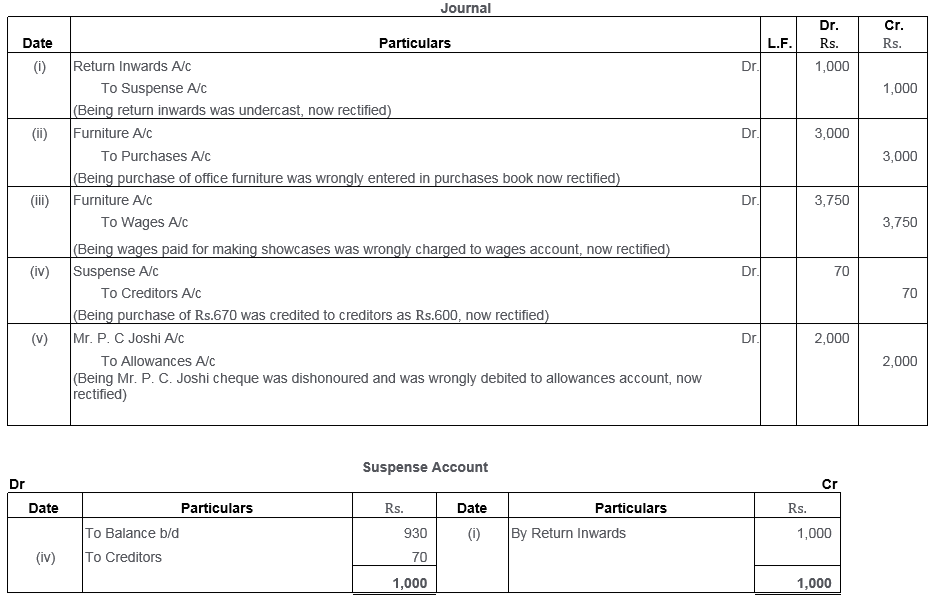
    Rectify the following errors found in the books of Mr. B. Trial Balance had Rs.930 excess credit. The difference has been posted to a Suspense Account:
    i. The total of Returns Inward Book has been cast Rs.1,000 short.
    ii. The purchase of an office table costing Rs.3,000 has been passed through the Purchases Book.
    iii. Rs.3,750 paid for wages to workmen for making showcases had been charged to the Wages Account.
    iv. A purchase of Rs.670 had been posted to the Creditors Account as Rs.600.
    v. A cheque for Rs.2,000 received from Mr. P.C. Joshi had been dishonoured and was passed to the debit of the Allowances Account.
    After rectification reflect the transactions in the Suspense Account.
    Solution:
    ts-grewal-solutions-class-11-accountancy-chapter-16-rectification-errors-35

    Question 36.
    Pass the rectification entries for the following transactions:
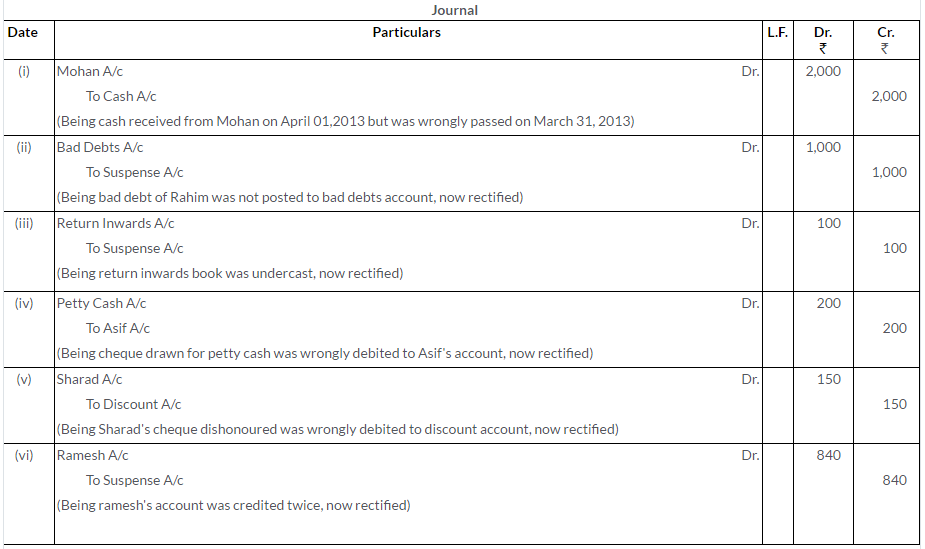
    i. An amount of Rs.2,000 received from Mohan on 1st April, 2013 had been entered in the Cash Book as having been received on 31st March, 2013.
    ii. The balance in the account of Mr. Rahim Rs.1,000 had been written off as bad but on other account has been debited.
    iii. An addition in the Returns Inward Book had been cast Rs.100 short.
    iv. A cheque for Rs.200 drawn for the Petty Cash Account has been posted in the account of Asif.
    v. A cheque of Rs.150 received from Sharad has been dishonoured and debited in the Discount Account.
    vi. Ramesh’s Account was credited with Rs.840 twice instead of once.
    Solution:
    ts-grewal-solutions-class-11-accountancy-chapter-16-rectification-errors-36

    Question 37.
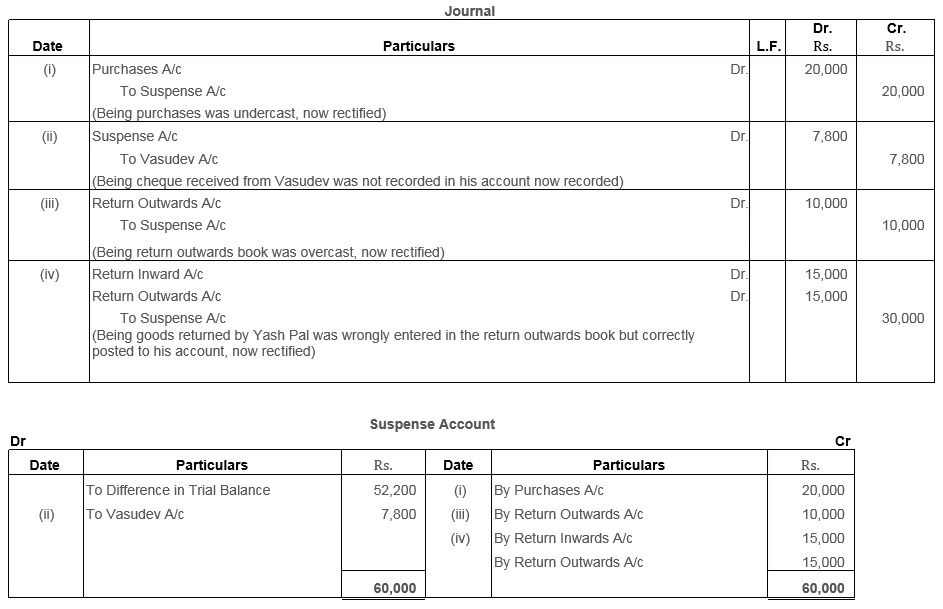
    The Trial Balance of M/s. Gupta and Sons shows a difference of Rs.52,200. To prepare the Final Account on 31st March, 2009, this difference is placed in a Suspense Account Afterwards the following errors were disclosed. Pass the necessary entries to rectify them and show the Suspense Account.
    i. Purchases Book total had been undercasted by Rs.20,000.
    ii. A cheque received from Vasudev for Rs.7,800 had been debited in the Cash Book but not posted in Vasudev’s Personal Account.
    iii. Returns Outward Book had been overcasted by Rs.10,000.
    iv. Goods returned by Yash Pal worth Rs.15,000 have been entered in Returns Outward Book. However, Yash Pal’s Account is correctly posted.
    (Delhi 2006)
    Solution:
    ts-grewal-solutions-class-11-accountancy-chapter-16-rectification-errors-37

    Question 38.
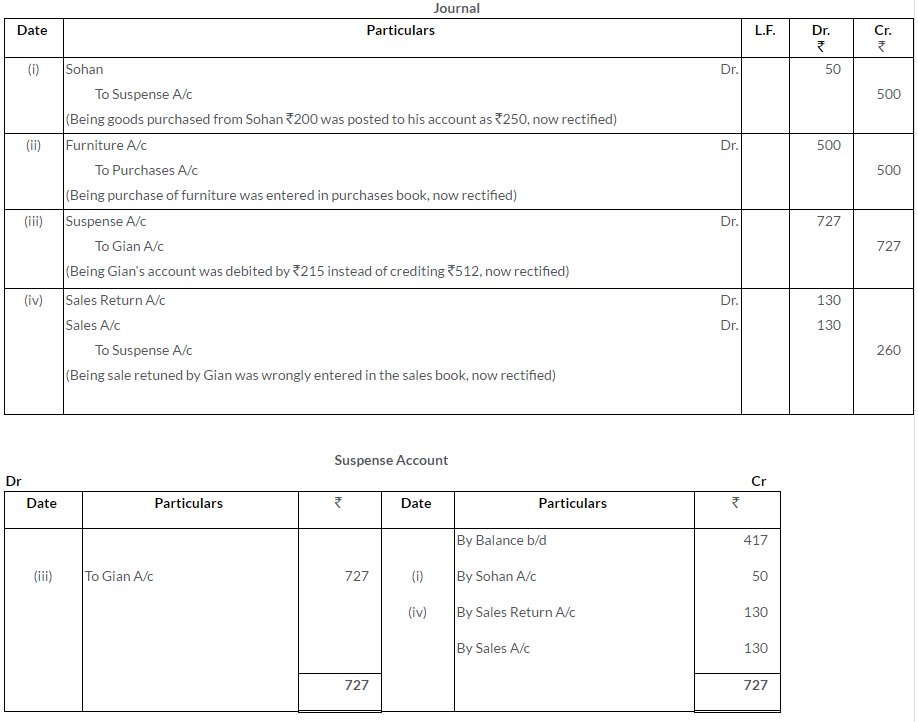
    A Trial Balance disclosed a difference of Rs.417 placed on the credit side of the Suspense Account. Later on the following errors were located:
    i. Goods worth Rs.200 purchased from Sohan had been posted to his account as Rs.250.
    ii. A purchase of furniture for Rs.500 was recorded in the Purchases Book.
    iii. Instead of crediting Gian’s Account with Rs.512, it was debited with Rs.215.
    iv. Goods worth Rs.130 returned by Gian were entered in the Sales Book and posted therefrom to the credit of Gian’s Personal Account.
    Pass the rectifying entries and prepare a Suspense Account.
    (MSE Chandigarh 2006)
    Solution:
    ts-grewal-solutions-class-11-accountancy-chapter-16-rectification-errors-38

    Question 39.
    There was a difference of Rs.720 in the Trial Balance which has been transferred to the credit side of the Suspense Account. Pass the rectifying entries and prepare a Suspense Account to rectify the following errors:
    i. An amount of Rs.375 now posted on the debit side of the Commission Account instead of Rs.275.
    ii. Credit amount of Rs.260 posted to the debit of the Personal Account as Rs.360.
    iii. Goods sold to Surinder recorded in Purchases Book Rs.300.
    iv. D’s bill for erection of godown at a cost of Rs.1,200 has been charged to the Repairs Account.
    (MSE Chandigarh 2005)
    Solution:
    ts-grewal-solutions-class-11-accountancy-chapter-16-rectification-errors-39

    Question 40.
    Rectify the following errors by means of Journal entries:
    i. A cheque of Rs.5,000 received from Ashish was dishonoured and was debited to Discount Account.
    ii. Purchases of Rs.540 from Ramneek was written in Sales Book but was correctly posted to correct side of Ramneek’s Account.
    iii. Salary paid to Miss Yugakshi Rs.1,000 was debited to her Personal Account as Rs.900.
    iv. Furniture costing Rs.500, purchased from Jyoti, was wrongly entered in Purchases Book as Rs.450.
    (Delhi 2008)
    Solution:
    ts-grewal-solutions-class-11-accountancy-chapter-16-rectification-errors-40

    Question 41.
    The Trial Balance of S. Sen did not agree and the difference in books was carried to a Suspense Account. Pass the entries required to rectify the following errors which accounted for the difference. Also, prepare the Suspense Account:
    i. A Sales Invoice for Rs.1,000 for goods sold on credit to B. Basu was entered in the Purchases Book but in the Ledger, the amount was correctly debited to the account of B. Basu.
    ii. Goods bought on credit from Ram Lal for Rs.1,500 were wrongly debited to his account as Rs.5,100.
    iii. An amount of Rs.275 was posted as Rs.325 to the debit side of the Commission Account.
    iv. The Sales Book for the month of April was undercast by Rs.100.
    v. Rs.460 paid for building repairs was debited to the Building Account as Rs.640.
    [Suspense Account opened with a Credit of Rs.8,930]
    Solution:
    ts-grewal-solutions-class-11-accountancy-chapter-16-rectification-errors-41

    Question 42.
    Rectify the following errors:
    i. Sale of old furniture worth Rs.3,000 treated as sales of goods.
    ii. Sales Book added Rs.5,000 short.
    iii. Rent of proprietor’s residence, Rs.6,500 debited to Rent Account.
    iv. Goods worth Rs.11,970 returned by Manav posted to his debit as Rs.11,790.
    (Delhi 2010)
    Solution:
    ts-grewal-solutions-class-11-accountancy-chapter-16-rectification-errors-42

    Question 43.
    There was a difference in the Trial Balance of M/s. Jain and Sons, prepared for the year ended 31st March, 2009. The accountant put the difference in Suspense Account. The following errors were found:
    i. Purchases Return Book total Rs.400 has not been posted to Ledger Account.
    ii. Rs.5,100 spent on legal expense for the newly acquired Building was debited to the Building Account as Rs.1,500.
    iii. A sale of Rs.6,540 to Rajat has been credited to his account.
    Rectify the errors and show the Suspense Account with Nil closing balance.
    (KVS 2010)
    Solution:
    ts-grewal-solutions-class-11-accountancy-chapter-16-rectification-errors-43

    Question 44.
    Give the Journal entries to rectify the following errors:
    i. Purchases Book was overcast by Rs.1,000.
    ii. Installation charges on new machinery purchased Rs.500 were debited to Sundry Expenses Account as Rs.50.
    iii. Radhey Shyam returned goods worth Rs.500 which was entered in the Purchases Return Book.
    iv. Goods taken by the proprietor for Rs.5,000 have not been entered in the books at all.
    (Delhi 2011)
    Solution:
    ts-grewal-solutions-class-11-accountancy-chapter-16-rectification-errors-44

    Question 45.
    Rectify the following errors:
    i. The total of one page of Sales Book was carried forward as Rs.371 instead of Rs.317.
    ii. Rs.540 received from Yatin was posted to the debit of his Account.
    iii. Purchases Returns Book was overcast by Rs.300.
    iv. An item of Rs.1,062 entered in Sales Return Book had been posted to the debit of customer who returned the goods.
    v. Rs.1,500 paid for furniture purchased had been charged to ordinary Purchase Account.
    (MSE Chandigarh 2011)
    Solution:
    ts-grewal-solutions-class-11-accountancy-chapter-16-rectification-errors-45

    Question 46.
    Rectify the following errors by passing Journal entries:
    i. Old furniture sold for Rs.500 has been credited to Sales Account.
    ii. Machinery purchased on credit from Raman for Rs.2,000 recorded through PurchaS Book as Rs.16,000.
    iii. Cash received from Rajat Rs.5,000 was posted to the debit of Bhagat as Rs.6,000.
    iv. Depreciation provided on machinery Rs.3,000 was posted to Machinery Account Rs.300.
    (MSE Chandigarh 2013)
    Solution:
    ts-grewal-solutions-class-11-accountancy-chapter-16-rectification-errors-46

    Question 47.
    Rectify the following errors by passing Journal entries:
    i. A sum of Rs.470 received from Ganga was posted to her debit as Rs.740.
    ii. A debit balance of Rs.550 in the personal account of Mr. John was undercast.
    iii. Bills Receivable from Brown for Rs.3,000 posted to the credit of Bills Payable Account and credited to Brown’s Account.
    iv. Goods returned by Mridul Rs.225 have been entered in the Returns Outward Book.
    (MSE Chandigarh 2015)
    Solution:
    ts-grewal-solutions-class-11-accountancy-chapter-16-rectification-errors-47

    Question 48.
    Pass the rectification entries for the following transactions:
    i. A builder’s bill for Rs.25,000 for erection of a small shed was debited to Repairs Account.
    ii. Repairs to plant amounting to Rs.2,000 had been charged to Plant and Machinery Account.
    iii. Wages paid to the firm’s workmen for making certain additions to machinery amounting to Rs.1,340 were debited to Wages Account.
    iv. A cheque for Rs.7,500 received from S. Desai was credited to the account of R. Gupta.
    v. Goods to the value of Rs.7,000 returned by X were included in closing stock, but no entry was made in the books.
    vi. Goods costing Rs.5,000 were purchased for various members of the staff and the cost was included in Purchases’. A similar amount was deducted from the salaries of the staff members concerned and the net payments to them debited to Salaries Account.
    vii. Goods sold to Rs.4,750 have been wrongly entered in the Sales Journal as Rs.7,450.
    viii. Debit and Credit totals of discount columns in the Cash Book which come to Rs.400 and Rs.370 respectively have not been posted to Discount Accounts.
    Solution:
    ts-grewal-solutions-class-11-accountancy-chapter-16-rectification-errors-48

    Question 49.
    While trying to close his books for the year ended 31st March, 2014, Mahesh found that t Trial Balance did not agree. He traced the following errors:
    i. In the Sales Book for the month of January total of Page No. 2 was carried forward to Page No. 3 as Rs.1,000 instead of Rs.1,200 and total of Page No. 6 was carried forward to Page No. 7 as Rs.5,600 instead of Rs.5,000.
    ii. Goods returned to Ram Rs.1,000 were recorded in the Sales Book.
    iii. Bill Receivable for Rs.1,600 from Noor was dishonoured and posted to debit of Allowances Account. Rectify the above errors.
    (KVS 2015)
    Solution:
    ts-grewal-solutions-class-11-accountancy-chapter-16-rectification-errors-49

  • TS Grewal Solutions for Accounting for Bills of Exchange Class 11 Accountancy Chapter 15

    TS Grewal Solutions for Class 11 Accountancy Chapter 15 – Accounting for Bills of Exchange

    Question 1.
    Manish sold goods to Kumar to the value of Rs.10,000 drawing upon him a bill for the amount payable 3 month after date. Kumar accepted the bill and returned it to Manish. On the due date, Manish presented the bill to Kumar who honoured it. Pass the Journal entries in the books of both the parties.
    Solution:
    ts-grewal-solutions-class-11-accountancy-chapter-15-accounting-bills-exchange-1

    Question 2.
    On 1stJanuary2013, A sold goods to B for Rs.5,000 and drew upon him a bill for this amount payable 3 month after date. The bill was duly accepted by B.A retained the bill due date. On the due,the bill was paid.
    Pass the Journal entries in the books of A And B. Also, show the necessary accounts in the books of both the parties.
    Solution:
    ts-grewal-solutions-class-11-accountancy-chapter-15-accounting-bills-exchange-2

    Question 3.
    Vinod sold goods to Darbara Singh for Rs. 1,000. He drew on the latter a bill for the amount payable 3 month after date. He discounted the bill with his bankers for Rs.990. On maturity, the bill is duly met. Make the journal entries in the books of Vinod and Darbara Singh.
    Solution:
    ts-grewal-solutions-class-11-accountancy-chapter-15-accounting-bills-exchange-3

    Question 4.
    Dinesh received from Shridhar an acceptance for Rs.3,000 on 1stSeptember, 2012 at 3 month. Dines got the acceptance discounted at 9% p.a.from his bank. On the due date, Shridhar paid the required amount. Give the Journal entries in the books of Dinesh and Shridhar.
    Solution:
    ts-grewal-solutions-class-11-accountancy-chapter-15-accounting-bills-exchange-4

    Question 5.
    A sold goods to B for Rs.20,000 on credit of 3 moths. He drew on the latter a bill for the amount. The bill was endorsed in favour of C, who got the payment on maturity. Give the journal entries in the books of A.
    Solution:
    ts-grewal-solutions-class-11-accountancy-chapter-15-accounting-bills-exchange-5

    Question 6.
    On 10thJuly, 2013, A sold goods to B for Rs.3,500 and drew upon him a bill at 3 month of the amount. B accepted the bill. After 10 days, A endorsed the bill to his credit C. On the due date, acceptance is duly met.
    Show the entries in the books of A, B and C.
    Solution:
    ts-grewal-solutions-class-11-accountancy-chapter-15-accounting-bills-exchange-6
    ts-grewal-solutions-class-11-accountancy-chapter-15-accounting-bills-exchange-6-1

    Question 7.
    A owed a bill of Rs.1,000 on B for 3 month which was duly accepted by the latter. A endorsed the to C in full payment of his own acceptance to C for like amount. C endorsed the bill to B.
    Pass the journal entries in the book of A,B and C.
    Solution:
    ts-grewal-solutions-class-11-accountancy-chapter-15-accounting-bills-exchange-7

    Question 8.
    A owed B Rs.8,000.He gave a bill for the same on 1st August,2011 payable after 4 months at the Bank of India, ChandniChowk, Delhi. Immediately after receiving the bill of endorsed it C in payment of his debt. On 1st September, C discounted the bill the at 12% p.a. The bill is met on due date.
    Pass the journal entries in the books of A,B and C.
    Solution:
    ts-grewal-solutions-class-11-accountancy-chapter-15-accounting-bills-exchange-8
    ts-grewal-solutions-class-11-accountancy-chapter-15-accounting-bills-exchange-8-1

    Question 9.
    Mohan Singh draws a bill on Jagat for Rs.1,000 payable 2 month after date. Immediately after its acceptance, Mohan Singh sends the bill to his Bank for collection . On due date bank gets the payment.Make the entries in the books of all the parties.
    Solution:
    ts-grewal-solutions-class-11-accountancy-chapter-15-accounting-bills-exchange-9

    Question 10.
    X draws on Y a bill for Rs.4,000 which was duly accepted by Y. Y meet the bill on its due date show what entries would be passed in the books of X under each of the following circumstance.
    a. If X retainthe bill till due date.
    b. If X discounts the same with his banker paying Rs.100 for discount.
    c. If Xendorses the same to his creditors Z in full settlement of this debtofRs.4,080.
    d. If X sends the bill to his banker for collection the next day bank.
    Solution:
    ts-grewal-solutions-class-11-accountancy-chapter-15-accounting-bills-exchange-10
    ts-grewal-solutions-class-11-accountancy-chapter-15-accounting-bills-exchange-10-1

    Question 11.
    Ram draws a bill forRs.2,000 on Shyam on 15th September, 2011 for the 3 months on maturity, Shyam failed to honour the bill.
    Solution:
    ts-grewal-solutions-class-11-accountancy-chapter-15-accounting-bills-exchange-11

    Question 12.
    On 20thmarch,2013, Naresh sold goods to Kailash to the value of Rs.1,250, taking a bill of 3 months for the amount. On maturity, the bill was dishonoured. Rs.10of noting charges. On 1stJuly, Kailash cleared his account by paying Rs. 1,260.
    Make the entries in the books of both the parties to record the above transaction.
    Solution:
    ts-grewal-solutions-class-11-accountancy-chapter-15-accounting-bills-exchange-12
    ts-grewal-solutions-class-11-accountancy-chapter-15-accounting-bills-exchange-12-1

    Question 13.
    On 1stJuly, 2011, A drew a bill for Rs.500. On B payable after 3 months. A discounted it the Bank for Rs.485. On maturity B failed to pay the amount of his acceptance and had to pay Rs.5 as noting charges.
    Draw up the necessary Journal entries in the books of A and B.
    Solution:
    ts-grewal-solutions-class-11-accountancy-chapter-15-accounting-bills-exchange-13

    Question 14.
    On 15thJune, 2015, Mohan sold goods to Sohan valued at Rs.2,000. He drew a bill 3 month for the amount and discounted the same with his bankers atRs.1,960.On the due date the bill was dishonoured and Mohan paid to the bank the amount due plus noting charges of Rs.10.
    Draft the journal entries in the books of all parties.
    Solution:
    ts-grewal-solutions-class-11-accountancy-chapter-15-accounting-bills-exchange-14
    ts-grewal-solutions-class-11-accountancy-chapter-15-accounting-bills-exchange-14-1

    Question 15.
    On 1stMarch ,2015, R accepted a Bill of Exchange of Rs.20,000 from S payable 3month after date in full settlement of his dues. On the same day S endorsed the Bill of Exchange to T together with a cheque for Rs.5,000 in settlement of his debt to the latter. On 2ndMarch, 2015, T discounted the Bill of exchange @ 6% p.a. with his bankers. On maturity the Bill of Exchange was dishonoured.
    Journalise the transaction in the books of R and T.
    Solution:
    ts-grewal-solutions-class-11-accountancy-chapter-15-accounting-bills-exchange-15

    Question 16.
    On 1st January, 2015, A drew a bill on B for Rs.1,000 payable after 3 months. B accepted the bill and returned it to A. After 10 days, A endorsed the bill to his creditor C. On the due date, the bill was dishonoured and C paid Rs.5 as noting charges.Record the transactions in the books of A, B and C.
    Solution:
    ts-grewal-solutions-class-11-accountancy-chapter-15-accounting-bills-exchange-16
    ts-grewal-solutions-class-11-accountancy-chapter-15-accounting-bills-exchange-16-1

    Question 17.
    B owes A Rs.4,000 on 1st January, 2015. B accepts a 3 months bill for Rs.3,900 being in full settlement of the claim. At its due date the bill is dishonoured. Noting charges Rs.50 are paid by A. Give the Journal entries in the books of A and B.
    Solution:
    ts-grewal-solutions-class-11-accountancy-chapter-15-accounting-bills-exchange-17

    Question 18.
    Y owesX Rs.4,000. On 1st January, 2015, Y accepts a 3 months bill for Rs.3,900 in satisfaction of his full claim. On the same date, it was endorsed by Xto Z in satisfaction of his claim of Rs.3,980. The bill is dishonoured on the due date. Give the Journal entries in the books of X.
    Solution:
    ts-grewal-solutions-class-11-accountancy-chapter-15-accounting-bills-exchange-18

    Question 19.
    Rama sold goods worth Rs.1,200 to Reshma on 1st January, 2015. On the same date Rama draws a bill on Reshma for Rs.1,200 for a period of 3 months. On receipt of the bill on 1st January, duly accepted by Reshma. Ramadiscounts it with a bank at 6% p.a. On the date of maturity, the bill was dishonoured, the bank having to pay Rs.20 as noting charges. Rama was compelled to make the settlement. Show the Journal entries arising from the above in the books of both Rama and Reshma.
    Solution:
    ts-grewal-solutions-class-11-accountancy-chapter-15-accounting-bills-exchange-19
    ts-grewal-solutions-class-11-accountancy-chapter-15-accounting-bills-exchange-19-1

    Question 20.
    On 1st January, 2015, A draws a bill on B for Rs.1,000 payable after 3 months. Immediately after its acceptance, A sends the bill to his bank for collection. On the due date, the bill was dishonoured. Record the transactions in the Journals of A and B.
    Solution:
    ts-grewal-solutions-class-11-accountancy-chapter-15-accounting-bills-exchange-20

    Question 21.
    A bill for Rs.21,000 is drawn by A on B and accepted by the latter payable at the New Bank of India. Show what entries should be passed in the books of A under each of the following circumstances:
    i. If A retained the bill till the due date and then realised it on maturity.
    ii. If A discounted it with his bankers for Rs.950.
    iii. If A endorsed it to his creditor C in full settlement of his debt.
    iv. If A sent it to his bankers for collection.
    Also, give the necessary entries in each of the cases if the bill is dishonoured.
    Solution:
    ts-grewal-solutions-class-11-accountancy-chapter-15-accounting-bills-exchange-21
    ts-grewal-solutions-class-11-accountancy-chapter-15-accounting-bills-exchange-21-1

    Question 22.
    On 1st January, 2013 for goods sold, Ramesh drew a Bill of Exchange Mahesh for Rs.4,000, for a period of 3 months. Mahesh accepts it and returns to Ramesh. Ramesh then endorses it to Mukesh who in turn endorses it to Suresh on 1st February. 2013. The bill is then discounted by Suresh on the same date with his banker at 5% p.a. On the due date the bill is dishonoured. Pass the necessary Journal entries in the books of all the four parties.
    Solution:
    ts-grewal-solutions-class-11-accountancy-chapter-15-accounting-bills-exchange-22
    ts-grewal-solutions-class-11-accountancy-chapter-15-accounting-bills-exchange-22-1

    Question 23.
    A Bill Receivable for Rs.100, which has been discounted at Rs.95, is dishonoured and the bank paid Rs.2 as noting charges.
    Give the Journal entries to record the above in the books of
    i. the Drawer
    ii. the Drawee
    iii. the Bank
    Solution:
    ts-grewal-solutions-class-11-accountancy-chapter-15-accounting-bills-exchange-23
    ts-grewal-solutions-class-11-accountancy-chapter-15-accounting-bills-exchange-23-1

    Question 24.
    A purchases goods worth Rs.6,200 from B and gives him his acceptance for Rs.6,000 in full satisfaction. B purchases goods worth Rs. 10,000 from C and endorses the bill to him, paying the balance by cheque. On maturity the bill is dishonoured, noting charges amounted to Rs.100. Give the Journal entries in the books of A, B and C.
    Solution:
    ts-grewal-solutions-class-11-accountancy-chapter-15-accounting-bills-exchange-24
    ts-grewal-solutions-class-11-accountancy-chapter-15-accounting-bills-exchange-24-1
    ts-grewal-solutions-class-11-accountancy-chapter-15-accounting-bills-exchange-24-2

    Question 25.
    A draws a bill of Rs.500 on B. on getting B’s acceptance, he endorse it to C and C to D. On maturity the bill is dishonoured, nothing charges amounted to Rs.10.
    Give the Journal entries in the books of all the parties to record the above transactions.
    Solution:
    ts-grewal-solutions-class-11-accountancy-chapter-15-accounting-bills-exchange-25
    ts-grewal-solutions-class-11-accountancy-chapter-15-accounting-bills-exchange-25-1

    Question 26.
    On 1st January 2013, X received from Y three Bills of Exchange for Rs.6,000; Rs.8,000 and Rs.10,000 for 6 months, 4 months and 3 months respectively. On 3rd January the first was discounted by X with his bankers at a discount of 5% p.a. On 1st February the 3rd bill was endorsed in favor of a creditor Z. The second bill was retained till the due dates all the three bills were dishonored.
    Show the necessary Journal entries in the books of X and Y.
    Solution:
    ts-grewal-solutions-class-11-accountancy-chapter-15-accounting-bills-exchange-26
    ts-grewal-solutions-class-11-accountancy-chapter-15-accounting-bills-exchange-26-1

    Question 27.
    On 1st January, 2013, Mr. X sold goods to Mr. Y for Rs.4,500 on credit and drew 3 bills on him: first bill for Rs.1,000 for 1 month, second bill for Rs.1,500 for 2 months and third bill Rs. 2,000 for 3 months. Mr. Y accepted and returned all the bills to Mr. X.
    The first bill was retained by Mr. X till the date of maturity. Second bill was endorsed his creditor Mr. Z on 3rd January, 2013 and third bill was sent to bank for collection on 4th January, 2013. On maturity all the bills were dishonoured and noting charges amounted to Rs.10, Rs.15 and Rs.20 respectively.
    Solution:
    ts-grewal-solutions-class-11-accountancy-chapter-15-accounting-bills-exchange-27
    ts-grewal-solutions-class-11-accountancy-chapter-15-accounting-bills-exchange-27-1
    ts-grewal-solutions-class-11-accountancy-chapter-15-accounting-bills-exchange-27-2

    Question 28.
    Ram owes Rs.2,000 to Mohan on 1st January, 2013. On this date, he accepted a draft for amount for 3 months. Mohan got the bill discounted at his bank @ 6% p.a. On the due the bill was dishonoured, noting charges Rs.20. Ram agreed to pay Rs.520 immediately accept another bill for the remaining amount for 3 months together with interest at 9% p.a.
    This bill was met on the due date. Give the Journal entries in the books of both the parties.
    Solution:
    ts-grewal-solutions-class-11-accountancy-chapter-15-accounting-bills-exchange-28
    ts-grewal-solutions-class-11-accountancy-chapter-15-accounting-bills-exchange-28-1

    Question 29.
    On 15th June, 2013, X sold to Y goods to the value of Rs.1,500 drawing upon the latter bills, one for Rs.1,000 payable 2 months after date and other for Rs.500 payable 3 month after date. X discounted the first bill with his bankers at 6% p.a. and endorsed the second bill in favor of this creditor Z. The first bill was met on maturity but the second dishonoured. Z paid Rs.5 as noting charges. On 1st October, Y cleared his account paying Rs.510 which included Rs.5 as interest.
    Record the necessary Journal entries in the books of both X and Y.
    Solution:
    ts-grewal-solutions-class-11-accountancy-chapter-15-accounting-bills-exchange-29
    ts-grewal-solutions-class-11-accountancy-chapter-15-accounting-bills-exchange-29-1

    Question 30.
    X draws a bill on Y for Rs.2,000 on 1st January, 2013. Y accepts the same and returns it to X. The bill was drawn by X in full settlement of a debt owing by Y amounted to Rs.2,050. X discounts the bill on the same date with the Central Bank of India for Rs.1,980. At maturity the bill was duly met by Y. Give the entries in the books of X and Y.
    Suppose the bill is dishonoured, what entries will be passed?
    Solution:
    ts-grewal-solutions-class-11-accountancy-chapter-15-accounting-bills-exchange-30
    ts-grewal-solutions-class-11-accountancy-chapter-15-accounting-bills-exchange-30-1

    Question 31.
    On 1st June, 2013, A sold goods to B for Rs.250. B gave to A his acceptance payable 1 month after date. Before maturity B requests A to renew it, which A does adding Rs.10 to the new bill for interest. Make the necessary Journal entries to record these transactions in the books of both A and B.
    Solution:
    ts-grewal-solutions-class-11-accountancy-chapter-15-accounting-bills-exchange-31
    ts-grewal-solutions-class-11-accountancy-chapter-15-accounting-bills-exchange-31-1

    Question 32.
    A sold goods to B on 1st September, 2013 for Rs.16,000. B immediately accepted a 3 months bill. On the due date, B requested that the bill be renewed for a further period of 2 months. A agreed provided interest at 9% p.a. was paid immediately in cash. To this B was agreeable. The second bill was met on the due date. Give the Journal entries in the books of A.
    Solution:
    ts-grewal-solutions-class-11-accountancy-chapter-15-accounting-bills-exchange-32
    ts-grewal-solutions-class-11-accountancy-chapter-15-accounting-bills-exchange-32

    Question 33.
    On 1st May, 2013, Merchant and Co. sold goods to A.B and Co. valued at Rs.500 and drew upon them a bill at 3 months for the amount. A.B and Co. accepted the draft on presentation. When the bill was about to mature. A.B and Co. expressed their inability to meet it, and offered to pay Merchant and Co. Rs.200 in cash and to accept a fresh bill for the balance plus interest at 6% p.a. for 3 months. Merchant and Co. agreed to the proposal and bill was renewed. On maturity, the bill was duly met. Make the entries in the books of both the parties to record the above transactions.
    Solution:
    ts-grewal-solutions-class-11-accountancy-chapter-15-accounting-bills-exchange-33
    ts-grewal-solutions-class-11-accountancy-chapter-15-accounting-bills-exchange-33-1

    Question 34.
    A owed B Rs.400. A accepted a Bill of Exchange at 3 months date for this amount which B discounted for Rs.380.
    Give the necessary Journal entries in the books of A and B if this bill is:
    (a) dishonoured on the due date; (b) met at maturity and (c) retired under rebate at 6% p.a. 2 months before its maturity.
    Solution:
    ts-grewal-solutions-class-11-accountancy-chapter-15-accounting-bills-exchange-34
    ts-grewal-solutions-class-11-accountancy-chapter-15-accounting-bills-exchange-34-1
    ts-grewal-solutions-class-11-accountancy-chapter-15-accounting-bills-exchange-34-2

    Question 35.
    Amar sells goods to Bhola for Rs.10,000 and draws upon him a bill for the amount payable 3 months after date. The bill is accepted by Bhola. Amar discounts the bill with his bankers at a discount of Rs.150 inclusive of all charges. Bhola fails to meet this bill on maturity. Amar pays off his banker and his expenses amounting to Rs.100. Bhola gives a fresh bill, 2 months’ date to Amar for Rs.10,250, which he met at maturity.
    Show the necessary Journal entries in Amar’s books.
    Solution:
    ts-grewal-solutions-class-11-accountancy-chapter-15-accounting-bills-exchange-35

    Question 36.
    Amar purchased goods worth Rs.1,000 from Bimal on 1st January, 2013 and accepted a bill for 1 month drawn by Bimal for the same. Being unable to meet the bill on the due date, Amar requested Bimal to accept cash Rs.250 and draw a new bill for 2 months for the balance amount plus interest of Rs.10. Bimal accepted this proposal and drew on Amar another bill. The bill was duly met on the due date. Pass the Journal entries in the books of both the parties.
    Solution:
    ts-grewal-solutions-class-11-accountancy-chapter-15-accounting-bills-exchange-36
    ts-grewal-solutions-class-11-accountancy-chapter-15-accounting-bills-exchange-36-1

    Question 37.
    ‘B’, being unable to meet his acceptance for Rs.2,000 due on 15th June, approaches the Drawer `A’ (who is in possession of the bill) on 30th June, with the request to receive Rs. 800 in cash and draw on him for the balance plus Rs. 15 for interest at 3 months date and cancel the old Bill for 2000.”A’ agrees to this. Pass the entries in the books of ‘A’ and ‘B’.
    Solution:
    ts-grewal-solutions-class-11-accountancy-chapter-15-accounting-bills-exchange-37

    Question 38.
    Give the Journal entries for the following:
    a. B’s acceptance to us for Rs.1,000 due this day, renewed at his request for 3 months with interest @ 6% p.a.
    b. Our bill to C. Chandra for Rs.5,000 renewed for 2 months with interest @ 6% p.a.
    c. B’s acceptance of Rs.3,000 is discharged on his paying us cash 1,000 and accepting a fresh bill for the balance with interest Rs.100.
    Solution:
    ts-grewal-solutions-class-11-accountancy-chapter-15-accounting-bills-exchange-38
    ts-grewal-solutions-class-11-accountancy-chapter-15-accounting-bills-exchange-38-1

    Question 39.
    Leena sold goods to Meena on 1st March, 2009 for Rs.68,000 and drew two Bills of Exchange of the equal amount upon Meena payable after three months. Leena immediately discounted the first bill with her bank at 12% p.a. The bill was dishonoured by Meena and Bank paid Rs.55 as noting charges. The second bill was retired on 4th May, 2009 under a rebate of 6% p.a. with mutual agreement.
    Journalize the above in the books of Leena and Meena.
    (KVS 2010)
    Solution:
    ts-grewal-solutions-class-11-accountancy-chapter-15-accounting-bills-exchange-39
    ts-grewal-solutions-class-11-accountancy-chapter-15-accounting-bills-exchange-39-1

    Question 40.
    How will you record the following transactions in the books of Kapadia?
    a. A bill received from Dalpat for Rs.1,000 has to be renewed; Dalpat agrees to pay Rs.20 as interest.
    b. Swamy’s bill for Rs.800 endorsed in favour of Ghosh dishonoured. Ghosh pays Rs.10 as noting charges. Swamy pays Rs.300 immediately and agrees to accept a new bill for 3 months for the balance together with interest at 6% p.a. Ghosh’s Account is settled by cheque.
    Solution:
    ts-grewal-solutions-class-11-accountancy-chapter-15-accounting-bills-exchange-40
    ts-grewal-solutions-class-11-accountancy-chapter-15-accounting-bills-exchange-40-1

    Question 41.
    Y purchased goods for Rs.6,000 on 1st June, 2011 from X and on the same date accepted a bill payable after three months. 3 days later, X endorsed the bill to Z. On maturity, the bill was dishonoured for non-payment and Z had to pay Rs.50 as noting charges. Two days after the dishonour of bill, Y paid Rs.2,000 to X and requested him to draw a second bill of the balance plus Rs.90 for the amount of interest, payable after two months. X accepted the proposal and draws the bill on Y, which was accepted by Y and was duly met on maturity.
    Pass Journal entries for the above transactions in the books of X.
    (MSE Chandigarh 2013)
    Solution:
    ts-grewal-solutions-class-11-accountancy-chapter-15-accounting-bills-exchange-41

    Question 42.
    On 1st January, 2008, A sold goods to B for C Rs.1,00,000 received Rs.25,000 in cash and drew two bills, first Rs.45,000 and second for Rs.30,000 of two months each. Both bills duly accepted by B. First bill was endorsed to C in settlement of his account of Rs.45,000 and second bill was discounted from the bank at the rate of 12% p.a. On the due date of these bills, both bills were dishonoured. C has paid Rs. 100 and bank has paid Rs.80 as noting charges.
    Pass Journal entries in the books of A, B and C.
    (MSE Chandigarh.)
    Solution:
    ts-grewal-solutions-class-11-accountancy-chapter-15-accounting-bills-exchange-42
    ts-grewal-solutions-class-11-accountancy-chapter-15-accounting-bills-exchange-42-1

    Question 43.
    On 1st January, 2015, Y accepted a three months bill for Rs.2,000 drawn on him by X for the latter’s benefit. X discounted the bill on 4th January @ 6% p.a. and on the due date sent a cheque for Rs.2,000 in order to enable him to honor the bill. Y duly honoured his acceptance.
    Pass the Journal entries in the books of X and Y.
    Solution:
    ts-grewal-solutions-class-11-accountancy-chapter-15-accounting-bills-exchange-43

    Question 44.
    On 1st January, 2015, B accepted a three months bill for Rs.20,000 drawn on him by A for latter’s benefit. A discounted the bill on 4th January @ 20% p.a. and on the due date sent B a cheque for Rs.20,000 in order to enable him to honour the bill. B duly honored his acceptance. Pass the Journal entries in the books of A and B.
    Solution:
    ts-grewal-solutions-class-11-accountancy-chapter-15-accounting-bills-exchange-44

    Question 45.
    For the mutual accommodation of P and Q, P draws a bill on Q for Rs.1,500. Q accepts the bill and returns it to P. P discounts the same with his bankers and receives Rs.1,464. The proceeds are shared between P and Q in proportion to 2/3rd and 1/3rd respectively. On the due date P remits his proportion to Q who meets the bill.
    Pass the Journal entries in the books of P and Q to record the above transactions.
    Solution:
    ts-grewal-solutions-class-11-accountancy-chapter-15-accounting-bills-exchange-45

    Question 46.
    X, for the temporary and mutual accommodation of himself and Y, draws upon the latter a Bill of Exchange at 3 months for Rs.1,000. On 1st January, 2009, X discounts the bill at 6% and hands half the proceeds to Y. On the due date, X remits the amount due to Y who meets the bill. Pass the Journal entries in the books of both the parties.
    Solution:
    ts-grewal-solutions-class-11-accountancy-chapter-15-accounting-bills-exchange-46
    ts-grewal-solutions-class-11-accountancy-chapter-15-accounting-bills-exchange-46-1

  • TS Grewal Solutions for Depreciation Class 11 Accountancy Chapter 13

    TS Grewal Solutions for Class 11 Accountancy Chapter 13 – Depreciation

    Question 1.
    On 1st April, 2012, Shri Ram purchased a machinery costing Rs.40,000 and spent Rs.5,000 on its erection. The estimated effective life of the machinery is 10 years with a scrap valued of Rs.5,000. Calculate the Depreciation on the Straight Line Method and show the Machinery Account of first three years. Accounting year ends on 31st March every year.
    Solution:
    ts-grewal-solutions-class-11-accountancy-chapter-13-depreciation-1

    Question 2.
    On 1st April, 2011, a merchant purchased a furniture costing Rs.55,000. It is estimated that its life is 10 years at the end of which it will be sold for Rs.5,000. Additions are made 1st April, 2012 and 1st October, 2014 to the value of Rs.9,500 and Rs.8,400 (Residual values Rs.500 and Rs.400 respectively).
    Show the Furniture Account for the first four years, Depreciation A/c is written off according to the Straight Line Method.
    Solution:
    ts-grewal-solutions-class-11-accountancy-chapter-13-depreciation-2
    ts-grewal-solutions-class-11-accountancy-chapter-13-depreciation-2-1

    Question 3.
    On 1st April, 2011, A Ltd. purchased a machine for Rs.2,40,000 and spent Rs.10,000 on its erection. On 1st October, 2011, an additional machinery costing Rs.1,00,000 was purchased. On 1st October, 2013 the machine purchased on 1st April, 2011 was sold for Rs.1,43,000 and on the same date, a new machine was purchased at a cost of Rs.2,00,000.
    Show the Machinery Account for the first four financial years after charging Depreciation at 5% p.a. by the Straight Line Method.
    Solution:
    ts-grewal-solutions-class-11-accountancy-chapter-13-depreciation-3
    ts-grewal-solutions-class-11-accountancy-chapter-13-depreciation-3-1

    Question 4.
    From the following transactions of a concern, prepare the Machinery Account for ended 31at March, 2015:
    1st April, 2014: Purchased second-hand machinery for Rs.40,000.
    1st April, 2014: Spent Rs.10,000 on repairs for making it serviceable.
    30th September, 2014: Purchased additional new machinery fort 20,000.
    31st December, 2014: Repairs and renewals of machinery Rs.3,000.
    31st March, 2015 :Depreciate the machinery at 10% p.a.
    Solution:
    ts-grewal-solutions-class-11-accountancy-chapter-13-depreciation-4

    Question 5.
    An asset was purchased for Rs.10,500 on 1st April, 2009. The scrap value was estimated be Rs.500 at the end of asset’s 10 years’ life. Straight Line Method of depreciation was used.
    The accounting year ends on 31st March. The asset was sold for Rs.600 on 31st March, 2016. calculate the following:
    a. The Depreciation expense for the year ended 31st March, 2010.
    b. The net book value of the asset on 31st March, 2014.
    c. The gain or loss on sale of the asset on 31st March, 2016.
    Solution:
    ts-grewal-solutions-class-11-accountancy-chapter-13-depreciation-5

    Question 6.
    Modern Ltd. purchased machinery on 1st JulyRs.60,000. On 1st October, 2004 based another machine for Rs.20,000. On 30th June, 2005, it sold the first machine hosed in 2003 fort Rs.38,500. Depreciation-is provided at 20% p.a. on the original cost year. Accounts are closed on 31st March every year. Prepare the Machinery A/c for three year.
    Solution:
    ts-grewal-solutions-class-11-accountancy-chapter-13-depreciation-6
    ts-grewal-solutions-class-11-accountancy-chapter-13-depreciation-6-1

    Question 7.
    On 1st July. 2010, Sohan Lal and Sons purchased a plant costing Rs.60,000. Additional plant was purchased on 1st January, 2011 for Rs.40,000 and on 1st October, 2011, for Rs.20,000. On 1st April, 2012, one-third of the plant purchased on 1st July, 2010, was found to have become obsolete and was sold for Rs.6,000.
    Prepare the Plant Account for the first three years in the books of Sohan Lal and Sons. Depreciation is charged @ 10% p.a. on Straight Line Method. Accounts are closed on 31st March each year.
    Solution:
    ts-grewal-solutions-class-11-accountancy-chapter-13-depreciation-7
    ts-grewal-solutions-class-11-accountancy-chapter-13-depreciation-7-1

    Question 8.
    A Van was purchased on 1st April, 2010 for Rs.60,000 and Rs.5,000 was spent on its repair and registration. On 1st October, 2011 another van was purchased for Rs.70,000. On 1st April, 2012, the first van purchased on 1st April, 2000 was sold for Rs.45,000 and a new van costing Rs.1,70,000 was purchased on the same date. Show the Van Account from 2010 – 2011 to 2012-13 on the basis of Straight Line Method, if the rate of Depreciation charged is 10% p.a. Assume that books are closed on 31st March every year.
    Solution:
    ts-grewal-solutions-class-11-accountancy-chapter-13-depreciation-8
    ts-grewal-solutions-class-11-accountancy-chapter-13-depreciation-8-1

    Question 9.
    Company whose accounting year is a financial year, purchased on 1st July, 2003 machinery costing Rs.30,000. It purchased further machinery on 1st January. 2004 costing Rs.20,000 and on let October, 2004 costing Rs.10,000. On 1st April, 2005 one-third of the machinery installed on 1st July. 2003 became obsolete, and was sold for Rs.3,000.
    Show how machinery Account would appear in the books of the company. It being given that machinery was depreciated by fixed installment Method at 10% p.a. What would be the value of Machinery Account on 1st April, 2006?
    Solution:
    ts-grewal-solutions-class-11-accountancy-chapter-13-depreciation-9
    ts-grewal-solutions-class-11-accountancy-chapter-13-depreciation-9-1

    Question 10.
    ts-grewal-solutions-class-11-accountancy-chapter-13-depreciation-10-1
    Solution:
    ts-grewal-solutions-class-11-accountancy-chapter-13-depreciation-10-2
    ts-grewal-solutions-class-11-accountancy-chapter-13-depreciation-10-3

    Question 11.
    A firm purchased a second-hand machine on 1st April, 2011 and paid Rs.1,40,000 for it spent on its overhauling and installation Rs.20,000. On 1st October, 2011, another costing Rs.80,000 was purchased. On 1st October, 2013 the machine purchased on 1st April 2011 was disposed off for Rs.1,04,000 and a new machine costing Rs.2,00,000 was Depreciation was provided 10% p.a. by the Straight Line Method. Give the Account and Depreciation Account for 3 years. Firm’s books are closed on 31st March.
    Solution:
    ts-grewal-solutions-class-11-accountancy-chapter-13-depreciation-11
    ts-grewal-solutions-class-11-accountancy-chapter-13-depreciation-11-1

    Question 12.
    ts-grewal-solutions-class-11-accountancy-chapter-13-depreciation-12-1
    Solution:
    ts-grewal-solutions-class-11-accountancy-chapter-13-depreciation-12-2
    ts-grewal-solutions-class-11-accountancy-chapter-13-depreciation-12-3

    Question 13.
    ts-grewal-solutions-class-11-accountancy-chapter-13-depreciation-13-1
    Solution:
    ts-grewal-solutions-class-11-accountancy-chapter-13-depreciation-13-2

    Question 14.
    Following balances appear in the boobs of X Ltd. as on 1st April. 2001:
    Machinery Account = Rs.5,00,000
    Provision for Depreciation = Rs.2,25,000
    The machinery is depreciated at 10% p.a. on the Fixed Installment Method. The accounting being April-March. On 1st October, 2001, a machinery which was purchased on, 1998 for Rs.1,00,000 was sold for Rs.42,000 and on the same date a new machine was purchased for Rs.2,00,000. Prepare Machinery Account and Provision for Depreciation A/c for the year ended 31st March. 2002.
    Solution:
    ts-grewal-solutions-class-11-accountancy-chapter-13-depreciation-14
    ts-grewal-solutions-class-11-accountancy-chapter-13-depreciation-14-1

    Question 15.
    ts-grewal-solutions-class-11-accountancy-chapter-13-depreciation-15-1
    Solution:
    ts-grewal-solutions-class-11-accountancy-chapter-13-depreciation-15-2

    Question 16.
    The original cost of furniture amounted to Rs.4,000 and it is decided to write off 5% on the cost as Depreciation at the end of each year. Shows the Ledger Account as it will appear during the first four years. Show also how the same account will appear if it was write off 5% on the diminishing balance of the asset each year.
    Solution:
    ts-grewal-solutions-class-11-accountancy-chapter-13-depreciation-16
    ts-grewal-solutions-class-11-accountancy-chapter-13-depreciation-16-1

    Question 17.
    A boiler purchased from abroad for Rs.10,000;shipping and forwarding charges Rs.2,000, Import duty Rs.7,000 and expenses of installation amounted to Rs.1,000.
    Calculate the Depreciation for the first three years (separately for each year) @ 10% on diminishing Method.
    Solution:
    ts-grewal-solutions-class-11-accountancy-chapter-13-depreciation-17

    Question 18.
    Babu purchased on 1st April, 2006, a machine fort Rs.6,000. On 1st October, 2006, he also purchased another machine for Rs.5,000. On 1st October, 2007, he sold the machine on 1st April, 2006 for Rs.4,000.
    It was decided that Depreciation @10% p.a. was to be written off every year under diminishing Balance Method.
    Assuming the accounts were closed on 31st March every year, show the machinery Account for the years ended 31st March,2007 and 2008.
    Solution:
    ts-grewal-solutions-class-11-accountancy-chapter-13-depreciation-18
    ts-grewal-solutions-class-11-accountancy-chapter-13-depreciation-18-1

    Question 19.
    Kaushal Traders purchased second-hand machinery on 1st April, 2006 for Rs.23,000 and spent Rs.2,000 in its repair. It was decided to depreciate the machinery @20% every year on 31st March at Diminishing Balance Method.
    Prepare the Machinery Account from years ended 31st March, 2007 to 2009 and show Profit or Loss as it was sold on 31st March 2009 for Rs.10,800.
    Solution:
    ts-grewal-solutions-class-11-accountancy-chapter-13-depreciation-19

    Question 20.
    X bought a machine for Rs.25,000 on which he spent Rs.5,000 for carriage and freight, Rs.1,000 for brokerage of the middleman, Rs.3,500 for installation and Rs.500 for an iron pad. Machine is depreciated @ 10% every year on Written Down Value basis. After three years, the machine was sold to Y for Rs.30,500 and Rs.500 was paid as commission to the broker through whom the sale was effected. Find out the profit and loss on sale of machine.
    Solution:
    ts-grewal-solutions-class-11-accountancy-chapter-13-depreciation-20

    Question 21.
    A company purchased machinery for Rs.50,000 on 1st October, 2008. Another machinery costing Rs.10,000 was purchased on 1st December, 2009. On 31st March, 2010, the machinery purchased in 2008 was sold at a loss of Rs.5,000. The company charges depreciation at the rate of 15% p.a. on Diminishing Balance Method. Accounts are closed 31st March every year. Prepare the Machinery Account for 3 years.
    Solution:
    ts-grewal-solutions-class-11-accountancy-chapter-13-depreciation-21

    Question 22.
    On 1st April, 2005, machinery was purchased for Rs.20,000. On 1st October, 2006 another machine was purchased for Rs.10,000 and on 1st April, 2007, one more machine was purchased for Rs.5,000. The firm depreciates its machinery @ 10% on the Diminishing Balance Method. What is the amount of Depreciation for the years ended 31st March, 2006; 2007 and 2008?
    What will be the balance in Machinery Account as on 31st March, 2008?
    Solution:
    ts-grewal-solutions-class-11-accountancy-chapter-13-depreciation-22
    ts-grewal-solutions-class-11-accountancy-chapter-13-depreciation-22-1

    Question 23.
    A Machinery was purchased for Rs.1,80,000 on 1st July, 2011. Depreciation was charged annually @ 10% on Diminishing Balance Method. 1/4th of this Machinery was sold on 1st October, 2013 for 36,000. Prepare Machinery A/c from the year ended 31st March, 2012 to 2014, if the books are closed on 31st March every year.
    Solution:
    ts-grewal-solutions-class-11-accountancy-chapter-13-depreciation-23

    Question 24.
    Astha Engineering Works purchased a machine on 1st July, 2011 for Rs.1, 80,000 and spent Rs.20,000 on its installation.
    On 1st April, 2012, it purchased another machine for Rs.2,40,000. On 1st October, 2013, the machine purchased on 1st July, 2011 was sold for Rs.1,45,000. On 1st January, 2014 another machine was purchased for Rs.4,00,000.
    Prepare the Machine Account for years ended 31st March, 2012 to 2014 after charging Depreciation @10% p.a. by Diminishing Balance Method.
    Accounts are closed on 31st March every year.
    Solution:
    ts-grewal-solutions-class-11-accountancy-chapter-13-depreciation-24

    Question 25.
    A firm purchased on 1st April 2008 certain machinery for Rs.5,82,000 and spent Rs.18,000 on its erection. On 1st October, 2008, additional machinery costing Rs.2,00,000 was purchased.
    On 1st October, 2010, the machinery purchased on 1st April, 2008 was auctioned for Rs.2,86,000 and a new machinery for Rs.4,00,000 was purchased on the same date. Depreciation was provided annually on 31st March at the rate of 10% on the Written Down Value Method. Prepare the Machinery Account for the years ended 31st March, 2009 to 2011.
    Solution:
    ts-grewal-solutions-class-11-accountancy-chapter-13-depreciation-25

    Question 26.
    M/s. P and Q purchased machinery for Rs.40,000 on 1st October, 2013. By Depreciation is provided @10% p.a. on the Diminishing Balance. On 31st January, 2015, one-fourth of the machinery was found unsuitable and disposed off for Rs.5,600. On the same date new machinery at a cost of Rs.15,000 was purchased. Write up the Machinery Account for the years ended 31st March, 2014 and 2015. The accounts are closed on 31st March.
    Solution:
    ts-grewal-solutions-class-11-accountancy-chapter-13-depreciation-26

    Question 27.
    Shakti Cements purchased on 1st April, 2013 a plant for Rs.80,000. On 1st July, 2014 it purchased additional plant costing Rs.48,000. On 1st December, 2015 the plant purchased on 1st April, 2013 was sold for Rs.42,000 and on the same date a fresh plant was purchased for Rs.75,000. Depreciation is provided at 10% p.a. on the Diminishing Balance Method. Accounts are closed on 31st March each year. Show the Plant Account for 3 years (along with working notes).
    Solution:
    ts-grewal-solutions-class-11-accountancy-chapter-13-depreciation-27

    Question 28.
    A company purchased on 1st July, 2011 machinery costing Rs.30,000. It further purchased machinery on 1st January, 2012 costing Rs.20,000 and on 1st October, 2012 costing Rs.10,000. On 1st April, 2013 one-third of the machinery installed on 1st July, 2011 became obsolete and was sold for Rs.3,000.
    The company follows financial year as accounting year.
    Show how the Machinery Account would appear in the books of company if depreciation is charged @ 10% p.a. on Written Down Value Method.
    Solution:
    ts-grewal-solutions-class-11-accountancy-chapter-13-depreciation-28
    ts-grewal-solutions-class-11-accountancy-chapter-13-depreciation-28-1

    Question 29.
    On 1st October, 2010, Meenal Sharma bought a machine for Rs.25,000 on which he spent Rs.5,000 for carriage and freight; Rs.1,000 for brokerage of the middle-man, Rs.4,000 for installation. The machine is depreciated @ 10% p.a. on written down value basis. On 31st March, 2013 the machine was sold to Deepa for Rs.30,500 and Rs.500 was paid as commission to broker through whom the sales was affected. Find out the profit or loss on sale of machine if accounts are closed on 31st March, every year.
    Solution:
    ts-grewal-solutions-class-11-accountancy-chapter-13-depreciation-29

    Question 30.
    ts-grewal-solutions-class-11-accountancy-chapter-13-depreciation-30-1
    Solution:
    ts-grewal-solutions-class-11-accountancy-chapter-13-depreciation-30-2

    Question 31.
    ts-grewal-solutions-class-11-accountancy-chapter-13-depreciation-31-1
    Solution:
    ts-grewal-solutions-class-11-accountancy-chapter-13-depreciation-31-2

    Question 32.
    ts-grewal-solutions-class-11-accountancy-chapter-13-depreciation-32-1
    Solution:
    ts-grewal-solutions-class-11-accountancy-chapter-13-depreciation-32-2
    ts-grewal-solutions-class-11-accountancy-chapter-13-depreciation-32-3

    Question 33.
    On 1st October, 2011, X Ltd. purchased a machinery for Rs.2,50,000. A part of machinery which was purchased for Rs.20,000 on 1st October, 2011 became obsolete and was disposed off on 1st January, 2014 (having a book value Rs.17,100 on 1st April, 2013) for Rs.2,000. Depreciation is charged @10% annually on written down value. Prepare machinery disposal account and also show your workings. The books being closed on 31st March of every year.
    Solution:
    ts-grewal-solutions-class-11-accountancy-chapter-13-depreciation-33

    Question 34.
    Sharma and Co. whose books are closed on 31st March, purchased machinery for Rs.1, 50,000 on 1st April, 2005, Additional machinery was acquired for Rs.50,000 on 1st October, 2005. Certain machinery which was purchased for Rs.50,000 on 1st October, 2005 was sold for Rs.40,000 on 30th September, 2007.
    Prepare the Machinery Account and Accumulated Depredation Account for all the yeas up to the year ended 31st March, 2008. Depreciation is charged @ 10% p.a. on Straight Line Method. Also, show the Machinery Disposal Account.
    Solution:
    ts-grewal-solutions-class-11-accountancy-chapter-13-depreciation-34
    ts-grewal-solutions-class-11-accountancy-chapter-13-depreciation-34-1
    ts-grewal-solutions-class-11-accountancy-chapter-13-depreciation-34-2

    Question 35.
    On 1st April, 2010 Amit Kumar purchased five machines for Rs.60,000 each. Depreciation @ 10% p.a. on initial cost has been charged from the Profit and Loss Account and credited to Provision for Depreciation Account.
    On 1st April, 2011 one machine was sold for Rs.50,000 and on 1st April, 2012 another machine was sold for Rs.50,000. An improved model costing Rs.1,00,000 was purchased on 1st October, 2011. Amit Kumar closes his books on 31st March each year.
    You are required to show:
    (i) Machinery Account; (ii) Machinery Disposal Account and (iii) Provision for Depreciation Account for the period of three accounting years ended 31st March, 2013
    Solution:
    ts-grewal-solutions-class-11-accountancy-chapter-13-depreciation-35
    ts-grewal-solutions-class-11-accountancy-chapter-13-depreciation-35-1
    ts-grewal-solutions-class-11-accountancy-chapter-13-depreciation-35-2

  • TS Grewal Solutions for Trial Balance Class 11 Accountancy Chapter 12

    TS Grewal Solutions for Class 11 Accountancy Chapter 12 – Trial Balance

    Question 1.
    ts-grewal-solutions-class-11-accountancy-bank-reconciliation-statement-1-1
    Solution:
    ts-grewal-solutions-class-11-accountancy-bank-reconciliation-statement-1-2

    Question 2.
    ts-grewal-solutions-class-11-accountancy-bank-reconciliation-statement-2-1
    Solution:
    ts-grewal-solutions-class-11-accountancy-bank-reconciliation-statement-2-2

    Question 3.
    ts-grewal-solutions-class-11-accountancy-bank-reconciliation-statement-3-1
    Solution:
    ts-grewal-solutions-class-11-accountancy-bank-reconciliation-statement-3-2
    ts-grewal-solutions-class-11-accountancy-bank-reconciliation-statement-3-3
    ts-grewal-solutions-class-11-accountancy-bank-reconciliation-statement-3-4
    ts-grewal-solutions-class-11-accountancy-bank-reconciliation-statement-3-5
    ts-grewal-solutions-class-11-accountancy-bank-reconciliation-statement-3-6
    ts-grewal-solutions-class-11-accountancy-bank-reconciliation-statement-3-7

    Question 4.
    ts-grewal-solutions-class-11-accountancy-bank-reconciliation-statement-4-1
    Solution:
    ts-grewal-solutions-class-11-accountancy-bank-reconciliation-statement-4-2
    ts-grewal-solutions-class-11-accountancy-bank-reconciliation-statement-4-3
    ts-grewal-solutions-class-11-accountancy-bank-reconciliation-statement-4-4
    ts-grewal-solutions-class-11-accountancy-bank-reconciliation-statement-4-5
    ts-grewal-solutions-class-11-accountancy-bank-reconciliation-statement-4-6
    ts-grewal-solutions-class-11-accountancy-bank-reconciliation-statement-4-7
    ts-grewal-solutions-class-11-accountancy-bank-reconciliation-statement-4-8

    Question 5.
    ts-grewal-solutions-class-11-accountancy-bank-reconciliation-statement-5-1
    Solution:
    ts-grewal-solutions-class-11-accountancy-bank-reconciliation-statement-5-2

    Question 6.
    From the following ledger balances prepare Trial Balance:
    Capital – Rs.20,800;Rent Outstanding – Rs.1,420;Amount due to Param – Rs.15,000;Drawing – Rs.2,800; Goodwill – Rs.12,000;Interest Received – Rs.2,000; Discount Received – Rs.1,580;Amount due from Deepan – Rs.26,000.
    Solution:
    ts-grewal-solutions-class-11-accountancy-bank-reconciliation-statement-6

    Question 7.
    ts-grewal-solutions-class-11-accountancy-bank-reconciliation-statement-7-1
    Solution:
    ts-grewal-solutions-class-11-accountancy-bank-reconciliation-statement-7-2
    ts-grewal-solutions-class-11-accountancy-bank-reconciliation-statement-7-3
    ts-grewal-solutions-class-11-accountancy-bank-reconciliation-statement-7-4
    ts-grewal-solutions-class-11-accountancy-bank-reconciliation-statement-7-5
    ts-grewal-solutions-class-11-accountancy-bank-reconciliation-statement-7-6
    ts-grewal-solutions-class-11-accountancy-bank-reconciliation-statement-7-7
    ts-grewal-solutions-class-11-accountancy-bank-reconciliation-statement-7-8
    ts-grewal-solutions-class-11-accountancy-bank-reconciliation-statement-7-9

    Question 8.
    ts-grewal-solutions-class-11-accountancy-bank-reconciliation-statement-8-1
    Solution:
    ts-grewal-solutions-class-11-accountancy-bank-reconciliation-statement-8-2

    Question 9.
    ts-grewal-solutions-class-11-accountancy-bank-reconciliation-statement-9-1
    Solution:
    ts-grewal-solutions-class-11-accountancy-bank-reconciliation-statement-9-2

    Question 10.
    From the following balances extracted from the Ledger of Sri Narugopal, prepare Balance as on 31st March, 2015:
    Capital Rs.75,00,000;Building Rs.7,50,000; Plant Rs.15,00,000;Stock on 1st April 2014, Rs.12,50,000;Cash in Hand Rs.2,500; Cash at Bank Rs.5,75,000;Commission Received Rs.1,75,000;Rates, Taxes and Insurance Rs.30,000;Discount (Dr.) Rs.55,000; Discount (Cr.) 45,000; Purchases Return Rs.50,000;Sundry Creditors Rs.2,50,000;Interest Received Rs.30,000;Sales Rs.62,50,000; Repairing Charges Rs.1,25,000; Book Debts Rs.15,00,000;General Expenses Rs.3,00,000;Rent Rs.62,500; Wages Rs.5,00,000;Purchases Rs.48,00,000; Furniture Rs.1,20,000;Carriage and Freight Rs.75,000;Sales Return Rs.90,000; Delivery Van Rs.5,00,000;Loan Advanced Rs.6,00,000; Travelling Expenses Rs.50,000; Office Salaries Rs.6,25000, Drawings Rs.6,00,000
    Solution:
    ts-grewal-solutions-class-11-accountancy-bank-reconciliation-statement-10

    Question 11.
    ts-grewal-solutions-class-11-accountancy-bank-reconciliation-statement-11-1
    Solution:
    ts-grewal-solutions-class-11-accountancy-bank-reconciliation-statement-11-2

  • TS Grewal Solutions for Bank Reconciliation Statement Class 11 Accountancy Chapter 11

    TS Grewal Solutions for Class 11 Accountancy Chapter 11 – Bank Reconciliation Statement

    Question 1.
    ts-grewal-solutions-class-11-accountancy-chapter-11-bank-reconciliation-statement-1-1
    Solution:
    ts-grewal-solutions-class-11-accountancy-chapter-11-bank-reconciliation-statement-1-2

    Question 2.
    ts-grewal-solutions-class-11-accountancy-chapter-11-bank-reconciliation-statement-2-1
    Solution:
    ts-grewal-solutions-class-11-accountancy-chapter-11-bank-reconciliation-statement-2-2

    Question 3.
    On 31st March, 2015, Cash Book showed a balance of Rs.15,000 as cash at bank, but the Bank Pass Book of the same date showed that cheques for Rs.1,850, Rs.1,000 and Rs.1,750 respectively had not been presented for payment; also cheques amounting to Rs.4,100 paid into the account had not yet been cleared. Find by means of a Bank Reconciliation Statement the balance shown in the Pass Book.
    Solution:
    ts-grewal-solutions-class-11-accountancy-chapter-11-bank-reconciliation-statement-3

    Question 4.
    Mr. Ram Behari has his account at Punjab National Bank, Delhi. According to his Cash Book, his bank balance on 31st March, 2015 was Rs.72,950. He sent cheques for Rs.90,075 to his bank for collection but cheques amounted toRs. 43,769 were not collected by that date. Out of the cheques issued by him in payment of his debts, cheques for Rs.29,344 were not presented for payment. Prepare Bank Reconciliation Statement and determine the balance as shown by his Pass Book.
    Solution:
    ts-grewal-solutions-class-11-accountancy-chapter-11-bank-reconciliation-statement-4

    Question 5.
    On 31st March, 2015, Cash Book of Mahesh showed debit bank balance of Rs.75,000. When compared with the Bank Statement, following facts were discovered. 30th March, two cheques of Rs.5,000 and Rs.7,000 were deposited in the bank but were not realised till date. On 28th March, three cheques of Rs.6,000, Rs.8,000 and Rs.12,000 were issued but none of these were presented to the bank for payment. On 31st March, bank credited Rs.1,250 as interest but this was not recorded in the Cash Book. Similarly, bank had charged Rs.150 as bank charges but this was not recorded in the Cash Book Prepare Bank Reconciliation Statement on 31st March, 2015.
    Solution:
    ts-grewal-solutions-class-11-accountancy-chapter-11-bank-reconciliation-statement-5

    Question 6.
    Cash Book of a merchant showed bank balance of Rs.23,000 on 31st March, 2015. On go’ through the Cash Book, it was found that two cheques for Rs.5,000 and Rs.7,000 deposited the month of March were not credited in the Pass Book till 2nd April, 2015 and three cheques for Rs.6,000, Rs.8,000 and Rs.12,000 issued on 28th March, were not presented payment till 3rd April, 2015. In addition to this, bank had credited merchant for Rs.125 interest and had debited him for Rs.100 as bank charges for which entries in Cash Bo were not recorded. Prepare Bank Reconciliation Statement as on 31st March, 2015.
    Solution:
    ts-grewal-solutions-class-11-accountancy-chapter-11-bank-reconciliation-statement-6

    Question 7.
    On 30th June, 2015, bank column of the Cash Book showed balance of Rs.12,000 but the Pass Book showed a different balance due to the following reasons:
    i. Cheques paid into the bank Rs.8,000 but out of these only cheques of 6,500 credited by bankers.
    ii. The receipt column of the Cash Book under cast by Rs.200.
    iii. On 29th June, a customer deposited Rs.3000 directly in the Bank Account but it was entered in the Pass Book only.
    iv. Cheques of Rs.9,200 were issued of which Rs.2,200 were presented for payment on 15th July.
    v. Pass Book shows a credit of Rs.330 as interest and a debit of Rs.60 as bank charges. Prepare Bank Reconciliation Statement as on 30th June, 2015.
    Solution:
    ts-grewal-solutions-class-11-accountancy-chapter-11-bank-reconciliation-statement-7

    Question 8.
    ts-grewal-solutions-class-11-accountancy-chapter-11-bank-reconciliation-statement-8-1
    Solution:
    ts-grewal-solutions-class-11-accountancy-chapter-11-bank-reconciliation-statement-8-2

    Question 9.
    From the following particulars, prepare Bank Reconciliation Statement as on 31st December, 2008:
    i. Debit balance as per Cash Book Rs.10,000.
    ii. A cheque for Rs.500 issued in favour of Karan has not been presented for payment.
    iii. A bill for Rs.700 retired by bank under a rebate of Rs.20, the full amount of the bill was credited in the Cash Book.
    iv. A cheque for Rs.295 deposited in the bank has been dishonoured.
    v. A sum of Rs.800 deposited in the bank has been credited as Rs.80 in the Pass Book.
    vi. Payment side of the Cash Book has been under cast by Rs.200.
    vii. A bill receivable for Rs.1,000 (discounted with the bank in November 2008) dishonoured on 31st December, 2008.
    Solution:
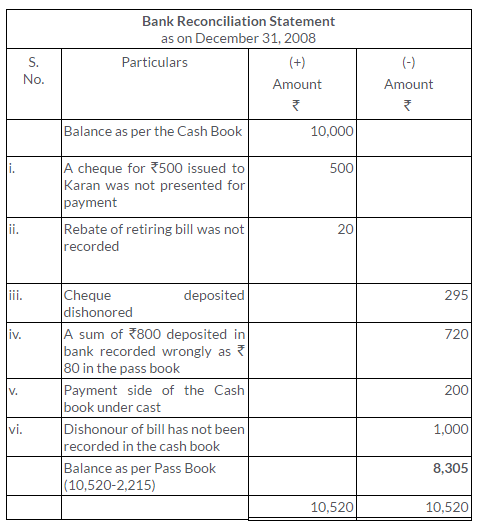
    ts-grewal-solutions-class-11-accountancy-chapter-11-bank-reconciliation-statement-9

    Question 10.
    On examining the Bank Statement of Green Ltd., it is found that the balance shown on 31st March, 2015, differs from the bank balance of Rs.23,650 shown by the Cash Book on that date. From a detailed comparison of the entries it is found that:
    i. Rs.2,860 is entered in the Cash Book as paid into the bank on 31st March, 2015 but not credited by the ba until the following day.
    ii. Bank charges of Rs.70 on 31st March, 2015 are not entered in the Cash Book.
    iii. A bill for Rs.5,500 discounted with the bank is entered in the Cash Book without recording the discount charges of Rs.270.
    iv. Cheques totaling Rs.16,720 were issued by the company and duly recorded in the Cash Book before 31st March, 2015 but had not been presented at the Bank for payment until after that date.
    v. On 25th March, 2015, a debtor paid Rs.1,000 into the Company’s Bank in settlement of his account but no entry was made in the Cash Book of the company in respect of this.
    vi. No entry has been made in the Cash Book to record the dishonor on 15th March, 2015, of a cheque for Rs.550 received from Ram Babu. Prepare a Bank Reconciliation Statement as on 31st March, 2015.
    Solution:
    ts-grewal-solutions-class-11-accountancy-chapter-11-bank-reconciliation-statement-10

    Question 11.
    Prepare Bank Reconciliation Statement from the following particulars on 31st July, 2015:
    i. Balance as per the Pass Book Rs.50,000.
    ii. Three cheques for Rs.6,000, Rs.3,937 and Rs.1,525 issued in July, 2015 were presented for payment to the bank in August, 2015.
    iii. Two cheques of Rs.500 and Rs.650 sent to the bank for collection were not entered in the Pass Book by 31st July, 2015.
    iv. The bank charged Rs.460 for its commission and allowed interest of Rs. 100 which were not mentioned in the Bank Column of the Cash Book.
    Solution:
    ts-grewal-solutions-class-11-accountancy-chapter-11-bank-reconciliation-statement-11

    Question 12.
    ts-grewal-solutions-class-11-accountancy-chapter-11-bank-reconciliation-statement-12-1
    Solution:
    ts-grewal-solutions-class-11-accountancy-chapter-11-bank-reconciliation-statement-12-2

    Question 13.
    Draw Bank Reconciliation Statement showing adjustment between your cash book and pass book as on 31st March, 2011:
    i. On 31st March, 2011 your pass book showed a balance of Rs.6,000 to your credit.
    ii. Before that date, you had issued cheques amounting to Rs.1,500 of which cheques of Rs.900 have been presented for payment.
    iii. A cheque of Rs.800 paid by you into the bank on 29th March, 2011 is not yet credited pass book.
    iv. There was a credit of Rs.85 for interest on Current Account in the pass book.
    v. On 31st March, 2011 a cheque for Rs.510 received by you and was paid into bank the same was omitted to be entered in cash book.
    (MSE Chandigarh 2012)
    Solution:
    ts-grewal-solutions-class-11-accountancy-chapter-11-bank-reconciliation-statement-13

    Question 14.
    ts-grewal-solutions-class-11-accountancy-chapter-11-bank-reconciliation-statement-14-1
    Solution:
    ts-grewal-solutions-class-11-accountancy-chapter-11-bank-reconciliation-statement-14-2

    Question 15.
    From the following particulars, prepare a Bank Reconciliation Statement of Govil as on 31st March, 2015: Balance as per Pass Book on 31st March, 2015 is Rs.8,500. Rs.5,100 were issued during the month of March but out of these, cheques for Rs.1,200 were presented in the month of April, 2015 and one cheque for Rs.200 was not presented for payment. Cheque and cash amounting to Rs.4,800 were deposited in the bank during March but credit was given for Rs.3,800 only. A customer had deposited Rs.800 into the bank directly. The bank has credited Covil for Rs.200 as interest and has debited him for Rs.90 as bank charges, for which there are no corresponding entries in the Cash Book.
    Solution:
    ts-grewal-solutions-class-11-accountancy-chapter-11-bank-reconciliation-statement-15

    Question 16.
    Bank Statement of a customer shows bank balance of 62,000 on 31st March, 2015. On comparing it with the Cash Book the following discrepancies were noted:
    i. Cheques were paid into the bank in March but were credited in April: P-Rs. 3,500; Q-Rs.2,500; R-Rs.2,000.
    ii. Cheques issued in March were presented in April: X-Rs. 4,000; Q-Rs. 4,500.
    iii. Cheque for Rs.1,000 received from a customer entered in the Cash Book but was not banked.
    iv. Pass Book shows a debit of Rs.1,000 for bank charges and credit of Rs.2,000 as interest.
    v. Interest on investment Rs.2,500 collected by the bank appeared in the Pass Book. Prepare Bank Reconciliation Statement showing the balance as per Cash Book on 31st March, 2015.
    (MSE Chandigarh 2003, Modified)
    Solution:
    ts-grewal-solutions-class-11-accountancy-chapter-11-bank-reconciliation-statement-16

    Question 17.
    On 1st January, 2015, Naresh had an overdraft of Rs. 40,000 as shown by his Cash Book in the bank column. Cheques amounting to Rs.10,000 had been deposited by him but were not collected by the bank by 1st January, 2015. He issued cheques of Rs.7,000 which were not presented to the bank for payment up to that day. There was also a debit in his Pass Book of Rs.600 for interest and Rs. 500 for bank charges. Prepare a Bank Reconciliation Statement.
    Solution:
    ts-grewal-solutions-class-11-accountancy-chapter-11-bank-reconciliation-statement-17

    Question 18.
    On 31st March, 2015, Cash Book of B. Babu showed an overdraft of Rs.18,000 with the Bank of India. This balance did not agree with the balance as shown by the Bank Pass Book. You find that Babu had paid into the bank on 26th March, four cheques for Rs.10,000, Rs.12,000, Rs.6,000 and Rs.8,000. Out of these the cheque for Rs.6,000 was credited by the bank in April, 2015. Babu had issued on 24th March three cheques for Rs.15,000, Rs.12,000 and Rs.7,000. The first two cheques were presented to the bank for payment in March, 2015 and the third cheque in April, 2015.
    You also find that on 31st March, 2015 the bank had debited Babu’s Account with Rs.500 for interest and Rs.20 as charges, but Babu had not recorded these amounts in his books. Prepare Bank Reconciliation Statement as on 31st March, 2015 and ascertain the balance as per Bank Pass Book.
    Solution:
    ts-grewal-solutions-class-11-accountancy-chapter-11-bank-reconciliation-statement-18

    Question 19.
    On 31st March, 2015, Cash Book of a merchant showed bank overdraft of Rs.1,72,985. On comparing the Cash Book with Bank Statement, following discrepancies were noted:
    i. Cheques issued for Rs.60,000 were not presented in the bank till 7th April, 2015.
    ii. Cheques amounting to Rs.75,000 were deposited in the bank but were not collected.
    iii. A cheque of Rs.15,000 received from Mahesh Chand and deposited in the bank was dishonored but the non-payment advice was not received from the bank till 1st April, 2015.
    iv. Rs.1, 50,000 being the proceeds of a bill receivable collected appeared in the Pass Book but not in the Cash Book.
    v. Bank charges Rs.1,500 and interest on overdraft Rs.8,500 appeared in the Pass Book but not in the Cash Book.
    Prepare Bank Reconciliation Statement and show what balance the Bank Pass Book would indicate on 31st March, 2015.
    Solution:
    ts-grewal-solutions-class-11-accountancy-chapter-11-bank-reconciliation-statement-19

    Question 20.
    Prepare Bank Reconciliation Statement from the following: On 31st March, 2015, a merchant’s Cash Book showed a credit bank balance of 10,500 but due to the following reasons the Pass Book showed a difference:
    i. A cheque of Rs.540 issued to Mohan has not been presented for payment.
    ii. A post-dated cheque for Rs.100 has been debited in the bank column of the Cash Book but under no circumstances was it possible to present it.
    iii. Four cheques of Rs.1,200 sent to the bank have not been collected so far. A cheque Rs.400 deposited in the bank has been dishonoured.
    iv. As per instructions, the bank paid Rs.50 as Fire Insurance premium but the entry has not been made in the Cash Book.
    v. There was a debit in the Pass Book of Rs.15 in respect of bank charges and a credit of Rs.25 for interest on Current Account but no record exists in the Cash Book.
    Solution:
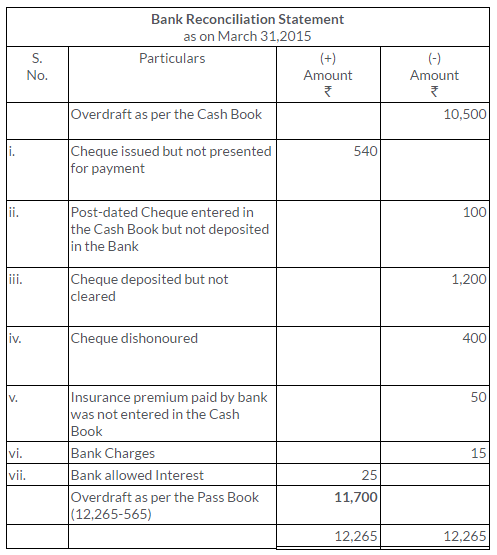
    ts-grewal-solutions-class-11-accountancy-chapter-11-bank-reconciliation-statement-20

    Question 21.
    Tiwari and Sons find that the bank balance shown by their Cash Book on 31st March, 2015 is Rs.40,500 (credit) but the Pass Book shows a difference due to the following reasons:
    i. A cheque for Rs.5,000 drawn in favour Manohar has not yet been presented for payment.
    ii. A post-dated cheque for Rs.900 has been debited in the bank column of the Cash Book.
    iii. Cheques totaling Rs.10,200 deposited with the bank have not yet been collected and a cheque for Rs.4,000 has been dishonoured.
    iv. A bill for 10,000 was retired by the bank under a rebate of 150 but the full amount of the bill was credited in the bank column of the Cash Book.
    Prepare a Bank Reconciliation Statement and find out the balance as per the Pass Book.
    (KVS 2005, Modified)
    Solution:
    ts-grewal-solutions-class-11-accountancy-chapter-11-bank-reconciliation-statement-21

    Question 22.
    From the following particulars of a trader, prepare a Bank Reconciliation Statement 31st March, 2015:
    i. Bank overdraft as per Cash Book Rs.52,100.
    ii. During the month, the total amount of cheques for Rs.94,400 were deposited into the bank but of these, one cheque for Rs.11,160 has been entered into the Pass Book on 5th April
    iii. During the month, cheques for Rs.89,580 were drawn in favour of creditors. Of them, one creditor for Rs.38,580 encashed his cheque on 7th April whereas another for Rs.4,320 have not yet been encashed.
    iv. As per instructions the bank on 28th March paid out 10,500 to a creditor but by mistake, the same has not been entered in the Cash Book.
    v. According to agreement, on 25th March, a debtor deposited directly into the Rs.9,000 but the same has not been recorded in the Cash Book.
    vi. In the month of March, the bank without any intimation, debited his account for Rs.120 as bank charges and credited the same for Rs.180 as interest.
    Solution:
    ts-grewal-solutions-class-11-accountancy-chapter-11-bank-reconciliation-statement-22

    Question 23.
    Prepare Bank Reconciliation Statement from the following particulars as on 31st March, 2015, when Pass Book shows a debit balance of Rs.2,500:
    i. Cheque issued for Rs.5,000 but up to 31st March, 2015 only Rs.3,000 could be cleared.
    ii. Cheques issued for Rs.1,000 but omitted to be recorded in the Cash Book.
    iii. Cheques deposited for Rs.5,500 but cheques for Rs.500 were collected on 4th April, 2015.
    iv. A discounted Bill of Exchange dishonoured Rs.1,000.
    v. A Rs.500 debited in Cash Book but omitted to be banked.
    vi. Interest allowed by bank Rs.200 but no entry was passed in the Cash Book.
    (Delhi 2002, Adapted)
    Solution:
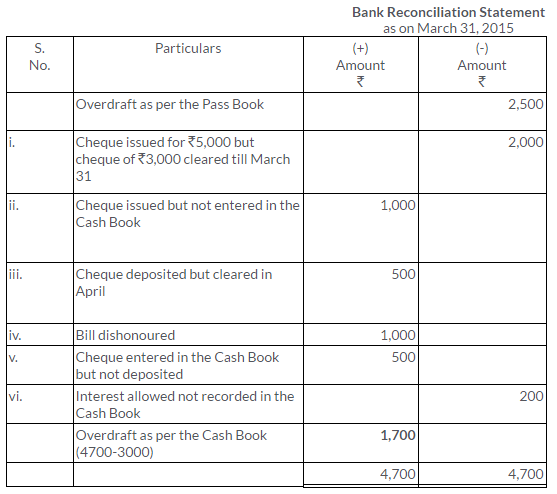
    ts-grewal-solutions-class-11-accountancy-chapter-11-bank-reconciliation-statement-23

    Question 24.
    ts-grewal-solutions-class-11-accountancy-chapter-11-bank-reconciliation-statement-24-1
    Solution:
    ts-grewal-solutions-class-11-accountancy-chapter-11-bank-reconciliation-statement-24-2

    Question 25.
    On 31st March, 2015, Bank Pass Book of Naresh and Co. showed an overdraft of Rs.10,700. From the following particulars, prepare Bank Reconciliation Statement:
    i. Cheques issued before 31st March, 2015 but presented for payment after that date amounted to Rs.900.
    ii. Cheques paid into the bank but not collected and credited until 31st March, 2015 amounted to Rs.2,200.
    iii. Interest on overdraft amounting to Rs.1,200 did not appear in the Cash Book.
    iv. Rs.5,000 being interest on investments collected by the bank and credited in the Pass Book were not shown in the Cash Book.
    v. Bank charges of Rs.50 were not entered in the Cash Book.
    vi. Rs.800 in respect of dishonoured cheque were entered in the Pass Book but not in the Cash Book.
    Solution:
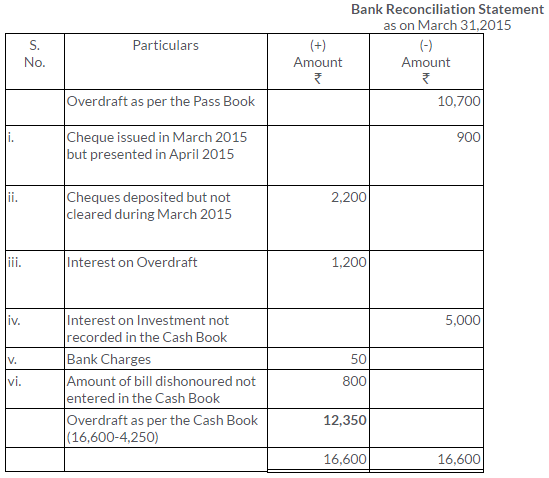
    ts-grewal-solutions-class-11-accountancy-chapter-11-bank-reconciliation-statement-25

    Question 26.
    On 31st March, 2015, Pass Book of Shri Bhama Shah shows debit balance of Rs.10,000. From the following particulars, prepare Bank Reconciliation Statement:
    i. Cheques amounting to Rs.8,000 drawn on 25th March of which cheques of Rs.5,000 cashed in April, 2015.
    ii. Cheques paid into bank for collection of Rs.5,000 but cheques of Rs.2,200 could only be collected in March, 2015.
    iii. Bank charges Rs.25 and dividend of Rs.350 on investment collected by bank could not be shown in the Cash Book.
    iv. A cheque of Rs.600 debited in the Cash Book omitted to be banked.
    (Delhi 2005, Modified)
    Solution:
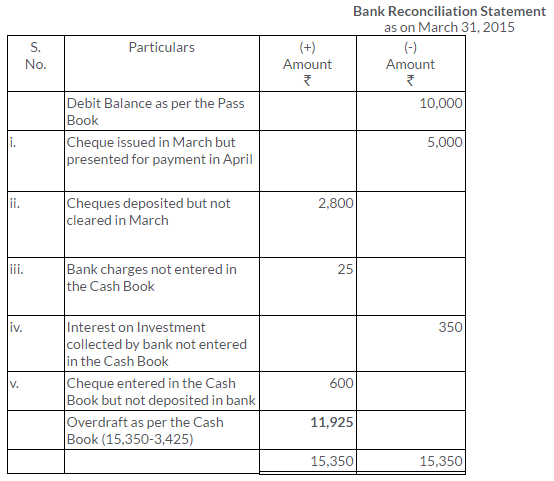
    ts-grewal-solutions-class-11-accountancy-chapter-11-bank-reconciliation-statement-26

    Question 27.
    On checking the Bank Pass Book it was found that it showed an overdraft of Rs. 5,220 as on 31st March, 2015, while as per Ledger it was different. The following differences were noted:
    i. Cheques deposited but not yet credited by the bank Rs.6,000.
    ii. Cheques dishonoured and debited by the bank but not given effect to it in the Ledger Rs.800.
    iii. Bank charges debited by the bank but Debit Memo not received from the bank Rs.50.
    iv. Interest on overdraft excess credited in the Ledger Rs.200.
    v. Wrongly credited by the bank to account, deposit of some other party Rs.900.
    vi. Cheques issued but not presented for payment Rs.400.
    (Delhi 2001, Modified)
    Solution:
    ts-grewal-solutions-class-11-accountancy-chapter-11-bank-reconciliation-statement-27

    Question 28.
    Prepare Bank Reconciliation Statement from the following particulars as on 31st 2015 when Pass Book shows a debit balance of Rs.2,500:
    i. Cheque issued for Rs.5,000 but up to 31st March, 2015 only 3,000 could be cleared.
    ii. Cheques deposited for Rs.5,500 but cheques of Rs.500 were collected on 10th April, 2015.
    iii. A discounted bill of exchange dishonoured Rs.2,000.
    iv. A cheque of Rs.300 debited in Cash Book but omitted to be banked.
    v. Interest allowed by bank Rs.400 but no entry was passed in the Cash Book.
    (KVS 2004, Modified)
    Solution:
    ts-grewal-solutions-class-11-accountancy-chapter-11-bank-reconciliation-statement-28

    Question 29.
    From the following particulars, you are required to ascertain the bank balance as appear in the Cash Book of Ramesh as on 31st October, 2014:
    i. Bank Pass Book showed an overdraft of Rs.16,500 on 31st October.
    ii. Interest of Rs.1,250 on overdraft up to 31st October, 2014 has been debited in the Pass Book but it has not been entered in the Cash Book.
    iii. Bank charges debited in the Bank Pass Book amounted to Rs.35.
    iv. Cheques issued prior to 31st October, 2014 but not presented till that date, amounted, to Rs.11,500.
    v. Cheques paid into bank before 31st October, but not collected and credited up to date, were for Rs.2,500.
    vi. Interest on investment collected by the bankers and credited in the Bank Pass amounted to Rs.1,800.
    (KVS 2003, Modified)
    Solution:
    ts-grewal-solutions-class-11-accountancy-chapter-11-bank-reconciliation-statement-29

    Question 30.
    ts-grewal-solutions-class-11-accountancy-chapter-11-bank-reconciliation-statement-30-1
    Solution:
    ts-grewal-solutions-class-11-accountancy-chapter-11-bank-reconciliation-statement-30-2

    Question 31.
    Prepare Bank Reconciliation Statement as on 31st March, 2015 from the following particulars :
    i. R’s overdraft as per Pass Book Rs.12,000 as on 31st March.
    ii. On 30th March, cheques had been issued for Rs.70,000 of which cheques amounting Rs.3,000 only had been encashed up to 31st March.
    iii. Cheques amounting to Rs.3,500 had been paid into the bank for collection but of these only 500 had been credited in the Pass Book.
    iv. Bank has charged Rs.500 as interest on overdraft and the intimation of which has been received on 2nd April, 2015.
    v. Bank Pass Book shows credit for Rs.1,000 representing Rs.400 paid by debtor of R direct into the bank and Rs.600 collected directly by the bank in respect of interest on R’s investment. R had no knowledge of these items.
    vi. A cheque for Rs.200 has been debited in the bank column of Cash Book by R but it was not sent to the bank at all.
    Solution:
    ts-grewal-solutions-class-11-accountancy-chapter-11-bank-reconciliation-statement-31

    Question 32.
    Prepare Bank Reconciliation Statement from the following particulars and show balance as per Cash Book:
    i. Balance as per Pass Book on 31st March, 2015 overdrawn Rs.10,000.
    ii. Cheques drawn in the last week of March, 2015 but not cleared till 3rd April, 2015 Rs.20,000.
    iii. Interest on bank overdraft not entered in the Cash Book Rs.1,500.
    iv. Cheques of Rs.20,000 deposited in the bank in March, 2015 but not collected and credited till 3rd April, 2015.
    v. Rs.100 insurance premium paid by the bank under a standing order has not been entered in the Cash Book.
    Solution:
    ts-grewal-solutions-class-11-accountancy-chapter-11-bank-reconciliation-statement-32

    Question 33.
    Bank Pass Book of Mr. X showed an overdraft of Rs.33,575 on 31st March, 2015. On going through the Pass Book the accountant found the following:
    i. A cheque of Rs.1,080 credited in the Pass Book on 28th March, being dishonoured is debited again in the Pass Book on 1st April, 2015. There was no entry in the Cash Book about the dishonour of the cheque until 15th April.
    ii. Bankers had credited his account with Rs.2,800 for interest collected by them on his behalf but the same had not been entered in his Cash Book.
    iii. Out of Rs.20,500 paid in by Mr. X in cash and by cheques on 31st March, cheques amounting to Rs.7,500 were collected on 7th April.
    iv. Out of cheques amounting to Rs.7,800 drawn by him on 27th March, a cheque for Rs.2,500 was encashed on 3rd April.
    Prepare Bank Reconciliation Statement on 31st March, 2015.
    Solution:
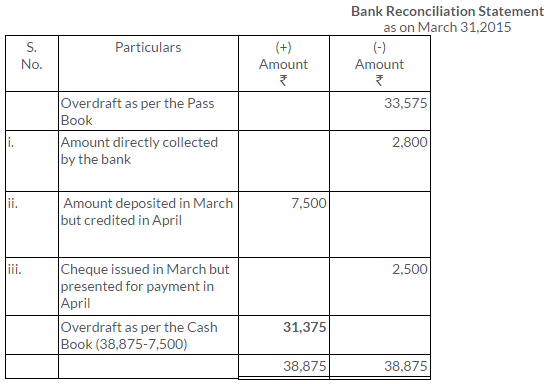
    ts-grewal-solutions-class-11-accountancy-chapter-11-bank-reconciliation-statement-33

    Question 34.
    ts-grewal-solutions-class-11-accountancy-chapter-11-bank-reconciliation-statement-34-1
    Solution:
    ts-grewal-solutions-class-11-accountancy-chapter-11-bank-reconciliation-statement-34-2

    Question 35.
    From the following information, prepare Bank Reconciliation Statement as on 31st March, 2015:
    i. Debit balance shown by Pass Book Rs.17,800.
    ii. Cheques of Rs.21,600 were issued in the last week of March but only cheques of Rs.14,800 were presented for payment.
    iii. Cheques of Rs.10,750 were presented to the bank. Out of them, a Rs.4,200 was credited in the first week of April, 2015.
    iv. A cheque of Rs.1,200 was debited in the cash book but was not presented in the bank.
    v. Insurance premium paid by bank Rs.1,450.
    vi. A bill of exchange of Rs.6,200 which discounted with the same was dishonoured but no entry was made in the cash book.
    vii. Bank charges, charged by the bank Rs.350.
    (MSE Chandigarh 2011, Modified)
    Solution:
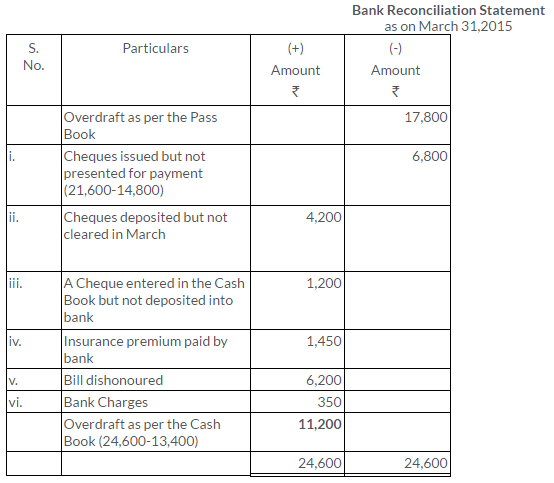
    ts-grewal-solutions-class-11-accountancy-chapter-11-bank-reconciliation-statement-35

    Question 36.
    ts-grewal-solutions-class-11-accountancy-chapter-11-bank-reconciliation-statement-36-1
    Solution:
    ts-grewal-solutions-class-11-accountancy-chapter-11-bank-reconciliation-statement-36-2

    Question 37.
    From the following particulars, ascertain the bank balance as per Pass Book 31st March, 2015 (a) without correcting the Cash Book balance and (b) after correcting the Cash Book balance:
    i. The bank balance as per Cash Book on 31st March, 2015 Rs. 40,000.
    ii. Cheques issued but not encashed up to 31st March, 2015 amounted to Rs.10,000.
    iii. Cheques paid into the bank, but not cleared up to 31st March, 2015 amounted to Rs.15,000.
    iv. Interest on investments collected by the bank but not entered in the Cash Book Rs.500.
    v. Cheques deposited in the bank but not entered in the Cash Book Rs.12,500.
    vi. Bank charges debited in the Pass Book but not entered in the Cash Book Rs.100.
    Solution:
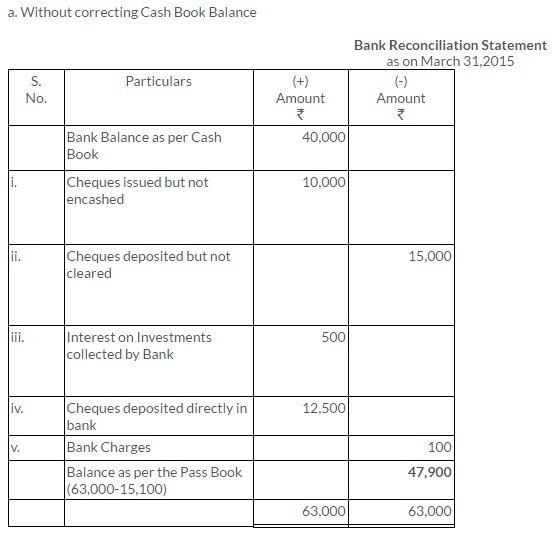
    ts-grewal-solutions-class-11-accountancy-chapter-11-bank-reconciliation-statement-37-2
    ts-grewal-solutions-class-11-accountancy-chapter-11-bank-reconciliation-statement-37-3

    Question 38.
    ts-grewal-solutions-class-11-accountancy-chapter-11-bank-reconciliation-statement-38-1
    Solution:
    ts-grewal-solutions-class-11-accountancy-chapter-11-bank-reconciliation-statement-38-2

    Question 39.
    ts-grewal-solutions-class-11-accountancy-chapter-11-bank-reconciliation-statement-39-1-1
    ts-grewal-solutions-class-11-accountancy-chapter-11-bank-reconciliation-statement-39-1
    Solution:
    ts-grewal-solutions-class-11-accountancy-chapter-11-bank-reconciliation-statement-39-2

  • TS Grewal Solutions for Special Purpose Books II – Other Books Class 11 Accountancy Chapter 10

    TS Grewal Solutions for Class 11 Accountancy Chapter 10 – Special Purpose Books II – Other Books

    Question 1.
    ts-grewal-solutions-class-11-accountancy-chapter-10-special-purpose-books-ii-books-Q1-1
    Solution:
    ts-grewal-solutions-class-11-accountancy-chapter-10-special-purpose-books-ii-books-Q1-2

    Question 2.
    ts-grewal-solutions-class-11-accountancy-chapter-10-special-purpose-books-ii-books-Q2-1
    Solution:
    ts-grewal-solutions-class-11-accountancy-chapter-10-special-purpose-books-ii-books-Q2-2

    Question 3.
    ts-grewal-solutions-class-11-accountancy-chapter-10-special-purpose-books-ii-books-Q3-1
    Solution:
    ts-grewal-solutions-class-11-accountancy-chapter-10-special-purpose-books-ii-books-Q3-2

    Question 4.
    ts-grewal-solutions-class-11-accountancy-chapter-10-special-purpose-books-ii-books-Q4-1
    Solution:
    ts-grewal-solutions-class-11-accountancy-chapter-10-special-purpose-books-ii-books-Q4-2
    ts-grewal-solutions-class-11-accountancy-chapter-10-special-purpose-books-ii-books-Q4-3

    Question 5.
    ts-grewal-solutions-class-11-accountancy-chapter-10-special-purpose-books-ii-books-Q5-1
    Solution:
    ts-grewal-solutions-class-11-accountancy-chapter-10-special-purpose-books-ii-books-Q5-2
    ts-grewal-solutions-class-11-accountancy-chapter-10-special-purpose-books-ii-books-Q5-3

    Question 6.
    ts-grewal-solutions-class-11-accountancy-chapter-10-special-purpose-books-ii-books-Q6-1
    Solution:
    ts-grewal-solutions-class-11-accountancy-chapter-10-special-purpose-books-ii-books-Q6-2

    Question 7.
    ts-grewal-solutions-class-11-accountancy-chapter-10-special-purpose-books-ii-books-Q7-1
    Solution:
    ts-grewal-solutions-class-11-accountancy-chapter-10-special-purpose-books-ii-books-Q7-2
    ts-grewal-solutions-class-11-accountancy-chapter-10-special-purpose-books-ii-books-Q7-3

    Question 8.
    ts-grewal-solutions-class-11-accountancy-chapter-10-special-purpose-books-ii-books-Q8-1
    Solution:
    ts-grewal-solutions-class-11-accountancy-chapter-10-special-purpose-books-ii-books-Q8-2

    Question 9.
    ts-grewal-solutions-class-11-accountancy-chapter-10-special-purpose-books-ii-books-Q9-1
    Solution:
    ts-grewal-solutions-class-11-accountancy-chapter-10-special-purpose-books-ii-books-Q9-2
    ts-grewal-solutions-class-11-accountancy-chapter-10-special-purpose-books-ii-books-Q9-3

    Question 10.
    ts-grewal-solutions-class-11-accountancy-chapter-10-special-purpose-books-ii-books-Q10-1
    Solution:
    ts-grewal-solutions-class-11-accountancy-chapter-10-special-purpose-books-ii-books-Q10-2

    Question 11.
    ts-grewal-solutions-class-11-accountancy-chapter-10-special-purpose-books-ii-books-Q11-1
    Solution:
    ts-grewal-solutions-class-11-accountancy-chapter-10-special-purpose-books-ii-books-Q11-2

    Question 12.
    ts-grewal-solutions-class-11-accountancy-chapter-10-special-purpose-books-ii-books-Q12-1
    Solution:
    ts-grewal-solutions-class-11-accountancy-chapter-10-special-purpose-books-ii-books-Q12-2

    Question 13.
    ts-grewal-solutions-class-11-accountancy-chapter-10-special-purpose-books-ii-books-Q13-1
    Solution:
    ts-grewal-solutions-class-11-accountancy-chapter-10-special-purpose-books-ii-books-Q13-2

    Question 14.
    ts-grewal-solutions-class-11-accountancy-chapter-10-special-purpose-books-ii-books-Q14-1
    Solution:
    ts-grewal-solutions-class-11-accountancy-chapter-10-special-purpose-books-ii-books-Q14-2

    Question 15.
    ts-grewal-solutions-class-11-accountancy-chapter-10-special-purpose-books-ii-books-Q15-1
    Solution:
    ts-grewal-solutions-class-11-accountancy-chapter-10-special-purpose-books-ii-books-Q15-2

    Question 16.
    ts-grewal-solutions-class-11-accountancy-chapter-10-special-purpose-books-ii-books-Q16-1
    Solution:
    ts-grewal-solutions-class-11-accountancy-chapter-10-special-purpose-books-ii-books-Q16-2

    Question 17.
    Following balance appeared in the Balance Sheet of Ram Stores on 31st March, 2013.
    Pass the necessary Journal entries for opening the books for the year 2013-14:
    Debit Balances: Furniture Rs.4,000; Machinery Rs.20,000;Debtors Rs.5,000; Bills Receivable Rs.11,800; Cash Rs.14,200.
    Credit Balances: Capital Rs.30,000; Bills Payable Rs.15,000;Creditors Rs.10,000.
    Solution:
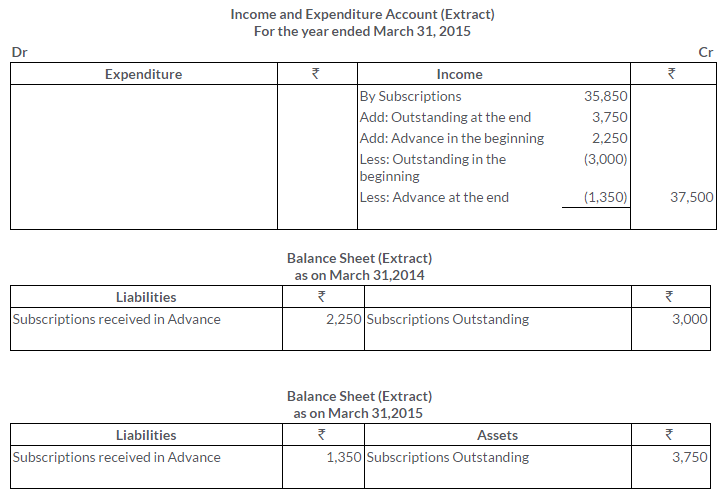
    ts-grewal-solutions-class-11-accountancy-chapter-10-special-purpose-books-ii-books-Q17-2

    Question 18.
    Enter the following transactions in Journal Proper of Geeta (Proprietor):
    i. Rent not paid (Rent outstanding) Rs.1,000.
    ii. Goods withdrawn by proprietor for personal use Rs.5,000.
    iii. Purchase of machine on credit for Rs.10,000 from Ram Sons.
    iv. Depreciate motor car with book value Rs.1,00,000 @ 10% p.a. for one year.
    Solution:

    ts-grewal-solutions-class-11-accountancy-chapter-10-special-purpose-books-ii-books-Q18-2

    Question 19.
    From the following information available on 31st March, 2013, pass the necessary Adjustment Entries in the Journal for the year ending on that date:
    Interest accrued Rs.2,500.
    Wages for March, 2013 outstanding Rs.10,000.
    Insurance prepaid Rs.1,500.
    Rent for April, 2013 received in advance Rs.3,000.
    Depreciation on furniture Rs.5,000.
    Commission due to Manager 6% on net profit after charging such commission. The profit before charging such commission was Rs.1,06,000.
    Interest due on loan but not paid. Loan of Rs.1,50,000 was taken at 9% p.a.; 9 months before end of the year.
    Solution:
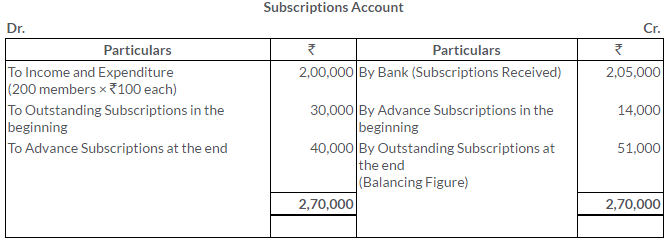
    ts-grewal-solutions-class-11-accountancy-chapter-10-special-purpose-books-ii-books-Q19-2

    Question 20.
    ts-grewal-solutions-class-11-accountancy-chapter-10-special-purpose-books-ii-books-Q20-1
    Solution:

    ts-grewal-solutions-class-11-accountancy-chapter-10-special-purpose-books-ii-books-Q20-2

    Question 21.
    ts-grewal-solutions-class-11-accountancy-chapter-10-special-purpose-books-ii-books-Q21-1
    Solution:
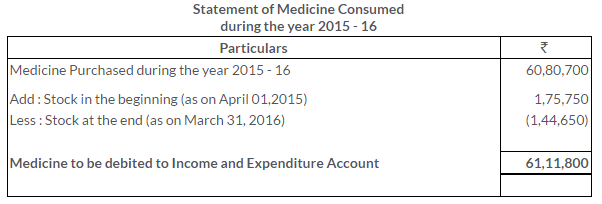
    ts-grewal-solutions-class-11-accountancy-chapter-10-special-purpose-books-ii-books-Q21-2
    ts-grewal-solutions-class-11-accountancy-chapter-10-special-purpose-books-ii-books-Q21-3

    Question 22.
    ts-grewal-solutions-class-11-accountancy-chapter-10-special-purpose-books-ii-books-Q22-1
    Solution:
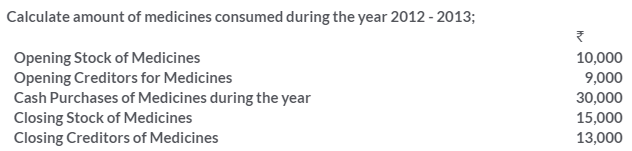
    ts-grewal-solutions-class-11-accountancy-chapter-10-special-purpose-books-ii-books-Q22-2
    ts-grewal-solutions-class-11-accountancy-chapter-10-special-purpose-books-ii-books-Q22-3
    ts-grewal-solutions-class-11-accountancy-chapter-10-special-purpose-books-ii-books-Q22-4
    ts-grewal-solutions-class-11-accountancy-chapter-10-special-purpose-books-ii-books-Q22-5

    Question 23.
    ts-grewal-solutions-class-11-accountancy-chapter-10-special-purpose-books-ii-books-Q23-1
    Solution:
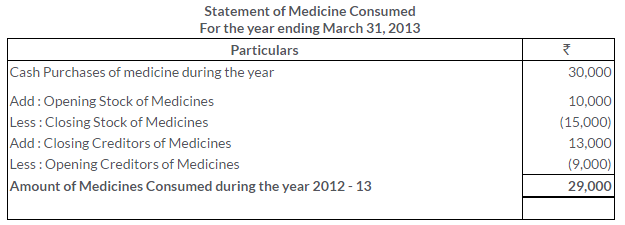
    ts-grewal-solutions-class-11-accountancy-chapter-10-special-purpose-books-ii-books-Q23-2
    ts-grewal-solutions-class-11-accountancy-chapter-10-special-purpose-books-ii-books-Q23-3

    Question 24.
    ts-grewal-solutions-class-11-accountancy-chapter-10-special-purpose-books-ii-books-Q24-1
    Solution:
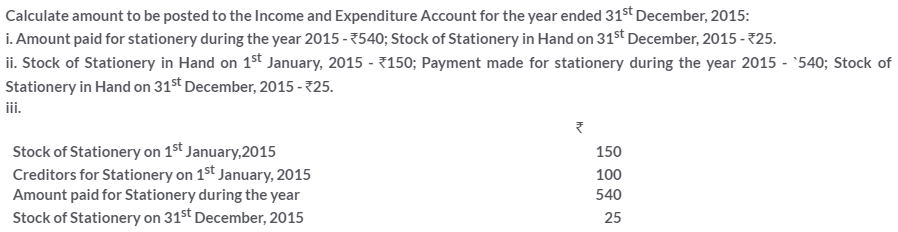
    ts-grewal-solutions-class-11-accountancy-chapter-10-special-purpose-books-ii-books-Q24-2
    ts-grewal-solutions-class-11-accountancy-chapter-10-special-purpose-books-ii-books-Q24-3
    ts-grewal-solutions-class-11-accountancy-chapter-10-special-purpose-books-ii-books-Q24-4

    Question 25.
    ts-grewal-solutions-class-11-accountancy-chapter-10-special-purpose-books-ii-books-Q25-1
    Solution:
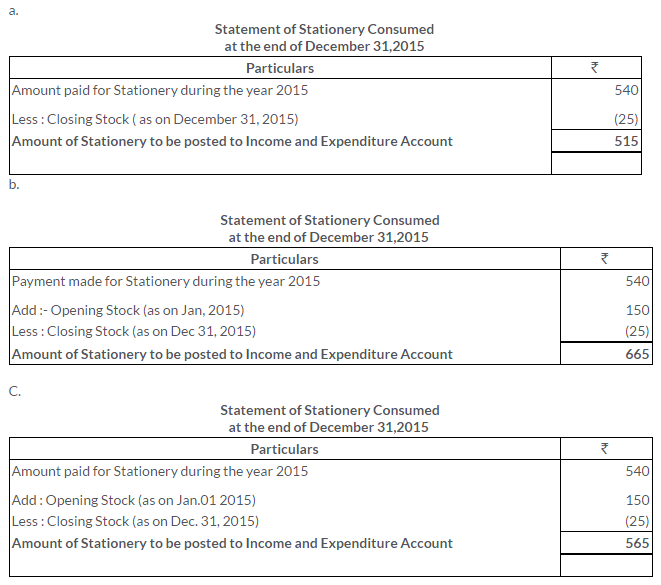
    ts-grewal-solutions-class-11-accountancy-chapter-10-special-purpose-books-ii-books-Q25-2
    ts-grewal-solutions-class-11-accountancy-chapter-10-special-purpose-books-ii-books-Q25-3
    ts-grewal-solutions-class-11-accountancy-chapter-10-special-purpose-books-ii-books-Q25-4
    ts-grewal-solutions-class-11-accountancy-chapter-10-special-purpose-books-ii-books-Q25-5
    ts-grewal-solutions-class-11-accountancy-chapter-10-special-purpose-books-ii-books-Q25-6
    ts-grewal-solutions-class-11-accountancy-chapter-10-special-purpose-books-ii-books-Q25-7
    ts-grewal-solutions-class-11-accountancy-chapter-10-special-purpose-books-ii-books-Q25-8
    ts-grewal-solutions-class-11-accountancy-chapter-10-special-purpose-books-ii-books-Q25-9

    Question 26.
    ts-grewal-solutions-class-11-accountancy-chapter-10-special-purpose-books-ii-books-Q26-1
    Solution:
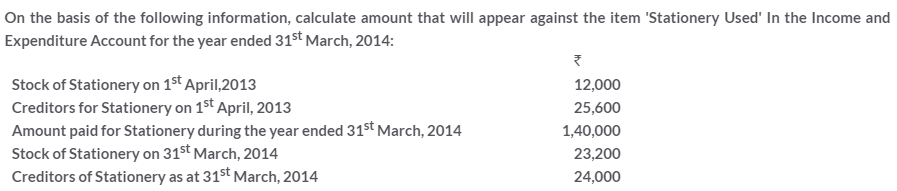
    ts-grewal-solutions-class-11-accountancy-chapter-10-special-purpose-books-ii-books-Q26-2
    ts-grewal-solutions-class-11-accountancy-chapter-10-special-purpose-books-ii-books-Q26-3
    ts-grewal-solutions-class-11-accountancy-chapter-10-special-purpose-books-ii-books-Q26-4
    ts-grewal-solutions-class-11-accountancy-chapter-10-special-purpose-books-ii-books-Q26-5
    ts-grewal-solutions-class-11-accountancy-chapter-10-special-purpose-books-ii-books-Q26-6
    ts-grewal-solutions-class-11-accountancy-chapter-10-special-purpose-books-ii-books-Q26-7
    ts-grewal-solutions-class-11-accountancy-chapter-10-special-purpose-books-ii-books-Q26-8
    ts-grewal-solutions-class-11-accountancy-chapter-10-special-purpose-books-ii-books-Q26-9

    Question 27.
    ts-grewal-solutions-class-11-accountancy-chapter-10-special-purpose-books-ii-books-Q27-1
    Solution:
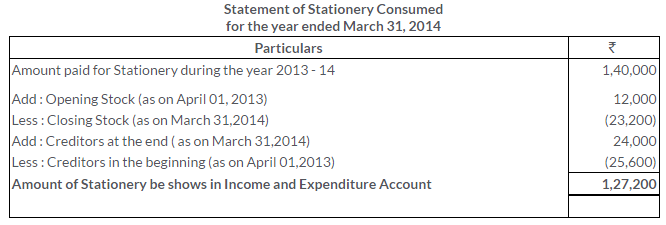
    ts-grewal-solutions-class-11-accountancy-chapter-10-special-purpose-books-ii-books-Q27-2
    ts-grewal-solutions-class-11-accountancy-chapter-10-special-purpose-books-ii-books-Q27-3
    ts-grewal-solutions-class-11-accountancy-chapter-10-special-purpose-books-ii-books-Q27-4
    ts-grewal-solutions-class-11-accountancy-chapter-10-special-purpose-books-ii-books-Q27-5
    ts-grewal-solutions-class-11-accountancy-chapter-10-special-purpose-books-ii-books-Q27-6
    ts-grewal-solutions-class-11-accountancy-chapter-10-special-purpose-books-ii-books-Q27-7
    ts-grewal-solutions-class-11-accountancy-chapter-10-special-purpose-books-ii-books-Q27-8
    ts-grewal-solutions-class-11-accountancy-chapter-10-special-purpose-books-ii-books-Q27-9
    ts-grewal-solutions-class-11-accountancy-chapter-10-special-purpose-books-ii-books-Q27-10

    Question 28.
    ts-grewal-solutions-class-11-accountancy-chapter-10-special-purpose-books-ii-books-Q28-1
    Solution:
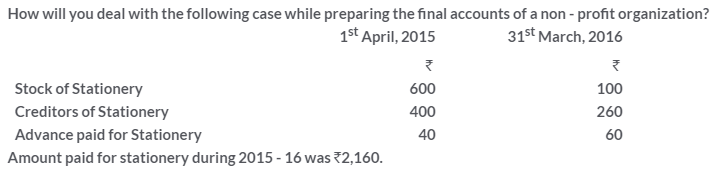
    ts-grewal-solutions-class-11-accountancy-chapter-10-special-purpose-books-ii-books-Q28-2
    ts-grewal-solutions-class-11-accountancy-chapter-10-special-purpose-books-ii-books-Q28-3
    ts-grewal-solutions-class-11-accountancy-chapter-10-special-purpose-books-ii-books-Q28-3
    ts-grewal-solutions-class-11-accountancy-chapter-10-special-purpose-books-ii-books-Q28-5
    ts-grewal-solutions-class-11-accountancy-chapter-10-special-purpose-books-ii-books-Q28-6
    ts-grewal-solutions-class-11-accountancy-chapter-10-special-purpose-books-ii-books-Q28-7
    ts-grewal-solutions-class-11-accountancy-chapter-10-special-purpose-books-ii-books-Q28-8
    ts-grewal-solutions-class-11-accountancy-chapter-10-special-purpose-books-ii-books-Q28-9
    ts-grewal-solutions-class-11-accountancy-chapter-10-special-purpose-books-ii-books-Q28-10
    ts-grewal-solutions-class-11-accountancy-chapter-10-special-purpose-books-ii-books-Q28-11
    ts-grewal-solutions-class-11-accountancy-chapter-10-special-purpose-books-ii-books-Q28-12
    ts-grewal-solutions-class-11-accountancy-chapter-10-special-purpose-books-ii-books-Q28-13

    Question 29.
    Following were the balances of accounts appearing in the books of Ram Mohan, Iron and Steel Merchant, on 31st March, 2013:
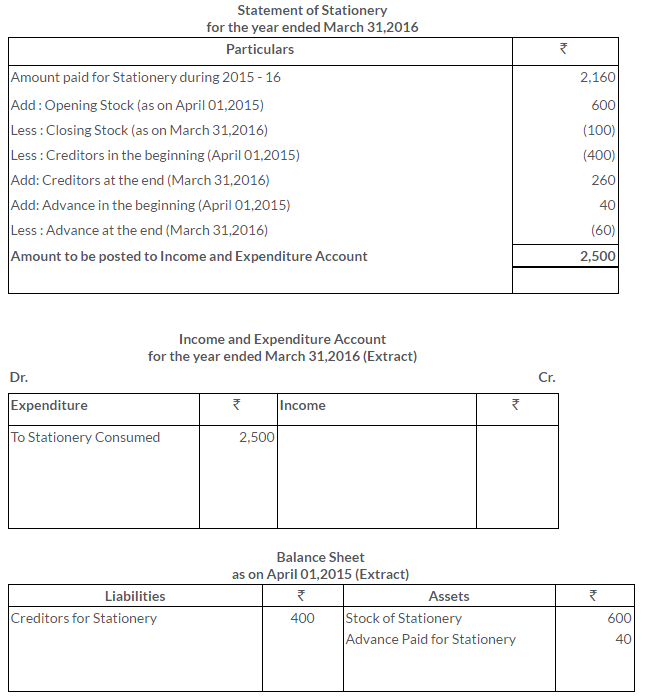
    Debit Balances: Stock in Warehouse Rs.21,000;Fixtures and Fittings Rs.6,300;Motor Lorries Rs.35,000; Harish Chander Rs.9,600, Rs.3,200;Rs.8,900;Cash in Hand Rs.2,500; Cash at bank Rs.17,300.
    Credit Balances: Satish, Rs.17,900; Gyan Chand, Rs.9,900.
    Enter the above balances in the Journal and post them to the Cash Book and Ledger Accounts. Also enter the following transactions in the proper subsidiary books and post them to the Ledger. Cheques received are paid into the bank on the same day. Balance the accounts and take out a Trial Balance.
    ts-grewal-solutions-class-11-accountancy-chapter-10-special-purpose-books-ii-books-Q29-1
    Solution:
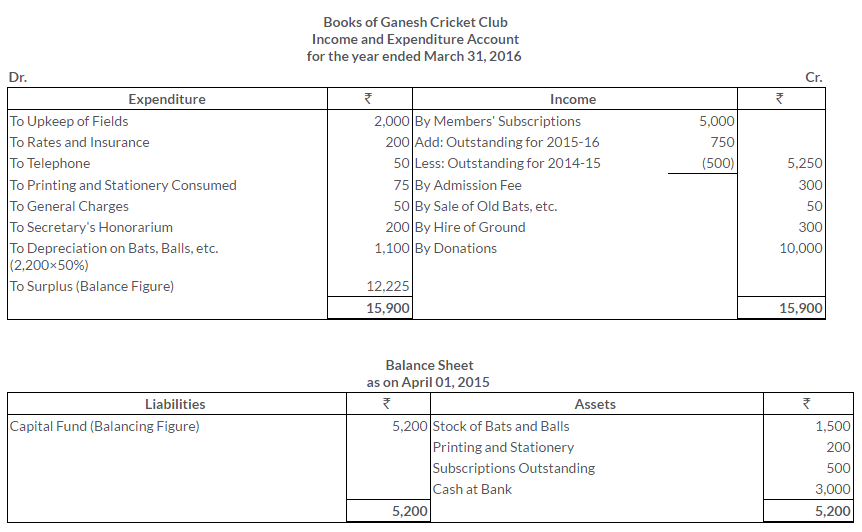
    ts-grewal-solutions-class-11-accountancy-chapter-10-special-purpose-books-ii-books-Q29-2
    ts-grewal-solutions-class-11-accountancy-chapter-10-special-purpose-books-ii-books-Q29-3
    ts-grewal-solutions-class-11-accountancy-chapter-10-special-purpose-books-ii-books-Q29-4
    ts-grewal-solutions-class-11-accountancy-chapter-10-special-purpose-books-ii-books-Q29-5
    ts-grewal-solutions-class-11-accountancy-chapter-10-special-purpose-books-ii-books-Q29-6
    ts-grewal-solutions-class-11-accountancy-chapter-10-special-purpose-books-ii-books-Q29-7
    ts-grewal-solutions-class-11-accountancy-chapter-10-special-purpose-books-ii-books-Q29-8
    ts-grewal-solutions-class-11-accountancy-chapter-10-special-purpose-books-ii-books-Q29-9
    ts-grewal-solutions-class-11-accountancy-chapter-10-special-purpose-books-ii-books-Q29-10
    ts-grewal-solutions-class-11-accountancy-chapter-10-special-purpose-books-ii-books-Q29-11

    Question 30.
    ts-grewal-solutions-class-11-accountancy-chapter-10-special-purpose-books-ii-books-Q30-1
    Solution:
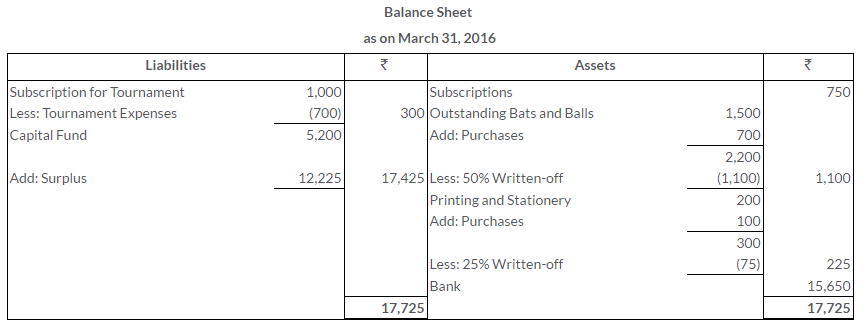
    ts-grewal-solutions-class-11-accountancy-chapter-10-special-purpose-books-ii-books-Q30-2
    ts-grewal-solutions-class-11-accountancy-chapter-10-special-purpose-books-ii-books-Q30-3
    ts-grewal-solutions-class-11-accountancy-chapter-10-special-purpose-books-ii-books-Q30-4
    ts-grewal-solutions-class-11-accountancy-chapter-10-special-purpose-books-ii-books-Q30-5
    ts-grewal-solutions-class-11-accountancy-chapter-10-special-purpose-books-ii-books-Q30-6
    ts-grewal-solutions-class-11-accountancy-chapter-10-special-purpose-books-ii-books-Q30-7
    ts-grewal-solutions-class-11-accountancy-chapter-10-special-purpose-books-ii-books-Q30-8
    ts-grewal-solutions-class-11-accountancy-chapter-10-special-purpose-books-ii-books-Q30-9
    ts-grewal-solutions-class-11-accountancy-chapter-10-special-purpose-books-ii-books-Q30-10
    ts-grewal-solutions-class-11-accountancy-chapter-10-special-purpose-books-ii-books-Q30-11