Category: Classes

  • TS Grewal Solutions for Trial Balance Class 11 Accountancy Chapter 12

    TS Grewal Solutions for Class 11 Accountancy Chapter 12 – Trial Balance

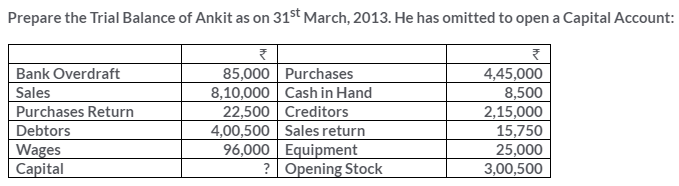
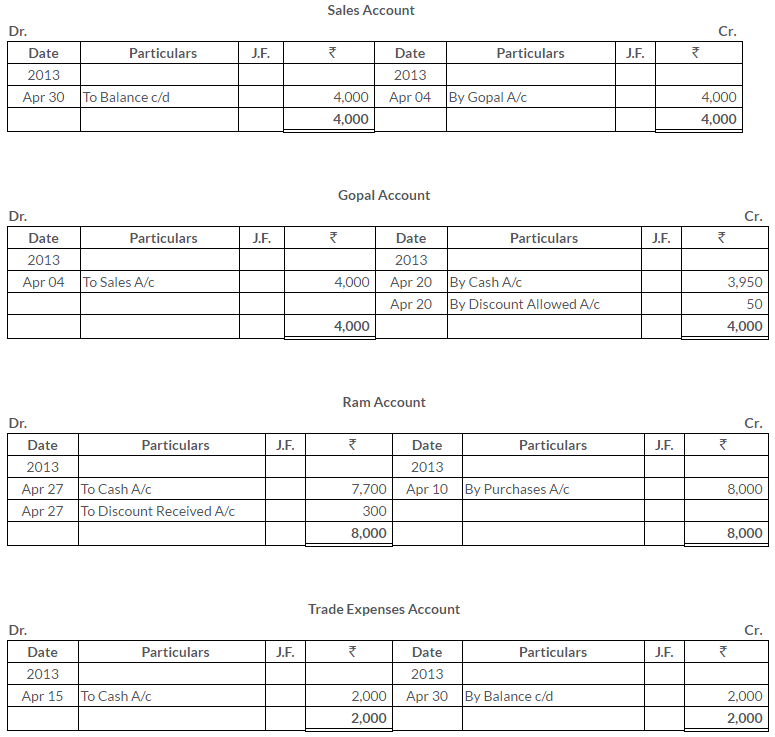
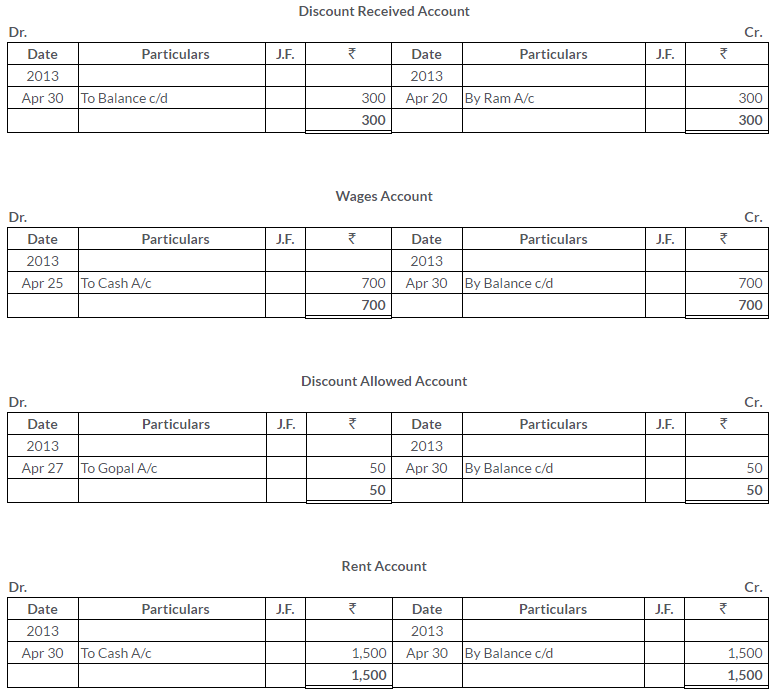
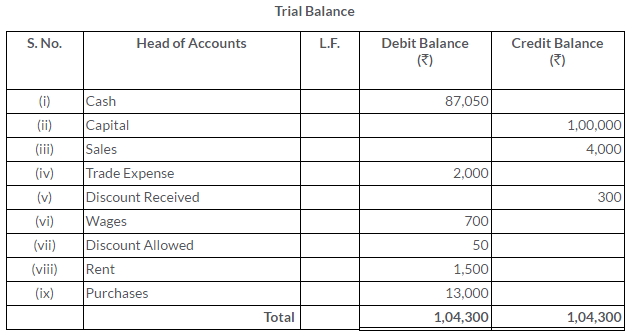
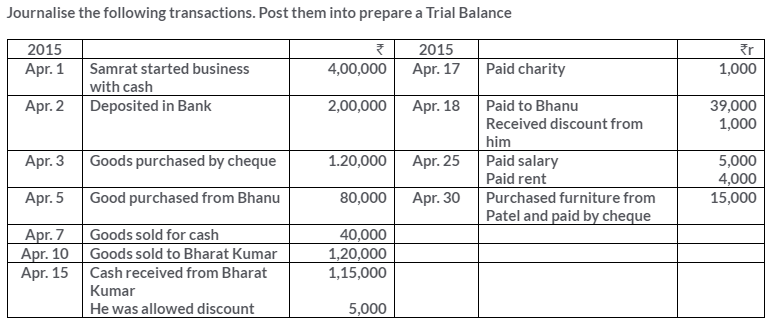
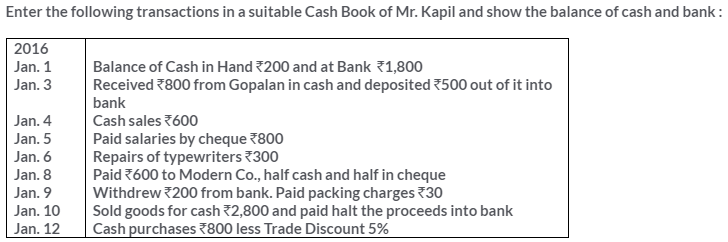
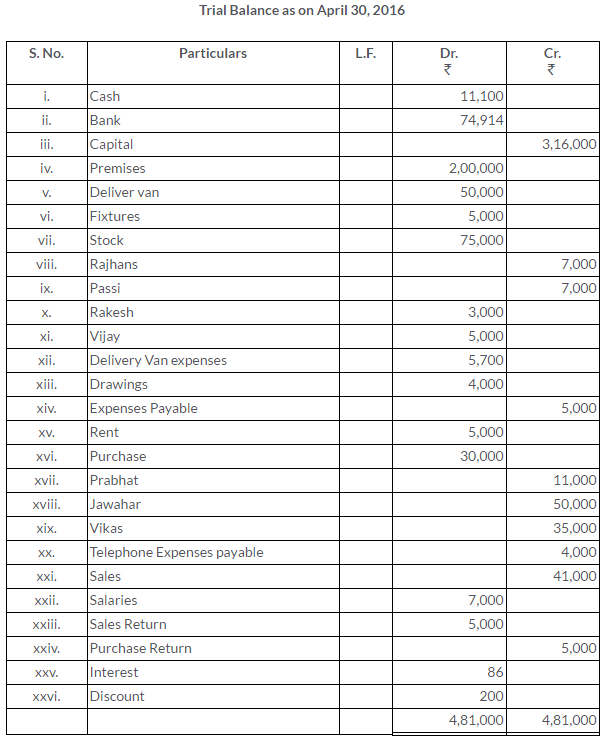
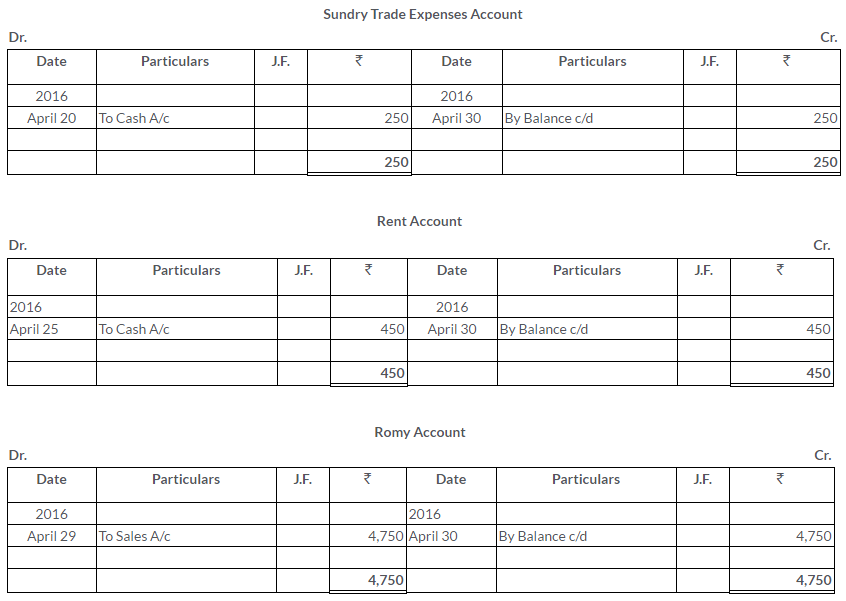
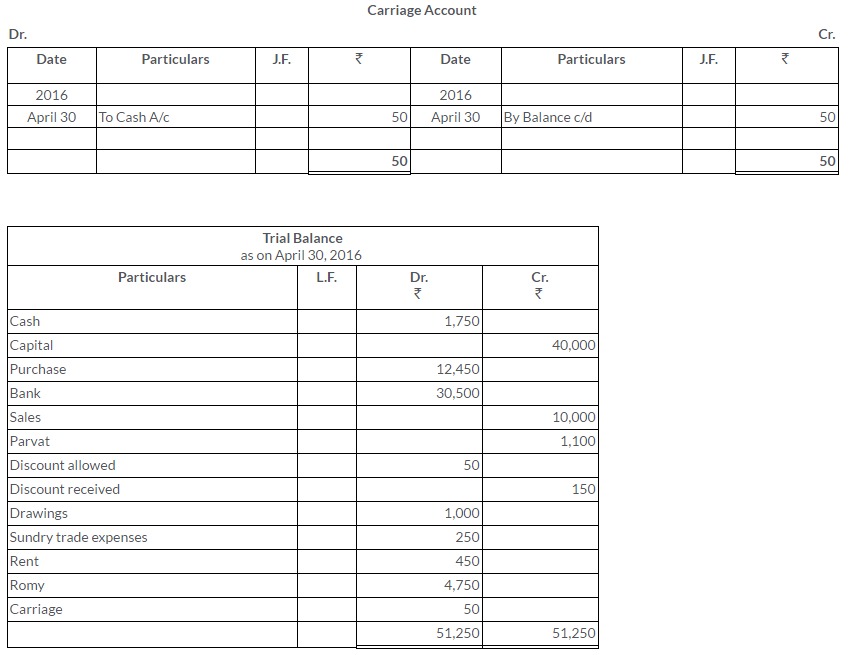
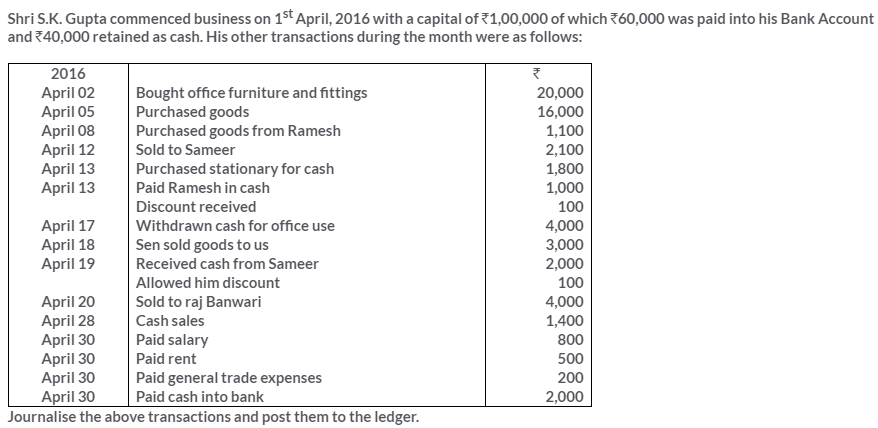
    Question 1.
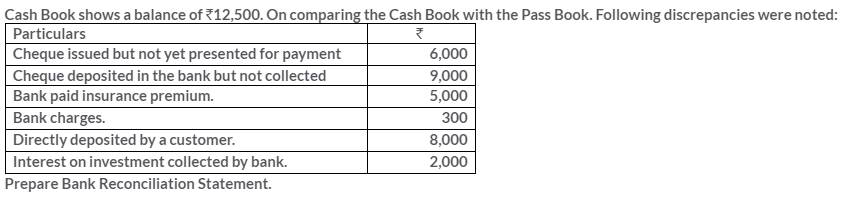
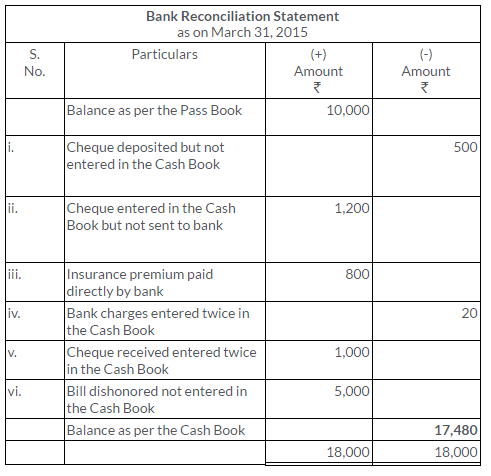
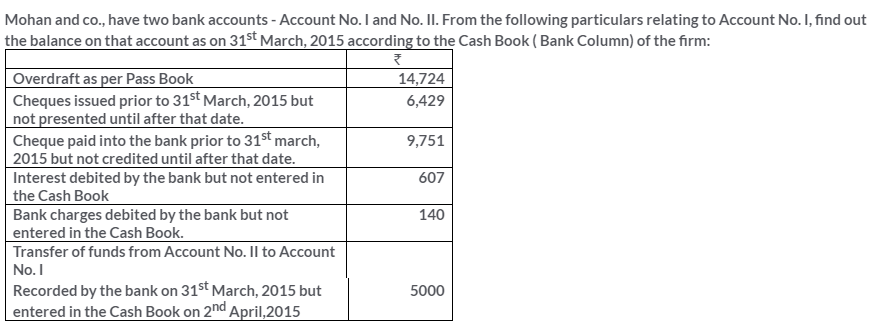
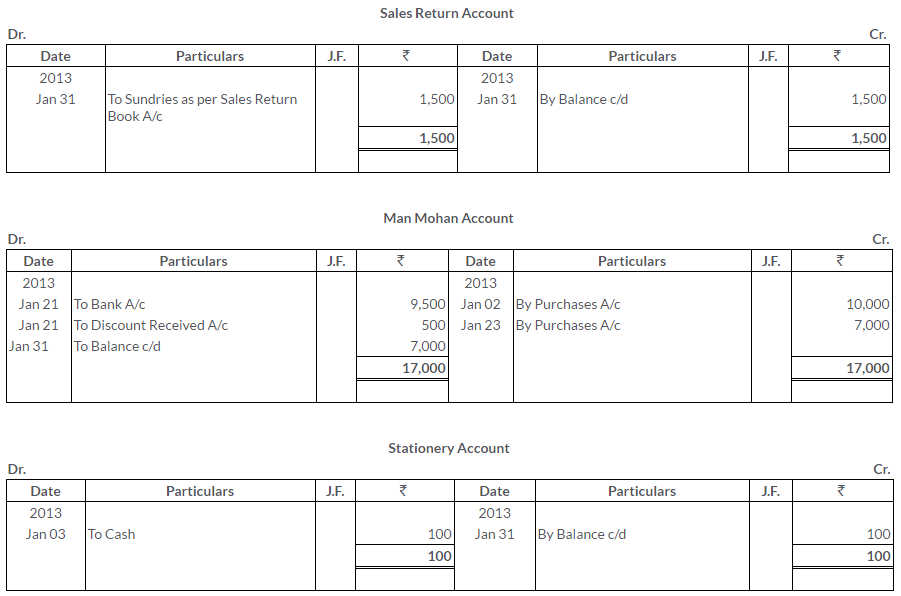
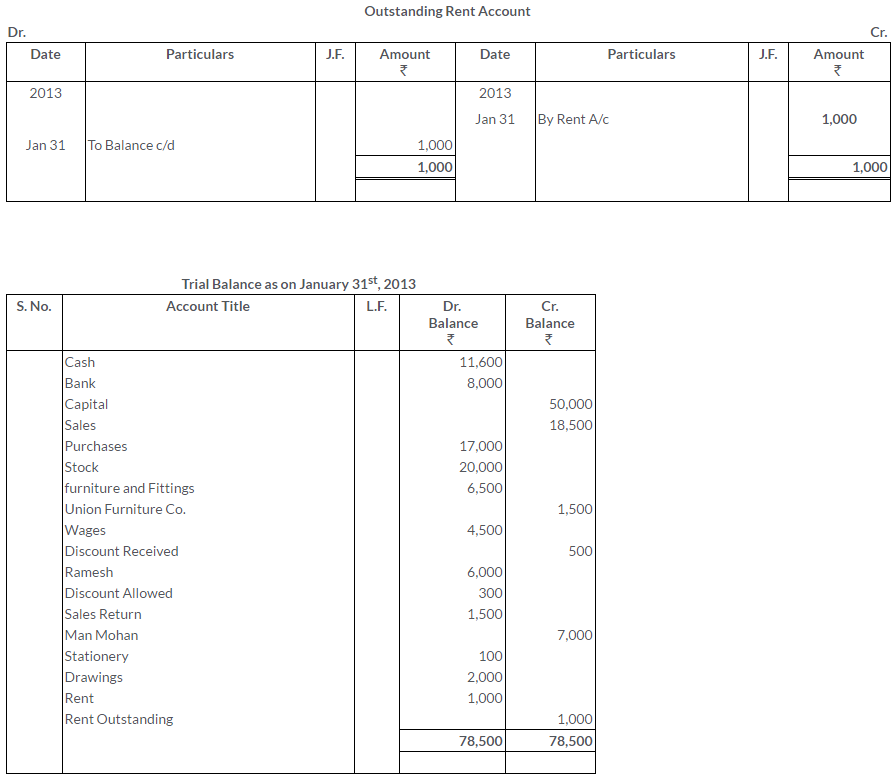
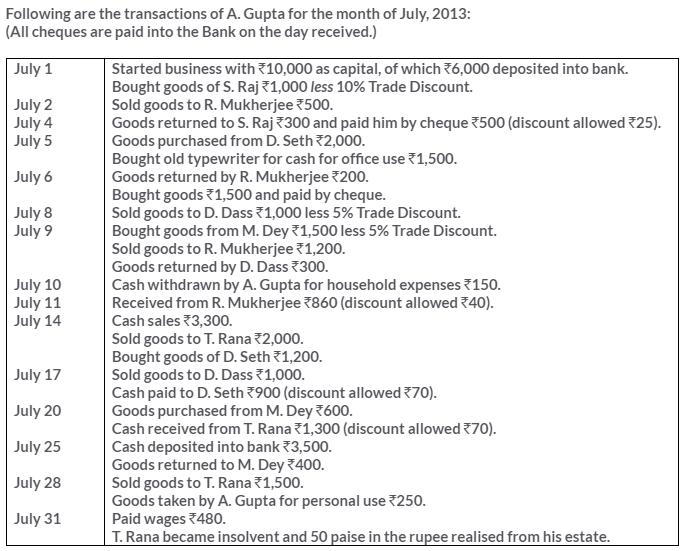
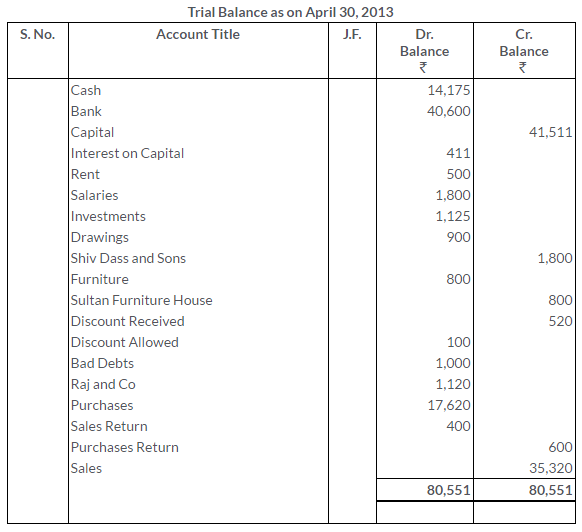
    ts-grewal-solutions-class-11-accountancy-bank-reconciliation-statement-1-1
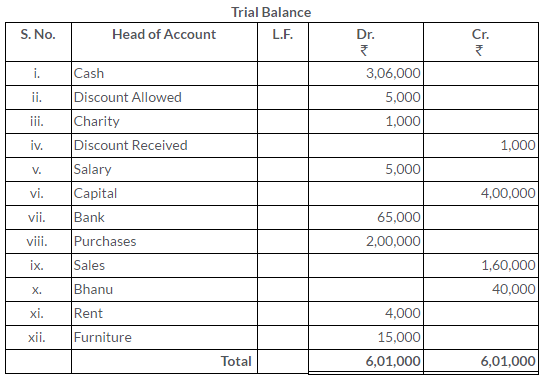
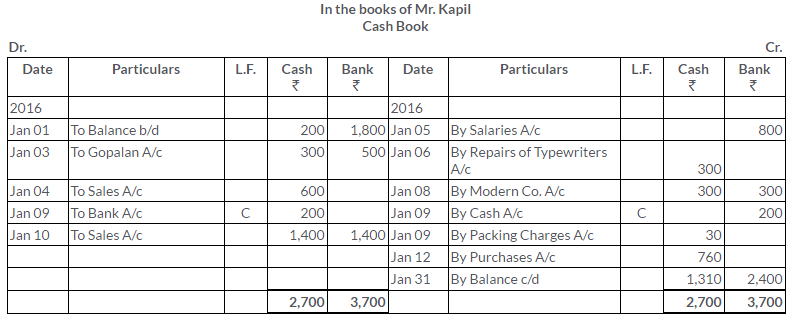
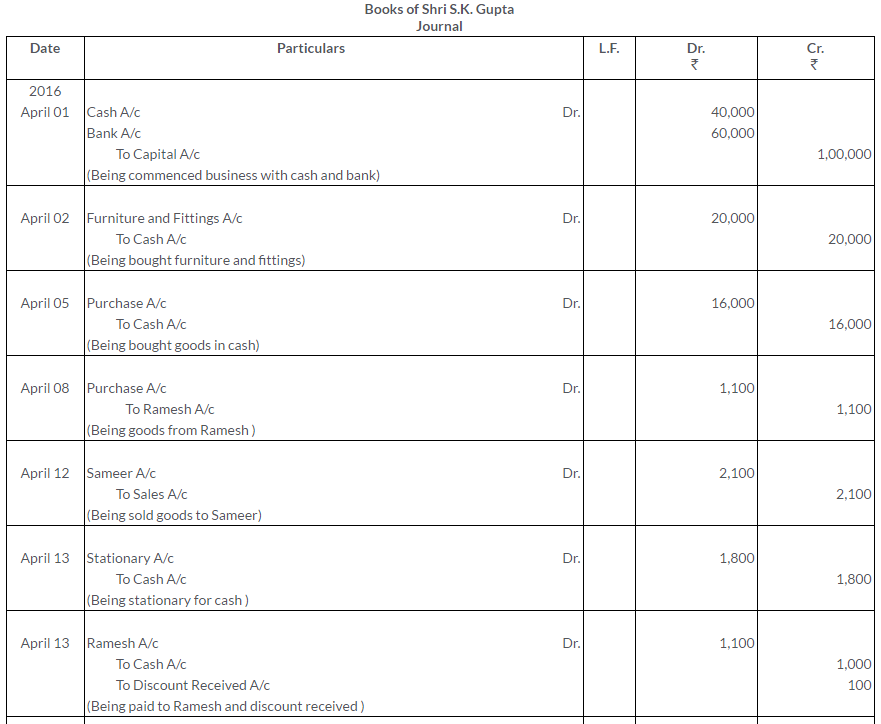
    Solution:
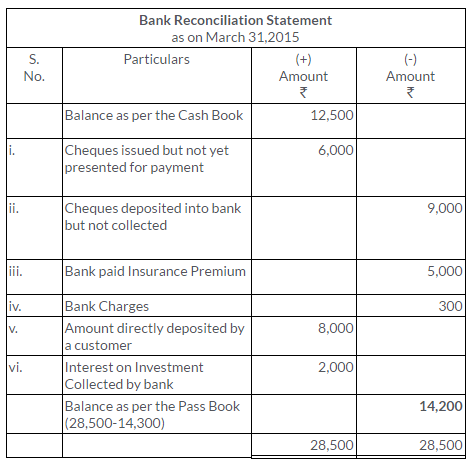
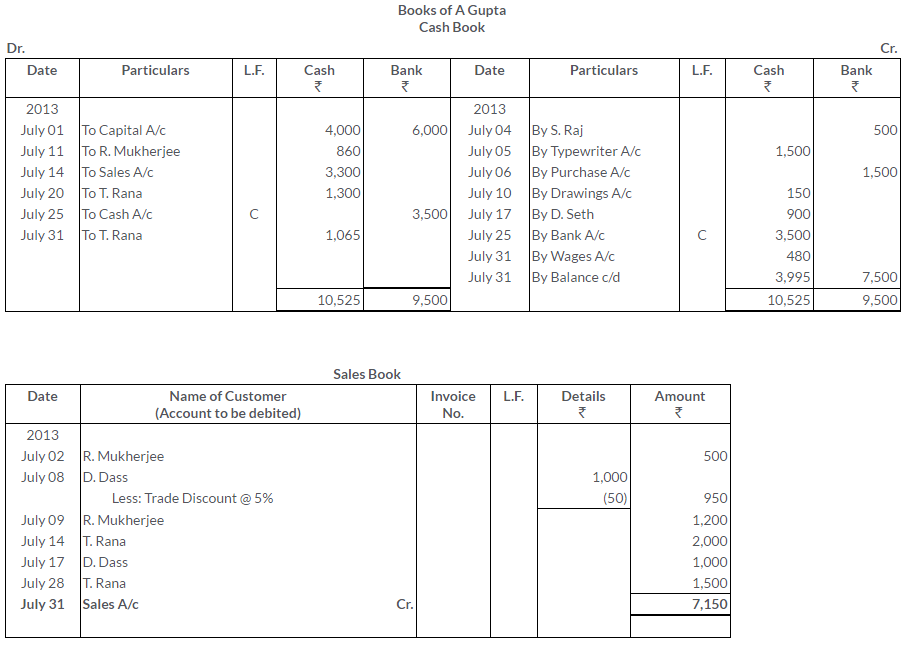
    ts-grewal-solutions-class-11-accountancy-bank-reconciliation-statement-1-2

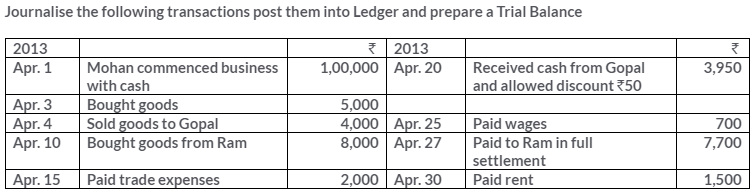
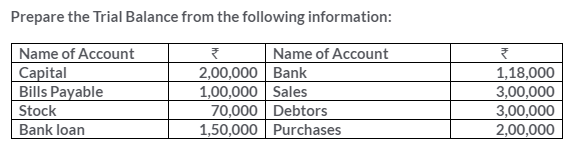
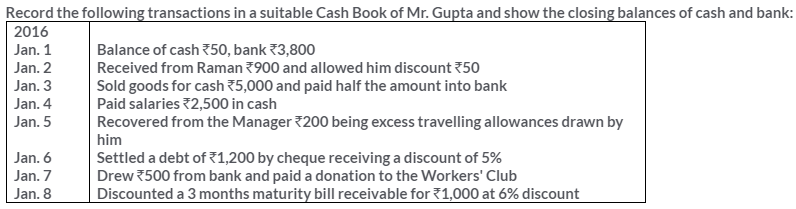
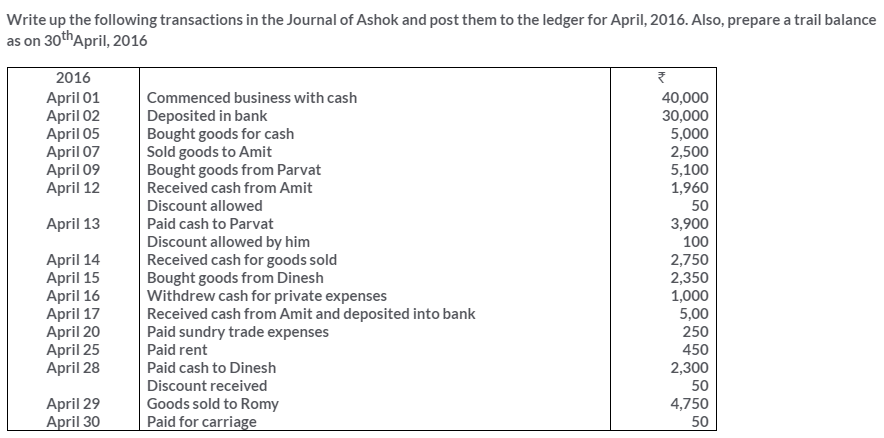
    Question 2.
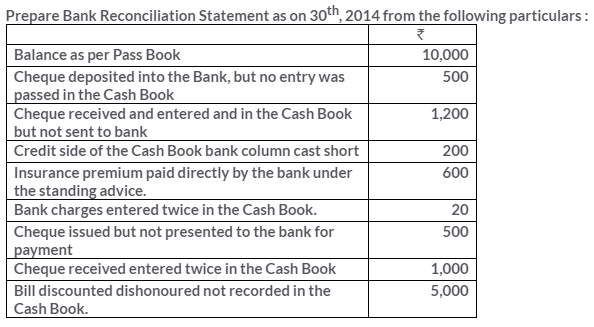
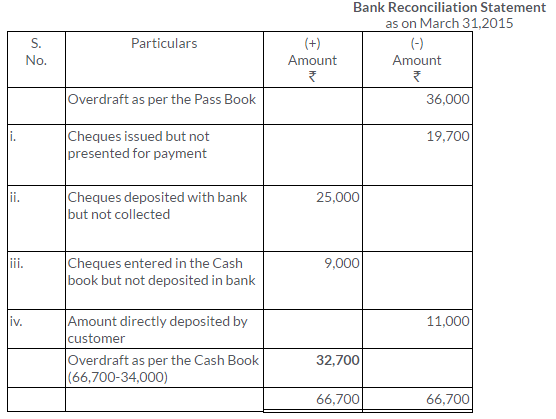
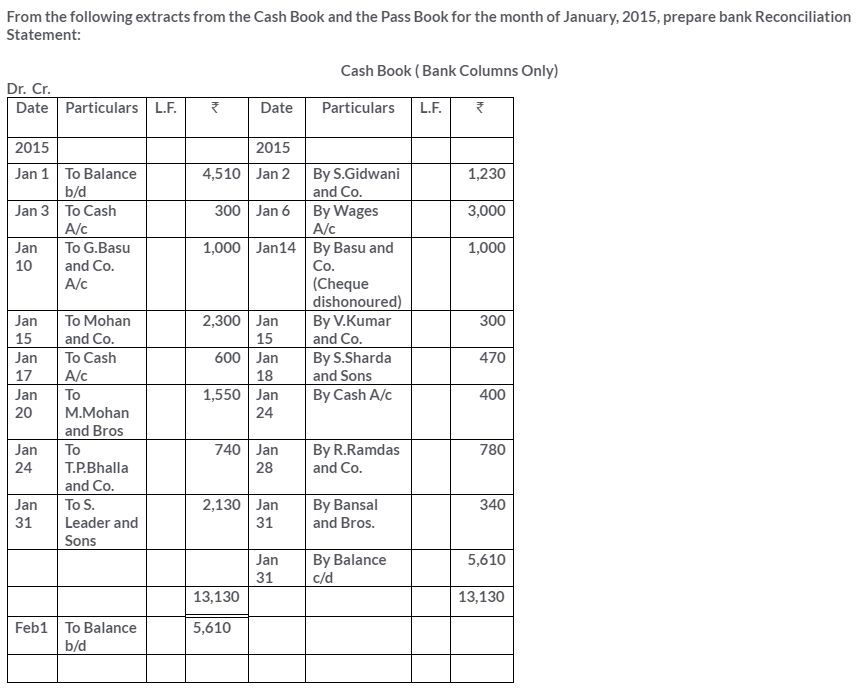
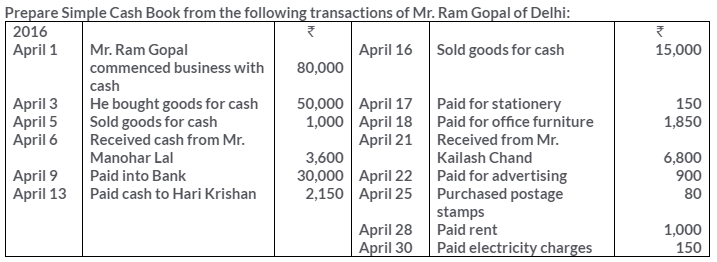
    ts-grewal-solutions-class-11-accountancy-bank-reconciliation-statement-2-1
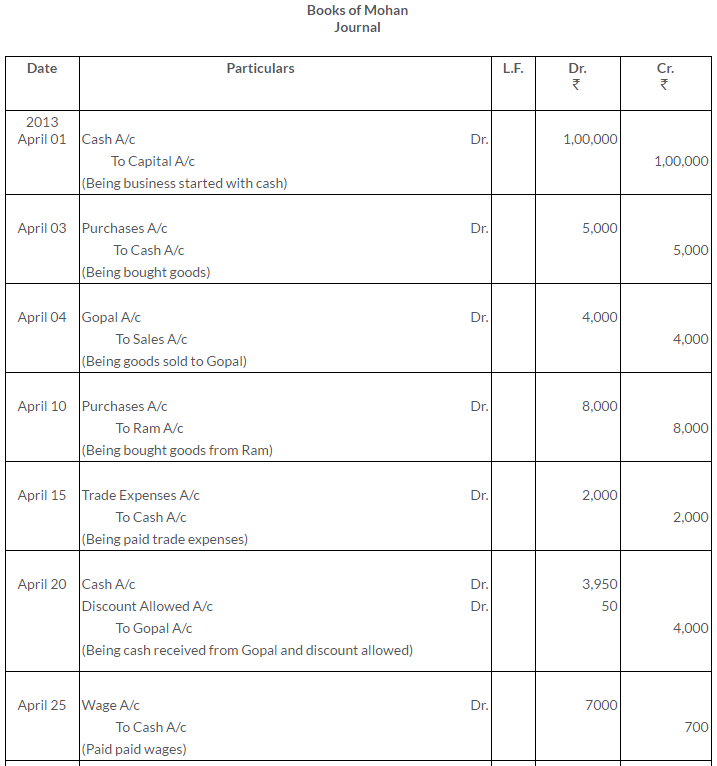
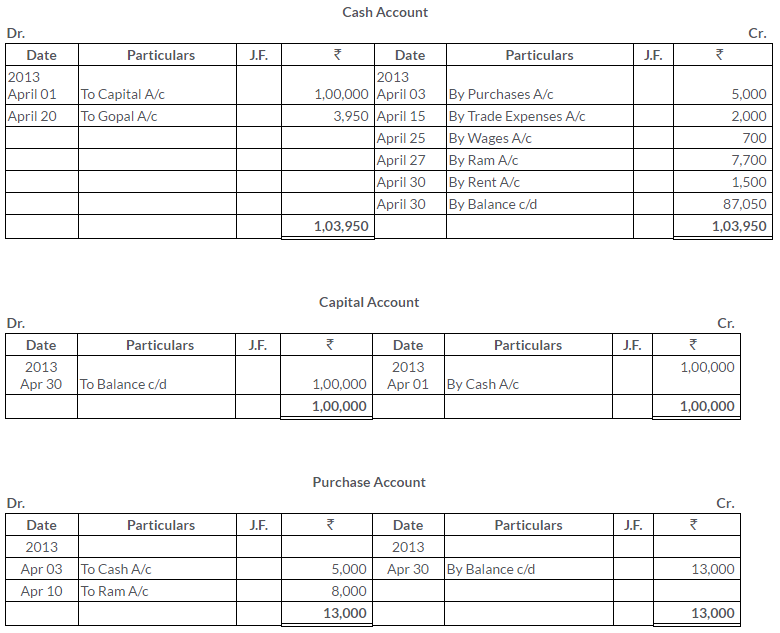
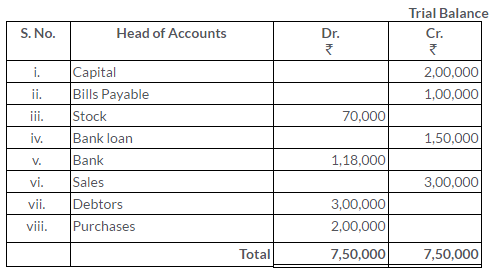
    Solution:
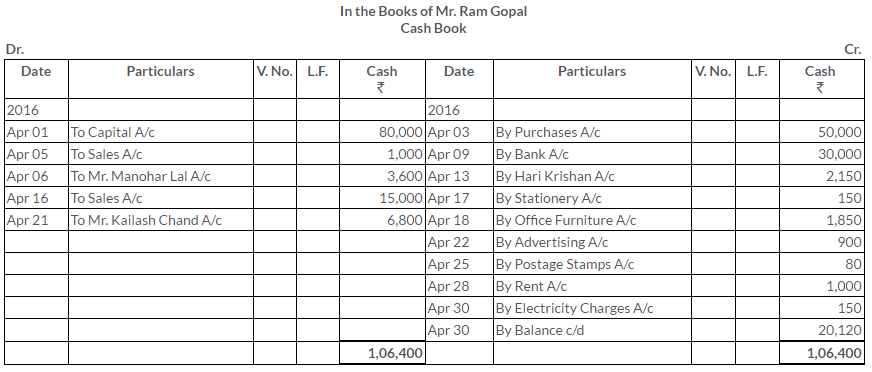
    ts-grewal-solutions-class-11-accountancy-bank-reconciliation-statement-2-2

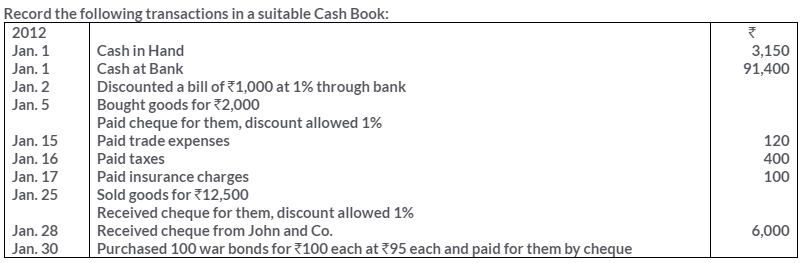
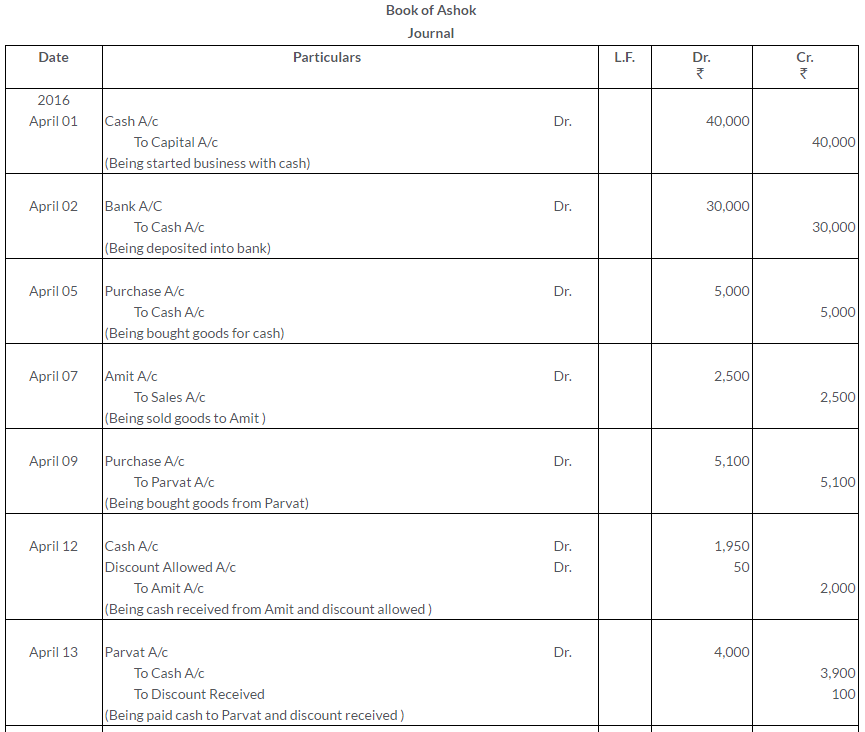
    Question 3.
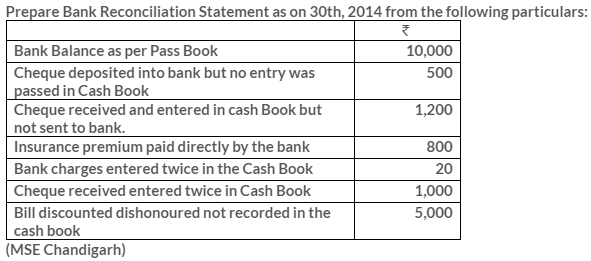
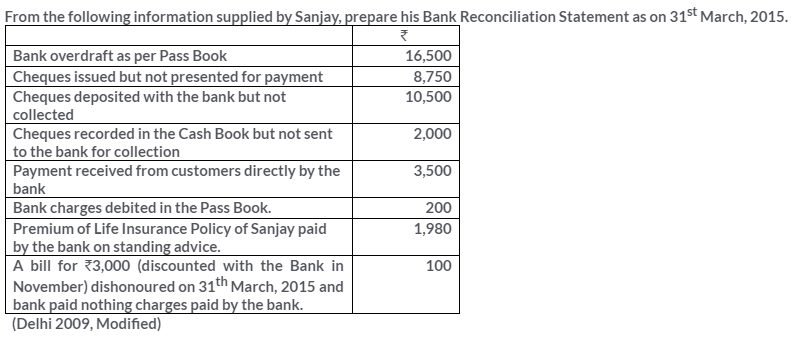
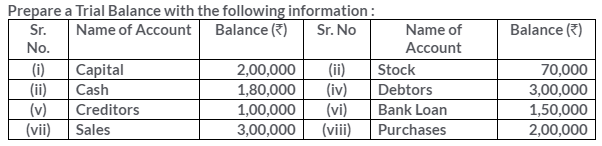
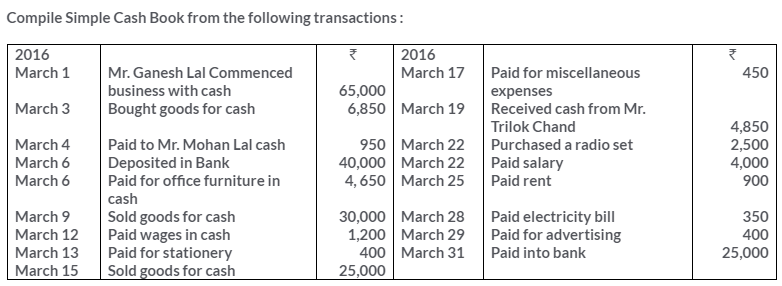
    ts-grewal-solutions-class-11-accountancy-bank-reconciliation-statement-3-1
    Solution:
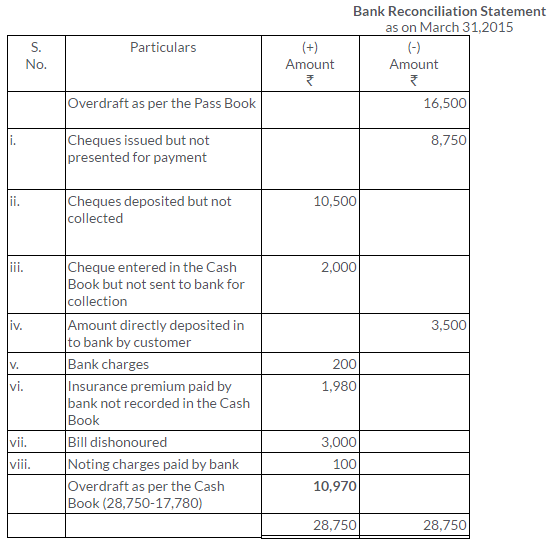
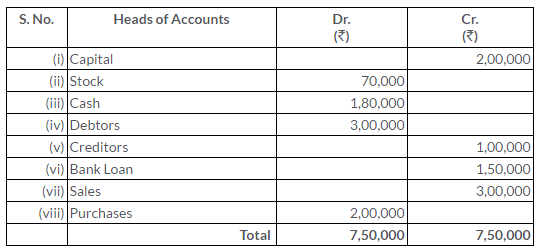
    ts-grewal-solutions-class-11-accountancy-bank-reconciliation-statement-3-2
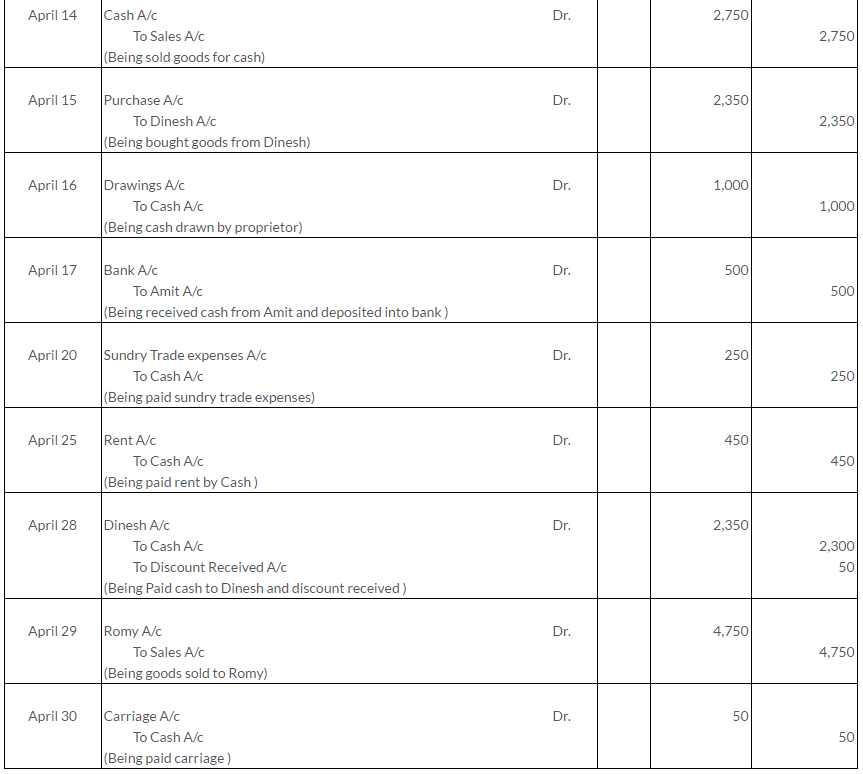
    ts-grewal-solutions-class-11-accountancy-bank-reconciliation-statement-3-3
    ts-grewal-solutions-class-11-accountancy-bank-reconciliation-statement-3-4
    ts-grewal-solutions-class-11-accountancy-bank-reconciliation-statement-3-5
    ts-grewal-solutions-class-11-accountancy-bank-reconciliation-statement-3-6
    ts-grewal-solutions-class-11-accountancy-bank-reconciliation-statement-3-7

    Question 4.
    ts-grewal-solutions-class-11-accountancy-bank-reconciliation-statement-4-1
    Solution:
    ts-grewal-solutions-class-11-accountancy-bank-reconciliation-statement-4-2
    ts-grewal-solutions-class-11-accountancy-bank-reconciliation-statement-4-3
    ts-grewal-solutions-class-11-accountancy-bank-reconciliation-statement-4-4
    ts-grewal-solutions-class-11-accountancy-bank-reconciliation-statement-4-5
    ts-grewal-solutions-class-11-accountancy-bank-reconciliation-statement-4-6
    ts-grewal-solutions-class-11-accountancy-bank-reconciliation-statement-4-7
    ts-grewal-solutions-class-11-accountancy-bank-reconciliation-statement-4-8

    Question 5.
    ts-grewal-solutions-class-11-accountancy-bank-reconciliation-statement-5-1
    Solution:
    ts-grewal-solutions-class-11-accountancy-bank-reconciliation-statement-5-2

    Question 6.
    From the following ledger balances prepare Trial Balance:
    Capital – Rs.20,800;Rent Outstanding – Rs.1,420;Amount due to Param – Rs.15,000;Drawing – Rs.2,800; Goodwill – Rs.12,000;Interest Received – Rs.2,000; Discount Received – Rs.1,580;Amount due from Deepan – Rs.26,000.
    Solution:
    ts-grewal-solutions-class-11-accountancy-bank-reconciliation-statement-6

    Question 7.
    ts-grewal-solutions-class-11-accountancy-bank-reconciliation-statement-7-1
    Solution:
    ts-grewal-solutions-class-11-accountancy-bank-reconciliation-statement-7-2
    ts-grewal-solutions-class-11-accountancy-bank-reconciliation-statement-7-3
    ts-grewal-solutions-class-11-accountancy-bank-reconciliation-statement-7-4
    ts-grewal-solutions-class-11-accountancy-bank-reconciliation-statement-7-5
    ts-grewal-solutions-class-11-accountancy-bank-reconciliation-statement-7-6
    ts-grewal-solutions-class-11-accountancy-bank-reconciliation-statement-7-7
    ts-grewal-solutions-class-11-accountancy-bank-reconciliation-statement-7-8
    ts-grewal-solutions-class-11-accountancy-bank-reconciliation-statement-7-9

    Question 8.
    ts-grewal-solutions-class-11-accountancy-bank-reconciliation-statement-8-1
    Solution:
    ts-grewal-solutions-class-11-accountancy-bank-reconciliation-statement-8-2

    Question 9.
    ts-grewal-solutions-class-11-accountancy-bank-reconciliation-statement-9-1
    Solution:
    ts-grewal-solutions-class-11-accountancy-bank-reconciliation-statement-9-2

    Question 10.
    From the following balances extracted from the Ledger of Sri Narugopal, prepare Balance as on 31st March, 2015:
    Capital Rs.75,00,000;Building Rs.7,50,000; Plant Rs.15,00,000;Stock on 1st April 2014, Rs.12,50,000;Cash in Hand Rs.2,500; Cash at Bank Rs.5,75,000;Commission Received Rs.1,75,000;Rates, Taxes and Insurance Rs.30,000;Discount (Dr.) Rs.55,000; Discount (Cr.) 45,000; Purchases Return Rs.50,000;Sundry Creditors Rs.2,50,000;Interest Received Rs.30,000;Sales Rs.62,50,000; Repairing Charges Rs.1,25,000; Book Debts Rs.15,00,000;General Expenses Rs.3,00,000;Rent Rs.62,500; Wages Rs.5,00,000;Purchases Rs.48,00,000; Furniture Rs.1,20,000;Carriage and Freight Rs.75,000;Sales Return Rs.90,000; Delivery Van Rs.5,00,000;Loan Advanced Rs.6,00,000; Travelling Expenses Rs.50,000; Office Salaries Rs.6,25000, Drawings Rs.6,00,000
    Solution:
    ts-grewal-solutions-class-11-accountancy-bank-reconciliation-statement-10

    Question 11.
    ts-grewal-solutions-class-11-accountancy-bank-reconciliation-statement-11-1
    Solution:
    ts-grewal-solutions-class-11-accountancy-bank-reconciliation-statement-11-2

  • TS Grewal Solutions for Bank Reconciliation Statement Class 11 Accountancy Chapter 11

    TS Grewal Solutions for Class 11 Accountancy Chapter 11 – Bank Reconciliation Statement

    Question 1.
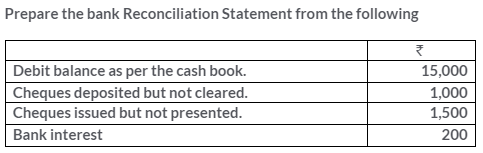
    ts-grewal-solutions-class-11-accountancy-chapter-11-bank-reconciliation-statement-1-1
    Solution:
    ts-grewal-solutions-class-11-accountancy-chapter-11-bank-reconciliation-statement-1-2

    Question 2.
    ts-grewal-solutions-class-11-accountancy-chapter-11-bank-reconciliation-statement-2-1
    Solution:
    ts-grewal-solutions-class-11-accountancy-chapter-11-bank-reconciliation-statement-2-2

    Question 3.
    On 31st March, 2015, Cash Book showed a balance of Rs.15,000 as cash at bank, but the Bank Pass Book of the same date showed that cheques for Rs.1,850, Rs.1,000 and Rs.1,750 respectively had not been presented for payment; also cheques amounting to Rs.4,100 paid into the account had not yet been cleared. Find by means of a Bank Reconciliation Statement the balance shown in the Pass Book.
    Solution:
    ts-grewal-solutions-class-11-accountancy-chapter-11-bank-reconciliation-statement-3

    Question 4.
    Mr. Ram Behari has his account at Punjab National Bank, Delhi. According to his Cash Book, his bank balance on 31st March, 2015 was Rs.72,950. He sent cheques for Rs.90,075 to his bank for collection but cheques amounted toRs. 43,769 were not collected by that date. Out of the cheques issued by him in payment of his debts, cheques for Rs.29,344 were not presented for payment. Prepare Bank Reconciliation Statement and determine the balance as shown by his Pass Book.
    Solution:
    ts-grewal-solutions-class-11-accountancy-chapter-11-bank-reconciliation-statement-4

    Question 5.
    On 31st March, 2015, Cash Book of Mahesh showed debit bank balance of Rs.75,000. When compared with the Bank Statement, following facts were discovered. 30th March, two cheques of Rs.5,000 and Rs.7,000 were deposited in the bank but were not realised till date. On 28th March, three cheques of Rs.6,000, Rs.8,000 and Rs.12,000 were issued but none of these were presented to the bank for payment. On 31st March, bank credited Rs.1,250 as interest but this was not recorded in the Cash Book. Similarly, bank had charged Rs.150 as bank charges but this was not recorded in the Cash Book Prepare Bank Reconciliation Statement on 31st March, 2015.
    Solution:
    ts-grewal-solutions-class-11-accountancy-chapter-11-bank-reconciliation-statement-5

    Question 6.
    Cash Book of a merchant showed bank balance of Rs.23,000 on 31st March, 2015. On go’ through the Cash Book, it was found that two cheques for Rs.5,000 and Rs.7,000 deposited the month of March were not credited in the Pass Book till 2nd April, 2015 and three cheques for Rs.6,000, Rs.8,000 and Rs.12,000 issued on 28th March, were not presented payment till 3rd April, 2015. In addition to this, bank had credited merchant for Rs.125 interest and had debited him for Rs.100 as bank charges for which entries in Cash Bo were not recorded. Prepare Bank Reconciliation Statement as on 31st March, 2015.
    Solution:
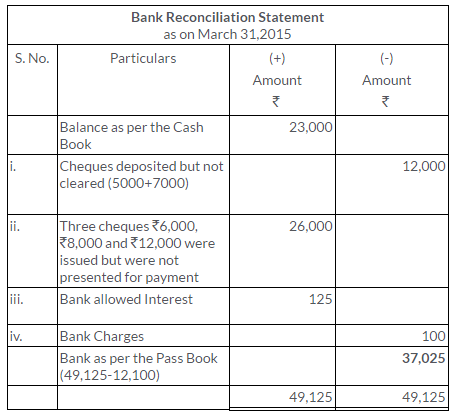
    ts-grewal-solutions-class-11-accountancy-chapter-11-bank-reconciliation-statement-6

    Question 7.
    On 30th June, 2015, bank column of the Cash Book showed balance of Rs.12,000 but the Pass Book showed a different balance due to the following reasons:
    i. Cheques paid into the bank Rs.8,000 but out of these only cheques of 6,500 credited by bankers.
    ii. The receipt column of the Cash Book under cast by Rs.200.
    iii. On 29th June, a customer deposited Rs.3000 directly in the Bank Account but it was entered in the Pass Book only.
    iv. Cheques of Rs.9,200 were issued of which Rs.2,200 were presented for payment on 15th July.
    v. Pass Book shows a credit of Rs.330 as interest and a debit of Rs.60 as bank charges. Prepare Bank Reconciliation Statement as on 30th June, 2015.
    Solution:
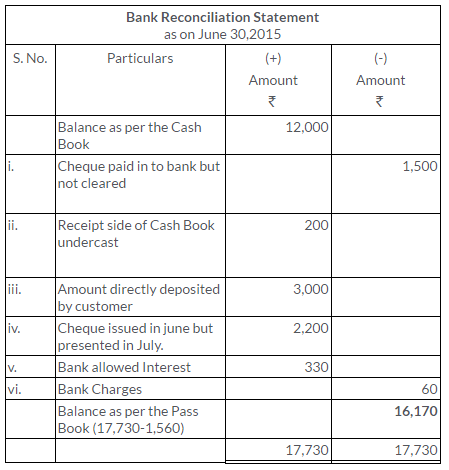
    ts-grewal-solutions-class-11-accountancy-chapter-11-bank-reconciliation-statement-7

    Question 8.
    ts-grewal-solutions-class-11-accountancy-chapter-11-bank-reconciliation-statement-8-1
    Solution:
    ts-grewal-solutions-class-11-accountancy-chapter-11-bank-reconciliation-statement-8-2

    Question 9.
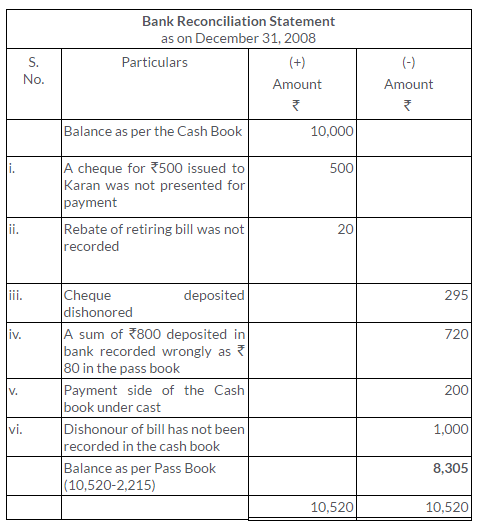
    From the following particulars, prepare Bank Reconciliation Statement as on 31st December, 2008:
    i. Debit balance as per Cash Book Rs.10,000.
    ii. A cheque for Rs.500 issued in favour of Karan has not been presented for payment.
    iii. A bill for Rs.700 retired by bank under a rebate of Rs.20, the full amount of the bill was credited in the Cash Book.
    iv. A cheque for Rs.295 deposited in the bank has been dishonoured.
    v. A sum of Rs.800 deposited in the bank has been credited as Rs.80 in the Pass Book.
    vi. Payment side of the Cash Book has been under cast by Rs.200.
    vii. A bill receivable for Rs.1,000 (discounted with the bank in November 2008) dishonoured on 31st December, 2008.
    Solution:
    ts-grewal-solutions-class-11-accountancy-chapter-11-bank-reconciliation-statement-9

    Question 10.
    On examining the Bank Statement of Green Ltd., it is found that the balance shown on 31st March, 2015, differs from the bank balance of Rs.23,650 shown by the Cash Book on that date. From a detailed comparison of the entries it is found that:
    i. Rs.2,860 is entered in the Cash Book as paid into the bank on 31st March, 2015 but not credited by the ba until the following day.
    ii. Bank charges of Rs.70 on 31st March, 2015 are not entered in the Cash Book.
    iii. A bill for Rs.5,500 discounted with the bank is entered in the Cash Book without recording the discount charges of Rs.270.
    iv. Cheques totaling Rs.16,720 were issued by the company and duly recorded in the Cash Book before 31st March, 2015 but had not been presented at the Bank for payment until after that date.
    v. On 25th March, 2015, a debtor paid Rs.1,000 into the Company’s Bank in settlement of his account but no entry was made in the Cash Book of the company in respect of this.
    vi. No entry has been made in the Cash Book to record the dishonor on 15th March, 2015, of a cheque for Rs.550 received from Ram Babu. Prepare a Bank Reconciliation Statement as on 31st March, 2015.
    Solution:
    ts-grewal-solutions-class-11-accountancy-chapter-11-bank-reconciliation-statement-10

    Question 11.
    Prepare Bank Reconciliation Statement from the following particulars on 31st July, 2015:
    i. Balance as per the Pass Book Rs.50,000.
    ii. Three cheques for Rs.6,000, Rs.3,937 and Rs.1,525 issued in July, 2015 were presented for payment to the bank in August, 2015.
    iii. Two cheques of Rs.500 and Rs.650 sent to the bank for collection were not entered in the Pass Book by 31st July, 2015.
    iv. The bank charged Rs.460 for its commission and allowed interest of Rs. 100 which were not mentioned in the Bank Column of the Cash Book.
    Solution:
    ts-grewal-solutions-class-11-accountancy-chapter-11-bank-reconciliation-statement-11

    Question 12.
    ts-grewal-solutions-class-11-accountancy-chapter-11-bank-reconciliation-statement-12-1
    Solution:
    ts-grewal-solutions-class-11-accountancy-chapter-11-bank-reconciliation-statement-12-2

    Question 13.
    Draw Bank Reconciliation Statement showing adjustment between your cash book and pass book as on 31st March, 2011:
    i. On 31st March, 2011 your pass book showed a balance of Rs.6,000 to your credit.
    ii. Before that date, you had issued cheques amounting to Rs.1,500 of which cheques of Rs.900 have been presented for payment.
    iii. A cheque of Rs.800 paid by you into the bank on 29th March, 2011 is not yet credited pass book.
    iv. There was a credit of Rs.85 for interest on Current Account in the pass book.
    v. On 31st March, 2011 a cheque for Rs.510 received by you and was paid into bank the same was omitted to be entered in cash book.
    (MSE Chandigarh 2012)
    Solution:
    ts-grewal-solutions-class-11-accountancy-chapter-11-bank-reconciliation-statement-13

    Question 14.
    ts-grewal-solutions-class-11-accountancy-chapter-11-bank-reconciliation-statement-14-1
    Solution:
    ts-grewal-solutions-class-11-accountancy-chapter-11-bank-reconciliation-statement-14-2

    Question 15.
    From the following particulars, prepare a Bank Reconciliation Statement of Govil as on 31st March, 2015: Balance as per Pass Book on 31st March, 2015 is Rs.8,500. Rs.5,100 were issued during the month of March but out of these, cheques for Rs.1,200 were presented in the month of April, 2015 and one cheque for Rs.200 was not presented for payment. Cheque and cash amounting to Rs.4,800 were deposited in the bank during March but credit was given for Rs.3,800 only. A customer had deposited Rs.800 into the bank directly. The bank has credited Covil for Rs.200 as interest and has debited him for Rs.90 as bank charges, for which there are no corresponding entries in the Cash Book.
    Solution:
    ts-grewal-solutions-class-11-accountancy-chapter-11-bank-reconciliation-statement-15

    Question 16.
    Bank Statement of a customer shows bank balance of 62,000 on 31st March, 2015. On comparing it with the Cash Book the following discrepancies were noted:
    i. Cheques were paid into the bank in March but were credited in April: P-Rs. 3,500; Q-Rs.2,500; R-Rs.2,000.
    ii. Cheques issued in March were presented in April: X-Rs. 4,000; Q-Rs. 4,500.
    iii. Cheque for Rs.1,000 received from a customer entered in the Cash Book but was not banked.
    iv. Pass Book shows a debit of Rs.1,000 for bank charges and credit of Rs.2,000 as interest.
    v. Interest on investment Rs.2,500 collected by the bank appeared in the Pass Book. Prepare Bank Reconciliation Statement showing the balance as per Cash Book on 31st March, 2015.
    (MSE Chandigarh 2003, Modified)
    Solution:
    ts-grewal-solutions-class-11-accountancy-chapter-11-bank-reconciliation-statement-16

    Question 17.
    On 1st January, 2015, Naresh had an overdraft of Rs. 40,000 as shown by his Cash Book in the bank column. Cheques amounting to Rs.10,000 had been deposited by him but were not collected by the bank by 1st January, 2015. He issued cheques of Rs.7,000 which were not presented to the bank for payment up to that day. There was also a debit in his Pass Book of Rs.600 for interest and Rs. 500 for bank charges. Prepare a Bank Reconciliation Statement.
    Solution:
    ts-grewal-solutions-class-11-accountancy-chapter-11-bank-reconciliation-statement-17

    Question 18.
    On 31st March, 2015, Cash Book of B. Babu showed an overdraft of Rs.18,000 with the Bank of India. This balance did not agree with the balance as shown by the Bank Pass Book. You find that Babu had paid into the bank on 26th March, four cheques for Rs.10,000, Rs.12,000, Rs.6,000 and Rs.8,000. Out of these the cheque for Rs.6,000 was credited by the bank in April, 2015. Babu had issued on 24th March three cheques for Rs.15,000, Rs.12,000 and Rs.7,000. The first two cheques were presented to the bank for payment in March, 2015 and the third cheque in April, 2015.
    You also find that on 31st March, 2015 the bank had debited Babu’s Account with Rs.500 for interest and Rs.20 as charges, but Babu had not recorded these amounts in his books. Prepare Bank Reconciliation Statement as on 31st March, 2015 and ascertain the balance as per Bank Pass Book.
    Solution:
    ts-grewal-solutions-class-11-accountancy-chapter-11-bank-reconciliation-statement-18

    Question 19.
    On 31st March, 2015, Cash Book of a merchant showed bank overdraft of Rs.1,72,985. On comparing the Cash Book with Bank Statement, following discrepancies were noted:
    i. Cheques issued for Rs.60,000 were not presented in the bank till 7th April, 2015.
    ii. Cheques amounting to Rs.75,000 were deposited in the bank but were not collected.
    iii. A cheque of Rs.15,000 received from Mahesh Chand and deposited in the bank was dishonored but the non-payment advice was not received from the bank till 1st April, 2015.
    iv. Rs.1, 50,000 being the proceeds of a bill receivable collected appeared in the Pass Book but not in the Cash Book.
    v. Bank charges Rs.1,500 and interest on overdraft Rs.8,500 appeared in the Pass Book but not in the Cash Book.
    Prepare Bank Reconciliation Statement and show what balance the Bank Pass Book would indicate on 31st March, 2015.
    Solution:
    ts-grewal-solutions-class-11-accountancy-chapter-11-bank-reconciliation-statement-19

    Question 20.
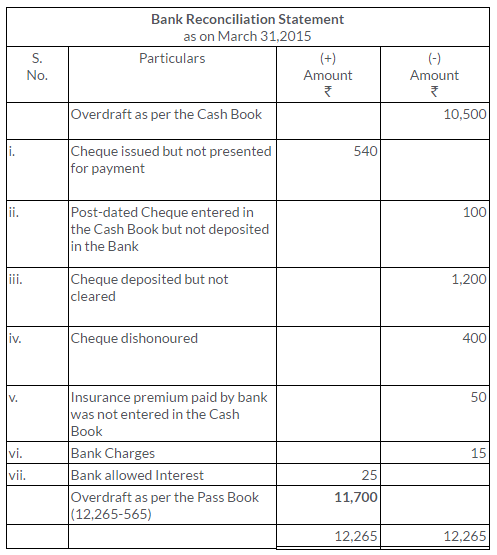
    Prepare Bank Reconciliation Statement from the following: On 31st March, 2015, a merchant’s Cash Book showed a credit bank balance of 10,500 but due to the following reasons the Pass Book showed a difference:
    i. A cheque of Rs.540 issued to Mohan has not been presented for payment.
    ii. A post-dated cheque for Rs.100 has been debited in the bank column of the Cash Book but under no circumstances was it possible to present it.
    iii. Four cheques of Rs.1,200 sent to the bank have not been collected so far. A cheque Rs.400 deposited in the bank has been dishonoured.
    iv. As per instructions, the bank paid Rs.50 as Fire Insurance premium but the entry has not been made in the Cash Book.
    v. There was a debit in the Pass Book of Rs.15 in respect of bank charges and a credit of Rs.25 for interest on Current Account but no record exists in the Cash Book.
    Solution:
    ts-grewal-solutions-class-11-accountancy-chapter-11-bank-reconciliation-statement-20

    Question 21.
    Tiwari and Sons find that the bank balance shown by their Cash Book on 31st March, 2015 is Rs.40,500 (credit) but the Pass Book shows a difference due to the following reasons:
    i. A cheque for Rs.5,000 drawn in favour Manohar has not yet been presented for payment.
    ii. A post-dated cheque for Rs.900 has been debited in the bank column of the Cash Book.
    iii. Cheques totaling Rs.10,200 deposited with the bank have not yet been collected and a cheque for Rs.4,000 has been dishonoured.
    iv. A bill for 10,000 was retired by the bank under a rebate of 150 but the full amount of the bill was credited in the bank column of the Cash Book.
    Prepare a Bank Reconciliation Statement and find out the balance as per the Pass Book.
    (KVS 2005, Modified)
    Solution:
    ts-grewal-solutions-class-11-accountancy-chapter-11-bank-reconciliation-statement-21

    Question 22.
    From the following particulars of a trader, prepare a Bank Reconciliation Statement 31st March, 2015:
    i. Bank overdraft as per Cash Book Rs.52,100.
    ii. During the month, the total amount of cheques for Rs.94,400 were deposited into the bank but of these, one cheque for Rs.11,160 has been entered into the Pass Book on 5th April
    iii. During the month, cheques for Rs.89,580 were drawn in favour of creditors. Of them, one creditor for Rs.38,580 encashed his cheque on 7th April whereas another for Rs.4,320 have not yet been encashed.
    iv. As per instructions the bank on 28th March paid out 10,500 to a creditor but by mistake, the same has not been entered in the Cash Book.
    v. According to agreement, on 25th March, a debtor deposited directly into the Rs.9,000 but the same has not been recorded in the Cash Book.
    vi. In the month of March, the bank without any intimation, debited his account for Rs.120 as bank charges and credited the same for Rs.180 as interest.
    Solution:
    ts-grewal-solutions-class-11-accountancy-chapter-11-bank-reconciliation-statement-22

    Question 23.
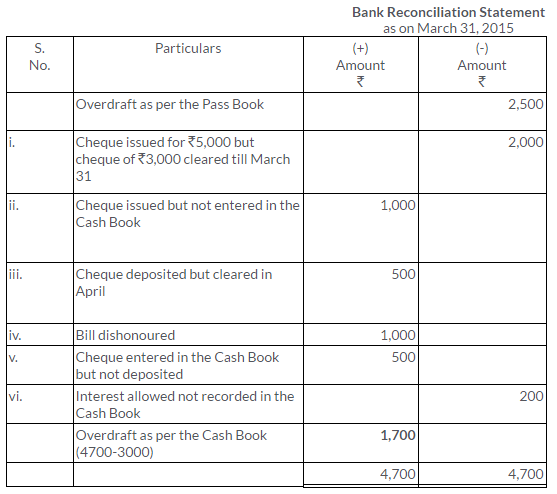
    Prepare Bank Reconciliation Statement from the following particulars as on 31st March, 2015, when Pass Book shows a debit balance of Rs.2,500:
    i. Cheque issued for Rs.5,000 but up to 31st March, 2015 only Rs.3,000 could be cleared.
    ii. Cheques issued for Rs.1,000 but omitted to be recorded in the Cash Book.
    iii. Cheques deposited for Rs.5,500 but cheques for Rs.500 were collected on 4th April, 2015.
    iv. A discounted Bill of Exchange dishonoured Rs.1,000.
    v. A Rs.500 debited in Cash Book but omitted to be banked.
    vi. Interest allowed by bank Rs.200 but no entry was passed in the Cash Book.
    (Delhi 2002, Adapted)
    Solution:
    ts-grewal-solutions-class-11-accountancy-chapter-11-bank-reconciliation-statement-23

    Question 24.
    ts-grewal-solutions-class-11-accountancy-chapter-11-bank-reconciliation-statement-24-1
    Solution:
    ts-grewal-solutions-class-11-accountancy-chapter-11-bank-reconciliation-statement-24-2

    Question 25.
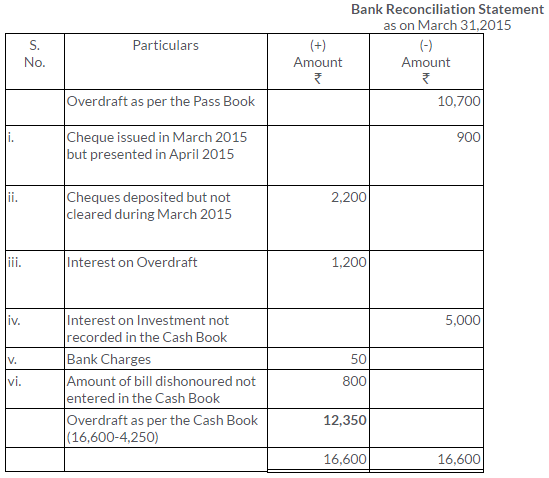
    On 31st March, 2015, Bank Pass Book of Naresh and Co. showed an overdraft of Rs.10,700. From the following particulars, prepare Bank Reconciliation Statement:
    i. Cheques issued before 31st March, 2015 but presented for payment after that date amounted to Rs.900.
    ii. Cheques paid into the bank but not collected and credited until 31st March, 2015 amounted to Rs.2,200.
    iii. Interest on overdraft amounting to Rs.1,200 did not appear in the Cash Book.
    iv. Rs.5,000 being interest on investments collected by the bank and credited in the Pass Book were not shown in the Cash Book.
    v. Bank charges of Rs.50 were not entered in the Cash Book.
    vi. Rs.800 in respect of dishonoured cheque were entered in the Pass Book but not in the Cash Book.
    Solution:
    ts-grewal-solutions-class-11-accountancy-chapter-11-bank-reconciliation-statement-25

    Question 26.
    On 31st March, 2015, Pass Book of Shri Bhama Shah shows debit balance of Rs.10,000. From the following particulars, prepare Bank Reconciliation Statement:
    i. Cheques amounting to Rs.8,000 drawn on 25th March of which cheques of Rs.5,000 cashed in April, 2015.
    ii. Cheques paid into bank for collection of Rs.5,000 but cheques of Rs.2,200 could only be collected in March, 2015.
    iii. Bank charges Rs.25 and dividend of Rs.350 on investment collected by bank could not be shown in the Cash Book.
    iv. A cheque of Rs.600 debited in the Cash Book omitted to be banked.
    (Delhi 2005, Modified)
    Solution:
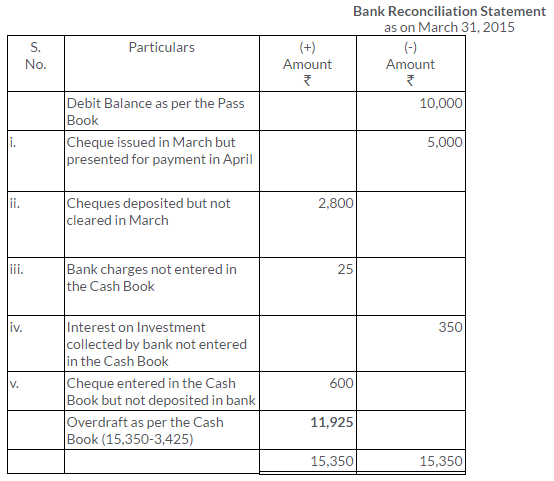
    ts-grewal-solutions-class-11-accountancy-chapter-11-bank-reconciliation-statement-26

    Question 27.
    On checking the Bank Pass Book it was found that it showed an overdraft of Rs. 5,220 as on 31st March, 2015, while as per Ledger it was different. The following differences were noted:
    i. Cheques deposited but not yet credited by the bank Rs.6,000.
    ii. Cheques dishonoured and debited by the bank but not given effect to it in the Ledger Rs.800.
    iii. Bank charges debited by the bank but Debit Memo not received from the bank Rs.50.
    iv. Interest on overdraft excess credited in the Ledger Rs.200.
    v. Wrongly credited by the bank to account, deposit of some other party Rs.900.
    vi. Cheques issued but not presented for payment Rs.400.
    (Delhi 2001, Modified)
    Solution:
    ts-grewal-solutions-class-11-accountancy-chapter-11-bank-reconciliation-statement-27

    Question 28.
    Prepare Bank Reconciliation Statement from the following particulars as on 31st 2015 when Pass Book shows a debit balance of Rs.2,500:
    i. Cheque issued for Rs.5,000 but up to 31st March, 2015 only 3,000 could be cleared.
    ii. Cheques deposited for Rs.5,500 but cheques of Rs.500 were collected on 10th April, 2015.
    iii. A discounted bill of exchange dishonoured Rs.2,000.
    iv. A cheque of Rs.300 debited in Cash Book but omitted to be banked.
    v. Interest allowed by bank Rs.400 but no entry was passed in the Cash Book.
    (KVS 2004, Modified)
    Solution:
    ts-grewal-solutions-class-11-accountancy-chapter-11-bank-reconciliation-statement-28

    Question 29.
    From the following particulars, you are required to ascertain the bank balance as appear in the Cash Book of Ramesh as on 31st October, 2014:
    i. Bank Pass Book showed an overdraft of Rs.16,500 on 31st October.
    ii. Interest of Rs.1,250 on overdraft up to 31st October, 2014 has been debited in the Pass Book but it has not been entered in the Cash Book.
    iii. Bank charges debited in the Bank Pass Book amounted to Rs.35.
    iv. Cheques issued prior to 31st October, 2014 but not presented till that date, amounted, to Rs.11,500.
    v. Cheques paid into bank before 31st October, but not collected and credited up to date, were for Rs.2,500.
    vi. Interest on investment collected by the bankers and credited in the Bank Pass amounted to Rs.1,800.
    (KVS 2003, Modified)
    Solution:
    ts-grewal-solutions-class-11-accountancy-chapter-11-bank-reconciliation-statement-29

    Question 30.
    ts-grewal-solutions-class-11-accountancy-chapter-11-bank-reconciliation-statement-30-1
    Solution:
    ts-grewal-solutions-class-11-accountancy-chapter-11-bank-reconciliation-statement-30-2

    Question 31.
    Prepare Bank Reconciliation Statement as on 31st March, 2015 from the following particulars :
    i. R’s overdraft as per Pass Book Rs.12,000 as on 31st March.
    ii. On 30th March, cheques had been issued for Rs.70,000 of which cheques amounting Rs.3,000 only had been encashed up to 31st March.
    iii. Cheques amounting to Rs.3,500 had been paid into the bank for collection but of these only 500 had been credited in the Pass Book.
    iv. Bank has charged Rs.500 as interest on overdraft and the intimation of which has been received on 2nd April, 2015.
    v. Bank Pass Book shows credit for Rs.1,000 representing Rs.400 paid by debtor of R direct into the bank and Rs.600 collected directly by the bank in respect of interest on R’s investment. R had no knowledge of these items.
    vi. A cheque for Rs.200 has been debited in the bank column of Cash Book by R but it was not sent to the bank at all.
    Solution:
    ts-grewal-solutions-class-11-accountancy-chapter-11-bank-reconciliation-statement-31

    Question 32.
    Prepare Bank Reconciliation Statement from the following particulars and show balance as per Cash Book:
    i. Balance as per Pass Book on 31st March, 2015 overdrawn Rs.10,000.
    ii. Cheques drawn in the last week of March, 2015 but not cleared till 3rd April, 2015 Rs.20,000.
    iii. Interest on bank overdraft not entered in the Cash Book Rs.1,500.
    iv. Cheques of Rs.20,000 deposited in the bank in March, 2015 but not collected and credited till 3rd April, 2015.
    v. Rs.100 insurance premium paid by the bank under a standing order has not been entered in the Cash Book.
    Solution:
    ts-grewal-solutions-class-11-accountancy-chapter-11-bank-reconciliation-statement-32

    Question 33.
    Bank Pass Book of Mr. X showed an overdraft of Rs.33,575 on 31st March, 2015. On going through the Pass Book the accountant found the following:
    i. A cheque of Rs.1,080 credited in the Pass Book on 28th March, being dishonoured is debited again in the Pass Book on 1st April, 2015. There was no entry in the Cash Book about the dishonour of the cheque until 15th April.
    ii. Bankers had credited his account with Rs.2,800 for interest collected by them on his behalf but the same had not been entered in his Cash Book.
    iii. Out of Rs.20,500 paid in by Mr. X in cash and by cheques on 31st March, cheques amounting to Rs.7,500 were collected on 7th April.
    iv. Out of cheques amounting to Rs.7,800 drawn by him on 27th March, a cheque for Rs.2,500 was encashed on 3rd April.
    Prepare Bank Reconciliation Statement on 31st March, 2015.
    Solution:
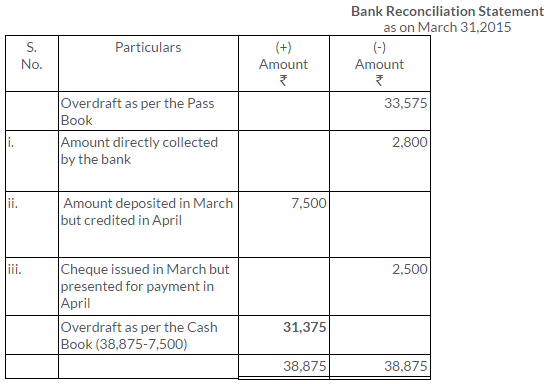
    ts-grewal-solutions-class-11-accountancy-chapter-11-bank-reconciliation-statement-33

    Question 34.
    ts-grewal-solutions-class-11-accountancy-chapter-11-bank-reconciliation-statement-34-1
    Solution:
    ts-grewal-solutions-class-11-accountancy-chapter-11-bank-reconciliation-statement-34-2

    Question 35.
    From the following information, prepare Bank Reconciliation Statement as on 31st March, 2015:
    i. Debit balance shown by Pass Book Rs.17,800.
    ii. Cheques of Rs.21,600 were issued in the last week of March but only cheques of Rs.14,800 were presented for payment.
    iii. Cheques of Rs.10,750 were presented to the bank. Out of them, a Rs.4,200 was credited in the first week of April, 2015.
    iv. A cheque of Rs.1,200 was debited in the cash book but was not presented in the bank.
    v. Insurance premium paid by bank Rs.1,450.
    vi. A bill of exchange of Rs.6,200 which discounted with the same was dishonoured but no entry was made in the cash book.
    vii. Bank charges, charged by the bank Rs.350.
    (MSE Chandigarh 2011, Modified)
    Solution:
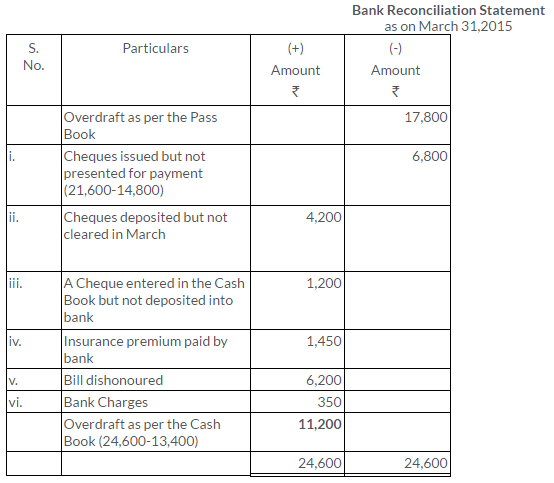
    ts-grewal-solutions-class-11-accountancy-chapter-11-bank-reconciliation-statement-35

    Question 36.
    ts-grewal-solutions-class-11-accountancy-chapter-11-bank-reconciliation-statement-36-1
    Solution:
    ts-grewal-solutions-class-11-accountancy-chapter-11-bank-reconciliation-statement-36-2

    Question 37.
    From the following particulars, ascertain the bank balance as per Pass Book 31st March, 2015 (a) without correcting the Cash Book balance and (b) after correcting the Cash Book balance:
    i. The bank balance as per Cash Book on 31st March, 2015 Rs. 40,000.
    ii. Cheques issued but not encashed up to 31st March, 2015 amounted to Rs.10,000.
    iii. Cheques paid into the bank, but not cleared up to 31st March, 2015 amounted to Rs.15,000.
    iv. Interest on investments collected by the bank but not entered in the Cash Book Rs.500.
    v. Cheques deposited in the bank but not entered in the Cash Book Rs.12,500.
    vi. Bank charges debited in the Pass Book but not entered in the Cash Book Rs.100.
    Solution:
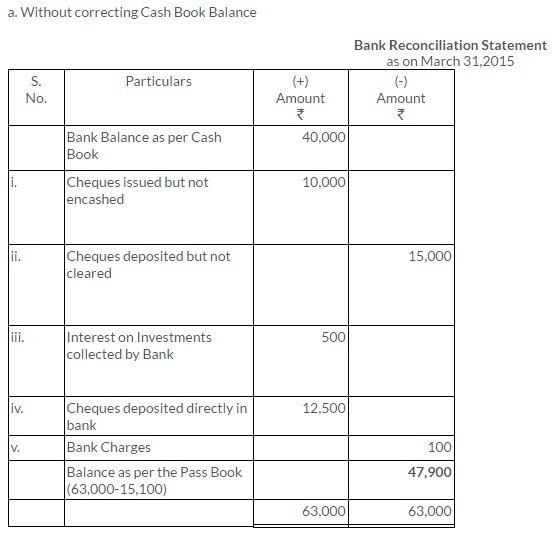
    ts-grewal-solutions-class-11-accountancy-chapter-11-bank-reconciliation-statement-37-2
    ts-grewal-solutions-class-11-accountancy-chapter-11-bank-reconciliation-statement-37-3

    Question 38.
    ts-grewal-solutions-class-11-accountancy-chapter-11-bank-reconciliation-statement-38-1
    Solution:
    ts-grewal-solutions-class-11-accountancy-chapter-11-bank-reconciliation-statement-38-2

    Question 39.
    ts-grewal-solutions-class-11-accountancy-chapter-11-bank-reconciliation-statement-39-1-1
    ts-grewal-solutions-class-11-accountancy-chapter-11-bank-reconciliation-statement-39-1
    Solution:
    ts-grewal-solutions-class-11-accountancy-chapter-11-bank-reconciliation-statement-39-2

  • TS Grewal Solutions for Special Purpose Books II – Other Books Class 11 Accountancy Chapter 10

    TS Grewal Solutions for Class 11 Accountancy Chapter 10 – Special Purpose Books II – Other Books

    Question 1.
    ts-grewal-solutions-class-11-accountancy-chapter-10-special-purpose-books-ii-books-Q1-1
    Solution:
    ts-grewal-solutions-class-11-accountancy-chapter-10-special-purpose-books-ii-books-Q1-2

    Question 2.
    ts-grewal-solutions-class-11-accountancy-chapter-10-special-purpose-books-ii-books-Q2-1
    Solution:
    ts-grewal-solutions-class-11-accountancy-chapter-10-special-purpose-books-ii-books-Q2-2

    Question 3.
    ts-grewal-solutions-class-11-accountancy-chapter-10-special-purpose-books-ii-books-Q3-1
    Solution:
    ts-grewal-solutions-class-11-accountancy-chapter-10-special-purpose-books-ii-books-Q3-2

    Question 4.
    ts-grewal-solutions-class-11-accountancy-chapter-10-special-purpose-books-ii-books-Q4-1
    Solution:
    ts-grewal-solutions-class-11-accountancy-chapter-10-special-purpose-books-ii-books-Q4-2
    ts-grewal-solutions-class-11-accountancy-chapter-10-special-purpose-books-ii-books-Q4-3

    Question 5.
    ts-grewal-solutions-class-11-accountancy-chapter-10-special-purpose-books-ii-books-Q5-1
    Solution:
    ts-grewal-solutions-class-11-accountancy-chapter-10-special-purpose-books-ii-books-Q5-2
    ts-grewal-solutions-class-11-accountancy-chapter-10-special-purpose-books-ii-books-Q5-3

    Question 6.
    ts-grewal-solutions-class-11-accountancy-chapter-10-special-purpose-books-ii-books-Q6-1
    Solution:
    ts-grewal-solutions-class-11-accountancy-chapter-10-special-purpose-books-ii-books-Q6-2

    Question 7.
    ts-grewal-solutions-class-11-accountancy-chapter-10-special-purpose-books-ii-books-Q7-1
    Solution:
    ts-grewal-solutions-class-11-accountancy-chapter-10-special-purpose-books-ii-books-Q7-2
    ts-grewal-solutions-class-11-accountancy-chapter-10-special-purpose-books-ii-books-Q7-3

    Question 8.
    ts-grewal-solutions-class-11-accountancy-chapter-10-special-purpose-books-ii-books-Q8-1
    Solution:
    ts-grewal-solutions-class-11-accountancy-chapter-10-special-purpose-books-ii-books-Q8-2

    Question 9.
    ts-grewal-solutions-class-11-accountancy-chapter-10-special-purpose-books-ii-books-Q9-1
    Solution:
    ts-grewal-solutions-class-11-accountancy-chapter-10-special-purpose-books-ii-books-Q9-2
    ts-grewal-solutions-class-11-accountancy-chapter-10-special-purpose-books-ii-books-Q9-3

    Question 10.
    ts-grewal-solutions-class-11-accountancy-chapter-10-special-purpose-books-ii-books-Q10-1
    Solution:
    ts-grewal-solutions-class-11-accountancy-chapter-10-special-purpose-books-ii-books-Q10-2

    Question 11.
    ts-grewal-solutions-class-11-accountancy-chapter-10-special-purpose-books-ii-books-Q11-1
    Solution:
    ts-grewal-solutions-class-11-accountancy-chapter-10-special-purpose-books-ii-books-Q11-2

    Question 12.
    ts-grewal-solutions-class-11-accountancy-chapter-10-special-purpose-books-ii-books-Q12-1
    Solution:
    ts-grewal-solutions-class-11-accountancy-chapter-10-special-purpose-books-ii-books-Q12-2

    Question 13.
    ts-grewal-solutions-class-11-accountancy-chapter-10-special-purpose-books-ii-books-Q13-1
    Solution:
    ts-grewal-solutions-class-11-accountancy-chapter-10-special-purpose-books-ii-books-Q13-2

    Question 14.
    ts-grewal-solutions-class-11-accountancy-chapter-10-special-purpose-books-ii-books-Q14-1
    Solution:
    ts-grewal-solutions-class-11-accountancy-chapter-10-special-purpose-books-ii-books-Q14-2

    Question 15.
    ts-grewal-solutions-class-11-accountancy-chapter-10-special-purpose-books-ii-books-Q15-1
    Solution:
    ts-grewal-solutions-class-11-accountancy-chapter-10-special-purpose-books-ii-books-Q15-2

    Question 16.
    ts-grewal-solutions-class-11-accountancy-chapter-10-special-purpose-books-ii-books-Q16-1
    Solution:
    ts-grewal-solutions-class-11-accountancy-chapter-10-special-purpose-books-ii-books-Q16-2

    Question 17.
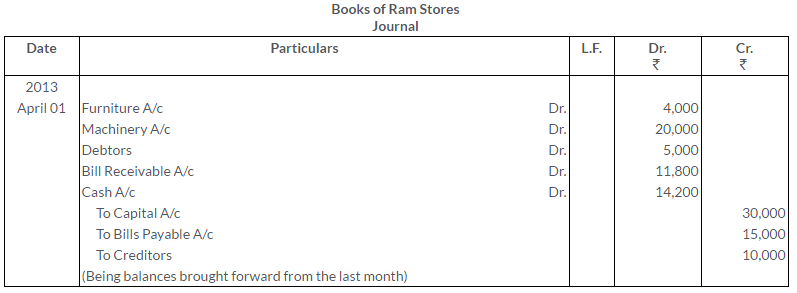
    Following balance appeared in the Balance Sheet of Ram Stores on 31st March, 2013.
    Pass the necessary Journal entries for opening the books for the year 2013-14:
    Debit Balances: Furniture Rs.4,000; Machinery Rs.20,000;Debtors Rs.5,000; Bills Receivable Rs.11,800; Cash Rs.14,200.
    Credit Balances: Capital Rs.30,000; Bills Payable Rs.15,000;Creditors Rs.10,000.
    Solution:
    ts-grewal-solutions-class-11-accountancy-chapter-10-special-purpose-books-ii-books-Q17-2

    Question 18.
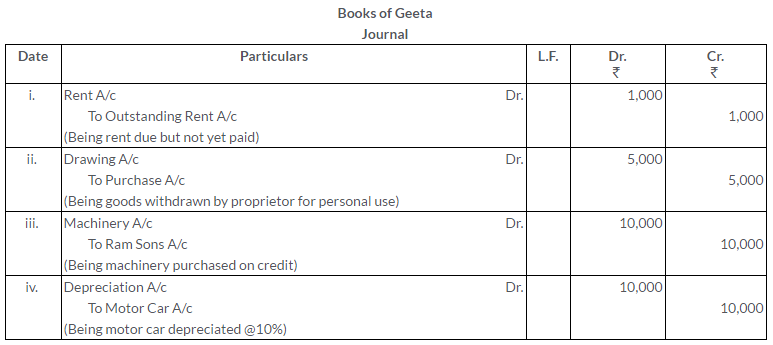
    Enter the following transactions in Journal Proper of Geeta (Proprietor):
    i. Rent not paid (Rent outstanding) Rs.1,000.
    ii. Goods withdrawn by proprietor for personal use Rs.5,000.
    iii. Purchase of machine on credit for Rs.10,000 from Ram Sons.
    iv. Depreciate motor car with book value Rs.1,00,000 @ 10% p.a. for one year.
    Solution:
    ts-grewal-solutions-class-11-accountancy-chapter-10-special-purpose-books-ii-books-Q18-2

    Question 19.
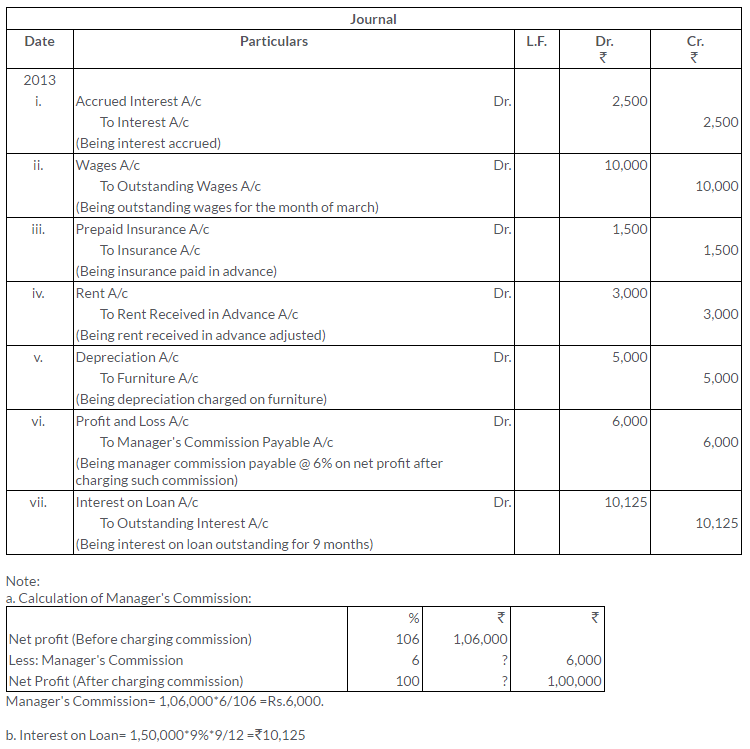
    From the following information available on 31st March, 2013, pass the necessary Adjustment Entries in the Journal for the year ending on that date:
    Interest accrued Rs.2,500.
    Wages for March, 2013 outstanding Rs.10,000.
    Insurance prepaid Rs.1,500.
    Rent for April, 2013 received in advance Rs.3,000.
    Depreciation on furniture Rs.5,000.
    Commission due to Manager 6% on net profit after charging such commission. The profit before charging such commission was Rs.1,06,000.
    Interest due on loan but not paid. Loan of Rs.1,50,000 was taken at 9% p.a.; 9 months before end of the year.
    Solution:
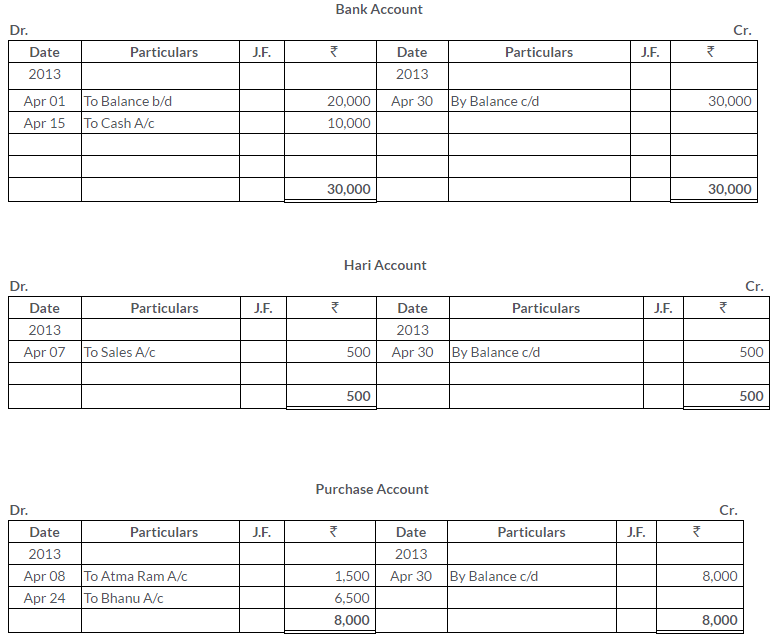
    ts-grewal-solutions-class-11-accountancy-chapter-10-special-purpose-books-ii-books-Q19-2

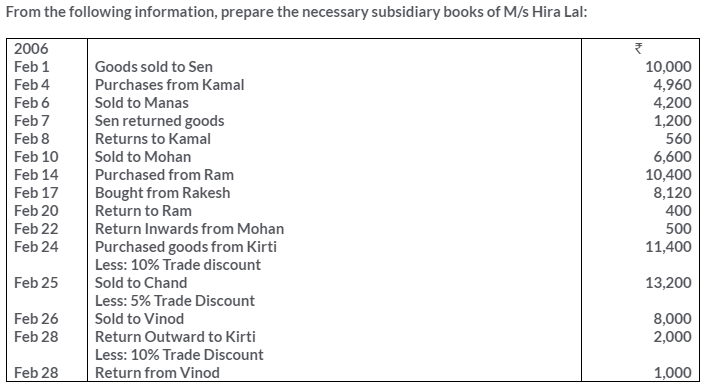
    Question 20.
    ts-grewal-solutions-class-11-accountancy-chapter-10-special-purpose-books-ii-books-Q20-1
    Solution:
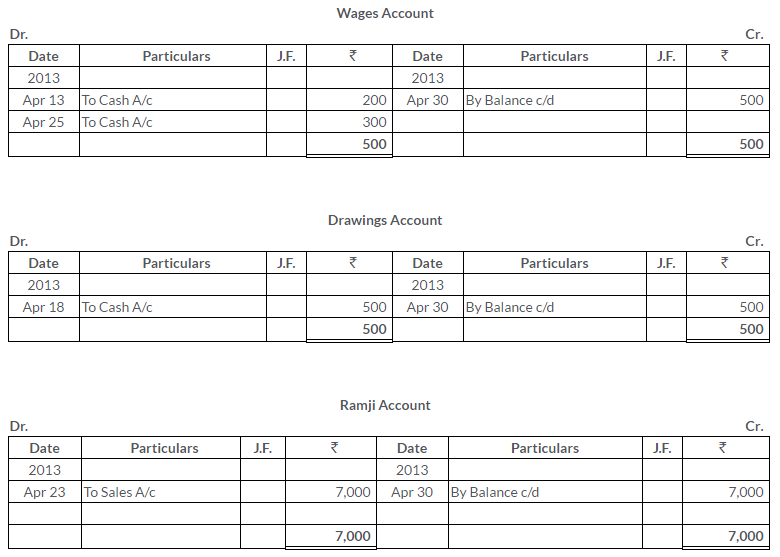
    ts-grewal-solutions-class-11-accountancy-chapter-10-special-purpose-books-ii-books-Q20-2

    Question 21.
    ts-grewal-solutions-class-11-accountancy-chapter-10-special-purpose-books-ii-books-Q21-1
    Solution:
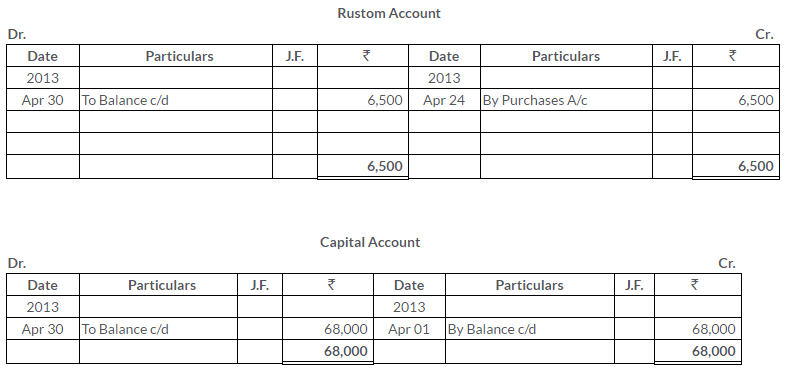
    ts-grewal-solutions-class-11-accountancy-chapter-10-special-purpose-books-ii-books-Q21-2
    ts-grewal-solutions-class-11-accountancy-chapter-10-special-purpose-books-ii-books-Q21-3

    Question 22.
    ts-grewal-solutions-class-11-accountancy-chapter-10-special-purpose-books-ii-books-Q22-1
    Solution:
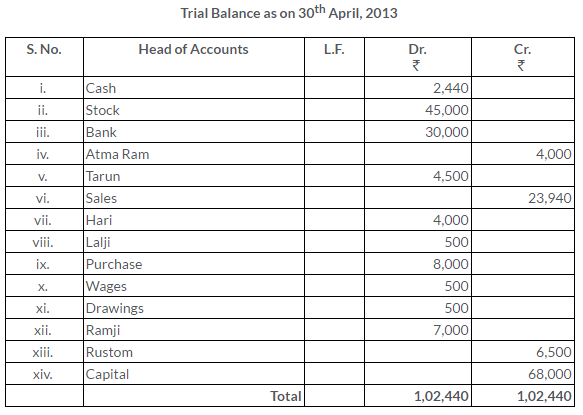
    ts-grewal-solutions-class-11-accountancy-chapter-10-special-purpose-books-ii-books-Q22-2
    ts-grewal-solutions-class-11-accountancy-chapter-10-special-purpose-books-ii-books-Q22-3
    ts-grewal-solutions-class-11-accountancy-chapter-10-special-purpose-books-ii-books-Q22-4
    ts-grewal-solutions-class-11-accountancy-chapter-10-special-purpose-books-ii-books-Q22-5

    Question 23.
    ts-grewal-solutions-class-11-accountancy-chapter-10-special-purpose-books-ii-books-Q23-1
    Solution:
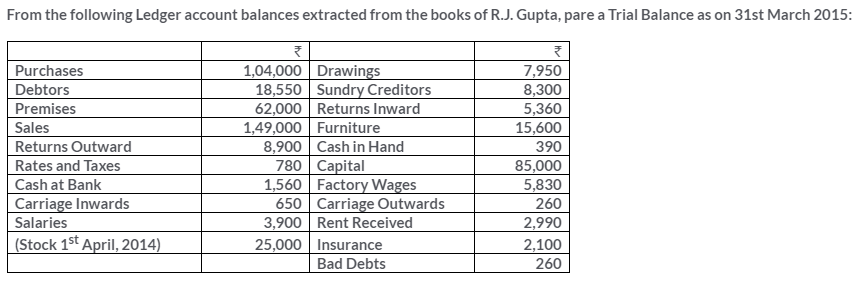
    ts-grewal-solutions-class-11-accountancy-chapter-10-special-purpose-books-ii-books-Q23-2
    ts-grewal-solutions-class-11-accountancy-chapter-10-special-purpose-books-ii-books-Q23-3

    Question 24.
    ts-grewal-solutions-class-11-accountancy-chapter-10-special-purpose-books-ii-books-Q24-1
    Solution:

    ts-grewal-solutions-class-11-accountancy-chapter-10-special-purpose-books-ii-books-Q24-2
    ts-grewal-solutions-class-11-accountancy-chapter-10-special-purpose-books-ii-books-Q24-3
    ts-grewal-solutions-class-11-accountancy-chapter-10-special-purpose-books-ii-books-Q24-4

    Question 25.
    ts-grewal-solutions-class-11-accountancy-chapter-10-special-purpose-books-ii-books-Q25-1
    Solution:
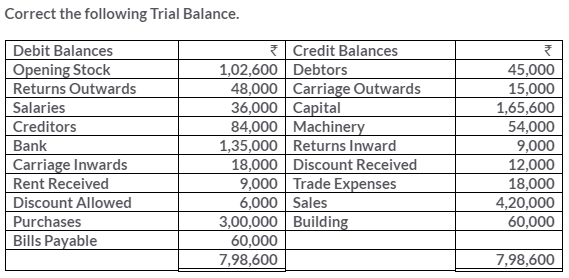
    ts-grewal-solutions-class-11-accountancy-chapter-10-special-purpose-books-ii-books-Q25-2
    ts-grewal-solutions-class-11-accountancy-chapter-10-special-purpose-books-ii-books-Q25-3
    ts-grewal-solutions-class-11-accountancy-chapter-10-special-purpose-books-ii-books-Q25-4
    ts-grewal-solutions-class-11-accountancy-chapter-10-special-purpose-books-ii-books-Q25-5
    ts-grewal-solutions-class-11-accountancy-chapter-10-special-purpose-books-ii-books-Q25-6
    ts-grewal-solutions-class-11-accountancy-chapter-10-special-purpose-books-ii-books-Q25-7
    ts-grewal-solutions-class-11-accountancy-chapter-10-special-purpose-books-ii-books-Q25-8
    ts-grewal-solutions-class-11-accountancy-chapter-10-special-purpose-books-ii-books-Q25-9

    Question 26.
    ts-grewal-solutions-class-11-accountancy-chapter-10-special-purpose-books-ii-books-Q26-1
    Solution:
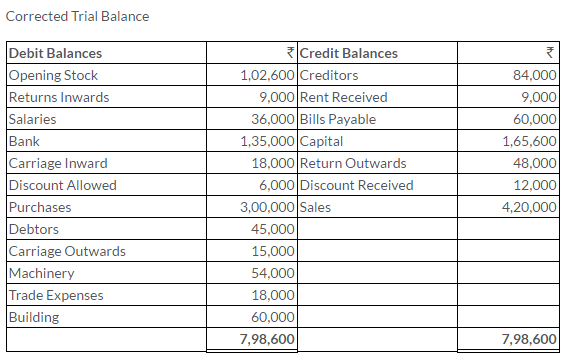
    ts-grewal-solutions-class-11-accountancy-chapter-10-special-purpose-books-ii-books-Q26-2
    ts-grewal-solutions-class-11-accountancy-chapter-10-special-purpose-books-ii-books-Q26-3
    ts-grewal-solutions-class-11-accountancy-chapter-10-special-purpose-books-ii-books-Q26-4
    ts-grewal-solutions-class-11-accountancy-chapter-10-special-purpose-books-ii-books-Q26-5
    ts-grewal-solutions-class-11-accountancy-chapter-10-special-purpose-books-ii-books-Q26-6
    ts-grewal-solutions-class-11-accountancy-chapter-10-special-purpose-books-ii-books-Q26-7
    ts-grewal-solutions-class-11-accountancy-chapter-10-special-purpose-books-ii-books-Q26-8
    ts-grewal-solutions-class-11-accountancy-chapter-10-special-purpose-books-ii-books-Q26-9

    Question 27.
    ts-grewal-solutions-class-11-accountancy-chapter-10-special-purpose-books-ii-books-Q27-1
    Solution:
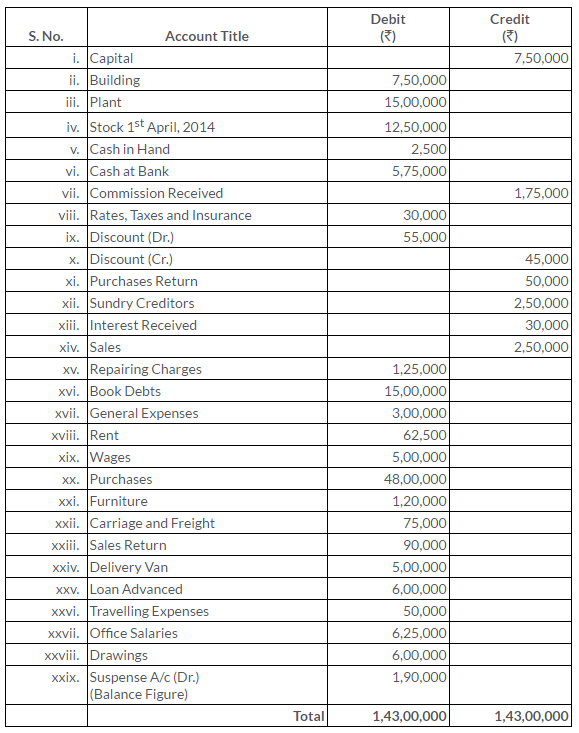
    ts-grewal-solutions-class-11-accountancy-chapter-10-special-purpose-books-ii-books-Q27-2
    ts-grewal-solutions-class-11-accountancy-chapter-10-special-purpose-books-ii-books-Q27-3
    ts-grewal-solutions-class-11-accountancy-chapter-10-special-purpose-books-ii-books-Q27-4
    ts-grewal-solutions-class-11-accountancy-chapter-10-special-purpose-books-ii-books-Q27-5
    ts-grewal-solutions-class-11-accountancy-chapter-10-special-purpose-books-ii-books-Q27-6
    ts-grewal-solutions-class-11-accountancy-chapter-10-special-purpose-books-ii-books-Q27-7
    ts-grewal-solutions-class-11-accountancy-chapter-10-special-purpose-books-ii-books-Q27-8
    ts-grewal-solutions-class-11-accountancy-chapter-10-special-purpose-books-ii-books-Q27-9
    ts-grewal-solutions-class-11-accountancy-chapter-10-special-purpose-books-ii-books-Q27-10

    Question 28.
    ts-grewal-solutions-class-11-accountancy-chapter-10-special-purpose-books-ii-books-Q28-1
    Solution:
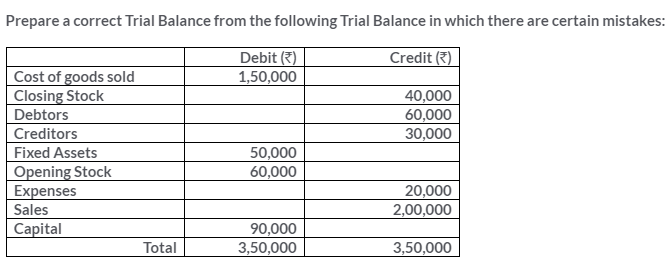
    ts-grewal-solutions-class-11-accountancy-chapter-10-special-purpose-books-ii-books-Q28-2
    ts-grewal-solutions-class-11-accountancy-chapter-10-special-purpose-books-ii-books-Q28-3
    ts-grewal-solutions-class-11-accountancy-chapter-10-special-purpose-books-ii-books-Q28-3
    ts-grewal-solutions-class-11-accountancy-chapter-10-special-purpose-books-ii-books-Q28-5
    ts-grewal-solutions-class-11-accountancy-chapter-10-special-purpose-books-ii-books-Q28-6
    ts-grewal-solutions-class-11-accountancy-chapter-10-special-purpose-books-ii-books-Q28-7
    ts-grewal-solutions-class-11-accountancy-chapter-10-special-purpose-books-ii-books-Q28-8
    ts-grewal-solutions-class-11-accountancy-chapter-10-special-purpose-books-ii-books-Q28-9
    ts-grewal-solutions-class-11-accountancy-chapter-10-special-purpose-books-ii-books-Q28-10
    ts-grewal-solutions-class-11-accountancy-chapter-10-special-purpose-books-ii-books-Q28-11
    ts-grewal-solutions-class-11-accountancy-chapter-10-special-purpose-books-ii-books-Q28-12
    ts-grewal-solutions-class-11-accountancy-chapter-10-special-purpose-books-ii-books-Q28-13

    Question 29.
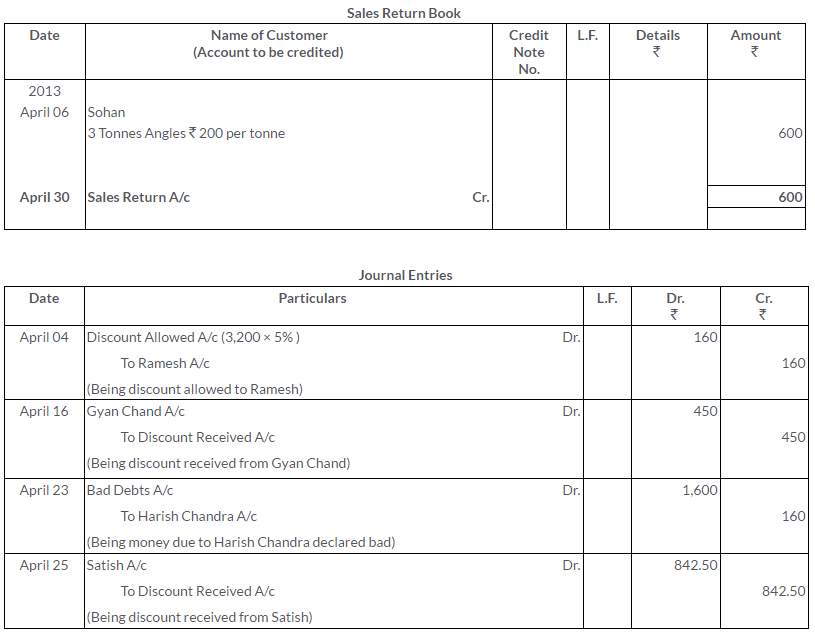
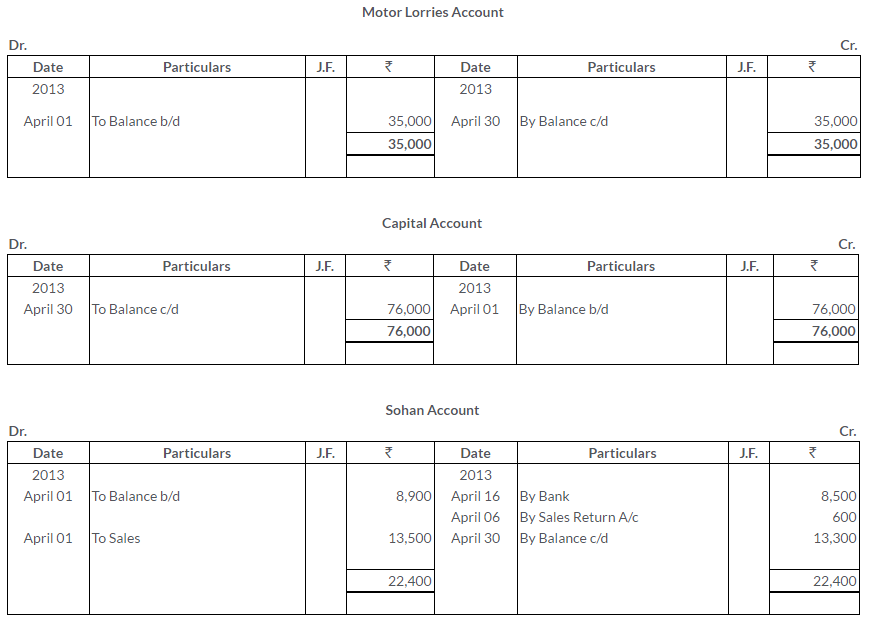
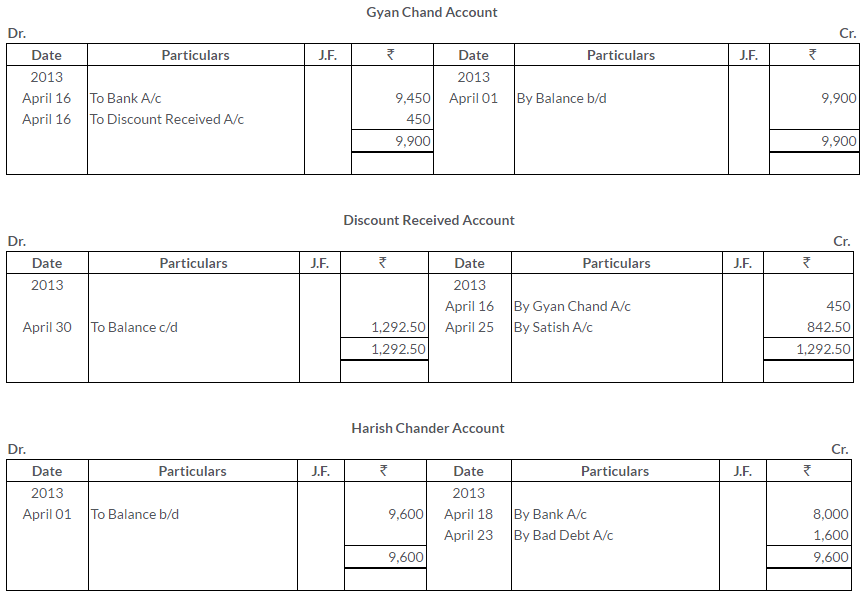
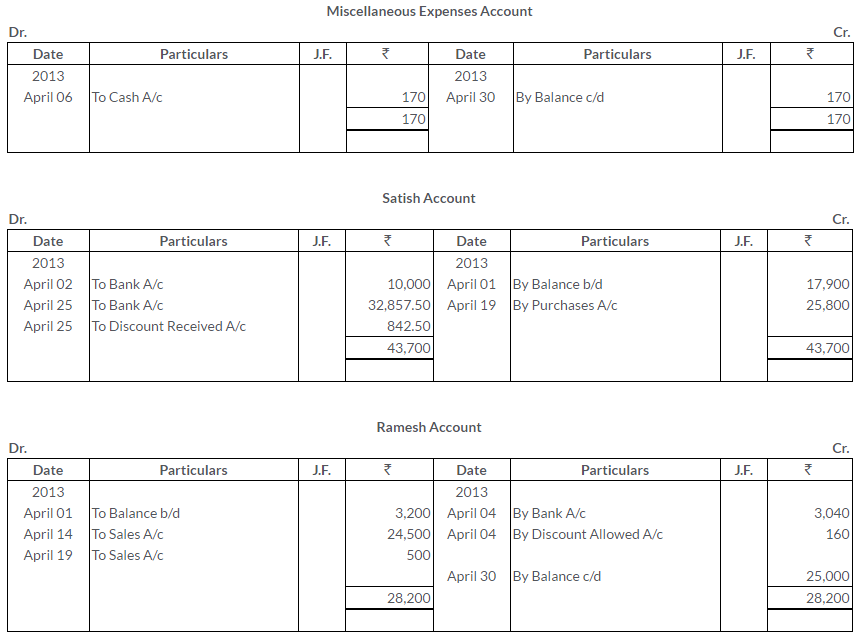
    Following were the balances of accounts appearing in the books of Ram Mohan, Iron and Steel Merchant, on 31st March, 2013:
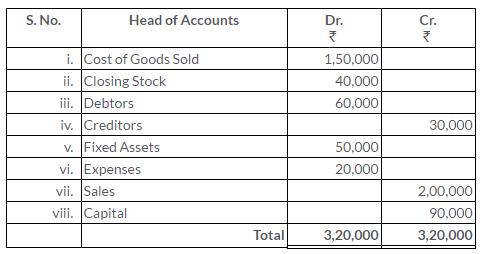
    Debit Balances: Stock in Warehouse Rs.21,000;Fixtures and Fittings Rs.6,300;Motor Lorries Rs.35,000; Harish Chander Rs.9,600, Rs.3,200;Rs.8,900;Cash in Hand Rs.2,500; Cash at bank Rs.17,300.
    Credit Balances: Satish, Rs.17,900; Gyan Chand, Rs.9,900.
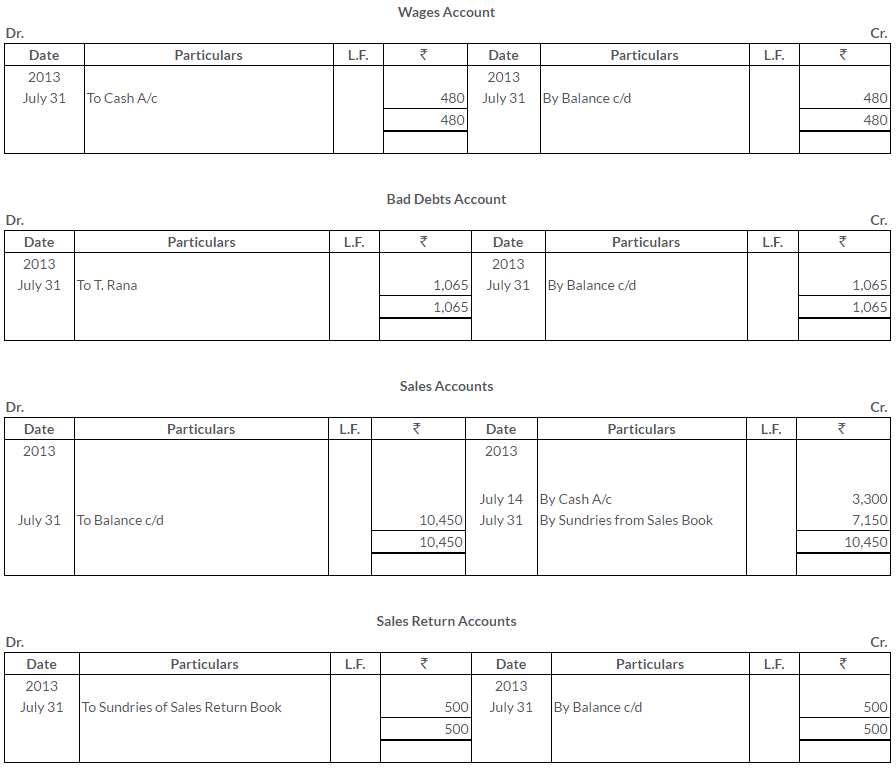
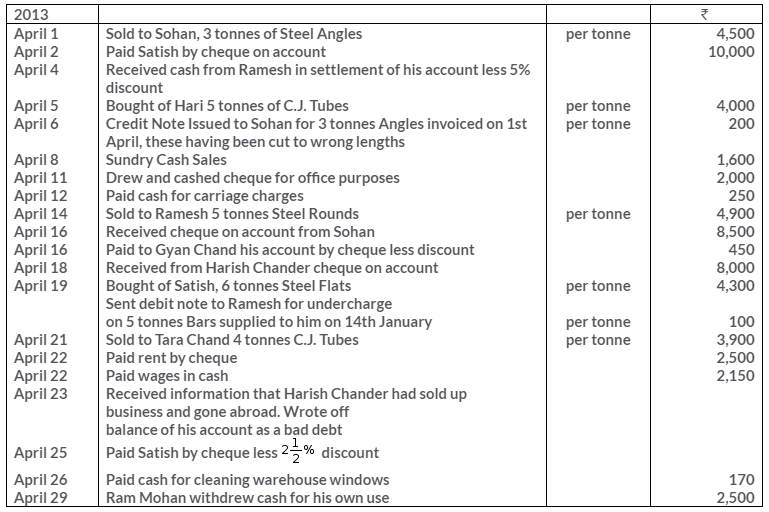
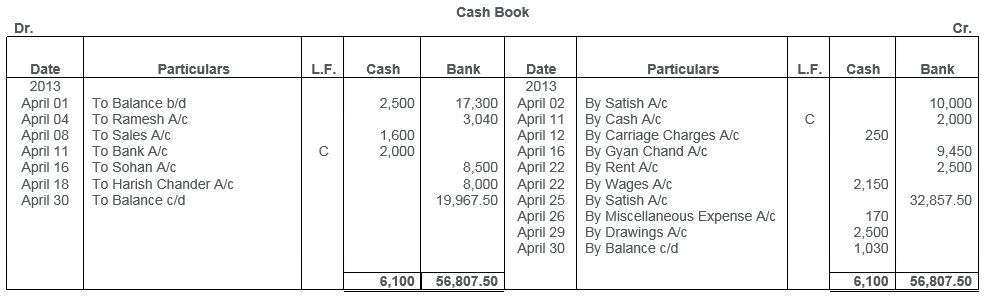
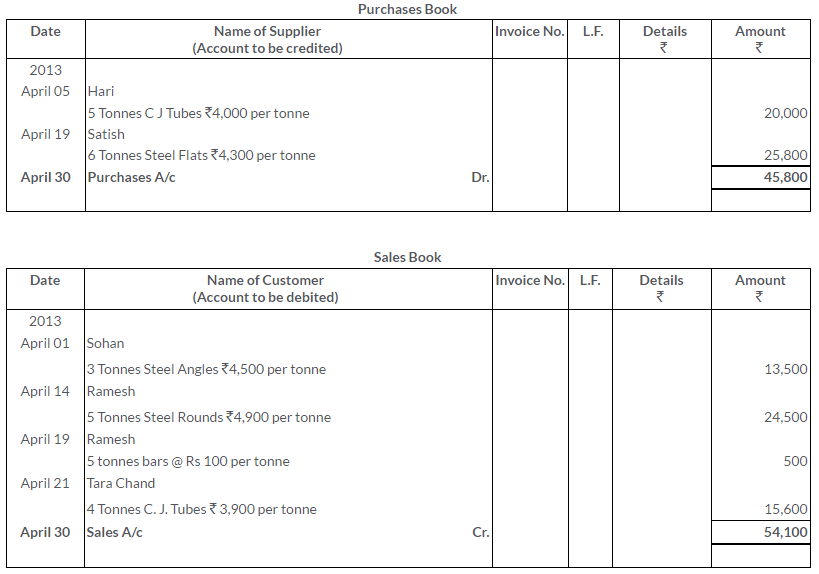
    Enter the above balances in the Journal and post them to the Cash Book and Ledger Accounts. Also enter the following transactions in the proper subsidiary books and post them to the Ledger. Cheques received are paid into the bank on the same day. Balance the accounts and take out a Trial Balance.
    ts-grewal-solutions-class-11-accountancy-chapter-10-special-purpose-books-ii-books-Q29-1
    Solution:
    ts-grewal-solutions-class-11-accountancy-chapter-10-special-purpose-books-ii-books-Q29-2
    ts-grewal-solutions-class-11-accountancy-chapter-10-special-purpose-books-ii-books-Q29-3
    ts-grewal-solutions-class-11-accountancy-chapter-10-special-purpose-books-ii-books-Q29-4
    ts-grewal-solutions-class-11-accountancy-chapter-10-special-purpose-books-ii-books-Q29-5
    ts-grewal-solutions-class-11-accountancy-chapter-10-special-purpose-books-ii-books-Q29-6
    ts-grewal-solutions-class-11-accountancy-chapter-10-special-purpose-books-ii-books-Q29-7
    ts-grewal-solutions-class-11-accountancy-chapter-10-special-purpose-books-ii-books-Q29-8
    ts-grewal-solutions-class-11-accountancy-chapter-10-special-purpose-books-ii-books-Q29-9
    ts-grewal-solutions-class-11-accountancy-chapter-10-special-purpose-books-ii-books-Q29-10
    ts-grewal-solutions-class-11-accountancy-chapter-10-special-purpose-books-ii-books-Q29-11

    Question 30.
    ts-grewal-solutions-class-11-accountancy-chapter-10-special-purpose-books-ii-books-Q30-1
    Solution:
    ts-grewal-solutions-class-11-accountancy-chapter-10-special-purpose-books-ii-books-Q30-2
    ts-grewal-solutions-class-11-accountancy-chapter-10-special-purpose-books-ii-books-Q30-3
    ts-grewal-solutions-class-11-accountancy-chapter-10-special-purpose-books-ii-books-Q30-4
    ts-grewal-solutions-class-11-accountancy-chapter-10-special-purpose-books-ii-books-Q30-5
    ts-grewal-solutions-class-11-accountancy-chapter-10-special-purpose-books-ii-books-Q30-6
    ts-grewal-solutions-class-11-accountancy-chapter-10-special-purpose-books-ii-books-Q30-7
    ts-grewal-solutions-class-11-accountancy-chapter-10-special-purpose-books-ii-books-Q30-8
    ts-grewal-solutions-class-11-accountancy-chapter-10-special-purpose-books-ii-books-Q30-9
    ts-grewal-solutions-class-11-accountancy-chapter-10-special-purpose-books-ii-books-Q30-10
    ts-grewal-solutions-class-11-accountancy-chapter-10-special-purpose-books-ii-books-Q30-11

  • TS Grewal Solutions for Special Purpose Books I – Cash Book Class 11 Accountancy Chapter 9

    TS Grewal Solutions for Class 11 Accountancy Chapter 9 – Special Purpose Books I – Cash Book

    Question 1.
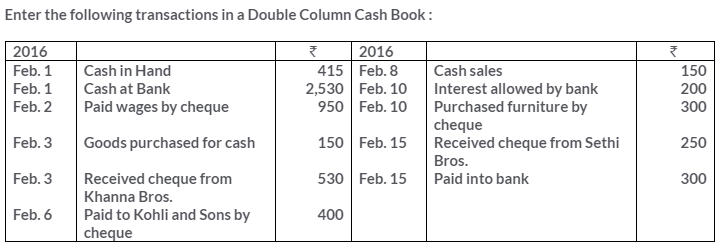
    ts-grewal-solutions-class-11-accountancy-chapter-9-special-purpose-books-i-cash-book-Q1-1
    Solution:
    ts-grewal-solutions-class-11-accountancy-chapter-9-special-purpose-books-i-cash-book-Q1-2

    Question 2.
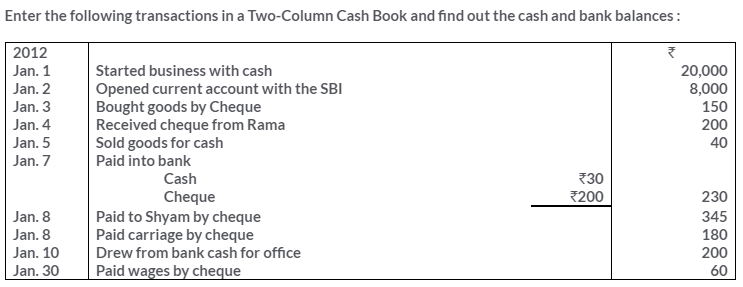
    ts-grewal-solutions-class-11-accountancy-chapter-9-special-purpose-books-i-cash-book-Q2-1
    Solution:
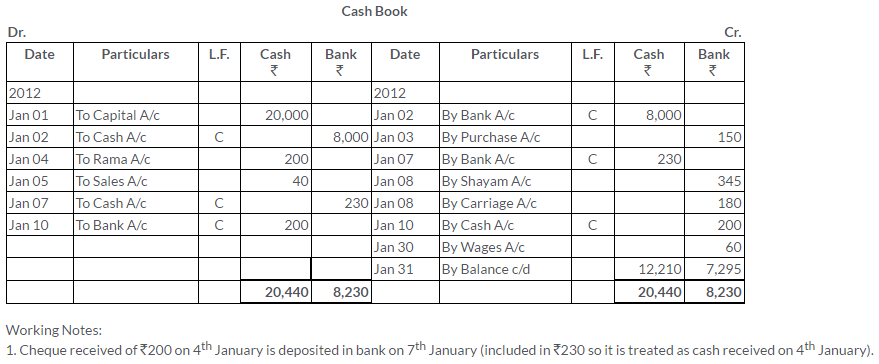
    ts-grewal-solutions-class-11-accountancy-chapter-9-special-purpose-books-i-cash-book-Q2-2

    Question 3.
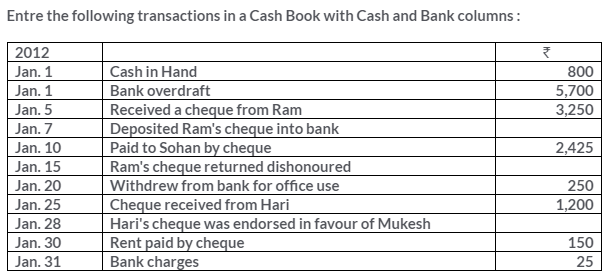
    ts-grewal-solutions-class-11-accountancy-chapter-9-special-purpose-books-i-cash-book-Q3-1
    Solution:
    ts-grewal-solutions-class-11-accountancy-chapter-9-special-purpose-books-i-cash-book-Q3-2

    Question 4.
    ts-grewal-solutions-class-11-accountancy-chapter-9-special-purpose-books-i-cash-book-Q4-1
    Solution:
    ts-grewal-solutions-class-11-accountancy-chapter-9-special-purpose-books-i-cash-book-Q4-2

    Question 5.
    ts-grewal-solutions-class-11-accountancy-chapter-9-special-purpose-books-i-cash-book-Q5-1
    Solution:
    ts-grewal-solutions-class-11-accountancy-chapter-9-special-purpose-books-i-cash-book-Q5-2

    Question 6.
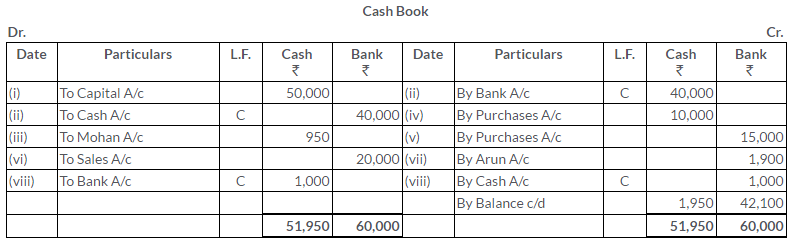
    Record the following transactions in a suitable Cash Book and find out the cash and bank balances:
    i. Commenced business with cash Rs.50,000.
    ii. Deposited in bank Rs.40,000.
    iii. Received cash from Mohan Rs.950.
    iv. Bought goods for cash Rs.10,000.
    v. Bought goods by cheque Rs.15,000.
    vi. Sold goods by cheque for Rs.20,000 and deposited in bank on the same day.
    vii. Paid to Arun by cheque Rs.1,900.
    viii. Drew from bank for office use Rs.1,000.
    Solution:
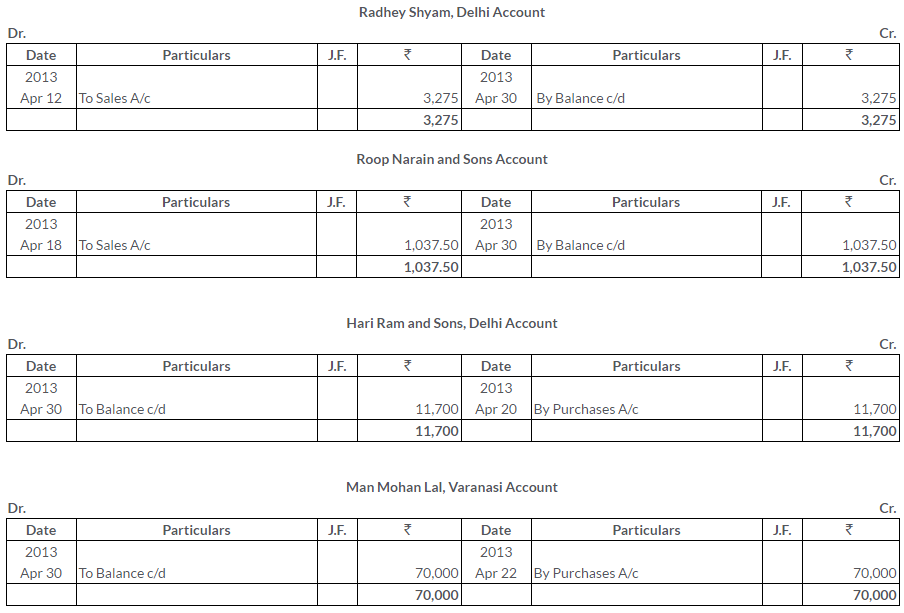
    ts-grewal-solutions-class-11-accountancy-chapter-9-special-purpose-books-i-cash-book-Q6

    Question 7.
    ts-grewal-solutions-class-11-accountancy-chapter-9-special-purpose-books-i-cash-book-Q7-1
    Solution:
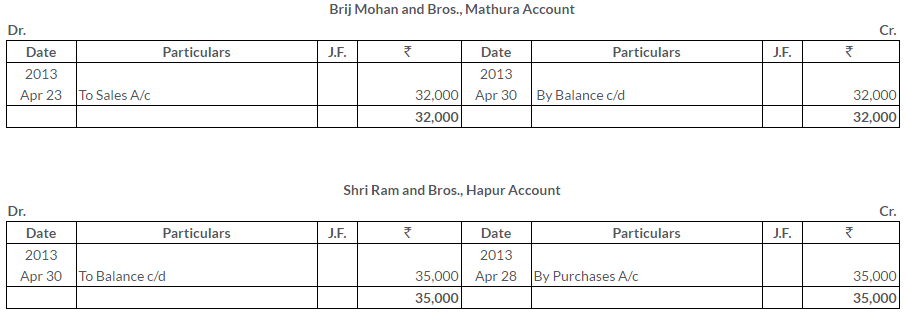
    ts-grewal-solutions-class-11-accountancy-chapter-9-special-purpose-books-i-cash-book-Q7-2

    Question 8.
    ts-grewal-solutions-class-11-accountancy-chapter-9-special-purpose-books-i-cash-book-Q8-1
    Solution:
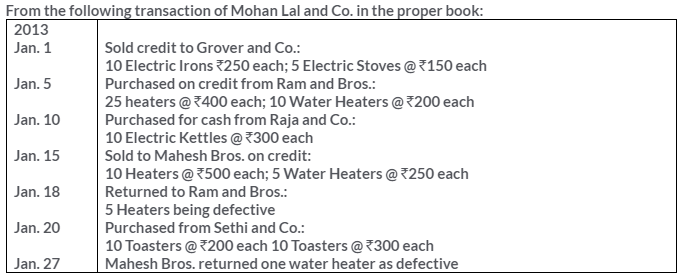
    ts-grewal-solutions-class-11-accountancy-chapter-9-special-purpose-books-i-cash-book-Q8-2

    Question 9.
    ts-grewal-solutions-class-11-accountancy-chapter-9-special-purpose-books-i-cash-book-Q9-1
    Solution:
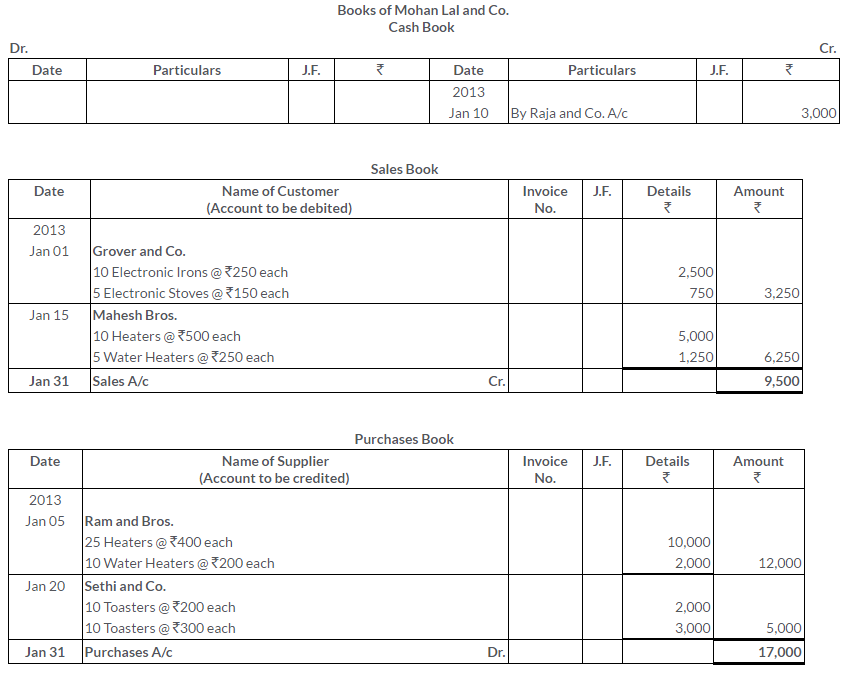
    ts-grewal-solutions-class-11-accountancy-chapter-9-special-purpose-books-i-cash-book-Q9-2

    Question 10.
    ts-grewal-solutions-class-11-accountancy-chapter-9-special-purpose-books-i-cash-book-Q10-1
    Solution:
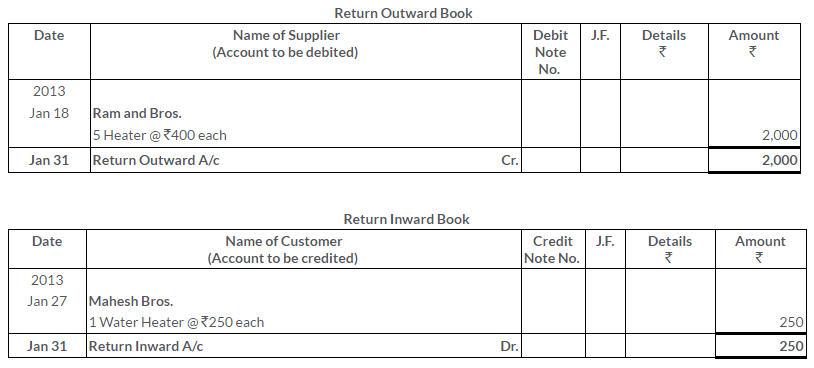
    ts-grewal-solutions-class-11-accountancy-chapter-9-special-purpose-books-i-cash-book-Q10-2

    Question 11.
    ts-grewal-solutions-class-11-accountancy-chapter-9-special-purpose-books-i-cash-book-Q11-1
    Solution:
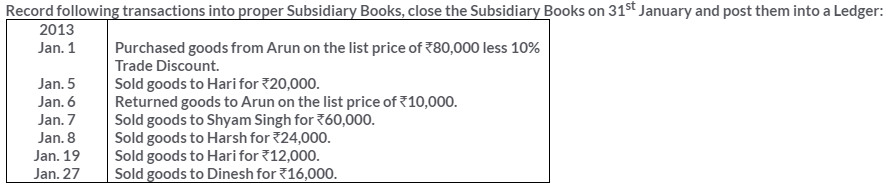
    ts-grewal-solutions-class-11-accountancy-chapter-9-special-purpose-books-i-cash-book-Q11-2

    Question 12.
    ts-grewal-solutions-class-11-accountancy-chapter-9-special-purpose-books-i-cash-book-Q12-1
    Solution:
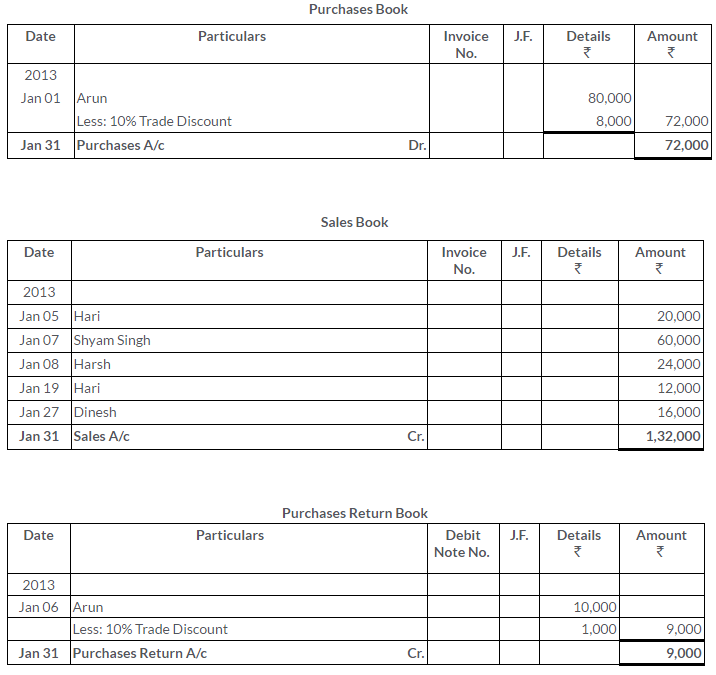
    ts-grewal-solutions-class-11-accountancy-chapter-9-special-purpose-books-i-cash-book-Q12-2

    Question 13.
    ts-grewal-solutions-class-11-accountancy-chapter-9-special-purpose-books-i-cash-book-Q13-1
    Solution:
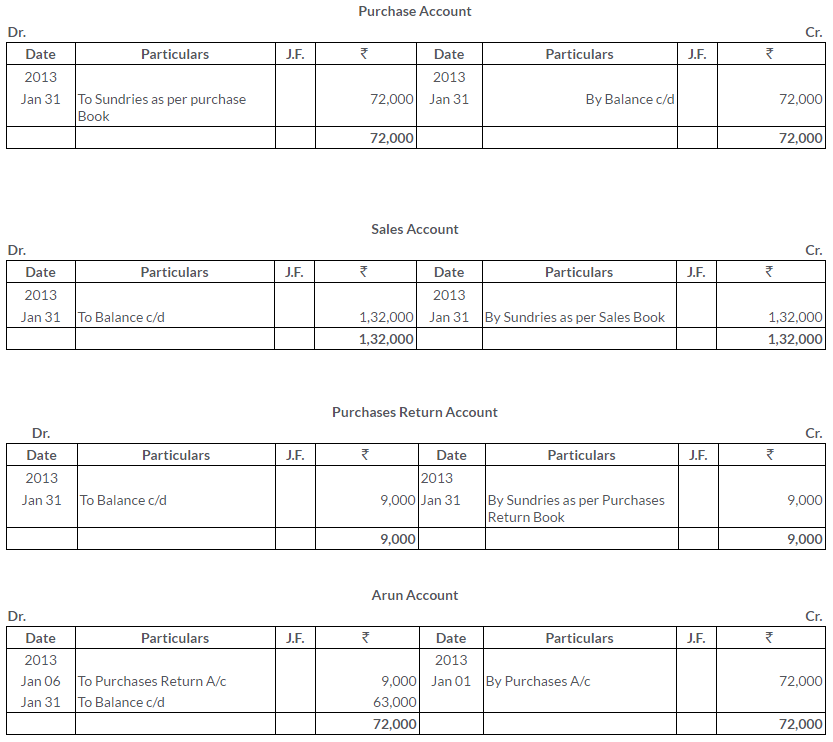
    ts-grewal-solutions-class-11-accountancy-chapter-9-special-purpose-books-i-cash-book-Q13-2

    Question 14.
    ts-grewal-solutions-class-11-accountancy-chapter-9-special-purpose-books-i-cash-book-Q14-1
    Solution:
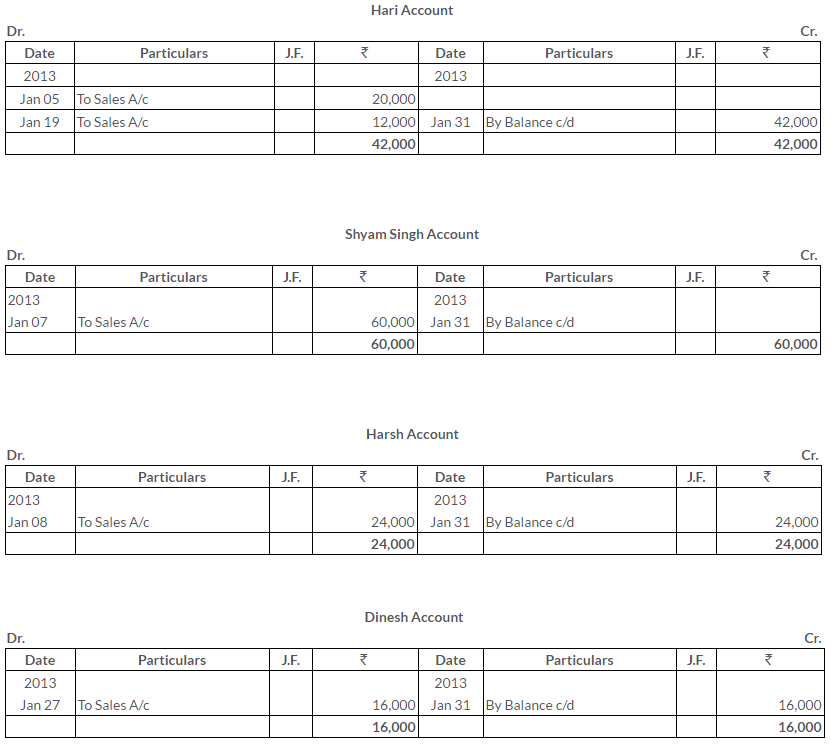
    ts-grewal-solutions-class-11-accountancy-chapter-9-special-purpose-books-i-cash-book-Q14-2

    Question 15.
    ts-grewal-solutions-class-11-accountancy-chapter-9-special-purpose-books-i-cash-book-Q15-1
    Solution:
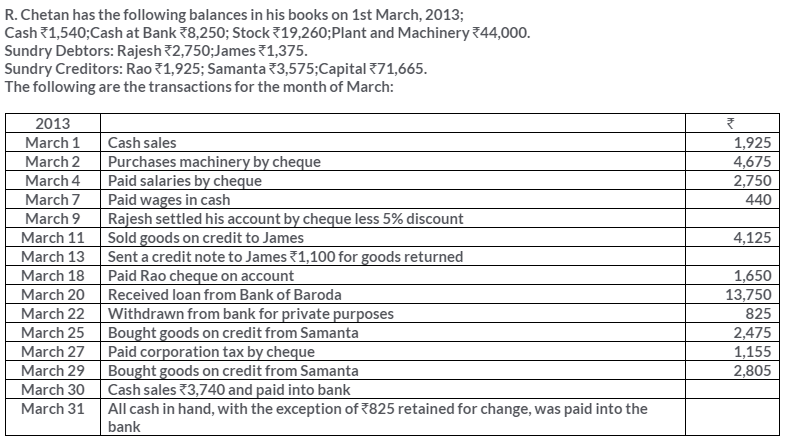
    ts-grewal-solutions-class-11-accountancy-chapter-9-special-purpose-books-i-cash-book-Q15-2

    Question 16.
    ts-grewal-solutions-class-11-accountancy-chapter-9-special-purpose-books-i-cash-book-Q16-1
    Solution:
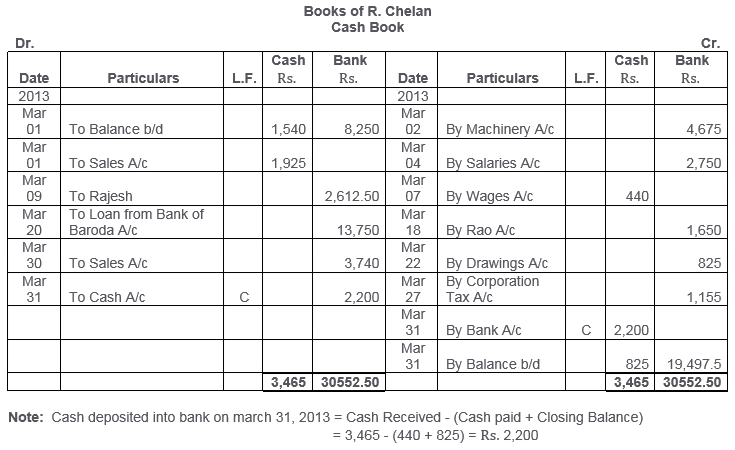
    ts-grewal-solutions-class-11-accountancy-chapter-9-special-purpose-books-i-cash-book-Q16-2

    Question 17.
    ts-grewal-solutions-class-11-accountancy-chapter-9-special-purpose-books-i-cash-book-Q17-1
    Solution:
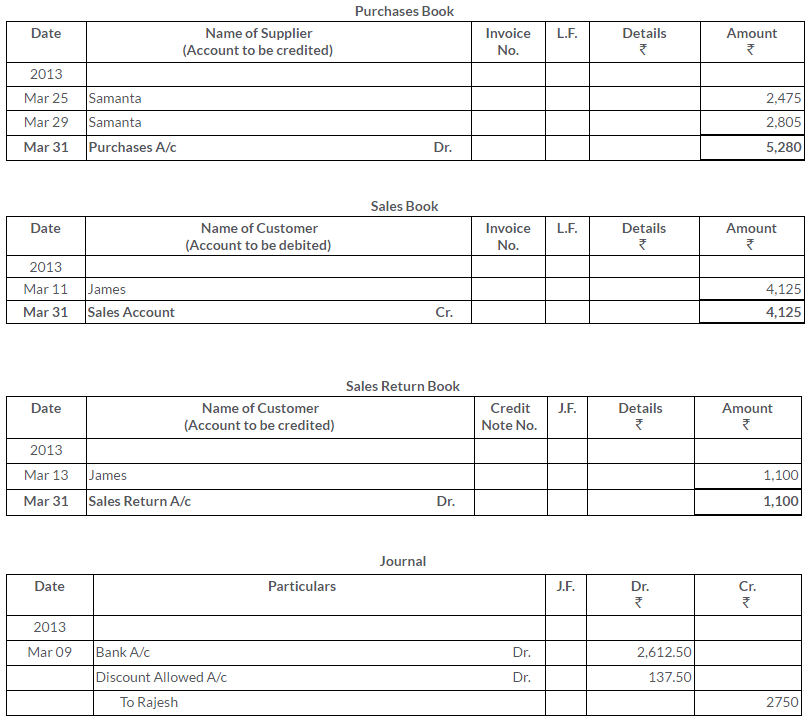
    ts-grewal-solutions-class-11-accountancy-chapter-9-special-purpose-books-i-cash-book-Q17-2

    Question 18.
    ts-grewal-solutions-class-11-accountancy-chapter-9-special-purpose-books-i-cash-book-Q18-1
    Solution:

    ts-grewal-solutions-class-11-accountancy-chapter-9-special-purpose-books-i-cash-book-Q18-2

    Question 19.
    ts-grewal-solutions-class-11-accountancy-chapter-9-special-purpose-books-i-cash-book-Q19-1
    Solution:
    ts-grewal-solutions-class-11-accountancy-chapter-9-special-purpose-books-i-cash-book-Q19-2

    Question 20.
    ts-grewal-solutions-class-11-accountancy-chapter-9-special-purpose-books-i-cash-book-Q20-1
    Solution:
    ts-grewal-solutions-class-11-accountancy-chapter-9-special-purpose-books-i-cash-book-Q20-2

    Question 21.
    ts-grewal-solutions-class-11-accountancy-chapter-9-special-purpose-books-i-cash-book-Q21-1
    Solution:
    ts-grewal-solutions-class-11-accountancy-chapter-9-special-purpose-books-i-cash-book-Q21-2

    Question 22.
    ts-grewal-solutions-class-11-accountancy-chapter-9-special-purpose-books-i-cash-book-Q22-1
    Solution:
    ts-grewal-solutions-class-11-accountancy-chapter-9-special-purpose-books-i-cash-book-Q22-2

    Question 23.
    ts-grewal-solutions-class-11-accountancy-chapter-9-special-purpose-books-i-cash-book-Q23-1
    Solution:
    ts-grewal-solutions-class-11-accountancy-chapter-9-special-purpose-books-i-cash-book-Q23-2

    Question 24.
    ts-grewal-solutions-class-11-accountancy-chapter-9-special-purpose-books-i-cash-book-Q24-1
    Solution:
    ts-grewal-solutions-class-11-accountancy-chapter-9-special-purpose-books-i-cash-book-Q24-2

    Question 25.
    ts-grewal-solutions-class-11-accountancy-chapter-9-special-purpose-books-i-cash-book-Q25-1
    Solution:
    ts-grewal-solutions-class-11-accountancy-chapter-9-special-purpose-books-i-cash-book-Q25-2
    ts-grewal-solutions-class-11-accountancy-chapter-9-special-purpose-books-i-cash-book-Q25-3

    Question 26.
    ts-grewal-solutions-class-11-accountancy-chapter-9-special-purpose-books-i-cash-book-Q26-1
    Solution:
    ts-grewal-solutions-class-11-accountancy-chapter-9-special-purpose-books-i-cash-book-Q26-2

    Question 27.
    ts-grewal-solutions-class-11-accountancy-chapter-9-special-purpose-books-i-cash-book-Q27-1
    Solution:
    ts-grewal-solutions-class-11-accountancy-chapter-9-special-purpose-books-i-cash-book-Q27-2

    Question 28.
    ts-grewal-solutions-class-11-accountancy-chapter-9-special-purpose-books-i-cash-book-Q28-1
    Solution:
    ts-grewal-solutions-class-11-accountancy-chapter-9-special-purpose-books-i-cash-book-Q28-2

    Question 29.
    ts-grewal-solutions-class-11-accountancy-chapter-9-special-purpose-books-i-cash-book-Q29-1
    Solution:
    ts-grewal-solutions-class-11-accountancy-chapter-9-special-purpose-books-i-cash-book-Q29-2

    Question 30.
    ts-grewal-solutions-class-11-accountancy-chapter-9-special-purpose-books-i-cash-book-Q30-1
    Solution:
    ts-grewal-solutions-class-11-accountancy-chapter-9-special-purpose-books-i-cash-book-Q30-2

    Question 31.
    ts-grewal-solutions-class-11-accountancy-chapter-9-special-purpose-books-i-cash-book-Q31-1
    Solution:
    ts-grewal-solutions-class-11-accountancy-chapter-9-special-purpose-books-i-cash-book-Q31-2
    ts-grewal-solutions-class-11-accountancy-chapter-9-special-purpose-books-i-cash-book-Q31-3

  • TS Grewal Solutions for Journal and Ledger Class 11 Accountancy Chapter 8

    TS Grewal Solutions for Class 11 Accountancy Chapter 8 – Journal and Ledger

    Question 1.
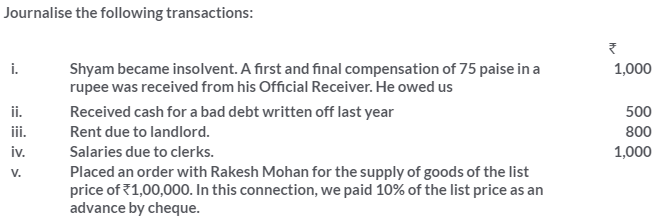
    ts-grewal-solutions-class-11-accountancy-chapter-8-journal-ledger-Q1-1
    Solution:
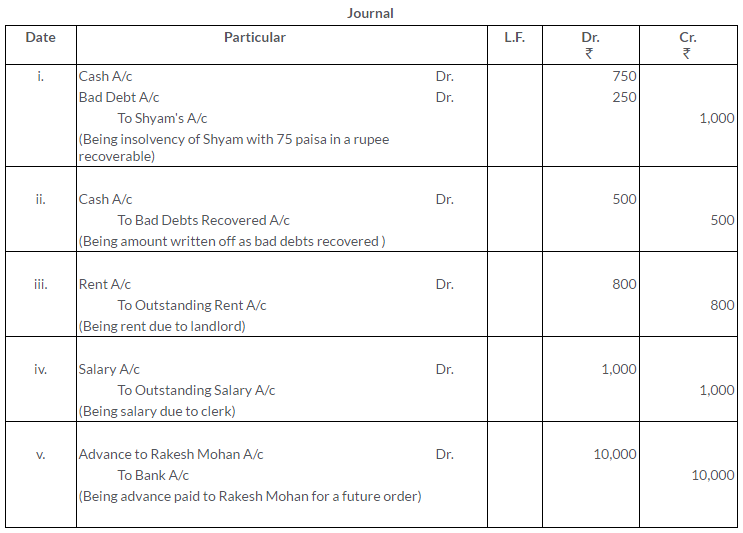
    ts-grewal-solutions-class-11-accountancy-chapter-8-journal-ledger-Q1-2

    Question 2.
    ts-grewal-solutions-class-11-accountancy-chapter-8-journal-ledger-Q2-1
    Solution:
    ts-grewal-solutions-class-11-accountancy-chapter-8-journal-ledger-Q2-2
    ts-grewal-solutions-class-11-accountancy-chapter-8-journal-ledger-Q2-3

    Question 3.
    ts-grewal-solutions-class-11-accountancy-chapter-8-journal-ledger-Q3-1
    Solution:
    ts-grewal-solutions-class-11-accountancy-chapter-8-journal-ledger-Q3-2
    ts-grewal-solutions-class-11-accountancy-chapter-8-journal-ledger-Q3-3

    Question 4.
    ts-grewal-solutions-class-11-accountancy-chapter-8-journal-ledger-Q4-1

    Solution:
    ts-grewal-solutions-class-11-accountancy-chapter-8-journal-ledger-Q4-2
    ts-grewal-solutions-class-11-accountancy-chapter-8-journal-ledger-Q4-3

    Question 5.
    ts-grewal-solutions-class-11-accountancy-chapter-8-journal-ledger-Q5-1
    Solution:
    ts-grewal-solutions-class-11-accountancy-chapter-8-journal-ledger-Q5-2
    ts-grewal-solutions-class-11-accountancy-chapter-8-journal-ledger-Q5-3

    Question 6.
    ts-grewal-solutions-class-11-accountancy-chapter-8-journal-ledger-Q6-1
    Solution:
    ts-grewal-solutions-class-11-accountancy-chapter-8-journal-ledger-Q6-2
    ts-grewal-solutions-class-11-accountancy-chapter-8-journal-ledger-Q6-3
    ts-grewal-solutions-class-11-accountancy-chapter-8-journal-ledger-Q6-4

    Question 7.
    ts-grewal-solutions-class-11-accountancy-chapter-8-journal-ledger-Q7-1
    Solution:
    ts-grewal-solutions-class-11-accountancy-chapter-8-journal-ledger-Q7-2
    ts-grewal-solutions-class-11-accountancy-chapter-8-journal-ledger-Q7-3
    ts-grewal-solutions-class-11-accountancy-chapter-8-journal-ledger-Q7-4
    ts-grewal-solutions-class-11-accountancy-chapter-8-journal-ledger-Q7-5

    Question 8.
    ts-grewal-solutions-class-11-accountancy-chapter-8-journal-ledger-Q8-1
    Solution:
    ts-grewal-solutions-class-11-accountancy-chapter-8-journal-ledger-Q8-2
    ts-grewal-solutions-class-11-accountancy-chapter-8-journal-ledger-Q8-3
    ts-grewal-solutions-class-11-accountancy-chapter-8-journal-ledger-Q8-4

    Question 9.
    ts-grewal-solutions-class-11-accountancy-chapter-8-journal-ledger-Q9-1
    Solution:
    ts-grewal-solutions-class-11-accountancy-chapter-8-journal-ledger-Q9-2
    ts-grewal-solutions-class-11-accountancy-chapter-8-journal-ledger-Q9-3

    Question 10.
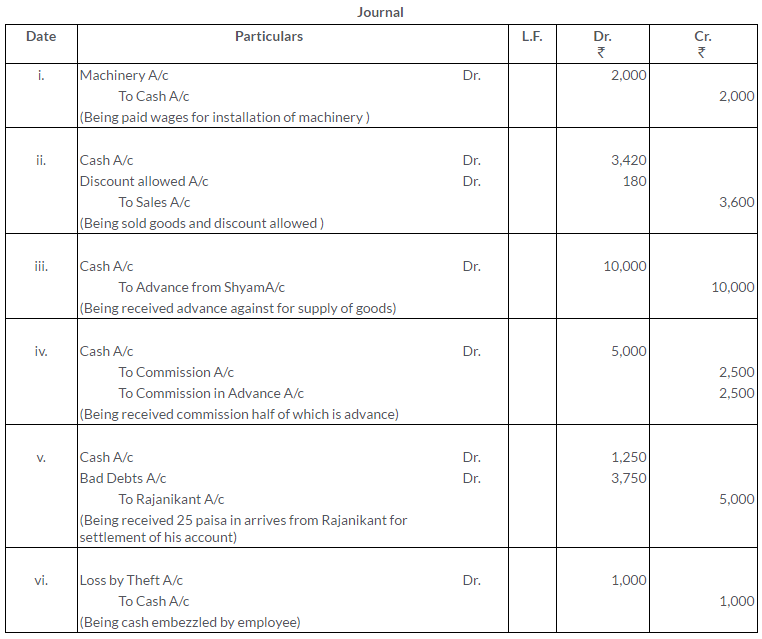
    Journalise the following transactions :
    i. Paid Rs.2,000 in cash as wages on installation of a machine.
    ii. Sold goods to Manohar, list price Rs.4,000, Trade Discount 10% and cash Discount 5% he paid the amount on the same day and availed the cash discount.
    iii. Received as order from Shyam for supply of goods of the list price Rs.1,00,000 with an advance of 10% of list price.
    iv. Received commission Rs.5,000 half of which is in advance.
    v. Rajanikant is declared insolvent. A final compensation of 25 paise in the rupee is received from his estate out of Rs.5,000.
    vi. Cash embezzled by an employee Rs.1,000.
    Solution:
    ts-grewal-solutions-class-11-accountancy-chapter-8-journal-ledger-Q10

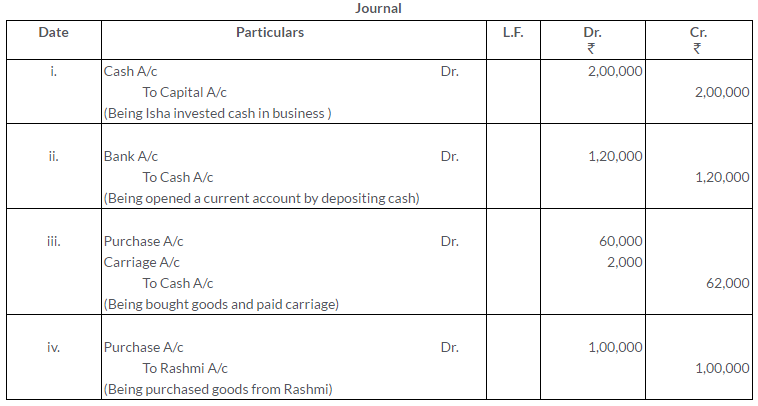
    Question 11.
    Journalise the following :
    i. Isha invested Rs.2,00,000 in business.
    ii. Opened a current account in bank Rs.1,20,000.
    iii. Purchased goods for Rs.60,000 and paid Rs.2,000 for arrange.
    iv. Purchased goods for Rs.1,00,000 from Rashmi.
    Solution:
    ts-grewal-solutions-class-11-accountancy-chapter-8-journal-ledger-Q11

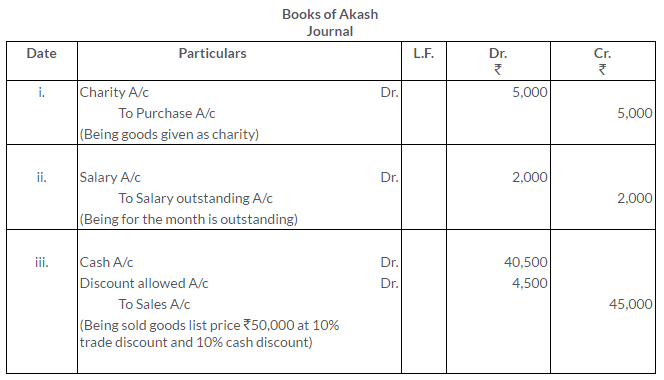
    Question 12.
    Journalise the following transactions in the books of Akash :
    i. Goods given as charity Rs.5,000.
    ii. Salary for the month is outstanding Rs.2,000.
    iii. Goods sold for a list price of Rs.50,000; trade discount allowed 10%, cash discount allowed 10%.
    Solution:
    ts-grewal-solutions-class-11-accountancy-chapter-8-journal-ledger-Q12

    Question 13.
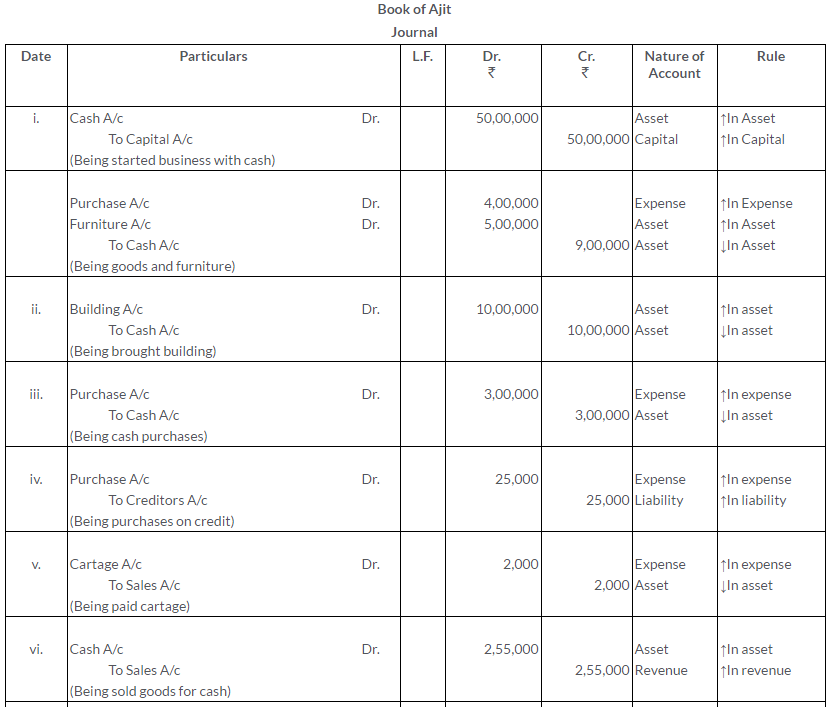
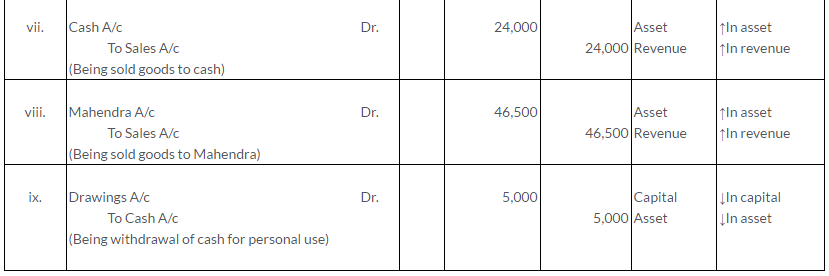
    Give journal entries for the following transactions giving in each case the nature of account (whether asset, liability, capital, expenses or revenue) and the rule applicable:
    i. Ajit started business by investing cash Rs.50,00,000. He bought goods old Rs.4,00,000 and furniture of Rs.5,00,000.
    ii. Purchased building for Rs.10,00,000.
    iii. Purchased goods for cash Rs.3,00,000.
    iv. Purchased goods on credit from Chandler Rs.25,000.
    v. Paid cartage Rs.2,000.
    vi. Sold goods for cash Rs.2,55,000.
    vii. Sold goods for cash to Rs.24,000.
    viii. Sold goods to Mahendra on credit Rs.46,500.
    ix. Cash withdrawn by Ajit for personal use Rs.5,000.
    Solution:
    ts-grewal-solutions-class-11-accountancy-chapter-8-journal-ledger-Q13
    ts-grewal-solutions-class-11-accountancy-chapter-8-journal-ledger-Q13-1

    Question 14.
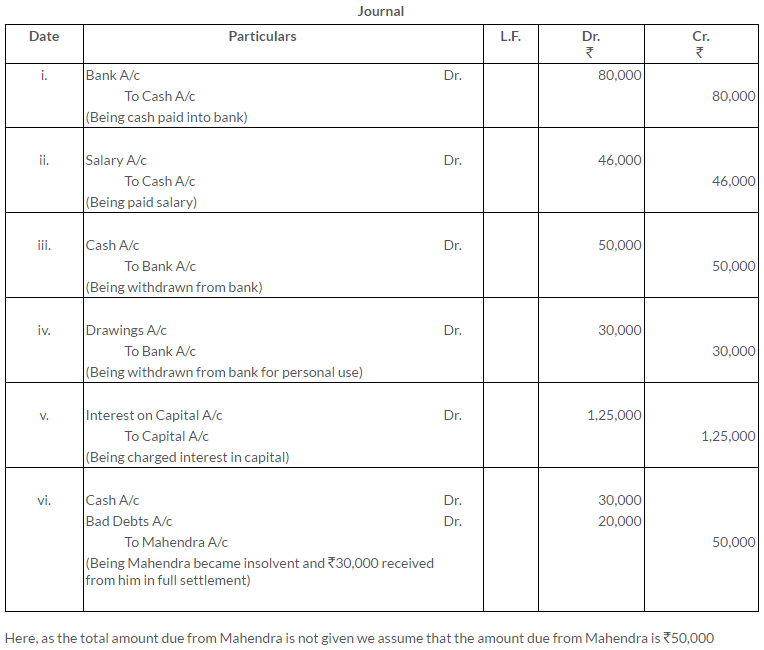
    Journalise the following transactions :
    i. Deposited cash into bank Rs.80,000.
    ii. Paid salary Rs.46,000.
    iii. Withdrew from the bank Rs.50,000 for office use.
    iv. Withdrew from the bank Rs.30, 000 for private use.
    v. Charged interest on capital Rs.1,25,000.
    vi. Mahendra became insolvent. Only Rs.30,000 could be realised from him.
    Solution:
    ts-grewal-solutions-class-11-accountancy-chapter-8-journal-ledger-Q14

    Question 15.
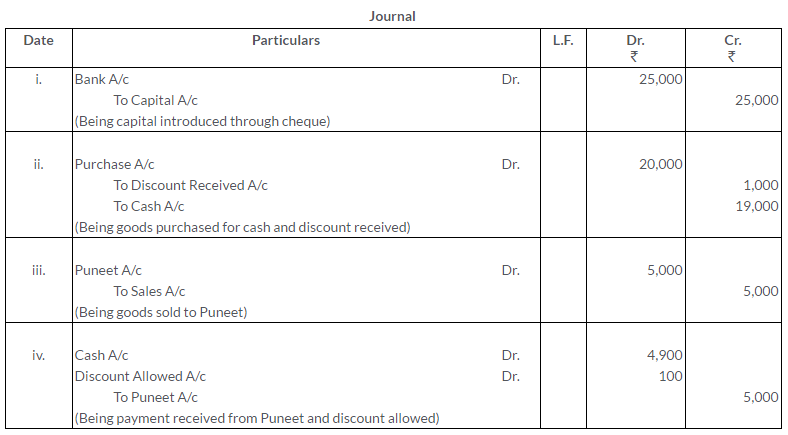
    Journalise the following transactions:
    i. Tarun introduced capital by cheque Rs.25,000.
    ii. Purchased goods for Rs.20,000 and availed discount Rs.1,000.
    iii. Sold goods to Puneet for Rs.5,000.
    iv. Puneet paid cash and availed discount Rs.100
    Solution:
    ts-grewal-solutions-class-11-accountancy-chapter-8-journal-ledger-Q15

    Question 16.
    Journalise the following transactions:
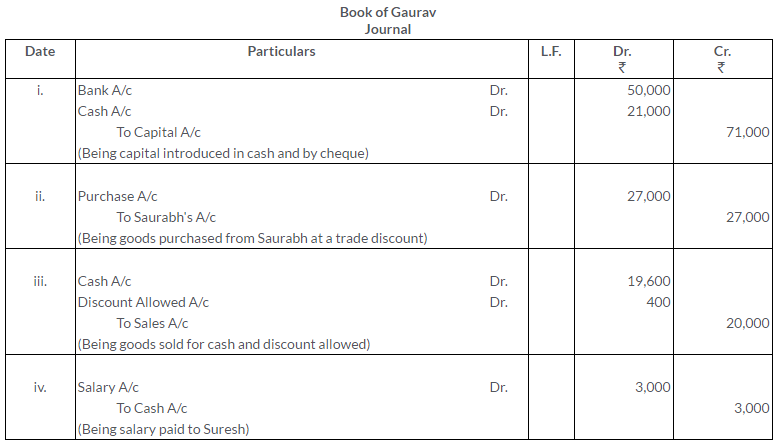
    Gaurav commenced business by introducing capital in cash Rs.21,000 and by cheque Rs.50,000.
    Gaurav purchased goods from Saurab for Rs.30,000 and Saurab allowed him Trade Discount of Rs.3,000.
    He sold goods to Ramesh against cash Rs.20,000 and allowed him Cash Discount of Rs.400.
    Paid salary to Suresh Rs.3,000.
    Solution:
    ts-grewal-solutions-class-11-accountancy-chapter-8-journal-ledger-Q16

    Question 17.
    Journalise the following transactions:
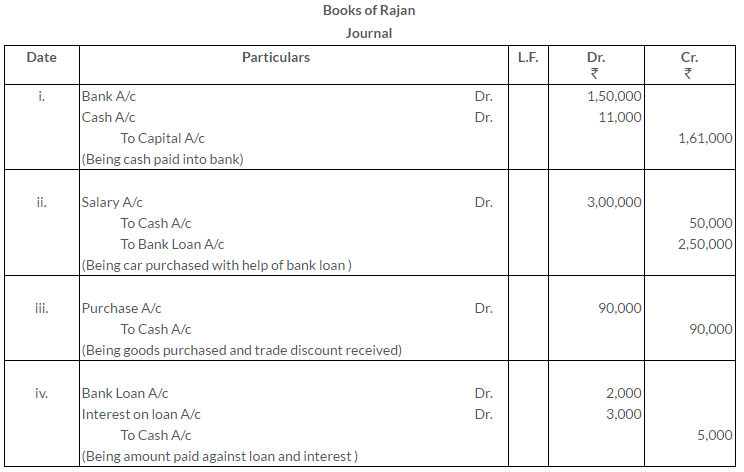
    Rajan commenced business by introducing capital in cash Rs.11,000 and by cheque Rs.1,50,000.
    Purchased car for Rs.3,00,000 by taking loan of Rs.2,50.000 from bank.
    Purchased goods for Rs.1,00,000 and availed Trade Discount of Rs.10,000.
    Paid Rs.5,000 to bank as installment, Rs.2,000 towards principal and Rs.3,000 as interest.
    Solution:
    ts-grewal-solutions-class-11-accountancy-chapter-8-journal-ledger-Q17

    Question 18.
    Journalise the following transactions in the books of Ajay:
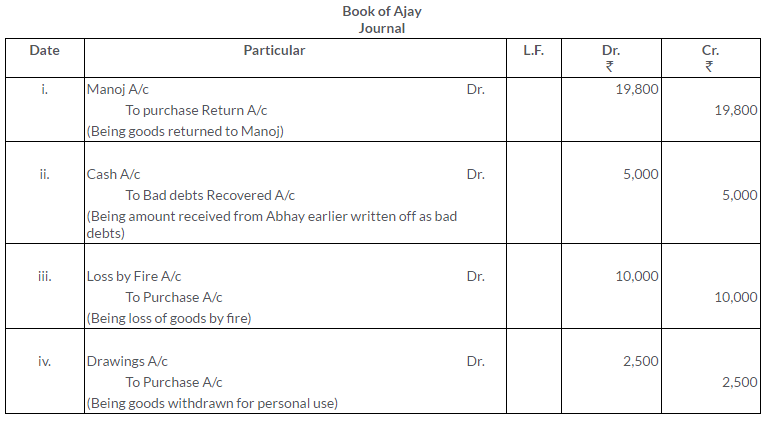
    Ajay returned goods purchased from Manoj Rs.22,000. He had availed Trade Discount of Rs.2,200 on the goods returned.
    Ajay received Rs.5,000 from Abhay which he had earlier written off as Bad Debts.
    A fire occurred in the godown of Ajay and he lost goods worth Rs.10,000. The stock was not insured.
    Ajay took goods worth Rs.2,500 (Cost) for his personal use.
    Solution:
    ts-grewal-solutions-class-11-accountancy-chapter-8-journal-ledger-Q18

    Question 19.
    Journalise the following transactions in our books:
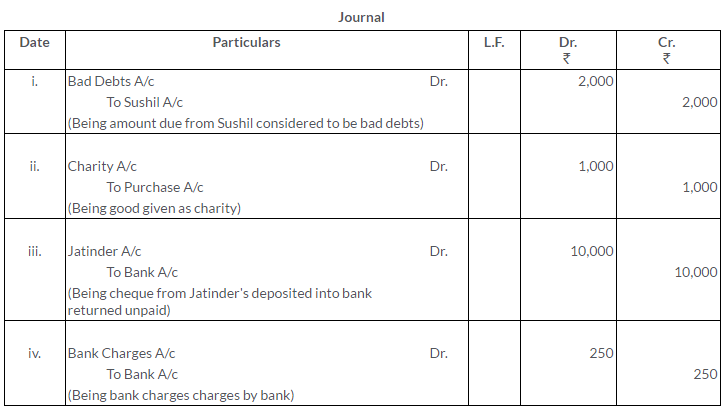
    i. Amount due from Sushil Rs.2,000 is not recoverable.
    ii. Goods purchased for Rs.1,000 given as charity.
    iii. Cheque of Jatinder of Rs.10,000 deposited, returned unpaid.
    iv. Bank charges charged by bank Rs.250.
    Solution:
    ts-grewal-solutions-class-11-accountancy-chapter-8-journal-ledger-Q19

    Question 20.
    ts-grewal-solutions-class-11-accountancy-chapter-8-journal-ledger-Q20-1
    Solution:
    ts-grewal-solutions-class-11-accountancy-chapter-8-journal-ledger-Q20-2

    Question 21.
    Journalise the following entries:
    Goods worth Rs.500 given as charity.
    Received Rs.975 from Harikrishna in full settlement of his account for Rs.1,000.
    Received a first and final dividend of 60 paise in a rupee from the Official Receive Rajan, who owed us Rs.1,000.
    Charged depreciation on plant Rs.1,000.
    Solution:
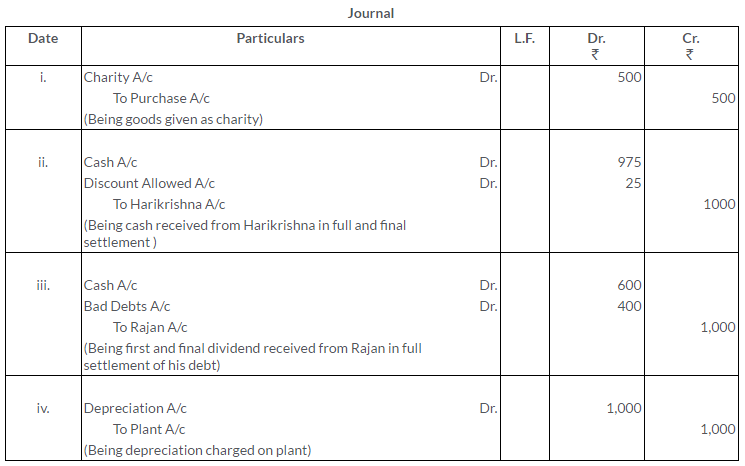
    ts-grewal-solutions-class-11-accountancy-chapter-8-journal-ledger-Q21

    Question 22.
    Journalise the following transactions with narration:
    i. Paid Income Tax Rs.3,000.
    ii. Interest on Capital Rs.300.
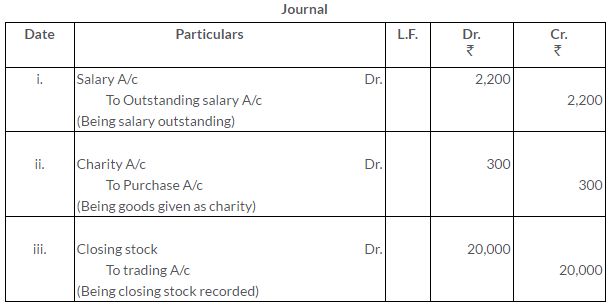
    iii. Goods worth Rs.500 given as charity.
    Solution:
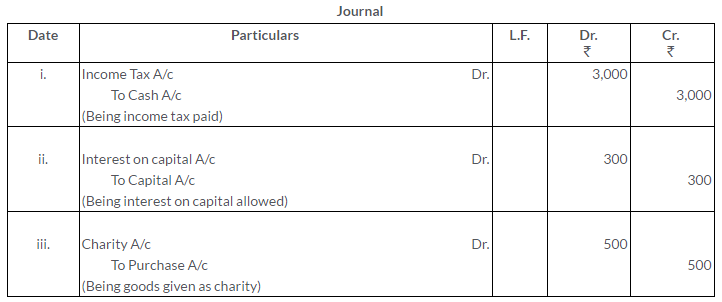
    ts-grewal-solutions-class-11-accountancy-chapter-8-journal-ledger-Q22

    Question 23.
    Journalise the following:
    i. Goods worth Rs.500 were used by the proprietor for domestic purposes.
    ii. Goods uninsured worth Rs.3,000 were destroyed by fire.
    iii. Paid Rs.250 as wages on installation of a new machine.
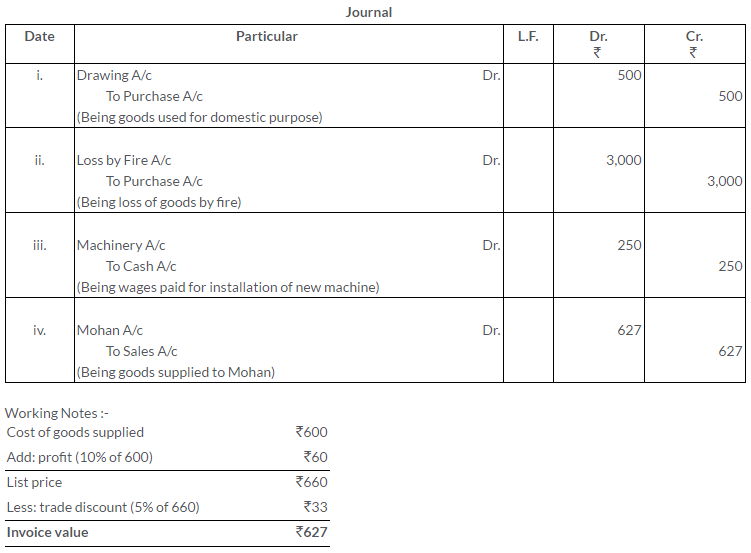
    iv. Supplied goods costing Rs.600 to Mohan issued at 10% above cost less 5% Trade Discount.
    Solution:
    ts-grewal-solutions-class-11-accountancy-chapter-8-journal-ledger-Q23

    Question 24.
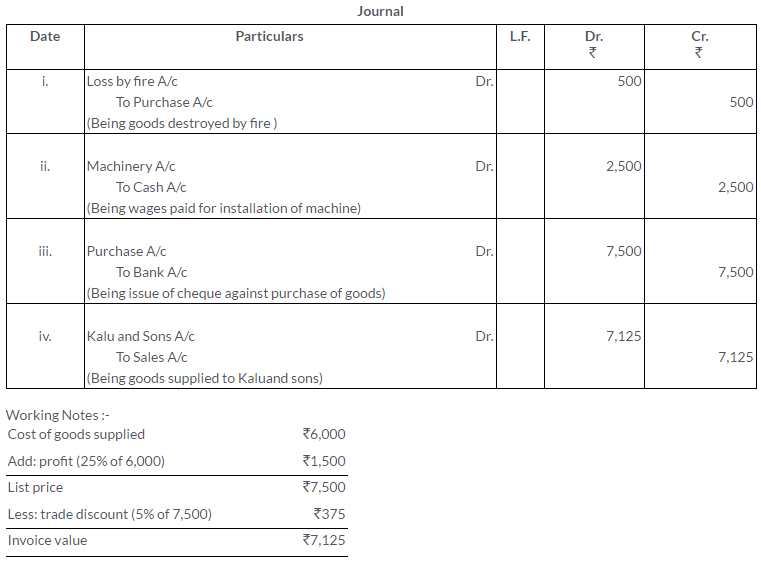
    Journalise the following transactions:
    Goods destroyed by fire Rs.500.
    Paid Rs.2,500 in cash as wages on installation of a machinery.
    Issued a cheque in favour of M/s. Parmatma Singh and Sons on account of purchase goods worth Rs.7,500.
    Goods sold costingRs.6,000 to M/s Kalu Sons at an invoice price 25% above cost less 5% Trade Discount.
    Solution:
    ts-grewal-solutions-class-11-accountancy-chapter-8-journal-ledger-Q24

    Question 25.
    Prepare the journal from the transactions given below:
    i. Rent outstanding Rs.5,000.
    ii. Received interest on loan from the debtor Rs.25,000.
    iii. Provided interest on capital (Rs.50,000) at 6% for six months.
    iv. Received Rs.780 from Surinder in full settlement of debt to his account for Rs.800.
    Solution:

    Question 26.
    At the end of an accounting year, a trader finds that no entry has been passed in the books of account in respect of the following transactions:
    ts-grewal-solutions-class-11-accountancy-chapter-8-journal-ledger-Q26-1
    Solution:
    ts-grewal-solutions-class-11-accountancy-chapter-8-journal-ledger-Q26-2

    Question 27.
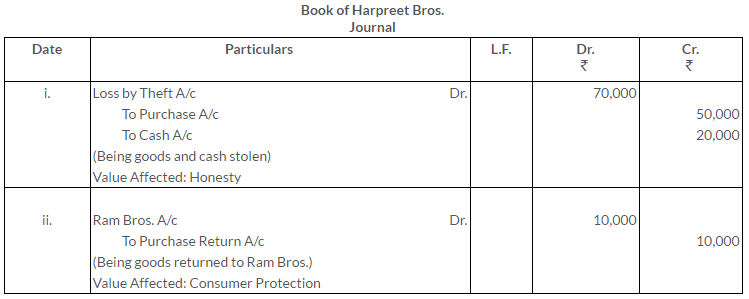
    Journalise the following transactions in the books of Harpreet Bros:
    i. Goods worth Rs.50,000 and Cash Rs.20,000 were stolen by an employee.
    ii. Goods costingRs.10,000 were returned to Ram Bros. as the goods were hazardous for the health of the consumers.
    Also give value affected in each of the above case.
    Solution:
    ts-grewal-solutions-class-11-accountancy-chapter-8-journal-ledger-Q27

    Question 28.
    Journalise the following:
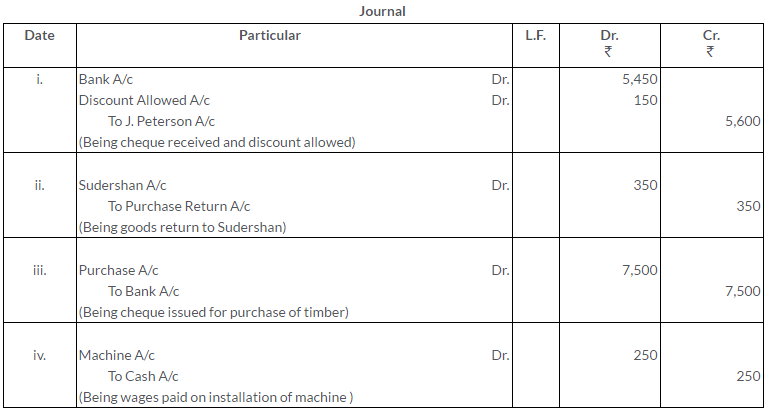
    i. Received a cheque from J. Peterson Rs.5,450. Allowed him discount of Rs.150.
    ii. Returned goods to Sudershan of the value of Rs.350.
    iii. Issued a cheque in flavor of M/s Karanvir Timber Company on account of the purchase of timber worth Rs.7,500.
    iv. Paid Rs.250 in cash as wages on installation of a machine.
    Solution:
    ts-grewal-solutions-class-11-accountancy-chapter-8-journal-ledger-Q28

    Question 29.
    Journalise the following transactions in the books of M/s. Hari Ram:
    i. Rahul who owned Rs.5,000 was declared insolvent and 60 paise in a rupee are received as final compensation.
    ii. Out of insurance paid this year, Rs.3,000 is related to next year.
    iii. Provide depreciation @10% on furniture costing Rs.10,000 for 9 months.
    Solution:

    Question 30.
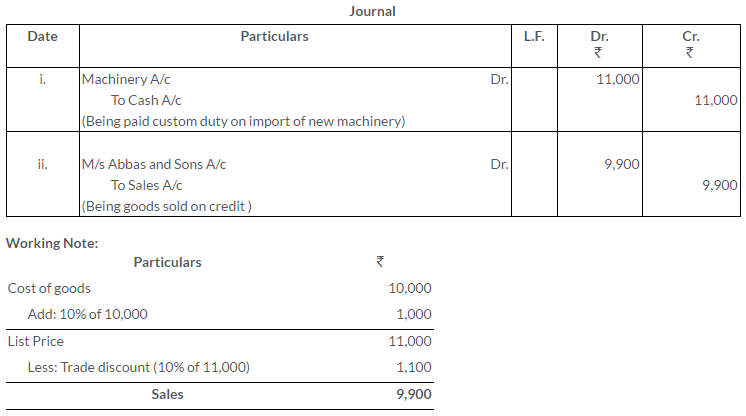
    Journalise the following transactions:
    i. Paid customs duty Rs.11,000 in cash on import of a new machinery.
    ii. Goods sold costing Rs.10,000 to M/s Abbas and sons at an invoice price 10% above cost less 10% trade discount.
    Solution:
    ts-grewal-solutions-class-11-accountancy-chapter-8-journal-ledger-Q30

    Question 31.
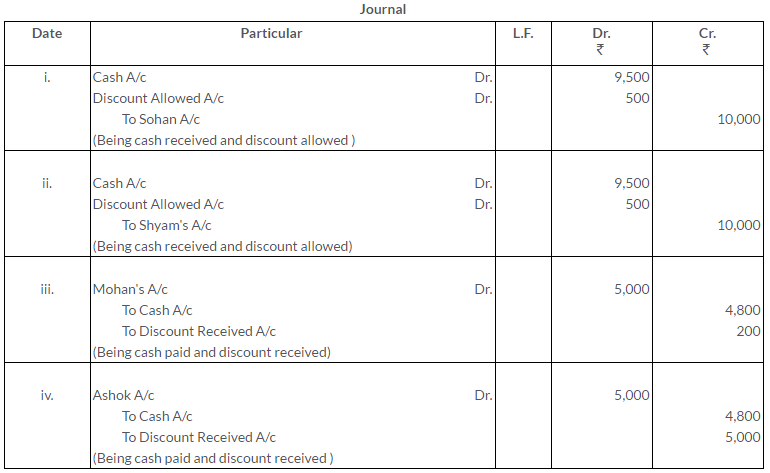
    Journalise the following transactions in the books of Gaurav:
    i. Received Rs.9,500 from Sohan in full settlement of his account for Rs.10,000.
    ii. Received Rs.9,500 from Shyam on his account for Rs.10,000.
    iii. Paid Rs.4,800 to Mohan in full settlement of his account for Rs.5,000.
    iv. Paid Rs.4,800 to Ashok on his account for Rs.5,000.
    Solution:
    ts-grewal-solutions-class-11-accountancy-chapter-8-journal-ledger-Q31

    Question 32.
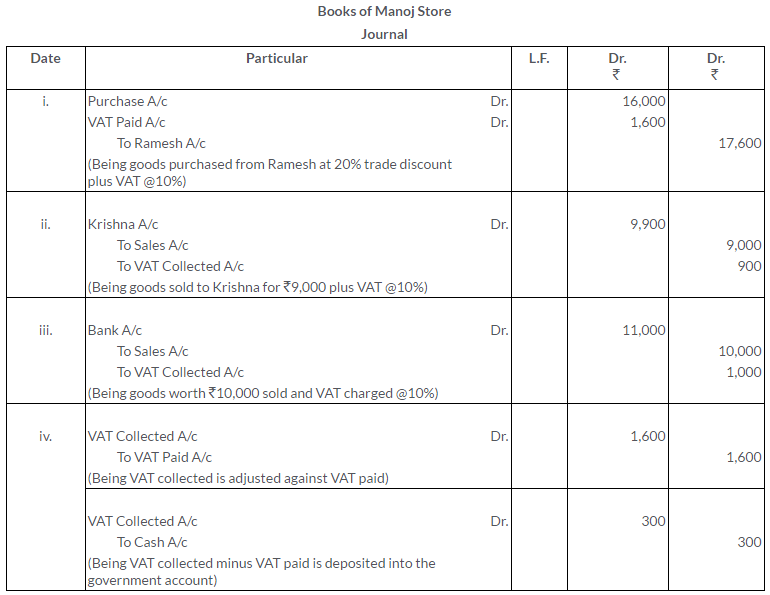
    Journalise the following transactions in the books of Manoj Store:
    i. Purchased goods from Ramesh Rs.20,000 less trade discount at 20% plus VAT @10%
    ii. Sold goods costing Rs.7,000 to Krishna for Rs.9,000 plus VAT @10%
    iii. Sold goods for Rs.10,000 and charged VAT @10% against cheque.
    iv. VAT was deposited into government account on due date.
    Solution:
    ts-grewal-solutions-class-11-accountancy-chapter-8-journal-ledger-Q32

    Question 33.
    Journalise the following transactions :
    i. Paid Rs.2,500 in cash as wages on installation of a machine.
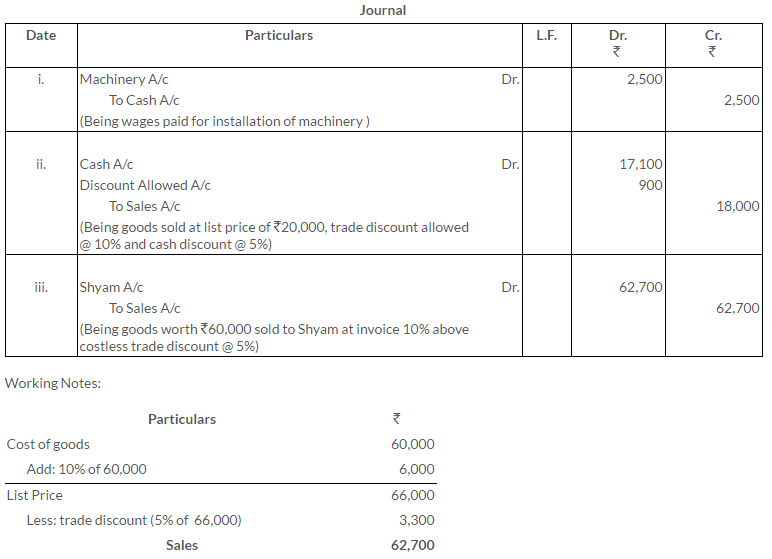
    ii. Sold goods to kitty at a list price of Rs.20,000. Sales subject to 10% trade discount and 5% cash discount if payment is made immediately. Kitty availed cash discount.
    iii. Supplied goods costing Rs.60,000 to Shyam. Issued invoice at 10% above cost less 5% trade discount.
    Solution:
    ts-grewal-solutions-class-11-accountancy-chapter-8-journal-ledger-Q33

    Question 34.
    ts-grewal-solutions-class-11-accountancy-chapter-8-journal-ledger-Q34-1
    Solution:
    ts-grewal-solutions-class-11-accountancy-chapter-8-journal-ledger-Q34-2

    Question 35.
    ts-grewal-solutions-class-11-accountancy-chapter-8-journal-ledger-Q35-1
    Solution:
    ts-grewal-solutions-class-11-accountancy-chapter-8-journal-ledger-Q35-2
    ts-grewal-solutions-class-11-accountancy-chapter-8-journal-ledger-Q35-3
    ts-grewal-solutions-class-11-accountancy-chapter-8-journal-ledger-Q35-4
    ts-grewal-solutions-class-11-accountancy-chapter-8-journal-ledger-Q35-5
    ts-grewal-solutions-class-11-accountancy-chapter-8-journal-ledger-Q35-6
    ts-grewal-solutions-class-11-accountancy-chapter-8-journal-ledger-Q35-7
    ts-grewal-solutions-class-11-accountancy-chapter-8-journal-ledger-Q35-8

    Question 36.
    ts-grewal-solutions-class-11-accountancy-chapter-8-journal-ledger-Q36-1
    Solution:
    ts-grewal-solutions-class-11-accountancy-chapter-8-journal-ledger-Q36-2
    ts-grewal-solutions-class-11-accountancy-chapter-8-journal-ledger-Q36-3
    ts-grewal-solutions-class-11-accountancy-chapter-8-journal-ledger-Q36-4
    ts-grewal-solutions-class-11-accountancy-chapter-8-journal-ledger-Q36-5
    ts-grewal-solutions-class-11-accountancy-chapter-8-journal-ledger-Q36-6
    ts-grewal-solutions-class-11-accountancy-chapter-8-journal-ledger-Q36-7

    Question 37.
    ts-grewal-solutions-class-11-accountancy-chapter-8-journal-ledger-Q37-1
    Solution:
    ts-grewal-solutions-class-11-accountancy-chapter-8-journal-ledger-Q37-2
    ts-grewal-solutions-class-11-accountancy-chapter-8-journal-ledger-Q37-3
    ts-grewal-solutions-class-11-accountancy-chapter-8-journal-ledger-Q37-4
    ts-grewal-solutions-class-11-accountancy-chapter-8-journal-ledger-Q37-5
    ts-grewal-solutions-class-11-accountancy-chapter-8-journal-ledger-Q37-6
    ts-grewal-solutions-class-11-accountancy-chapter-8-journal-ledger-Q37-7
    ts-grewal-solutions-class-11-accountancy-chapter-8-journal-ledger-Q37-8
    ts-grewal-solutions-class-11-accountancy-chapter-8-journal-ledger-Q37-9
    ts-grewal-solutions-class-11-accountancy-chapter-8-journal-ledger-Q37-10

    Question 38.
    ts-grewal-solutions-class-11-accountancy-chapter-8-journal-ledger-Q38-1
    Solution:
    ts-grewal-solutions-class-11-accountancy-chapter-8-journal-ledger-Q38-2
    ts-grewal-solutions-class-11-accountancy-chapter-8-journal-ledger-Q38-3
    ts-grewal-solutions-class-11-accountancy-chapter-8-journal-ledger-Q38-4
    ts-grewal-solutions-class-11-accountancy-chapter-8-journal-ledger-Q38-5
    ts-grewal-solutions-class-11-accountancy-chapter-8-journal-ledger-Q38-6
    ts-grewal-solutions-class-11-accountancy-chapter-8-journal-ledger-Q38-7
    ts-grewal-solutions-class-11-accountancy-chapter-8-journal-ledger-Q38-8

    Question 39.
    ts-grewal-solutions-class-11-accountancy-chapter-8-journal-ledger-Q39-1
    Solution:
    ts-grewal-solutions-class-11-accountancy-chapter-8-journal-ledger-Q39-2
    ts-grewal-solutions-class-11-accountancy-chapter-8-journal-ledger-Q39-3
    ts-grewal-solutions-class-11-accountancy-chapter-8-journal-ledger-Q39-4
    ts-grewal-solutions-class-11-accountancy-chapter-8-journal-ledger-Q39-5
    ts-grewal-solutions-class-11-accountancy-chapter-8-journal-ledger-Q39-6
    ts-grewal-solutions-class-11-accountancy-chapter-8-journal-ledger-Q39-7
    ts-grewal-solutions-class-11-accountancy-chapter-8-journal-ledger-Q39-8
    ts-grewal-solutions-class-11-accountancy-chapter-8-journal-ledger-Q39-9
    ts-grewal-solutions-class-11-accountancy-chapter-8-journal-ledger-Q39-10
    ts-grewal-solutions-class-11-accountancy-chapter-8-journal-ledger-Q39-11
    ts-grewal-solutions-class-11-accountancy-chapter-8-journal-ledger-Q39-12
    ts-grewal-solutions-class-11-accountancy-chapter-8-journal-ledger-Q39-13
    ts-grewal-solutions-class-11-accountancy-chapter-8-journal-ledger-Q39-14

    Question 40.
    ts-grewal-solutions-class-11-accountancy-chapter-8-journal-ledger-Q40-1
    Solution:
    ts-grewal-solutions-class-11-accountancy-chapter-8-journal-ledger-Q40-2
    ts-grewal-solutions-class-11-accountancy-chapter-8-journal-ledger-Q40-3
    ts-grewal-solutions-class-11-accountancy-chapter-8-journal-ledger-Q40-4
    ts-grewal-solutions-class-11-accountancy-chapter-8-journal-ledger-Q40-5
    ts-grewal-solutions-class-11-accountancy-chapter-8-journal-ledger-Q40-6
    ts-grewal-solutions-class-11-accountancy-chapter-8-journal-ledger-Q40-7
    ts-grewal-solutions-class-11-accountancy-chapter-8-journal-ledger-Q40-8
    ts-grewal-solutions-class-11-accountancy-chapter-8-journal-ledger-Q40-9

    Question 41.
    ts-grewal-solutions-class-11-accountancy-chapter-8-journal-ledger-Q41-1
    Solution:
    ts-grewal-solutions-class-11-accountancy-chapter-8-journal-ledger-Q41-2
    ts-grewal-solutions-class-11-accountancy-chapter-8-journal-ledger-Q41-3
    ts-grewal-solutions-class-11-accountancy-chapter-8-journal-ledger-Q41-4
    ts-grewal-solutions-class-11-accountancy-chapter-8-journal-ledger-Q41-5
    ts-grewal-solutions-class-11-accountancy-chapter-8-journal-ledger-Q41-6
    ts-grewal-solutions-class-11-accountancy-chapter-8-journal-ledger-Q41-7
    ts-grewal-solutions-class-11-accountancy-chapter-8-journal-ledger-Q41-8
    ts-grewal-solutions-class-11-accountancy-chapter-8-journal-ledger-Q41-9

    Question 42.
    ts-grewal-solutions-class-11-accountancy-chapter-8-journal-ledger-Q42-1
    Solution:
    ts-grewal-solutions-class-11-accountancy-chapter-8-journal-ledger-Q42-2
    ts-grewal-solutions-class-11-accountancy-chapter-8-journal-ledger-Q42-3
    ts-grewal-solutions-class-11-accountancy-chapter-8-journal-ledger-Q42-4
    ts-grewal-solutions-class-11-accountancy-chapter-8-journal-ledger-Q42-5
    ts-grewal-solutions-class-11-accountancy-chapter-8-journal-ledger-Q42-6
    ts-grewal-solutions-class-11-accountancy-chapter-8-journal-ledger-Q42-7
    ts-grewal-solutions-class-11-accountancy-chapter-8-journal-ledger-Q42-8
    ts-grewal-solutions-class-11-accountancy-chapter-8-journal-ledger-Q42-9
    ts-grewal-solutions-class-11-accountancy-chapter-8-journal-ledger-Q42-10
    ts-grewal-solutions-class-11-accountancy-chapter-8-journal-ledger-Q42-11

  • TS Grewal Solutions for Origin of Transactions – Source Documents and Preparation of Voucher Class 11 Accountancy Chapter 7

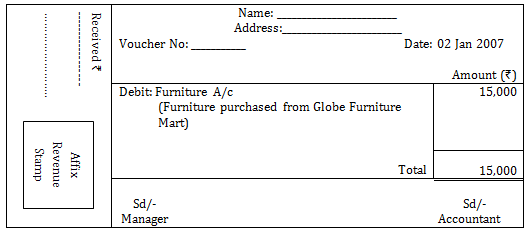
    Origin of Transactions – Source Documents and Preparation of Voucher

  • TS Grewal Solutions for Accounting Procedures – Rules of Debit and Credit Class 11 Accountancy Chapter 6

    TS Grewal Solutions for Class 11 Accountancy Chapter 6 – Accounting Procedures – Rules of Debit and Credit

    Question 1.
    Following accounts are being maintained in the books of Shri Ashok. Classify them under Assets, Liabilities, Expenses and Revenue Accounts.
    (i) Land; (ii) Investments; (iii) Building; (iv) Interest Received; (v) Salary;(vi) Bank Overdraft; (vii) Debtors; (viii) Creditors; (ix) Bad Debts; (x) Capital; (xi) Depreciation; (xii) Motor Vehicles; (xiii) Freight; (xiv) Wages; (xv) Goodwill; (xvi) Repairs.
    Solution:
    ts-grewal-solutions-class-11-accountancy-chapter-6-accounting-procedures-rules-debit-credit--Q1

    Question 2.
    Classify the following into assets, liabilities, capital, revenue, and expenses:
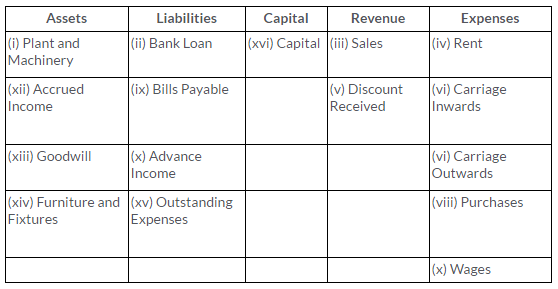
    (i) Plant and Machinery; (ii) Bank Loan; (iii) Sales; (iv) Rent; (v) Discount Received; (vi) Carriage Inwards; (vii) Carriage Outwards; (viii) Purchases;(ix) Bills Payable; (x) Wages; (xi) Advance Income; (xii) Accrued Income;(xiii) Goodwill; (xiv) Furniture and Fixtures; (xv) Outstanding Expenses;(xvi) Capital.
    Solution:
    ts-grewal-solutions-class-11-accountancy-chapter-6-accounting-procedures-rules-debit-credit--Q2

    Question 3.
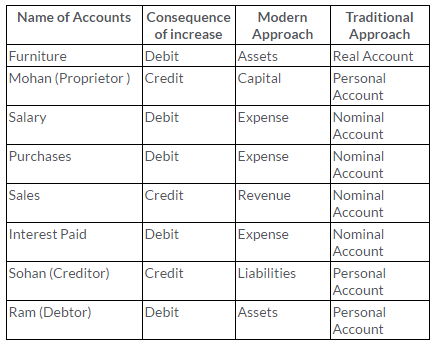
    On which side will be the increase in the following accounts recorded? Also, mention the nature of the account:
    i. Furniture A/c
    ii. Mohan (Proprietor)
    iii. Salary A/c
    iv. Purchases A/c
    v. Sales A/c
    vi. Interest Paid A/c
    vii. Sohan (Creditor)
    viii. Ram (Debtor)
    Solution:
    ts-grewal-solutions-class-11-accountancy-chapter-6-accounting-procedures-rules-debit-credit--Q3

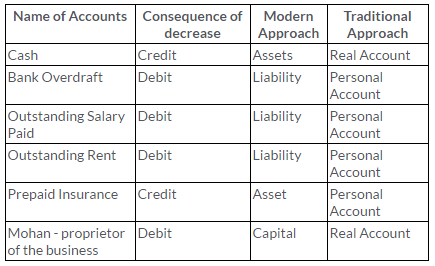
    Question 4.
    On which side will be the decrease in the following accounts recorded? Also, mention the nature of the account:
    i. Cash
    ii. Bank Overdraft
    iii. Outstanding Salary paid
    iv. Outstanding Rent
    v. Prepaid Insurance
    vi. Mohan, Proprietor of the business
    Solution:
    ts-grewal-solutions-class-11-accountancy-chapter-6-accounting-procedures-rules-debit-credit--Q4

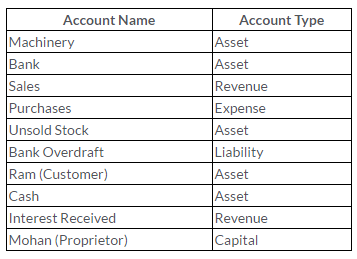
    Question 5.
    Following is the list of various accounts. Find out which are Assets, Liabilities, Capital, Revenue or Expense Accounts:
    i. Machinery
    ii. Bank
    iii. Sales
    iv. Purchases
    v. Unsold Stock
    vi. Bank Overdraft
    vii. Ram (Customer)
    viii. Cash
    ix. Interest Received
    x. Mohan (Proprietor)
    Solution:
    ts-grewal-solutions-class-11-accountancy-chapter-6-accounting-procedures-rules-debit-credit--Q5

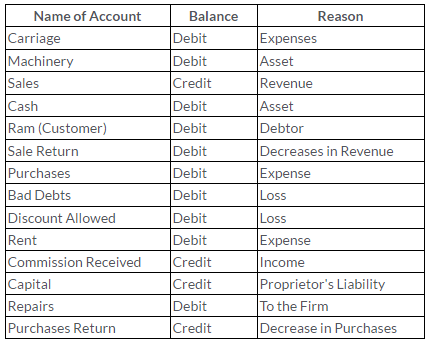
    Question 6.
    You are given a number of accounts below. State which of them will show a debit balance and which a credit balance:
    i. Carriage
    ii. Machinery
    iii. Sales
    iv. Cash
    v. Ram (Customer)
    vi. Sales Return
    vii. Purchases
    viii. Bad Debts
    ix. Discount Allowed
    x. Rent
    xi. Commission Received
    xii. Capital
    xiii. Repairs
    xiv. Purchases Return
    Solution:
    ts-grewal-solutions-class-11-accountancy-chapter-6-accounting-procedures-rules-debit-credit--Q6

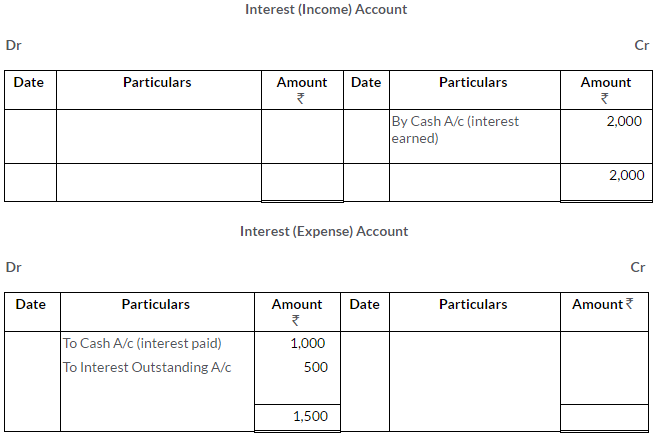
    Question 7.
    Put the following transactions on the proper side of an Interest Account:
    i. Interest earned Rs.2,000
    ii. Interest paid Rs.1,000
    iii. Interest due Rs.500
    Solution:
    ts-grewal-solutions-class-11-accountancy-chapter-6-accounting-procedures-rules-debit-credit--Q7

    Question 8.
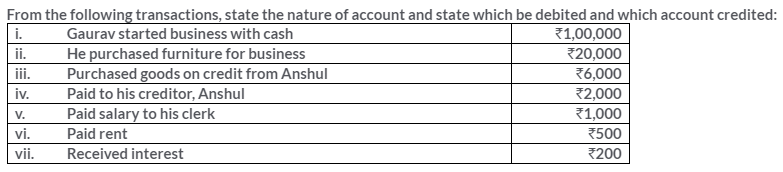
    ts-grewal-solutions-class-11-accountancy-chapter-6-accounting-procedures-rules-debit-credit-8
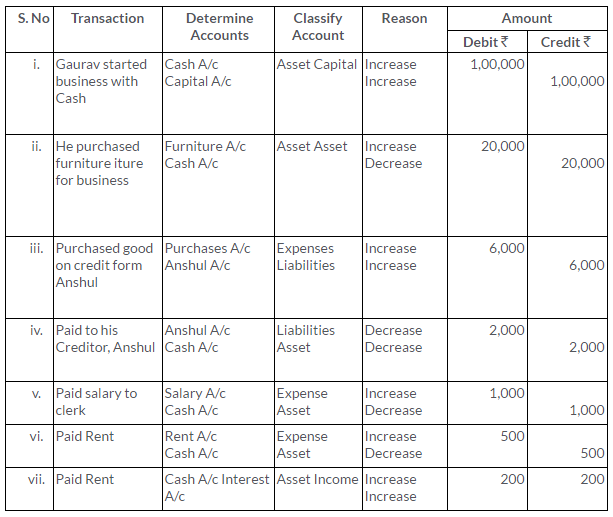
    Solution:
    ts-grewal-solutions-class-11-accountancy-chapter-6-accounting-procedures-rules-debit-credit--Q8

    Question 9.
    ts-grewal-solutions-class-11-accountancy-chapter-6-accounting-procedures-rules-debit-credit-9
    Solution:
    ts-grewal-solutions-class-11-accountancy-chapter-6-accounting-procedures-rules-debit-credit--Q9

    Question 10.
    ts-grewal-solutions-class-11-accountancy-chapter-6-accounting-procedures-rules-debit-credit-10
    Solution:
    ts-grewal-solutions-class-11-accountancy-chapter-6-accounting-procedures-rules-debit-credit--Q10

    Question 11.
    ts-grewal-solutions-class-11-accountancy-chapter-6-accounting-procedures-rules-debit-credit-Q11-1
    Solution:
    ts-grewal-solutions-class-11-accountancy-chapter-6-accounting-procedures-rules-debit-credit--Q11

    Question 12.
    Solution:
    ts-grewal-solutions-class-11-accountancy-chapter-6-accounting-procedures-rules-debit-credit--Q12
    ts-grewal-solutions-class-11-accountancy-chapter-6-accounting-procedures-rules-debit-credit-Q12-1

    Question 13.
    ts-grewal-solutions-class-11-accountancy-chapter-6-accounting-procedures-rules-debit-credit-Q13-1
    Solution:
    ts-grewal-solutions-class-11-accountancy-chapter-6-accounting-procedures-rules-debit-credit--Q13

    Question 14.
    ts-grewal-solutions-class-11-accountancy-chapter-6-accounting-procedures-rules-debit-credit-Q14-1
    Solution:
    ts-grewal-solutions-class-11-accountancy-chapter-6-accounting-procedures-rules-debit-credit--Q14

    Question 15.
    ts-grewal-solutions-class-11-accountancy-chapter-6-accounting-procedures-rules-debit-credit-Q15-1
    Solution:
    ts-grewal-solutions-class-11-accountancy-chapter-6-accounting-procedures-rules-debit-credit--Q15

  • TS Grewal Solutions for Accounting Equation Class 11 Accountancy Chapter 5

    TS Grewal Solutions for Class 11 Accountancy Chapter 5 – Accounting Equation

    Question 1.
    ts-grewal-solutions-class-11-accountancy-chapter-5-accounting-equation--Q1
    Solution:
    ts-grewal-solutions-class-11-accountancy-chapter-5-accounting-equation-Q1
    Question 2.
    ts-grewal-solutions-class-11-accountancy-chapter-5-accounting-equation--Q2

    Solution:
    ts-grewal-solutions-class-11-accountancy-chapter-5-accounting-equation-Q2
    Question 3.
    ts-grewal-solutions-class-11-accountancy-chapter-5-accounting-equation--Q3

    Solution:
    ts-grewal-solutions-class-11-accountancy-chapter-5-accounting-equation-Q3
    Question 4.
    What will be the effect of the following on the Accounting Equation?
    i. Harish started business with cash Rs.18,000
    ii. Purchased goods for cash 5,000 and on credit Rs.2,000
    iii. Sold goods for cash Rs.4,000 (costing Rs.2,400)
    iv. Rent paid Rs.1,000 and rent outstanding Rs.200
    (Delhi 1998)
    Solution:
    ts-grewal-solutions-class-11-accountancy-chapter-5-accounting-equation-Q4
    Question 5.
    Prepare Accounting Equation from the following:
    i. Started business with cash Rs.1,00,000 and Goods Rs.20,000.
    ii. Sold goods worth Rs.10,000 for cash Rs.12,000.
    iii. Purchased furniture on credit for Rs.30,000.
    (Delhi 2011)
    Solution:
    ts-grewal-solutions-class-11-accountancy-chapter-5-accounting-equation-Q5
    Question 6.
    Prepare an Accounting Equation and Balance Sheet on the following basis:
    i. Ajeet started business with cash Rs.20,000.
    ii. He purchased furniture for Rs.2,000.
    iii. He paid rent of Rs.200.
    iv. He purchased goods on credit Rs.3,000.
    v. He sold goods (cost price Rs.2,000) for Rs.5,000 on cash.
    Solution:
    ts-grewal-solutions-class-11-accountancy-chapter-5-accounting-equation-Q6
    Question 7.
    Prepare an Accounting Equation from the following:
    i. Started business with cash Rs.1,00,000.
    ii. Purchased goods for cash Rs.20,000 and on credit Rs.30,000.
    iii. Sold goods for cash costing Rs.10,000 and on credit costing Rs.15,000 both at a profit of 20%.
    (Delhi 2010)
    Solution:
    ts-grewal-solutions-class-11-accountancy-chapter-5-accounting-equation-Q7
    Question 8.
    ts-grewal-solutions-class-11-accountancy-chapter-5-accounting-equation--Q8

    Solution:
    ts-grewal-solutions-class-11-accountancy-chapter-5-accounting-equation-Q8
    Question 9.
    ts-grewal-solutions-class-11-accountancy-chapter-5-accounting-equation--Q9

    Solution:
    ts-grewal-solutions-class-11-accountancy-chapter-5-accounting-equation-Q9
    Question 10.
    Prove that the Accounting Equation is satisfied in all the following transactions of Suresh. Also prepare a Balance sheet.
    i. Commenced business with cash Rs.60,000.
    ii. Paid rent in advance Rs.500.
    iii. Purchased goods for cash Rs.30,000 and credit Rs.20,000.
    iv. Sold goods for cash Rs.30,000 costing Rs.20,000.
    v. Paid salary 500 and salary outstanding being Rs.100
    vi. Bought motorcycle for personal use Rs.5,000.
    Solution:
    ts-grewal-solutions-class-11-accountancy-chapter-5-accounting-equation-Q10
    Question 11.
    Show the effect of the following transactions on assets, liabilities and capital using the Accounting Equation. Also prepare a Balance sheet:
    i. Started business with cash Rs.60,000
    ii. Rent received Rs.2,000
    iii. Accrued interest Rs.500
    iv. Commission received in advance Rs.1,000
    v. Amount withdrawn Rs.5,000
    [Hint : Capital = Opening Capital Rs.60,000 + Rent Received Rs.2,000 + Accrued Interest Rs.500 – Drawings Rs.5,000 = Rs.57,500]
    Solution:
    ts-grewal-solutions-class-11-accountancy-chapter-5-accounting-equation-Q11
    Question 12.
    Prove that the Accounting Equation is satisfied in all the following transactions of Sameer Goel :
    (i) Started business with cash Rs.10,000.
    (ii) Paid rent in advance Rs.300.
    (iii) Purchased goods for cash 5,000 and credit Rs.2,000.
    (iv) Sold goods for cash Rs.8,000 costing Rs.4,000.
    (v) Paid salary Rs.450 and salary outstanding being Rs.100.
    (vi) Bought motorcycle for personal use Rs.3,000.
    (KVS 1997)
    Solution:
    ts-grewal-solutions-class-11-accountancy-chapter-5-accounting-equation-Q12
    Question 13.
    Show the Accounting Equation on the basis of the following transactions and present a Balance sheet on the last new equation balance:
    ts-grewal-solutions-class-11-accountancy-chapter-5-accounting-equation--Q13
    Solution:
    ts-grewal-solutions-class-11-accountancy-chapter-5-accounting-equation-Q13
    ts-grewal-solutions-class-11-accountancy-chapter-5-accounting-equation-Q13-1
    Question 14.
    Raghunath had the following transaction in an accounting year:
    i. Commenced business with cash Rs.50,000.
    ii. Paid into bank Rs.10,000.
    iii. Purchased goods for cash Rs.20,000 and credit Rs.30,000.
    iv. Sold goods for cash Rs.40,000 costing Rs.30,000.
    v. Rent paid Rs.500.
    vi. Rent outstanding Rs.100.
    vii. Bought furniture Rs.5,000 on credit.
    viii. Bought refrigerator for personal use Rs.5,000.
    ix. Purchased motorcycle for cash Rs.20,000.
    Create an Accounting Equation to show the effect of the above transactions on his assets, liabilities and capital and also show his final Balance sheet.
    Solution:
    ts-grewal-solutions-class-11-accountancy-chapter-5-accounting-equation-Q14
    ts-grewal-solutions-class-11-accountancy-chapter-5-accounting-equation-Q14-1
    Question 15.
    Prepare an Accounting Equation from the following:
    i. Started business with cash Rs.50,000 and goods Rs.30,000.
    ii. Purchased goods for cash 30,000 and on credit from Karan Rs.20,000.
    iii. Goods costing Rs.40,000 were sold for Rs.55,000.
    iv. Withdraw cash for personal use Rs.10,000.
    v. Rent outstanding Rs.2,000.
    (MSE Chandigarh)
    Solution:
    ts-grewal-solutions-class-11-accountancy-chapter-5-accounting-equation-Q15
    Question 16.
    Show an Accounting Equation on the basis of the following transactions:
    i. D. Mahapatra commenced business with cash Rs.1,50,000; goods Rs.60,000; machinery Rs.1,00,000 and furniture Rs.50,000.
    ii. 1/3rd of the above goods sold at a profit of 10% on cost and half of the payment is received in cash.
    iii. Depreciation on machinery provided @10%.
    iv. Cash withdrawn for personal use 10,000.
    v. Interest on drawings charged @5%.
    vi. Goods sold to Gupta for Rs.10,000 and received a Bill Receivable for the same amount for 3 months.
    vii. Received Rs.10,000 from Gupta against the Bills Receivable on its maturity.
    [Hints:
    1. Opening Capital Rs.3,60,000 = Cash Rs.1,50,000 + Stock Rs.60,000 + Machinery Rs.1,00,000 + Furniture Rs.50,000
    2. Liabilities: Nil]
    Solution:
    ts-grewal-solutions-class-11-accountancy-chapter-5-accounting-equation-Q16
    Question 17.
    ts-grewal-solutions-class-11-accountancy-chapter-5-accounting-equation--Q17
    Solution:
    ts-grewal-solutions-class-11-accountancy-chapter-5-accounting-equation-Q17
    Question 18.
    Create an Accounting Equation on the basis of the following transactions:
    i. Commenced business with cash Rs.50,000, goods Rs.30,000 and furniture Rs.20,000.
    ii. Sold goods to Ajay on credit costing Rs.4,000 for Rs.5,000.
    iii. Sold goods for cash costing Rs.12,000 for Rs.16,000.
    iv. Purchased goods for cash Rs.40,000.
    v. Purchased goods on credit for Rs.20,000.
    vi. Paid rent Rs.3,000 including Rs.2,000 in advance.
    vii. Paid salaries Rs.2000.
    viii. Sold goods costing Rs.8,000 for Rs.10,000.
    ix. Salaries outstanding Rs.1,000.
    x. Charge depreciation on furniture Rs.500.
    Solution:
    ts-grewal-solutions-class-11-accountancy-chapter-5-accounting-equation-Q18
    ts-grewal-solutions-class-11-accountancy-chapter-5-accounting-equation-Q18-1
    Question 19.
    Prepare Accounting Equation from the following:
    a. Started business with cash Rs.1,00,000.
    b. Purchased goods for cash Rs.20,000 and on credit Rs.30,000.
    c. Sold goods for cash costing Rs.10,000 and on credit costing Rs.15,000 both at profit of 20%.
    d. Paid salaries Rs.8,000.
    [Delhi 2012]
    Solution:
    ts-grewal-solutions-class-11-accountancy-chapter-5-accounting-equation-Q19
    Question 20.
    Show the accounting equation on the basis of following transactions:
    a. Ram started business with Rs.25,000.
    b. Purchased goods from Shyam Rs.10,000.
    c. Sold goods to Sohan costing Rs.1,500 for Rs.1,800.
    [MSE Chandigarh 2015]
    Solution:
    ts-grewal-solutions-class-11-accountancy-chapter-5-accounting-equation-Q20
    Question 21.
    If the capital of a business is Rs.3,00,000 and liabilities are Rs.50,000, loss 70,000, calculate the total assets of the business.
    Solution:
    ts-grewal-solutions-class-11-accountancy-chapter-5-accounting-equation-Q21
    Question 22.
    If total assets of a business are Rs.1,30,000 and net worth is Rs.80,000, calculate the creditors.
    [Hint: Net worth = Assets – Liabilities]
    Solution:
    ts-grewal-solutions-class-11-accountancy-chapter-5-accounting-equation-Q22
    Question 23.
    A commenced his cloth business on 1st April 2014 with a capital of Rs.30,000. On 31st March 2015, his assets were worth Rs.50,000 and liabilities of Rs.10,000. Find out his closing capital and profits earned during the year.
    Solution:
    ts-grewal-solutions-class-11-accountancy-chapter-5-accounting-equation-Q23
    Question 24.
    If capital of a business is Rs.1,40,000 and liabilities are of Rs.80,000, calculate the total assets of the business.
    Solution:
    ts-grewal-solutions-class-11-accountancy-chapter-5-accounting-equation-Q24
    Question 25.
    Calculate the total assets if:
    i. Capital is Rs.40,000.
    ii. Creditors are Rs.25,000.
    iii. Revenue during the period is Rs.50,000.
    iv. Expenses during the period are Rs.40,000.
    (Delhi 2001)
    Solution:
    ts-grewal-solutions-class-11-accountancy-chapter-5-accounting-equation-Q25
    Question 26.
    a. A had a capital of Rs.75,000 on 1st April 2015. He had also goods amounting to Rs.15,000 which he had purchased on credit and the payment had not been made. Find out the value of the total assets of the business.
    b. After a period of one month, he came to know that he had suffered a loss of Rs.1,700. He withdrew Rs.800 for his personal use. Find out his capital and assets of the business.
    Solution:
    ts-grewal-solutions-class-11-accountancy-chapter-5-accounting-equation-Q26
    Question 27.
    a. Mohan started a business on 1st April 2014 with a capital of Rs.10,000 and borrowed Rs.3,000 from a friend. He earned a profit ofRs.5,000 during the year ended 31st march, 2013 and withdrew cash Rs.4,000 for private use. What is his capital on 31st March, 2015?
    b. Mahesh started a business with capital of Rs.15,000 on 1st April, 2014. During the year he made a profit of Rs.3,000. He owes Rs.2,500 to suppliers of goods. What is the total of assets in his business on 31st March, 2015?
    Solution:
    ts-grewal-solutions-class-11-accountancy-chapter-5-accounting-equation-Q27
    Question 28.
    Mohan stared a business on 1st April 2014 with a capital of Rs.25,000 and a loan of Rs.12,500 borrowed from Shyam. During 2014-15 he had introduced additional capital of Rs.12,500 and had withdrew Rs.7,500 for personal use. On 31st March 2015 his assets were Rs.75,000. Find out his capital as on 31st March,2015 and profit made or loss incurred during the year 2014 – 15.
    Solution:
    ts-grewal-solutions-class-11-accountancy-chapter-5-accounting-equation-Q28
    Question 29.
    On 31st March, 2015, the total assets and external liabilities were Rs.2,00,000 and Rs.6,000 respectively. During the year, the proprietor had introduced capital of Rs.20,000 and withdrawn Rs.12,000 for personal use. He made a profit of Rs.20,000 during the year.
    Calculate the capital as on 1st April, 2014.
    Solution:
    ts-grewal-solutions-class-11-accountancy-chapter-5-accounting-equation-Q29

  • TS Grewal Solutions for Basic Accounting Terms Class 11 Accountancy Chapter 2

    TS Grewal Solutions for Class 11 Accountancy Chapter 2 – Basic Accounting Terms

    Question 1.
    Mr. Gopal started business for buying and selling of readymade garments with Rs.8, 00,000 as an initial investment. Out of this he paid Rs.4,00,000 for the purchase of garments and Rs.50,000 for furniture and Rs.50,000 for computers and the remaining amount was deposited into the bank. He sold some of the ladies and kids garments for Rs.3,00,000 for cash and some garments for Rs.1,50,000 on credit to Mr. Rajesh. Subsequently, he bought men’s garments of Rs.2,00,000 from Mr. Satish. In the first week of the next month, a fire broke out in his office and stock of garments worth Rs.1,00,000 was destroyed. Later on, some garments which cost Rs.1,20,000 were sold for Rs.1,30,000. Expenses paid during the same period were Rs.15,000. Mr. Gopal withdrew Rs.20,000 from business for his domestic use.
    From the above, answer the following:

    1. What is the amount of capital with which Mr. Gopal started the business?
    2. What fixed assets did he buy?
    3. What is the value of the goods purchased?
    4. Who is the creditor and state the amount payable to him?
    5. Who is the debtor and what is the amount receivable from him?
    6. What is the total amount of expenses?
    7. What is the amount of drawings of Mr. Gopal?

    Solution:

    1. Initial capital introduced by Mr. Gopal for starting the business of Readymade Garments” is Rs.8,00,000.
    2. He purchased two Fixed Assets i.e., Furniture and Computer. Therefore,
      Total Fixed Assets bought by him
      = Furniture + Computer
      Rs.50,000 + Rs.50,000  = Rs.1,00,000
    3. Value of the goods purchased by Mr. Gopal (Proprietor) = Purchase of Garments + Purchase of Men’s Garments
      =4,00,000 + 2,00,000
      Rs.6,00,000
    4. The creditor of the business is Mr. Satish with Rs.2, 00,000 being payable to him.
    5. The debtor of the business is Mr. Rajesh with Rs.1,50,000 being the amount to be received from him.
    6. Total amount of expenses is Rs.15,000.
    7. The amount of drawings of Mr. Gopal is Rs.20,000.