Category: English

  • Long Answer Questions of The Brook Poetry Class 9th

    1. “Tennyson’s poem offers a visual treat of sight and sound.” Discuss by giving examples from the poem ‘The Brook’.

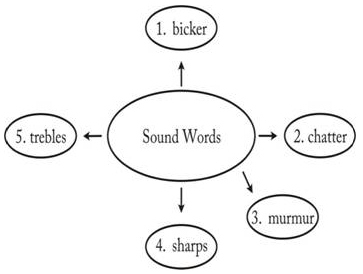
    Ans. Lord Tennyson provides us a visual treat of sight and sound using words like—bicker, murmur, chatter, babble and trebles for sound. Murmur means making soft sounds, bicker means to flow with a loud noise, treble is a high pitched sound in music. Chatter means making meaningless sound, so the brook chatters in little sharps and trebles, it babbles on the pebbles thus giving us a treat of sound. The visual treats are conveyed by — I make a sudden sally and sparkle among the fern, I steal by lawns. I slide by hazel covers. I move the sweet forget-me-nots. I slip, I slide, I gloom, I glance — sometimes it moves gently, sometimes forcefully. ‘It moves in and out’ mean it makes a zigzag movement like a snake.

    2. The journey of the brook is narrated by the brook itself. Discuss the effectiveness of the first person narration, used by Lord Tennyson.

    Ans. The brook is an inanimate object but the poet by introducing the device of personification makes it tell its experiences as it flows down hills, valley, villages and fields and finally joins a river. The brook relates the tale of its journey in detail and with accuracy. Its movements and the sounds it makes as it moves over pebbles, stony paths, as it cuts its own banks and lets the beams of sun dance on its waters, how it carries flowers and fish along with it to the big river. There is vividness, liveliness and an effectively painted picture of a brook taking its natural course which comes alive before our eyes.

    3. What is the moral message in the poem ‘The Brook’?

    OR

    How is the brook a symbol of human life?

    Ans. The poem ‘The Brook’ not only describes the journey of the brook but it also parallels the journey of human life. The poet wishes to highlight one important difference, that human life is transitory and comes to an
    end with death but the brook is immortal, its journey continues non-stop.

    The brook passes through many ups and downs like the highs and lows of human life. The brook passes through various places, which affects its smooth flow. Similarly human beings also encounter different problems, which affect their personality in turn. Just as the brook meets many kinds of life, like trout and grayling, similarly human beings interact with different people in the journey of life. They help and support them, just like the brook sustains many flowers, plants and sea-life. The brook imparts its zest and verve like human beings. Somewhere it is noisy, somewhere it is calm, like the peace and aggression depicted by the human beings.

    So the brook is a symbol of struggle of life, of meeting different odds, to remain undeterred in facing challenges, without any fear and still continues in one’s pursuit. The brook provides a valuable lesson to remain unshaken in one’s goal to accept joys and sorrows in one’s stride and still remain steadfast. So the brook and life symbolise constant movement, change, dynamism and renewal.

    4. Describe the journey of the Brook, originating from the ‘haunts of coot and heron’, joining the river, as its final destination.

    Ans. The brook travels through various places. It starts its journey somewhere in the mountains, which are home to birds like coot and heron. It emerges suddenly from a plateau and falls down into a valley. On its way, it passes through various hills, ridges, villages and lawns. It makes various kinds of movements like swirl, spiral, sally, bicker etc. Sometimes it makes curved whistling movements. moving over pebbles, flowers, fish. It attains progress over the plain area. Hordes of birds skim over the surface of water to catch fish. The brook looks beautiful as the starlight seems to be trapped on its surface, producing a net-like effect. Before reaching its final destination, the brook takes on a slow and lingering movement. In the end, it makes a final dash to meet the brimming river.

    Content’s

  • Short Answer Questions of The Brook Poetry Class 9th

    1. Give examples of alliteration and the beautiful images that form the texture of the poem ‘The Brook.’

    Ans. Sudden sally, bubble babble, twenty thorpes, field and fallow, I slip, I slide, willow-weed are examples of alliteration. The poem forms many beautiful images — the first one is formed in stanza 2 ‘By thirty hills — a hundred bridges’. This vivid image is of the brook flowing through hills and valleys, under bridges and passing by the villages.

    Another beautiful and strikingly vivid image created by the poet is that of the brook making serpent-like motions slipping, sliding, glancing among meadows, grassy plots, forget me-nots and floating fish.

    2. How is the journey of the brook similar to the journey of life and yet different?

    Ans. There are various similarities between the brook and the journey of life, e.g., both have a beginning, a middle age and an end. There are struggles in the lives of both — the human life continues inspite of struggles and ups and downs and the brook continues to flow against all odds. But one thing is different — man is mortal, whereas the brook is eternal, man may come and man may go but the brook goes on forever.

    3. ‘The Brook’ proceeds like a travelogue. Discuss the importance of the various places that the brook encounters on its journey.

    Ans. The brook travels through hills and vales, between ridges and underbridges, beside Philip’s farm, fallow land and foreland, making its way through, with a blossom here and a trout there and many a grayling through obstructions of sand and gravel until it falls into the big river. It passes thirty hills and fifty bridges. It
    chatters and babbles and creates music as it flows.

    4. Describe four movements that the brook makes during its journey. [CBSE 2010 (Term I)]

    The various movements that the brook makes on its journey are best described by the poet Lord Tennyson through words like sally, sparkle, slide, move, slip, hurry, flow, go, loiter, linger.

    It sparkles as it emerges among the plants with slender leaves, it sparkles in sunshine among the ferns. It hurries down hills and slips between ridges. It steals by lawns and slides, by hazel covers, it slips and slides, it glooms and glides and glances. It means it moves gently, slowly, unobserved, smoothly and then comes out into the open.

    5. What is the symbolic meaning conveyed by

    “For men may come and men may go, but I go on forever”? [CBSE 2010 (Term I)]

    The brook is a small stream that is born in some mountain. It grows bigger and stronger in the course of its journey. It makes many types of sounds as it flows through the pebbles. Its movements are also varied. It slips and slides; it steals and winds its curves and flows. It chatters and babbles, it makes musical as well as harsh sounds. The brook’s birth and growth, chattering and babbling are very much similar to the activities of a human being. The brook represents life in general. Both have an origin, a middle stage and an end. Both struggle against various adversities, odds and keep moving towards their goal. Above all, the brook represents life. Men may come and men may go, but life goes on forever. The same rule applies in the case of the brook. It keeps flowing eternally, like life.

    6. What does the poet want to convey through the poem, ‘The Brook’ ? [CBSE 2011 (Term I)]

    The brook is a symbol of the struggle of human life. The poet wishes to point out that just as ups and down do

    not deter the brook from its journey, similarly, human beings should also take the hurdles and sorrows in their stride.

    7. Name the different things that can be found floating in the brook. [CBSE 2010 (Term I)]

    The brook passes through many hills, ridges, gardens and valleys. It proceeds on its journey with great force. So it carries many flowers, ferns, pebbles, weeds with its flow. Many times colourful fish like the trout or the grayling can be seen floating in it. When the current is strong, foam
    gathers on its surface. The brook embraces everything it encounters with great happiness.

    8. What is the message given by the brook? [CBSE 2010 (Term I)]

    The poet wants to convey the message by personifying the brook that just as the brook overcomes many hurdles and obstacles in its journey bravely and reaches its final destination in the same way human beings should also remain undeterred to accept the joys and sorrows of life and face all the obstacles, that come in way of their aim, bravely.

    Content’s

  • Non-Multiple Choice Questions of The Brook Poetry Class 9th

    Read the extracts and answer the following questions.

    1. By thirty hills I hurry down,

    Or slip between the ridges,

    By twenty thorpes, a little town,

    And half a hundred bridges.

    (a) How does the brook flow through the hills? Ans. It passes through various hills meeting different

    odds which affect its smooth movements.

    (b) What are the things which come in its way? Ans. The things which come in its way are flowers,

    fish, willows, weeds, etc.

    (c) What is the brook’s destination?

    Ans. Brook’s final destination is a brimming river.

    2. I slip, I slide, I gloom, I glance,

    Among my skimming swallows,

    I make the netted sunbeam dance Against my sandy shallows.
    (a) Why does the poet repeatedly use ‘I’ in the above stanza? What poetic purpose does it serve?

    Ans. By repeatedly using ‘I’ the poet has personified the brook to make us tell the struggles it faces during its journey.

    (b) What are the various quick movements that the brook makes?

    Ans. Sometimes the brook moves gently and sometimes forcefully. It also makes a zigzag movement like a snake.

    (c) Give the rhyme scheme of the above stanza.

    Ans. The rhyming scheme is abab.

    3. I murmur under moon and stars In brambly wildernesses;

    I linger by my shingly bars;

    I loiter round my cresses;

    (a) The movement of the brook appears to have undergone a change. How?

    Ans. It is depicted in the lines above that the brook has slowed down. The poet has used the words ‘linger and loiter’ to show slow movement.

    (b) What effect do ‘moon and stars’ have over the movement of the brook?

    Ans. The moon and stars have slowed down the journey of the brook. They make it murmur.

    (c) What are ‘cresses’?

    Ans. Cresses are the hot-tasting leaves, used for salads.

    4. And out again I curve and flow To join the brimming river,
    For men may come and men may go,

    But I go on forever.

    (a) What is the final destination of the brook?

    Ans. The final destination of the brook is the brimming river.

    (b) Explain ‘brimming river’.

    Ans. The brimming river means the river overflowing with water.

    (c) What is the message of the poet?

    Ans. The poet compares the journey of the brook with human life with the only difference that human life is mortal, whereas the brook is immortal.

    Content’s

  • Multiple Choice Questions of The Brook Poetry Class 9th

    Read the following extracts and choose the correct option : [CBSE 2010 (Term I)]

    1. I chatter, chatter, as I flow To join the brimming river For men may come and men may go But I go on forever.

    (a) The brook chatters by_.

    (i) making sounds like a monkey

    (ii) jumping like a monkey

    (iii) keeping up with the monkey’s pace

    (iv) making a loud noise as it rushes over different surfaces

    (b) The final destination of the brook is _____ .

    (i) Philip’s farm (ii) the brimming river

    (ii) a sea (iv) Brambly wilderness

    (c) The last two lines of this stanza are repeated several times in the poem. The reason for this repetition is to show the_.

    (i) perennial nature of the brook in contrast to the mortal existence of man

    (ii) mortal nature of the brook

    (iii) perennial nature of the brook

    (iv) immortal existence of man

    Ans. (a) (iv) (b) (ii) (c) (i)

    2. With many a curve my banks I fret By many a field and fallow,

    And many a fairy foreland set with willow-weed and mallow.

    (a) Trace the movement of the brook :

    (i) from the banks

    (ii) from bank to the fields

    (iii) through marshes and willows

    (iv) both (ii) and (iii)

    (b) How does the brook react to the curve of the bank?
    (i) fallow (ii) fret

    (iii) mallow (iv) babble

    (c) What is the condition of the fields?

    (i) full of weeds (ii) fertile

    (iii) marshy (iv) plain

    Ans : (a) (iv) (b) (ii) (c) (i)

    3. I wind about, and in and out, with here a blossom sailing,

    And here and there a lusty trout,

    And here and there a grayling.

    (a) What things does the brook encounter in its path?

    (i) birds (ii) grayling

    (iii) trout (iv) both (ii) and (iii)

    (b) Identify two names of fish from the above stanza.

    (i) grayling (ii) trout

    (iii) blossom (iv) both (i) and (ii)

    (c) What makes the brook so colourful and lively?

    (i) blossom and trout

    (ii) blossom sailing

    (iii) blossom and grayling

    (iv) both (i) and (iii)

    Ans : (a) (iv) (b) (iv) (c) (iv)

    4. And draw them all along, and flow To join the brimming river

    For men may come and men may go,

    But I go on forever. (CBSE 2010 (Term I)]

    (a) The ‘I’ in the last lines refers to :

    (i) Life (ii) River

    (iii) Brook (iv) Stream

    (b) The ‘I’ in the line carries along :

    (i) Fishes, flowers, foam

    (ii) Trout, grayling, gravel

    (iii) Lusty tout, foamy gravel, golden grayling

    (iv) Weeds, hazel leaves, forget-me-nots

    (c) The significance of the last two lines is :

    (i) Humans have a temporary existence in contrast to Nature’s eternal presence

    (ii) Brook has an eternal existence in contrast to Nature’s temporary existence.

    (iii) Life is temporary in contrast to Brook’s momentary existence

    (iv) Humans have an eternal existence in contrast to Nature’s momentary existence

    Ans. (a) (iii) (b) (ii) (c) (i)

    5. I chatter over stony ways,

    In little sharps and trebles,

    I bubble into eddying bays.

    I babble on the pebbles.

    (a) The brook flows over stony ways :

    (i) with a noise (ii) slowly

    (iii) speedily (iv) angrily

    (b) When the brook joins the eddying bays :

    (i) it babbles (ii) it loses its shape

    (iii) it overflows (iv) it joins the sea

    (c) ‘Babble’ means :

    (i) quarrel (ii) causing bubbles
    (iii) causing froth (iv) causing joyful sounds

    Ans. (a) (i) (b) (i) (c) (iv)

    5. I slip, I slide, I gloom, I glance,

    Among my skimming swallows;

    I make the netted sunbeam dance Against my sandy shallows.

    [CBSE 2010 (Term I)]

    (a) Identify the figure of speech in the first two lines :

    (i) Metaphor (ii) Imagery

    (iii) Alliteration (iv) Simile

    (b) ‘the netted sunbeam dance’ refer to :

    (i) sunrays filtering through the intertwined leaves seem to move with the undulating movement of water

    (ii) rays of sun dance to the music of water creating a netted effect

    (iii) shadow of leaves falling on water create a dance-like effect

    (iv) the moving water creates the effect of dancing rays caught in the net

    (c) The sandy shallows indicate that the brook is :

    (i) On the last leg of her journey

    (ii) Drying up due to heat

    (iii) Filled with sediments

    (iv) Flowing on sandy bed

    Ans. (a) (iii) (b) (ii) (c) (i)

    Content’s

  • Textbook Question of The Brook Poetry Class 9th

    Page No: 60

     
    4. After reading the poem answer the following questions.
     
    Answer
     
     
    (b) 
     
     
    Answer
    (c) A
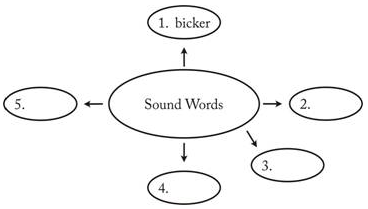
    word or a combination of words, whose sounds seems to resemble the
    sound it denotes (for example: “hiss”, “buzz”,
    etc.) is called onomatopoeia. From the words that you have filled in
    the blurbs above, point out these words. 
     
    Answer
     
    Bicker,
    Chatter, Babble
     
    Page No: 61
     
    5. The
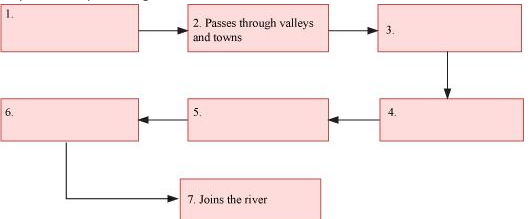
    following is a flow chart showing the course of the brook. Can you
    fill in the blank spaces with help from the phrases given below?
     
      
    Answer
     
     
    6. On the basis of your understanding of the poem, answer the following questions by ticking the correct choice.
     

    (a) The
    message of the poem is that the life of a brook is ___________.


    (i)
    temporary


    (ii)
    short-lived


    (iii)
    eternal


    (v)
    momentary

    Answer

    (iii)
    eternal

    (b) The
    poet draws a parallelism between the journey of the brook with
    ___________.


    (i)
    the life of a man


    (ii)
    the death of man


    (iii)
    the difficulties in a man’s life


    (iv)
    the endless talking of human beings

    Answer

    (i)
    the life of a man

    (c) The
    poem is narrated in the first person by the brook. This figure of
    speech is ________.


    (i)
    Personification


    (ii)
    Metaphor


    (iii)
    Simile


    (iv)
    Transferred epithet

    Answer

    (i)
    Personification

    (d) In the poem, below mentioned lines:

    “And here and there a lusty trout ,

    And here and there a grayling”

    suggest that _____________.

    (i) the brook is a source of life

    (ii) people enjoy the brook

    (iii) fishes survive because of water

    (iv) the brook witnesses all kinds of scenes

    Answer

    (i) the brook is a source of life

    Page No: 62

    7. Answer the following questions. 

    (a) How
    does the brook ‘sparkle’?

    Answer

    The
    brook sparkles because of the sun’s rays which shine on its
    water. The sudden emergence or rush of the brook is shown to be in a
    sparkling motion. 


    (b) ‘Bicker’
    means ‘to quarrel’. Why does the poet use this word here?

    Answer

    ‘Bicker’
    means a noisy discussion or an argument. The poet uses the word
    ‘bicker’ to describe the noisy flow of the brook as it
    flows through the valley as it sounds like quarrel.

    (c) How
    many hills and bridges does it pass during is journey?

    Answer

    The
    brook passes thirty hills and fifty bridges during its journey.

    (d) Where
    does it finally meet the river?

    Answer

    The brook finally meets the river near Phillip’s farm.

    (e) Why
    has the word ‘chatter’ been repeated in the poem?

    Answer  

    The
    word ‘chatter’ has been repeated in the poem because it
    represents the sound frequently made by the flowing brook. It seems
    that the brook talks about its journey that it has travelled
    throughout in a lively mood.

    (f) With
    many a curve my banks I fret’- What does the poet mean by this
    statement?

    Answer

    The brook becomes tired occasionally as it has to curve and move round and round, again and again.

    (g) ‘I
    wind about, and in and out.’ What kind of a picture does this line
    create in your mind?

    Answer

    The
    brook does not flow in a straight line but veers and twists itself along its
    way. It creates a picture of
    flowing waters of the
    brook resembling a maze or whirlpool.

    (h) Name
    the different things that can be found floating in the brook.

    Answer 

    The
    different things that can be found floating in the river are pumice,
    flowers, wood chips, foamy flakes, bark of trees, twigs and leaves.

    (i) What
    does the poet want to convey by using the words ‘steal’
    and ‘slide’?

    Answer 

    By
    using the words ‘steal’ and ‘slide’, the poet refers to smooth and noiseless movement of the brook.

    (j) The
    poem has many examples of alliteration. List five examples.

    Answer 

    Five
    examples of alliteration in the poem are:
    ‘Sudden
    sally’
    ‘Field
    and fallow
    ‘Willow-weed’
    ‘Golden
    gravel’
    ‘Slip,
    slide’

    (k) ‘I
    make the netted sunbeam dance.’ What does ‘the netted
    sunbeam’ mean? How does it dance?

    Answer

    The sunrays filtering through the leaves and bushes make a net-like pattern on shallow water-pools. They are reflected on the surface of water and appear to be dancing as the water flows.

    (l) What
    is the ‘refrain’ in the poem? What effect does it create?


    Answer

    In
    the referred poem, the refrain is:
    For
    men may come and men may go

    But
    I go on for ever.’

    The repetition of the refrain emphasises the transitory nature of man and the eternal nature of the brook.


    8. Read the given lines and answer the questions
    I chatter, chatter, as I flow
    To join the brimming river,
    For men may come and men may go,
    But I go on for ever.


    (a) Who
    does ‘I’ refer to in the given lines? 

    (b) How does it ‘chatter’? 
    (c) Why has the poet used the word ‘brimming’? What kind of a picture does it create? 
    (d) Explain the last two lines of the stanza.

    Answer

    (a) ‘I’
    refers to the brook in the given lines.
    (b) The brook chatters by flowing over the pebbles making a lot of meaningless noise.
    (c) ‘Brimming’ means full to the brim or top. It creates an impression on our mind of the picture of a big river in flood.

    (d) These
    lines tell us that men have a short span of life; man is mortal and
    human life is transient. The life of the brook, however, is continuous
    and will never end. Nature is  immortal and can outlive man. That is why the brook says it will go on forever.
    The  immortal nature of the brook is contrasted with the fleeting nature of man’s life.
     
    9. Identity
    the rhyme scheme of the poem.
     
    Answer
     
    The rhyme scheme is ab ab cd cd …..
     
    10. The
    poem is full of images that come alive through skilful use of words.
    List out any two images that appeal to you the most, quoting the
    lines from the poem.

    Answer

    The first vivid image created by the poet is that
    of the brook flowing through hills and valleys, under the
    bridges and by the villages.
    By thirty hills I hurry down
    Or slip between the ridges
    By twenty thorpes, a little town,
    And half a hundred bridges.

    The second striking image is that of serpent. Like flow of the brook, with flowers and fish floating on it. This image is most appealing because it is apt, colourful and poetic.


    11. The
    brook appears to be a symbol for life. Pick out examples of
    parallelism between life and the brook. 

    Answer

    The brook appears to be
    a symbol for life, which becomes the central theme of the poem.
    Various instances that can be seen in the poem which draw parallel
    between brook and life.
    The brook is a small stream that is born in somemountain. It grows bigger and stronger in the course of its
    journey. It makes so many types of sounds as it flows through the pebbles. Its movements are also varied. It slips and slides; it steals and winds its curves and flows. It chatters and babbles, it makes musical as well as harsh sounds. The brook’s birth and growth, chattering and babbling are very much similar to the activities of a human being. The brook represents life in general. Both have an origin, a middle stage and an end. Both struggle against various adversities, odds and keep moving towards their goal. Above all, the brook represents life. Men may come and men may go, but life goes on forever. The same rule applies in the case of the brook. It keeps flowing eternally, like life.

    Content’s

  • Word Meanings of The Brook Poetry Class 9th

    Word-Meaning
    • Haunts – places frequently visited • Coot – a type of waterbird • Hern – heron (another kind of waterbird) • Sally – to emerge suddenly • Bicker noise – to flow down with a lot of noise • Ridge -a long, narrow hilltop • Brimming – be full to the point of overflowing • Bays – an area of sea and coast forming a broad curve • Fret – be anxious and restless about • Wind about – take a twisting or spiral course • Skimming – move quickly • Brambly – thorny • Wilderness – deserted places with small plants • Loiter – to wander aimlessly

    Content’s

  • Hindi Summary of The Brook Poetry Class 9th.

    The Brook summary in hindi

    सारांश

    ‘द ब्रुक’ नामक कविता उत्तम पुरुष शैली में लिखी गई है और एक आत्मकथा वेफ रूप में प्रभावित करती है। यह कविता एक यात्रा की तरह बढ़ती है और भिन्न-भिन्न पड़ावों, अनेक प्रकार वेफ उतार-चढ़ाव, और अनेक गतिविध्यिों से गुशरती है।

    जलधरा की यात्रा पर्वतों से प्रारम्भ होती है जहाँ बगुला और ‘वूफट्स’ जैसी चिडि़याँ वास करती हैं और वह एक भरी-पूरी नदी में जाकर समाप्त होती है। मार्ग में जलधरा अनेक पहाडि़यों, गाँवों, शहरों, पुलों से गुशरती है। कभी जलधरा बड़ी शक्तिशाली गति से बहती है और कभी अत्यन्त ध्ीमी गति से। वह कभी पफसलों से भरे खेतों वेफ किनारों को काटती हुई चलती है। जलधरा में अनेक प्रकार की मछलियाँ तैरती हैं, वह पूफलों, पेड़ों और जंगली पौधें का घर है। जलधरा प्रेमियों वेफ मिलने का स्थान भी है और छोटी-छोटी चिडि़याँ भी उसकी धरा पर तैरती हैं। उसकी तेशी से बहती हुई धरा पर सूर्य की किरणें नृत्य करती हैं

    यह छोटी जलधरा अपनी यात्रा में पिफसलते, खिसकते, सरकते, नाचते, रुकते और किनारों से बाहर निकलते हुए आगे बढ़ती जाती है। चाँदनी और सितारों की रोशनी में वह बुदबुदाने लगती है। अपनी यात्रा में जलधरा अनेक अड़चनों, अवरोधें को पार करती हुई अन्त में अपने निर्धरित स्थान पर पहुँच जाती है। झरने की यात्रा मानव जीवन यात्रा वेफ समान है। कवि जलधरा और मानव जीवन की तुलना करते हुए अपनी यह विचारधरा सबवेफ सामने लाना चाहता है कि जलधरा निरंतर चलती रहती है, वह अनंत है परन्तु मानव जीवन अस्थायी है, अल्प या वुफछ समय वेफ ही लिए है। कवि चाहते हैं कि जिस तरह सारे उतार-चढ़ाव का जलधरा पर कोई प्रभाव नहीं पड़ता, उसकी यात्रा में बाध नहीं आती, उसी तरह मानव भी इससे शिक्षा ले और बाधाओं और दुखों से प्रभावित न हो और निरंतर कर्म करता रहे।

    Hindi Summary of The Brook Poetry Class 9th.

    Content’s

  • Summary of The Brook Poetry Class 9th

    Summary

    The poem ‘The Brook’ is written in the first person, so it strikes an autobiographical note. It proceeds like a journey, which has different stages, various ups, and downs, showing different kinds of movement.
    The Brook begins its journey from somewhere in the mountains, which are home to birds like ‘coots’ and ‘heron’ and ends it by joining the ‘brimming river’. On its way, it passes through many hills, ridges, towns, villages, bridges. The brook’s movement is sometimes forceful and strong, sometimes leisurely. It makes its way by eroding the banks, through cultivated, uncultivated lands and forelands. The Brook is also the habitat of many kinds of fish and is full of willows, mallows, and flowers. It also provides a meeting point for lovers and surface to swallows to skim. Its rushing water serves as a background for the dance of the rays of the sun.
    The brook proceeds on its journey slipping, sliding, gliding, dancing, lingering, gushing. The moon, the stars make it murmur. On its way, it overcomes many hurdles and obstacles but reaches its final destination in the end.
    The journey of the brook becomes parallel to the journey of human life. The poet makes a reflective comment which highlights the continuity and eternal existence of the brook to the transitory nature of human life. The poet wishes to point out that just as ups and downs do not deter the brook from its journey, similarly, human beings should also take the hurdles and sorrows in their stride

    Content’s