Matter : Anything which occupies space and has mass is called
2. Theory of molecular structure of matter
Matter (elements or compounds) consists of extremely small particles which are not visible to the unaided The smallest particle of matter which can exist independently is known as molecule.
The molecules are in the state of continuous motion, which does not stop with Due to the continuous motion all molecules have kinetic energy.
The kinetic energy of the molecules increases with the rise in temperature.
The kinetic energy of the molecules in the solids is least, in liquids more than solids and in gases
The spaces in between the molecules are called intermolecular spaces. The intermolecular spaces are least in case of solids, more in case of liquids and maximum in case of
The molecules attract each other with a force which is commonly called intermolecular force. It is maximum in case of solids and least in case of
The intermolecular forces decrease with the increase in intermolecular spaces and vice
3. Properties of Solids :
They have definite shape and definite
They cannot be compressed
They are generally heavy and have high densities.
They do not flow, but can be
They can have any number of free surfaces and do not need a vessel to contain
4. Properties of Liquids :
They have definite volume, but no definite shape. They take the shape of the containing vessel.
They cannot be compressed
They are usually less dense than the
They do not fill the entire volume of a container.
They can flow and hence need a vessel to contain them.
5. Properties of Gases :
They have neither definite shape nor definite volume. They always acquire the shape and volume of the vessel containing
They can be compressed
They are very, very light and hence have very low
They f i l l the entire volume of a container.
They can flow and hence need a vessel to contain them.
Explanation of solids on the basis of kinetic model : The molecules in a solid have very small kinetic energy and very small intermolecular spaces. Because of very small intermolecular spaces, they attract each other with very large intermolecular forces, such that they cannot change their positions. Thus, solids are rigid and have definite shape and definite volume. Furthermore, they cannot be compressed and have high
Explanation of liquids on the basis of kinetic model : The molecules in a liquid have more kinetic energy and more intermolecular spaces as compared to solids. Because of large intermolecular spaces, they do not attract one another with strong intermolecular Thus, molecules can change their positions within the liquid. So, liquids have definite volume, but not definite shape. They can flow and always take the shape of the containing vessel.
Explanation of gases on the basis of kinetic model : The molecules in a gas have very large intermolecular spaces and high kinetic energy as compared to solids and liquids. Because of very large intermolecular spaces, they do not experience intermolecular forces. Thus, the molecules can move in all possible directions and fill the entire space of the containing vessel. So, gases have neither definite shape nor definite volume.
Diffusion : Intermixing of particles of two or more substances on their own is known as diffusion.
Homogeneous material : A material which has the same composition and same properties throughout is called a homogeneous
Heterogeneous material : A material which has different composition and different properties in different parts is called a heterogeneous
Interconversion of matter : The phenomenon due to which matter changes from one state to another state and back to the original state, by altering the conditions of temperature and pressure, etc. is known as interconversion of matter.
Melting or fusion : The process due to which a solid changes into the liquid state at a constant temperature by absorbing heat energy is known as melting or
Freezing or solidification : The process due to which a liquid changes into the solid state at a constant temperature by giving out heat energy is known as freezing or
Melting point : The constant temperature at which a solid changes into the liquid state by absorbing heat energy is called melting point.
Freezing point : The constant temperature at which a liquid changes into the solid state by giving out heat energy is called freezing point.
Vaporisation or boiling : The process due to which a liquid changes into the gaseous state at constant temperature by absorbing heat energy is known as vaporisation or
Condensation or liquefaction : The process due to which a gas changes into the liquid state at a constant temperature by giving out heat energy is known as condensation or liquefaction.
Boilingpoint: The constant temperature at which a liquid rapidly changes into the gaseous state by absorbing heat energy is known as boiling point.
Liquefaction point : The constant temperature at which a gas rapidly changes into its liquid state by giving out heat energy is known as liquefaction
Sublimation : The process due to which a solid directly changes into the gaseous state on heating without changing first into the liquid state and a gaseous state directly changes into the solid state on cooling is called sublimation.
Sublime : A gaseous form directly formed from a solid on heating is known as
Sublimate : A solid state of matter formed directly from its gaseous state on cooling is called
Boiling is a bulk phenomenon in which particles from the whole of the liquid change into gaseous
Evaporation : It is a surface phenomenon in which energetic particles close to the surface of a liquid overcome intermolecular forces and atmospheric pressure and hence escape in
Rateof evaporation increases with (1) increase in surface area, (2) increase in the temperature of a liquid, (3) increase in the temperature of the surroundings (4) decrease in humidity (5) increase in the motion of air.
Evaporation takes place at all temperatures below the boiling point of a
Evaporation always causes
Specific latent heat of fusion : It is the amount of heat energy required to change 1 kg of a solid at its melting point into the liquid state, without rise in temperature at normal atmospheric
Specific latent heat of vaporisation : It is the amount of heat energy required to change of 1 kg of a liquid at its boiling point into the gaseous state, without rise in temperature at normal atmospheric
Plasma : It is the fourth state of matter, which is formed at extremely high temperature and consists of charged
We provide students with the best science notes for class 11th that helps to repack the long and lengthy course into a short series of easy notes that reduces the burden from the shoulders of students regarding heavy course and hard study and shows them a new and easy way to study. Until class 10th, students were taught in a lengthy, easy and explained method so that their basic knowledge about science gets strong. Class 11th is about expanding that basic knowledge and have got a very lengthy course which is many times more than that of 9th and 10th class. Also, if a student seeks to go into competitions like I.I.T., A.I.E.E.E., A.I.M.M.S. than the load of study he needs to do is much more increased. This load can be decreased if he is presented his vast course in form of short and easy notes which the students can easily understand and learn. That is why we have prepared the whole large and vast course for Class 11th in form of short and easy notes for our students. You can read them and find it out for yourself how easy is to read and learn them. We would appreciate your feedbacks or suggestions in form of comments and if there is something still missing, we will be keeping updating the post for you. You must keep visiting the website to get those updates.
In the second chapter of first unit, we come across a problem. A large number of topics is to be covered in the second chapter, each topic having specific type of questions, problems and numericals associated with them. Fitting all those topics in one chapter would make it difficult to understand and the chapter will become really bulky. So, we have divided the second chapter into four parts, ‘Units and quantities’, ‘Length, mass and time measurement’, ‘Dimensional Analysis’ and ‘Error Analysis’. This would help the students to understand all the topics in four different parts and making them easier to understand and learn.
Science for class – XI
Unit -1: Physical world and measurements
Although we have been studying the physics from a long time, still there is not everything we have been able to clear out in our previous classes. We need to revisit the world of physics with a new dimension and explore the basics of physics and physical study again so that nothing remains uncovered and no single basic concept of physics is left. In unit Ist i.e. Physical world and measurements, we look at all the basic knowledge of physics so that armed with this knowledge we can move onto further deep study of physics in further units.
Chapter – 2: Systems of Units
Part-1: Units and Quantities
2.1.1 – Introduction
In this first part of chapter two, we will discuss the topics surrounding units and quantities. We would discuss about some earlier definitions of some common units and then introduce the SI system of units and how it defines the basic and supplementary units.
2.1.2 – What are units?
Before we move on to units, let us talk about physical quantities.
Physical quantity: All quantities in terms of which laws of physics can be explained and which can be measured directly or indirectly are physical quantities. For example length, mass, time etc.
Now let us move to units.
Units: The standard that is chosen as reference in order to measure a physical quantity is called the unit of that quantity. For example, the unit of length which is metre, or the unit of mass which is kilogram.
Process of measurement of physical quantities:
The selection of the unit.
Determining the number of times the unit is contained in that physical quantity.
For example, in the first step, we select metre as the unit of length. Next, in the second step, we measure the length of a room. To do so, we determine how many metres are contained in the room we are measuring. We know that the room’s length can be measured using various methods and we usually say that the room is 7 metres or 8 metres.
Measure of a physical quantity = Numerical value of the physical quantity × Size of its unit
X = n u
It follows that if the size of the unit is small, numerical value of the quantity will be large and vice-versa.
n u = constant
If n1 = numerical value of physical quantity of unit u1.
n2= numerical value of physical quantity of unit u2.
n1 u1 = n2 u2
2.1.3 – Fundamental and Derived Units.
As the title says, in this topic we would discuss about two different categories of units.
Fundamental units: Those units which are neither derived from other units, nor can be further resolved into other units are known as fundamental units.
Mass, length and time are fundamental quantities and their units are called fundamental units.
Derived units: Those units which are derived from other fundamental units are known as derived units.
Area is a derived unit. If the side of a square is ‘x’ metres, then its area is x × x = x2 metres.
The unit of any physical quantity can be derived from its defining equation. e.g.:
Speed = Distance/Time
Unit of speed = Unit of length/Unit of time
= metre/second
=m s-1
2.1.4 – Standard Units.
A unit that is most appropriate or most suitable for a quantity/physical quantity is called a standard unit.
Characteristics of a standard unit:
It should be well-defined.
It should be of suitable size i.e. neither too large nor too small.
It should be easily reproducible at all places.
It should not change with time and from place to place.
It should not change with change in physical properties.
It should be easily accessible.
2.1.5 – Some physical units and their earlier definitions
Unit of mass:
Mass: Mass of a body is the quantity of matter it contains.
Mass of a material body can never be zero. The internationally accepted unit of mass is kilogram.
Unit of length:
Length: Length of an object is the distance of separation between its two ends.
Internationally accepted unit of length is metre.
Unit of time:
Time: It is not possible to define time in absolute terms. However, according to Einstein, time is simply what a clock reads.
Internationally accepted unit of time is second.
Earlier definitions of these units:
Mass:
Originally, one kilogram was defined as the mass of one cubic decimetre of water at 4° (Temperature of water at maximum density)
The General Conference of Weights and Measures defined one kilogram as the mass of a platinum-iridium cylinder kept at the International Bureau of Weights and Measures at Sevres, near Paris, France.
Length:
In 1971, the Paris Academy of Sciences defined metre as one-tenth millionth of the distance from north pole to equator.
In 1899, the General Conference of Weights and Measures defined metre as the distance between two lines marked on a platinum-iridium rod kept at a constant temperature of 273.16 K preserved at International Bureau Of Weights And Measures.
Why was this not a convenient definition of metre?
There are two reasons:
If the temperature of the rod changes, its length will change too.
It will be difficult to compare any metre rod or a newly produced rod with the preserved rod.
Time:
Paris Academy of Sciences defined one second as the time taken by a simple pendulum of one metre to swing between two extreme points.
The time when sun is at the highest point is called noon. Solar day is the time that elapses between noons of two consecutive days.
Mean solar day is the average of all solar days in one year. And a solar second is the (1/24 × 60 × 60)th of a mean solar day.
Why was this definition not appropriate?
Duration or length of a mean solar day is different for different years. So, this definition was not appropriate.
Q – What difficulties did earlier units of mass and length did present?
Some difficulties were:
It was difficult to preserve kilogram and a metre bar.
It was difficult to replicate them for their use in different countries.
It was difficult to compare the replicas with the preserved kilogram and metre bar.
2.1.6 – International systems of units.
cgs system :
French system of units.
Uses centimetre, gram and second as basic units.
It is a metric system of units.
2.fps system :
British/English system of units.
Uses foot, pound and second as basic units.
It is not a metric system of units.
3.mks system :
Also a French system of units.
Uses metre, kilogram and second as basic units.
A metric system of units. Closely related to cgs system.
A coherent system of units.
Coherent system of units: If all derived units can be obtained by either multiplying or dividing its fundamental units, such that no numerical factors are introduced.
4.SI : The General Conference of Weights and Measures held in 1960 introduced a new logical system of units known as Systeme Internationale d’ Unites or SI in short.
Redefines units on the basis of atomic standards.
Covers all the branches of physics.
Based on seven basic and two supplementary units.
Following is the table of the seven basic units defined by SI:
Following is the list of supplementary SI units:
2.1.7 – Basic and supplementary SI units.
Basic units:
Metre: According to General Conference of Weights and Measures, one metre equals to 1,650,763.3 wavelengths in the vacuum of orange-red radiation emitted by Krypton with atomic mass 86.
In 1983, metre was redefined as length of path travelled by light in vacuum during a time interval of 1/299,792,458 of a second.
Kilogram : It was not redefined on atomic standards. So, one kilogram is the mass of the platinum-iridium cylinder kept at the International Bureau of Weights and Measures in Sevres, near Paris, France.
Second : In 1964, the twelfth General Conference of Weights and Measures defined second as equal to the duration of 9,192,631,770 vibrations corresponding to the transition between two hyperfine levels of cesium-133 atom in the ground state.
Kelvin : It is defined as 1/273.16th fraction of the thermodynamic temperature at the triple point of water.
Ampere : One ampere is defined as the current generating a force of 2 ×10⁻⁷ newton per metre square between two parallel straight conductors of infinite length and negligible circular cross-section, when placed one metre apart in vacuum.
Candela : One candela is the luminous intensity in the perpendicular direction of a surface of 1/6,00,000 square metre of a black body at a temperature of freezing platinum (2046.65 K) and under a pressure of 1,01,325 newton per metre square.
In 1979, candela was redefined as the luminous intensity in a given direction due to a source which emits monochromatic radiation of frequency of 540 × 1012 Hz and of which the radiant intensity in that direction is 1/683 watt per steradian.
Mol : One mol was defined as the amount of substance having the same number of elementary particles as there are atoms in 0.012 kg of carbon-12.
Supplementary SI units:
Radian : It is the plane angle between two radii of a circle, which cut off from the circumference, an arc equal to the length of the radius of the circle.
plane angle (in radian) = length of arc/radius
Steradian : It is the solid angle with its apex at the centre of a sphere, which cuts out an area on the surface of the sphere equal to the area of an square whose sides are equal to the radius of the circle.
solid angle (in steradian) = area cut out from the surface of the sphere/radius2
2.1.7 – Advantages of SI.
It is a rational system of units : It makes use of only one unit for one physical quantity while other systems may use different units for a single quantity.
SI is a coherent system of unites : All derived units can be obtained by dividing and multiplying basic and supplementary units and no numerical factors are introduced, while in other systems, numerical factors may be introduced.
Closely related to cgs system : It is very easy to convert cgs units into SI units or vice-versa.
SI is a metric system : Like cgs and mks, SI is also a metric system of units. All multiples and submultiples can be expressed as the powers of 10.
2.1.8 – Some prefixes in power of 10.
Submultiples:
table1.3
Multiples :
table1.4
Some side-notes :
The following units of lengths are used for measuring very small units:
1 fermi/femtometre (fm) = 10-15 m
1 angstorm = 10-10 m
1 micron/micrometre = 10-6 m
The following units are used for measuring very large distances:
Light year : Distance travelled by light in vacuum in one year.
1 light year = 9.46 × 10¹⁵ m
Astronomical unit (AU) : Mean distance of the sun from the earth.
1 AU = 1.496 × 10¹¹ m
Parallactic second (parsec) : Distance at which an arc of length one AU subtends an angle of one second of an arc.
1 parsec = 3.08 × 10¹⁶ m
Atomic mass unit:
In atomic and nuclear physics,, mass is measured in terms of atomic mass unit (a.m.u.).
One a.m.u. is defined as 1/12th of the mass of one Carbon-12 atom.
Here students can find best NCERT solutions for various subjects of their XI standard, for instance, Hindi, English, Maths, Science. We provide you with the best study material that students typically look over the internet and what they typically need.
Notes
Biology Notes Class 11th
Physics Notes Class 11th
Chemistry Notes Class 11th
Maths Notes Class 11th
NCERT Solutions Class 11th
English
NCERT Solutions of Hornbill Textbook Class 11th
NCERT Solution of Woven Words Textbook Class 11th
NCERT Solutions of Snapshots Textbook Class 11th
Science
NCERT Solutions of Physics Part- I Textbook Class 11th
NCERT Solutions Physics Part- II Textbook Class 11th
NCERT Solutions of Chemistry Part- I Textbook Class 11th
NCERT Solutions of Chemistry Part- II Textbook Class 11th
NCERT Solutions of Biology Textbook Class 11th
Maths
NCERT Solutions of Mathematics Textbook Class 11th
RS Aggarwal Class 9 Solutions Chapter 2 Polynomials
Exercise 2A
Question 1:
(i) It is a polynomial, Degree = 5.
(ii) It is polynomial, Degree = 3.
(iii) It is polynomial, Degree = 2.
(iv) It is not a polynomial.
(v) It is not a polynomial.
(vi) It is polynomial, Degree = 108.
(vii) It is not a polynomial.
(viii) It is a polynomial, Degree = 2.
(ix) It is not a polynomial.
(x) It is a polynomial, Degree = 0.
(xi) It is a polynomial, Degree = 0.
(xii) It is a polynomial, Degree = 2.
Question 2:
The degree of a polynomial in one variable is the highest power of the variable.
(i) Degree of 2x – is 1.
(ii) Degree of 3 – x + x2 – 6x3 is 3.
(iii) Degree of 9 is 0.
(iv) Degree of 8x4 – 36x + 5x7 is 7.
(v) Degree of x9 – x5 + 3x10 + 8 is 10.
(vi) Degree of 2 – 3x2 is 2.
Question 3:
(i) Coefficient of x3 in 2x + x2 – 5x3 + x4 is -5
(ii) Coefficient of x in
(iii) Coefficient of x2 in
(iv) Coefficient of x2 in 3x – 5 is 0.
Question 5:
(i) It is a quadratic polynomial.
(ii) It is a cubic polynomial.
(iii) It is a quadratic polynomial.
(iv) It is a linear polynomial.
(v) It is a linear polynomial.
(vi) It is a cubic polynomial.
Question 4:
(i) p(x) = 0
⇒ x – 5 = 0
⇒ x = 5
⇒ 5 is the zero of the polynomial p(x).
(ii) q(x) = 0
⇒ x + 4 = 0
⇒ x = -4
⇒ -4 is the zero of the polynomial q(x).
(iii) p(t) = 0
⇒ 2t – 3 = 0
⇒ 2t =3
⇒ t =
⇒ t = is the zero of the polynomial p(t).
(iv) f(x) = 0
⇒ 3x + 1= 0
⇒ 3x = -1
⇒ x =
⇒ x = is the zero of the polynomial f(x).
(v) g(x) = 0
⇒ 5 – 4x = 0
⇒ -4x = -5
⇒ x =
⇒ x = is the zero of the polynomial g(x).
(vi) h(x) = 0
⇒ 6x – 1 = 0
⇒ 6x = 1
⇒ x =
⇒ x = is the zero of the polynomial h(x).
(vii) p(x) = 0
⇒ ax + b = 0
⇒ ax = -b
⇒ x =
⇒ x = is the zero of the polynomial p(x)
(viii) q(x) = 0
⇒ 4x = 0
⇒ x = 0
⇒ 0 is the zero of the polynomial q(x).
(ix) p(x) = 0
⇒ ax = 0
⇒ x = 0
⇒ 0 is the zero of the polynomial p(x).
Question 5:
(i) p(x) = x – 4
Then, p(4) = 4 – 4 = 0
⇒ 4 is a zero of the polynomial p(x).
(ii) p(x) = x – 3
Then, p(-3) = -3 – 3 = -6
⇒ -3 is not a zero of the polynomial p(x).
(iii) p(y) = 2y + 1
Then,
⇒ is a zero of the polynomial p(y).
(iv) p(x) = 2 – 5x
Then,
⇒ is a zero of the polynomial p(x).
(v) p(x) = (x – 1) (x – 2)
Then, p(1) = (1 – 1) (1 – 2) = 0 -1 = 0
⇒ 1 is a zero of the polynomial p(x).
Also, p(2) = (2 – 1)(2 – 2) = 1 0 = 0
⇒ 2 is a zero of the polynomial p(x).
Hence, 1 and 2 are the zeroes of the polynomial p(x).
(vi) p(x) = x2 – 3x.
Then, p(0) = 02 – 3(0) = 0
p(3) = (32) – 3(3) = 9 – 9 = 0
⇒ 0 and 3 are the zeroes of the polynomial p(x).
(vii) p(x) = x2 + x – 6
Then, p(2) = 22 + 2 – 6
= 4 + 2 – 6
= 6 – 6 = 0
⇒ 2 is a zero of the polynomial p(x).
Also, p(-3) = (-3)2 – 3 – 6
= 9 – 3 – 6 = 0
⇒ -3 is a zero of the polynomial p(x).
Hence, 2 and -3 are the zeroes of the polynomial p(x).
Exercise 2C
Question 1:
f(x) = x3 – 6x2 + 9x + 3
Now, x – 1 = 0 ⇒ x = 1
By the remainder theorem, we know that when f(x) is divided by (x – 1) the remainder is f(1).
Now, f(1) = 13 – 6 × 12 + 9 × 1 + 3
= 1 – 6 + 9 + 3
= 13 – 6 = 7
∴ The required remainder is 7.
Question 2:
f(x) = (2x3 – 5x2 + 9x – 8)
Now, x – 3 = 0 ⇒ x = 3
By the remainder theorem, we know that when f(x) is divided by (x – 3) the remainder is f(3).
Now, f(3) = 2 × 33 – 5 × 32 + 9 × 3 – 8
= 54 – 45 + 27 – 8
= 81 – 53 = 28
∴ The required remainder is 28.
Question 3:
f(x) = (3x4 – 6x2 – 8x + 2)
Now, x – 2 = 0 ⇒ x = 2
By the remainder theorem, we know that when f(x) is divided by (x – 2) the remainder is f(2).
Now, f(2) = 3 × 24 – 6 × 22 – 8 × 2 + 2
= 48 – 24 – 16 + 2
= 50 – 40 = 10
∴ The required remainder is 10.
Question 4:
f(x) = x3 – 7x2 + 6x + 4
Now, x – 6 = 0 ⇒ x = 6
By the remainder theorem, we know that when f(x) is divide by (x – 6) the remainder is f(6)
Now, f(6) = 63 – 7 × 62 + 6 × 6 + 4
= 216 – 252 + 36 + 4
= 256 – 252 = 4
∴ The required remainder is 4.
Question 5:
f(x) = (x3 – 6x2 + 13x + 60)
Now, x + 2 = 0 ⇒ x = -2
By the remainder the theorem, we know that when f(x) is divide by (x + 2) the remainder is f(-2).
Now, f(-2) = (-2)3 – 6(-2)2 + 13(-2) + 60
= -8 – 24 – 26 + 60
= -58 + 60 = 2
∴ The required remainder is 2.
Question 6:
f(x) = (2x4 + 6x3 + 2x2 + x – 8)
Now, x + 3 = 0 ⇒ x = -3
By the remainder the theorem, we know that when f(x) is divide by (x + 3) the remainder is f(-3).
f(-3) = 2(-3)4 + 6(-3)3 + 2(-3)2 – 3 – 8
= 162 – 162 + 18 – 3 – 8
= 18 – 11 = 7
∴ The required remainder is 7.
Question 7:
f(x) = (4x3 – 12x2 + 11x – 5)
Now, 2x – 1 = 0 ⇒ x =
By the remainder theorem, we know that when f(x) is divided by (2x – 1) the remainder is
∴ The required remainder is -2.
Question 8:
f(x) = (81x4 + 54x3 – 9x2 – 3x + 2)
Now, 3x + 2 = 0 ⇒ x =
By the remainder theorem, we know that when f(x) is divided by (3x+ 2) the remainder is
∴ The required remainder is 0.
Question 9:
f(x) = (x3 – ax2 + 2x – a)
Now, x – a = 0 x ⇒ = a
By the remainder theorem, we know that when f(x) is divided by (x – a) the remainder is f(a)
Now, f(a) = a3 – a a2 + 2 a – a
= a3 – a3 + 2a – a
= a
∴ The required remainder is a.
Question 10:
Let f(x) = ax3 + 3x2 – 3
and g(x) = 2x3 – 5x + a
∴ f(4) = a × 43 + 3 × 42 – 3
= 64a + 48 – 3
= 64a + 45
g(4) = 2 × 43 – 5 × 4 + a
= 128 – 20 + a
= 108 + a It is given that:
f(4) = g(4)
⇒ 64a + 45 = 108 + a
⇒ 64a – a = 108 – 45
⇒ 63a = 63
⇒ a = = 1
∴ The value of a is 1.
Question 11:
Let f(x) = (x4 – 2x3 + 3x2 – ax + b)
∴ From the given information,
f(1) = 14 – 2(1)3 + 3(1)2 – a (1 ) + b = 5
⇒ 1 – 2 + 3 – a + b = 5
⇒ 2 – a + b = 5 ….(i)
And,
f(-1) = (-1)4 – 2(-1)3 + 3(-1)2 – a(-1) + b = 19
⇒ 1 + 2 + 3 + a + b = 19
⇒ 6 + a + b = 19 ….(ii)
Adding (i) and (ii), we get
⇒ 8 + 2b = 24
⇒ 2b = 24 – 8 = 16
⇒ b =
Substituting the value of b = 8 in (i), we get
2 – a + 8 = 5
⇒ -a + 10 = 5
⇒ -a = -10 + 5
⇒ -a = -5
⇒ a = 5
∴ a = 5 and b = 8
f(x) = x4 – 2x3 + 3x2 – ax + b
= x4 – 2x3 + 3x2 – 5x + 8
∴ f(2) = (2)4 – 2(2)3 + 3(2)2 – 5(2) + 8
= 16 – 16 + 12 – 10 + 8
= 20 – 10 = 10
∴ The required remainder is 10.
Exercise 2D
Question 1:
f(x) = (x3 – 8)
By the Factor Theorem, (x – 2) will be a factor of f(x) if f(2) = 0.
Here, f(2) = (2)3 – 8
= 8 – 8 = 0
∴ (x – 2) is a factor of (x3 – 8).
Question 2:
f(x) = (2x3 + 7x2 – 24x – 45)
By the Factor Theorem, (x – 3) will be a factor of f(x) if f(3) = 0.
Here, f(3) = 2 × 33 + 7 × 32 – 24 × 3 – 45
= 54 + 63 – 72 – 45
= 117 – 117 = 0
∴ (x – 3) is a factor of (2x3 + 7x2 – 24x – 45).
Question 3:
f(x) = (2x4 + 9x3 + 6x2 – 11x – 6)
By the Factor Theorem, (x – 1) will be a factor of f(x) if f(1) = 0.
Here, f(1) = 2 × 14 + 9 × 13 + 6 × 12 – 11 × 1 – 6
= 2 + 9 + 6 – 11 – 6
= 17 – 17 = 0
∴ (x – 1) is factor of (2x4 + 9x3 + 6x2 – 11x – 6).
Question 4:
f(x) = (x4 – x2 – 12)
By the Factor Theorem, (x + 2) will be a factor of f(x) if f(-2) = 0.
Here, f(-2) = (-2)4 – (-2)2 – 12
= 16 – 4 – 12
= 16 – 16 = 0
∴ (x + 2) is a factor of (x4 – x2 – 12).
Question 5:
f(x) = 2x3 + 9x2 – 11x – 30
By the Factor Theorem, (x + 5) will be a factor of f(x) if f(-5) = 0.
Here, f(-5) = 2(-5)3 + 9(-5)2 – 11(-5) – 30
= -250 + 225 + 55 – 30
= -280 + 280 = 0
∴ (x + 5) is a factor of (2x3 + 9x2 – 11x – 30).
Question 6:
f(x) = (2x4 + x3 – 8x2 – x + 6)
By the Factor Theorem, (x – a) will be a factor of f(x) if f(a) = 0.
Here, 2x – 3 = 0 ⇒ x =
∴ (2x – 3) is a factor of (2x4 + x3 – 8x2 – x + 6).
Question 7:
f(x) = (7x2 – x – 6 = 0)
By the Factor Theorem, (x – a) will be a factor of f(x) if f(a) = 0.
Here,
= 14 – 8 – 6
= 14 – 14 = 0
∴ (x – ) is a factor of (7 – x – 6 = 0).
Question 8:
f(x) = (x2 + 5x + = 0)
By the Factor Theorem, (x – a) will be a factor of f(x) if f(a) = 0.
Here,
∴ (x + ) is a factor of (x2 + 5x + = 0).
Question 9:
f(x) = (2x3 + 9x2 + x + k)
x – 1 = 0 ⇒ x = 1
∴ f(1) = 2 × 13 + 9 × 12 + 1 + k
= 2 + 9 + 1 + k
= 12 + k
Given that (x – 1) is a factor of f(x).
By the Factor Theorem, (x – a) will be a factor of f(x) if f(a) = 0 and therefore f(1) = 0.
⇒ f(1) = 12 + k = 0
⇒ k = -12.
Question 10:
f(x) = (2x3 – 3x2 – 18x + a)
x – 4 = 0 ⇒ x = 4
∴ f(4) = 2(4)3 – 3(4)2 – 18 × 4 + a
= 128 – 48 – 72 + a
= 128 – 120 + a
= 8 + a
Given that (x – 4) is a factor of f(x).
By the Factor Theorem, (x – a) will be a factor of f(x) if f(a) = 0 and therefore f(4) = 0.
⇒ f(4) = 8 + a = 0
⇒ a = -8
Question 11:
f(x) = x4 – x3 – 11x2 – x + a
x + 3 = 0 ⇒ x = -3
∴ f(-3) = (-3)4 – (-3)3 -11 (-3)2 – (-3) + a
= 81 + 27 – 11 × 9 + 3 + a
= 81 + 27 – 99 + 3 + a
= 111 – 99 + a
= 12 + a
Given that f(x) is divisible by (x + 3), that is (x+3) is a factor of f(x).
By the Factor Theorem, (x – a) will be a factor of f(x) if f(a) = 0 and therefore f(-3) = 0.
⇒ f(-3) = 12 + a =0
⇒ a = -12.
Question 12:
f(x) = (2x3 + ax2 + 11x + a + 3)
2x – 1 = 0 ⇒ x =
Given that f(x) is exactly divisible by (2x – 1), that is (2x – 1) is a factor of f(x).
By the Factor Theorem, (x – a) will be a factor of f(x) if f(a) = 0
and therefore ≠ 0.
Therefore, we have
∴ The value of a = -7.
Question 13:
Let f(x) = (x3 – 10x2 + ax + b), then by factor theorem
(x – 1) and (x – 2) will be factors of f(x) if f(1) = 0 and f(2) = 0.
f(1) = 13 – 10 12 + a 1 + b = 0
⇒ 1 – 10 + a + b = 0
⇒ a + b = 9 ….(i)
And f(2) = 23 – 10 22 + a 2 + b = 0
⇒ 8 – 40 + 2a + b = 0
⇒ 2a + b = 32 ….(ii)
Subtracting (i) from (ii), we get
a = 23
Substituting the value of a = 23 in (i), we get
⇒ 23 + b = 9
⇒ b = 9 – 23
⇒ b = -14
∴ a = 23 and b = -14.
Question 14:
Let f(x) = (x4 + ax3 – 7x2 – 8x + b)
Now, x + 2 = 0 x = -2 and x + 3 = 0 x = -3
By factor theorem, (x + 2) and (x + 3) will be factors of f(x) if f(-2) = 0 and f(-3) = 0
∴ f(-2) = (-2)4 + a (-2)3 – 7 (-2)2 – 8 (-2) + b = 0
⇒ 16 – 8a – 28 + 16 + b = 0
⇒ -8a + b = -4
⇒ 8a – b = 4 ….(i)
And, f(-3) = (-3)4 + a (-3)3 – 7 (-3)2 – 8 (-3) + b = 0
⇒ 81 – 27a – 63 + 24 + b = 0
⇒ -27a + b = -42
⇒ 27a – b = 42 ….(ii)
Subtracting (i) from (ii), we get,
19a = 38
So, a = 2
Substituting the value of a = 2 in (i), we get
8(2) – b = 4
⇒ 16 – b = 4
⇒ -b = -16 + 4
⇒ -b = -12
⇒ b = 12
∴ a = 2 and b = 12.
Question 15:
Let f(x) = x3 – 3x2 – 13x + 15
Now, x2 + 2x – 3 = x2 + 3x – x – 3
= x (x + 3) – 1 (x + 3)
= (x + 3) (x – 1)
Thus, f(x) will be exactly divisible by x2 + 2x – 3 = (x + 3) (x – 1) if (x + 3) and (x – 1) are both factors of f(x), so by factor theorem, we should have f(-3) = 0 and f(1) = 0.
Now, f(-3) = (-3)3 – 3 (-3)2 – 13 (-3) + 15
= -27 – 3 × 9 + 39 + 15
= -27 – 27 + 39 + 15
= -54 + 54 = 0
And, f(1) = 13 – 3 × 12 – 13 × 1 + 15
= 1 – 3 – 13 + 15
= 16 – 16 = 0
∴ f(-3) = 0 and f(1) = 0
So, x2 + 2x – 3 divides f(x) exactly.
Question 16:
Let f(x) = (x3 + ax2 + bx + 6)
Now, by remainder theorem, f(x) when divided by (x – 3) will leave a remainder as f(3).
So, f(3) = 33 + a × 32 + b × 3 + 6 = 3
⇒ 27 + 9a + 3b + 6 = 3
⇒ 9a + 3b + 33 = 3
⇒ 9a + 3b = 3 – 33
⇒ 9a + 3b = -30
⇒ 3a + b = -10 ….(i)
Given that (x – 2) is a factor of f(x).
By the Factor Theorem, (x – a) will be a factor of f(x) if f(a) = 0 and therefore f(2) = 0.
f(2) = 23 + a × 22 + b × 2 + 6 = 0
⇒ 8 + 4a+ 2b + 6 = 0
⇒ 4a + 2b = -14
⇒ 2a + b = -7 ….(ii)
Subtracting (ii) from (i), we get,
⇒ a = -3
Substituting the value of a = -3 in (i), we get,
⇒ 3(-3) + b = -10
⇒ -9 + b = -10
⇒ b = -10 + 9
⇒ b = -1
∴ a = -3 and b = -1.
Question 21:
We know that,
Therefore,
(a + b)3 – (a – b)3
= [a + b – (a – b)] [ (a + b)2 + (a + b) (a – b) + (a – b)2]
= (a + b – a + b) [ a2 + b2 + 2ab + a2 – b2 + a2 + b2 – 2ab]
= 2b (3a2 + b2).
Question 22:
x – 8xy3
= x (1 – 8y3)
= x [(1)3 – (2y)3]
= x (1 – 2y) [(1)2 + 1 (2y) + (2y)2]
= x (1 – 2y) (1 + 2y + 4y2).
Question 13:
a3 (b – c)3 + b3 (c – a)3 + c3 (a – b)3
= [a (b – c)]3 + [b (c – a)]3 + [c (a – b)]3
Now, since, a (b – c) + b (c -a) + c (a – b)
= ab – ac + bc – ba + ca – bc = 0
So, a3 (b – c)3 + b3 (c – a)3 + c3 (a – b)3
= 3a (b – c) b (c – a) c (a – b)
= 3abc (a – b) (b – c) (c – a).
NCERT Solutions for Class 9 Science Chapter 14 Natural Resources
Page: 193 Question 1. How is our atmosphere different from the atmosphere on Venus and Mars? (SA II – 2013) Answer: Our atmosphere contains a mixture of many gases like nitrogen (78.08%), oxygen (20.95%), carbon dioxide (0.03%) and water vapour (in varying proportion). Whereas the atmosphere on Venus and Mars is mainly comprised of carbon dioxide. This carbon dioxide constitutes upto 95-97% of the atmosphere on Venus and Mars. It is supposed that, due to this reason no life is known to exist on these planets.
Question 2. How does the atmosphere act as a blanket ? (SA II – 2012, 13) Answer: It is a known fact that, air is a bad conductor of heat and our atmosphere contains mainly the air. Due to this reason, the atmosphere keeps the average temperature of the Earth fairly steady during the day and even during the course of the whole year. The atmosphere prevents the sudden increase in temperature during the daylight hours and during the night, it slows down the escape of heat into outer space.
Question 3. What causes winds ? (SA II – 2012, 13) Answer: Winds are caused due to unequal heating of atmospheric air. This phenomena can be easily seen near coastal regions during the daytime. The air above the land gets heated faster and starts rising. As this air rises, a region Of low pressure is created and air over the sea moves into this area Of low pressure. The movement of air from one region to the other Creates winds. During the day, the direction of the wind would be from the sea to the land.
Question 4. How are clouds formed ? (SA II – 2013) Answer:The water evaporates due to heating up Of water bodies and other biological activities. The air also heats and rises. On rising, it expands and cools to form tiny droplets. These droplets grow bigger, expand and form clouds. The collection Of dust and other suspended particles facilitate the process.
Question 5. List any three human activities that you think would lead to air pollution. (SA II – 2013) Answer: Human activities that would lead to air pollution
(i) Excessive use and burning of fossil fuels like coal and petroleum produces different oxides of nitrogen and sulphur. These are not only dangerous to our respiratory system but also leads to acid rain.
(ii) Incomplete combustion of various fuels forms unburnt carbon particles which lowers the visibility, especially in cold weather when water also condenses Out of air. This is known as smog and is a visible indication Of air pollution.
(iii) Large usage Of automobiles and improperly tuning of engines leads to the formation of carbon monoxide gas and Other oxides of nitrogen which causes lot of respiratory problems.
(iv) Forest fires, excessive mining and ore refining, excessive use of chlorofluorocarbons and excessive industrialisation leads to air pollution.
Page 194: Question 1. Why do organisms need water ? (SA II – 2012) Answer: Organisms need water due to the following
(i) All cellular processes take place in a water medium.
(ii) All the reactions that take place within our body and within the cells occur between substances that are dissolved in water.
(iii) Substances are also transported from one part of the body to the other in a dissolved form.
(iv) Water makes up about 70% of body weight Of all living organisms.
(v) It helps in the digestion of food and absorption of nutrients in the blood. Hence, organisms need to maintain the level of water within their bodies in order to stay alive. It helps in maintaining body temperature. Question 2. What is the major source of freshwater in the city/town/village where you live ? Answer: The major sources of freshwater in the city (town/ village is the underground water which is mostly taken out with the help of hand pumps or tube wells. The rivers flowing in the nearby areas, lakes and ponds also serve as the source of freshwater.
Question 3. DO you know any activity which may be polluting these water sources? Answer: There are many activities which cause pollution Of water sources such as :
(i) Dumping of waste from factories, sewage from our towns and cities into rivers or lakes.
(ii) Discharging hot water from cooling towers into the water bodies affect the breeding capacity of aquatic organisms.
Page 196 Question 1. How is soil formed ? (SA II – 2013, 2014) Answer: The formation of soil takes place in this way :
Over long periods of time, thousands and millions Of years, the rocks at or near the surface of the are broken down by various physical, chemical and some biological processes. The end product of this breaking down is the fine particles of soil. There are many other factors which play a vital role in the formation of soil. These factors are : (i) The Sun : It causes heating of rocks which causes cracking and ultimately breaking up into smaller pieces. (ii) Water: It breaks rocks both by freezing and fast flow. (iii) Wind : It causes erosion of rocks similar to as done by fast flowing water. It also carries sand from one place to the other like water does. (iv) Living organisms : Lichens and moss plants grow on the rock surface and cause rock surface to powder down and form a thin layer of soil. The roots of big trees sometimes go into cracks in the rocks and as the roots grow bigger, the crack is forced bigger.
Question 2.What is soil erosion ? (SA II 2012) Answer: The removal of topsoil which is rich in humus and nutrients by flowing water or wind is known as soil erosion. If this process continues further then all soil may get washed away and the rocks underneath may get exposed. It may lead to the loss of all valuable resources because nothing grows as such on the rocks.
Question 3. What are the methods of preventing or reducing soil erosion ? (SA II – 2012) Answer: The methods of preventing soil erosion are : (i) Afforestation : Forests reduce erosion as the roots of trees hold the soil in place. (ii) Shelter belts : Trees planted in lines or hedges around farmland reduce erosion by reducing the speed of the wind. (iii) Contour ploughing : Farmers plough land so that furrows lie across the natural slope of the land. These furrows trap water and do not allow it to flow down carrying the topsoil. (iv) Terrace (or step) farming : A terraced hillside is less likely to be eroded than a natural hillside. Here a series of steps formed by horizontal strips supported by walls, catch the descending water. It gives the water sufficient time to percolate into the soil and nourish the crop. (v) Soil cover : Soil left bare after harvesting a crop is often covered with dried vegetation to prevent erosion. Steep slopes that cannot be ploughed are covered with grass or pasture crops. (vi) Preventing overgrazing : As the grass has a tendency to bind soil molecules, so even a very little grass on a field prevents erosion of soil. But if the grass is overgrazed, it exposes the soil to erosion.
Page 201 Question 1. What are the different states in which water is found during the water cycle? (SA II – 2011) Answer: All three different states of water can be seen during the water cycle. These states are :
(i) Gaseous state (In the form Of water vapour which evaporates from the surface water). Liquid state (It is formed by the condensation of water vapour and can be Seen in the form of rain).
(ii) Solid state (It is formed by the freezing Of liquid droplets in the upper layer of atmosphere which can be seen in the form Of snow, hail Or sleet).
Question 2. Name two biologically important compounds that contain both oxygen and nitrogen. (SA II – 2011) Answer: Proteins and nucleic acids (DNA and RNA).
Question 3. List any three human Which would lead to an increase in the carbon dioxide content of air. (SA II – 2011) Answer: Three human activities which would lead to an increase in the C02 content of air are :
(i) Respiration : It is the natural process Of release Of C02 by both plants and animals. But this release is neither dangerous nor it has any adverse effect on our environment.
(ii) Combustion of fuels : The various types of fuels are burnt to provide energy for various needs like heating, cooking, transportation and industrial fuels.
(iii) Deforestation : Trees help in the conversion Of C02 into organic compounds such as glucose, starch, etc., by the process of photosynthesis. When these trees are cut non-judiciously, then the level of C02 increases in our environment.
Question 4. What is the greenhouse effect ? (SA II – 2011) Answer: Some gases prevent the escape of heat from the Earth. An increase in the percentage Of such gases in the atmosphere would cause the average temperatures to increase worldwide and this is called the greenhouse effect.
Question 5. What are the two forms of oxygen found in the atmosphere ? (SA II 2011) Answer: (i) Elemental oxygen is normally found in the form Of a diatomic molecule (02) in the lower regions Of the atmosphere to the extent of 21 %. It is non-poisonous form Of oxygen.
(ii) But in the upper reaches Of the atmosphere (stratosphere), it occurs in the form of ozone, containing three atoms of oxygen and having the molecular formula 03. It is the poisonous form of oxygen.
Some other forms of Oxygen :
It also Occurs extensively in the combined form in the Earth’s crust as well as also in the air in the form of carbon dioxide. In the crust, it is found as the oxides of most metals and silicon, and also as carbonate, sulphate, nitrate and other minerals. It is also an essential component Of most biological molecules like carbohydrates, proteins, nucleic acids and fats (or lipids).
Question 1. Why is the atmosphere essential for life (SAII – 2011) Answer: Atmosphere is essential for life because of the following masons :
(i) It keeps the average temperature of the earth fairly steady during the day and even during the course of the whole year.
(ii) It prevents the sudden increase in temperature during the daylight hours.
(iii) It contains all the important gases which are required for sustaining life on earth. These gases are :
(a) Oxygen for respiration of living organisms and oxidation.
(b) Carbon dioxide for photosynthesis in plants and for making food.
(c) Nitrogen for providing inert atmosphere and making proteins.
(iv) The stratosphere region (16-23 km from the surface of Earth) of atmosphere contains a thick layer of ozone which filters the harmful UV radiation from Sun. If these radiations reach on the surface of Earth, then they may cause cancer in animals and are also harmful for plants.
Question 2. Why is water essential for life ? (SAII – 2011) Answer: Water is considered essential for life because of the following reasons :
(i) All cellular processes take place in water medium.
(ii) All the reactions that take place within our body and within the cells occur between substances that are dissolved in water.
(iii) Substances are also transported from one part of the body to the other in a dissolved form.
(iv) Water makes up about 70% of body weight of all living organisms.
(v) It helps in the digestion of food and absorption Of nutrients in the blood. Hence, organisms need to maintain the level of water within their bodies in order to stay alive.
(vi) It helps in maintaining body temperature.
Question 3. How are living organisms dependent on the soil? Are organisms that live in water totally independent Of soil as a resource ? Answer: Living organisms are dependent on the soil in the following ways :
(i) Soil provides a natural habitat for various different organisms (such as bacteria, fungi, algae) which help in improving the quality of the soil. Thus, they maintain the fertility of the soil.
(it) Number of insects, animals like rats, rabbits, etc., build their home in the soil.
(iii) Earthworms perform all their activities in the soil. They maintain fertility also as their excreta is rich in nitrogen.
(iv) Soil provides anchorage and nutrients to the plants for their growth and development.
Yes, all organisms that live in water are totally dependent on soil as a resoure :
The mineral nutrients are present in water in the dissolved form. But their recycling takes place only with the help Of decomposers which are present in the soil beds. Thus, all water bodies has soil beds which contain decomposers for the recycling of nutrients and to convert them into readily absorbable forms.
Question 4. You have seen weather reports on television and in newspapers. How do you think we are able to predict the weather? Answer: Weather observatories collect information regarding the pattern of temperature, speed of wind, air pressure, ocean features and all other features which can affect the weather. This information is collected by remote sensing and weather forecasting satellites. The information collected is then sent to the meteorological departments which prepare a weather report which is displayed on the maps. This information is further transmitted through radio and television.
Question 5. You might have heard about weather report saying ‘depressions’ in the Way of Bengal have caused rains in some areas. We know that many human activities lead to increasing levels of pollution of the air, water bodies and soil. Do you think that isolating these activities to specific and limited areas wcwld help in reducing pollution ? Answer: Yes, definitely if these activities are isolated to specific and limited areas, then the level of pollution Of the air, water bodies and soil will ‘decrease. For example
(i) If all the sewage discharge, industrial waste is collected and treated properly before diScharging into water bodies, then obviously aquatic life in these water bodies will be affected to a little extent.
(ii) If hot water from the industries (which is used for cooling machines and other devices) is collected at a common place and cooled and aerated properly before discharging into water bodies. Then this will not affect the breeding capacity of aquatic organisms.
(iii) If all the industries and commercial places of a city/town are located in a particular area which is far away from a residential area. Then all diseases resulting from air pollution could be minimised.
(iv) Above all, if we use only biodegradable substances, then they will get decomposed easily and there will be very little pollution of our precious natural resources.
Question 6. Write a note on how forests influence the quality “four air, soil and water resources. Answer: Forests influence the quality of air, soil and water resources in the following ways :
Influence of forests in controlling the quality of air :
(a) Forests help in minimising the level of C02 in the atmosphere. This prevents greenhouse effect and global warming.
(b) Forests reduce environmental temperature which in turn increases the rate of photosynthesis in plants in the surrounding regions.
(c) Some of the trees has the ability to absorb harmful gases present in the atmosphere, e.g., Jamun trees can absorb compounds of lead easily.
Influence of forests in controlling the quality of soil :
(a) The roots of huge trees larger area and prevent erosion of topsoil by holding the soil particles tightly.
(b) Forests also regulate biogeochemical cycles which are responsible for cycling of nutrients and making them available for the plants in the soil,
(c) Many of the decomposing bacteria and nitrogen-fixing bacteria live in close association with the roots of the trees.
Influence of forests in controlling the quality of water :
(a) Forests help in returning pure water back to the surface of earth through rains
(b) Forests help in maintaining the water cycle as well as water resources of the earth.
Ncert Textbook Page 178: Question 1. State any two conditions for good health Answer: Two conditions essential for good health are:
State of physical, mental and social well-being.
Better surroundings or -environment.
Question2. State any two conditions essential for being free of disease. Answer. The two conditions essential for being free of disease are:
Personal and -domestic .hygiene.
Clean environment and surroundings
Question 3. Are the answers to the above questions necessarily the same or different ? Why ? Answer: The answer to the above questions are different because a person may be free of disease but his mental, social or economical health may not be good.
Ncert Textbook Page 180 Question 1. List any three reasons why you would think that you are sick and ought to see a doctor. If only one of these symptoms were present, would you still go to the doctor? Why or why not? Answer: The 3 reasons why one would think that he is sick are—(1) headache, (2) cold and cough, (3) loose-motions.
This indicates that there may be a disease but does not indicate what the disease is. So one would still visit the doctor for the treatment and to know the cause of above symptom.
Even in case of single symptom one needs to go to the doctor to get proper treatment.
Question 2. In which of the following case do you think the long-term effects on your health are likely to be most unpleasant?
If you get jaundice
If you get lice
If you get acne.
Why. Answer: In the above cases, lice and acne are acute problems of our health which can be cured in short duration. But jaundice is the disease that can have most unpleasant effect on our health as it affects the most important organ of our body i.e., liver. This disease is a chronic one.
Ncert Textbook Page 187 Question 1. Why are we normally advised to take bland and nourishing food when we are sick? Answer: We are advised to take bland and nourishing food when we are sick because our body needs energy to release cells to overcome the infection, the wear and tear of body organ. The nourishing food provides nutrients to our body that will further provide energy and make new cells. No spices in the food makes its digestion process faster, does not release acids in the body that can interfere in the treatment and cure.
Question 2. What are the different means by which infectious diseases are spread? Answer: The different means by which infectious diseases spread are: (a) Through air: They are also called air-borne diseases. The air carries bacteria, virus and the diseases that can be caused are: common cold, influenza, tuberculosis etc. (b) Through food and water: When one eats/drinks contaminated food/water, that contains bacteria, virus, worm etc. it can cause diseases like cholera typhoid, hepatitis. (c) Through contact: Many diseases spread by contact of infected person with the healthy person. Example, fungal infections, skin diseases, scabies etc. (d) By sexual contact: Many diseases can be transmitted, example, syphilis, AIDS. (e) By body fluids: Fluids like blood, semen, mother’s milk, when infected,
can also cause diseases. Example, AIDS. (f) Vectors: The organism that spreads a disease by carrying pathogens from one place to another is called vector. Example, mosquitoes are vectors that carry pathogens like protozoa.
Question 3. What precautions can you take in your school to reduce the incidence of infectious diseases? Answer: The precautions that one can take in school to reduce the incidence of infectious diseases are
(a) By using handkerchief while coughing sneezing.
(b) Washing hands before eating tiffins.
(c) Staying at home if anyone suffers from infectious diseases.
(d) Getting vaccinated before the infection affects.
(e) Keeping the school surroundings clean, checking for stagnant water.
Question 4. What is immunisation? Answer: When the body attains immunity against any disease, due to vaccination. This process is called immunisation.
Question 5. What are the immunisation programmes available at the nearest health centre in your locality? Which of these diseases are the major health problems in your area? Answer: The immunization programmes available at the nearest health care centres are:
Child immunization programme starts from 0 to 12 years.
Polio eradication programme
H1N1 screening programme
Age
Immunisation
Infant
6 weeks—9 weeks
9-12 months
Polio, B.C.G
D.P.T, tetanus
booster doses, chickenpox, hepatitis A, B etc.
In major areas tuberculosis cases are reported in a large number which is a major concern.
Questions From Ncert Textbook
Question 1. How many times did you fall ill in the last one year? What were the illnesses? (a) Think of one change you could make in your habits in order to avoid any of/ most of the above illnesses. (b) Think of one change you would wish for in your surroundings in order to avoid any of/most of the above illness. Answer: The illness was 2-3 times, common-cold, occurred in a year.
(a) One change I would make in my habits in order to avoid the above illness is that I would take proper diet rich in vitamin C and would avoid too cold food.
(b) The surroundings should be neat, and clean,
Question 2. A doctor/nurse/health worker is exposed to more sick people than others in the community. Find out how she/he avoids getting sick herself/himself? Answer: A doctor/nurse/health worker when exposed to sick people they keep their nose and mouth covered, take care of hygiene, wash hands with soap before drinking water or eating food. They use mask, gloves, etc to avoid the direct contact with the person suffering from infectious diseases.
Question 3. Conduct a survey in your neighbourhood to find out what the three most common diseases are. Suggest three steps that could be taken by your local authorities to . bring down the incidence of these diseases. Answer:
Common-diseases In neighbourhood
Steps to bring down the diseases spread
1. Malaria2. Typhoid
3. Cough and cold
1. Clean surrounding
2. Clean drinking water
3. Childhood immunisation
Question 4. A baby is not able to tell bis/her.caretakers that she/he is sick. What would help us to find out (a) that the baby is sick? (a) what is the sickness? Answer:
(a) The symptoms like body temperature, fever, cough, cold, loose-motions, non-stop crying improper or no food intake etc. would help up to find that the baby is sick.
(b) The symptoms could help us to find out the sickness of the body.
Question 5. Under which of the following conditions is a person most likely to fall sick? (a) When she is recovering from malaria. (b) When she has recovered from malaria and is taking care of someone suffering from chicken-pox. (c) When she is on a four-day fast after recovering from malaria and is taking care of someone suffering from chicken-pox. Why? Answer: (c) When she is on a four-day fast after recovering from malaria and is taking care of someone suffering from chicken-pox.
As the person is not taking proper diet which is required for her proper health and healing of body.
Her chances of getting chicken-pox also high as her body’s immunity has lowered.
Question 6. Under which of the following conditions are you most likely to fall sick? (a) When you are taking examinations. (b) When you have travelled by bus and train for two days. (c) When your friend is suffering from measles. Why? Answer: (c) When your friend is suffering from measles, as it is an infectious disease.
More Questions Solved
I. Multiple Choice Questions
Choose the correct option:
1. The disease that affects our lungs is
(a) AIDS (b) rabies
(c) polio (d) tuberculosis
2. The BCG vaccine is given for the immunity against
(a) hepatitis (b) jaundice
(c) tuberculosis (d) malaria
3. Malaria is caused due to
(a) protozoa (b) Anopheles mosquito
(c) both (a) and (b) (d) none of the above
4. Trypanosoma, Leishmania and Plasmodium are the examples of
(a) virus (b) bacteria
(c) protozoa (d) worm
5. Diarrhoea, cholera, typhoid, are the diseases that have one thing in common, that is:
(a) All of them are caused by bacteria.
(b) All of them are transmitted by contaminated food and water.
(c) All of them are cured by antibiotics.
(d) All of the above.
6. The bacteria among the following is
(a) Plasmodium (b) Trypanosoma
(c) Rabies virus (d) Salmonella typhi
7. HIV virus attacks one of the following cells in our body:
(a) Red blood cell (b)White blood cell
(c) Liver cell (d) Long cell
8. The pathogens of disease are
(a) bacteria (b) virus
(c) protozoa(d) all of the above
9. Penicillin is a drug that can
(a) interfere in thq biological pathway of bacteria
(b) an antibiotic that can kill bacteria
(c) both (a) and (b)
(d) none of the above
10. The disease caused due to worm is
(a) tetanus (b) rabies
(c) sleeping sickness (d) filariasis Answer. 1—(d), 2—(c), 3—(c), 4—(c), 5—(d), 6—(d),10—(d).
II. Very Short Answer Type Questions Question 1. Define health. Answer. Health means a state of physical, mental and social well-being.
Question2. Define disease. Answer: Disease means being uncomfortable.
Question 3. What do you mean by symptoms of disease? Answer: Symptoms of disease are the signs of a disease which indicates the presence of a particular disease.
Question 4. What are acute diseases? Answer: Those diseases which last for very short period of time are called acute diseases. Example, headache and cold.
Question 5. What are chronic diseases? Answer: The diseases which last for very long period of time are called chronic disease Example, tuberculosis and jaundice.
Question 6. What are pathogens? Answer: The disease causing microbes are called pathogens. Example, bacteria, virus, fungi, worms.
Question 7. What are vectors? Answer: The organisms that spread or carry pathogens from one place to another, from infected person to healthy person is called vector.
Example, mosquito, housefly etc.
Question 8. What are infectious diseases? Answer: Diseases which can spread from one person to another and microbes are the immediate cause for these diseases are called infectious diseases. Example, typhoid
Question 9. What are non-infectious diseases? Answer: Diseases which do not spread from one person to another is called non-infectious diseases. Example, cancer.
Question 10. Name any one disease caused due to genetic abnormality. Answer: Haemophilia.
Question 11. Name two diseases caused by protozoa. Answer: Malaria and amoebiasis.
Question 12. Name two diseases caused due to bacteria. Answer. Tuberculosis, typhoid.
Question 13. Name two disease caused due to virus. Answer: Polio, chickenpox.
Question 14. Name two disease caused by fungi. Answer: Scabies and skin infection.
Question 15. What are antibiotics? Answer: Antibiotics are drugs that block the biochemical pathways important for bacteria. These are used to cure diseases caused due to bacteria.
Question 16. Give the full form of AIDS. Answer: AIDS-Acquired Immuno Deficiency Syndrome (Syndrome means collection of symptoms).
Question 17. Name the pathogen that causes sleeping sickness. Answer: The protozoan → Trypanosoma.
Question 18. Name the organism that causes kala-azar. Answer: Leishmania.
Question 19. Name two air-borne diseases. Answer: Common cold, cough,* tuberculosis.
Question 20. Name two diseases that are organ specific. Answer:
Jaundice – liver
Tuberculosis – lungs
Question 21. Which virus causes AIDS? Answer: HIV virus causes AIDS
HIV—Human Immuno Deficiency Virus.
III. Short Answer Type Questions Question 1. Give the difference between acute disease and chronic disease. Answer:
Acute disease
Chronic disease
1. It may last for few days.2. It does not have major effect on body.
1. It lasts for longer period.
2. It affects the body drastically.
Question 2. State two main causes of disease. Answer: Two main causes of disease are immediate cause and contributory cause. Immediate cause: This is due to the organisms that enter our body and cause disease. Example, virus, protozoa, bacteria.
Contributory cause: These are the secondary factors which lead these organisms to enter our body. Example, dirty water, unclean surrounding, contaminated food etc.
Question 3. Define vaccine and name two vaccines. Answer: Vaccine is a chemical /drug given in advance to a body to give immunity against certain diseases.
Vaccines given to children are:
(a) BCG—for tuberculosis prevention
(b) Polio drops—for polio prevention
Question 4. What is antibiotic penicillin? Give its function. Answer: Penicillin antibiotic blocks the bacterial processes that build the cell wall. Due to this drug, the bacteria is unable to make a protective cell wall and dies easily. It is used to cure the diseases and infections caused by bacteria.
Question 5. Bacteria is a cell, antibiotics can kill these bacteria (cell), Human body is also made of cells how does it affect our body? Answer: Antibiotics block the biochemical pathway of bacteria by which it makes a protective cell wall around it. Antibiotic does not allow the bacteria to make this cell wall because of which they die.
Human body cell don’t make any cell wall so antibiotics cannot have any such effect on our body.
Question 6. How does cholera becomes an epidemic in a locality? Answer: Cholera is an infectious disease that spreads due to unsafe water. It can spread in a locality; if a person suffering from cholera lives in the locality and
the excreta of this person, get mixed with the drinking water used by people living nearby. The cholera-causing microbe enters the new hosts through the water they drink and cause disease in them.
Question 7. Name the organs affected due to the following diseases: Malaria, jaundice, Japanese encephalitis, typhoid. Answer:
Malaria: Infects liver and red blood cells
Jaundice: Infects the liver.
Japanese encephalitis: Infects the brain
Typhoid: Infects blood.
Question 8. Why are sick patients advised to take bed rest? Answer: Doctors advise to take bed rest for sick patients so that they can conserve their energy which can be used for healing of their body organs which were affected due to certain disease.
Question 9. How do we kiU microbes that enter our body and cause diseases? Answer: Microbes can be killed by using medicines These microbes are of different categories—virus, bacteria, fungi or protoza. Each of these groups of organisms have some essential biochemical life processes which is peculiar to a particular group and is not shared by others. These pathways are not used by us. By using drugs that blocks the microbial synthesis pathway without affecting us can kill the microbes.
Question 10. What are disease specific means of prevention? Answer: The disease specific means of prevention are the use of vaccines. The vaccines, are used against tetanus, diphtheria, whooping cough, measles, polio and many others.
Question 11. Why can’t we make antiviral medicines/drugs? Answer: The viruses lie on the border line of living and non-living organisms. The viruses can live, grow and multiply only inside the host body. They cannot be grown or cultured and their .biological pathways cannot be affected. Hence, the antiviral medicines/drugs is difficult to make.
Question 12. Write a short note on malaria as a disease, its symptoms and control. Answer: Malaria is caused by protozoa that lives in blood. This parasite enters our body through a female Anopheles mosquito bite which is the vector, visits water to lay eggs, the protozoa enters our blood stream when female mosquito bites us. This protozoa affects our liver and red blood cells. Symptoms: Very high fever with periodic shivering, headache and muscular pain. – Control: Use of quinine drug, keeping the surroundings clean with no stagnant water, use of mosquito repellent creams, nets, can control the spread of this disease.
Question 13. What is AIDS? How does a person get affected with HIV? Answer: AIDS is Acquired Immuno Deficiency Syndrome, it is caused due to HIV— human immuno deficiency virus. This virus reduces the immunity of human body. Therefore if any microbe enters the body of a person it causes disease killing the person.
The virus is transmitted from infected person to other person by any of the following way:
(a) Blood transfusion.
(b) From mother (infected) to baby in the womb.
(c) From mother’s milk to lactating baby.
(d) By sexual contact.
(e) Sharing of needle with an infected person.
Question 14. Becoming exposed to or infected with an infectious microbe does not necessarily mean developing noticeable disease. Explain. Answer: This is because the immune system of our body is normally fighting off microbes. Our body have cells that are specialised in killing infecting microbes. Whenever any microbes or foreign body enters our system, these cells become active and kill the microbes that could cause any damage to the body. These immune cells manage to kill off the infection and a person does not get disease.
Question 15. What are three limitations for the approach to deal with infectious diseases? Answer: The three limitations are:
(1) If someone has a disease, their body functions are damaged and may never recover completely.
(2) As the treatment will take time, the person suffering from a disease is likely to be bedridden for some time.
(3) The infectious person can serve as the source from where the infection may spread to other people.
Question 16. Give the common methods of transmission of diseases. Answer:
The common methods of transmission of diseases are:
(1) By air – cough, cold, tuberculosis
(2) By food and water – typhoid, jaundice
(3) By mosquito bite – malaria
(4) By rabid animal – rabies
(5) By direct contact – skin infection, small pox, AIDS
(6) By indirect contact – typhoid, chickenpox
Question 17. What are the basic conditions for good healths? Answer: The basic conditions for good health are:
(1) Proper balanced and nutritious diet
(2) Personal hygiene
(3) Clean surroundings and clean environment
(4) Regular rest
(5) Proper rest
(6) Good economic status.
IV. Long Answer Type Questions Question 1. If someone in the family gets infectious disease, what precautions will you advice to the other family members? Answer: For an infectious diseased person in the family following precautions should be taken:
(1) The surroundings and the house should be clean.
(2) The infected person should be kept isolated in a separate room.
(3) The clothes and utensils of patient should be sanitized regularly.
(4) Separate towels and handkerchief should be used by the patient.
(5) Children should not be allowed to visit the infected person.
(6) Clean and boiled drinking water should be given to the patient.
(7) A balanced and nutritious diet which will provide lot of energy should be given.
(8) There should be silence and the patient should be given lot of bedrest to overcome the infection.
Question 2. What is a disease? Classify disease based on duration and infection cause. Answer:Disease can be defined as the state of human health which is not at ease is not comfortable. During disease, the functioning or appearance of one or more systems of the body changes. Classification: (a) Based on duration: Acute diseases: Diseases that last for only short period of time. Example, headache, common cold etc. Chronic diseases: Diseases that last for long time is called chronic disease Example, tuberculosis. (b) Based on cause: Disease can be grouped as infectious/communicable disease and non-infectious or non-communicable disease. Infectious diseases: These diseases are caused due to microbes and can spread from one person to another. Non-infectious diseases: These type of diseases do not spread in the community, but remains internal. Example, cancer, genetic abnormalities.
Question 3. What are the different ways used for the treatment and prevention of diseases? Answer:Principles of treatment for diseases are:
(1) To reduce the effect of the diseases.
(2) To kill the cause of the disease i.e., to kill the microbes like bacteria, fungi, protozoa. Principles of prevention are: (a) General ways: It relate to preventing exposure to the microbes. This can be done in following ways:
For avoiding air-borne infections—Avoid visiting public place, cover your nose and mouth while sneezing or coughing
For water-borne infection—Drink safe, clean and boiled water.
For vector-borne diseases—Keep the surroundings clean, keep food and water covered and clean. Do not allow any water to stand as it becomes a breeding ground for mosquitoes.
Self immunity—It is self-defence mechanism in our system that can fight off and kill microbes that enter our body.
(b) Specific ways—By giving vaccines, childhood immunisation that is given to children for preventing infections and diseases.
Question 4. State the mode of transmission for the following diseases: Malaria, AIDS, Jaundice, Typhoid, Cholera, Rabies, Tuberculosis, Diarrhoea, Hepatitis, Influenza. Answer:
Infected blood, semen, mother’s milk, from mother to foetus.
3.
Jaundice
Contaminated water.
4.
Typhoid
Contaminated food and water.
5.
Cholera
Contaminated food and water.
6.
Rabies
Bite of rabid animal.
7.
Tuberculosis
Cough and sneeze droplets.
8.
Diarrhoea
Contaminated food and water.
9.
Hepatitis
Contaminated food and water.
10.
Influenza
Cough and sneeze droplets.
Question 5. Name all the micro-organisms that causes infectious disease and name few diseases caused by each micro-organism. Answer:
Infections Micro-organism
Disease
Bacteria
Tuberculosis, typhoid, diarrhoea, cholera
Virus
Polio, AIDS, chickenpox
Protozoa
Malaria, amoebiasis, kala-azar, sleeping sickness
Fungi
Food poisoning, skin diseases
V. Value-Based Questions Question 1. AIDS is spreading globally at very fast rate, a group of class-IX students made a module on its prevention and posted it on social networking site. (a) What is the cause of AIDS? (b) Give any two preventions for it. (c) What value of these students is reflected in this act? Answer:
(a) HIV virus.
(b) Two preventive measures of AIDS are use of disposable injections, scanning of blood before transfusion for HIV.
(c) Students showed moral responsibility and general awareness.
Question 2. There is a ban on sale of junk food items in school canteens. A student notices that in his school canteen cold drink, chips and cup noodles were sold. He reports this matter to his teachers and school office. Thereafter the sale of junk food in canteen was stopped and monitored. (a) Why is balanced diet necessary for maintaining healthy body? (b) Name two diseases caused due to junk food. (c) What values of this student is reflected? Answer:
(a) Balanced diet provides all the nutrients to our body in appropriate amount and keeps our body healthy.
(b) Heart diseases and obesity.
(c) The student showed general awareness and responsible citizen.
Question 3. Sudha’s brother who is 5 years old had high fever for two days, doctor prescribes him antibiotics. Sudha hesitantly asks for the name of the disease his brother had and why was he advised to take antibiotics without any diagnosis? (a) Is fever a disease? (b) What is the role of antibiotics? (c) What value of Sudha is reflected in the above act? Answer:
(a) Fever is not a disease it is a symptom.
(b) Antibiotics are medicines advised to be taken only when the immune system of a patient is unable to fight against the microbes.
(c) Sudha showed moral responsibility, general awareness.
Question 4. Malaria was on the outbreak in a locality of a town. People thought that the bite of mosquitoes cause malaria and started killing mosquitoes. Anita told the masses to clean the breeding grounds of mosquitoes, to add oil on the water bodies and clean all the areas, where stagnant water was present. (a) What is the cause of malaria? (b) Give two ways to prevent it. (c) What value of Anita is reflected in this act? Answer:
(a) Malaria is caused due to the protozoa named Plasmodium.
(b) Two ways to prevent malaria are—
(i) Clear all breeding grounds of mosquitoes i.e., stagnant water.
(ii) Use mosquito repellents.
(c) Anita showed the values of social responsibility and self-awareness.
Question 5. Latika was suffering with chickenpox and was advised to stay at home by her doctor. Latika’s friend persuades her to go for class picnic along with her and have fun. But Latika refuses and stays at home. (a) What is the cause of chickenpox? (b) Give one precaution for it. (c) What value of Latika is reflected in not going for picnic. Answer:
(a) Virus causes chickenpox.
(b) One precaution of avoiding spread of chickenpox is to stay away from public places when one is suffering from it. Take vaccination.
(c) Latika showed moral responsibility and self awareness.
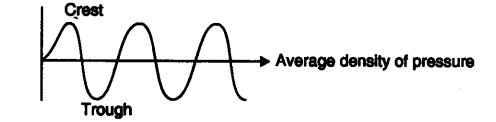
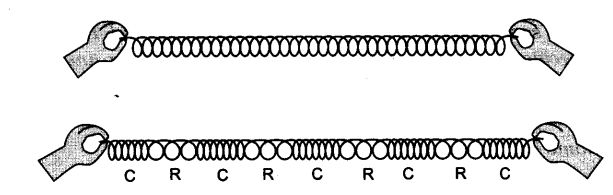
NCERT TextBook Class 9 Science Page 162 Question 1. How does the sound produced by a vibrating object in a medium reach your ear? Answer: Air is the commonest material through which sound propagates. When vibrating objects, like prongs of a tuning fork move forward, they push the molecules of the air in front of them. This in turn compresses the air, thus creating a region of high pressure and high density called compression. This compression in the air travels forward. When the prongs of the tuning fork move backward, they create a region of low pressure in the air, commonly called rarefaction.
This region has low pressure, low density, and more volume. As the tuning fork continues to vibrate, the regions of compression in the air alternate with the regions of rarefaction. These regions alternate at the same place. The energy of vibrating tuning fork travels outward. This energy which reaches the ears, makes the eardrums to vibrate and thus we hear sound
NCERT TextBook Class 9 Science Page 163 Question 1. Explain how sound is produced by your school bell. Answer: Air is the commonest material through which sound propagates. When school bell is rung, it pushes the molecules of the air in front of it. This in turn compresses the air, thus creating a region of high pressure and high density called compression. This compression in the air travels forward. When the bell moves back, it creates a region of low pressure in the air, commonly called rarefaction. This region has low pressure, low density, and more volume. As the bell continues to vibrate, the regions Of compression in the air alternate with the regions of rarefaction. These regions alternate at the same place. The energy of vibrating bell travels outward. This energy which reaches the ears, makes the eardrums to vibrate and thus we hear sound.
Question 2. Why are sound waves called mechanical waves ? Answer: Some mechanical energy is required to make an object vibrate. Sound energy cannot be produced on its own. The mechanical energy Of vibrating object travels through a medium and finally reaches the ear. Therefore, the sound waves are called mechanical waves.
Question 3. Suppose you and your friend are on the moon. Will you be able to hear any-sound produced by your friend ? Answer: No, I will not be able to hear sound, because moon has no atmosphere. Therefore, no sound waves can travel to your ears and, therefore, no sound is heard.
NCERT TextBook Class 9 Science Page 166 -I Question 1. Which wave property determines (a) loudness, (b) Pitch ? Answer: (a) The amplitude of the wave determines the loudness; more the amplitude of a wave, more is the loudness produced.
(b) The pitch is determined by the frequency of the wave. Higher the frequency of a wave more is its pitch and shriller is the sound.
Question 2. Guess which sound has a higher pitch; guitar or car horn ? Answer: Car horn has a higher pitch than a guitar, because sound produced by the former is shriller than the latter.
NCERT TextBook Class 9 Science Page 166 -II Question 1. What are wavelength, frequency, time period and amplitude of a sound wave ? Answer: Frequency: The number of compressions or rarefactions taken together passing through a point in one second is called frequency.
Time Period: It is the time taken by two consecutive compressions or rarefactions to cross a point.
Amplitude: It is the magnitude of maximum displacement of a vibrating particle about its mean position.
Question 2. How are the wavelength and frequency of a sound wave related to its speed ? Answer: Speed of sound Frequency x Wavelength
Question 3. Calculate the wavelength of a sound wave whose frequency is 220 Hz and speed is 440 m s-1 in a given medium. Answer: Frequency = 220 Hz
Speed of sound = 440 m s-1
We know speed of sound Frequency x Wavelength = 220 x Wavelength
Wavelength = = = 2m
Question 4. A person is listening to a tone of 500 Hz sitting at a distance of 450 m from the source Of the sound. What is the time interval between successive compressions from the source ? Answer:
Question 5. Distinguish between loudness and intensity of sound. Answer: The loudness depends on energy per unit area of the wave and on the response of the ear but intensity depends only on the energy per unit area of the wave and is independent of the response of the ear.
Question 6. In which of the three media, air, water or iron, does sound travel the fastest at a particular temperature ? Answer: Sound travels fastest in iron as compared to water and air.
An echo is returned in 3 s. mat is the distance of the reflecting surface from the source, given the speed of sound is 342 m s-1
Question 7. Why are the ceilings of concert halls curved ? Answer: The ceilings of concert halls are curved because sound after reflection from it reaches all the corners of the hall and is audible to each person in the hall.
Question.8.What is the audible range of the average human ear ? Answer. An average human ear can hear sound waves between frequencies 20 Hz to 20,000 Hz.
Question 9. What is the range of frequencies associated with (a) Infra sound ? (b) Ultrasound ? Answer: (a) Infra sound : Sound waves between the Frequencies 1 and 20 Hz.
(b) Ultrasound : Sound waves of the frequencies above 20,000 Hz.
Exercises
Question 1. What is sound and how is it produced ? Answer: Sound is mechanical energy which produces a sensation of hearing. When an Object is set into vibrations, sound is produced.
Question 3. Cite an experiment to show that sound needs a material medium for its propagation. Answer: Take an electric circuit which consists of a cell, a switch and an electric bell arranged inside a bell jar, which stands on the platform of an evacuating pump. The switch of the bell is pressed to close the electric circuit. When there is air within the bell jar, sound is heard. Air is now pumped out of the bell jar. When the air is completely removed from the bell jar, no sound is heard as it is obvious from fig. because the medium of air which has to carry energy from the bell to the bell jar is removed. It shows that sound needs material medium for its propagation.
Question 4. Why is sound wave called a longitudinal wave ? Answer:Sound wave is called longitudinal wave because the particles of the medium vibrate in the direction of the propagation of wave.
Question 5. Which characteristic of the sound helps you to identify your friend by his voice while sitting with others in a darkroom ? Answer: The characteristic of sound is quality or timbre.
Question 6. Flash and thunder are produced simultaneously. But thunder is heard a few seconds after the flash is seen, why ? Answer: Speed of sound is 330 m/sec in air medium at 0°C. Whereas speed of light is 3 x 10⁸m/sec. When we compare the speed of light with that of speed of sound, speed of light is greater than that of speed of sound. Therefore thunder is heard a few seconds after the flash is seen.
Question 7. A person has a hearing range from 20 Hz to 20 kHz. What are the typical wavelengths of sound waves in air corresponding to these two frequencies? Take the speed of sound in air as 344 ms-1. Answer:
Question 8. Two children are a± opposite ends of an aluminium rod. One strikes the end of the rod with a stone. Find the ratio of times taken by the sound wave in air and in aluminium to reach the second child. Answer:
Question 9. The frequency of a sources/ sound is 100 Hz. How many times does it vibrate in a minute? Answer:
Question 10. Does sound follow the same laws of reflection as light does? Explain. Answer: Yes. Sound follows the same laws of reflection as that of light because,
(i) Angle of incidence of sound is always equal to that of angle of reflection of sound waves.
(ii) The direction in which sound is incident, the direction in which it is reflected and normal all lie in the same plane.
Question 11. When a sound is reflected from a distant object, an echo is produced. Let the distance between the reflecting surface and the source of sound production remains the same. Do you hear echo sound on a hotter day? Answer:
Time is inversely proportional to the speed. As the temperature increases, the speed increases. Thus on a hot day due to high temperature the speed of sound increases. Hence the time will decrease and we can hear the echo sooner.
Question 12. Give two practical applications of reflection of sound waves. Answer: Reflection of sound is used in megaphones, horns and musical instruments such as trumpets and shehna. It is used in stethoscope for hearing patient’s heartbeat. Ceilings of the concert halls are curved, so that sound after reflection reaches all comers of the hall. (Any two practical applications can be written).
Question 13. A stone dropped from the top of a tower 500 m high into a pond of water at the base of the tower. When is the splash heard at the top? Giving, g = 10 ms-2 and speed of sound = 340 m s-1. Answer:
Question 14. A sound wave travels at a speed of 339 ms-1. If its wavelength is 1.5 cm, what is the frequency of the wave? Will it be audible? Answer:
Question 15. What is reverberation? How can it be reduced? Answer: The persistence of sound in an auditorium is the result of repeated reflections of sound and is called reverberation.
To reduce the undesirable effects due to reverberation, roofs and walls of the auditorium are generally covered with sound absorbent materials like compressed fiberboard, rough plaster or draperies. The seat materials are also selected having sound absorption properties.
Question 16. What is loudness of sound? What factors does it depend on? Answer: The loudness of sound is determined by its amplitude. The amplitude of the sound wave depends upon the force with which an object is made to vibrate. Loud sound can travel a larger distance as it is associated with higher energy. A sound waves spreads out from its source. As it moves away from the source its amplitude as well as its loudness decreases.
Question 17. Explain how bats use ultrasound to catch a prey. Answer: Bats search out its prey by emitting and detecting reflections of ultrasonic waves. The high-pitched ultrasonic squeaks of bat are reflected from the obstacles or prey and return to bat’s ear. The nature of reflection tells the bat where the obstacle or prey is and what it is like.
Question 18. How is ultrasound used for cleaning? Answer: Ultrasound is used to clean parts located in hard-to-reach places (i.e.) spiral tube, odd shaped parts, electronic components etc. Objects to be cleaned are placed in a cleaning solution and ultrasonic waves are sent into the solution. Due to the high frequency, the dust particles, grease get detached and drop out. The objects thus get thoroughly cleaned.
Question 19. Explain the working and application of a sonar. Answer: Working: SONAR Consists of a transmitter and a detector and is installed in a boat or a ship as shown in the fig. The transmitter produces and transmits ultrasonic waves. These waves travel through water and after striking the object on the seabed, get reflected back and are sensed by the detector. The detector converts the ultrasonic waves into electrical signals which are appropriately interpreted. The distance of the object that reflected the sound wave can be calculated by knowing the speed of sound in water and the time interval between the transmission and reception of the ultrasound.
Question 20. A sonar device on a submarine sends out a signal and receives an echo 5 s later. Calculate the speed of sound in water if the distance of the object from the submarine is 3625 m. Answer: Time taken between transmission and reception of signal = 5 sec.
Distance of the object from the sub marine = 3625 m.
Question.21. Explain how defects in a metal block can be detected using ultrasound. Answer. Ultrasounds can be used to detect cracks and flaws in metal blocks. Metallic components are used in the construction of big structures like buildings, bridges, machines and scientific equipment’s. The cracks or holes inside the metal blocks, which are invisible from outside reduces the strength of the structure. Ultrasonic waves are allowed to pass through the metallic block and detectors are used to detect the transmitted waves. If there is even a small defect, the ultrasound gets reflected back indicating the presence of the flaw or defect.
Question 22. Explain how the human ear works. Answer: The outer ear is called “pinna. It collects the sound from the surroundings. The collected sound passes through the auditory canal. At the end of the auditory canal there is a thin membrane called the eardrum or the tympanic membrane. When a compression of the medium reaches the eardrum the pressure on the outside of the membrane increases and forces the eardrum inward. Similarly, the eardrum moves outward when a rarefaction reaches it. In this way the eardrum vibrates. The vibrations are amplified several times by three bones (the hammer, anvil and stirrup) in the middle ear. The middle ear transmits the amplified pressure variations received from the sound wave to the inner ear. In the inner ear, the pressure variations are turned into electrical signals by the cochlea. These electrical signals are sent to the brain via the auditory nerve and the brain interprets them as sound.
MORE QUESTIONS SOLVED
I. MULTIPLE CHOICE QUESTIONS Choose the correct option: Question 1. A wave in slinky travelled to and fro in 5 sec the length of the slinky is 5 m. The velocity of wave is (a) 10 m/s (b) 5 m/s (c) 2 m/s (d) 25 m/s Answer: (c)
Question 2. Loud sound can travel a larger distance, due to (a) higher amplitude (b) higher energy (c) high frequency (d) high speed Answer (c)
Question 3. We can distinguish between sound having same pitch and loudness, this characteristic of sound is (a) tone (b) note (c) pitch (d) timber Answer: (b)
Question 4. Speed of sound depends upon (a) temperature of medium (b) pressure of medium (c) temperature of source producing sound (d) temperature and pressure of medium Answer: (d)
Question 5. Speed (s), wavelength’ (X) and frequency (v) of sound are related as (a) s =u x v (b) v=s x u (c) u=s x v (d)u=s/v Answer: (c)
Question 6. To hear a distinct echo the time interval between the original sound and the reflected sound must be: (a) 0.2 s (b) 1 s (c) 2 s (d) 0.1 s Answer: (d)
Question 7. Reverberation of sound is used in (a) stethoscope (b) trumpets (c) megaphone (d) all of these Answer: (d)
Question 8. Children under the age of 5 can hear upto: (a) 20 kHz (c) 20 Hz (b) 25 kHz (d) 25 Hz Answer: (b)
Question 9. Dolphins, bats and porpoise uses (a) ultrasound (c) both (a) and (b) (b) infrasound (d) none of these Answer: (a)
Question 10. The part of human ear that converts sound vibrations into electrical signals are: (a) Tympanic membrane (c) Stirrup (b) Hammer (d) Cochlea Answer: (d)
II. VERY SHORT ANSWER TYPE QUESTIONS
Question 1. Is sound wave longitudinal or transverse? Answer: Sound wave is longitudinal in nature.
Question 2. What is the relation between frequency (v) and time period of a sound wave? Answer: v = 1/T
Frequency is inversely proportional to time period.
Question 3. In which of the three media air, water or steel does sound travel the fastest? Answer: Sound travels fastest in steel.
Question 4. Which has a higher pitch—the sound of a whistle or that of a drum? Answer: The sound of whistle has higher pitch.
Question 5. What is pitch? Answer: The way our brain interprets the frequency of an emitted sound is called the pitch.
Question 6. How can we distinguish one sound from another having the same pitch and loudness? Answer: The quality or timber of sound helps us to distinguish one sound from another having the same pitch and loudness.
Question 7. What is the audible range of frequency for human beings? Answer: The audible range of frequencies for human beings is 20 Hz to 20,000 Hz.
Question 8. What is one Hz? Answer: Hz is the unit of frequency, called as Hertz. One Hertz is equal to one cycle per second.
Question 9. Define speed of sound. Answer: The speed of sound is defined as the distance travelled per unit time by compression or rarefaction.
Question 10. What is ‘note’ of sound? Answer: The sound produced due to a mixture of several frequencies is called a note, it is pleasant to listen to.
Question 11. Find the frequency of a wave whose time period is 0.002 second. Answer:
Question 12. What is the time period-of sound wave? Answer: The time taken by two consecutive compressions or rarefactions to cross a fixed points is called the time period of the wave.
Question 13. What is the minimum distance required to hear distinct echo? Answer: The minimum distance of the obstacle from the source of sound should be 17.2 m.
Question 14. What is reverberation? Answer: The repeated reflection that results in the persistence of sound is called reverberation.
Question 15. What is SONAR? Answer: SONAR is—Sound Navigation and Ranging. It is a device that uses ultrasonic waves to measure the distance, direction and speed of underwater objects by getting the reflection of sound.
Question 16. What is ‘ultrasonic’ and ‘infrasonic’ sound wave? Answer: Sound waves with frequencies below the audible range (less than 20 Hz) are termed as “infrasonic” and those sound waves with frequencies above the audible range (more than 20000 Hz) are termed as “ultrasonic”.
Question 17. What should be the time interval between the originated sound and the reflected sound to be heard distinctly? Answer: To hear a distinct sound the time interval between the originated sound and the reflected sound must be at least 0.1 second.
III. SHORT ANSWER TYPE QUESTIONS
Question 1. What is a medium? Give two examples. Answer: The matter or substance through which sound is transmitted is called a medium. It can be solid, liquid or gas. Example, air, water, metals.
Question 2. Define wave-motion. Answer: A wave is a disturbance that moves through a medium when the particles of the medium set neighbouring particles into motion. The particles of the medium do not move forward but the disturbance is carried forward.
Question 3. What is ‘sonic boom’? Answer: When an object just attains a supersonic speed, it causes shock waves in air. As a result there is large change in air pressure. This results in sonic boom.
Question 4. Why does sound become faint with distance? Answer: Sound is a form of energy. As it moves away from the source its amplitude as well as its loudness decreases. The energy also get transformed in vibration of the particles of the medium.
Question 5. Why do we say that sound waves are longitudinal? Answer: Longitudinal waves need medium for propagation. The sound energy travel in the same line as the particles oscillate.
———— > Sound energy
<————>Particles oscillation
It forms compression and rarefaction for the longitudinal wave motion. Sound wave shows all the characteristics of longitudinal wave so it is called as longitudinal wave.
Question 6. Differentiate between longitudinal wave and transverse wave. Answer:
Question 7. What is crest and trough? Answer: When a wave is propagated as represented below. A peak is called the crest and a valley is called the trough of a wave.
Question 8. The maximum oscillation disturbance of particles of air forms crest and trough. What is echo? Why don’t we get echo in small room? Answer: The distinct sound heard after reflection of sound from the source is called echo. For echo, the distance of reflecting surface from the source should be more than 17.2 m.
Question 9. What is velocity of sound? Why does sound travel faster in summer season than in winter? Answer: Velocity of sound is- the speed of sound in a given medium at a given temperature. As the temperature increases the speed of sound also increases, hence in summer the sound travels faster than in winter.
Question 10. Draw a graphical representation of the wave shape for (a) low pitched sound and (b) a high pitched sound. Answer:
Question 11. Give two applications of echo/reflection of sound. Answer: (i) Ships use reflection of sound technique “SONAR” which helps in locating the depth, distance, direction and speed of underwater objects.
(ii) Ceilings of concert halls are curved so that sound after reflection reaches all comers of the hall.
Question 12. Define amplitude time period and frequency of sound wave. Answer: Amplitude: The magnitude of the maximum disturbance in the medium on either side of the mean value is called amplitude of the wave. Its unit is meter.
Time Period: The time taken by two consecutive compressions or rarefactions to cross a fixed point is called the time period of the wave.
Frequency: The number of oscillation, occurring per unit time is called the frequency of sound wave.
Question 13. A sound wave causes the density of air at a place to oscillate 1200 times in 2 minutes. Find the time period and frequency of the wave. Answer:
Question 14. Give 3 uses of ultrasound. Answer: Use of ultrasound:
1. Ultrasound is used to detect cracks and flaws in metal blocks.
2. It is used in ‘echo-cardiography’, the ultrasonic waves are made to reflect from various parts of the heart and form the image of the heart.
3. It is used in ‘ultrasonography’, to detect the image of organs or to detect the abnormalities in the organs. It is also used to examine the foetus during pregnancy to detect congenital defects.
Question: 15. What is the function of middle ear? Answer: Middle ear consist of three small bones called hammer, anvil and stirrup. These three bones receive the sound vibrations and increase the strength of these vibrations to amplify the vibrations received by ear-drum. These amplified vibrations are furthgr passed to the inner ear.
A ship sends out ultrasound that return from the seabed and is detected after 3.42 s.
Question 16. If the speed of ultrasound through seawater is 1531 m/s. What is the distance of the seabed from the ship?- Answer: Time between transmission and detection t = 342 s.
Speed of ultrasound in seawater = 1531 m/s.
Question 17. Distinguish between tone, note and noise. Answer: Tone: A sound of single frequency is called a tone.
Note: The sound which is produced due to a mixture of several frequencies is called a note.
Noise: The sound which is produced due to a mixture of several frequencies but is unpleasant to the ear is called noise.
Question 18: Establish the relationship between speed, wavelength and frequency of sound. Answer: Speed of sound —» The distance travelled by a wave or a point on a wave (compression or rarefaction) per unit time.
Question 19. Which wave property determines (a) loudness? (b) pitch? Name the characteristic of the sound which help you to distinguish your friend’s voice while talking in a dark room. Answer: (a) Loudness is determined by amplitude.
(b) Pitch is determined by frequency.
The quality or timber of sound helps us to distinguish our friend’s voice while talking in a dark room.
Question 20. A sound produces 13 crests and 15 troughs in 3 seconds. When the second crest is produced the first is 2 cm away from the source? Calculate. (a) the wavelength (b) the frequency (c) the wave speed. Answer:
IV. LONG ANSWER TYPE QUESTIONS
Question 1. Sound cannot travel in vacuum. Describe an experiment to demonstrate this. Answer: Sound is a mechanical wave and needs a material medium to propagate. It cannot travel in vacuum and can be shown by the following experiment.
• Take an electric bell and an airtight glass bell jar. The electric bell is suspended inside the airtight bell jar. Switch ‘ON’ the electric bell.
• Now, connect the bell jar to vacuum pump.
• Pump out the air from the jar, the sound becomes fainter, although the same current passes through the bell.
• Pump out some more air from the jar, a very feeble sound is heard.
• When the air is completely removed from the jar, no sound is heard.
Question 2. Explain the structure of the human ear with the help of a diagram. Answer:
(a) Outer Ear: Pinna, auditory canal and tympanic membrane.
Pinna: It collects the sound from the surroundings.
Auditory Canal: The sound waves collected passes through this canal.
Tympanic Membrane: It is a thin membrane which receives the vibrations of sound. A compression reaches the eardrum, the pressure on the outside of the membrane increases and pushes the eardrum inward, and moves out when the rarefaction reaches.
(b) Middle Ear: Consists of three small bones called hammer, anvil and stirrup. The vibrations are received by these three bones and the strength of vibrations is increased i.e., the sound is amplified and passed to inner ear.
(c) Inner Ear: It consist of cochlea and auditory nerve.
Chochlea receives the amplified vibrations and convert them into electrical signals. These electrical signals are sent to the brain via the auditory nerve and the brain interprets the signals as sound.
Question 3. Given that sound travels in air at 340 m/sec, find the wavelength of the waves in air produced by 20 kHz sound source. If the same source is put in a water tank, what would be the wavelength of the sound waves in water? (Speed of sound in water = 1480 m/s.) Answer:
Question 4. A child watching Dussehra celebration from a distance sees the effigy of Ravana burst into flames and hears the explosion associated with it 2 sec after that. How far was he from the effigy if the speed of sound in air that night was 335 m/sec? Answer:
V. ACTIVITY-BASED QUESTIONS
Question 1. • Take a tuning fork and set it vibrating by striking its prong on a rubber pad. Bring it near your ear. • Do you hear any sound? • Touch one of the prongs of the vibrating tuning fork with your finger and share your experience with your friends. • Now, suspend a table tennis ball or a small plastic ball by a thread from a support. Touch the ball gently with the prong of a vibrating tuning fork. • Observe what happens and discuss with your friends. Answer: • Yes, we heard sound.
• If we touch the ball with tuning fork set into vibration, the ball gets displaced from its mean position and starts moving.
Question 2. • Fill water in a beaker or a glass up to the brim. Gently touch the water surface with one of the prongs of the vibrating tuning fork. • Next dip the prongs of the vibrating tuning fork in water. . • Observe what happens in both the cases. • Discuss with your friends why this happens. • Arrange them on a table near a wall. • Keep a clock near the open end of one of the pipes and try to hear the sound of the clock through the other pipe. • Adjust the position of the pipes, so that you can best hear the sound of the clock. • Now, measure the angles of incidence and reflection and see the relationship between the angles. Answer: In both the cases, sound will be produced by the tuning fork which produces ripples. But in case (1) ripples are produced which will move up and down and in case (2) ripples are produced which will move in sideways.
Question 3. • Take a slinky. Ask your friend to hold one end. You hold the other end. Now stretch the slinky and give it a sharp push towards your friend. • What do you notice? If you move your hand pushing and pulling the slinky alternatively, what will you observe? • If you mark a dot on the slinky, you’ll observe that the dot on the slinky will move back and forth parallel to the direction of propagation of the disturbance. Answer: When we give a small jerk a hump is produced and this travels forward. When we give a sharp push continuous disturbance is produced. When we give a push or pull to the slinky, slinky starts moving in the forward and backward direction parallel to the direction of propagation of the disturbance.
Question 4. • Take two identical pipes. The length of the pipes should be sufficiently long. • Lift the pipes on the right .vertically to a small height and observe what happens. Answer: (i) Reflection of sound is similar to reflection of light i.e. Angle of incidence = Angle of reflection.
(ii) If we lift the pipe vertically to a small height, well not be able to hear the sound through the other end of the pipe because Angle of incidence * Angle of reflection. Therefore the reflected ray will not travel through the pipe B.
VI. VALUE-BASED QUESTIONS
Question 1. Raj noticed that his pet dog was frightened and trying to hide in safe place in his house when some crackers were burst in the neighbourhood. He realized the problem and he decided not to burst crackers during diwali or for any other celebrations. (a) What must be the range of crackers sound? (b) Name two diseases that can be caused due to noise pollution. (c) Name the values of Raj reflected in above act. Answer: (a) The range of crackers sound must be between 20 Hz to 20 kHz.
(b) Two diseases that can occur due to noise pollution are heart attack and high blood pressure.
(c) Raj reflects the value of respecting sensitivity for animals and caring for animals.
Question 2. It is not advisable to construct houses near airports, in spite of that many new residential apartments are constructed near airports. Sumit files RTI and also complains the municipal office about the same. (a) Why one should not reside near airport? (b) Name other two places where there is noise-pollution. (c) What value of Sumit is reflected in this act? Answer: (a) The landing and taking off of the air-planes causes lot of noise pollution which may lead to deafness, high blood pressure and other health problems.
(b) The other two places where there is noise-pollution is, residing near the heavy traffic routes and railway stations or lines.
(c) Sumit shows participating citizen and moral responsibility values.
NCERT Solutions for Class 9 Science Chapter 11 Work Power and Energy
Page 148
Q1:A force of 7 N acts on an object. The displacement is, say 8 m, in the direction of the force. Let us take it that the force acts on the object through the displacement. What is the work done in this case?
Page 149 Q1. When do we say that work is done?
Work is said to be done when a force causes displacement of an object in the direction of applied force. Q2. Write an expression for the work done when a force is acting on an object in the direction of its displacement.
Work done = Force x Displacement Q3. Define 1J of work.
When a force of IN causes a displacement of 1m, in its own direction the work done is said to be one joule.
Q4. A pair of bullocks exerts a force of 140 N on a plough. The field being ploughed is 15 m long. How much work is done in ploughing the length of the field?
Work done = Force x Displacement = 140 x 15 = 2,100 J
Page 152 Q1. What is the kinetic energy of an object?
The energy possessed by a body by virtue of its motion is called kinetic energy.
Q2. Write an expression for the kinetic energy of an object.
Q3. The kinetic energy of an object of mass, m moving with a velocity of 5 ms-1 is 25 J. What will be its kinetic energy when its velocity is doubled? What will be its kinetic energy when its velocity is increased three times?
NCERT TextBook Page 156
Q1. What is power?
Power is defined as the rate of doing work Q2. Define 1 watt of power.
When a work of 1 joule is done in 1 s, the power is said to be one watt. Q3. A lamp consumes 1000 J of electrical energy in 10 s. What is its power?
Given W = 1000J, t = 10s, P =?
We know, P = W/t = 1000/10 = 100W Q4. Define average power.
When a machine or person does different amounts of work or uses energy in different intervals of time, the ratio between the total work or energy consumed to the total time is average power.
NCERT TextBook Page 158
Q1. Look at the activities listed below. Reason out whether or not work is done in the light of your understanding of the term ‘work’. Suma is swimming in a pond.
A donkey is carrying a load on its back. A wind mill is lifting water from a well.
A green plant is carrying out photosynthesis. An engine is pulling a train.
Food grains are getting dried in the sun. A sailboat is moving due to wind energy.
Work is done because the displacement of swimmer takes place in the direction of applied force.
If the donkey is not moving, no work is done as the displacement of load does not take place in the direction of applied force. Work is done, as the displacement takes place in the direction of force.
No work is done, because no displacement takes place. Work is done, because displacement takes place in the direction of applied force.
No work is done, because displacement does not take place. Work is done, because displacement takes place in the direction of the force.
Q2. An object thrown at a certain angle to the ground moves in a curved path and falls back to the ground. The initial and the final points of the path of the object lie on the same horizontal line. What is the work done by the force of gravity on the object?
Since the body returns to a point which is on the same horizontal line through the point of projection, no displacement has taken place against the force of gravity, therefore, no work is done by the force due to gravity.
Q3. A battery lights a bulb. Describe the energy changes involved in the process.
Within the electric cell of the battery the chemical energy changes into electrical energy. The electric
energy on flowing through the filament of the bulb, first changes into heat energy and then into the light energy.
Q4. Certain force acting on a 20 kg mass changes its velocity from 5 m s-1 to 2 m s-1. Calculate the work done by the force.
Q5. A mass of 10 kg is at a point A on a table. It is moved to a point B. If the line joining A and B is horizontal, what is the work done on the object by the gravitational force? Explain your answer.
The work done is zero. This is because the gravitational force and displacement are perpendicular to each other.
Q6. The potential energy of a freely falling object decreases progressively. Does this violate the law of conservation of energy? Why?
It does not violate the law Of conservation of energy. Whatever, is the decrease in PE due to loss of height, same is the increase in the KE due to increase in velocity of the body.
Q7. What are the various energy transformations that occur when you are riding a bicycle?
The chemical energy of the food changes into heat and then to muscular energy. On paddling, the muscular energy changes into mechanical energy
Q8. Does the transfer of energy take place when you push a huge rock with all your might and fail to move it? Where is the energy you spend going?
Energy transfer does not take place as no displacement takes place in the direction of applied force. The energy spent is used to overcome inertia of rest of the rock.
Q9. A certain household has consumed 250 units of energy during a month. How much energy is this in joules?
Q10. An object of mass 40 kg is raised to a height of 5 m above the ground. What is its potential energy? If the object is allowed to fall, find its kinetic energy when it is half-way down.
Q11. What is the work done by the force of gravity on a satellite moving round the earth? Justify your answer.
Q12. Can there be displacement of an object in the absence of any force acting on it? Think. Discuss this question with your friends and teacher.
The answer is both Yes and No. Yes because when an object moves in deep space from one point to another point in a straight line, the displacement takes place, without the application of force. No, because force cannot be zero for displacement on the surface of earth. Some force is essential.
Page 159
Q13 A person holds a bundle of hay over his head for 30 minutes and gets tired. Has he done some work or not? Justify your answer.
The person does not do work because no displacement takes place in the direction of applied force as the force acts in the vertically upward direction.
Q14. An electric heater is rated 1500 W. How much energy does it use in 10 hours?
Q15. Illustrate the law of conservation of energy by discussing the energy changes which occur when we draw a pendulum bob to one side and allow it to oscillate. Why does the bob eventually come to rest? What happens to its energy eventually? Is it a violation of the law of conservation of energy?
When the pendulum bob is pulled (say towards left), the energy supplied is stored in it is the form
Of PE on account of its higher position. When the pendulum is released so that it starts moving towards right, then its PE changes into KE such that in mean position, it has maximum KE, and Zero PE. As the pendulum moves towards extreme right, its KE changes into PE such that at the extreme position, it has maximum PE and zero KE. When it moves from this extreme position to mean position, its PE again changes to KE. This illustrates the law Of conservation of
energy. Eventually, the bob comes to rest, because during each oscillation a part of the energy possessed by it transferred to air and in overcoming friction at the point of suspension. Thus, the energy of the pendulum is dissipated in air.
The law of conservation of energy is not violated because the energy merely changes its form and is not destroyed.
Q16. An object of mass, m is moving with a constant velocity, v. How much work should be done on the object in order to bring the object to rest?
Q17. Calculate the work required to be done to stop a car of 1500 kg moving at a velocity of 60 km/h.
Q18.
Q19. Soni says that the acceleration in an object could be zero even when several forces are acting on it. Do you agree with her? Why?
Q20. Find the energy in kWh consumed in 10 hours by four devices of power 500 W each.
Q21. A freely falling object eventually stops on reaching the ground. What happens to its kinetic energy?
Ncert TextBook Page 141 Questin 1. Why is it difficult to hold a school bag having a strap made of a thin and strong string? Answer: The force exerted by a thin and strong string is distributed to very less area and hence the force applied due to the bag is more, the pressure exerted on the body by thin straps will be more and hence will be more painful.
As pressure is inversely proportional to area, if the area is reduced pressure
Questin 2. What do you mean by buoyancy? Answer: The upward force exerted by any fluid (liquid, gas) on an object is known as upthrust or buoyancy.
Questin 3. Why does an object float or sink when placed on the surface of water? Answer: The density of the objects and water decides the floating or sinking of the object in water.
The density of water is 1 gm/cm3.
If the density of an object is less than the density of water then the object will float.
If the density of an object is more than the density of water then the object will sink.
Ncert TextBook Page 142 Questin 1. You find your mass to be 42 kg on a weighing machine. Is your mass more or less than 42 kg? Answer: The weighing machine actually measures the weight of the body as the acceleration due to gravity ‘g’ is acting on the body. Hence the mass reading of 42 kg given by a weighing machine is same as the actual mass of the body. As mass is the quantity of inertia, it remains the same.
Questin 2. You have a bag of cotton and an iron bar, each indicating a mass of 100 kg when measured on a weighing machine. In reality, one is heavier than other. Can you say which one is heavier and why? Answer: The heaviness of the bag can be given by density
Mass of both cotton bag and iron bag is same. But the volume of cotton bag is more than the iron bag.
Hence density is inversely proportional to volume. The bag of iron will be heavier.
Questions From Ncert Text book
Question 19. In what direction does the buoyant force on an object immersed in a liquid act? Answer: The buoyant force on an object immersed in a liquid acts upwards, i.e. opposite to the direction of the force exerted by the object.
Question 20. Why does a block of plastic released under water come up to the surface of water? Answer. The floating or sinking of a body in the water is decided by the density of both the body and water’s buoyant force acting on the body by the liquid.
The density of plastic is less than the water and the buoyant force exerted by water on the plastiq block is greater than the force exerted by plastic on the water.
Questin 21. The volume of 50 g of a substance is 20 cm3. If the density of water is 1 gem 3, will the substance float or sink? Answer.
As the density of a given substance is more than the density of water. The substance will sink in water.
Question 22. The volume of a 500 g sealed packet is 350 cm3. Will the packet float or sink in water if the density of water is lg cmr3? What will be the mass of the water displaced by this packet? Answer:
More Questions Solved
I. Multiple Choice Questions Choose the correct option:
The device used to measure the purity of milk is (a) hydrometer (b) lactometer (d) hygrometer (d) maltometer
The cork floats while the nail sinks in the water, this is due to (a) density of cork is more than nail (b) density of nail is more than cork. (c) density of cork is less than the density of water. (d) density of iron is less than the density of water.
The relative density of silver is 10.8 and the density of water is 1o3 kg/m2. The density of silver is (a) 1.8 x 1o4 N/m3 (b) 10.8 x 1o3 N/m3 (c) 1.8 x 1o4 kg/m3 (d) 10.8 x 1o4 kg/m3
Buoyant force exerted by different fluids on a given body is (a) same (b) different (c) zero (d) negligible
Liquid A is denser than liquid B, a body of wood is dipped in both the liquids? The buoyant force experienced by the body in (a) liquid A is more (b) liquid B is more (c) liquid A is less (d) none of the above Answer. 1 -(b), 2—(c), 3—(b), 4-(b), 5—(a).
II. Very Short Answer Type Questions
Question 1. What is the S.I. unit of thrust? Answer: Newton.
Question 2. What is the S.I. unit of pressure? Answer: The S.I. unit of pressure = N/m2 = Pascal.
Question 3. Define thrust. Answer: The net force exerted by a body in a particular direction is called thrust.
Question 4. Define pressure. Answer: The force exerted per unit area is called pressure.
Question 5. Why is it easier to swim in sea water than in river water? Answer: The density of sea water is more due to dissolved salts in it as compared to the density of river water. Hence the buoyant force exerted on the swimmer by the sea water is more which helps in floating and makes swimming easier.
Question 6. Why a truck or a motorbike has much wider tyres? Answer: The pressure exerted by it can be distributed to more area, and avoid the wear and tear of tyres.
Question 7. Why are knives sharp? Answer: To increase the pressure, area is reduced,
As pressure ∝ 1/Area hence the pressure or force exerted on a body increases.
Question 8. Why is the wall of dam reservoir thicker at the bottom? Answer: The pressure of water in dams at the bottom is more, to withstand this pressure the dams have wider walls.
Question 9. Why do nails have pointed tips? Answer: The force exerted when acts on a smaller area, it exerts larger pressure. So the nails have pointed tips.
Question 10. While swimming why do we feel light? Answer: The swimmer is exerted by an upward force by water, this phenomenon is called buoyancy and it makes the swimmer feel light.
Question 11. Define density and give its unit. Answer: The density of a substance is defined as mass per unit volume. Its unit is kg/m3.
Question 12. What is relative density? Answer: The relative density of a substance is the ratio-of its density to that of water.
III. Short Answer Type Questions Question 1. A ship made of iron does not sink but the iron rod sinks in water, why? Answer: The iron rod sinks due to high density and less buoyant force exerted by the water on it, but in case of ship the surface area is increased, the upthrust experienced by the body is more. So it floats on water
Question 2. Camels can walk easily on desert sand but we are not comfortable walking on the sand. State reason. Answer: Camels feet are broad and the larger area of the feet reduces the force/ pressure exerted by the body on the sand. But when we have to walk on the same sand, we sink because the pressure exerted by our body is not distributed but is directional.
Question 3. What is lactometer and hydrometer? Answer: Lactometer is a device used to find the purity of a given sample of milk. Hydrometer is a device used to find the density of liquids.
Question 4. The relative density of silver is 10.8. What does this mean? Answer: It means that the density of silver is 10.8 times more than that of water. T
Question 5. he relative density of gold is 19.3. The density of water is 103 kg/m3? What is the density of gold in S.I. unit? Answer:
Question 6. State Archimedes’ principle. Answer: Archimedes’ principle—When a body is immersed fully or partially in a fluid, it experiences an upward force that is equal to the weight of the fluid displaced by it.
It is used in designing of ships and submarines.
Question 7. Two cork pieces of same size and mass are dipped in two beakers containing water and oil. One cork floats on water but another sink in oil. Why? Answer: The cork floats on water because the density of cork is less than the density of water, and another cork sinks in the oil because the density of cork is more than the oil.
Question 8. What are fluids? Why is Archimedes’ principle applicable only for fluids? Give the application of Archimedes’ principle. Answer: Fluids are the substances which can flow e.g., gases and liquids are fluids. Archimedes’ principle is based on the upward force exerted by fluids on any object immersed in the fluid.
Hence it is applicable only for fluids.
Applications of Archimedes’ principle:
It is used in designing of ship and submarine.
It is used in designing lactometer, used to determine the purity of milk,
To make hydrometers, used to determine the density of liquids.
IV. Long Answer Type Questions Question 1. With the help of an activity prove that the force acting on a smaller area exerts a larger pressure? Answer: Consider a block of wood kept on a table top. The mass of the wooden block is 5 kg. Its dimension is 40 cm x 20 cm x 10 cm.
Now, we have to find the pressure exerted by the wooden block on the table top by keeping it vertically and horizontally.
∴ The pressure exerted by the box in case (a) is more as compared to the pressure exerted in case (b).
The area is reduced and the pressure exerted is more.
This shows that pressure ∝ 1/area.
Pressure will be larger if the area is reduced. Application:
Nails have pointed tips.
Knives have sharp edges.
Needles have pointed tips.
V. Activity – Based Questions Question 1.
Take an empty plastic bottle. Close the mouth of the bottle with an airtight stopper. Put it in a bucket filled with water. You see that the bottle floats.
Push the bottle into the water. You feel an upward push. Try to push it further down. You will find it difficult to push deeper and deeper. This indicates that water exerts a force on the bottle in the upward direction. The upward force exerted by the water goes on increasing as the bottle is pushed deeper till it is completely immersed.
Now, release the bottle. It bounces back to the surface.
Does the force due to the gravitational attraction of the earth act on this bottle? If so, why doesn’t the bottle stay immersed in water after it is released? How can you immerse the bottle in water?
Answer: Yes, the bottle is attracted downwards by the earth’s gravitational force. On pushing the bottle with force in the water it does not remain there but comes up because of’the upward force exerted by water on the bottle. This upward force is called upthrust or buoyant force. When the upward force or buoyant force is greater than the downward force ‘g’ the bottle will float. But if downward force is greater than upward force, the bottle will sink. The upward force (buoyant force) acting on the bottle can be reduced by increasing the force on the bottle or by filling the bottle with sand, water etc.
Question 2.
Take a beaker filled with water.
Take an iron nail and place it on the surface of the water.
Observe what happens.
Answer: The iron nail sinks as the density of nail is more and the downward force exerted on nail is more than the buoyant force.
Question 3.
Take a beaker filled with water.
Take a piece of cork and an iron nail of equal mass.
Place them on the surface of water.
Observe what happens.
Answer: The iron nail sinks as.the density of nail is more and the downward force exerted on nail is more than the buoyant force. The cost floats as the density of cost is less and the buoyant force exerted on it is more than the downward force.
Question 4.
Take a piece of stone and tie it to one end of a rubber string or a spring balance.
Suspend the stone by holding the balance or the string as shown in the figure (a).
Note the elongation of the string or the reading on the spring balance due to the weight of the stone.
Now, slowly dip the stone in the water in a container as shown in Fig. (b).
Observe what happens to the elongation of the string or the reading on the balance. Observations :
In Fig. (a) the elongation of the string is 6 cm.
In Fig. (b) when the stone is dipped in water the length of string reduced to 5 cm.
The length of the string in case (b) decreases due to the upward force exerted by water on the stone called as buoyant force.
VI. Value – Based Questions Question 1. A milkman sold his milk in the city and always carried lactometer with him. The customers trusted him and his business flourished. (a) What is lactometer? (b) What is the principle of working of lactometer? (c) What value of milkman is seen in this case? Answer.
(a) Lactometer is a device that measures the purity of milk.
(b) The principle of lactometer is ‘Archimedes’ principle’. It states that when a body is immersed fully or partially in a fluid, it experiences an upward force that is equal to the weight of the fluid displaced by it.
(c) Milkman is very honest and trustworthy.
Question 2. Reeta was wearing a high heel shoe for a beach party, her friend told her to wear flat shoes as she will be tired soon with high heels and will not feel comfortable, (a) Why would one feel tired with high heel shoes on beach? (b) Give the unit of pressure. (c) What value of Reeta’s friend is seen in the above act? Answer:
(a) The high heel shoes would exert lot of pressure on the loose sand of beach and will sink more in the soil as compared to flat shoes. Hence large amount of force will be required to walk with heels.
(b) Unit of pressure is Pascal.
(c) Reeta’s friend showed the value of being helpful, concerned and intelligent.
Question 3. In the school fair, there was a game in which one need to find the heaviest ball without holding them in hand. Three balls were given and few disposable glasses were kept. Tarun saw his friend struggling to win the game but he was unable to find the heaviest ball. Tarun helped him by dipping the three balls one by one in the glass’es full of water upto the brim and finally they won the game. (a) Why did Tarun told his friend to dip the balls one by one in completely filled glass of water? (b) Name the principle used here. (c) What value of Tarun is reflected in this case? Answer:
(d) Tarun wanted to measure the amount of water displaced by each ball when dipped in water.
(b) The principle used is ‘Archimedes’ principle’.
(c) Tarun showed the value of being helpful, kind and intelligent.
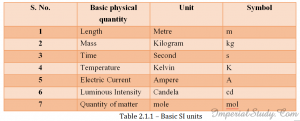
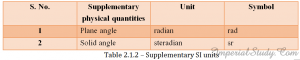
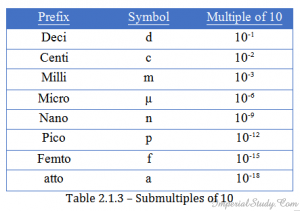
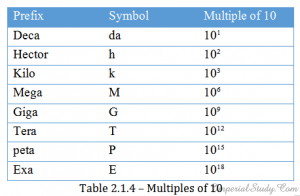

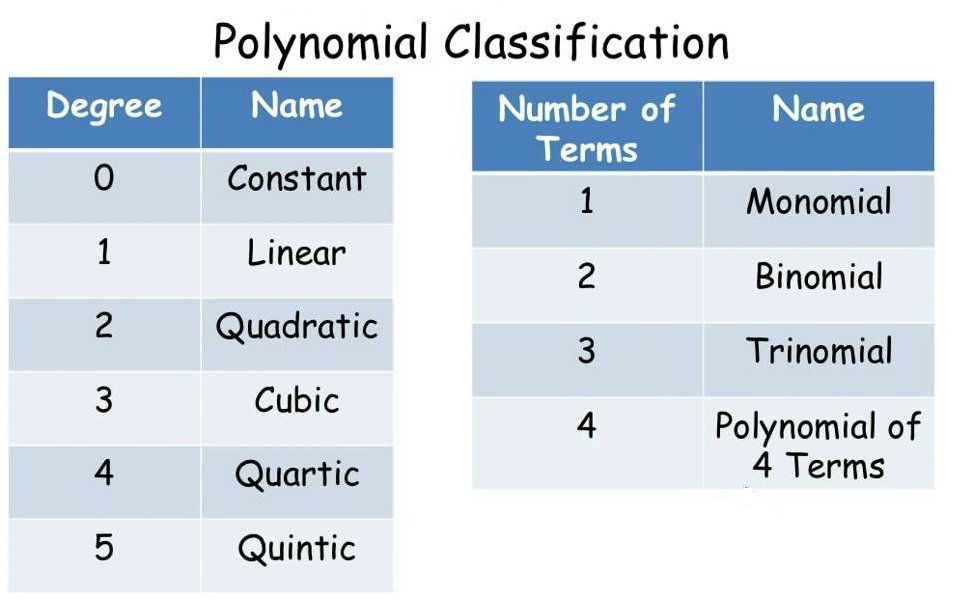
 is 1.
is 1.



 is a zero of the polynomial p(y).
 is a zero of the polynomial p(x).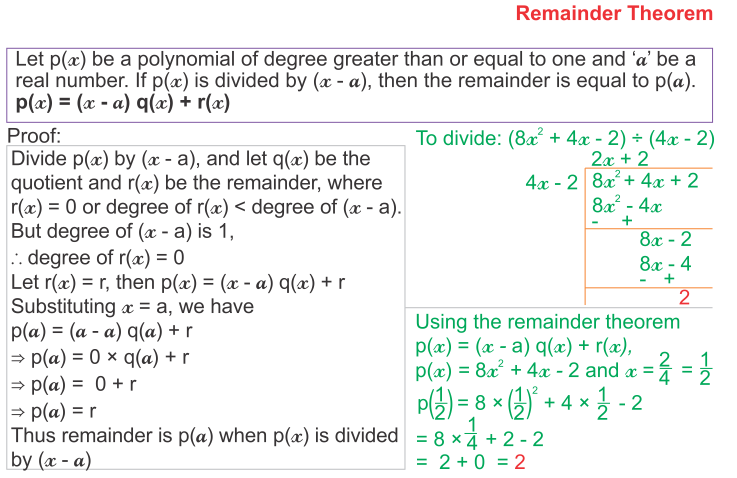


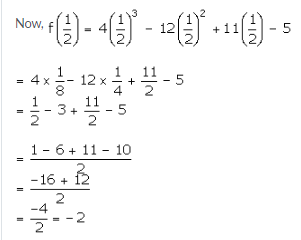


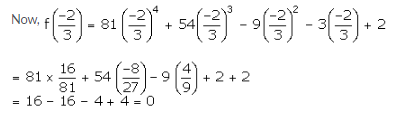
 = 1
= 1
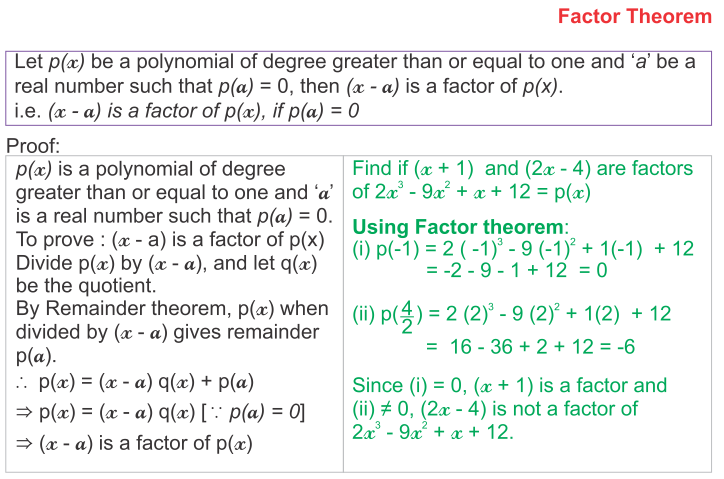


 x – 6 = 0)
 ) is a factor of (7 –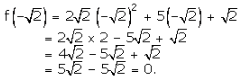

 12 + a



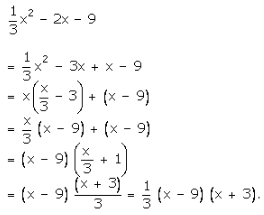
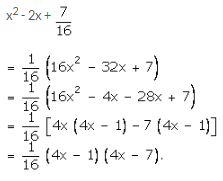
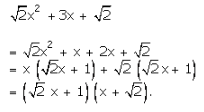
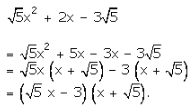

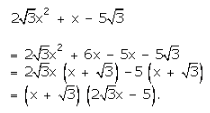
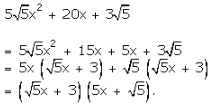
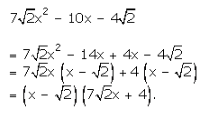
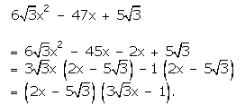
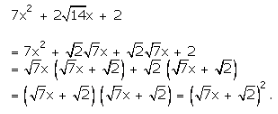
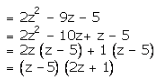
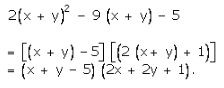
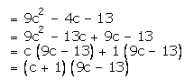

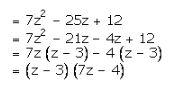
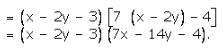
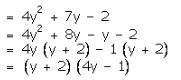
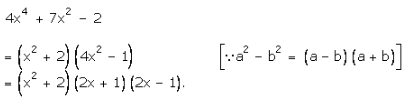




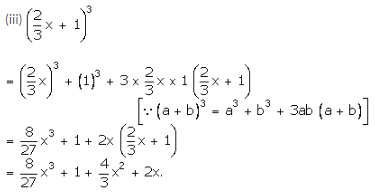




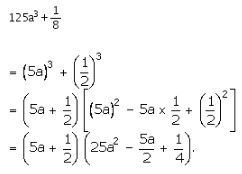

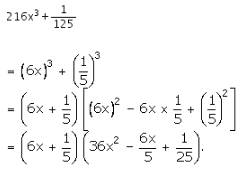


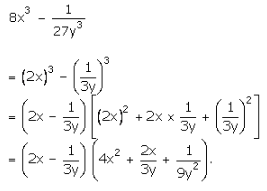

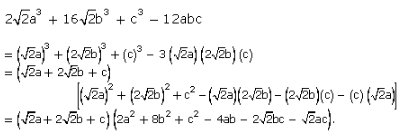

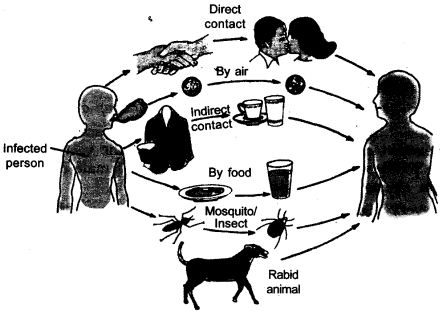
 =
=  = 2m
= 2m