Blog

  • Business Services Notes Class 11th Business Studies

    1. Service Sector Service sector includes commercial firm engaged in banking. communication. transport, insurance, warehousing etc. The service sector constitutes the basic infrastructure which is a must for smooth flow of business activities.

    2. Nature of Services

    Basic features of services are

    (i) Intangible
    (ii) Lack of Inconsistency
    (iii) Inventory
    (iv) Non-transferability or Inseparability
    (v) Involvement

    3. Classification or Types of Services

    Services can be broadly categorised into three categories

    (i) Business Services Business services are these services which are used by business enterprise to carryon business activities more smoothly, e.g., banking, insurance, transportation warehousing, communication etc.

    (ii) Social Services Social services are carried voluntarily to achieve social goal to the society at large.

    (iii) Personal Services Personal services are experienced by different customers. These depends upon the customer demands and preferences. Example: Tourism, Restaurants etc.

    4. Various Categories of Business Services

    (i) Banking
    (ii) Insurance
    (iii) Communication
    (iv) Warehousing
    (v) Transportation

    5. Banking A bank is an institution which attracts money on deposits for the purpose of being lent to industry or trade.

    According to Indian Banking Regulation Act, 1949, “Banking means accepting deposits of money from the public for the purpose of lending or investment”.

    Banks can be classified into following categories

    (i) Commercial Banks Commercial banks are governed and regulated by Indian Banking Regulation Act, 1949 and according to it banking means accepting deposits from public for the purpose of lending investment.

    There are Two Types of Commercial Banks

    (a) Public Sector Banks
    (b) Private Sector Banks

    (ii) Co-operative Banks These banks are governed by provisions of state Co-operative Societies Act and are formed to provide loan and advances to its members on easy terms.

    (iii) Specialised Banks These banks are formed to cater to specific needs of industries, export units. There are foreign exchange banks, industrial development bank, export-import banks etc.

    (iv) Central Banks Central bank of any country controls regulates and supervises the activities of commercial banks, it is known as banker of banks.

    6. Functions of Commercial Banks The main functions of commercial banks are

    (i) Collection of Deposits Commercial banks is that they accept deposits from their clients. The common types of deposits accepted by bank are

    (a) Saving account deposits
    (b) Current account deposits
    (c) Recurring deposits
    (d) Fixed term deposits

    (ii) Lending of Funds The commercial bank is to provide loans and advances out of the money received through deposits. These advances can be made in the form of overdraft cash credit etc.

    (iii) Cheque Facility The banks collect the cheques for their customers drawn on other banks. To collect cheques banks have clearing houses.

    (iv) Agency Functions Bank pay insurance premium on behalf of their clients. Bank also collect divided premium, interest, pension etc.

    (v) Allied Services In addition to above functions bank also provide allied services such as bill payments, locker facilities etc.

    7. e-banking Internet banking means any user with a PC and a browser can get connected to the banks website to perform any of the virtual banking functions and avail of any of the bank’s services.

    There are various benefits of e-banking provided to customer which are

    (i) e-banking provides 24 hours. 365 days a year services to the customer of the bank.
    (ii) Customers can. make some of the permitted transactions from office or house.
    (iii) Greater Customer satisfaction by offering unlimited access to the bank.

    The banks also stand to gain bye-banking

    (i) e-banking provides competitive advantage to the bank.
    (ii) e-banking provides unlimited network to the bank.

    8. Insurance Insurance is a contract between the insurer and insured in which insurer agree to make good the loss of insured on happening of an event in consideration of a regular payment called premium.

    (i) Functions

    (a) Protection
    (b) Distribution of risk
    (c) Competitiveness
    (d) Specialisation
    (e) Beller utilisation of capital
    (f) Promotes foreign trade
    (g) Credit facility
    (h) Capital formation
    (i) Social welfare

    (ii) Principles

    (a) Principle of utmost. good faith
    (b) Principle of insurable interest
    (c) Principle of indemnity
    (d) Principle of contribution
    (e) Principle of subrogation
    (f) Principle of causa proxima
    (g) Principle of mitigation of loss

    9. Types of Insurance

    Insurance contracts are of following types

    (i) Life Insurance It may be defined as a contract in which the insurer in consideration of a certain premium either is a lump-sum or by other periodical payments. agree to pays to the assured or the person for whose benefit the policy is taken. The life insurance lli related with two types of risks

    (a) Risk of dying to early
    (b) Risk of dying to late

    Types of life insurance policies are given below

    (a) Whole Life Policy Under this policy the insured sum is paid only on the death of the insured Which means the policy is to run for the whole life of assured,

    (b) Endowment Life Assurance Policy Under this policy the insurer pays a particular sum at the death of the person or on attaining a particular age.

    (c) Joint Life Policy This policy is taken up by two 01′ more persons. The premium IS paid jointly or by either of them in instalments.

    (d) Annuity Policy Under this policy the assured sum or policy a certain money is payable after the assured a attains age in monthly. quarterly. half yearly.

    (e) Children’s Endowment Policy This policy is taken by a person for his/her children to meet the expenses of their education or marriage.

    (ii) General Insurance

    (a) Fire Insurance Fire insurance is a contract under which one party in return for a consideration agrees to indemnity the other party for the financial loss.

    Kinds of fire insurance policies are as follows

    • Specific Policy
    • Double Insurance
    • Reinsurance

    (b) Marin Insurance Marine Insurance is a contract between the insured and the insurer. The insured may be cargo owner or ship owner or fright receiver.

    The different types of marine insurance are

    • Cargo Insurance
    • Hull Insurance
    • Freight Insurance

    10. Communication Services Communication refers to exchange of ideas, views or message between two or more persons.

    According to William H Newman, “Communication is an exchange of facts ideas, opinion or emotions by two or more persons”.

    11. Postal Services The government at national and international level provides postal services.

    (i) Features

    (a) All the postal services arc controlled by the government.

    (b) The postal department provides services at national as well as international level.
    (c) Post offices also started speed post service to compete with courier service.

    (ii) Drawbacks

    (a) Slow in speed
    (b) Bureaucratic in nature

    12. Telecom Services Telecom services are the backbone of every business activity. In the absence of Telecom service every business activity will remain as a dream only.

    The various types of telecom services are

    (i) Cellular mobile phone
    (ii) Radio paging services
    (iii) Fixed line service
    (iv) Cable service
    (v) VSAT services
    (vi) DTH services

    13. Transportation It refers to physical movement of goods from one place to other. Transportation comprises of freight services.

    The transportation services is necessary to remove the place gap between the producer and consumer.

    14. Warehousing Services Warehousing means holding and preservation of goods from the time of their production or purchase and until their sale or use.

    (i) Functions

    (a) Consolidation
    (b) Break the bulk
    (c) Stock pilling
    (d) Value added service
    (e) Price stabilisation
    (f) Financing
    (g) Risk Bearing

    (ii) Types of Warehouses

    Warehouses may broadly be classified into five categories

    (a) Private warehouse
    (b) Public warehouse
    (c) Co-operative warehouse
    (d) Government warehouses
    (e) Bonded warehouses
  • Private, Public and Global Enterprises Notes Class 11th Business Studies

    1. Private Sector and Public Sector There are all kinds of business organisations small or large organisation, privately owned or government owned existing.In our country. These organisation affect our daily economic life and therefore become part of the Indian Economy.

    Since the Indian Economy consists of both privately owned and government owned business enterprises. it. is known as mixed economy.

    2. Form of Public Sector Enterprises Public sector organisations are formed in three different forms

    (i) Departmental undertaking
    (ii) Public corporation/Statutory corporation
    (iii) Government company

    3. Departmental Undertakings This is the oldest form of public sector considered as enterprises. The departmental undertaking one of the departments of government. It has is no separate existence than government.

    (i) Features

    (a) They are a part of government only, there is no separate entity.
    (b) They are financed from the annual budgets of the government.
    (c) The revenues of departmental undertakings arc civil servants and recruited and compansated as per the rules of civil servants.
    (d) They can be sued in the same manner as one can file a suit against the government.

    (i) Merits

    (a) Easy formation
    (b) Effective control
    (c) Optimum utilisation of funds
    (d) Accountability
    (e) Public revenue
    (f) Secrecy

    (iii) Demerits

    (a) Inflexibility
    (b) Lack of motivation
    (c) Lack of financial autonomy
    (d) Inefficient management
    (e) Red tapism and bureaucracy

    4. Public Corporation/Statutory Corporation A statutory corporation is a body corporate formed by Special Act of Parliament or by the central or state legislation. It is fully financed by the government.

    (i) Features

    (a) It is created by an Act of Parliament or central or state legislature.
    (b) The powers, objectives and limitations of public corporation are defined in the out only.
    (c) It operates under total control of Central or State Government.
    (d) It is managed by the board of directors who are nominated by the government.
    (e) The main motive of public corporation is service to general public.
    (f) The Accounts of Public Corporation are generally audited by the Controller and Auditor General.

    (ii) Merits

    (a) Administrative autonomy
    (b) Quick decision
    (c) Service motive
    (d) Efficient staff
    (e) Professional management

    (iii) Demerits

    (a) Autonomy on paper only
    (b) Lack of initiative
    (c) Rigid structure
    (d) Unfair Practices

    5. Government Companies Government Company means any company in which at least 51% of the paid up share capital is held by the Central or State Government or partly by Central or State Government.

    For example, Steel Authority of India

    (i) Features

    (a) Registration
    (b) Ownership
    (c) Management
    (d) Separate legal entity
    (e) Ministerial control
    (f) Financial autonomy
    (g) Efficient staff
    (h) Accountability

    (ii) Merits

    (a) Administrative autonomy
    (b) Greater flexibility
    (c) Efficient staff
    (d) Collaboration

    (iii) Demerits

    (a) Autonomy on paper only
    (b) Political Interference
    (c) Board packed with government representatives,

    6. Role of Public Sector

    (i) Development of Infrastructure The infrastructure consists of services like transportation. communication, irrigation etc. The infrastructure is considered as the backbone of economic growth. So government set up various public sector enterprises to under take the task of developing infrastructure of our country.

    (ii) Regional Balance The government tries to locate new public sector enterprises in the backward areas so that the people of that area get opportunity to work and these can also be developed ensuring balanced regional development.

    (iii) Economies of Scale Public sector industries require large base to function economically which was only possible with government resources and large scale production.

    (iv) Check Over Concentration of Economic Power The public sector can invest in heavy sector and thus income does not go in a few hands of private sector but it gets shared by a large number of employees and workers. This prevents concentration of wealth in private sector.

    (v) Import Substitute These enterprises are making us self-reliant and saving huge amount of foreign exchange.

    7. Global Enterprises

    According to Global Enterprises by Niel H Jacoby. “A multinational corporation owns and manages business in two or more countries

    (i) Features

    (a) Giant size
    (b) International operations
    (c) Professional management
    (d) Centralised control
    (e) Oligopolistic powers
    (f) International market

    (ii) Merits

    (a) Employment opportunities
    (b) Advanced technology
    (c) Foreign capital
    (d) Growth of domestic firm
    (e) Foreign exchange
    (f) Standard of living
    (g) Healthy competition
    (h) Managerial revolution

    (iii) Demerits

    (a) Obsolete technology
    (b) Creation of monopoly
    (c) Restrictive clauses
    (d) Excessive remittance
    (e) Threat to national sovereignty
    (f) Depletion of National resources

    8. Joint Venture When two or more firms join together to Establish a new enterprise then it is known as joint venture. For example, Tata Iron and Steel Company joined hand with IPCOL to promote IPITATA Sponge Iron Limited,

    (i) Merits

    (a) Reduces competition
    (b) Reduces risk
    (c) Protection for small companies
    (d) Advanced technology
    (e) Better competence
    (f Large capital
    (g) Reduction in cost

    (ii) Demerits

    (a) Problem in sharing capital
    (b) Legal restrictions
    (c) Conflicts
    (d) Mergers and monopolies
    (e) Lack of co-ordination

  • Forms of Business Organisation Notes Class 11th Business Studies

    1. Introduction A business enterprises is an organisation which is engaged in some business or commercial activity. Every business enterprises is a separate and distinct unit of business.

    Various forms of business organisation from which one can choose the right one include

    • Sole Proprietorship
    • Joint Hindu Family Business
    • Partnership
    • Co-operative Societies
    • Joint Stock Compan

    2. Sole Proprietorship A business owned, managed and controlled by a single individual is known as a sole proprietorship organisation.

    (i) Features

    • Formation and closure
    • Liability
    • Sole risk bearer and profit recipient
    • Control
    • No separate entity
    • Lack of business continuity

    (ii) Merits

    • Quick decision making
    • Confidentiality of information
    • Direct incentive
    • Sense of accomplishment
    • Ease of formation and closure

    (iii) Limitations

    • Limited resources
    • Limited life of a business concern
    • Unlimited liability
    • Limited managerial ability

    3. Joint Hindu Family Business The business carried out by the male members of a Hindu undivided family is known as Joint Hindu Family Business.

    There are two conditions for existence of Joint Hindu Family Business, These are

    • Minimum two male members must be there in the family
    • Existence of some ancestral property

    Under Hindu Law there are two systems of inheritance. These are Dayabhaga and Mitakshara.

    (i) Features

    • Formation
    • Liability
    • Control
    • Continuity
    • Minor members

    (ii) Merits

    • Effective Control
    • Continued business existence
    • Limited liability of members
    • Increased loyalty and co-operation

    (iii) Limitations

    • Limited resources
    • Unlimited liability of karta
    • Dominance of karta
    • Limited managerial skill

    4. Partnership Partnership is an association of two or more persons who have agreed to share the profits of the business carried on by all 01′ any of them acting for all.

    According to LH Honey, “Partnership may be defined as the relation between the person who agree to carry on a business in common with a view to private gain.

    (i) Features

    • Formation
    • Liability
    • Risk bearing
    • Decision making and control
    • Continuity
    • Mutual agency
    • Membership

    (ii) Merits

    • Ease of formation an closure
    • Balanced decision making
    • More funds
    • Sharing of risks
    • Secrecy

    (iii) Limitations

    • Unlimited liability
    • Limited resource
    • Possibility of conflicts
    • Lack of continuity

    5. Types of Partner

    • Active Partner The active partner participates in the management of the firm.
    • Sleeping or Dormant Partner The partner who does not participate in the management of the firm.
    • Secret Partner Secret partner is one whose association or relation With the firm is not known to outsiders.
    • Nominal Partner The nominal partners are not the real partners of the firm. He only lends his name and reputation for the benefit of the firm.
    • Partner by Estoppel A person is considered a partner by estoppel if, through his own initiative, conduct or behaviour, he gives an impression to others that he is a partner of the firm.
    • Partner by Holding Out A partner ‘holding out’ is a person who though is not a partner in a firm but knowingly allows himself to be represented as a partner in a firm.

    6. Types of Partnership

    Based on the basis of time period, there are three types of partnership firm

    • Partnership at will
    • Fixed period partnership
    • Particular partnership

    On the basis of liability of members, there are two types of partnership. These are

    • General partnership
    • Limited partnership

    7. Partnership Deed

    The common contents of Partnership Deed are

    • Name of the firm
    • Name and address of the partners
    • Nature of business the firm will carry on
    • lace of business
    • Capital contribution by each other
    • Profit sharing ratio of partners
    • The right and duties of the partners
    • The mode of maintaining accounts
    • The rate of interest payable to partners on their capital
    • The rate of interest to be paid by partners on amount withdrawn by them
    • The amount of salary payable to partners
    • Provision regarding retirement and dissolution
    • Methods of solving disputes
    • Whether interest is payable on the loan provided by partners etc.

    8. Registration of Partnership Firm The procedure for registration of the partnership firm

    (i) Co-operative Society A co-operative form of business enterprise. In this form the main motive is not earning profit but the main motive of co-operative organisation is mutual help. It work with the principle of each for all and all for each.

    (a) Features

    • Voluntary membership
    • Legal status
    • Limited liability
    • Control
    • Service motive

    (b) Merits

    • Equality in voting status
    • Limited liability
    • Stable existence
    • Economy in operations
    • Support from government
    • Ease of formation

    (c) Limitations

    • Limited resources
    • Inefficiency in management
    • Lack of secrecy
    • Government control
    • Difference of opinion

    (ii) Types of Co-operative Societies

    • Consumer’s co-operative societies
    • Producers co-operative societies
    • Marketing co-operative societies
    • Former co-operative societies
    • Credit co-operative societies
    • Co-operative housing societies

    9. Joint Stock Company

    Definition by Prof Honey. “Joint Stock Company is a voluntary association of individual for profit, having a capital divided into transferable shares, the ownership of which is the condition of membership”.

    (i) Features

    • Artificial person
    • Separate legal entity
    • Formation
    • Perpetual succession
    • Control
    • Liability
    • Common seal
    • Risk bearing


    (ii) Merits

    • Limited liability
    • Transfer of interest
    • Perpetual existence
    • Scope for expansion
    • Professional management

    (iii) Limitations

    • Complexity in formation
    • Lack of secrecy
    • Impersonal work environment
    • Numerous regulations
    • Delay in decision making
    • Oligarchic management
    • Conflict in interest

    10. Types of Companies On the basis of ownership the companies can be classified in to following categories

    (1) Private Company According to the Companies Amendment Act, (2000), a private company is one which

    • Has a minimum of two and maximum of 50 members excluding the employees.
    • Restricts the right of members to transfer their shares.
    • Does not offer its shares to general public.
    • Does not invite general public to invest deposits in the company.
    • Has minimum paid up capit.al of~ one lakh.

    (ii) Public Company A public company is the one which

    • Has a minimum of seven members and maximum no limit.
    • Permits easy transfer of its shares.
    • Invites general public to subscribes to its public deposits.
    • Invites general public to subscribes to its shares and debentures.
    • Has minimum paid up capital of five lakh.
    • Any private company which is subsidiary of a public company.

    11. Choice of Form of Business Organisation

    • Cost and ease in setting up the organisation
    • Liability
    • Continuity
    • Management ability
    • Capital consideration
    • Degree of control
    • Nature of business
  • Nature and Purpose of Business Notes Class 11th Business Studies

    1. Economic Activities Activities which are under taken by people with the object of earning money are known as economic activities. e.g., production of goods in 8 factory, distribution of goods by a wholesaler or retailer.

    2. Types of Economic Activities Economic activities can be divided into three categories

    • Business
    • Profession
    • Employment

    3. Non-Economic Activities The activities which are undertaken by an individual with a motive of getting psychological satisfaction are known as non-economic activities e.g., going to temple, charily, social service etc.

    4. Concept of Business Business is a wide term. It includes all occupations in which people are busy in earning income either by production or purchase and sale or exchange of goods and services to satisfy the needs of other people with the main objective of earning profit.

    According to Lewis H Honey. “Business is a human activities directed towards producing or acquiring wealth through buying and selling goods”.

    5. Characteristics of Business Activities

    • An Economic Activity Business is considered as an economic activity as it is undertaken with the aim of earning looney.
    • Production or Procurement of Goods and Services Every business enterprise either produce or procures goods or services from producers.
    • Sale or Exchange of Goods and Services Directly or indirectly, business involves transfer of exchange of goods and services for value.
    • Dealings ill Goods and Services on a Regular Basis Business involves dealings in goods or services on a regular basis. One single transaction of sale or purchase, therefore, does not constitute business.
    • Profit Earning One of the main purpose of business is to earn income long without by way of profit. earning profit. No business can survive for
    • Uncertainty of Return There is always a possibility of losses being incurred, in spite of best efforts put into the business.
    • Element of Risk Risk is the uncertainty associated with an exposure to loss.

    6. Comparison of Business, Profession and Employment

    • Business refers to those economic activities which are connected with the production, purchase, sale or distribution of goods and services with the main aim objectives of earning profit. Profession refers to the activities which require special knowledge and skill to be applied by an individual in his work to earn a living.
    • Employment refers to an activity in which an individual work regularly for another person and gets remunerated in return.

    7. Classification of Business Activities

    Various business activities may be classified into two broad categories

    (i) Industry Industry refers to an activity which converts raw material into useful products. Industry includes activities related to production and processing as well as activities related to rearing and reproduction of animals 01′ other living species.

    Industries may be divided into three broad categories namely primary, secondary and tertiary.

    (a) Primary Industry These includes all those industries which are concerned with extraction of natural resources and reproduction of living species.

    These industries can further be classified into two categories

    • Extractive Industries
    • Genetic Industry

    (b) Secondary Industry  The secondary Industry makes use of products which arc extracted and produced by primary industry as their raw materials and produce finished products. e.g., meaning of iron ore is done in primary industry but steel manufacturing is done in secondary Industry.
    There are two kinds of Secondary Industry

    • Manufacturing Industries These industries are engaged in the process of conversion of raw materials or semi- finished goods in to finished products.
    • Construction Industry These industry are concerned with the construction of buildings, dams. roads etc.

    (c) Tertiary 0r Service Industry It is concerned with providing services with facilitate a smooth flow of goods and services. The various types of services provided by Tertiary Industry are Transport, Banking. Insurance, Warehousirrs. Advertising.

    (ii) Commerce Commerce refers to all those activities which help directly or indirectly in the distribution of goods to the ultimate consumer.

    (a) Functions of Commerce

    • Helps in Removing the Hindrance of persons.
    • Helps in Removing the Hindrance of place.
    • Helps in Removing the Hindrance of time.
    • Helps in Removing the Hindrance of Exchange.
    • Helps in Removing the Hindrance of Risk.

    (b) Classification of Commerce

    • Trade
    • Aids to Trade

    8. Trade Trade is an integral part of commerce. It refers to buying and selling of goods and services.

    Trade can be classified into two types

    (i) Internal Trade Internal Trade refers to buying and selling of goods or services with in the geographical boundaries of a country. It is also known as Home Trade.

    The internal trade of two types.

    1. Whole sale trade
    2.  Retail trade

    (ii) External Trade It refers to the buying and selling of goods and services beyond the geographical limits of the country. It is also known as trade between two or more countries.

    External trade is of following types

    • Export trade
    • Import trade
    • Entrepot trade

    9. Aids or Auxiliaries to Trade

    • Transport and Communication Transport refers to the movement of goods from one place to another. Communication helps in exchange of information between producers, consumers and traders etc.
    • Banking and Finance Bank and financial institutions provides credit facility, loan etc. to provide finance for smooth now of business activities.
    • Insurance Businessmen have to bear various types of risks, Insurance provides protection from SOme kinds of risk such a risk of loss due to fire, theft, accident etc.
    • Ware Housing Ware housing helps to businessmen to over come the problem of storage. Ware houses are constructed keeping in mind the nature of goods.
    • Advertising Practically It IS impossible for a manufacturer and trader to contract each and every customer. Advertisement helps to over come this problem.

    10. Objectives of Business Objectives are needed in every area that influences the survival and prosperity of business. The main objectives are

    • Market standing
    • Innovation
    • Productivity
    • Physical and financial resources
    • Earning profits
    • Manager performance and development
    • Worker performance and attitude
    • Social responsibility

    11. Business Risk Business risk refers to the probability of losses or inadequate profits due to uncertainties or unexpected events, which are beyond control.

    12. Nature of Business Risk

    • Business risk arises due to uncertainties
    • Risk is an essential part of every business
    • Degree of risk depends upon the nature and size of business
    • Profit is the reward for bearing the risk

    13. Causes of Business Risk

    • Natural Causes The natural causes are such type of uncertain factors that human being cannot make any preparation against.
    • Human Causes Human Causes are related to a chance of loss due to human beings or employees of the organization.
    • Economic Causes Economic Causes are related to a chance of loss due to change in market condition.
    • Other Causes These are unforeseen events like political disturbances, mechanical failures such as the bursting the boiler.

    14. Starting a Business-Basic Factors

    • Selection of line of business
    • Size of the firm
    • Choice of form of ownership
    • Location of business enterprises
    • Financing the proposition
    • Physical facilities
    • Plant layout
    • Competent and Committed worked force
    • Tax planning
    • Launching the enterprise
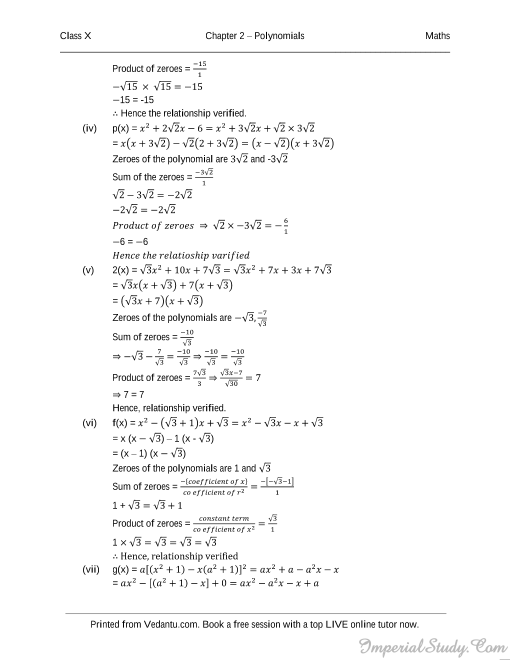
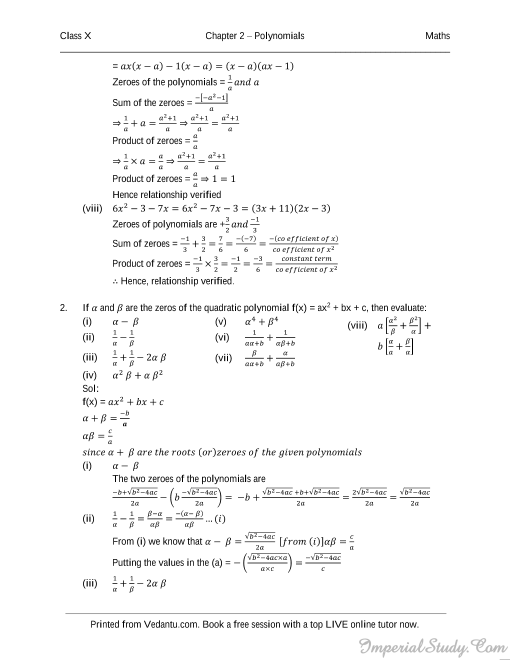
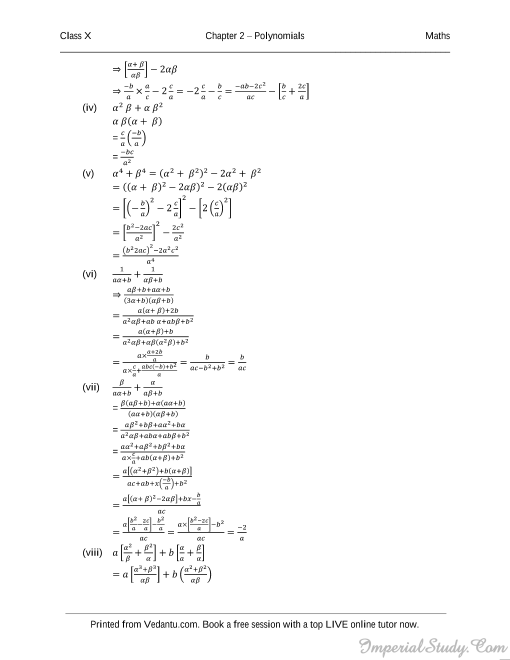
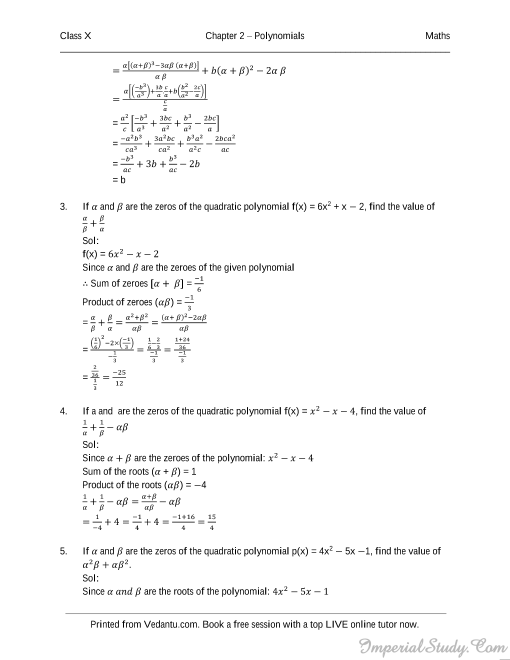
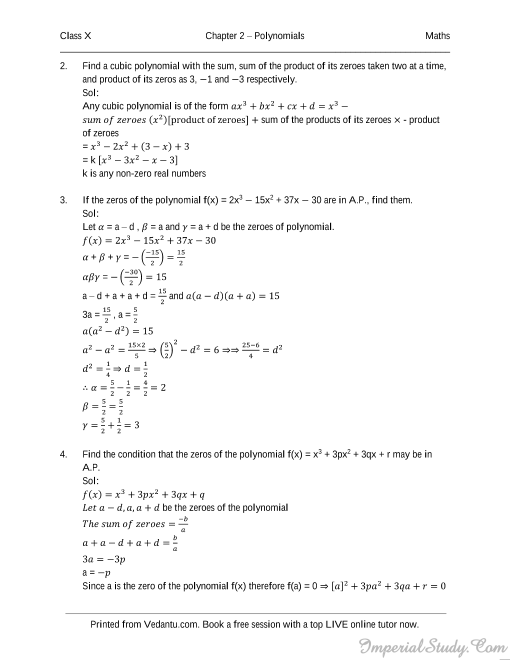
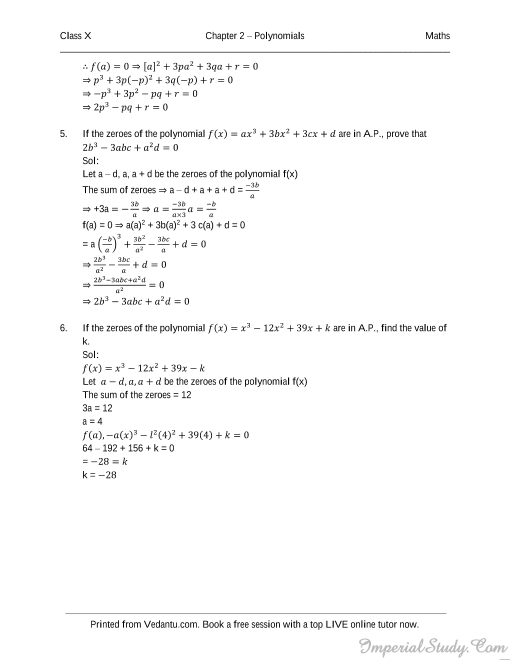
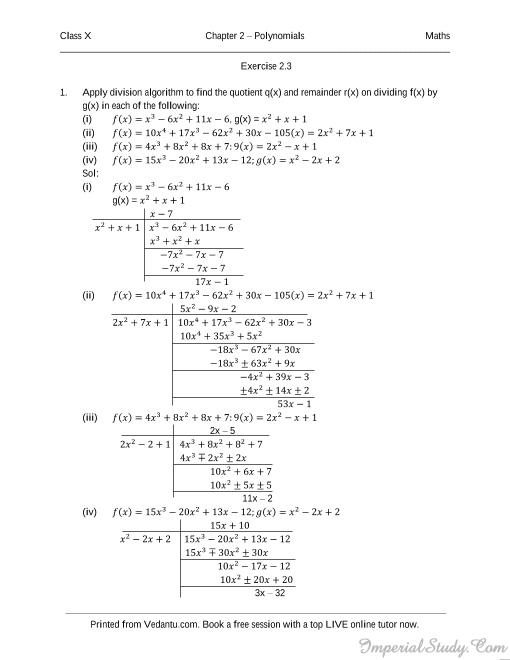
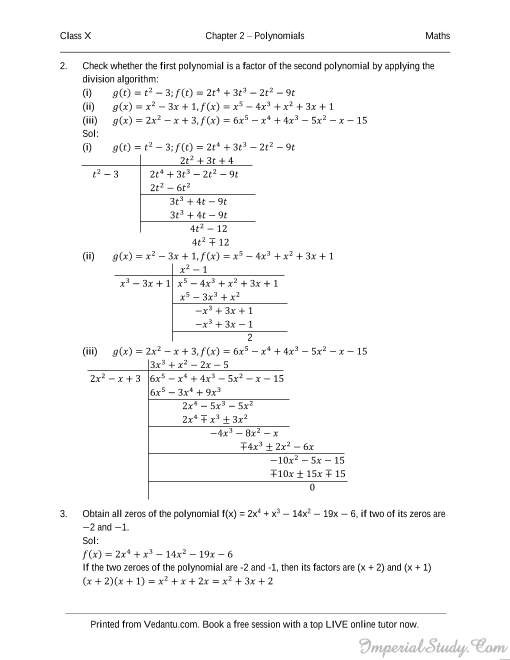
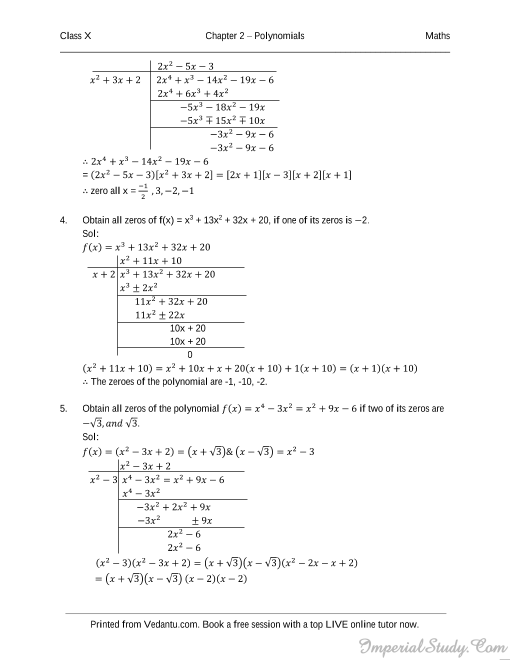
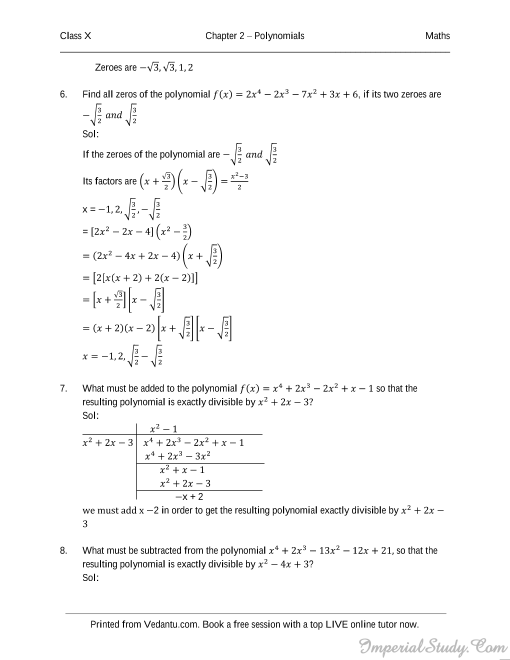
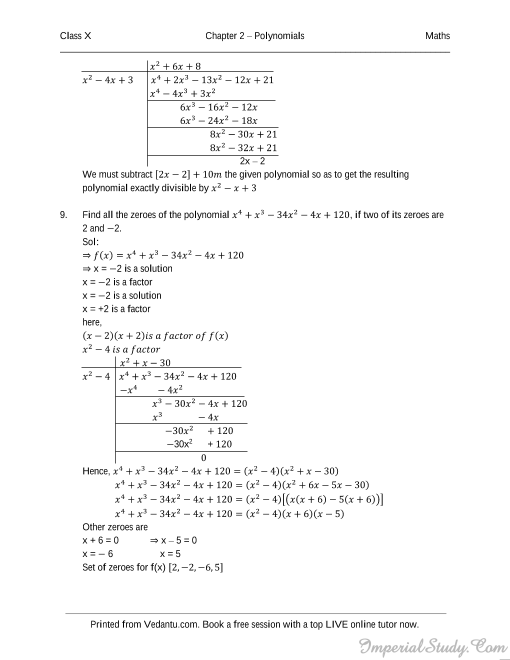
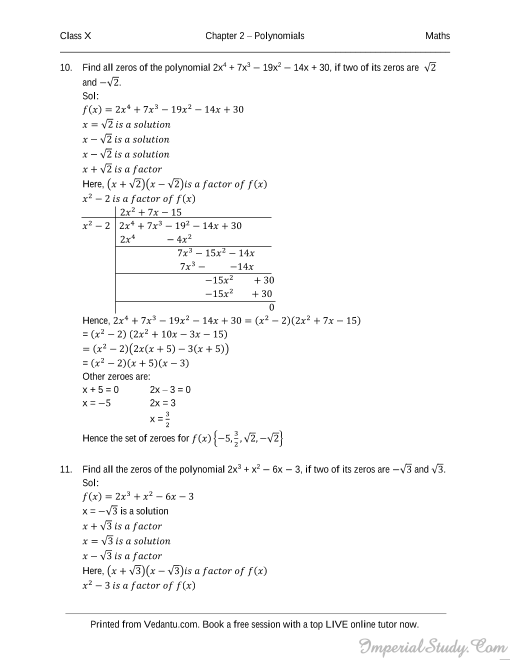
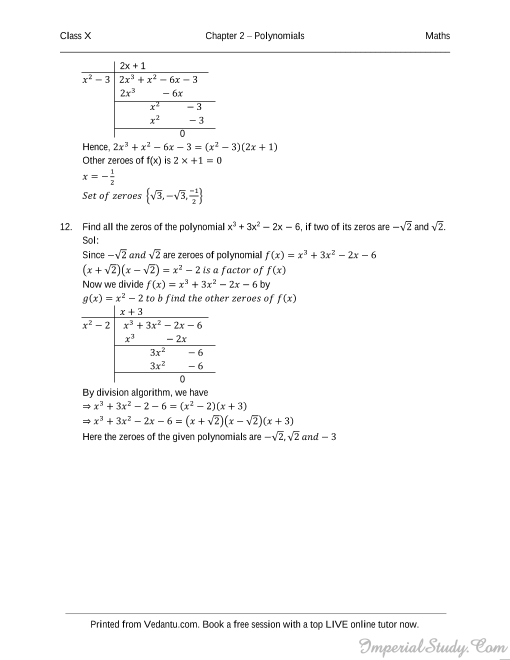
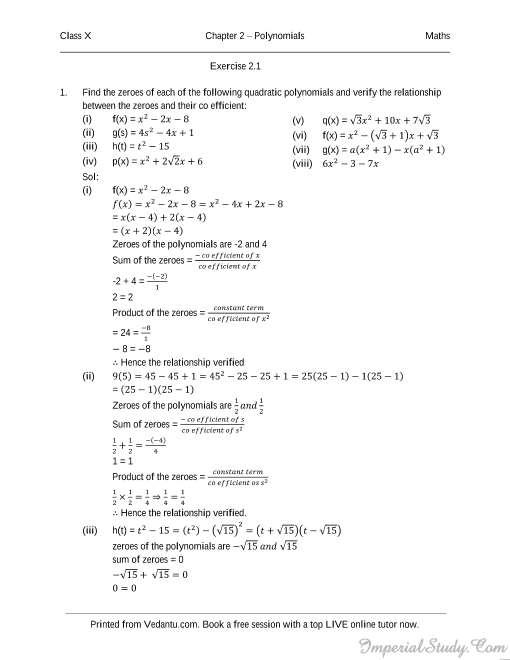
  • Polynomials R.D. Sharma Solution Chapter 2 – Class 10th Maths

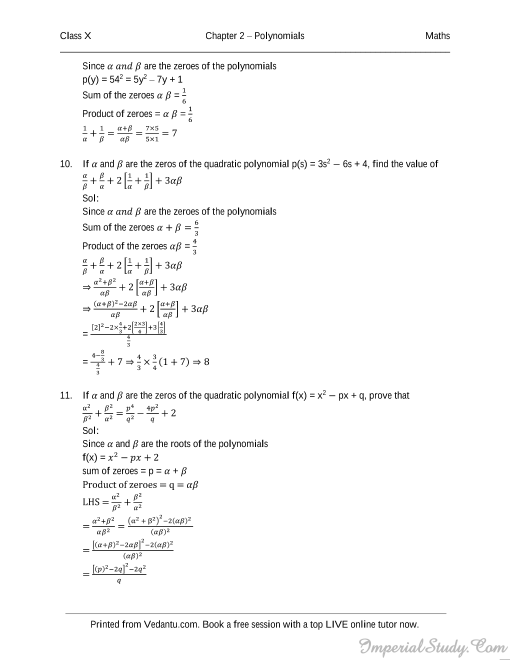
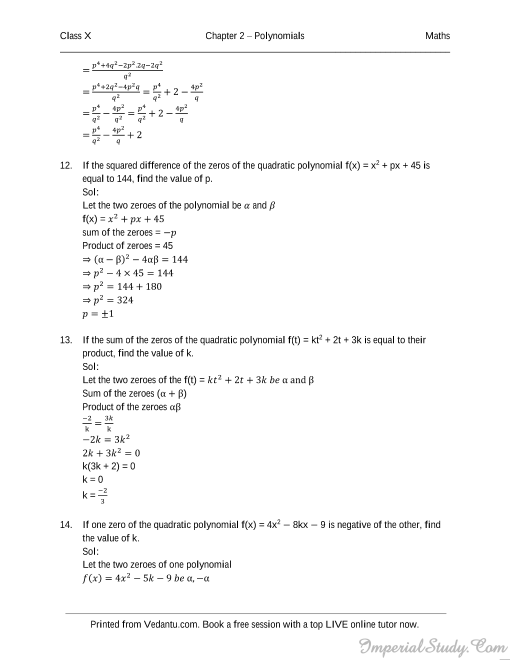
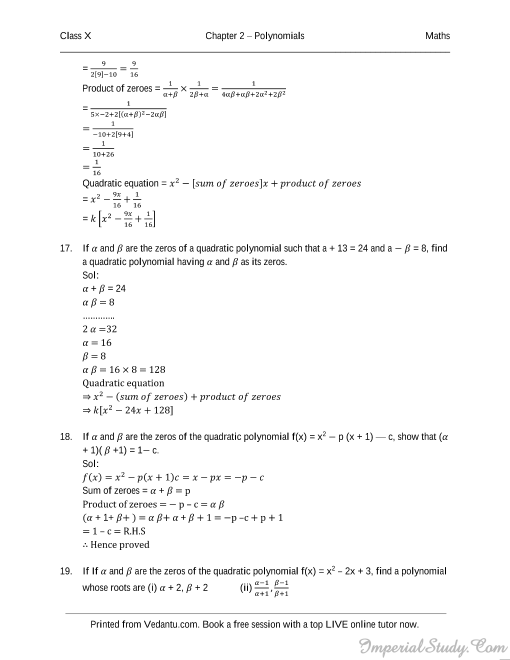
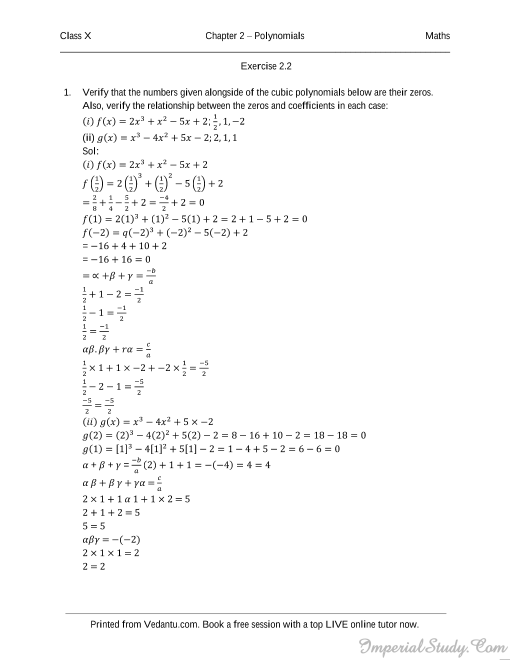
    There Are Lots Of Students Find RD Sharma Solutions Searching On Google For Polynomials RD Sharma Class 10 Solutions, But They Failed To Find Them Or The Solutions Are Paid But Here ImperialStudy Team Brought To You 100% Free And PDF Downloadable RD Sharam Solutions. Just Choose Chapter Read Solutions Online Like E-Book. For PDF Download Register On ImperialStudy And Get Access To Download All Solutions. We Post All The Solution By Collecting From Different Resources. Please Try To Read On Our Site only Which Give Profit To Us Also!

    Polynomials Solutions for RD Sharma Class 10 Chapter 2

    [showhide moret_text=”i”]

    rd sharma class 10 polynomials solutions rd sharma class 10 solutions chapter 2 polynomials rd sharma class 10 solutions polynomials ex 2.1 rd sharma class 10 solutions polynomials exercise 2.1 rd sharma class 10 solutions polynomials exercise 2.2 rd sharma class 10 solutions polynomials exercise 2.3 rd sharma class 10 solutions polynomials mcq rd sharma class 10 solutions polynomials pdf rd sharma class 9 polynomials solutions rd sharma class 9 solutions factorization of polynomials rd sharma mathematics class 10 polynomials solutions rd sharma polynomials solutions rd sharma polynomials solutions class 10 rd sharma solutions of polynomials

    [/showhide]


  • MINERALS AND ENERGY RESOURCES Class 10th Geography Chapter 5

    MINERALS

    They are homogenous, a naturally occurring substance with a definable internal structure.

    • Minerals are obtained from rocks.
    • Certain rocks contain only one mineral while some other rocks contain many minerals.
    • They vary in color, lustre, density, and hardness.

                      CLASSIFICATION OF MINERALS

    Minerals are classified in three categories-:

     ORES

    They are the accumulation of any mineral mixed with other elements.

    OCCURRENCE OF MINERALS

    • Minerals occur in igneous and metamorphic rocks in cracks, crevices, and joints.
    • The Smaller occurrence is called veins and larger occurrence is called lodes.
    • In sedimentation rocks, minerals occur in layers or beds. E.g. Gypsum and Potash.
    • Certain minerals occur by the decomposition of surface rocks. E.g. Bauxite.
    • Some minerals occur in alluvial deposits. {These deposits are called placer deposits which are not corroded by water. E.g. Gold, Silver, etc.
    • Ocean waters contain a vast quantity of minerals. E.g. Common salt, Magnesium, etc.

    DISTRIBUTION OF MINERALS RESOURCES IN INDIA

    • India is fortunate to have plenty of minerals but they are unevenly distributed.
    • Peninsular rocks contain reserves of coal, metallic minerals, mica, etc.
    • Sedimentary rocks in western & eastern coasts, Assam and Gujarat have petroleum deposits.
    • Rock system in Rajasthan has non-ferrous minerals.
    • The alluvial plains are devoid of economic minerals.

    FERROUS MINERALS

    • ¾ of the total value of the production of metallic minerals.
    • Strong base for metallurgical industries.

    IRON ORE

    • It is the basic mineral at the backbone of industrial development.
    • Magnetite is the finest iron ore with 70% iron content. Magnetite has magnetic qualities.
    • Hematite is used in most quantity. It has 50%-60% iron content.

    MAJOR IRON ORE BELTS IN INDIA  

    • Orissa-Jharkhand Belt-: [High-grade hematite are found in the Badampahar mines in Orissa].
    • Durg-Bastar-Chandrapur Belt (Lies in Chhattisgarh and Maharashtra)-: [High-grade hematite are found. Exported to Japan and South-Korea].
    • Bellary-Chitradurga-Chikmangalore-Tumbar Belt-: [It lies in Karnataka. Kudremukh mines are located here].
    • Maharashtra-Goa Belt (Lies in Goa and Ratnagiri district of Maharashtra)-: [Though the iron is not of good quality, they are exported through Mamargoa port.

    MANGANESE

    • It is used in manufacturing steel.
    • 10kg of manganese is required to manufacture 1tonne of steel. Orissa is the largest producer of manganese in India.

    NON-FERROUS MINERALS

    Important Non-Ferrous Minerals are-: Copper, Lead, Zinc, etc.

    COPPER

    India is deficient in the production of copper. They are malleable, ductile and good conductor used in electrical appliances, electronic and chemical industries. Orissa is the largest producer of Bauxite in India. Balaghat mines in Madhya Pradesh (M.P.) produces 52% copper in India.

    BAUXITE

    Aluminum is obtained from bauxite. It has the strength as iron, light, malleable, good conductor. 45% of bauxite is produced in Orissa.

    NON-METALLIC MINERALS

     MICA-:

    • It splits easily into thin sheets.
    • It is indispensable minerals used in electric and electronic industries due to its dielectric strength, low power loss factor and resistance to high voltage.

    LIMESTONE-:

    • It is found in sedimentary rocks.
    • It is the basic low material for cement industries and essential for iron ore in the ferneries.

    CONSERVATION OF MINERALS

    • Industry and agriculture are strongly dependent on minerals.
    • The process of minerals formation is so slow in comparison to the present consumption.
    • They are finite and non-renewable.
    • Continued extraction from greater depth leads to increasing costs and decreases in quality.
    • Improved technologies need to be used.
    • Recycling of metals, using scrap metals and other substances are the steps to consume the minerals for the future.

     ENERGY RESOURCES

    Energy is required for all the activities i.e. to cook, to provide light and heat, to propel vehicles and to drive machinery. Energy resources are of two types-:

    • Conventional Resources-: Include firewood; cattle dung cake, coal, petroleum, natural gas and electricity.
    • Non-Conventional Resources-: Include solar, the wind, tidal, geothermal, bio-gas & atomic energy.

     COAL

    Used for power generation, to supply energy to industry and domestic need.

    TYPES OF COAL
    • Peat-: Decaying plants in swamps produce peat. It has high carbon, high moisture, and low heating capacity.
    • Lignite-: It is a low grade brown coal. Neyveli in Tamil Nadu has great reserves of lignite. This is also used for generation of electricity.
    • Bituminous-: It is buried deep and subjected to increased temperatures.
    • Anthracite-: It is highest quality hard coal.
     OCCURRENCE OF COAL IN VARIOUS GEOLOGICAL AGES

    In India, coal occurs in two geological ages-:

    • Gondawana Age/Deposits-: A little over 200 millions in age. Located in Damodar valley, Jhoria, Raniganj, etc.
    • Tertiary Age/Deposits-: About 55 million years old. It is located in Meghalaya, Assam, Arunachal Pradesh and Nagaland.

    Note-: Coal is a bulky material which loses weight on use and reduced to ashes. So, thermal power stations are located near coal fields and domestic needs.

    PETROLEUM

    • It provides fuel for heat and lighting, lubricants for machinery and raw materials for industries.
    • Most of the petroleum occurrences are of tertiary age.
    • About 63% of India’s petroleum production is from Mumbai & 18% is from Gujarat.
    • Assam is the oldest oil producing state.

    NATURAL GAS

    • Natural gas is found in association with or without petroleum.
    • It is the environment-friendly fuel because of the low carbon dioxide emission.
    • Large reserves are found in the Krishna-Godavari basin.
    • The 1700 km long Hazira-Vijaypur-Jagdishpur cross country gas pipeline links Mumbai High and Basin.

    ELECTRICITY

    • Per capita consumption of electricity is considered as an index of development.
    • It is generated in two ways-: Hydro electricity and Thermal electricity.
    • Hydro electricity-: It is generated by fast flowing water. It is a renewable fuel. In India, there are many multi-projects like Bhakra Nangal, Kopili, Hydel project, etc.
    • Thermal Electricity-: It is generated by using coal, petroleum and natural gas. It is a non-renewable fossil fuel.

    NUCLEAR / ATOMIC ENERGY

    • It is obtained by altering the structure of atoms.
    • Uranium and Thorium are used for generating electricity.
    • Monazite sands of Kerala are rich in thorium.

     IMPORTANCE OF NON-CONVENTIONAL SOURCE OF ENERGY

    • Growing consumption of energy resulted in the over dependent on fossil fuels, like coal, petroleum, etc.
    • Rising price of oil and gas have raised uncertainties about the supply in future.
    • Increasing use of fossil fuels result in the environmental pollution.
    • So, there is a pressing need to use renewable resources like solar, wind, tidal energy, etc.

    SOLAR ENERGY

    • Since India is a tropical country, there are enormous possibilities of trapping solar energy.
    • Photovoltaic technology directly converts sunlight into electricity.
    • It will minimize the use of firewood, dung cakes in rural areas.

    WIND POWER

    The largest wind form cluster is located in Tamil Nadu, between Nagercoil and Madurai.

    BIO-GAS

    • Shrubs, fast waste animal, and human waste are used to produce bio-gas.
    • It has higher thermal efficiency.
    • The plants that use cattle dung are called Gobar Gas Plants.
    • It has twin benefits: Providing energy for electricity and providing manure.

    TIDAL ENERGY

    • Oceanic tides are used to generate electricity.
    • A 900 MW tidal energy power plant is set up in the gulf of Kuchchh.

    GEOTHERMAL ENERGY

    • Heat and electricity is produced by using the heat from the interior of the Earth.
    • Ground water absorbs the heat and becomes hot.
    • There is hundreds of hot springs in India.
    • Two experimental projects have been set up in Mani-Karan (H.P.) and Puga valley (J&K).

     IMPORTANCE OF CONSERVATION OF ENERGY RESOURCES

    • Energy is a basic requirement for economic development.
    • Every sector of the national economy agriculture, industry, domestic, etc. need inputs of energy.
    • Consumption of energy has been increasing since independence.
    • Energy conservations and use of renewable energy is the twin plank of sustainable energy.
     Suggestions-:
    • Using public transport system instead of the individual vehicle.
    • Switching of electricity when not in use.
    • Using power saving devices and using non-conventional sources of energy.
  • Class 9th Science | Nots, NCERT Solution, Extra Questions..


    • Chapter 1- Matter in Our Surroundings Class 9th Science
    • Chapter 2- Is Matter Around Us Pure Class 9th Science
    • Chapter 3- Atoms and Molecules Class 9th Science
    • Chapter 4- Structure of the Atom Class 9th Science
    • Chapter 5- The Fundamental Unit of Life Class 9th Science
    • Chapter 6- Tissues Class 9th Science
    • Chapter 7- Diversity in Living Organisms Class 9th Science
    • Chapter 8- Motion Class 9th Science
    • Chapter 9- Force and Laws of Motion Class 9th Science
    • Chapter 10- Gravitation Class 9th Science
    • Chapter 11- Work and Energy Class 9th Science
    • Chapter 12- Sound Class 9th Science
    • Chapter 13- Why Do We Fall Ill Class 9th Science
    • Chapter 14- Natural Resources Class 9th Science
    • Chapter 15- Improvement in Food Resources Class 9th Science


  • Matter in Our Surroundings Class 9th Science Chapter 1

    1 The Matter in Our Surroundings

    Content’s


  • NCERT Solution’s of Matter in Our Surroundings Class 9th Science

    In Text Questions

    Page No: 3

    1. Which of the following are matter?

    Chair, air, love, smell, hate, almonds, thought, cold, cold drink, smell of perfume.

    Answer

    Chair, air, almonds and cold drink

    2. Give reasons for the following observation:
    The smell of hot sizzling food reaches you several metres away, but to get the smell from cold food you have to go close.

    Answer

    Solids diffuse at a very slow rate. But, if the temperature of the solid is increased, then the rate of diffusion of the solid particles into air increases. This is due to an increase in the kinetic energy of solid particles. Hence, the smell of hot sizzling food reaches us even at a distance, but to get the smell from cold food we have to go close.

    3. A diver is able to cut through water in a swimming pool. Which property of matter does this observation show?

    Answer

    This observation shows that the particles of matter have intermolecular spaces. The intermolecular spaces in liquids is fair enough to let the diver pass through it.

    4. What are the characteristics of particles of matter?

    Answer

    The characteristics of particles of matter are:
    → Particles of matter have spaces between them.
    → Particles of matter are continuously moving.
    → Particles of matter attract each other.

    Page No: 6

    1. The mass per unit volume of a substance is called density (density = mass/volume).

    Arrange the following in order of increasing density – air, exhaust from chimney, honey, water, chalk, cotton, and iron.

    Answer

    air, Exhaust from chimneys, cotton, water, honey, chalk, and iron.

    2. (a) Tabulate the differences in the characteristics of states of matter.
    (b) Comment upon the following: rigidity, compressibility, fluidity, filling a gas container, shape, kinetic energy, and density.

    Answer

    (a)

    Property
    Solid state
    Liquid state
    Gaseous state
    Definite shape and volume. No definite shape. Liquids attain the shape of the vessel in which they are kept. Gases have neither a definite shape nor a definite volume.
    2.
    Incompressible Slightly Compressible Highly compressible
    3.
    Cannot flow Can flow Can flow
    4.
    Particles don’t move freely Particles move freely but are confined within the boundary. Particles move freely.
    5.
    Force of attraction between particles is maximum. Force of attraction between particles is less than solid but more than that in gas Force of attraction between particles is least.

    (b)
    → Rigidity: It is the property of matter to resist the change of its shape.→ Compressibility: It is the property of matter in which its volume is decreased by applying force.
    → Fluidity: It is the ability of matter to flow.
    → Filling a gas container: On filling a gas takes the shape of the container.
    → Shape: Having definite boundaries.
    → Kinetic Energy: It is the energy possessed by the particles of matter due to its motion.
    → Density: It is the ratio of mass with per unit volume.

    3. Give reasons:

    (a) A gas fills completely the vessel in which it is kept.

    ► The force of attraction between particles of gas is negligible. Because of this, particles of gas move in all directions. Thus, a gas fills the vessel completely in which it is kept.

    (b) A gas exerts pressure on the walls of the container.

    ► Particles of gas move randomly in all directions at high speed. As a result, the particles hit each other and also hit the walls of the container with a force. Therefore, gas exerts pressure on the walls of the container.

    (c) A wooden table should be called a solid.

    ► A wooden table has fixed shape and fixed volume, which are the main characteristics of solid. Thus a wooden table should be called a solid.

    (d) We can easily move our hand in air, but to do the same through a solid block of wood, we need a karate expert.

    ► Particles of the air have large spaces between them. On the other hand, wood has little space between its particles. Also, it is rigid. For this reason, we can easily move our hands in the air, but to do the same through a solid block of wood, we need a karate expert.

    4. Liquids generally have lower density as compared to solids. But you must have observed that ice floats on water. Find out why.

    Answer

    Ice which is solid has vacant spaces between water molecules thus making ice lighter than water. Thus ice floats on water.

    Page No: 9

    1. Convert the following temperature to Celsius scale:

    (a) 300 K

    ► 300 K = (300 – 273)°C
    = 27°C
    (b) 573 K

    ► 573 K = (573 – 273)°C
    = 300°C

    2. What is the physical state of water at:

    (a) 250°C

    ► Gaseous State (As Boiling temperature of the water is 100° C).

    (b) 100°C

    ► Since water boils at this temperature thus it can exist in both liquid and gaseous form. At this temperature, after getting the heat equal to the latent heat of vaporisation, water starts changing from liquid state to gaseous state.

    3. For any substance, why does the temperature remain constant during the change of state?

    Answer

    During the change of state of any substance, the heat supplied or released is utilised in phase change. Such heat is called latent heat. So, the temperature of any substance remains constant during the change of state.

    4. Suggest a method to liquefy atmospheric gases.

    Answer

    The gases can be converted into liquids by bringing its particles closer so atmospheric gases can be liquefied either by decreasing temperature or by increasing pressure.

    Page No: 10

    1.Why does a desert cooler cool better on a hot dry day?

    Answer

    A desert cooler increases the humidity of the surrounding air. The water particles in the air take the heat from the surrounding objects and evaporate. In hot and dry days the moisture level is very low in the atmosphere which increases the rate of evaporation. Because of faster evaporation, the cooler works well. That’s why desert cooler cools better on a hot dry day.

    2. How does water kept in an earthen pot (matka) become cool during summers?

    Answer

    There are some pores in an earthen pot through which the liquid inside the pot evaporates. This evaporation makes the water inside the pot cool. In this way, water kept in an earthen pot becomes cool during summers.

    3. Why does our palm feel cold when we put some acetone or petrol or perfume on it?

    Answer

    Acetone, petrol, and perfume evaporate at low temperatures. When some acetone, petrol, or perfume is dropped on the palm, it takes heat from the palm and evaporates, thereby making the palm cooler.

    4. Why are we able to sip hot tea or milk faster from a saucer than a cup?

    Answer

    A liquid has a larger surface area in a saucer than in a cup. Thus, it evaporates faster and cools faster in a saucer than in a cup. Thus, we are able to sip hot tea or milk faster from a saucer than a cup.

    5. What type of clothes should we wear in summers?

    Answer

    We should wear cotton clothes in summers as cotton is a good sweat absorber. Sweat is absorbed by the cotton and is exposed to the atmosphere making evaporation faster. During this evaporation, particles on the surface of the liquid gain energy from our body surface, making the body cool.

    Page No: 12

    Exercises

    (For Conversion Process we must know,
    Kelvin is an SI unit of temperature, where 0°C = 273 K approx.)

    1. Convert the following temperatures to Celsius scale.

    (a) 300 K
    ► 300 K = (300 – 273) °C
    = 27 °C

    (b) 573 K
    ► 573 K = (573 – 273) °C
    = 300 °C

    2. Convert the following temperatures to Kelvin scale.

    (a) 25°C
    ►25 °C = (25 + 273) K
    = 298 K

    (b) 373°C
    ► 373 °C = (373 + 273) K
    = 646 K

    3. Give reason for the following observations.

    (a) Naphthalene balls disappear with time without leaving any solid.
    (b) We can get the smell of perfume sitting several metres away.

    Answer

    (a) Naphthalene balls disappear with time without leaving any solid because of they undergoes sublimation easily i.e., the change of state of naphthalene from solid to gas takes place easily.

    (b) Perfumes have high degree of vaporisation and its vapour diffuses into the air easily. Therefore, we can get the smell of perfume sitting several metres away.

    4. Arrange the following substances in increasing order of forces of attraction between particles– water, sugar, oxygen.

    Answer

    Oxygen, Water, Sugar.

    5. What is the physical state of water at-

    (a) 25°C
    ► Liquid State

    (b) 0°C
    ► Solid State, can also be in liquid state(conditions required).

    (c) 100°C
    ► Gaseous State can also be in liquid state(conditions required).

    6. Give two reasons to justify-

    (a) water at room temperature is a liquid.
    (b) an iron almirah is a solid at room temperature.

    Answer

    (a) Water at room temperature is a liquid because it has fluidity also it has no shape but has a fixed volume that is, it occupies the shape of the container in which it is kept.

    (b) An iron almirah is a solid at room temperature it has rigid and fixed shape.

    7. Why is ice at 273 K more effective in cooling than water at the same temperature?

    Answer

    Ice at 273 K has less energy than water (although both are at the same temperature). Water possesses the additional latent heat of fusion. Hence, at 273 K, ice is more effective in cooling than water.

    8. What produces more severe burns, boiling water or steam?

    Answer

    Steam has more energy than boiling water. It possesses the additional latent heat of vaporisation. Therefore, burns produced by steam are more severe than those produced by boiling water.

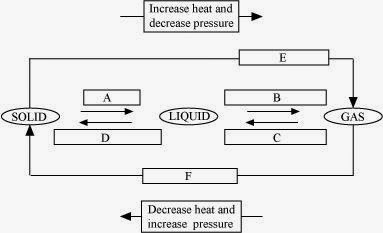
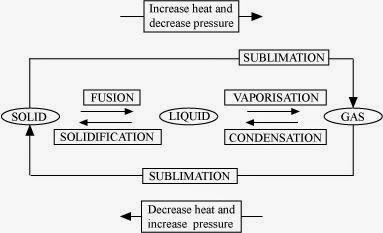
    9. Name A, B, C, D, E and F in the following diagram showing change in its state.

    Answer